Counting up to 2016
Okay, I admit that I am not a big fan of the countdown to the new year. I find the experience fairly anti-climactic. Jewish tradition teaches me that time spent anticipating a time to come is wasted time. What matters most is what we do with the time we have.
Our Talmudic sages teach that the reason we ascend from one candle on Chanukah’s first night to eight on the last night, as opposed to counting down the days of the holiday, is that we are meant to ascend in holiness, not to descend. We therefore count up our days after Passover to the day we celebrate receiving the Torah.
The lesson speaks to me. I don’t enjoy counting down the days left in a vacation. I much prefer to look ahead to each day of celebration, adding to the joy, as opposed to counting down the days to its conclusion.
On the eighth night of Chanukah, I lit a chanukiah in my grandparents’ kitchen, reflecting on their 75 years of marriage and a celebration of time that would bring most of their children, grandschildren, great-grandchildren and great-great-grandchildren together. Their lives have not been easy, though they have certainly had many causes for celebration. Surviviors of the Holocaust who have experienced their share of loss, their lives have been enriched by a generosity of spirit and a sincere appreciation for every relationship they share. A phone call today, a lunch date tomorrow, a card game the next day, a get-together with children on the weekend, a great grandson’s bar mitzvah in the summer — each day presents another opportunity to add a deposit to the time bank of our lives.

On this first day of 2015, we can start counting up to 2016. Each day can present an opportunity. Each experience can be a jewel added to a treasure chest of time and experience. May we never wish the time away, may we never miss today by wishing for tomorrow. May 2016 arrive after 365 days completed with a sense of accomplishment, appreciation and ascension.

Wishing you a happy and healthy 2015,
Rabbi Craig Scheff
Festival of the Daughters

What is a group of women doing in someone’s living room one night each month, introducing themselves with their matriarchal line and passing a candle from one to the next? We are celebrating Rosh Chodesh, the Jewish new month, a time designated by the rabbis as a festival for women. Rosh Chodesh Celebrations began this year to bring together women who are raising children at home for evenings of study, sharing and celebrating.
Each month our gatherings have been uplifting and meaningful. Through tears and laughter these women have found support and understanding in a close circle of OJC congregants, luxuriating in the gift of time dedicated to self and community.
Last night was a special Rosh Chodesh celebration as the group of younger moms met together with Sisters in Spirit, a group of OJC women whose nests are empty facilitated each month by Sally Kagan and Miriam Suchoff.
Rosh Chodesh Tevet is unique as it falls in the middle of a holiday, on the seventh night of Chanukah each year. Among the Jewish communities of North Africa, this auspicious night was designated as the Festival of the Daughters — a time for the generations to celebrate together. And so that is what the two Rosh Chodesh groups of the Orangetown Jewish Center did last night: we brought the generations together to celebrate.
One of the Rosh Chodesh Celebrations participants wrote about how much she enjoyed the special evening, “I always look to learn from the older, wiser and more experienced women (and men) in the world and often say that those sage people (like my dad) are hard to find these days. Their simple advice is so enlightening and comforting.”

Together we lit the chanukiah and immediately felt the magic begin.


After our opening ritual, Sally told the story of brave and wise Judith who saved the Jews who were under siege by the evil Holofernes. Sally’s storytelling technique was engaging and fun; you’ll have to ask her for a synopsis, but be sure to ask what she pulled out of her basket at the end of the story!
We used the lighting of seven candles to open us to seven questions about women we admire, blessings we would bestow on daughters, our own gifts to family, and more.

There were tears and words of support and much laughter. We concluded the evening with each woman offering a blessing to the woman to her right.


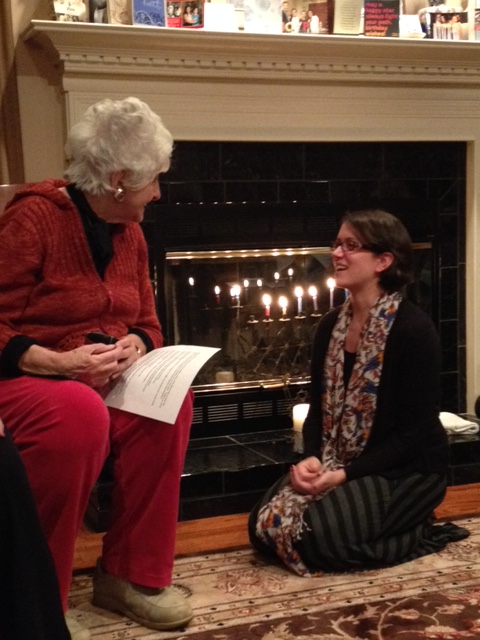
Without a doubt, there is magic in a Rosh Chodesh group. A group of women empowers one another to reach inside and tap into a place we often ignore. The group energizes us so that people not only feel good about themselves, but about the women surrounding them! As Sally Kagan says, “This is the essence of women gathering for Rosh Chodesh: that we all have the ability within our souls to capture the roots of our faith, the belief that we can nurture and be nourished by one another, and to understand what those first women in the red tents knew: that through the camaraderie and learning we are stronger!”
If you are a woman of the Orangetown Jewish Center, we hope that you’ll join one of the Rosh Chodesh groups. Contact me at Rabbi.Drill@theojc.org for more information. If you are a blog reader who is not connected to the OJC, be in contact for information on how to create a group of your own. And if you are a man, be happy for the women in your life that there is a safe and nurturing place for us to grow in a Jewish context.
Enjoy this eighth night of Chanukah. I pray that the lights in the darkness bring optimism to your hearts.
Chag Chanukah Sameach and Chodesh Tov, Happy Chanukah and Happy New Month,
Rabbi Paula Mack Drill
On the third night of Chanukah, my rabbi said to me…
A past-president of our synagogue, Nohra Leff, once said to me, “I don’t just believe in miracles, I EXPECT THEM!” What a great way to go through life. Expecting miracles means that we engage in behaviors that ultimately create an environment where what some perceive as the “miraculous” becomes that much more possible.
In the fall of 1995, I took a job as part-time cantor at the OJC. Still a full-time student and father of two young boys, I treated the job like it was the fulfillment of a dream. A year later, I was negotiating my first contract to be Student-Rabbi and to stay on as Rabbi after my ordination. I was advised by people “in the know” to avoid such a commitment. After all, the synagogue had gone through so many rabbis in its relatively short history, and I “could do better,” according to the more experienced. Three years later, another past-president, Michael Scolnick, would ask me how long I thought the honeymoon could last. I am glad to say that, even in my 20th year, I still feel like we met just yesterday. Okay, maybe just the day before yesterday.
When I speak to rabbinical students in their final years at JTS, I try to emphasize that every synagogue community has the potential to be a place that can be transformed and re-dedicated to Torah, service and deeds of loving kindness. That can only happen, however, if the rabbi is willing to see him or herself as spending the rest of their professional life serving that one community. If we invest ourselves in a plan believing that we have only two years to work toward achieving our goals, then we doom ourselves to failure; but if we invest ourselves planning for the long term, we can create an environment where the seemingly impossible is indeed achievable.

In the midst of Chanukah, we consider the nature of miracles, and the role that “dedication” (the literal meaning of the word Chanukah) plays in making one day’s worth of oil last for eight, or in leading one small band of soldiers to victory against overwhelming odds. I am so proud of what we have achieved and how we have continued to grow as a Conservative egalitarian community. Beyond our impressive numbers, we have attained a level of learning, service to the broader community, participation and spirit of which we can all be proud. The dedication that has brought us to this place in our history, however, has also given us the wisdom to understand that we must continue striving to build and to deepen relationships; to reach in to our membership and to reach out to those still searching; to develop more pathways into our OJC community, into a life of purpose and meaning, and into relationship with God; and to lookto the future with faith, optimism and vision. Some people might call our success a miracle. Perhaps we have witnessed something miraculous as a community; if so, the miracle only happened because of the wise people–presidents, boards, volunteers, congregants, professionals and clergy–who were looking for one, who expected one, and who acted to create the environment where such a miracle could take root.

Chag Urim Sameach,
Happy Festival of Lights,
Rabbi Craig Scheff
Mission Accomplished
At 6:00 this morning, I returned to the Orangetown Jewish Center after participating for five days on the Jewish Federation of Rockland County Lily Steuer ATID Leadership Mission. Atid means future and this mission fulfilled its call to set our sights on the future. As I write this, I am filled with tikvah (hope) that the future of Jewish Rockland and of Israel is bright.

I felt tikvah when we visited Susan’s House, an on-the-job training workshop for youth at risk in Jerusalem. Teens learn to make jewelry, glass plates, wooden objects and macramé as they learn life skills and self esteem. There I met a young woman named Aliana who slouched in her chair as the other teens brightly showed off the art that they were creating. When we started shopping, many of us chose beautiful wire jewelry, the work of Aliana, who joined us in the shop and proudly took pictures with each of us who were purchasing her creations. Aliana was standing up straight. I felt tikvah because I know that thanks to our Jewish Federation dollars, the vulnerable in Israel won’t be left behind.

I felt tikvah when we visited Har Hertzl, the national military cemetery of Israel. We stood, weeping, before a line of new graves from this past summer’s Protective Edge Operation. We stood before the grave of American lone soldier Max Steinberg. I felt tikvah because I know that Israel will defend our right to a Jewish home. Thanks to the support of Jews world wide, Israel will never stand alone.
I felt tikvah when we danced at the Sol and Bea Kramer Senior Center in Kiryat Ata. Elders enjoy support, socialization, hot meals and warmth thanks to Elana, the dedicated and passionate director, and thanks to Rockland Federation support from the Kramer family and from the Lily Steuer Fund. Languages from all over the world – Hebrew, Yiddish, Russian, Hungarian, Spanish – could be heard as Day Center participants sang and danced with us. I felt tikvah because I know that thanks to our Jewish Federation dollars, the mitzvah of honoring our elders will be fulfilled in Israel just as it is here in Rockland County.

I felt tikvah when we visited the Mevaseret Tzion Absorption Center to meet with new olim (immigrants to Israel) from Ethiopia. We experienced awe as we watched Mission Mentor and Federation Campaign Chair Bob Silverman meet family members with whom he flew from Ethiopia to Israel one and a half years ago.  I felt tikvah because I know that we in Rockland County help to ensure that all Jews are responsible one for the other.

The experience of our trip was heightened for all of us (but for me most of all!) by the participation on the mission of my son Josh, a student in Mechinat Rabin (a preparation year for the Israel Defense Forces). Josh’s passion for Israel, his questions and many conversations with mission participants made me proud as a mom and made me feel tikvah for the future of the Jewish people.
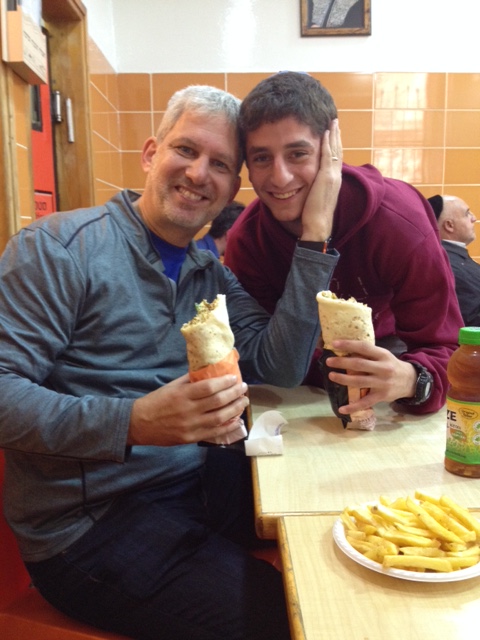
I thank Diane Sloyer and the staff of Jewish Federation of Rockland County for educating us, lifting us and giving us hope.
It is easy to be a cynic. Things go wrong and one can say, “See, I told you so.” But it takes courage to be an optimist. We continue, against all odds, to find hope and possibility in our world. Our plans and dreams might fail and we are often disappointed, but still we get up the next day and start again. It takes courage to be an optimist.
The 2014 ATID Mission gave us all many reasons to be optimists.
Shabbat shalom, Rabbi Paula Mack Drill
If only our issues were black and white
It would be so easy if our issues were black and white. Unfortunately, all too often we settle on addressing the issue as if it were black and white. We point fingers, we demonize, we stand up self-righteously, we spout rhetoric, we exhaust ourselves spinning narratives, and we pat ourselves on the back for having taken a stand. And in so doing, we fail to take on the real challenge, that of wresting with the grey.
In this week’s Torah portion, our imperfect work-in-progress-of-a-patriarch-Jacob chooses to confront his brother Esau, the man who vowed to kill him the last time they shared company. Jacob can avoid Esau, but at some level he knows that the courageous and potentially dangerous confrontation is the only way for him to grow and to find a greater sense of self and a better prospect for inner and outer peace.
I have wrestled all week with my response to what is taking place in the streets of America and in the Knesset of Israel. At this point, I have no original thoughts. But I have come across one teacher in Gil Troy who has given the best expression I have found to my feelings. Couched in the context of Israel’s nation-state discussion, his conclusions can be extended to the many events around us. Please click here for the link, or read on below.
Gil Troy is Professor of History at McGill University and a Visting Professor at the IDC in Herzliya. His latest book, Moynihan’s Moment: America’s Fight Against Zionism as Racism, just won the 2014 J.I. Segal Non-fiction award for a Jewish Theme. Visit him at www.giltroy.com.
On Jewish State: The Right is Wrong, The Left’s Not Right
The old joke has a rabbi telling one congregant “you’re right”; the congregant’s rival, “you’re right”; and his wife, who complains they both can’t be right, “you’re right, too.” With Right and Left squabbling about a Jewish Nation law, the Right is wrong; the Left isn’t right; and those who think they both can’t be wrong, are wrong, too.
The Right is wrong because the timing is bad, the optics are worse, and in some legislative drafts the balance is off. Prime Minister Benjamin Netanyahu is again playing partisan arsonist rather than statesmanlike firefighter. Politicians should follow the Hippocratic Oath – first do no harm. Israel operates in an hostile world environment, in a flammable region, during an incendiary time. When many Israelis are worrying about personal safety, seeking governmental leadership to calm tensions, unnecessary legislation stirring primal fears and triggering anti-Israel sentiment is reckless.
Israel’s leaders, including Likud backbenchers, have a responsibility to reassure more than two million non-Jewish Israelis during this sensitive time that they are cherished citizens, and will be protected by THIS government. They deserve reassurances that the “medina” the state, will remain democratic as well as Jewish, which is different than saying it is a Jewish state with a democratic mishtar – regime or government. (Unlike most, I read the versions in Hebrew and English before writing).
Israel’s Jewish character should not be a left-right issue. It’s a Zionist issue. Democratic nations have the right to express their majority culture in the public square. Israel’s Declaration of Independence already “declare[s] the establishment of a Jewish State,” mandating the State’s Jewish character, although certain specifics the proposed laws mention, such as Hatikvah as the national anthem, are not spelled out.
While some post-Zionist ideologues and the Supreme Court’s mushrooming power have triggered fears of eroding Israel’s Jewish character, no pressing danger exists. Netanyahu could have affirmed Israel’s Jewish character by quoting the Declaration of Independence, reinforced by a stack of bills and court cases protecting the precedent. Instead, advancing an extreme draft before his more balanced version, is like a husband blatantly housing a mistress in lesser quarters than the wife; while pretending to placate, it only enrages. Approving a bill’s initial reading while vowing to replace it, evokes John Kerry’s infamous 2003 legislative flip-flop, regarding funding Americans troops, when he said, “I actually did vote for the $87 billion before I voted against it.”
Nevertheless, the Left is not right, emitting shrill arguments, straw men, and premature eulogies over Israeli democracy, while hysterically, irresponsibly fueling Israel’s delegitimization. Netanyahu has promised to guarantee “equal rights for all” Israel’s citizens. He has an established track record of protecting Israel’s liberal democratic character as envisioned by his Zionist mentors Ze’ev Jabotinsky and Menachem Begin.
The insane accusations, ranging from familiar libels about Israel becoming an “Apartheid state” to fear-mongering about Israeli Arabs being forced to wear Green crescents – thank you Ha’aretz — tell more about the perverse, paranoid accusers than the accused. Their outrage meter is broken. They rail against potential Israeli breaches while enabling actual Palestinian totalitarianism, terrorism, and Islamism. If a future Palestinian state – or any Arab state — followed the protocols of the most extreme Jewish state Knesset bill (adapted to their national-religious identity) – we would have the first functional Arab democracy.
Israel’s democratic character should not be a left-right issue. It’s a Zionist issue. Israel was founded as a democratic state that “will ensure complete equality of social and political rights to all its inhabitants.” Ironically, liberals opened this legislative can of worms, hoping to enact a law guaranteeing “democracy,” a word missing from Israel’s Declaration of independence.
The need to caricature this government, and Israel, as repudiating democracy and demonizing Arabs proves what Matti Friedman writes in the Atlantic: “The uglier aspects of Palestinian society are untouchable [and I add, nuanced analyses of Israel as a Jewish-democratic state are unfashionable] because they would disrupt the ‘Israel story,’ which is a story of Jewish moral failure.” That popular, stereotypical, castigatory narrative, which many American Jewish elites are embracing, fails to understand that complex, pluralistic, free democracies balance competing ideals. Even America, which in these debates suddenly is held up as perfect, “hold[s] contradictory ideals in suspension,” the historian Michael Kammen wrote in his Pulitzer-Prize-winning People of Paradox.
Totalitarian regimes are simpler, often imposing one overriding idea. Israel, a Jewish democratic state with 25 percent non-Jewish citizens, will always juggle: struggling with maintaining its Jewish character while guaranteeing equal rights for all; wondering whether Arabs – and Haredim, for that matter – prefer individual rights or group rights; navigating between the religious components in Israel’s Jewish identity and its national dimensions.
These important dilemmas demand consideration. Yet the Left treats this democratic debate as threatening democracy, the Right treats this Jewish disputation as unJewish. Both sides should mature. The Right should avoid its “dog whistles” inciting hatred against Arabs; the Left should avoid its equally reprehensible dog whistles inciting hatred against Israel.
The philosopher John Dewey taught that “Democracy begins in conversation.” Let’s have the conversation, calmly, rationally, respectfully, with nuance and without demonization, sensitive to the many dimensions but understanding that to govern is to choose.
Just as Israel needs expansive centrists who can support the widows of Har Nof and the children of the burned classroom in the Max Rayne Hand in Hand Jerusalem School, we need voices saying “you’re right” to the pro-Jewish and pro-democratic sides. Democracy stems from Jewish ideas of equality. A Jewish-Democratic state is as possible as a state with majority rule and minority rights, committed to liberty and equality, fostering individualism amid nationalism. Embracing such valid if occasionally contradictory Zionist and democratic ideals fosters the kind of “you’re right, too” constructive, creative tension that makes democracies great.
Thank you, Gil, and shabbat shalom,
Rabbi Craig Scheff
The Chutzpah of Gratitude
Those pilgrims who established the first Thanksgiving back in1621 had some chutzpah celebrating gratitude. Fleeing religious persecution, they sailed through dangerous waters, accidentally ending up in Massachusetts instead of Virginia. Arriving in winter, they endured bitter cold, food shortages, bewildering farming practices, insufficient shelter, illness and despair. Within a short time, many had died. When we imagine being one of those pilgrims, it becomes clear that it was an act of faith and courage to sit down with new neighbors and give thanks.
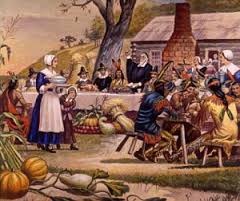
For what did they feel grateful? Perhaps their thanksgiving was an acknowledgement that despite trials and sorrows, it was still necessary to experience gratitude. Perhaps… their gratitude was an antidote to the painful life that was their lot.
Today many of us also struggle. We experience personal challenges, illness, death, family conflict, unemployment. Gratitude is not an emotion that always comes naturally, but Judaism teaches that gratitude is not a choice. As Jews, the expression of thanksgiving is not conditional on whether we have all that we want.
The Talmud teaches that each time we benefit from something in this world, it should be preceded by the recitation of a blessing. Otherwise, we are labeled a thief, stealing from God or the community in which we live. Jews recite berakhot (blessings) to acknowledge the One who provides everything. Jews become blessings when we express our gratitude for the good that is ours by acts of loving kindness toward others. As God’s partners, such behavior is required.
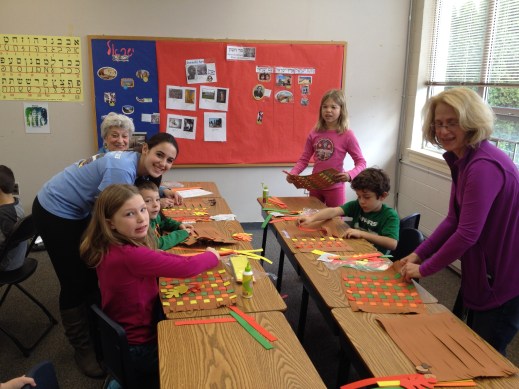
This past weekend, the Orangetown Jewish Center once again remembered to show our gratitude for all the good that is ours by becoming blessings to each other and the general community. For the first time, Mitzvah Day became Mitzvah Weekend. Thanks to the passion and capable organization of Co-Chairs Lorraine Brown and Carolyn Wodar, hundreds of congregants of every age and stage participated in some part of the experience.
After welcoming the Orangeburg Library Interfaith Study Group to Friday evening services led by our youth, seventy congregants gathered for Dinner and Dialogue. We hosted Andrea Weinberger and Rob Grosser, co-presidents of Rockland County Jewish Federation (http://www.jewishrockland.org) and learned together about the organization that anchors all tzedaka in our community, Israel, and around the globe.
On Shabbat morning, just returned from the annual volunteer Mitzvah Mission to Israel with twenty OJCers, Rabbi Scheff reminded us that performing mitzvoth requires stepping out of our comfort zones. Guests from neighboring faith communities joined us at the end of Shabbat for Havdalah and guided conversation to learn about each others’ traditions and beliefs.

Sunday was the culmination of months of planning as congregants volunteered from early morning with Keep Rockland Beautiful and the annual Breakfast Run to deliver warm blankets and food. Throughout the day, congregants danced to Zumba for United Hospice of Rockland (http://hospiceofrockland.org), learned about TAPS (http://www.taps.org) (support for widows and orphans of American servicemen and women) from CFO (and congregant) Scott Rutter, created flannel blankets and other craft projects for area hospitals and nursing facilities, and went out to visit patients and residents in those places. The day concluded with congregants being invited to minyanim in their neighborhoods.
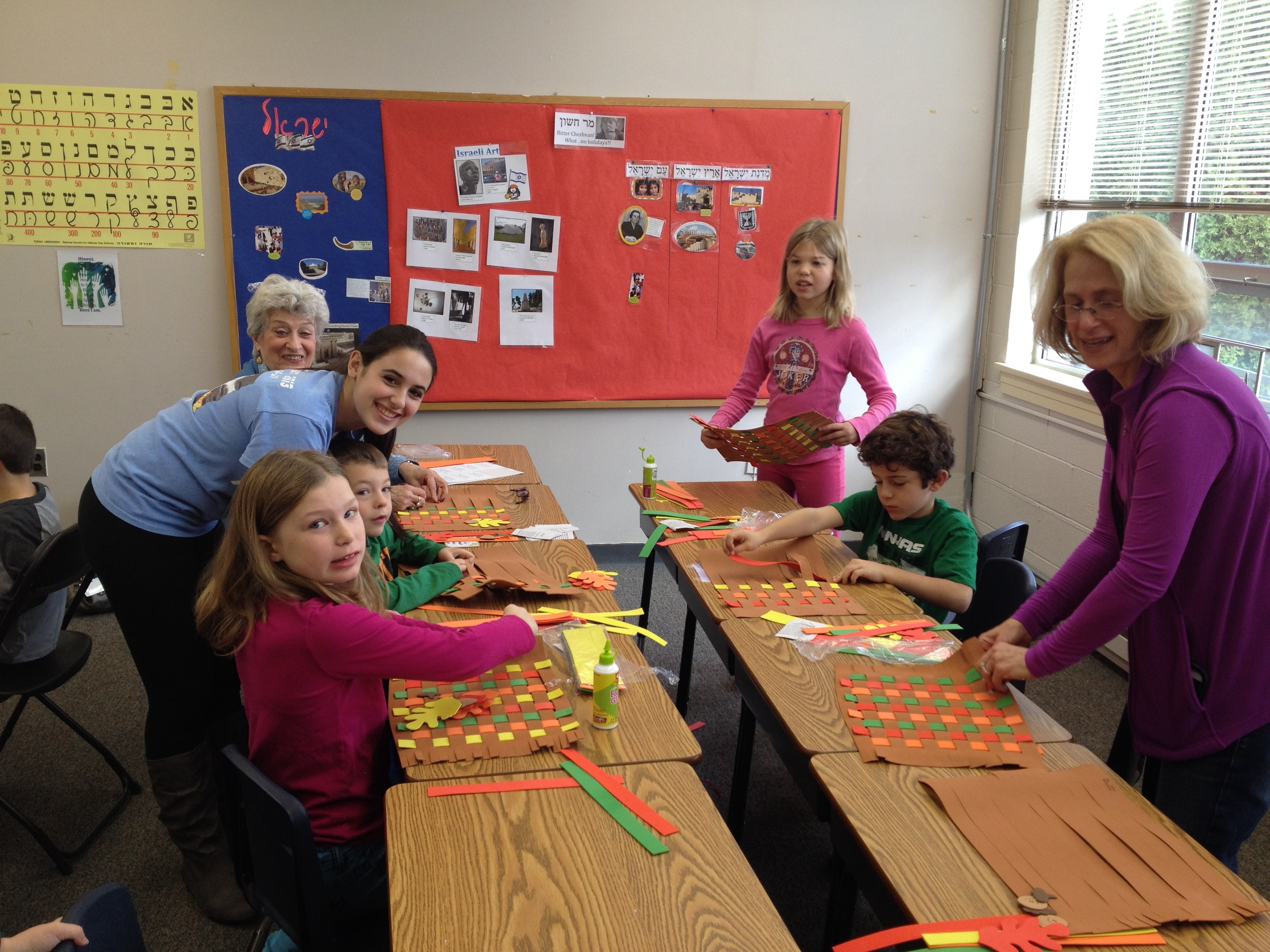

As many of us enter into the joy and contentment of celebrating Thanksgiving, it is important to remember that for many this time offers neither joy nor contentment. What can we do? If we are surrounded by an abundance of blessings, we can give thanks and become blessings to others. If this time of year emphasizes feelings of need and sadness, still we can find ways to give thanks. All of us can show gratitude to God by becoming blessings to each other. We can offer gratitude as a celebration of God’s gifts or as an antidote to despair.
May you be a blessing,
Rabbi Paula Mack Drill
Mitzvah Mission 2014, Day 5 – Israel is real


 Amid such a day of recognizing that Israel is indeed a real country with real problems, our final stop was among our most rewarding. We descended to the southern end of the Western Wall as an egalitarian community. We prayed the mincha (afternoon) service together, adding prayers for our congregation, the State of Israel, and those suffering illness. We sat together among the ancient stones and offered blessings of thanksgiving for the experience we had shared, we shed a few tears, and we offered each other warm embraces.
 Before any of us had departed for the airport, we had already begun planning the mission for 2015. It will be celebrated as a special mission, in light of the fact that it will be our 10th consecutive annual trip. And just in case you wanted to know, the dates are November 15-20, 2015. Wanna come?
Mitzvah Mission 2014, Day 4 – Coming home
As we stood together under a warm morning sun, we contemplated spending the day on the beach; how easy and quiet and careless a day we could have. But when you are home, you don’t ever really escape the demands of the real world. And we are indeed home. There was work to be done.
Our JNF guide described our task of the day in these terms. When you are serving for Israel. you are doing something that extends far beyond your self. You are preserving the capital on an investment for a people, for a story, for a future. So we put on our gloves and got to work. Hard work. A few of us bled from the thorns that cut our skin, some of us perspired through our shirts, and all of us got soil in our shoes. In an area of the Carmel mountains where a fire in 2010 had taken 44 lives and devastated much of the vegetation, we cleared thick brush to create a fire break that would slow the progress of any future fire. (See the before and after!)
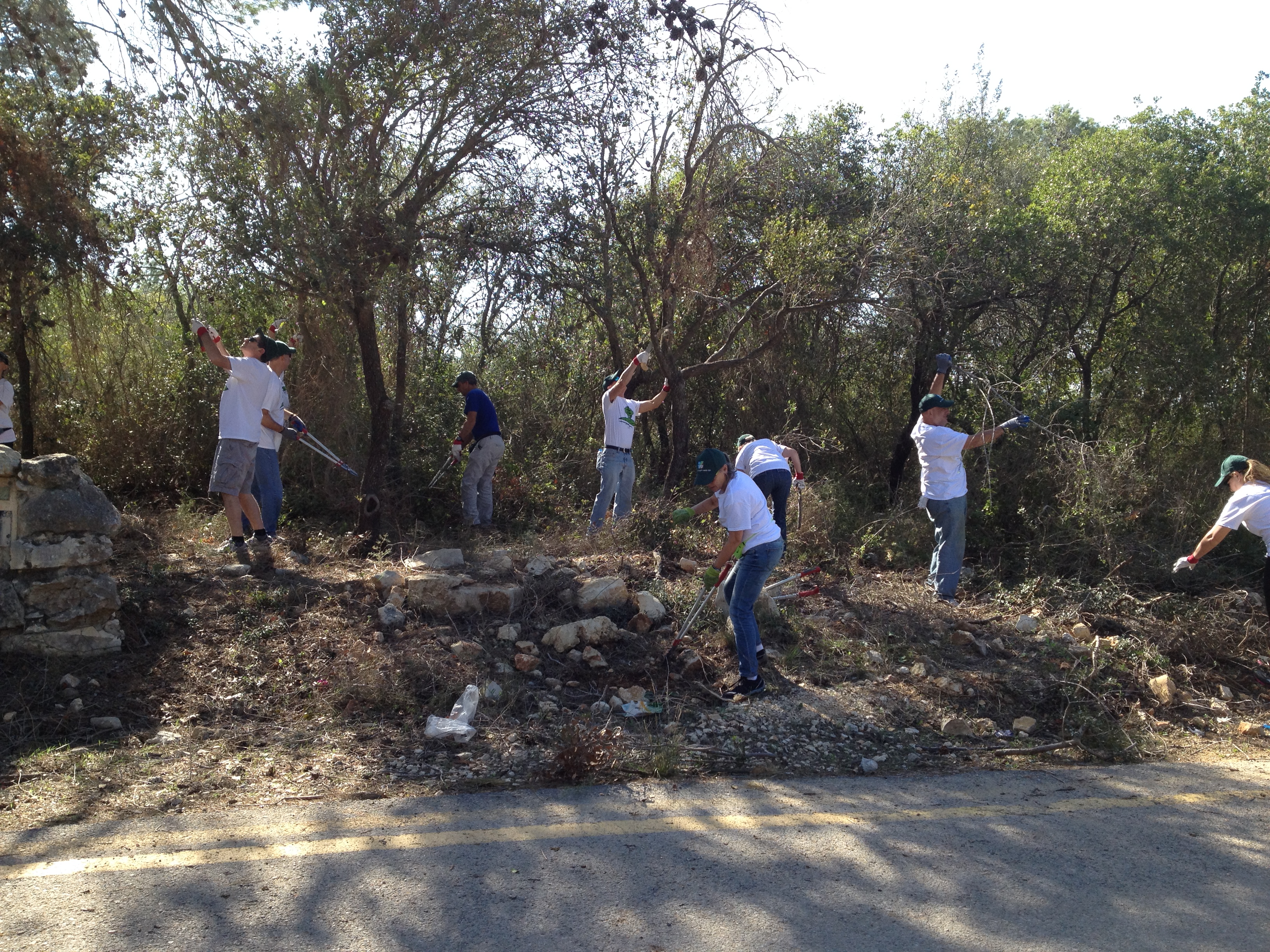

After lunch, we climbed to Jerusalem in song, and arrived at the overlook to the city just as the sun was shedding its last rays on the golden Dome of the Rock. From where we stood, one might have thought that peace in the Holy City had finally been realized. In the quiet moment, we sanctified the experience with a blessing, and recognized the shared commitment and reciprocal inspiration that brought us to this place and time.

We shared dinner in the new “train” station with some friends who joined us for dinner, including Ben Varon, who had just arrived to share the end of our mission with mom Linda, and Bradley Goldman, who is here studying for the year with the Nativ gap year program. One could sense a bit of nostalgia creeping in among the group as the evening came to an end.

It’s never easy leaving home.
Rabbi Craig Scheff
News from Far (Israel) and Near (East Ramapo)
Shalom Chaverim,
The news this morning from Jerusalem was shocking and tragic. As soon as I woke up, I checked the news from Israel as I always do. Reading about a brutal murder of four Jews davenning their morning prayers in their shul, I called my friend Rena in Jerusalem. “What a long, lonely day this has been,” she told me. “I have been alone here in Israel with this news since 7:00 this morning, while all of my loved ones in America were sleeping. Now that morning is arriving in America, I have to go through the story again and again, as you wake up on the East Coast, then my family in the Midwest, and then on to California.”
By now you have read Rabbi Scheff’s blog, so you know that our fellow OJCers on the Volunteer Work Mission are far from Jerusalem, up in the North. They are all safe, but like us, their hearts are broken. Truly, this is the meaning of Am Echad, One People: When one of us is hurt, we are all hurt.
Call your friends and family in Israel today. Tell them that we are thinking of them. We are well aware of the shocking terrorist attacks that have been happening in these last few weeks, and we care deeply about the people of Israel. As my friend Rena said, they are feeling lonely.
Closer to home, last evening the State Appointed Monitor, Hank Greenberg, gave his report to the Chancellery in Albany after months of research into the crisis in the East Ramapo Central School District. As I listened to the live broadcast, I felt both proud of the work that the Rockland Clergy for Social Justice has done and undaunted, knowing how much work lies ahead. You can view an archive of the broadcast for a limited period of time. Copy and paste this link into your browser:
Please consider the dozen volunteers who are spending time at the Early Childhood Center at the Kakiat School. When I go to help in Mrs. Greenwood’s classroom, I experience in my very being the urgency of the issue of the education of the children of our county. Contact Sally Kagan: sallykagan@gmail.com or call 845-290-0085.
With prayers for peace and blessings, Rabbi Paula Mack Drill
Mitzvah Mission 2014 Day 3
There is a sense of safety that we feel being in the land of Israel. It is so hard to explain logically, especially given the terrible massacre at Har Nof this morning. With the ocean to our west, we faced Jerusalem to daven the morning service, wrapped by the swirling breeze off the Mediterranean.
 There are many troubling aspects about this morning’s terror attack, from the timing to the place, the setting, and the methods. Of particular concern to the Israelis we encountered throughout the day is the fact that this attack did not occur in some West Bank town. The quiet neighborhood in the far west of Jerusalem represents every person’s neighborhood. The synagogue at the time of prayer represents the most secure of hours. That sense of tranquility and security was shattered this morning, and the reverberations were felt throughout the day.
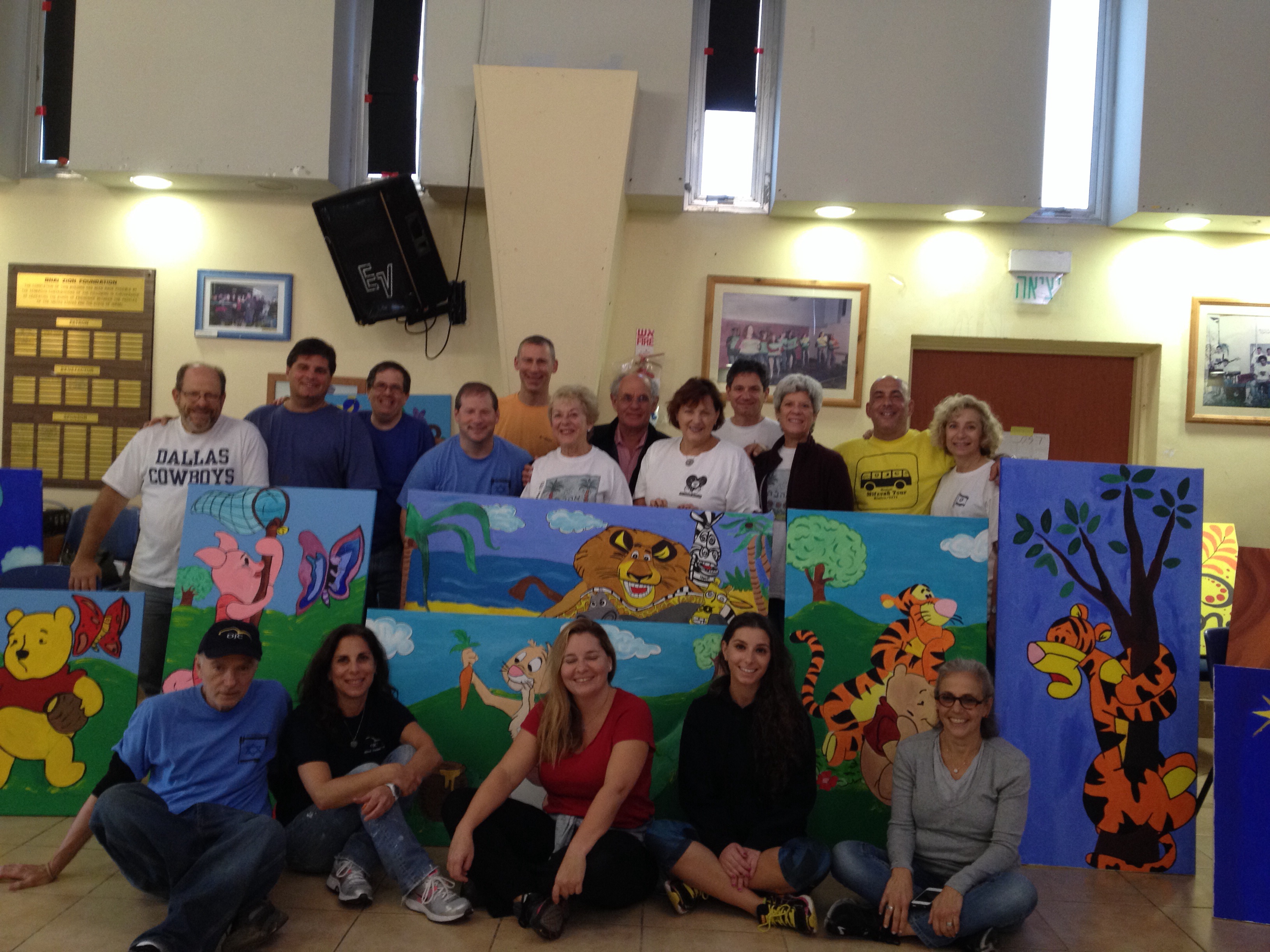
 Like everyone else, we threw ourselves into our work. As we painted, we sang Al kol eileh (“For the bitter and the sweet”), so appropriate for the mixed emotions we were experiencing. Surrounded by children scarred by their abusive homes and a society scarred by the abuse of her neighbors, we recommitted ourselves to creating something remarkable through which our impact would be felt. (Okay, some of us worked, and others of us directed!)

We wrapped up our work and admired the gallery of work that will adorn the walls of the children we served.
After an emotional goodbye with Yoav, Ahava’s executive director, we visited the Technion (Israel’s Institute of Technology), Israel’s first institute of higher learning founded in 1912. Danny Shapiro, Director of Public Affairs and a longtime friend of our own Aram Schwartz, presented us with a history of the institute. The Technion, in its first century, has responded to each of Israel’s needs, ranging from the development of its infrastructure to the development of the Iron Dome. It represents the bright, optimistic, hopeful side of Israel as a producer and exporter of creativity, self-reliance, medical and technological advancement.
Tonight, as I write this blog, the sounds of a public singalong could be heard in the hotel lobby, reminding us all that this is Israel. We sing, we celebrate life, and we awaken to each day with a sense of purpose. Tonight, we all feel safe.
Laila tov,
Rabbi Craig Scheff
 Three Rabbis Walk Into A Shul
Recent Comments