Thoughts on Joy: Moadim l’Simcha
The first two holy days of Passover came to an end last night and with the holy days, so went my children. As we made Havdalah, Josh left for the airport to return to Israel and his IDF unit. Noah returned to Maryland, Ben to college finals, and soon Sarah and Sagi will return to Israel as well. Moadim l’simcha, we say, may these middle days of Passover be filled with joy. Forgive me if my joy feels a bit diminished.
And I really mean: Forgive me. I have so many reasons to be filled with an abundance of joy. Like Elijah’s cup at the seder, the joy should be flowing over the top of the cup.
All four of my children became “all five of my children” this year as we added Sagi, a son by marriage to our ranks. On the Sunday before Passover, our daughter Sarah and Sagi stood under the chuppah with Rabbi Craig Scheff officiating. For anyone who might have been second guessing attendance at a simcha on the last really great cleaning/preparation day before Pesach, Rabbi Scheff told us that celebrating the wedding was exactly the kind of Passover preparation we should be doing. The ruach of the wedding was an experience of simcha that no one in our families will ever forget, pouring joy into my cup.

My own preparations for Pesach were put into perspective with absolute clarity. I could not have angst and agita because there was simply no time. On Monday we were serving bagels to thirty out of town guests. On Friday, we were sitting down to our family seder. The lived-understanding that my best was good enough and that the seder is meant to be completely a time of rejoicing freed me from years of self-imposed rigor.

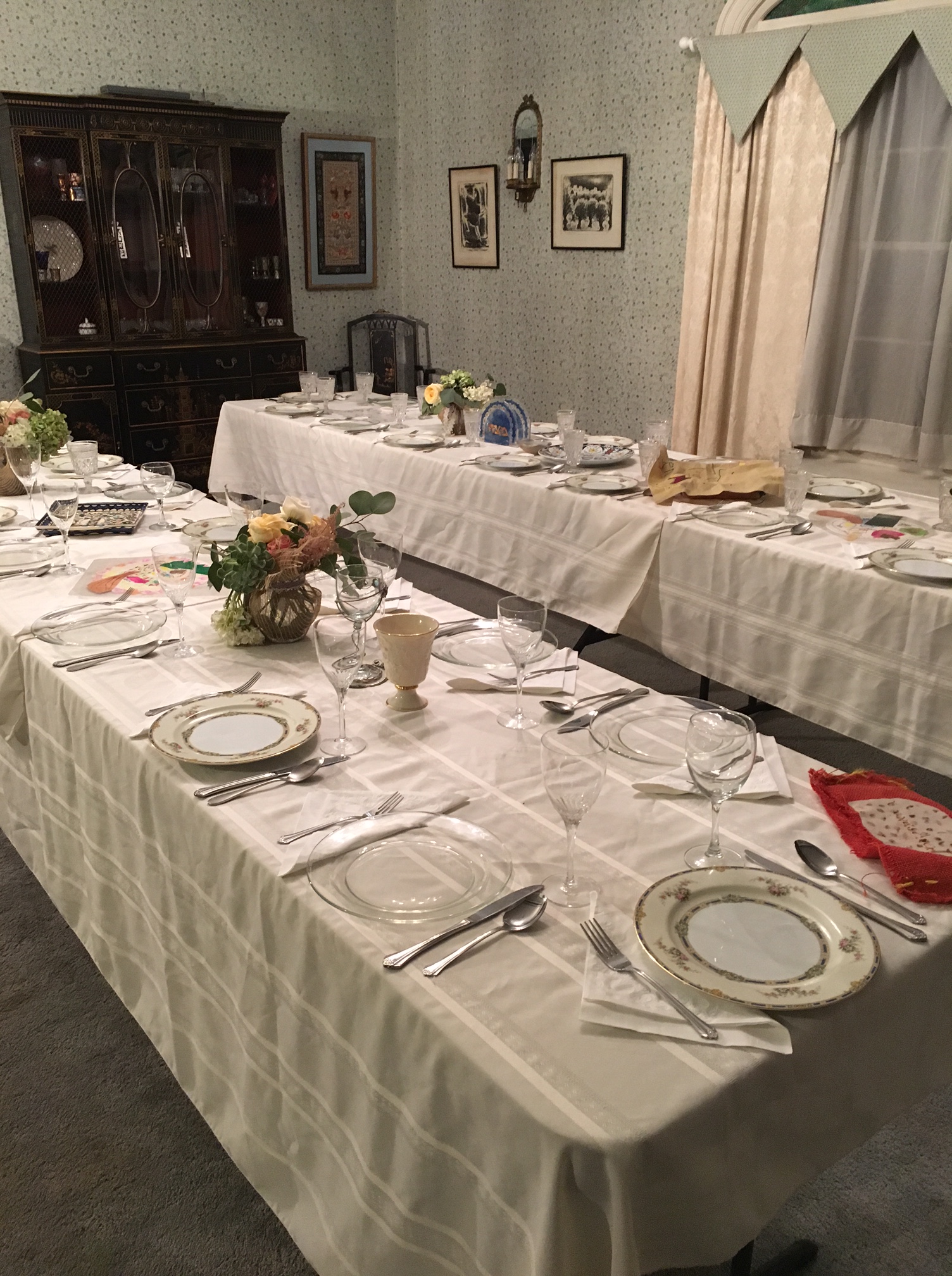
I have taught for years that we don’t need to be tortured in our Passover preparations. This year I walked my talk. The sense of freedom of the seder was another level of simcha poured into my cup.
It was a blessing to celebrate the first two days of Passover with such an abundance of old and new family, a blessing that I don’t take for granted.
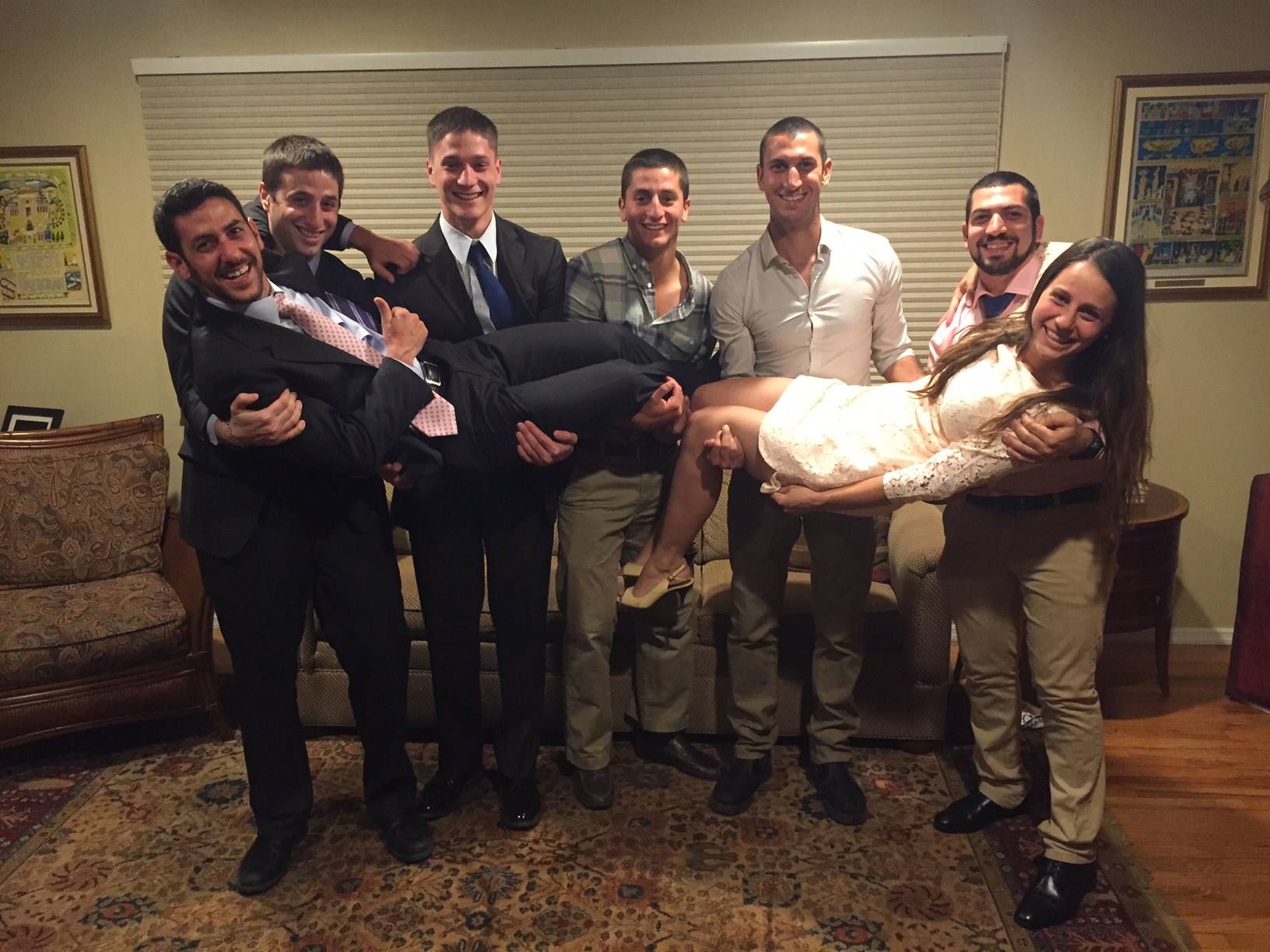
Two wonderful seders, sunny days, lunches of matza lasagna with friends, long walks with my new machatenasta (Yiddish for mother of my son-in-law) enhanced the beauty of the chag. The sense of quiet contentment is another kind of simcha to add to my cup.
Still, as the holy day ended last night and the middle days of Pesach began, I felt the diminishment of my joy as one by one, the Drill children and members of the Fainshtain family started peeling away, leaving us with great memories and (forgive me) matzah crumbs. But here is where Jewish ritual came to the rescue, reminding me that given a choice between feelings of loss and feelings of gratitude, I can choose gratitude.
Last night we counted the second day of the Omer. As we continue on the calendar arc from Passover to Shavuot, from redemption to revelation, we count up, not down. Each day toward the holiday of Shavuot reminds us that we choose to make every day one of meaning, to make every day count. I can let go of the lessons learned about simcha or I can hold fast to joy by being grateful. Forgive me If I choose joy!
Moadim l’simcha! Rabbi Paula Mack Drill
Choosing Not to Listen
18,000 of us converged on Washington for three days: Jews of every stream, nationality and political persuasion; Jews who are high school kids, college students, Holocaust survivors, rabbis. Also gathering were delegates who are Hispanic, people of color, Evangelical Christians, main line Christians, politicians. We came to AIPAC’s Policy Conference because all of us are supporters of the Israel–America alliance.
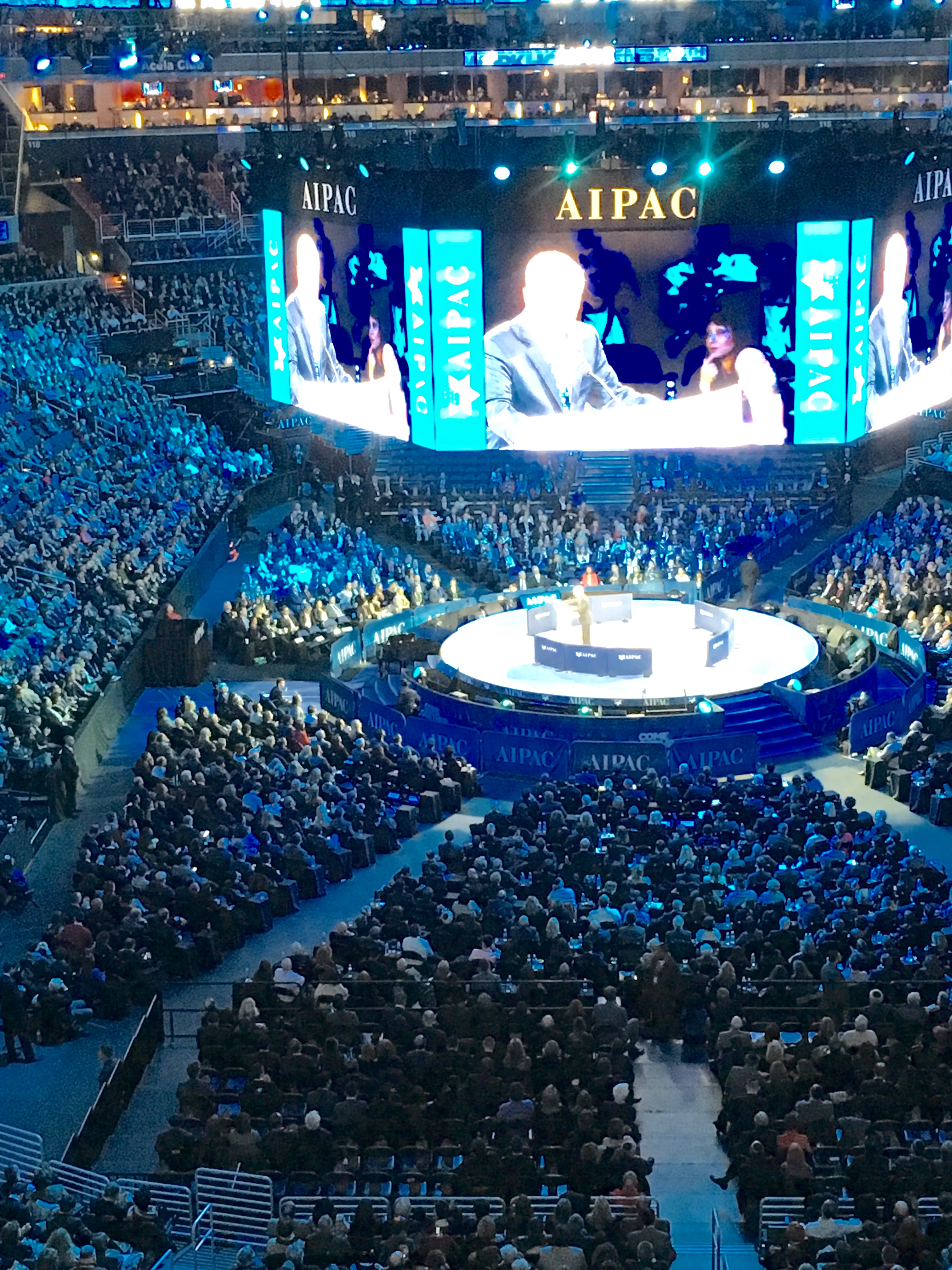
Imagine it: 18,000 filling the hallways and meeting rooms of the Washington Convention Center. 18,000 dramatically filling the arena of the Verizon Center to hear Vice President Biden, Israel’s Prime Minister Bibi Netanyahu, and most of the candidates currently running for president.
The person sitting next to me in a session about the refugee crisis in the Middle East may not have agreed with me about most things, but we are both similarly committed to Israel’s right to exist as a free, secure, Democratic nation. The people on either side of me during the campaign speeches may be voting differently than me, but we all agree on the necessity of friendship between Israel and America. The rabbis at my table listening to Natan Sharansky speak about the rise of anti-Semitism and the insidiousness of BDS may have different politics from mine, but we all agree that Israel is as necessary to American security as America is to Israel’s.
As always at AIPAC events, I listened to thinkers and politicians from the left and the right. Stav Shafir, Member of Knesset and one of the founders of the Israeli social justice protest (Mechaat Tzedek Hevrati), shared her idealistic vision for a progressive and optimistic future for Israel.

Author of My Promised Land, Ari Shavit criticized the current government in Israel, saying that Religious Zionists are endangering our home and Ultra-Orthodox Jews are endangering our religion. From the other side of ideology, Pulitzer Prize winner Bret Stephens shared his vision of security for Israel. Writer for The Atlantic, Jeffrey Goldberg, discussed his critique of the Obama administration’s Middle East policy.
The voices were a cacophony of harmonious disagreement. For me, this fact is the power of AIPAC.
As delegates, we listen respectfully to learn about a variety of perspectives and make up our own minds. Learning from the diversity of thought at AIPAC has enhanced my understanding of one of the most complicated situations in our world today. Over time, I have definitely changed my mind about certain things. But never have I wavered from the belief that when Israel and America are strong, the world is more stable.
This year for the first time in nine AIPAC Policy Conferences, I chose NOT to listen to one of AIPAC’s guests. I did not stage a protest or a walkout. Together with Rabbi Scheff, our intern Paula Rose, and fifty other rabbis, I chose to study Torah rather than to be in the arena when Donald Trump spoke. We gathered in a restaurant inside the center to hear words of Torah and sing Olam Chesed Yibaneh, (with loving kindness the world is built).

I do not judge the choices that others made with regard to Mr. Trump’s speech. Some walked out but did not gather with others, other delegates stayed in to listen to his words. Some maintained silence and others clapped politely. Some clapped enthusiastically. I acted according to my own conscience and not in anyone else’s name. I acted, but not in order to judge others.
I understood from the outset that AIPAC’s mission requires all presidential candidates to be invited and I support the invitation to Mr. Trump among all of the presidential candidates. But I could not in good conscience listen to a person whose rhetoric has been anchored in racism, Islamophobia, xenophobia, misogyny and calls to violence. Judaism’s most fundamental value teaches us that all people are worthy of respect because we are created in God’s image. As a rabbi and as a Jew, I felt a moral obligation NOT to listen, to refrain from lending legitimacy to a candidate for the highest office in America who engages in hateful speech.
Over my 10 years of participation in AIPAC, I have been taught to welcome all speakers with dignity and respect. No one boos or heckles a guest of AIPAC. We clap if we agree and we are quiet if we disagree. I have listened to policy with which I agreed and sharply disagreed. I have always listened. At Policy Conference 2016 I chose not to listen.
In so doing, I pray that my fellow rabbis and I made space for words of loving kindness.
I pray that words of loving kindness will disarm words of recrimination and anger flying on social media regarding AIPAC, Donald Trump, Israel’s supporters and her detractors as well.
Today is a fast day, Ta’anit Esther, commemorating Queen Esther’s request of the Persian Jewish community to join in solidarity with her as she faced the challenge of her lifetime. I dedicate my fast to similar solidarity of the Jewish community. Too much is at stake for us to stand apart in judgment of each other.
Rabbi Paula Mack Drill
Reflecting on a Month of Awareness and Inclusion
As February draws to a close, it is time to look back to consider the Orangetown Jewish Center’s commemoration of Jewish Disabilities Awareness and Inclusion Month #JDAIM.
By the end of the month, we will have posted seven spotlights of congregants who have eloquently reflected on lives impacted by disabilities. Rabbi Scheff and I have blogged, taught and reflected in our classes on Jewish values with respect to people who have disabilities. Tonight, congregants will join with our Education Director, Sandy Borowsky, to view and discuss the important film “How Hard Can This Be.”
This coming Shabbat, February 26 and 27 will be dedicated to Disability Awareness as fellow congregant Scott Salmon speaks on Friday evening at 7:00 services. His topic is “Ask Me: the Challenges of Inclusion.” On Shabbat morning, Rabbi Scheff’s sermon will be dedicated to the topic of awareness and inclusion. After kiddush, I will be facilitating a text study tracing Jewish attitudes toward people who are Deaf or hearing impaired from the Torah through Rabbinic texts, leading up to the 2011 watershed Responsa of the Committee on Jewish Law and Standards which grants full obligation and rights to Deaf people and which affirms that ASL is a language by which people can fulfill mitzvot.
At the OJC, we have much of which we can be proud. The month of February and #JDAIM, however, will only prove its lasting value if we reflect carefully on what we have learned and continue to strive toward being an ever more inclusive community.
I offer here the lessons that I have learned and look forward to your adding more to my list:
1. “Persons with a Disability” is not a useful catch-all phrase. People are first and foremost people. To paraphrase a powerful idea of the autism advocacy movement, if you know one person who has a disability . . . you know one person who has a disability. We cannot unilaterally provide services “to the disabled” as there is simply no such thing.
2. Along the spectrum of people and their families whose lives are affected by disability, there are those at one end who never identify themselves or their loved ones according to disability. They go about their lives without regard to hearing loss or the inability to walk. At the other end of the spectrum are those whose identity or whose family is subsumed by the insurmountable challenges of disability. I often think of one congregant who said to me, “We can never see a flier of an OJC activity and make plans to go and enjoy. We always must ask ourselves first, ‘What about our child? Will she be able to handle the program? And our answer is usually no. So then we ask ourselves which one of the parents will stay home.'”
3. We owe gratitude to the congregants who opened up their lives to us through their beautiful words in our spotlights. Sharing vulnerability requires courage and strength. (If you would like to write next year, let Rabbi Scheff or me know. If you do not receive emails from the OJC, you can find all of the spotlights on our Facebook page, Orangetown Jewish Center.)
4. Creating circles of inclusion is hard work. It requires the very best of ourselves. It requires us to take risks and step out of our own circles of comfort. But one thing is certain after a month of awareness: We have created a community of safety and thoughtfulness where anything is possible!
Here’s to making February all year long! B’yedidut,
Rabbi Paula Mack Drill
Deep Listening
Join me now to consider four possible levels of conversation: Conform, Confront, Connect, and Co-Create as taught by Dr. Otto Scharmer, Senior Lecturer at MIT and co-founder of the Presencing Institute. https://www.presencing.com/
This past week, I spent two days continuing my work of visioning a new identity for the Rabbinical Assembly, the professional organization of Conservative Rabbis worldwide. We were challenged by Liz Alperin Solms and Marie McCormick, our change project facilitators, www.insytepartners.com, to understand and experience deep levels of productive conversation.


Our work over the past year has been anchored in a passion to re-envision a new path for the RA, ensuring a vital and vibrant future for Conservative Judaism.
Over the past year, I have been part of this exciting Vision Team of fifty rabbis representing a variety of years of experience and professional paths.


Throughout the work, I have been sensitive to the fact that the change work we are doing for the RA is translatable to our OJC community. I share with you now the ideas of deep conversations so that we can apply them to our synagogue life.
At the first level of conversation, Conforming, we talk “nice,” speaking to try and provide what the other person wants to hear. We use polite routines and empty phrases to conform to expectation. “Yes, of course, what you care about is important to me.” “No, of course, I don’t think that you are being difficult – I am glad to hear your thoughts.” “Sure, that’s just fine with me.”
Next, Confronting. We talk tough. We speak from an unshakable position of our own beliefs and understandings. Because we are our point of view, we become defensive. In these conversations, I am right and therefore you are not.
At the third level, Connecting, our conversations are reflective inquiries. Now I speak from a place where I see myself as part of the whole. I might still think differently from you, but now I want to know why. Rather than defend my position, I want to connect with you and come to understand your viewpoint. “I may not agree but I hope that you will tell me more about that.” “I have never thought about the issue in that way before.”
Finally, Co-Create is the fourth level. At this deep level of experience, conversation is a generative flow. I understand my place as being part of a collective, I practice stillness and experience the flow. This final level of conversation leads to collective creativity. In co-creating conversations, we might feel that something extraordinary has entered the space.
When I learned about collective creativity, I suddenly saw that our Rabbis of Tradition understood generative flow. Talmud teaches that when two people sit together to study Torah, the Shekhina, the nurturing aspect of God, rests upon their shoulders. The students of Torah lose their sense of separateness in the connection through Torah.
Our project facilitators explained that most conversations in our lives happen at one of the first two levels, and indeed, both are necessary to live successfully in the world. Sometimes we have to just be polite. Sometimes we just have to say what we really think and stand by it.
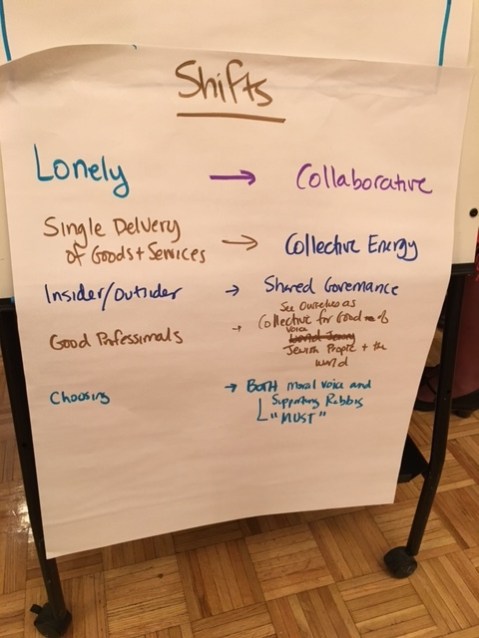
But if we want something to change and grow, we must dig deeper in our conversations. If we want our synagogue to prosper and thrive in adaptive and exciting ways, we must practice conversations at the third or even fourth level.
Scharmer’s theory about conversations for change feels very Jewish to me. To succeed as a community, we must let go of the inclination to begin every conversation from our own point of view. For success, we must say: I am part of something bigger than myself: this synagogue, this history, this particular people, this covenant with God. To fully participate in such a collective endeavor, I must listen carefully for clues about what you think and remain open to the possibility that my thinking is not enough. Together, we are stronger, wiser and more creative.
I look forward to continuing the conversation,
Rabbi Paula Mack Drill
A Light in the Window in East Ramapo
“I don’t just wish there were solutions, I believe that there are solutions to the problems in this district,” Dr. Deborah Wortham, Interim Superintendent of the East Ramapo Central School District insists. She explains how she is building a team and finding solutions despite the enormity of the issues and roadblocks in her path.

She is greeting children in their schools every day and working on recognizing the strengths in the administrators and teachers. Every day she sends out a message of empowerment to every classroom in every school in the district. Building collaboration between the community, the schools and the families and their children is her goal. She says that a community is as strong as the education of its children, and she is working to ensure that the children receive the constitutionally guaranteed education they deserve. Dr. Wortham told us that she cannot start with one task and then move on to the next. The needs of the district require a full court press. And indeed she seems to be doing so during very, very long days. Even a hint of what she does in a day makes me feel dizzy.
Dr. Deborah Wortham sees her task as the Interim Superintendent as healing a broken district so that the East Ramapo Central School District can become a creative school system that leaves a legacy of greatness.
How does she do it? I watched her teach, acknowledge and cheer at a School Board Meeting that Rabbi Scheff, Deb Roth and I attended in November. I was amazed by her unflagging energy, but I did not understand the source of her drive.
The source of her strength, however, became clear to me after sitting next to her for a two and a half hour meeting with the Rockland Clergy for Social Justice.

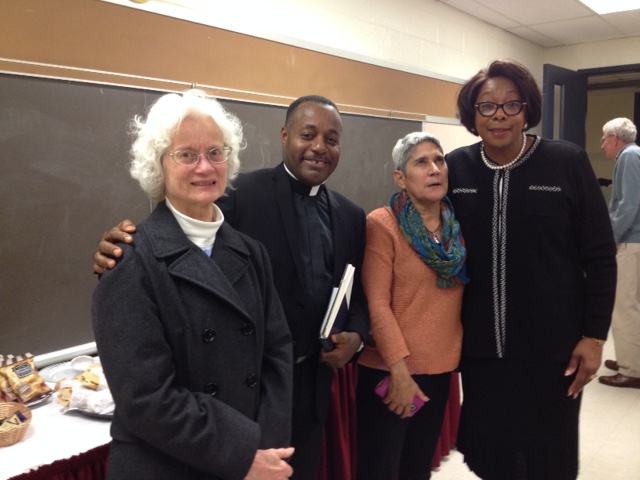
Dr. Wortham did not take a difficult position as Interim Superintendent because she wanted to leave her old job or was ready for a big challenge. She came to East Ramapo because she feels called by God to do this work, this daunting and seemingly impossible work. She told us that she makes no apology for her deep faith and close relationship with God. Her mission is to be what she calls an Educational Evangelist. I wanted to stand up and cheer when she described herself in that way. Dr. Wortham is fearless because she is using her blessings and gifts for the benefit of those who need them. For the four weeks during which she has been in her position, she told us, she has been filled with the grace of doing the work that God expects of her.
She listened to our concerns and responded to our questions, dedicating precious time to clergy leaders because she believes that the community must work together to heal and to repair.
On Sunday night, we will light the first candle of Chanukah, placing our menorahs in our windows to publicize the miracle.
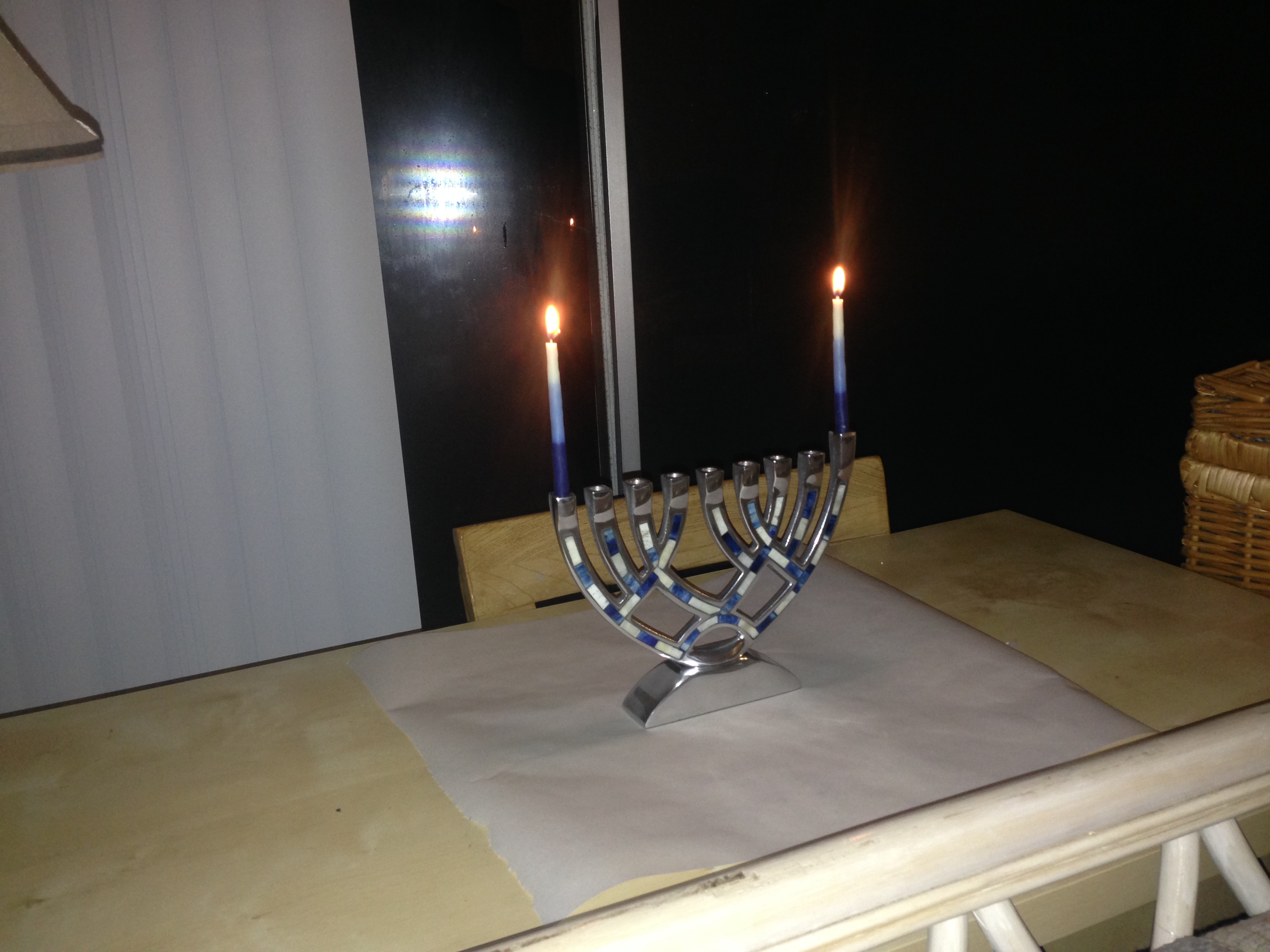
During the darkest time of the year when the days are short and the night feels endless, we cast our light outward to cheer and enlighten others. Dr. Deborah Wortham, it seems to me, is like one of those lights in the window. I pray that her energy and optimism stay with her as she continues on her mission of healing and education.

What can we do? We can continue the work of supporting and advocating for the children of ERCSD. We still need a full time monitor with veto power in the District. We still need a long range plan to overhaul governance in the District. And we can all roll up our sleeves and give time to the children of the schools.
To become a DOVE, a volunteer from OJC who helps teachers in the Early Childhood Center at Kakiat Elementary School, contact sallykagan@gmail.com. If you are able to organize congregants and friends who would serve as mentors to high school seniors in the District, contact me.
Happy Chanukah! Let your light shine!
Rabbi Paula Mack Drill
The Only Woman at the Table
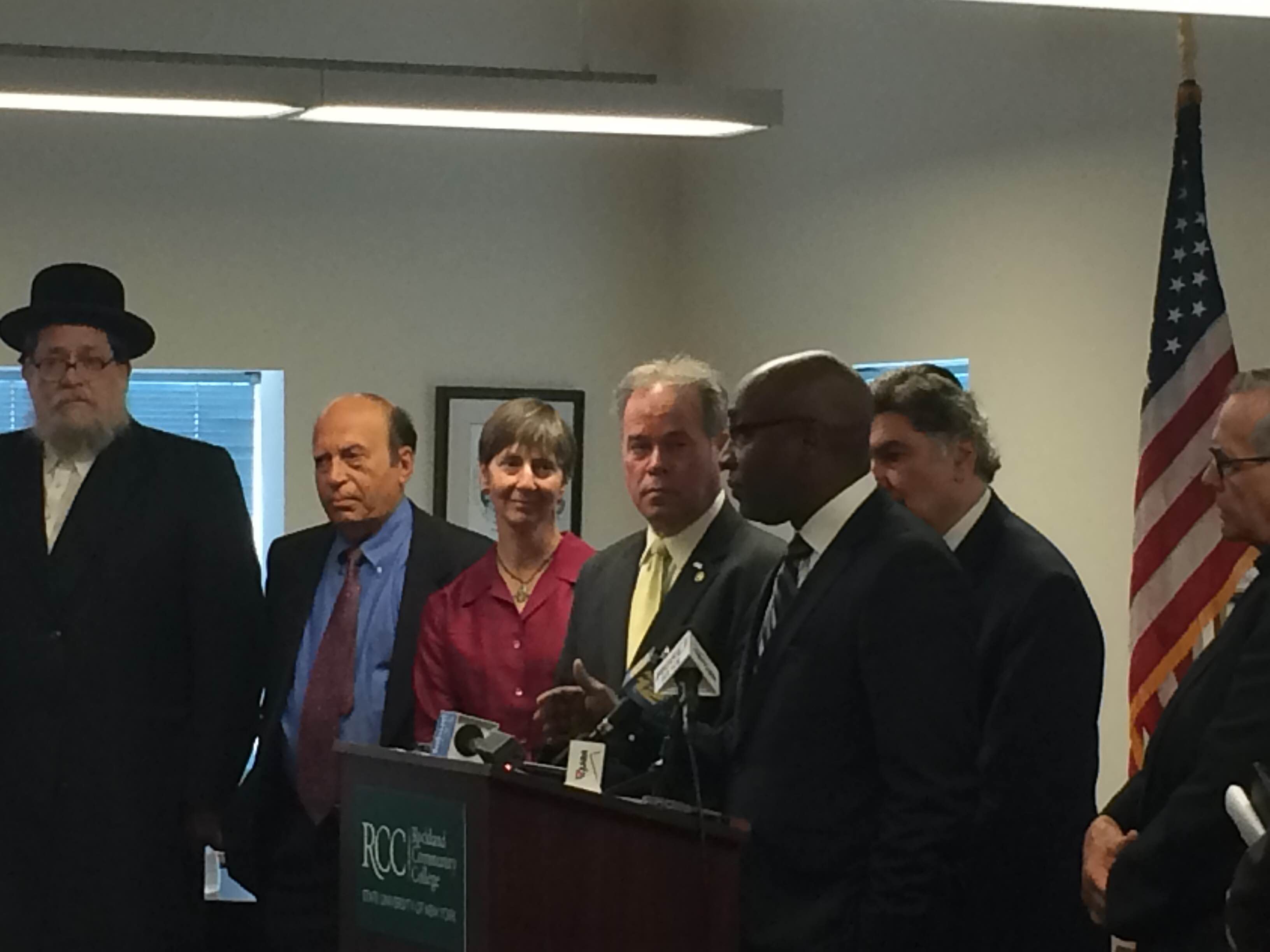
His seat was directly across the table from me. He called me Rabbi Drill, but he did not look directly at me. I know that calling me “Rabbi” was a concession he made for me and he knew that my understanding of his lack of eye contact was a compromise I accepted from him. Rabbi Mayer Schiller represented the Skver community in the Village of New Square and I represented a very different religious world. We were two of twelve religious leaders from Rockland County and New York City who gathered at the invitation of Rockland County Executive, Ed Day. Everyone around the table accommodated each other so that we could meet in the middle, in a place where we could listen to each other and truly feel heard.
When I was invited to the two hour summit that took place at Rockland Community College President’s Office yesterday, the meeting was described as an opportunity to sit down to open lines of communication between various religious groups of Rockland County. I accepted with the hope that a process of healing and reconciliation could begin.
But I arrived with low expectations. I knew that leaders of Rockland Clergy for Social Justice, of NAACP and of parent groups in East Ramapo have tried to meet with members of the Ultra-Orthodox community for open dialogue. I knew that these attempts had not been successful. I wondered what could possibly be different.
And here is what was different: Mr. Day invited religious leaders from Spring Valley and Suffern churches, the Islamic Center of Rockland, the Board of Rabbis (Conservative and Reform colleagues) and the Orthodox Jewish and Chassidic communities. Mr. Day told us that he is working to make Rockland County a place where we can live next to each other with respect and cooperation, with fair treatment for all and special privilege for none. He asked us to speak our truth and established an atmosphere of safety. Rabbi Joseph Potasnik, Executive Vice President of the New York Board of Rabbis, was invited as our facilitator. He established the tenor of the meeting when he said that it is better to discuss without resolution rather than resolve without discussion.
Two powerful pictures of broken community emerged from our conversation that struck powerful chords with me. First, Rockland County was compared to a ride on a New York City subway. We get on and get off at different stations, and while we share the space, no one makes eye contact or greets the other. We are as close as can be, but we pretend that the others are not there at all, sharing a bench or even hanging onto the same subway strap. Such travel through our days may be adaptive for New York City’s underground (though I would disagree) but it is not the way to be a cohesive county where all citizens have a profound sense of belonging.
The second description was shared by Reverend Raymond C. Caliman of the Fairmont Baptist Church in Haverstraw. He described a visit to Walmart in Suffern. People pass each other as they shop, but no one looks at the other. Instead, they look away. He said that the turning away speaks volumes about distrust and a refusal to know the “other”.
We spoke honestly and with open hearts from the anchor of our various religious traditions. Reverend Dr. Weldon McWilliams Jr. of the First Baptist Church of Spring Valley reminded us that we are all God’s children. Rabbi Schiller acknowledged that members of the Chassidic community must be taught that all people are created in God’s image. We talked about the need for a balance of power and empathy.
We explored next steps which include Rabbi Greenwald and Rabbi Schiller bringing members of their communities to the table, a statement of principles to which religious leaders can sign on, and a confederation of religious leaders who can stand together to condemn actions of bias against any group in the county as well as to celebrate positive steps forward.
It was only a beginning. But I feel optimistic. I felt heard. And Rabbi Schiller called me Rabbi.
http://www.fios1news.com/lowerhudsonvalley/first-interfaith-summit%20#.VVTTq7FsJTY
http://www.fios1news.com/lowerhudsonvalley/andrew-whitman-weighs-in%20#.VVSkO9m9K0c
With optimism and friendship, Rabbi Paula Mack Drill
Loving Henry; Losing Henry
He always said, “Come visit me when my eyes are open, not after they are closed.” And I did. Over the years, Henry and I did a lot of visiting. I take comfort from the knowledge that he and I had quite a friendship, and that I followed his advice to visit him when I could. Still, despite his admonition, it was difficult to miss the funeral of one of the greats who helped to lay the foundation of today’s OJC.
Like so many of you, I have many memories of Henry. There were lunches at the diner, a shared mission to Israel, wisecracks on Shabbat, and heart-to-heart talks that went on much too long. Like so many of you, I thought that I was the one who was most special to him. Henry made us feel like that.
One snapshot out of time will stay with me as a cherished memory. Henry shared a chapter of his life story with me one afternoon after his Yiddish club met. He showed me photographs of himself and his brothers as young boys, arriving in the United States, to be reunited eventually with their father after being raised by their mother all alone.

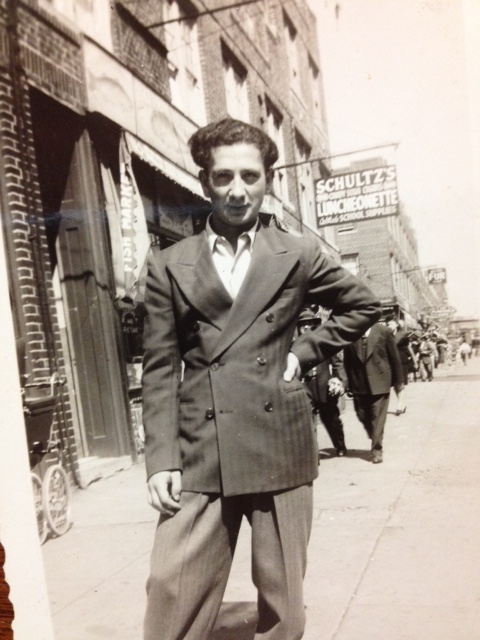
As he told me his story, between the lines, I heard the midrash of a boy who had felt abandoned and lost in a new country. Because of his childhood experiences, in his unique way, Henry dedicated his life to make sure that everyone around him felt included.
Rabbi Scheff told me about the broad spectrum of OJC congregants who came to pay respects to Henry at his funeral. It is not surprising to know that cronies from the Wednesday night poker game and from the kiddush club were there. It is not surprising that presidents and board members of the synagogue were there to pay honor to the man who always had plentiful suggestions. It is not surprising that Rabbi Scheff acknowledged that he was officiating at a funeral of someone who felt to him like a grandfather. Rabbi Scheff credits Henry with bringing him to OJC in the first place, and for giving him a vision of what a synagogue community could be. What might be surprising to someone who did not know Henry well, is the large number of young people who came to say goodbye to the man who had acted as a surrogate grandfather. His granddaughter Mara shared with mixed emotions that she always knew she had to share her grandfather with all the kids at the OJC.
In our synagogue community, there was no one who made him prouder than Mara. When she read Torah, led Shabbat morning services, or sang in the high holiday choir, Henry would beam. (Often he’d find me to whisper conspiratorially, “Did you know that they let girls lead services here?!”)
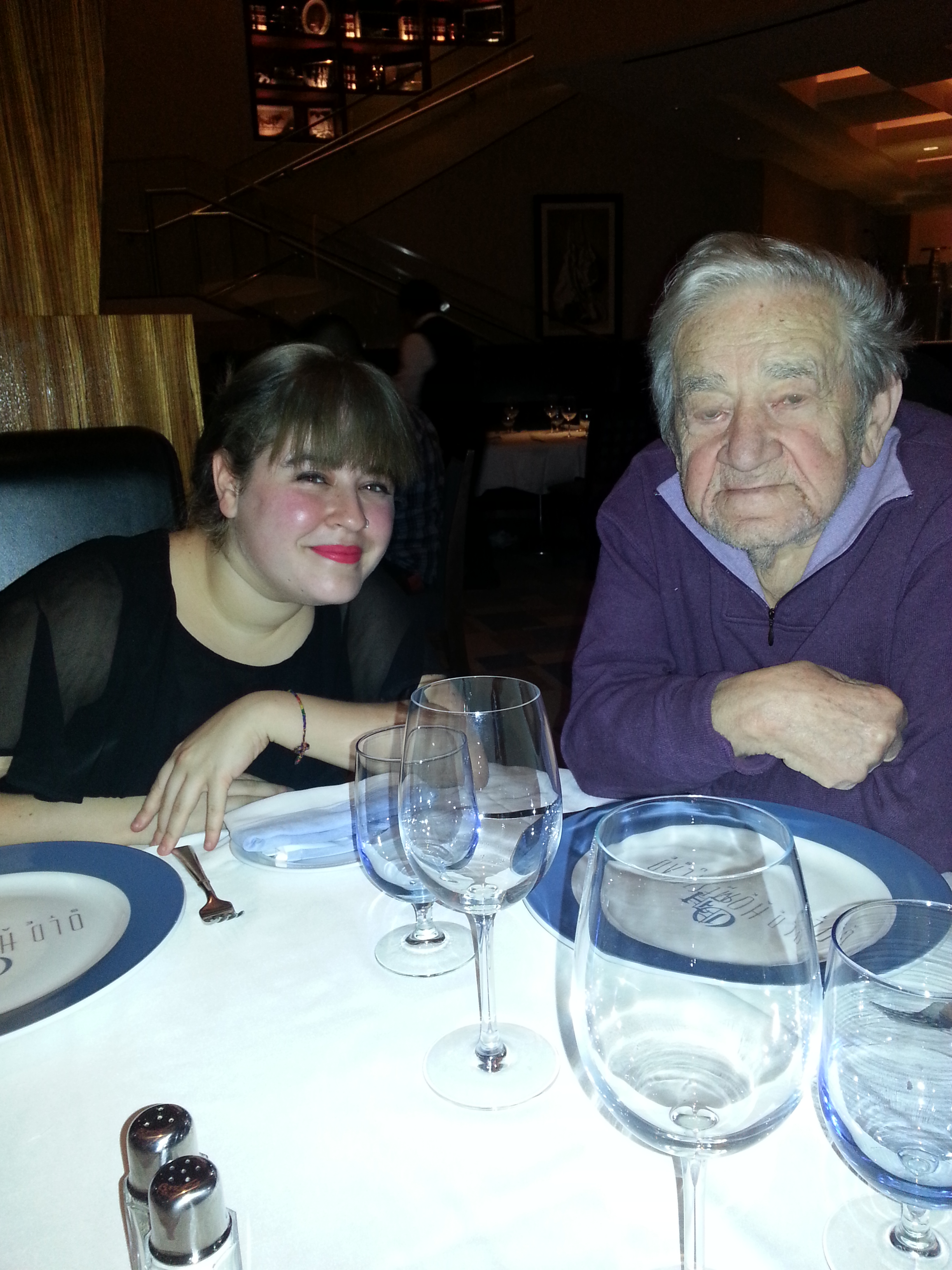
Many of us cry every year on the first night of Rosh HaShana when Mara sings She-hechiyanu. Part of the reason is the simple beauty of her voice. Part of it is the profundity of the words. But I am sure that much of it has always been anticipatory grief. We have known all along that we would not have Henry forever to be listening to his granddaughter praising God’s kindness for allowing us to reach another season. When we reach the next season, we’ll remember Henry and who he was to each one of us. We will thank God for another season and we will honor Henry’s memory as we listen to Mara chant She-hechiyanu.
May his memory be for a blessing. Rabbi Paula Mack Drill
Festival of the Daughters

What is a group of women doing in someone’s living room one night each month, introducing themselves with their matriarchal line and passing a candle from one to the next? We are celebrating Rosh Chodesh, the Jewish new month, a time designated by the rabbis as a festival for women. Rosh Chodesh Celebrations began this year to bring together women who are raising children at home for evenings of study, sharing and celebrating.
Each month our gatherings have been uplifting and meaningful. Through tears and laughter these women have found support and understanding in a close circle of OJC congregants, luxuriating in the gift of time dedicated to self and community.
Last night was a special Rosh Chodesh celebration as the group of younger moms met together with Sisters in Spirit, a group of OJC women whose nests are empty facilitated each month by Sally Kagan and Miriam Suchoff.
Rosh Chodesh Tevet is unique as it falls in the middle of a holiday, on the seventh night of Chanukah each year. Among the Jewish communities of North Africa, this auspicious night was designated as the Festival of the Daughters — a time for the generations to celebrate together. And so that is what the two Rosh Chodesh groups of the Orangetown Jewish Center did last night: we brought the generations together to celebrate.
One of the Rosh Chodesh Celebrations participants wrote about how much she enjoyed the special evening, “I always look to learn from the older, wiser and more experienced women (and men) in the world and often say that those sage people (like my dad) are hard to find these days. Their simple advice is so enlightening and comforting.”

Together we lit the chanukiah and immediately felt the magic begin.


After our opening ritual, Sally told the story of brave and wise Judith who saved the Jews who were under siege by the evil Holofernes. Sally’s storytelling technique was engaging and fun; you’ll have to ask her for a synopsis, but be sure to ask what she pulled out of her basket at the end of the story!
We used the lighting of seven candles to open us to seven questions about women we admire, blessings we would bestow on daughters, our own gifts to family, and more.

There were tears and words of support and much laughter. We concluded the evening with each woman offering a blessing to the woman to her right.


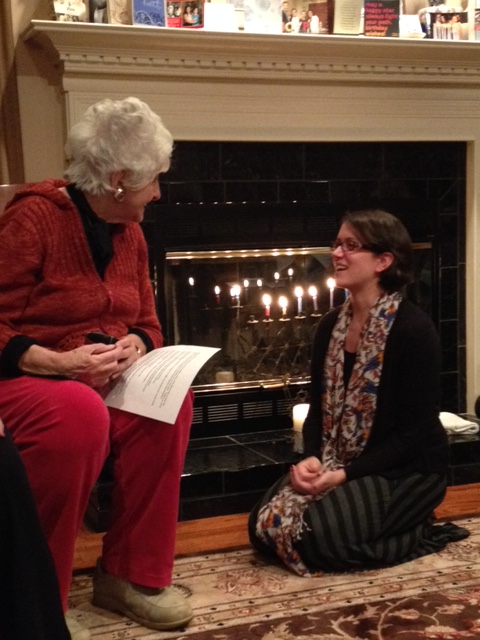
Without a doubt, there is magic in a Rosh Chodesh group. A group of women empowers one another to reach inside and tap into a place we often ignore. The group energizes us so that people not only feel good about themselves, but about the women surrounding them! As Sally Kagan says, “This is the essence of women gathering for Rosh Chodesh: that we all have the ability within our souls to capture the roots of our faith, the belief that we can nurture and be nourished by one another, and to understand what those first women in the red tents knew: that through the camaraderie and learning we are stronger!”
If you are a woman of the Orangetown Jewish Center, we hope that you’ll join one of the Rosh Chodesh groups. Contact me at Rabbi.Drill@theojc.org for more information. If you are a blog reader who is not connected to the OJC, be in contact for information on how to create a group of your own. And if you are a man, be happy for the women in your life that there is a safe and nurturing place for us to grow in a Jewish context.
Enjoy this eighth night of Chanukah. I pray that the lights in the darkness bring optimism to your hearts.
Chag Chanukah Sameach and Chodesh Tov, Happy Chanukah and Happy New Month,
Rabbi Paula Mack Drill
Mission Accomplished
At 6:00 this morning, I returned to the Orangetown Jewish Center after participating for five days on the Jewish Federation of Rockland County Lily Steuer ATID Leadership Mission. Atid means future and this mission fulfilled its call to set our sights on the future. As I write this, I am filled with tikvah (hope) that the future of Jewish Rockland and of Israel is bright.

I felt tikvah when we visited Susan’s House, an on-the-job training workshop for youth at risk in Jerusalem. Teens learn to make jewelry, glass plates, wooden objects and macramé as they learn life skills and self esteem. There I met a young woman named Aliana who slouched in her chair as the other teens brightly showed off the art that they were creating. When we started shopping, many of us chose beautiful wire jewelry, the work of Aliana, who joined us in the shop and proudly took pictures with each of us who were purchasing her creations. Aliana was standing up straight. I felt tikvah because I know that thanks to our Jewish Federation dollars, the vulnerable in Israel won’t be left behind.

I felt tikvah when we visited Har Hertzl, the national military cemetery of Israel. We stood, weeping, before a line of new graves from this past summer’s Protective Edge Operation. We stood before the grave of American lone soldier Max Steinberg. I felt tikvah because I know that Israel will defend our right to a Jewish home. Thanks to the support of Jews world wide, Israel will never stand alone.
I felt tikvah when we danced at the Sol and Bea Kramer Senior Center in Kiryat Ata. Elders enjoy support, socialization, hot meals and warmth thanks to Elana, the dedicated and passionate director, and thanks to Rockland Federation support from the Kramer family and from the Lily Steuer Fund. Languages from all over the world – Hebrew, Yiddish, Russian, Hungarian, Spanish – could be heard as Day Center participants sang and danced with us. I felt tikvah because I know that thanks to our Jewish Federation dollars, the mitzvah of honoring our elders will be fulfilled in Israel just as it is here in Rockland County.

I felt tikvah when we visited the Mevaseret Tzion Absorption Center to meet with new olim (immigrants to Israel) from Ethiopia. We experienced awe as we watched Mission Mentor and Federation Campaign Chair Bob Silverman meet family members with whom he flew from Ethiopia to Israel one and a half years ago.  I felt tikvah because I know that we in Rockland County help to ensure that all Jews are responsible one for the other.

The experience of our trip was heightened for all of us (but for me most of all!) by the participation on the mission of my son Josh, a student in Mechinat Rabin (a preparation year for the Israel Defense Forces). Josh’s passion for Israel, his questions and many conversations with mission participants made me proud as a mom and made me feel tikvah for the future of the Jewish people.
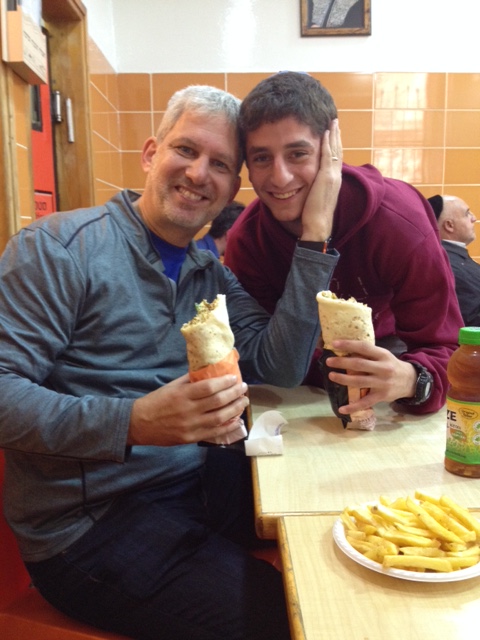
I thank Diane Sloyer and the staff of Jewish Federation of Rockland County for educating us, lifting us and giving us hope.
It is easy to be a cynic. Things go wrong and one can say, “See, I told you so.” But it takes courage to be an optimist. We continue, against all odds, to find hope and possibility in our world. Our plans and dreams might fail and we are often disappointed, but still we get up the next day and start again. It takes courage to be an optimist.
The 2014 ATID Mission gave us all many reasons to be optimists.
Shabbat shalom, Rabbi Paula Mack Drill
Filling My Mind and Soul with Israel
On Wednesday, I boarded a 5:45 am train for Washington, D.C. filled with excitement and anticipation of a day filled with learning at the National Rabbinic Symposium of AIPAC. When I arrived home late that night, I felt satisfied that I had been correct. One may wonder how a day spent discussing the difficult, intractable current affairs of Israel could possibly be uplifting, but it was just that. Surrounded by 250 rabbinic colleagues hearing from great thinkers and actors on the stage of Israel affairs, I felt supported and optimistic. Why? As always at AIPAC events, I was reminded of the incredible difference one person can make by exercising her American right to be an advocate for a cause. The cause of AIPAC is protecting and enhancing the American-Israel relationship. Throughout the day, one of my friends kept chanting, “Thank God, Thank God, Thank God for America’s friendship” every time the Iron Dome Defense System was mentioned. I was reminded all day that America is Israel’s staunch ally.
How much more talking and listening can we do about Israel, you may ask. All summer we wrote and read and talked about Israel. Rabbi Scheff and I will both be speaking about Israel on Yom Kippur — me at Kol Nidre and Rabbi Scheff on Yom Kippur morning. The answer is that we will not stop talking about Israel and that was the point of yesterday’s symposium.
I share with you now just one moment of learning in the midst of seven hours of speakers, discussion groups and presentations. At the lunchtime plenary, we were honored to meet and listen to Mosab Hassan Yousef, author of Son of Hamas, his autobiography about his childhood in Ramallah, his work as a spy for the Shin Bet (Mossad) for ten years and his eventual asylum here in America. Mosab’s father is Seikh Hassan Yousef, is a founding leader of Hamas, yet this son came to understand that murder and violence are not answers to the issues of Israel and her Arab neighbors. It felt like all of us in the room were holding our breath as Mosab shared his story with calm humility and courage. He does not believe that he is a hero; rather, he feels that he is a person who came to understand that saving even one life is worth the world. He was asked how he would bring peace to the Middle East given all that he knows about Hamas, Gaza and the West Bank, Israel and America. I cannot stop thinking about his answer. He looked out at all of us and said, “The only thing I can say is Israel must protect herself.” When all is said and done, he is right. Israel must protect herself, but she cannot do it without us. And so we must continue to protect Israel. That is why we’ll continue to read, write, talk and discuss Israel. Am Yisrael Chai!
Kol tuv, All the best, Rabbi Paula Mack Drill
 Two Rabbis, One Voice, Three Opinions
Recent Comments