The year of the unicorn (aka “Succeeding successfully”)
When we set out to create a job description for the search for our new rabbi, someone (it may have been our creative president Matt Schiering) suggested that we might as well be looking to replace a unicorn.
I certainly think quite highly of Rabbi Paula Drill, and I am beyond grateful for the partnership we have shared and the many ways in which having her as a co-rabbi has improved my life professionally and personally. But a unicorn?

As we follow Moses through the final year of his tenure leading the Israelites, we are reminded that he is irreplaceable. “There never arose another prophet like Moses….” Joshua is poised to succeed Moses, but not to replace him. Joshua will be a different leader for a different time with a different mission.
All this talk about Moses, Rabbi Drill and unicorns has left me reflecting on the origin story of Rabbi Drill‘s relationship with our community. We weren’t looking for a unicorn, and we didn’t hire one. We hired someone whom we knew could build relationships in the context of our Jewish tradition. There were challenges, doubts and growing pains as we introduced a new leader to our community. Personally, my guiding principle was that Rabbi Drill’s success would be my success. I believed my burden would be lighter, my life would have greater balance, and her achievements would add to the reputation of the OJC community as a place with which people wanted to connect. Our leadership understood that her success connecting, building relationships and offering more pathways into community would benefit our entire community and help us grow. It mattered not that Rabbi Drill started out only coming to OJC one Shabbat each month; it mattered that she was willing to connect with people on their time about their lives and their searches for meaning. Our faith was rewarded!

The partnership model that Rabbi Drill and I promoted from her earliest years here required a true cultural shift away from a hierarchical structure of leadership. We advocated to avoid the “assistant rabbi” title, ultimately establishing a co-rabbi relationship. We were inspired by the Jewish model of learning in partnership (“chavruta”), and by the pairs of rabbinic sages who challenged each other to grow, to refine their knowledge, and to consider alternate perspectives. I believe our synagogue became a kinder, more thoughtful place because of the partnership and team approach that we modeled.
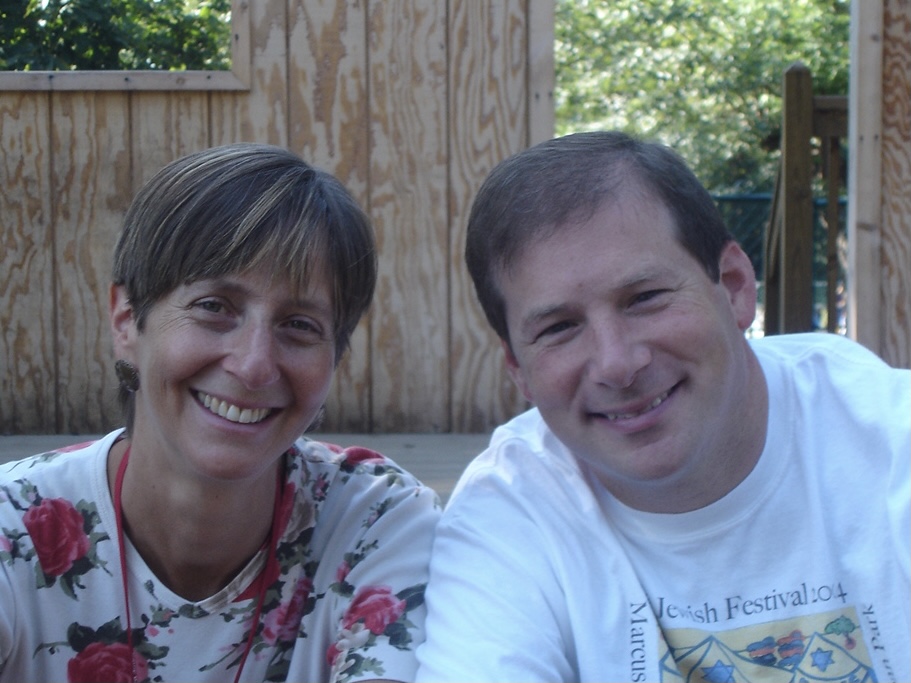
For our succession plan to be successful, we need to remember what has made us successful as a community to date. We need to remember how Rabbi Drill’s tenure became the success it was. It should come as no surprise that the survey we recently sent to the congregation revealed that the rabbinic role most important to our community, by a wide margin, is for the rabbi to share a personal connection with us. We want to be seen, heard, understood and appreciated by someone who can help us forge our own connection with community, tradition and God.

If it takes a unicorn to fill that need, then let the search for the next unicorn begin. If anyone can find one, it’s us!
Rabbi Craig Scheff
Living a Double Life
I held a Torah in my arms last Shabbat morning for the first time in more than sixteen months. We have, of course, prayed together in person and also via zoom during these pandemic days, but that morning was my first time leading Shacharit with an in-person minyan so that we could take the Torah from the ark.
As I turned to face our congregation and chant Shema, I realized with a sudden clarity that the weight of the Torah was exactly the weight of my almost 10-month-old grandson Carmel.
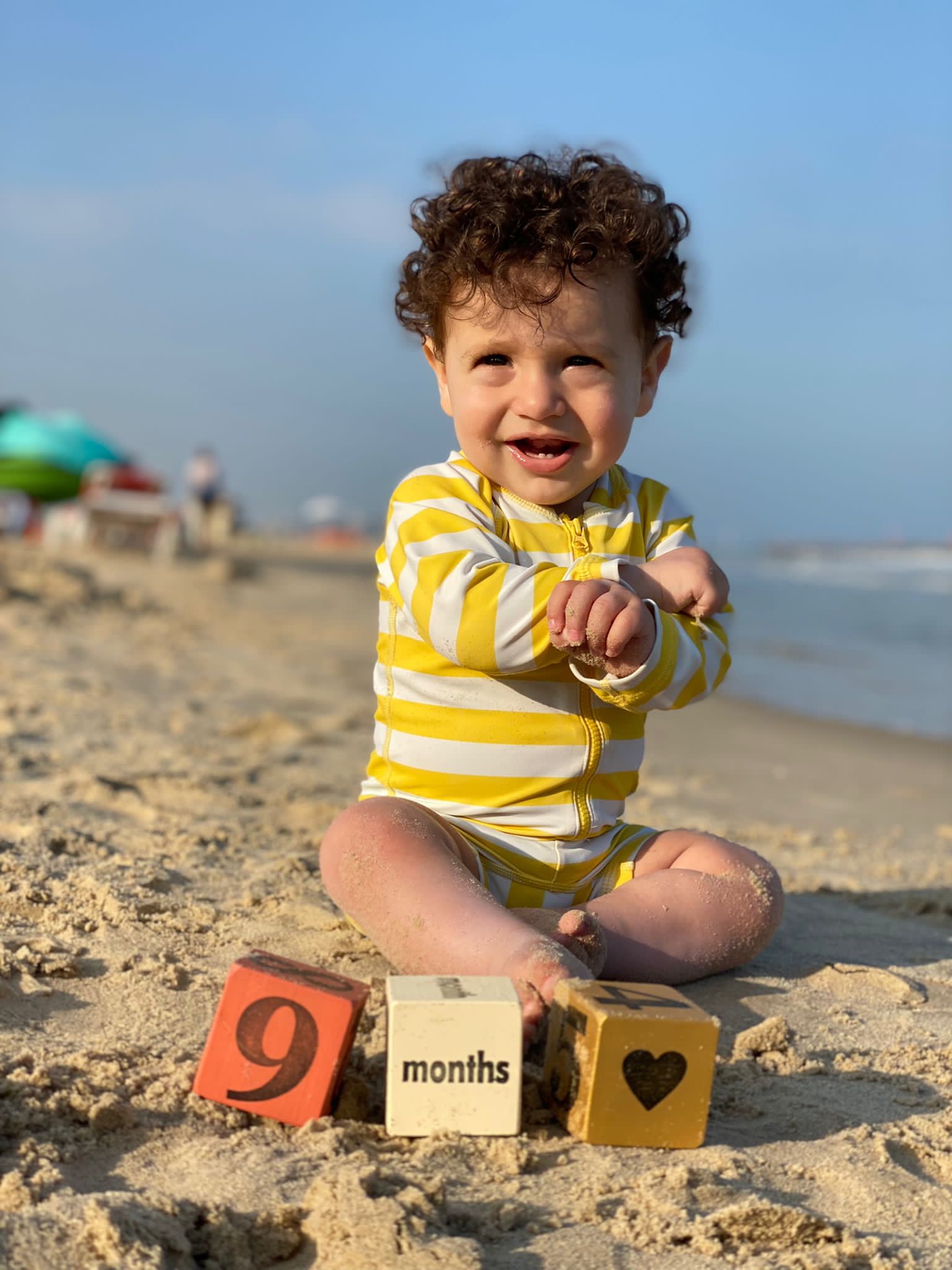


I have been carrying him every day for one month from mid-June through mid-July as I cared for him in Tel Aviv while his Momma and Abba worked. For thirty days, I lived every day from 7:30 a.m. until Carmel’s bedtime as Bubbe.
I arrived home to just one week ago in time for Shabbat, Tisha B’Av, plans for High Holidays in full swing, committee meetings scheduled and classes ready to begin. I have certainly returned to my life as Rabbi.
Am I living a double life? Is it possible to live as Bubbe and Rabbi simultaneously? I am determined to do so and have decided to purposefully weave the two lives together, carrying lessons from both identities across boundaries.
When I am Bubbe, I am mindful, patient, and joyful. I live to serve, to make my tiny charge as comfortable and content as possible. With Carmel, I could spend an hour making a tower of blocks that he would immediately knock down. Over and over and over. And I was delighted.
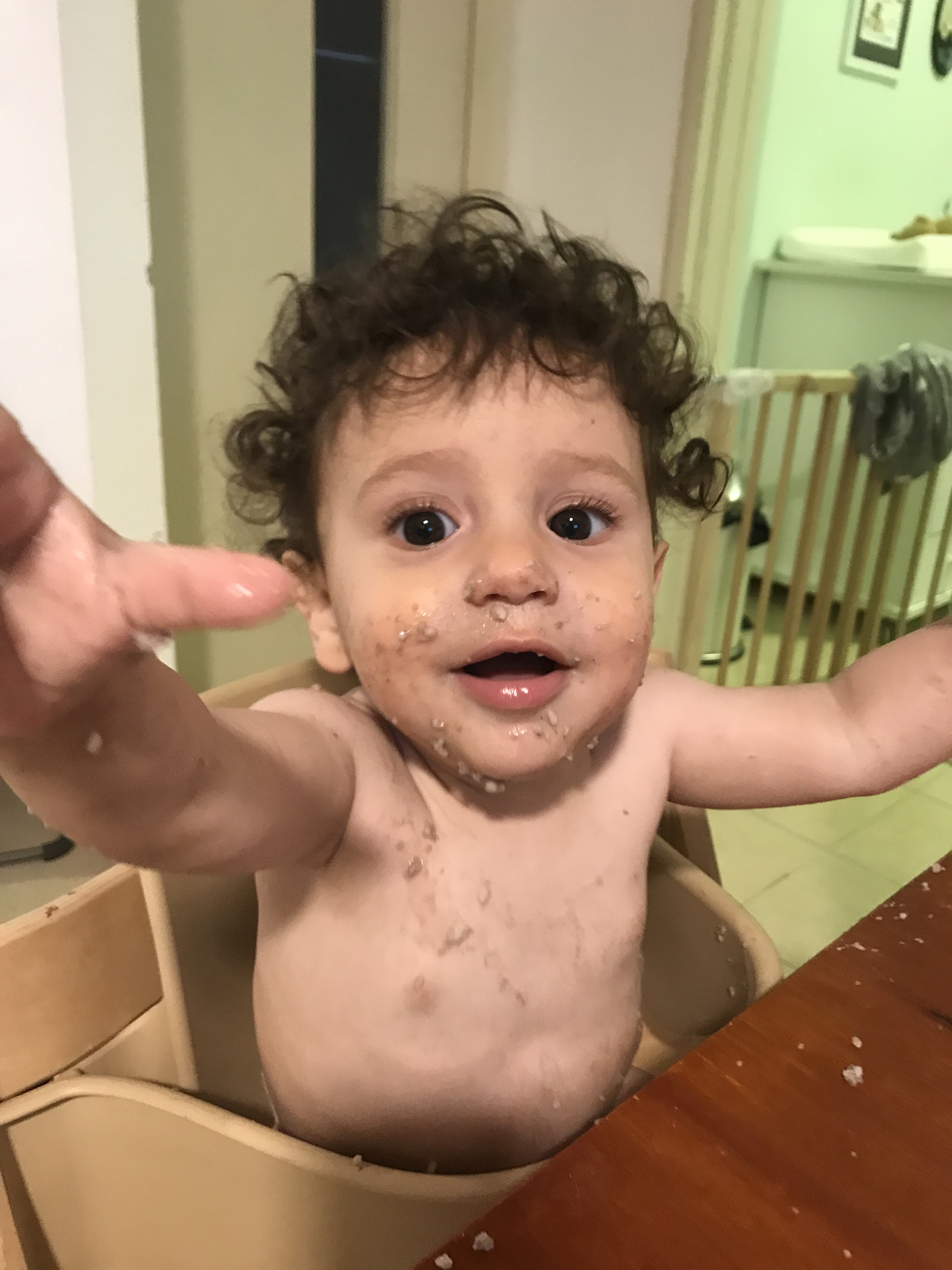
Breakfast was an hour-long affair that consisted of his aiming his spoon toward his mouth and connecting instead with an eyebrow, his neck, and his knee. Throwing the spoon to the floor, he would reach in with his whole fist to put oatmeal in his mouth, and also all over his chest. Every oatmeal party ended with him sitting in the kitchen sink so I could wash him down. And I was delighted.
Walking Carmel in his stroller in the sticky heat of Tel Aviv often required my capacity to distract and entertain. I refused to be embarrassed as I walked down Ben Gurion Boulevard singing Baby Shark, pushing the stroller with my right hand and making tiny sharks with my left.

What can this possibly have in common with my rabbinate? It seems clear to me that mindfulness, patience and joy as well as a refusal to be embarrassed are all excellent qualities for a rabbi to cultivate.
But what aspects of my rabbinate find their way into being Bubbe? I often davened parts of Shacharit as we played together in the morning. Carmel seems to enjoy Baruch She-amar and Ashrei as much as Itsy Bitsy Spider. Although he is not yet 10 months old, I like to think that he associates me with an appreciation for the wonders of God’s world, whether the orange blossom tree on Mapu Street in front of his apartment or the sun reflecting over the Kinneret when we went away for Shabbat. Every grandparent can bless their children and grandchildren on Friday nights, but I like to think that the gentle force of Bubbe who is also Rabbi brings Shabbat to the table each week. It is important for me to think of these things as I’ll become Bubbe to a second grandchild (expected by my son and daughter-in-law in Maryland) before the end of the year.
Can my two identities be woven together? Between Shabbat afternoon and Sunday afternoon, I participated in naming three baby girls, the newest members of our congregation. I was definitely in my role as Rabbi and yet also feeling 100% Bubbe.

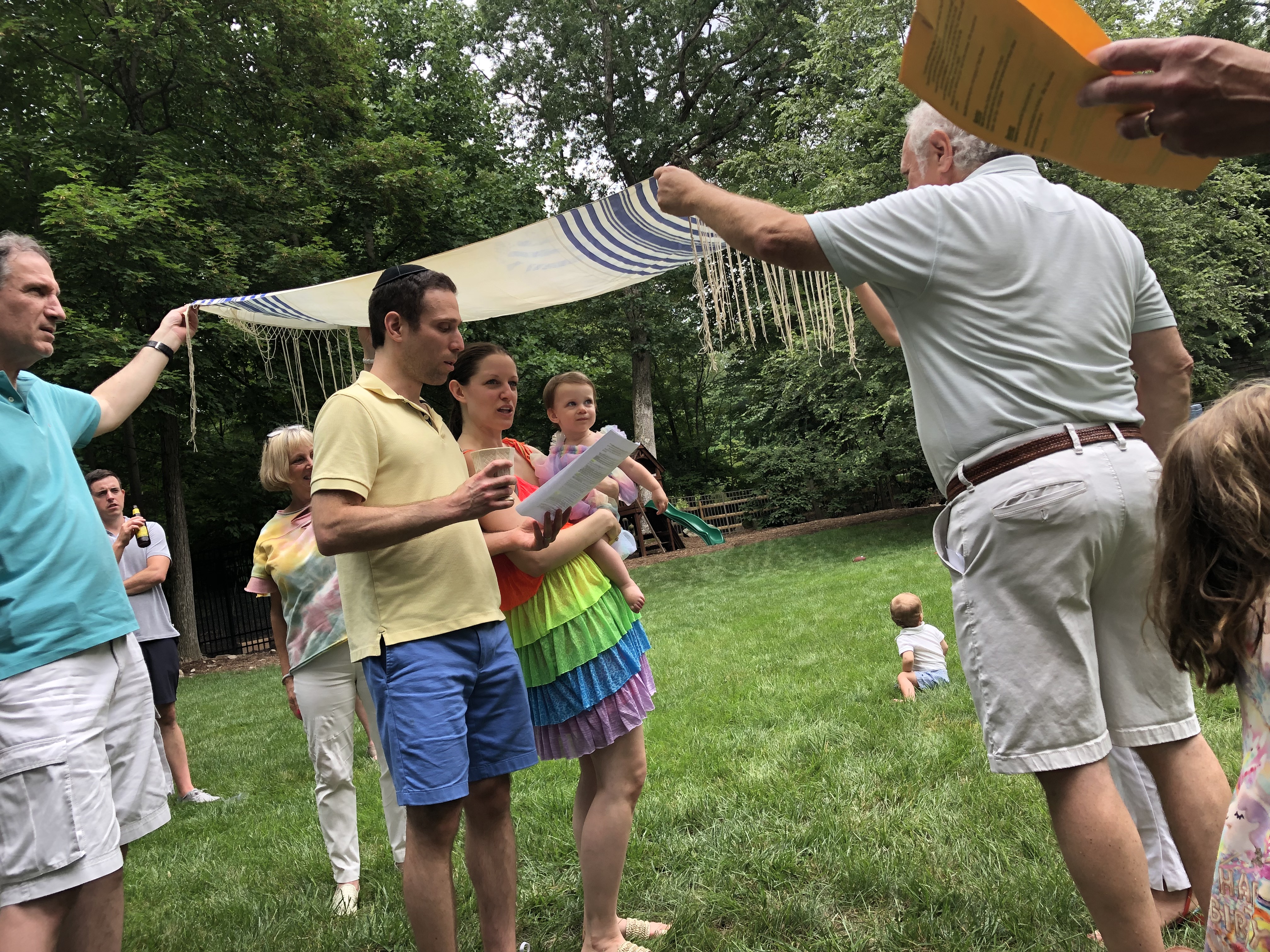

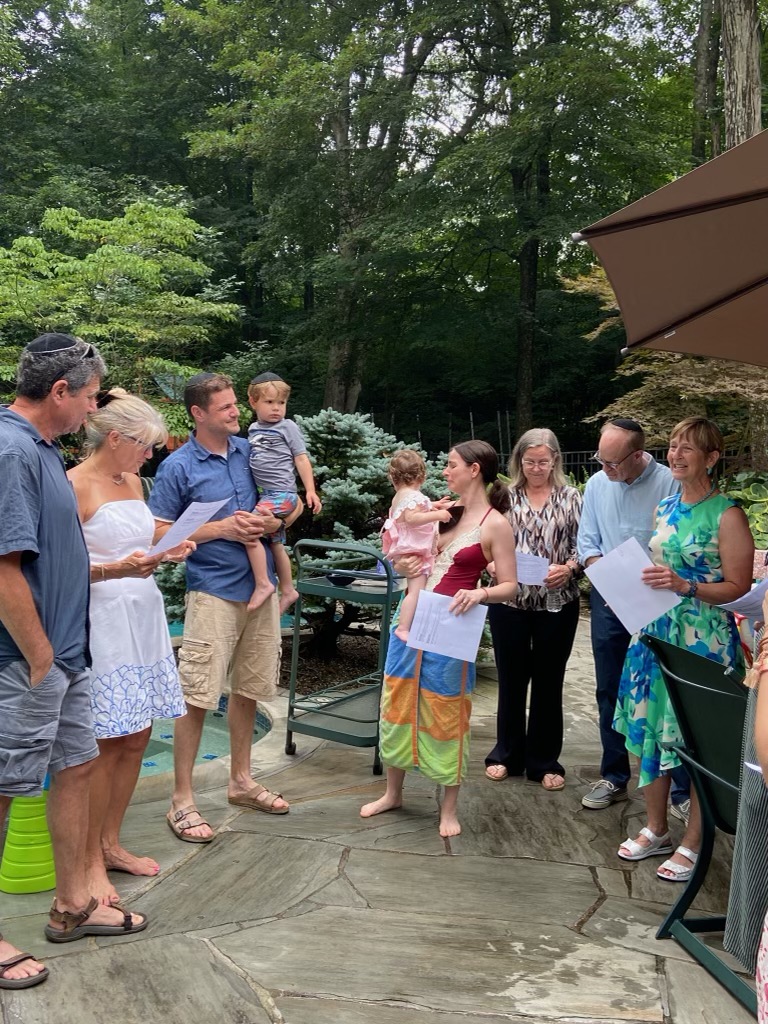

I believe that I am not required to live a double life. I can take the best of each role and apply it to the other. I am passionate about both of my roles – Bubbe and Rabbi, and I can be both at once. A good thing since I plan on being both for a nice long time to come!
Wishing all of us many roles, many lives, all rolled into one great adventure, Rabbi Bubbe Paula Mack Drill
A Rabbi’s Prayer on the Eve of the Holiday
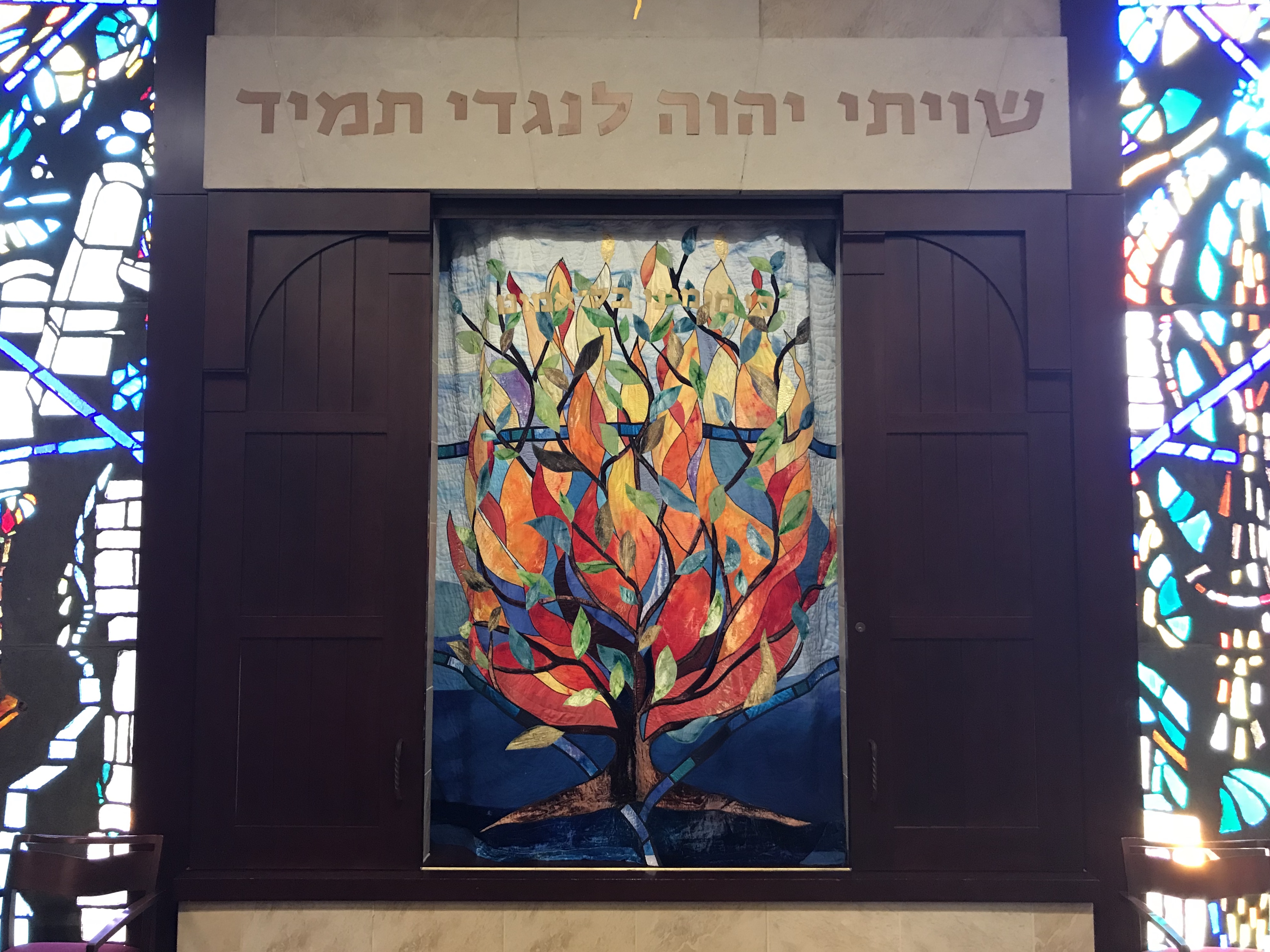
On the eve of a new year, I offer this prayer on behalf of my colleagues and religious leaders of every faith, who are striving to connect people in community in new and creative ways while maintain an authentic sense of tradition. And I offer this prayer in thanksgiving for a community who has told its faith leaders in a myriad of ways that they trust us, despite our flaws. The Hineni prayer (“Here I am”) is the prayer leader’s plea that God look past the shortcomings of the one appointed to pray on the community’s behalf. What follows is my interpretation of the original text.
Perhaps they don’t see that I am
Feeling unprepared
to confront current circumstance,
Shaken and uncertain
In the face of forces that threaten to overwhelm me.
Yet I must present myself to be heard
on behalf of a community that has entrusted me to represent.
I don’t claim to be worthy or sufficiently informed.
So I seek balance in the Source
of my ancestors’ resilience
In the breath between
Adonai and Adonai,
Compassion and Grace,
Tradition and Self-Sufficiency,
Reverence and Awe.
Carve me a path to success
As I seek the welfare
Of all those who have sent me.
Hold blameless those who trust me despite my shortcomings now exposed.
Guide me to speak with wisdom,
sensitive in tone,
considerate of all needs.
And may the love in my heart make up for the flaws in my actions.
May acknowledging the mistakes of our past transform our futures into joy and celebration,
life and wholeness,
with truth and peace as our guides.
Don’t let me falter on this path.
May it be Your will—
God of Israel and Sonia
God of Stan and Hannah
El, Unfathomable, Powerful,
Beyond Understanding
Source of my resilience
Yet to be known—
That my words will resonate
And carry
Until they are understood
For their sincerity
And their intentions
And their justice
And their humanity
And for the way they honor Your Name,
Unfathomable and Beyond Understanding.
Attend to my prayer for compassion.
With gratitude,
Hineni.
Rabbi Craig Scheff
 Three Rabbis Walk Into A Shul
Recent Comments