A successful work in progress
This past Sunday night, our OJC community and friends celebrated our community. Yes, Rabbi Paula Drill was the honoree for the evening, but—sorry—the night was only in part about her. It was a love-fest that spanned the generations: a night of Jewish learning, music, food and appreciation of one another. The night was about our community: our heart, our simplicity, our humility, our relationships, our Torah, our mission and our vision.

In trying to summarize our community’s success, I realize that we have not relied upon any new strategies. We haven’t created any unique ways of doing business; nor have we abandoned our commitment to traditional models of Jewish life. It is the Jewish values exhibited in the building of the Mishkan (the Israelites’ portable sanctuary), described in this week’s Torah portion, that serve as the blueprint for our own community.
The very idea that the people can participate in a process that will invite God’s presence is enough to inspire participation. Perhaps there is an element of guilt or a desire for repentance in their motivation, but after the debacle of the Golden Calf, the Israelites have a chance to merit a legacy. And the project is as much about the process as it is about the ultimate edifice that is constructed. The freewill service to a higher calling adds meaning and the sense of God’s presence to a life that is otherwise enslaved to fear and uncertainty.
God instructs Moses to engage the community by inviting them to donate to the project whatever they are moved to share. Several opportunities are created for that giving by virtue of the many types of materials being collected and utilized in the project. Engagement is transformed into empowerment as each individual becomes a participant in the processes of manufacturing, design and construction.
The appointment of Betzalel as project manager, the inclusion of artisans, and the participation of the broader community creates a new dynamic for the Israelites’ engagement with the Divine One. Before this change, leadership was purely hierarchical, and the population was steps removed in relation to God. As a result of the new appointee, the community operates in partnership with its leadership. In partnerships, the success of one is the success of all. Relationships deepen between the volunteers who recognize that they are working together towards a shared vision; relationships also deepen between the volunteers and the leadership, who now recognize the value of the other’s contributions towards a shared goal.
Finally, there is the matter of expectations and of how we define our success. Success can’t be about the number of people who participate or about the amounts they contribute. Success is found in the knowledge that the process of building—serving, empowering, partnering and relating—is an ongoing effort.

On Sunday night, we celebrated a milestone for a community in process. God said, “Let them build Me a sanctuary that I may dwell among them.” As we continue the process of building a world deserving of God’s presence, may we continue to merit God’s presence among us.
Rabbi Craig Scheff
Snow Storms as a Metaphor for Life
Some Purim! As I begin writing this post, the OJC building is empty. It was supposed to be filled just about now with hundreds of happy kids in costume. The teens who planned the carnival are at home, disappointed… and yet…


This morning’s Purim minyan was cancelled. Rabbi Scheff, Hersh and I davened
with two other people and chanted from the megillah, our half-hearted “Boos” not doing much to blot out Haman’s name…and yet…
Tuesday’s Catch a Rising Star celebration in Religious School had to be postponed, and I know that I won’t have the chance to stand on my head for them until next year… and yet…
I’m looking out of my office window as more snow piles up on my car. I wonder if I’ll get home tonight. (I did!) Driving in the snow is never pleasant… and yet…
It has been a hard winter, true. It is easy to feel our energy depleted by dire forecasts of ice and snow and States of Emergency over the past six weeks and our optimism buried under inches of snow…and yet…
Snow reminds us that we are not in control of everything. A power greater than us is in charge. We humans tend to forget about God as we dash about in our lives, planning, controlling, building, accomplishing. I am not saying that I know what God is; rather, I am saying that I am not God. Snow reminds me.
Snow happens every winter and yet we bemoan its arrival. Illness, brokenness, loss and sorrow happen in every life and yet we cry out, “Why me?” Turbulence happens because we are not ultimately in control. So when difficult things happen, we can choose to see them either as a blessing or a curse. Or we can practice saying “and yet” and see everything as both – blessing and curse.
Rabbi Rami Shapiro teaches on the verse “See, this day I set before you blessing and curse…” [Devarim 11:26]:
If we truly see this day as it is, then we will see that it contains both blessing and curse, light and shadow, good and bad, suffering and joy. Most of us are conditioned to hope for the former and anticipate the latter. We call this being realistic. It isn’t. It is conditioned thinking that has nothing to do with reality. Reality is both blessing and curse. You cannot have one without the other.
So what are the “and yets” of the snowiest Purim in the history of the OJC?
Our teens were disappointed when safety dictated that the carnival would be cancelled for today, and yet they immediately started planning with Youth Director Sharon Rappaport to come up with Plan B. They learned an invaluable lesson about resiliency when dealing with the unexpected.
We had no minyan this morning, and yet dozens of congregants tuned into the live feed of the megillah reading provided by our Men’s Club. We received emails from congregants in New York who were snowbound and in Florida who are snowbirds, all rejoicing in being able to “join us!”
Religious School kids were disappointed by the delay in their annual talent show, and yet they’ll be celebrating this coming Tuesday instead.
Driving in the snow is never fun, and yet I arrived home safely. Lucky for me, I learned to drive in Maine by a father who made sure I knew how to turn into a skid and how to rock out of a snowbank!

How blessed we are to turn to a tradition that teaches us to see both blessing and curse, but to choose blessing!
With blessings to all, Rabbi Paula Mack Drill
Purim fun, or not?
Growing up on the mean streets of New City, New York, I learned the hard way what it meant to be Jewish, short, skinny and unable to jump higher than 8 inches off the ground. In other words … wait for it . . . “scrappy” was my game. The experience hardened me to the outside world’s cold reality. A jaded, chip-on-my-shoulder, eat-or-be-eaten attitude pervaded everything I set out to accomplish. I learned to control most of my impulses, assuming a mild-mannered, soft-spoken persona everywhere I went. Everywhere, that is, except on the basketball court. Between the lines, I could be myself, let go of my inhibitions, run wild, heatedly pursue, charge at the hoop, display my bumps and bruises as badges of honor. Ironically, all that pent up anger, frustration and aggression that found its expression in my game was lauded as something good, something to be admired and copied.

Those of you who have seen me play over the years (with the 9- and 10-year-olds at recess, especially) have called me competitive, like a Mr. Hyde to Rabbi Jekyll. What you see is nothing, however, compared to the dark madness that once lurked in the soles of my high-top Converse sneakers (the white canvas ones). That’s just me having good, clean fun. Once I retired from competitive hoops at the age of 28 (the year I started rabbinical school), the cloud that once enveloped my heart lifted, and the beast was gone forever. Until . . . .

Rabbi Paula Mack Drill, whose thirteen years with the OJC we are celebrating this Purim, began her professional relationship with me at Camp Ramah in Nyack some 15 years ago. She was Program Director as I was Assistant Director, and Assistant Director (a position now full-time held by our own Rabbi Ami Hersh, the topic of another Purim spoof one day soon) as I was Camp Rabbi. We always had a great, easygoing, complementary style of working together. From Day One, people referred to us as the “Craig and Paula Show.” That relationship carried over into her internship here at the OJC, where I functioned formally as her mentor for the Seminary. The day she was ordained was a great day. I should have known something wasn’t quite right, however, when she informed me that her JTS GPA was .0185 higher than mine.

That single fact was the beginning of a disturbing pattern. Two-letter words like “XQ” were suddenly making their way into our Shabbat Scrabble games on triple word scores. She would casually mention to each congregant we met that she was older than me, taller than me (she took up heels), and could stand on her head longer than me. She would give her students colorful stickers and point out that I offered them nothing for their efforts. At the end of a day’s work she would ask me how many hours I had billed, as she filled my e-mail inbox with cc’s of every e-mail she sent out. I lashed back by working later, sleeping less, and leading more trips to Israel. I could feel the old Craig emerging, and it wasn’t pretty.
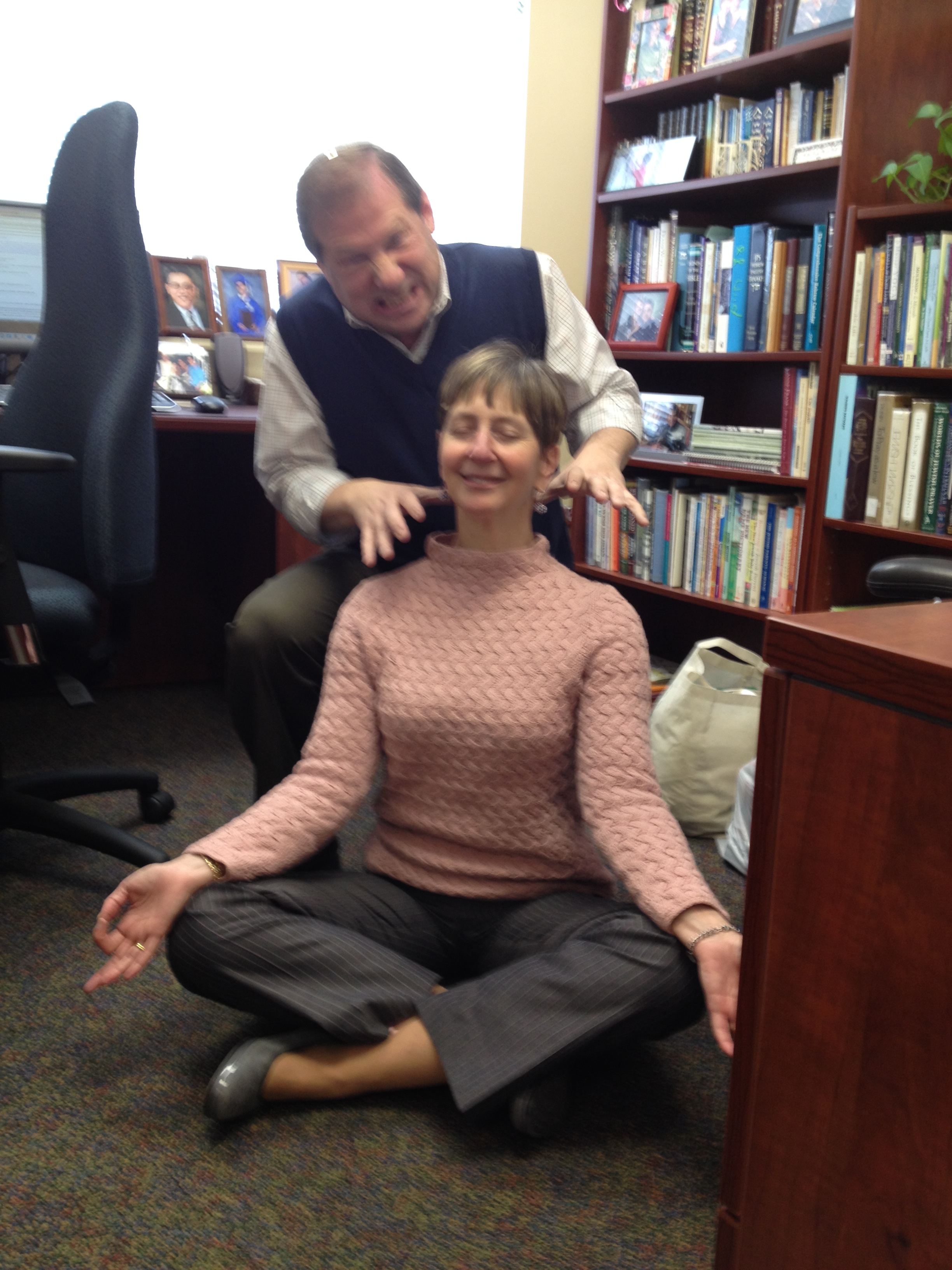
Rabbi Drill’s popularity has grown over the past 13 years. As has my therapy bill. But I have learned how to control the beast. Looking in the mirror each morning, I remind myself that I am good enough, that I am smart enough, and doggone it, people like me. Then I steel myself for the day ahead, trying to appreciate how good each day can be with Rabbi Drill at my side.

And then I pray . . . for the moment I will get her on the basketball court.

Happy Purim to all, and I hope you will join our community in celebrating Rabbi Drill’s 13 years with the OJC and the many ways in which she has enriched each of us and our community!
Rabbi Craig Scheff
Justice, Justice You Shall Pursue
Rabbi Abraham Isaac Kook said, “I don’t speak because I have the power to speak; I speak because I don’t have the power to remain silent.” From the beginning of my work with Rockland Clergy for Social Justice, I have felt the powerful call to speak out against the injustice being done to the children, their families, and the educators of the East Ramapo Central School District. In speaking out about the constitutionally given right to an education for all children in Rockland County, I have joined my voice to an interfaith coalition of Rockland clergy, to the congregants of the Orangetown Jewish Center, to all Jews who pursue tzedek (righteousness), and to all people of conscience.
Rockland Clergy for Social Justice (RC4SJ) is an interfaith coalition of Jewish, Christian and Muslim faith leaders who began working together over a year ago with a single unifying focus: the 9000 public school children of East Ramapo who are not receiving an adequate education that will prepare them to be successful citizens of our country.
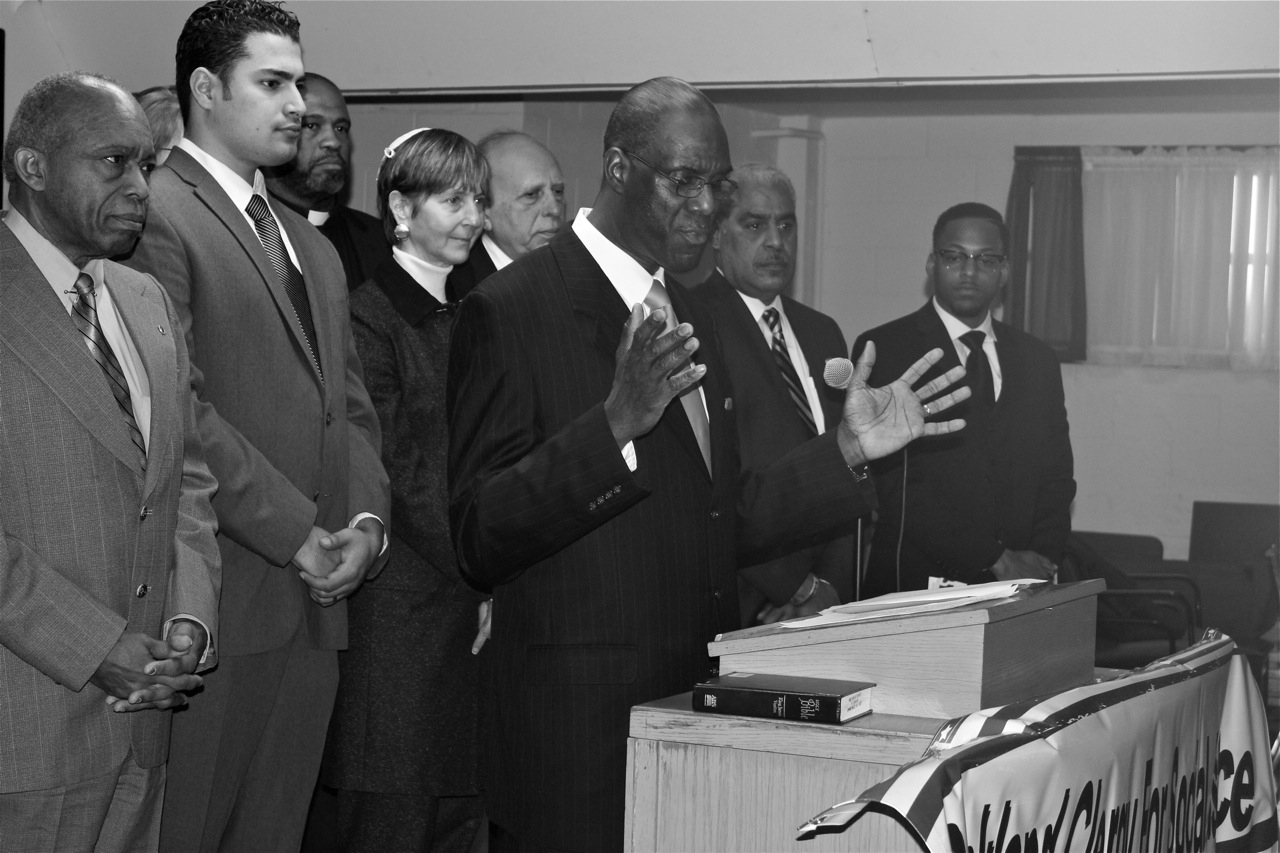
Today RC4SJ held a press conference at the First Baptist Church of Spring Valley to support the courageous work of State Legislators Ellen Jaffee, David Carlucci, and Ken Zebrowski. Since November, when special monitor Hank Greenberg presented his findings on the dysfunctional school district, they have been working to write legislation to ensure compliance with state and federal law, financial integrity and transparency and functional school governance. Our press conference, planned weeks ago to announce RC4SJ’s upcoming lobbying trip to Albany on March 3, coincidentally happened at the exact time that our county legislators introduced their bill. http://www.capitalnewyork.com/article/albany/2015/02/8562498/rockland-pols-introduce-east-ramapo-oversight-bill
The bill shows the commitment of Jaffee, Carlucci and Zebrowski to implementing both the spirit and letter of Hank Greenberg’s recommendations. To read the bill as it has been introduced, click here: http://open.nysenate.gov/legislation/bill/A5355-2015.

When I spoke at the press conference today, I began by recalling my feeling of dedication to 9000 children when I stood on the very same dais last year. 9000 seemed like a very large number, a compelling reason to stand up and speak up. Today, however, those 9000 children have become personal. Through my volunteer experiences together with fellow OJCers at the Kakiat School Early Childhood Center, I have come to know the children we are fighting for. Kindergarten children who need a full day of education receive instead two hours a day, one half hour of which is taken up with breakfast or lunch. The valiant, dedicated administrators and teachers at the ECC work to provide learning to children, who number thirty in a class without an aide. 9000 is not just a number. 9000 is Kiran, a bright, precocious five year old who would be reading chapter books already if he had more education hours. 9000 is Tyron, a child who has fine motor difficulties. I help him at the learning centers to hold scissors straight and cut paper. I wonder who helps him on the vast majority of days when I am not there. 9000 is Rosie, an imaginative little artist. My heart sinks when I think about Rosie entering grade school without art or music to continue fueling her curiosity. 9000 is not a number. It’s personal. https://www.youtube.com/watch?v=6CxColw3FnI
RC4SJ will be traveling once again to Albany on March 3, hoping to build on today’s momentum and seeking support from other legislative leaders and the Executive Chamber in Albany for the bill introduced today by Jaffee, Carlucci.and Zebrowski.
Last Friday, Governor Cuomo came to East Ramapo and bravely announced that he expected to sign legislation before June of this year. He said that he is grateful to special monitor Hank Greenberg for providing us with facts. I agree that having facts gives us with the leverage to create change. But facts are only the beginning. To see this through to a happy ending for the public school students of ERCSD, we will need passion, dedication to justice and clear vision of a moral high ground.
“Tzedek, tzedek, tirdof. Justice, justice, you will pursue.”
Rabbi Paula Mack Drill
Between the lines
Listening to a sports radio talk show this week, I heard Charles Barkley, one of the all-time great basketball players (known for his quote, among many notable quotes, “I am not a role model”), offer an important piece of wisdom. To paraphrase, he said that if we put a bunch of kids on a court together, no matter their color or nationality, they’d do just fine. “It’s the adults who screw everything up.”
Sadly, a group of kids suffered embarrassment this week because of the deeds of their adults. Little League Baseball stripped the U.S. championship from Chicago-based Jackie Robinson West and suspended its coach for violating a rule prohibiting the use of players who live outside the geographic area that the team represents. The kids played their game, had an experience of a lifetime, grew in so many ways, only to be told that their experience was not legitimate. What a crushing disillusionment for such young minds.

I learned so much participating in sports as a teen. I learned that there would always be someone bigger, stronger, faster and more skilled than me. I learned that success requires a lot of hard work and commitment. I learned that heart can take you far, but only so far. I learned that success takes sacrifice. I learned all these things without ever being the hero, leading the team, hitting a buzzer-beater or winning a championship. I even learned these lessons sitting on the bench and not being chosen for the team.
Years later, I would take all these lessons and channel them into a very different competitive endeavor, one that relied upon a very different skill set that didn’t involve my hands or my feet. Those years of competition–and yes, even of losing–taught me how to define success. I learned teamwork; I learned resilience. And the thing I remember most clearly is that my father let me figure it out all by myself.
Thanks Dad, and thanks to all the wonderful coaches out there teaching life lessons between the lines.
Rabbi Craig Scheff
Great Stories in the Great Book
I love a good story, don’t you? Author Stephen King says that there are books full of great writing that don’t have very good stories.
I hope it is not blasphemy to say that the Torah is just the opposite: not always such great writing but the best of all stories.

Let me suggest that the writing style of the Torah would not necessarily have passed muster with my seventh grade English teacher. The Torah is filled with poor editing, run on sentences, lack of transitions and confusing noun-verb match-ups. Throughout the ages, rabbis have gleaned meaning from repetitions, gaps, misplaced narrative and stylistic flaws and shared it all the commentaries and midrashim (stories from between the lines) that Jews cherish.
But good stories? The Torah is filled with good stories. Good stories are the ones that we remember. We remember them all our lives. We know the ending, but we still want to hear the story again and again. The Jewish people know that Adam and Eve are going to eat that fruit. Isaac is almost going to be sacrificed, but God stops his father at the last moment. Joseph is going to reveal himself to his brothers in Egypt after he toys with them a bit. We love to hear these stories again and again; we’ve been reading and reading and then re-rolling our Torah for centuries. The Torah is the word of God, but it would not endure without good stories.
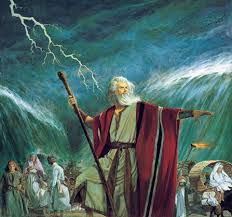
This week we are poised between two of the greatest stories of our Torah. Last week, God split the sea for the Israelites to pass through and this week we receive Torah at Sinai. I thrilled last Shabbat when we stood together in synagogue to chant the Song of the Sea, and I am excited to stand again this week to hear the Ten Commandments. My love for Torah is something that I don’t often question. It’s kind of like breathing.
Last week, however, at Conversations with Clergy in the Community at Adele Garber’s home in Nyack, one of our congregants challenged my easy acceptance of the ultimate worth of Torah. He asked what Rabbi Scheff and I “get out of” studying Torah. Truthfully, we had to stop and think about it. Both of us answered in terms of the stories of the Torah, and our answers were like two sides of the same coin. Rabbi Scheff said that in the Torah we find the stories of our lives. The heroes of our narratives are not saints, not perfect gods. They are real people dealing with real challenges. The lessons of their stories teach us about coming closer to our best selves, to each other and to God. I said that in addition to learning from the real lives of realistic people, the stories of Torah connect us to eternal truths, to an understanding of what God expects of us.
In the Great Stories we know who lives, who dies, who finds love, who doesn’t. . . and yet we want to know again. In the Great Stories of our Torah, we have the opportunity to hear not only what we want to know, but what God wants us to know!
Join us at the Orangetown Jewish Center to learn from the greatest stories of the Greatest Book ever written. Come on Shabbat morning to learn from a sermon. Study every Thursday in Text and Context or on the second Monday of the month in Women of the Torah. This month, Rabbi Hersh is teaching creation narratives in Thursday evening Conversations with Clergy. Contact Rabbi Scheff or me if you would like a suggestion about which class might be best for you!
Meanwhile, I’ll meet you at Sinai!
Shabbat shalom, Rabbi Paula Mack Drill
On being a patriot
I am a patriot.
Call me sentimental, but I see the colors of the flag and my chest swells. I stand a bit taller and feel a bit stronger when I see someone in uniform pass by. Seeing that banner wave against the sky, I think of the dedication that so many show to the cause. I take pride in the victories and mourn the losses, even if I have not set foot on the field of battle myself.
As a patriot, I can be critical of my own cause. I can disagree with the strategies utilized, question the personnel employed, and even dislike the individual personalities of those entrusted with the helm. As one on the sidelines, entrusting others to carry the ball for me, I am relied upon to vote with my voice and with my checkbook. Amongst those who share my passion, I can express my frustrations and feelings of persecution. I can find solace in a community of people who believe that the cause is just, and that ultimately we will be vindicated as champions of all that can be good and right in the world.
As a patriot on foreign soil, however, I am far more guarded. I am not so quick to show my true colors. I take personally the barbs and accusations of excessive pride, privilege, self-absorption and insularity. Fending off the parries with rationalizations or excuses only comes across as empty defensiveness. Relativizing any potential wrongdoing by comparing the accusations with the injustices committed under other regimes is dismissed as inconsequential. My standard-bearers are held to a higher standard than most, and any wrongdoing—or potential thereof—is headline news.
Such is the price of those who dare to lead, who shed the label of underdog and take ownership of their place in history.
Wherever I stand, I stand with America; I stand with Israel; I stand with the Jewish people.
Rabbi Craig Scheff
(Go Pats!)
Vote Now for Israel’s Future

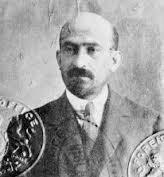
There is a story that charms me from the annals of Zionist history at the turn of the 20th century. Arthur Balfour, a Member of the House of Lords asked Chaim Weizmann, who later would become President of Israel, “Why do you Jews insist on Palestine when there are so many undeveloped countries you could settle in more conveniently?” According to the story, Weizmann answered, “That’s like my asking you why you drove twenty miles to visit your mother last Sunday when there are so many old ladies living on your street. Mr. Balfour, if you were offered Paris instead of London, would you take it?” Lord Balfour was shocked and surprised by the question, “But London is our own!” Weizmann answered, “Jerusalem was our own when London was a marsh.” This same Member of the House of Lords famously crafted the Balfour Declaration in 1917 that made public British support of a Jewish homeland in Palestine.
At the Orangetown Jewish Center, we talk about Israel, our Jewish homeland, proudly, passionately and with the assurance of safety. There is room for debate and discussion, but we all agree that our home had to be established in 1948 on that tiny strip of desert and marsh. Then Palestine, today Israel, is “our own.”
We also agree that while we advocate and educate about the need for secure borders and freedom from terrorism in Israel, we must also pay close attention to Israel’s soul. As Conservative Jews, we have a specific vision of Israel that is anchored in religious freedom. We yearn to be a part of an Israel that is a pluralistic Jewish and democratic state with which every Jew can proudly identify.
Rabbi Scheff and I often suggest ways to lift our voices in support of the official recognition in Israel of all the major streams of Judaism. We believe that the authority of rabbis from non-Orthodox movements should be respected regarding all issues of personal status and ritual. Rabbis of the Conservative and Reform movements should be able to officiate at weddings, conversions, divorces and funerals in Israel as they do here in America.

Today, there is one specific action you can take to be a part of the potential Israel you envision. It is time now to vote in the World Zionist Congress that will meet this year in Jerusalem. The World Zionist Congress has met since 1897 when it first laid out the principles of Zionism, the belief that the Jewish people of the world must have a homeland of their own, the land of Israel. Today the WZC elects the officers and decides on the policies of the World Zionist Organization and the Jewish Agency.
It is time now to vote. It is time to vote for Mercaz, the political arm of the Conservative–Masorti Movement of Judaism. According to the Mercaz mission statement, a vote for Mercaz is a vote for an Israel that is pluralistic and inclusive, egalitarian and unified, sustainable and diverse.
Go to http://votemercaz.org/ to get started, to get educated, and to cast your ballot. It costs just $10 for your opportunity to change the future of Israel. And while you are at the website, you can see a great photograph and statement by our own Josh Drill. He writes about what Mercaz means to him as a young man making aliya this August.
Mercaz has also made a series of short, informative videos that you can share to educate friends and family about the important vision we share about the soul of Israel. https://www.youtube.com/watch?v=FnfPe8s6VCU
It is time now to vote! 
With friendship, Rabbi Paula Mack Drill
Is it time to go home yet?
In the aftermath of the Charlie Hebdo and Hyper Cacher murderous terrorist attacks just a week ago, Israel’s Prime Minister Netanyahu seized the opportunity during the massive unity rally that followed to invite (actually, to call upon) the Jews of France, 500,000 strong, to return home to Israel. With the fresh images of four Jewish bodies returning to Israel to be buried and armed guards filling the entryways to their children’s schools, along with the collective memory they carry of the events that took place 75 years ago, the Jews of France have good reason to consider flight as their best option. I have heard many say that the handwriting is on the wall, that the times are looking like the 1930’s, that we made the mistake of staying once before and look what it cost us — and I can’t say that I completely disagree. Every individual and family must decide what is best for them.
But this is not 1938. And we are a more powerful international community of Jews than ever before. And we have Israel waiting with open arms. And we have allies, Christians and even Muslims among them. And French President Francois Hollande certainly understands the national and international implications of a mass Jewish exodus. Aside from the “brain drain” that would result, should France lose its Western soul in the battle between radical Islam and modernity, other countries like Belgium, the Netherlands and Sweden are likely to follow soon thereafter. And let’s not forget that France is a nuclear power and a permanent member of the U.N. Security Council. France is already experiencing the annual emigration of thousands of Jews to Israel in recent years. Should the largest European Jewish community be decimated of its own free will, there is little doubt that the other Jewish communities of Europe will suffer a similar fate.

Are we ready for a new demographic reality, where all Jews live in Israel, the United States and Canada? On the one hand, I say why not. On the other hand, the French Jews attending Prime Minister Netanyahu’s appearance at the Great Synagogue followed his oration with an emotional singing of Hatikvah, and concluded with an equally stirring and heartfelt rendition of La Marseillaise. We must also ask ourselves what we would sacrifice and how long we would fight were our American values and freedoms suddenly challenged. And we must also ask ourselves how our mission in the world is fulfilled as Jews if we are only a light unto those who share our values; if we become an insular and insulated community; if we are only for ourselves. That is not, in my opinion, how we were meant to be a blessing.

Israel is our home and, thank God, our haven. But the Jewish experiment was meant to be shared with the rest of the world. And that means fighting and sacrificing for a certain way of life for ourselves and for those who have elected to adopt our values. I fight back by supporting the education of our local community through Rockland’s Holocaust Museum and Study Center; I fight back by using social media to share balanced and accurate reporting; I fight back by participating in AIPAC’s policy conference and lobbying efforts (March 1-3) to make sure that the United States will stand as a partner with Israel in the international arena; I fight back by voting for MERCAZ USA in the World Zionist Congress elections (ongoing) to promote a more progressive social agenda and more pluralistic religious agenda in Israel; I fight back by supporting organizations like the American Jewish Committee to advocate globally for Israel and the world’s Jewish communities; I fight back by leading trips to Israel (informational meeting Wednesday night for our December 2015 trip) so others can feel empowered by the greatest feelings of belonging, strength and hope.
I pray that, should the time come (God forbid) when it is time to go home, I will know it. Until then, I will proudly defend my right to be a Jew right here.
Rabbi Craig Scheff
Loving Henry; Losing Henry
He always said, “Come visit me when my eyes are open, not after they are closed.” And I did. Over the years, Henry and I did a lot of visiting. I take comfort from the knowledge that he and I had quite a friendship, and that I followed his advice to visit him when I could. Still, despite his admonition, it was difficult to miss the funeral of one of the greats who helped to lay the foundation of today’s OJC.
Like so many of you, I have many memories of Henry. There were lunches at the diner, a shared mission to Israel, wisecracks on Shabbat, and heart-to-heart talks that went on much too long. Like so many of you, I thought that I was the one who was most special to him. Henry made us feel like that.
One snapshot out of time will stay with me as a cherished memory. Henry shared a chapter of his life story with me one afternoon after his Yiddish club met. He showed me photographs of himself and his brothers as young boys, arriving in the United States, to be reunited eventually with their father after being raised by their mother all alone.

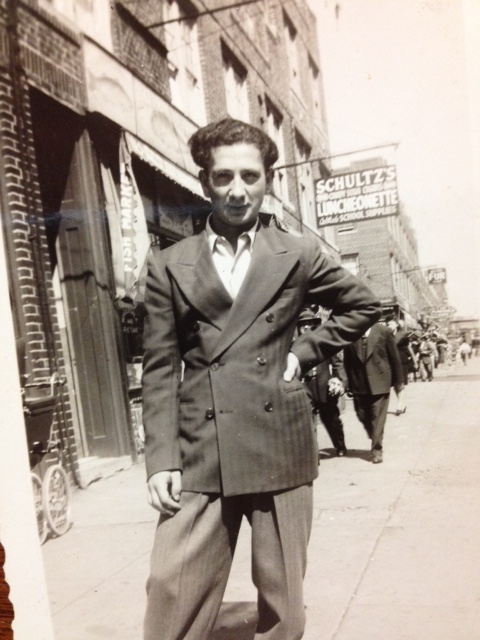
As he told me his story, between the lines, I heard the midrash of a boy who had felt abandoned and lost in a new country. Because of his childhood experiences, in his unique way, Henry dedicated his life to make sure that everyone around him felt included.
Rabbi Scheff told me about the broad spectrum of OJC congregants who came to pay respects to Henry at his funeral. It is not surprising to know that cronies from the Wednesday night poker game and from the kiddush club were there. It is not surprising that presidents and board members of the synagogue were there to pay honor to the man who always had plentiful suggestions. It is not surprising that Rabbi Scheff acknowledged that he was officiating at a funeral of someone who felt to him like a grandfather. Rabbi Scheff credits Henry with bringing him to OJC in the first place, and for giving him a vision of what a synagogue community could be. What might be surprising to someone who did not know Henry well, is the large number of young people who came to say goodbye to the man who had acted as a surrogate grandfather. His granddaughter Mara shared with mixed emotions that she always knew she had to share her grandfather with all the kids at the OJC.
In our synagogue community, there was no one who made him prouder than Mara. When she read Torah, led Shabbat morning services, or sang in the high holiday choir, Henry would beam. (Often he’d find me to whisper conspiratorially, “Did you know that they let girls lead services here?!”)
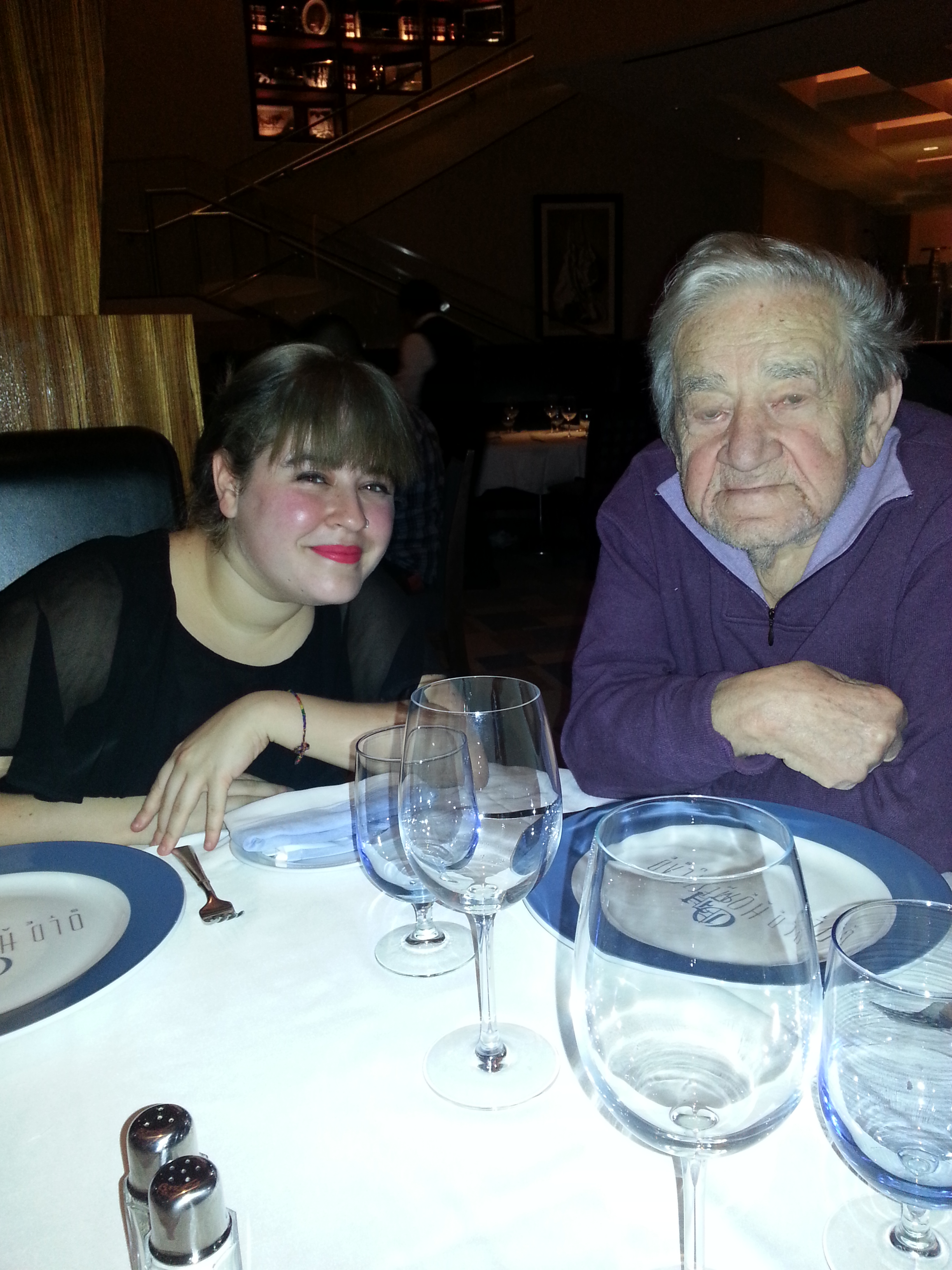
Many of us cry every year on the first night of Rosh HaShana when Mara sings She-hechiyanu. Part of the reason is the simple beauty of her voice. Part of it is the profundity of the words. But I am sure that much of it has always been anticipatory grief. We have known all along that we would not have Henry forever to be listening to his granddaughter praising God’s kindness for allowing us to reach another season. When we reach the next season, we’ll remember Henry and who he was to each one of us. We will thank God for another season and we will honor Henry’s memory as we listen to Mara chant She-hechiyanu.
May his memory be for a blessing. Rabbi Paula Mack Drill
 Three Rabbis Walk Into A Shul
Recent Comments