Reflections on “Walking as Witnesses”
The following is not the typical blog post from the OJC rabbis. It is a daily recap of the OJC-Poland 2024 experience that ended yesterday. It is meant for those who wanted to follow our experiences without resorting to Facebook. It is a bit long, but hopefully you will find it worthwhile reading! Please note, however, that to truly appreciate the emotional arc of our experiences, you really should read to the end….
OJC-Poland 2024: “Walking as Wintesses”
Day One
On the eve of arrival in Poland, leading a group of 32 (mostly from our synagogue community) to Krakow, Majdanek, Lublin and Warsaw, I wrestle with these thoughts:
How do we bear witness and process the inhumanity that was visited upon us? And how do we avoid permitting this victimization to be the primary motivator of our Jewish identification?
How can we make room for empathy towards those who were bystanders (sometimes innocent and sometimes willing), while also holding accountable those who actively participated in our suffering? What can we learn from those who stood up righteously in our defense or in defense of their own humanity?
How do we appreciate Jewish physical and spiritual resistance in spite of Jewish suffering?
How can Poland remain both home and graveyard?
How do we understand Jewish life in Poland today? What is its meaning and mission?
And how does all our wrestling translate into a productive and empowering way to confront our current circumstances as American Jews?
Though this is my third time leading this trip, I anticipate an emotional, challenging and hopefully meaningful week ahead with what seems to be a very special group of people.
Day Two
Our group convened this afternoon to begin our tour of Krakow. After I offered an intention for the days ahead, we set off for the Jewish quarter in Kazimierz.
Our tour guide walked us through the bustling city and into the heart of Jewish life here, home to the world’s largest annual Jewish festival. We visited the Altshul, the Rema Synagogue and Cemetery, and the Temple Synagogue, tracing the history of a Jewish presence dating back to the 15th century.
Our tour ended at JCC Krakow, where we dined and met with CEO Jonathan Ornstein, who shared with us his perspective on the phenomenon of a growing Jewish presence in what many considered a Jewish graveyard. The work that is being done for those discovering Jewish roots is remarkable, and the JCC has become a safe haven and support center for Ukrainian refugees.
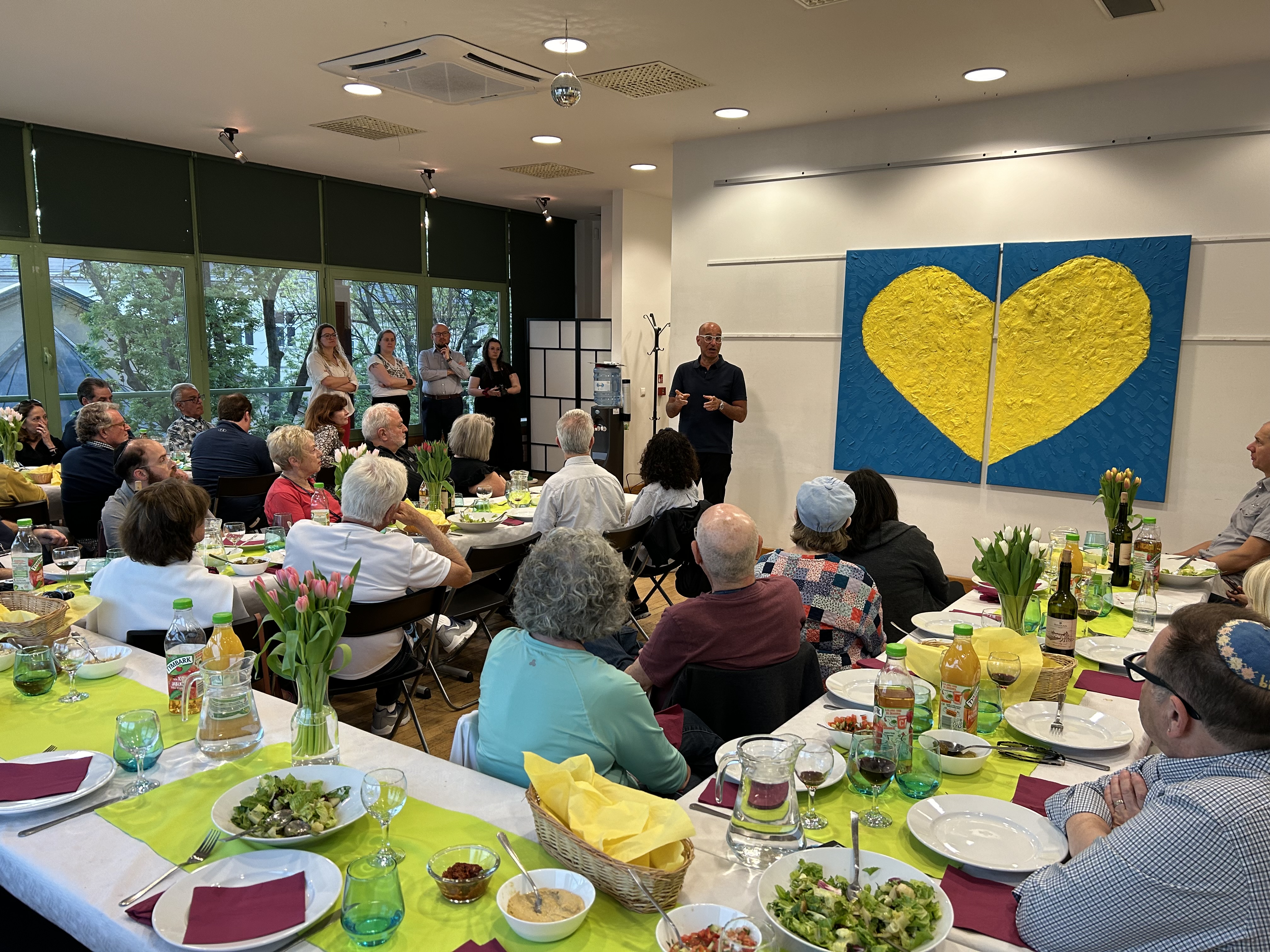
We asked ourselves the question earlier today, “why are we here”? After our first experiences in Krakow, we can answer that we are here to witness the resilience of the Jewish people.
Day Three
An early start on a warm and sunny day took us through the lush Polish countryside, out of Krakow and to Auschwitz and Birkenau. As we approached the site of the slaughter of 1.1 million Jews, I could sense the ghosts of the dead walking through the shadows of the dense woods, beckoning us to come bear witness.
Touring the exhibition halls gave us the history of the site’s construction and the story of how Jewish lives were routed to this final destination for so many. More impactful, however, was seeing the belongings of individuals who were given hope that they were heading from a ghetto to somewhere else — a suitcase, a pot. The piles of eyeglasses, prosthetic limbs and hair told us the unimaginable end that was met instead.

We left Birkenau and stopped at the remaining synagogue of the city of Oswiecim (Oswiecim Synagogue), where we had the opportunity to reflect on our personal reactions to the experience. We felt speechless, overwhelmed, sad, angry, scared, determined, resilient, strong, hopeful, all of the above and more. We felt the cognitive dissonance of walking in the sun on a beautiful day along the path that led to death for so many; of the magnificent weather for a space we associate with the color grey; of the bustling life going on all around, and even within, a torture chamber.
We will continue to let the images settle in our brains and the feelings come to rest in our hearts. It’s time to literally and figuratively wash off the dust as we prepare for Shabbat. This evening we will welcome the Sabbath queen as royalty ourselves. We are here, and we are alive. This Shabbat we make our presence known to God, to one another, and to all the ghosts relying on us to continue their legacies.
Day Four
Krakow is a magnificent city. It avoided destruction during multiple wars, in part because the Poles were quick to retreat in an effort to spare their crown jewel, in part because aggressors made it their center of operations. From castles to churches, we were impressed by the scale, opulence and history reflected by its layers of architectural beauty. Crowded and vibrant public squares and outdoor cafes showed us a free and happy society.
So what does it say about Jewish life in Poland if I tell you we had a perfect Shabbat in Krakow, from sundown to Saturday night? A space of our own in our gracious and inviting boutique hotel, a warm and uplifting Kabbalat Shabbat, and a sumptuous kosher dinner prepared by Chef Alon; morning Shabbat tefillah at the Rema Synagogue with locals and visitors, accompanied by melodies both familiar and new (giving me a couple of ideas to bring home!), where I received an aliyah (thanks David Simkins!) and couldn’t help but tear up thinking about what my grandfather z”l would say; a late morning walking tour to the Old Town; an afternoon walk to the site of the Jewish Ghetto and Schindler’s factory; and, of course, Havdalah.
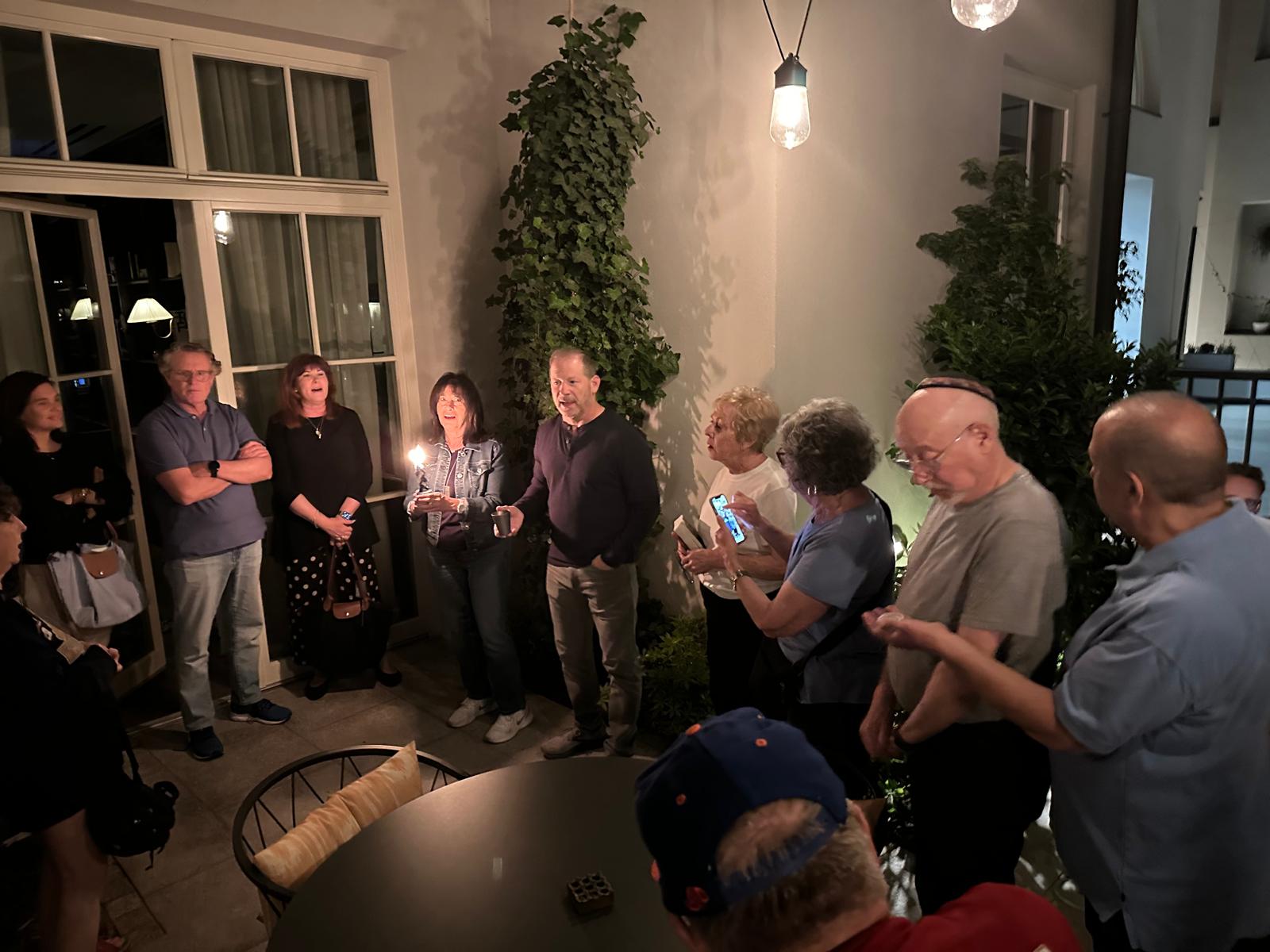
Out of the depths of Friday’s experience at Auschwitz we rose up to feel our souls soar (in stark contrast to our sore soles!), and this morning we once again descend into the pit that was Majdanek.
May we rise once again, Am Yisrael chai.
Day Five
An early departure from Krakow for the long ride to Majdanek was not a given. Despite the inconvenience and the apprehension about committing to experiencing a camp that could be operational in minutes, we knew we had made the right decision immediately upon our arrival.
Simply put, every Jew must see what we saw. It was a comfort to see multiple “March of the Living” groups of teens walking by us, sitting in reflection. On this eve of Yom Hashoah, they are learning the lesson we must all learn: Our Jewish identities and way of life are what has given us the resilience to survive, live and build lives. Our enduring the worst atrocities humans could inflict upon others only proved that we the Jewish People are the source of hope for all humanity.

Sitting in the Yeshiva of Chochmei Lublin, we felt the power that centuries of learning and prioritization of teaching and living Jewishly has brought to our ancestors and continues to provide for our children.
And despite terrible traffic that delayed our arrival in Warsaw by 2 hours, we still managed to hold our own Yom Hashoah commemoration, reflecting on what it means to us in the wake of this experience to be “keepers of the flame”.
Tonight, through the miracle of technology, I was able to share my reflections from this trip on the heroism of my own grandparents, Israel and Sonia Neiman z”l, to see generations representing the survivors of their own families, and to hear Amy Edelstein share her own story. I hope the next 24 hours will provide each of us the opportunity to reflect on what “never forget” means to us in light of where we find ourselves today.
Day Six
Too many people are unaware that the full name of Holocaust Remembrance Day is actually Yom Hashoah v’Hagevurah, meaning the day of remembering the destruction and the heroism.
On this Yom Hashoah, we find ourselves in Warsaw, the place that inspired the full name of the commemoration. The Warsaw Ghetto was obviously a place of terrible suffering as a result of inhumane treatment and living conditions. But while the Nazis tried to strip the Jews of their humanity and ultimately set about liquidating the ghetto, its residents fought until the end. After unexpectedly costing the Nazis soldiers’ lives, resources and time, the persistent and heroic Jews ultimately took their own lives in the face of an overwhelming Nazi military response.
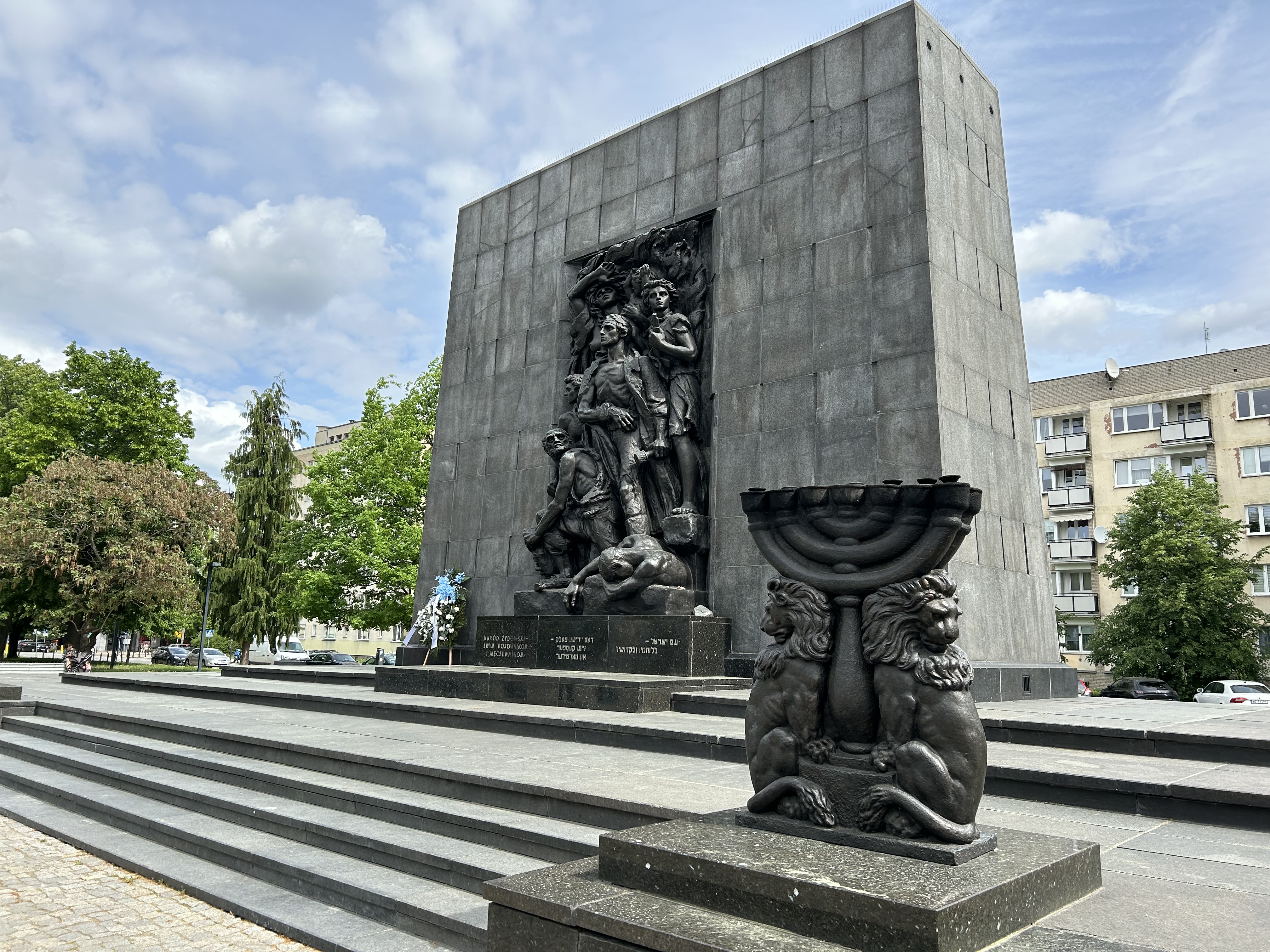
There are few remains of the actual physical ghetto or of the WWII city, given that 85 percent of Warsaw was reduced to rubble. But there are reminders everywhere of Jewish presence, persistence and rebirth, and of the Jewish history that is being rediscovered and examined by so many Polish citizens. From public memorials (plaques, monuments, structures like the deportation platform) to the new Polin Museum, it’s hard to be in Warsaw and not be reminded of the city’s Jewish heritage.
Standing in the Nozyk Synagogue, the only synagogue that remains in Warsaw today, we reflected on the connection between the heroism shown in Warsaw by the likes of Mordechai Anielewicz and the image of the “new Jews” who fought for the establishment of the State of Israel. Our voices echoed in the sanctuary as we sang a prayer for the hostages on this Day 213 of their Gazan captivity, the prayer for the State of Israel, and Am Yisrael Chai.
The Warsaw Jewish cemetery is history told in stone. Parts of the cemetery have been restored with monuments erected symbolically to pay homage to the many greats of Warsaw’s Jewish past. But as Nancy and I went in search of the burial place of our daughter-in-law’s relative who was buried here in 1934, we found ourselves in the deep, dark recesses of an abandoned graveyard with toppled and broken stones, one plot indistinguishable from the next. I felt the shadows closing in on us, and I was reminded of the brutality Jews experienced in a place they once called home.
A day to remember the heroism. A day to remember the destruction. Never again. Never again.
Day Seven
It’s honestly hard to appreciate how we got here without experiencing it for oneself. Considering this emotional roller coaster of a ride we’ve been on and where it started, most of us (if not all) could not have imagined finishing this journey where we did.
Today we took in a presentation from the Polin Museum about the “righteous gentiles” who risked and even gave their own lives protecting Jews. We heard an honest assessment of non-Jewish attitudes towards the Jewish past, and of the ways in which “cultural” antisemitism manifests itself in Polish society.
Today we visited the Jewish Historical Institute, where we saw the written testimonies preserved by “Oyneg Shabbos”, the underground archivists of the Warsaw Ghetto. Their heroic efforts of spiritual resistance have preserved legacies and eyewitness testimonies for Polish and Jewish students of the past.
Today we visited the beautiful Warsaw Zoo, where Jan and Antonina Zabinski hid Jews whom they helped escape from the Warsaw Ghetto, some for days and some for years. We were treated to a piano concert of Chopin and Offenbach, the music Antonina played to signal to the Jews in her basement whether they could emerge from hiding, fall into silence, or head for tunnel that led to the cages beneath the zoo.

We finished our day at the JCC Warszawa, where we dined and learned from CEO Patrycja Dolowy and JDC Entwine fellow Sam Kapner about the continuing revival of Jewish life in Warsaw.
Despite the horrors of the past to which we bore witness, despite the reality that our feet walked above the ruins of Jewish homes, and despite our desire to claim and brandish our victimization against the world, there is a fragrant flowering of Jewish life in Poland. It is youthful, energetic, embracing, and proud. It is unencumbered by the past. It is recognized, appreciated, and even celebrated by non-Jewish Poles.
With great curiosity and a desire for answers, Jewish life is being rediscovered by those with Jewish roots; revealed by those who hid their Jewish identities; explored by those who have recognized that Judaism comprised a substantial piece of Polish history and culture; and remembered by those who don’t want to be condemned to repeat the past. In a Poland that continues to redefine and rebuild itself since its independence from Soviet rule, Warsaw is a safe place to openly identify and practice as a Jew.
Did I just say that?
We heard it from young, proud voices. We heard it from the people who are living it. Who are we to diminish their Jewish enthusiasm, spirit or determination in any way?
As we concluded our night and our Poland experience singing our anthem “Vehi sh’amdah,” the words came out feeling quite different than when we first sang them. May that which has sustained us, despite the enemies in every generation who have sought our destruction, continue enabling us to flourish along with God’s help.

Being Here, Being There
In the middle of teaching my Kulanu class last week, I was stopped in my tracks by one of my sixth graders who looked up at me and asked, “How can you leave us, Rabbi Drill, when you say that we are your favorite sixth grade ever?” How can I leave indeed? OJC is my spiritual home, my workplace of more than two decades, one of the happiest places for me to be. (Spoiler alert: I have told every sixth grade for the past 23 years that they are my favorite class ever.)
As you know, I announced in November 2022 my decision to retire from full-time pulpit work this coming June 2024. Every day since that announcement has been an opportunity to process what it will mean to leave this beloved community, and to be completely present to the gifts and joys of my work as your rabbi. It has been a time for us to share loving words about what we mean to each other in the context of this community.
Retiring from the full-time work at OJC will mean that I can spend more time with our ever expanding family, and be a very present Bubbe to grandchildren.
From the beginning, I have said that while I am retiring from being a full-time rabbi, I am not yet done “rabbi-ing.” To prepare for “Act Three”, I met with wise colleagues and mentors at the Rabbinical Assembly and spent six months working with an executive coach. My mentors encouraged me to talk to lots of people and ask lots of questions for a full year before making any decisions about what kind of work I might do after OJC. My executive coach helped me articulate my primary values as I considered the kind of work that I would take on. Those values are: working with a fulfilling sense of purpose, acting from a place of love, and having flexibility for life.
In January, I started seriously pursuing some of my ideas and have now established two part-time pieces of rabbinic work that I will be engaged with once I retire from OJC.
Beginning in September, I will be serving my hometown synagogue, Congregation Agudath Israel in Caldwell, New Jersey as Rabbi in Residence, working one quarter time to teach and assist the congregation’s rabbi, Rabbi Ari Lucas, in various clergy tasks.
I will also be working as a Mentor in the JTS Rabbinical School Mechinah Program, meeting virtually to guide candidates spiritually as they prepare for Rabbinical School through a year of Hebrew and text skill preparation.
These two very part-time positions will allow me to feel useful, make the most of my strongest skills, and still allow me the luxury of time and energy for family.
And as I hope I have shown all of you day by day and week by week, until June 30, I am completely Rabbi Paula Mack Drill of the Orangetown Jewish Center.
Shavua tov, have a great week ahead, Rabbi Drill
Three Year Old’s Theology
We have entered the Universe of Why. At the age of 3 1/4, Carmel‘s conversations are now punctuated with a demand for more explanation: Why, Bubbe? But why, Bubbe?
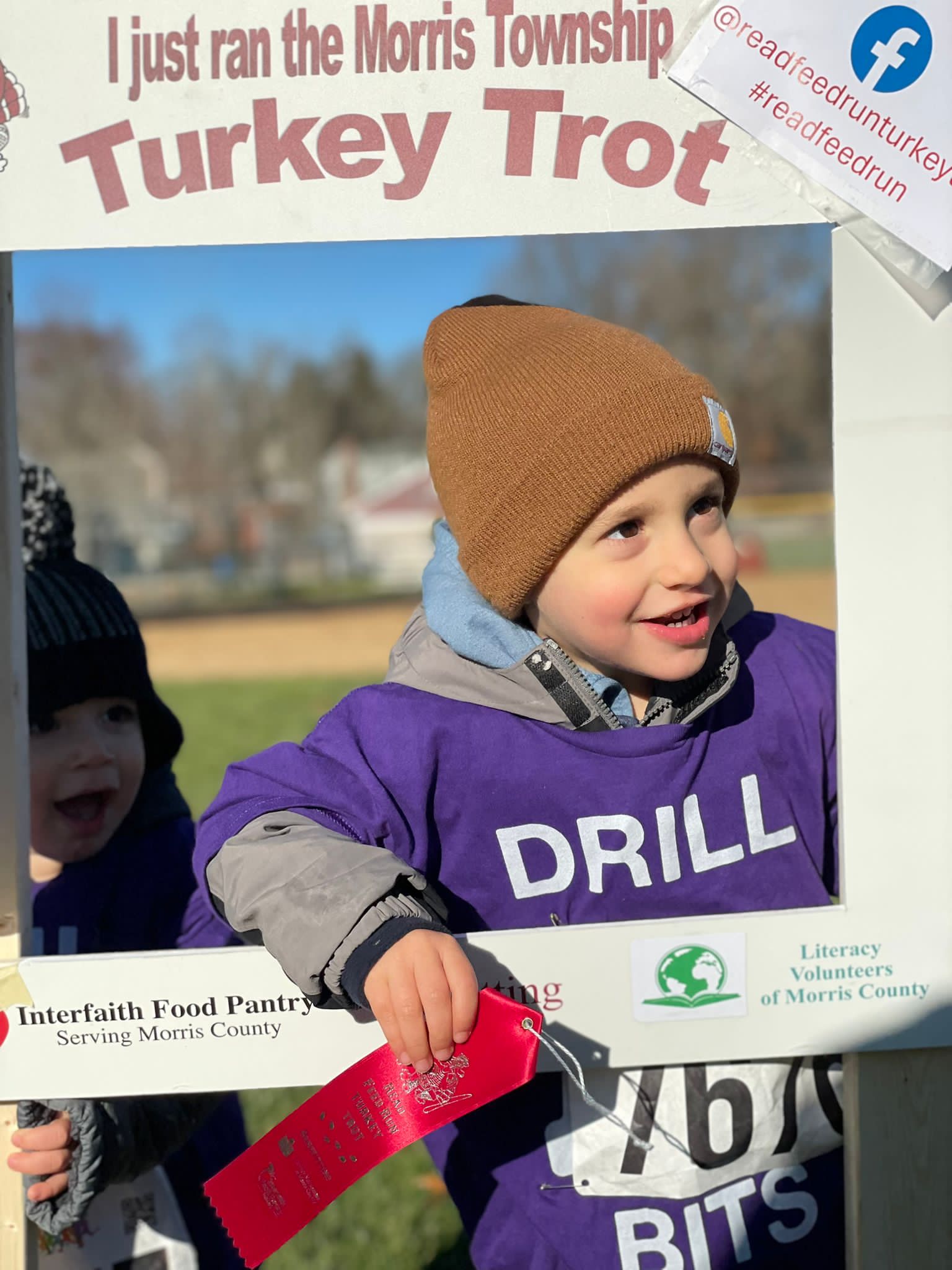
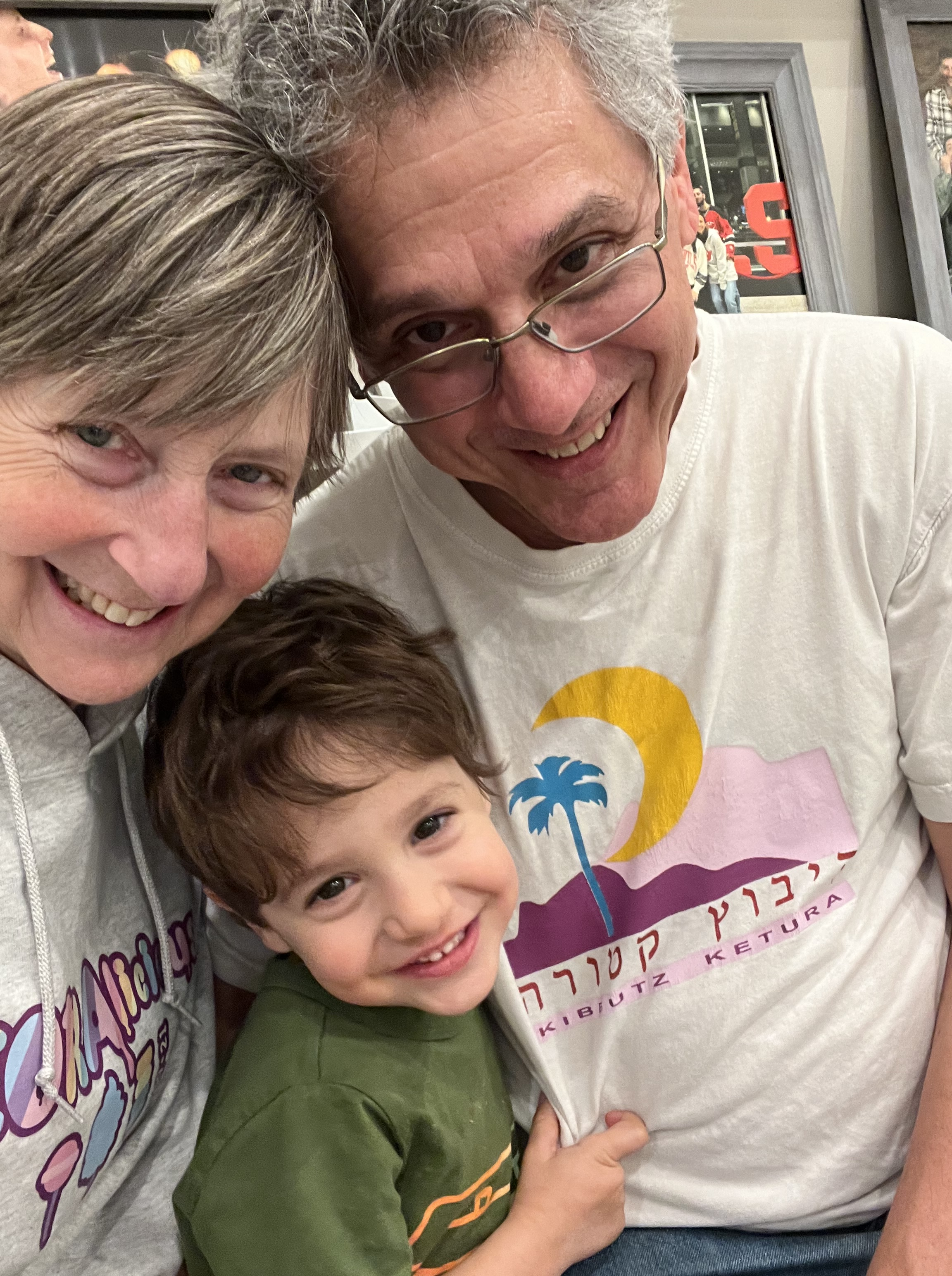
Luckily for me, there is one generalized answer that satisfies Carmel every time and has done so since before he was able to verbalize these questions. My answers are very often about God.
On the way to childcare this morning, many branches are down and lying in the streets. We discuss the heavy wind-driven rain of last night, and Carmel asks me why it happened.
“God made the storm and also blessed us with safe homes so that we can listen to the wind and rain, but not be outside in it.” Carmel agrees, “God keeps us safe and cozy.” (Cozy is a favorite word for Carmel who learned it from his mother who really loves to be cozy at home!)
We see work crews clearing leaves from clogged storm drains and Carmel asks why.
“God plans for snow, rain, and sun to take turns, but sometimes the rain is too fast and hard. So people have to help protect each other and the earth. We are God’s helpers.” This makes sense to Carmel, “I’m a helper.”
The sun suddenly peeks out from between the gray morning clouds so we discuss the rays of light that we can see; and yes, Carmel asks why.
“God created the sun, the moon, and the stars on the fourth day, and God really liked what was created and said that it was very good.” The creation story is one of Carmel‘s favorites, and he accepts it without question. “Tell me that story again, Bubbe!” I suppose God is another character for him alongside the Little Blue Truck and Pinkalicious!

At three years old, Carmel knows that when a breeze passes through the leaves of the tall trees in our yard, God is telling him that he is seen and he is safe. When the stars twinkle in a night sky, God is telling him that God is always with him so he is never alone.
Carmel loves to be in the OJC sanctuary and knows that the Torah is God‘s story of how we can be good people. He understands that God is with us in the sanctuary when we sing and pray together.
As Carmel continues to grow older, life will undoubtedly challenge his easy connection with God. He might just get busy and forget how simply God is the answer to so many questions. He will inevitably come to understand the contradictions and difficulties in the way the world works, and will learn that God cannot be the answer to every question. Life will disappoint or hurt him, and he will hold God responsible.
When these changes happen, I hope that Carmel will hold onto his unquestioning faith in God in the quiet moments when he is alone.
In that way, he can return to his simple and depend upon a connection with God when he grows older, and seeks to understand the answers to far more difficult questions than why branches fall down in a large windstorm.
I only know that the simplicity of his faith reminds me of the possibilities of my own faith. Can we recover the belief of our three year old selves in quiet moments? It might just be a start.
Rabbi Paula Mack Drill, a.k.a., Bubbe
Traveling with Two Hearts
Perhaps it is always the case that when a Jew travels in Europe, one travels simultaneously with two minds. Or more correctly, with two hearts.
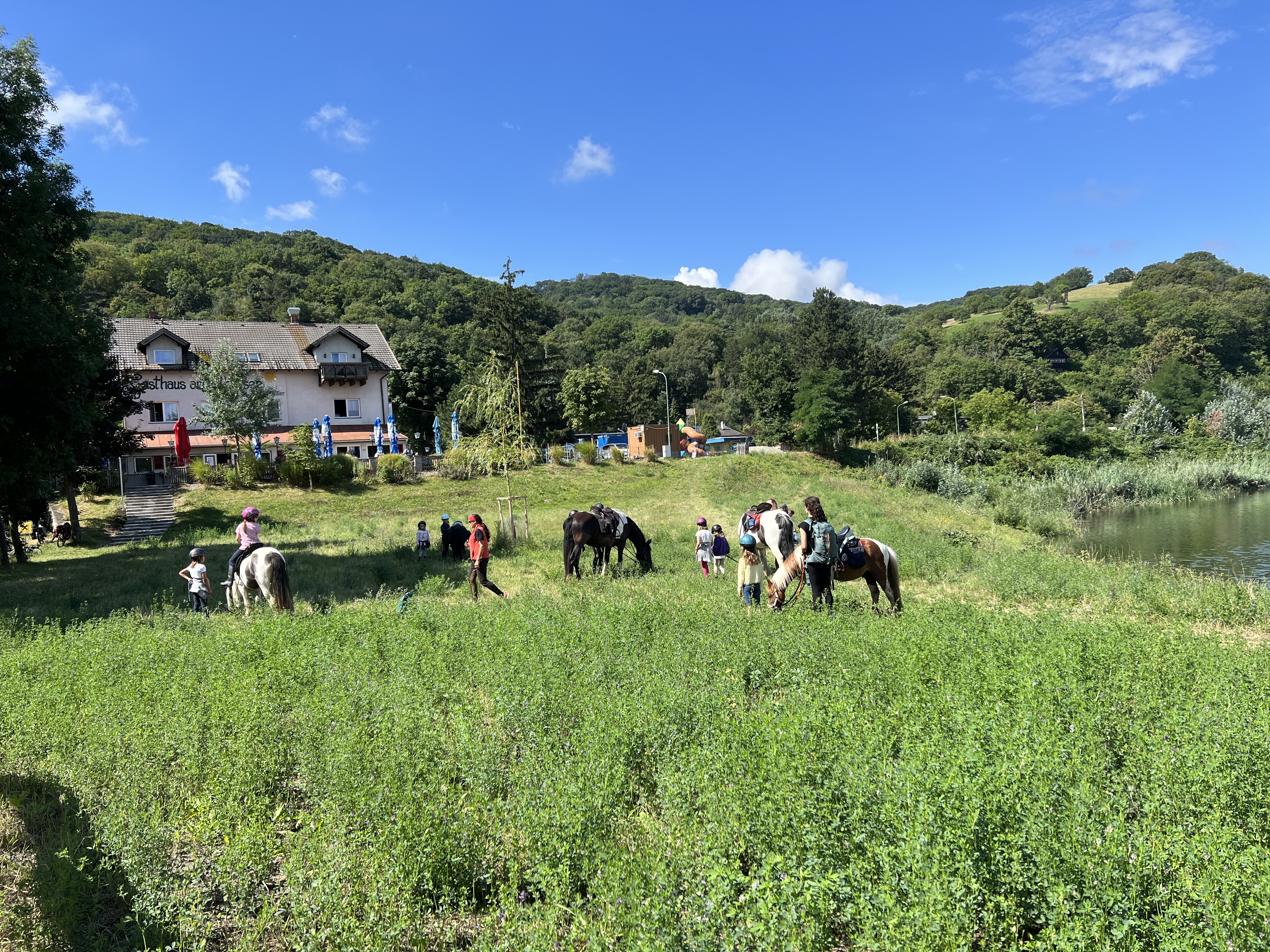
Of the first mind, here is an amazing vacation filled with everything one could desire, and for which I am grateful. We cycled and cruised the Danube from Prague to Budapest, enjoying river paths and forests, orchards and vineyards, castles and medieval forts, small villages and impressive cities. Jonathan and I enjoyed the fellowship of other cyclists, great food, and a Mozart concert.
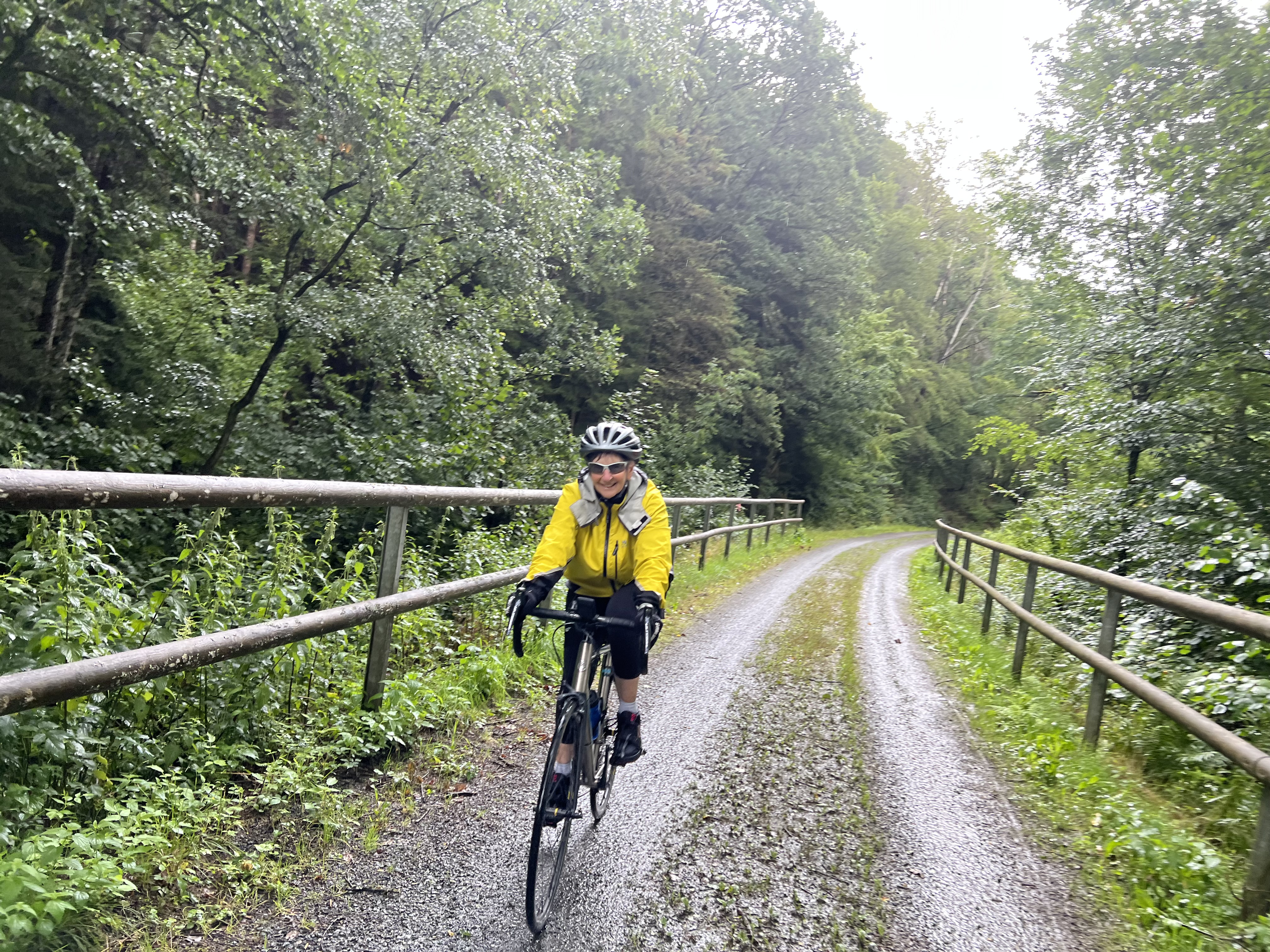
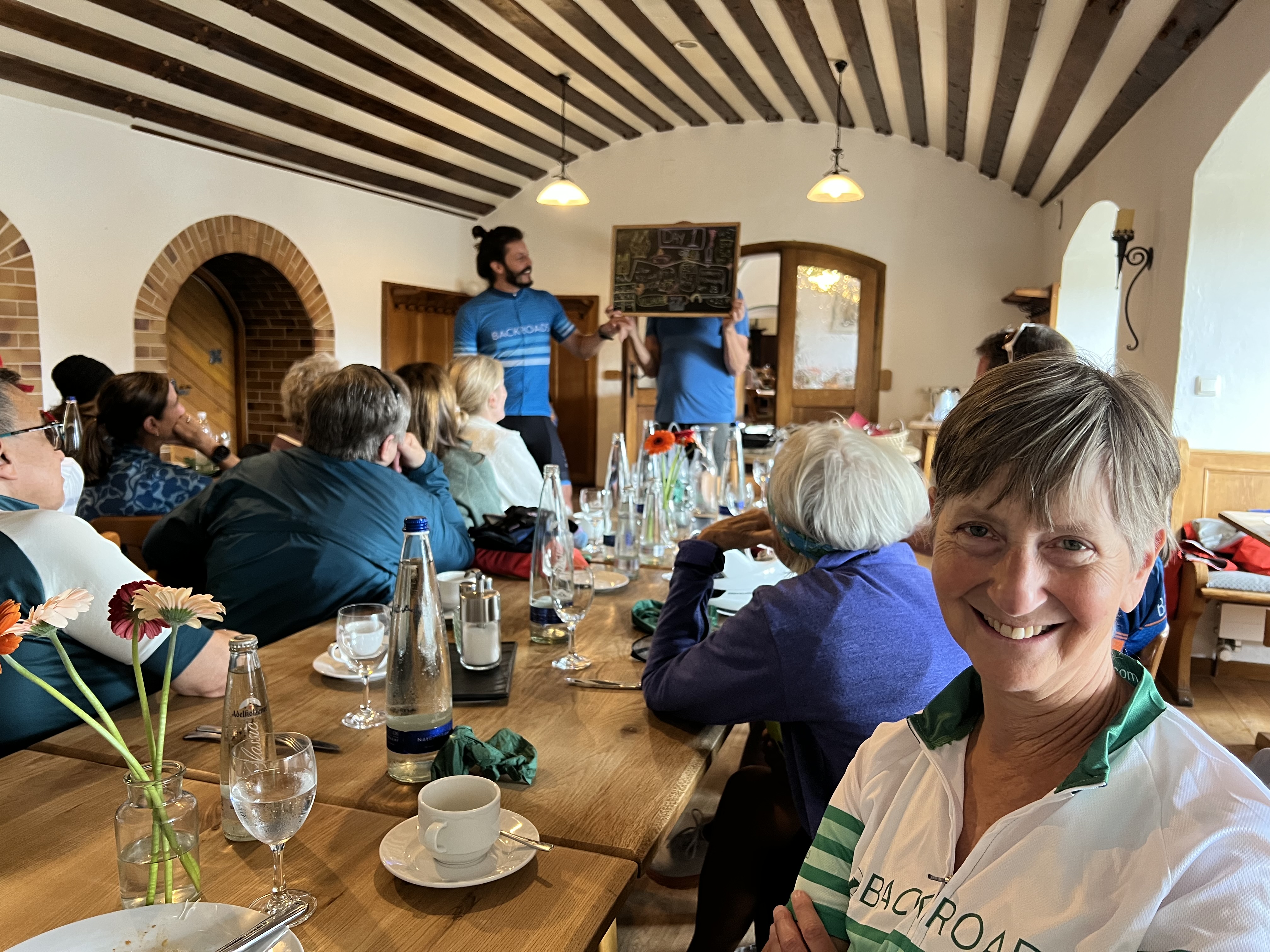
And in the other chamber of my heart, there are the unstoppable thoughts. What is the Jewish history of this place?
The answers were not completely absent from the week. We spent Shabbat in Prague with my friend and colleague, Rabbi Ron Hoffberg and the Masorti community there. Before Shabbat, Rabbi Hoffberg gave us a tour of the Jewish quarter. We saw four synagogues including the New Old Synagogue, the Jewish cemetery, and the stairs to the attic where the Golem is locked away. We viewed Prague from the perspective of the Jewish history there.
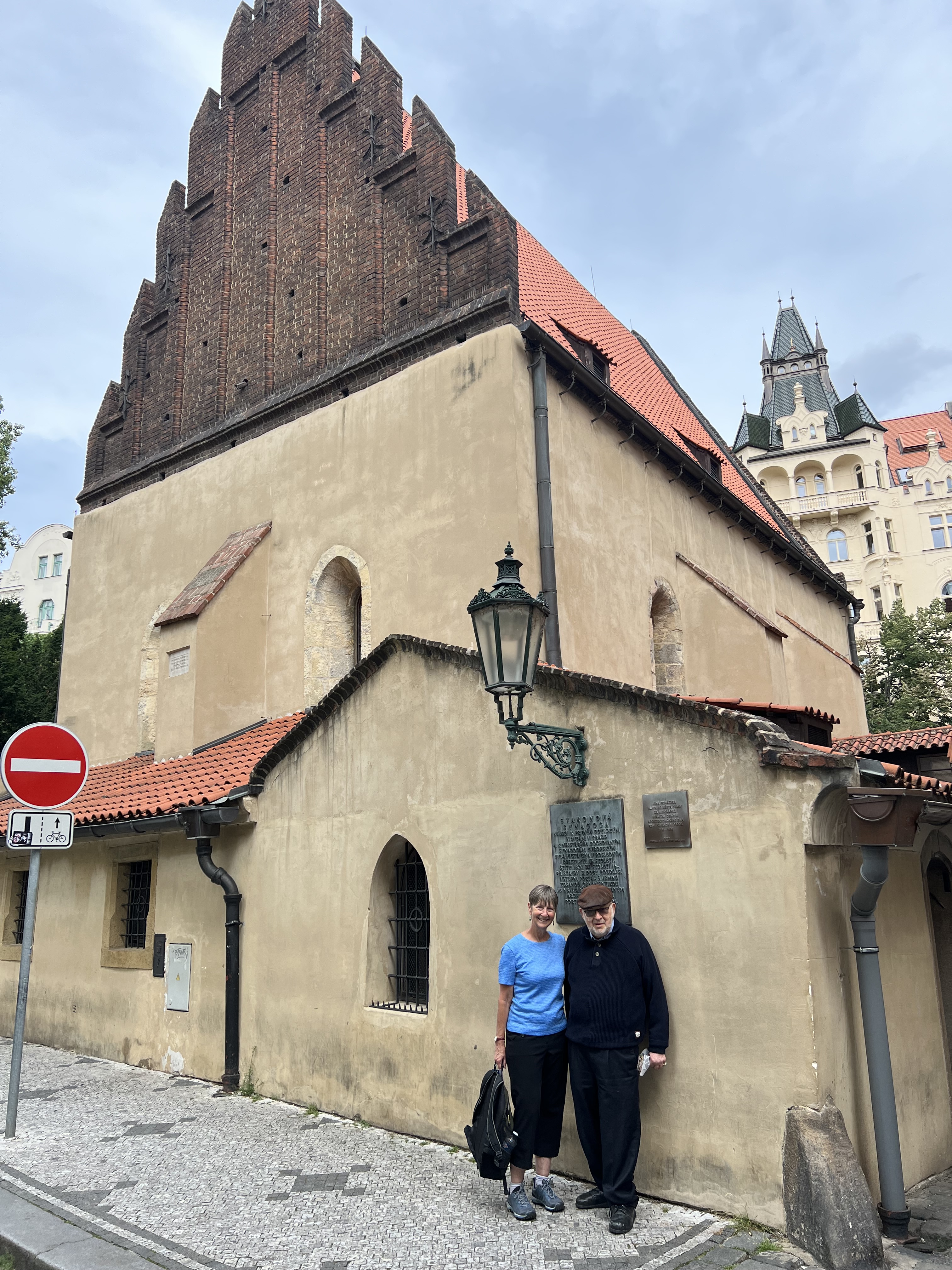

Once we joined our bike tour group, there was still acknowledgment of Jewish presence. In every historical explanation by a guide, there would be a mention: Franz Joseph was a strong protector of the Jews. All of these apartment buildings were inhabited by Jews who were welcomed into Linz for their merchant and banking skills. Sigmund Freud was a prized son of Vienna until “World War II forced him to leave.” See this statue of Princess Sisi and that of the great liberator of Vienna, Jan Sabieski – oh, and here is the representation of a Jew forced to clean the cobblestones with a tiny brush, very sad”. “Over here was a very large Jewish ghetto and around the corner is Bratislava’s Memorial to the Jews.”
The monologue in my mind offered quite a different tour:
Consider this quaint village. Did they round up their Jews or hide them?
Cycle in a windy, cold downpour through the Bavarian forests. How did Jewish refugees ever get warm when they were on the run?
Admire the large and prospering farm along the bike path. Did Jews hide in the barn or the haystacks?
The interior of this abbey is inspiring. Did the nuns here hide Jewish children or turn them in? View the sweeping interior of yet another Catholic Church. I wonder what the priests taught their parish about the Jews.


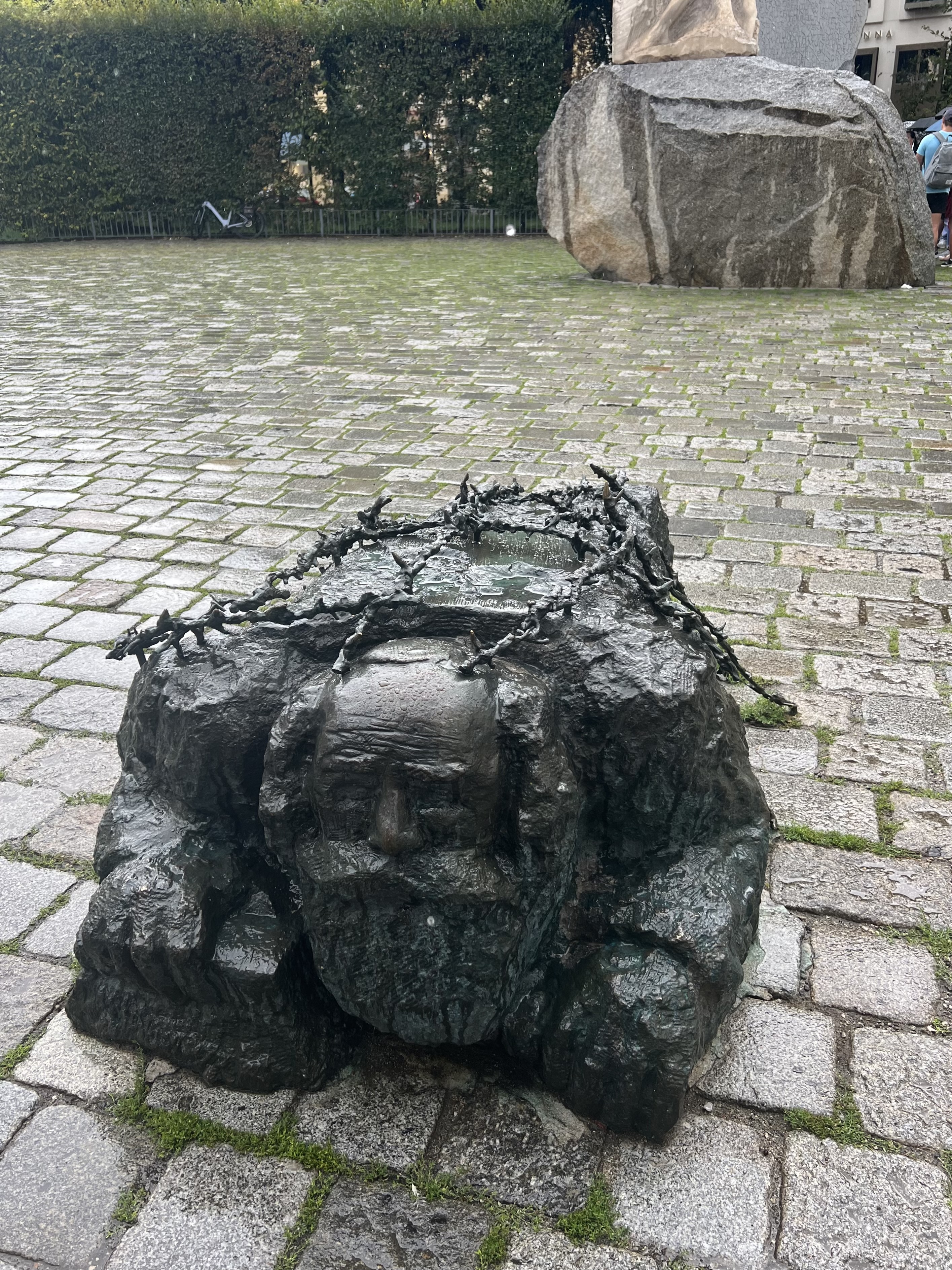
I thought that I was alone in these thoughts. But yesterday, our group had a walking tour of Budapest, and were guided to the haunting sculpture Shoes along the Danube. These bronze shoes are a memorial to the Budapest Jews who were rounded up at the very end of the War, and shot and killed at the edge of the Danube where the river turned red with their blood. Afterward, many members of our group came to just give me a hug or ask a question. I felt held and understood by very good human beings.

Last night, our guides asked everyone to share a highlight of the week. People spoke about cycling up a very hard mountain pass, or riding through the vineyards to a wine tasting. One of my fellow travelers began his memory by reflecting that we should all take seriously the sculpture of the shoes that we had seen earlier that day. He said that we are privileged to be able to travel the world, but we should be mindful that we are living in dark times. We should remember the fellowship of our travelers and live our lives to prove that kindness is stronger than hate.
In his few meaningful words, the two simultaneous travelers in my mind and heart united as one.
Wherever you are and whatever you are enjoying this summer, remember the superpower of kindness.
Rabbi Paula Mack Drill
A Poem on Yom HaShoah
Last night, OJC experienced a particularly emotional Sonia and Israel Neiman Shoah Memorial Project as we learned with Dan Grunfeld, author of By the Grace of the Game. Dan presented the inspiring story of his family’s Holocaust legacy and the trajectory of his father, the great Ernie Grunfeld of NY Knicks fame. He shared the tragic lessons of the Shoah together with his anyu’s (grandmother’s) lesson for life: Have hope!
At the beginning of the program, Rabbi Scheff read a poem that I wrote for the day. I share it here now.
She Read the News Every Day
She read the news every day.
On Shabbes, it was all they talked about.
Still, on Sunday morning she took the baby early so her daughter-in-law could sleep late
They built towers of blocks and she showed him how to make a house with playing cards
At night she made a big dinner for all of them
And they ate merrily, laughing and loud, as always.
He listened to the radio each night as he enjoyed his cigar.
It was all they talked about in the cafés and restaurants where he met clients for lunch.
Still, every morning, he knotted his tie just so, matching his pocket square to the exact shade of blue
He carried the leather brief bag with his initials on the side and enjoyed the blossoming trees on his short walk to the office
Coming home to his family, and his wife’s cooking, where he presided at the head of the table.
Until they didn’t.
Some were able to buy their way out.
Some hid in unthinkable circumstances.
Some went out to work and never came home.
Some were awakened in the middle of the night and shoved onto the street.
And we, in our hubris, hold them responsible.
We would have left sooner, we are sure.
We would have understood the signs and saved our families.
I am not so sure anymore.
I read the news and talk in the cafés
And still I wake early with the baby to let my daughter-in-law sleep late.
I cook a large dinner, and we eat merrily.
Rabbi Paula Mack Drill
Crossing a Red Line
What is your red line? Mine has just been crossed.
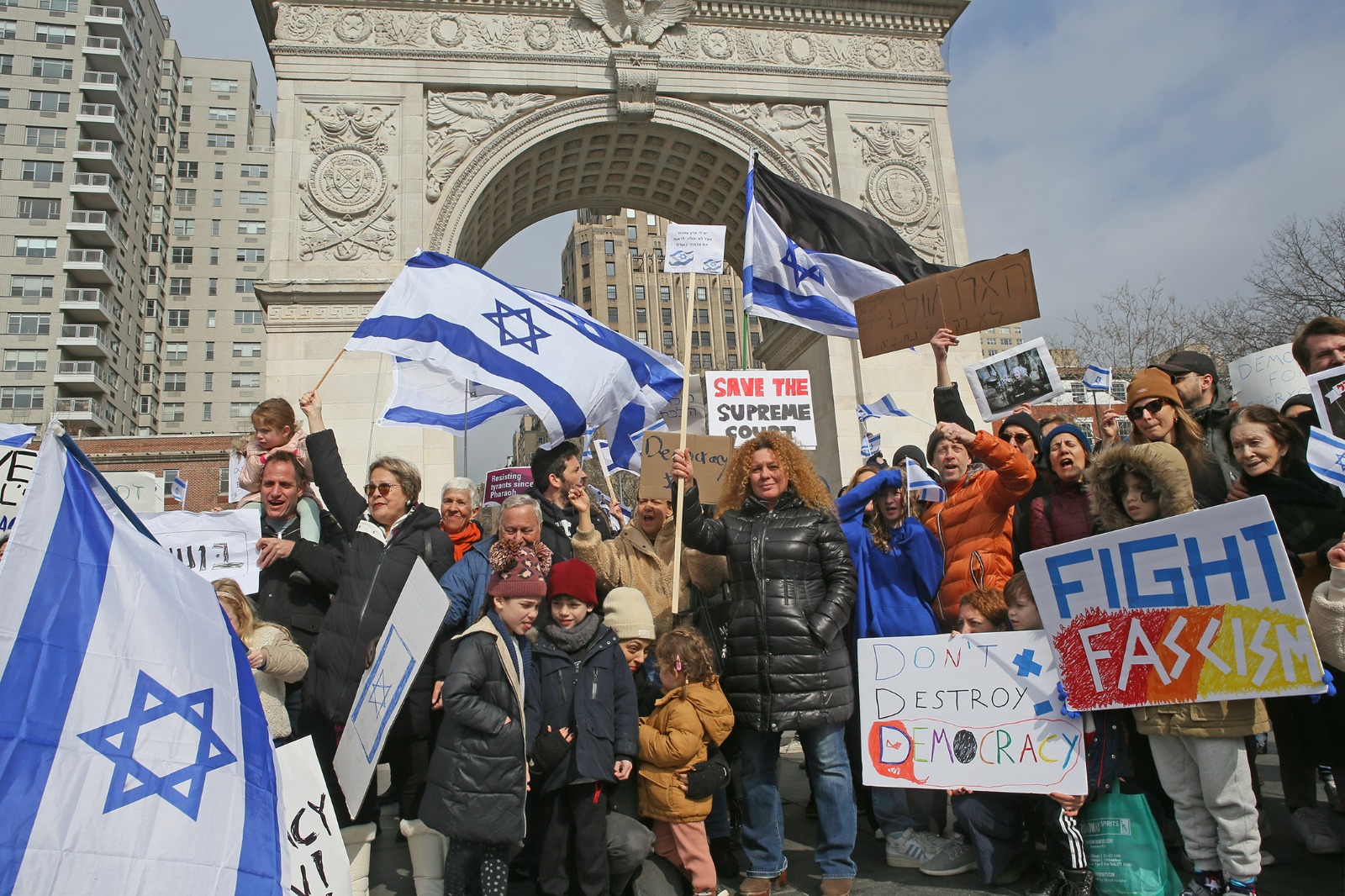
I have been filled with sorrow, outrage and concern over the past two months, regarding the intentions and actions of the new coalition government in the Israeli Knesset under the leadership of Bibi Netanyahu.
Your rabbis have attempted to educate according to values of Judaism and democracy through a sermon, a webinar with Yizhar Hess (CEO of WZO) and my son Josh, and an extensive letter filled with analysis and resources for you.

I have thought time and again over these past weeks of writing to you in this blog. Each time, I wondered what I could possibly say that would be either new or useful.
This morning, I woke to the news that last night, 400 Jewish settlers poured down a hill from Jewish West Bank settlements into the small Palestinian town of Huwara and neighboring villages, where they rampaged, setting fire to 40 buildings and hundreds of cars, causing injury to one hundred people, killing one Palestinian man, and destroying extensive amounts of property.
What is the context of these riots?
Yesterday, two young Jewish brothers in their twenties, Hillel and Yagev Yaniv, were tragically murdered in a terrorist attack. Even as security forces pursued the terrorist responsible for this heinous act, hundreds of Jews rioted in Huwara with the support of senior political figures. Answering violence with more violence, taking the law into their own hands, only six of these 400 settlers have been arrested.
While both Prime Minister Benyamin Netanyahu and President Isaac Herzog have officially condemned the Jewish violence, some elected officials in Israel justified the violence and burning of villages.
As your rabbi, a Zionist, a Jew, and a fellow human, I feel compelled to take action today. What can I do but use my words which Judaism has taught are more powerful than the sword? Yet what can I possibly do through these words that will be helpful?
Is it possible to convince you who love Israel to keep your faith in the Israeli people and in humanity?
I have a file in my hard drive that is called “Israel in Crisis.” Over the years, I have saved a tragic number of articles and emails regarding terrorist attacks against Israeli citizens, missile strikes against Israeli civilians in towns and cities, and all-out war. When this new government was elected in Israel, I did not create a new file. I simply started storing information in this same file called “Israel in Crisis.” This time, the crisis is from within.
In a powerful open letter to Israel’s friends in North America, published on February 2, 2023, Times of Israel article, Matti Friedman, Yossi Klein-Halevi, and Daniel Gordis warned us: “ the changes a foot will have dire consequences for the solidarity of Israel’s society, and for its economic miracle, as our leading economists are warning. It will also threaten Israeli-American relations, and it will do grave damage to our relations with you, our sisters and brothers in the Diaspora.”
It’s not just these famous columnists from across the political spectrum who are asking us to step up and let Israeli politicians know where we stand. Israeli family and friends are pleading with us to take action.
We lovers of Zion from outside of Israel have been given mixed messages through the years. Some of us internalized the message that we have no right to speak up regarding internal Israeli matters if we do not serve in the IDF or vote in the elections of the State.
This directive no longer feels tenable to me on this morning, after unspeakable violence against innocent Palestinians committed by Jewish hands in response to a terrorist act that took the lives of two innocent Jews.
I encourage you to continue studying and asking questions about the situation in Israel. To me, it seems clear that Israeli leaders need to hear where Zionists from outside of Israel stand. While Israel belongs first and foremost to the citizens of Israel, Israel matters to the entire peoplehood of Judaism. This government has gone far beyond my understanding of what a Jewish state and a democratic nation should be. I will continue writing and calling my representatives, asking them to make clear to the current government of Israel that the path they are currently on will lead to dire consequences. I invite you to consider doing the same.
May the memory of the murdered Yaniv brothers be for a blessing. May we all join together to work for peace between all of the citizens of Israel, and between Israelis and Palestinians in the occupied territories.
Rabbi Paula Mack Drill
Learning from our students
We learn from Rabbi Chanina in the Talmud (Taanit 7a), “I have learned much from my teachers, more from my colleagues, and most from my students.” Most of us, I imagine, would guess that the best learning is “top down,” that teacher knows best. The Talmudic quote, however, reflects the attitude of a teacher who must have had an intern.

For more than two decades, our synagogue has served as a placement site for the Jewish Theological Seminary Rabbinical School’s Resnick Internship program for fourth year (the penultimate year of study) students. Our community has benefited from the teachings of an illustrious group of rabbis-to-be, now all rabbis (but the last two). And I am confident that the rabbinates of each of these former interns have been shaped in some way by their time with OJC’s rabbis and community.

What I did not expect when I first started participating in this internship program was how much I would take away, personally and professionally, from the experience of mentoring. As an intern, Rabbi Drill came to our community with a professional background in social work and a personal background as a lay leader in a synagogue community. Her perspectives, experiences and questions about my methods helped me refine and improve upon my own rabbinic practice.

Over the years and across the decades, my own understanding of Torah has been expanded by the experiences and attitudes of our interns. They have kept me current in cultural trends, language and the potential uses of technology. Their understanding of society has helped me—and I believe our community—move well beyond political correctness to a place of social awareness, intelligence, understanding and empathy. While my professors and instructors have given me knowledge, theory and the structures inside which I would learn to exercise my rabbinic voice, it has been our interns—and for that matter all out students of Torah—who have taught me how my voice and Torah would resonate best.

Today, Lindsay Goldman (who grew up in our OJC community and served as our intern last year) will deliver her Senior Sermon. The ritual is a rite of passage for every rabbinical school student. Just as our own Ben Varon did last year, Lindsay will teach Torah to her community, including her peers, colleagues and teachers. She will be acknowledged by the JTS community as a teacher of Torah.

But we know, as did Rabbi Chanina, that we have already learned so much more Torah from her in her capacity as “our” student. She and our other interns have taught us how to teach, how to listen, how to grow and change, how to expand our grasp of Torah and the world.
Mazal tov to Lindsay, to her family and to all of us. May she—and may we all—continue to be students of Torah whose learning brings honor and greater wisdom to our tradition and to our teachers.
With admiration and appreciation,
Rabbi Craig Scheff
Mitzvah Day by the Numbers and So Much More
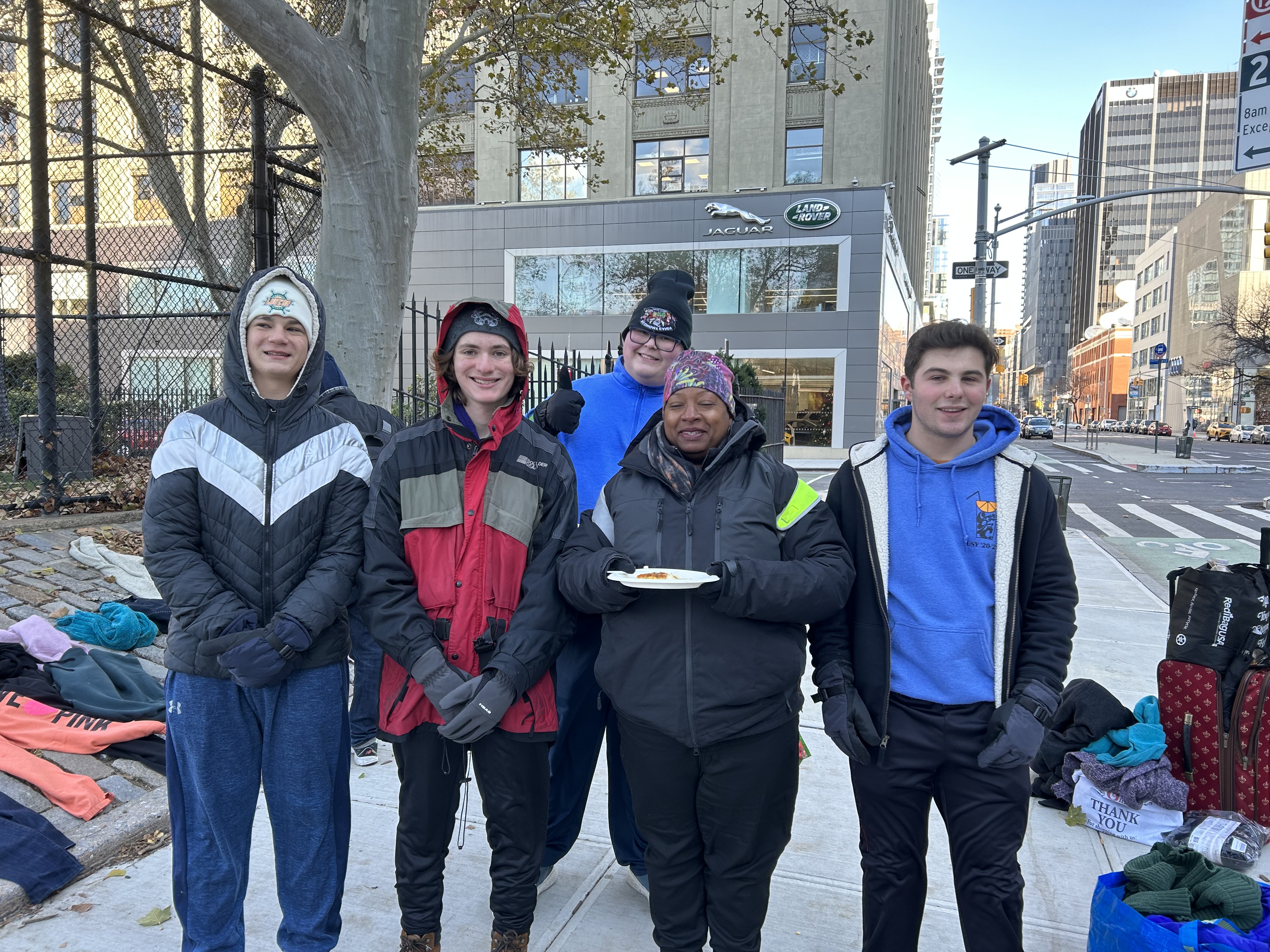
Sunday, November 20 at Orangetown Jewish Center was a hub of activity as mitzvoth of every kind were accomplished. One way to try to describe the day is by the numbers. Our annual Breakfast Run brought 18 large bags overflowing with new and gently used coats, clothing, socks, and toiletries, together with a warm breakfast, to people who are homeless in NYC. This mitzvah was accomplished by 18 hearty volunteers from the age of 15 through 75.
34 congregants were blood donors who helped save over 100 lives in total!
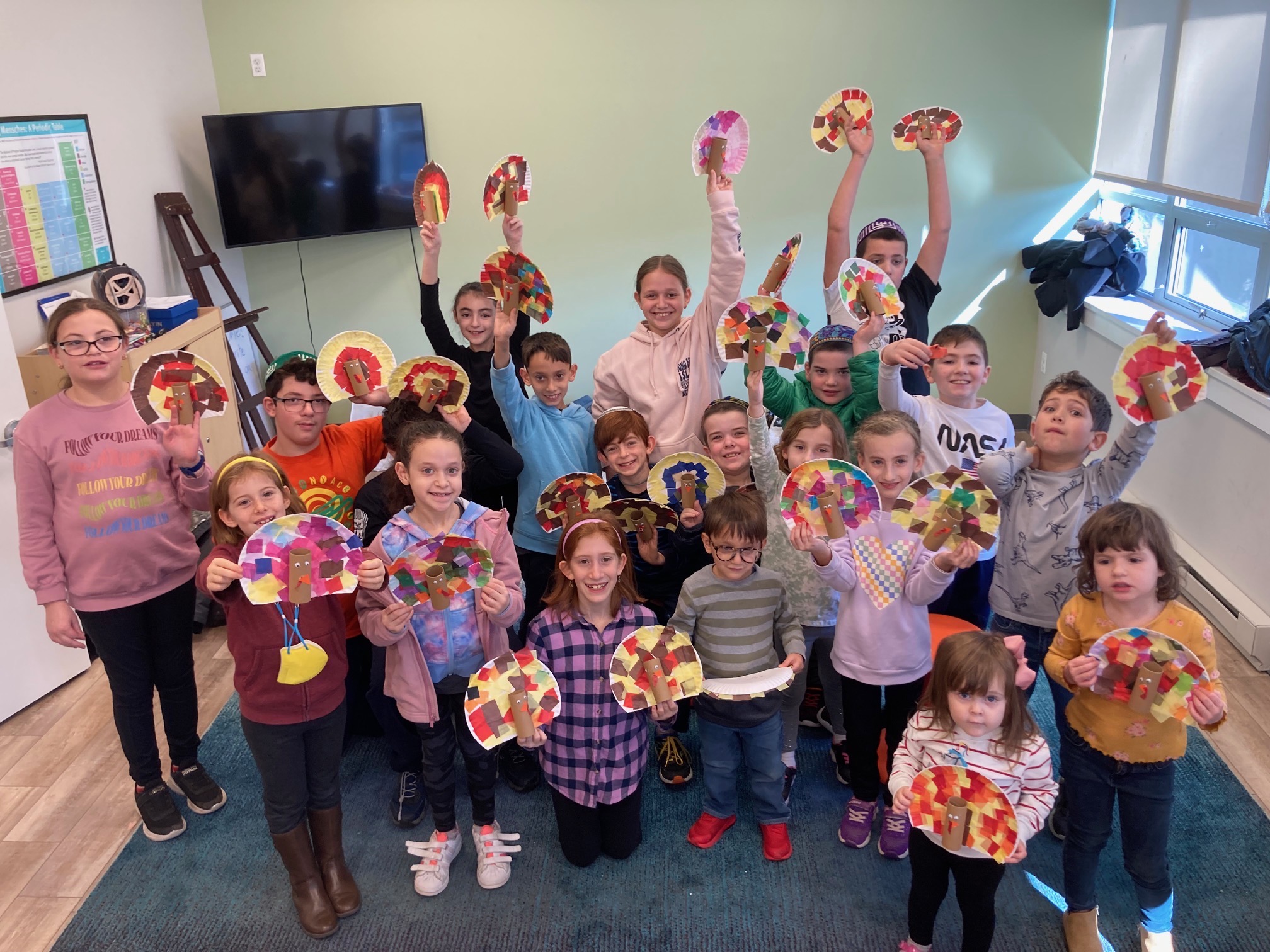
Over 20 children of all ages who handcrafted 40+ colorful Thanksgiving turkey decorations to share with residents at The Esplanade, and 40 congregants, young and old visited with Esplanade on the Palisades residents, singing and interacting with them.

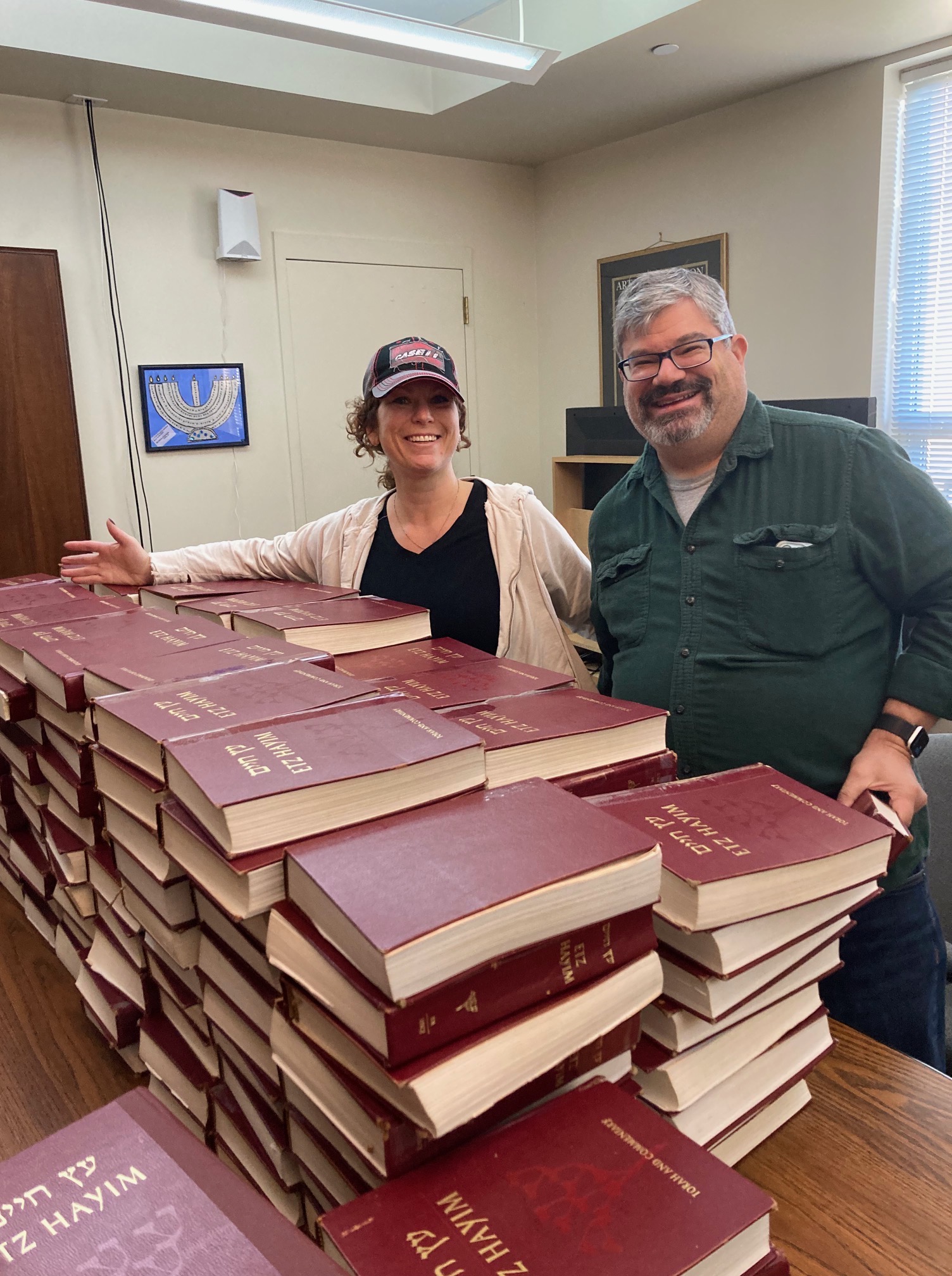
6 Chumash miracle workers mended the book spines, covers and pages of 34 Chumashim that were in disrepair.
12 Rhoda Bloom Kosher Food Pantry packers stood in the cold to load boxes of donated kosher food into recipients’ cars. OJC also collected 70 cans and boxes of food for the Rhoda Bloom Kosher Food Pantry.
10 participants learned with Rabbinic Intern Ilana Sandberg and 8 giggling yogis, raising funds to benefit The Rockland Pride Center.


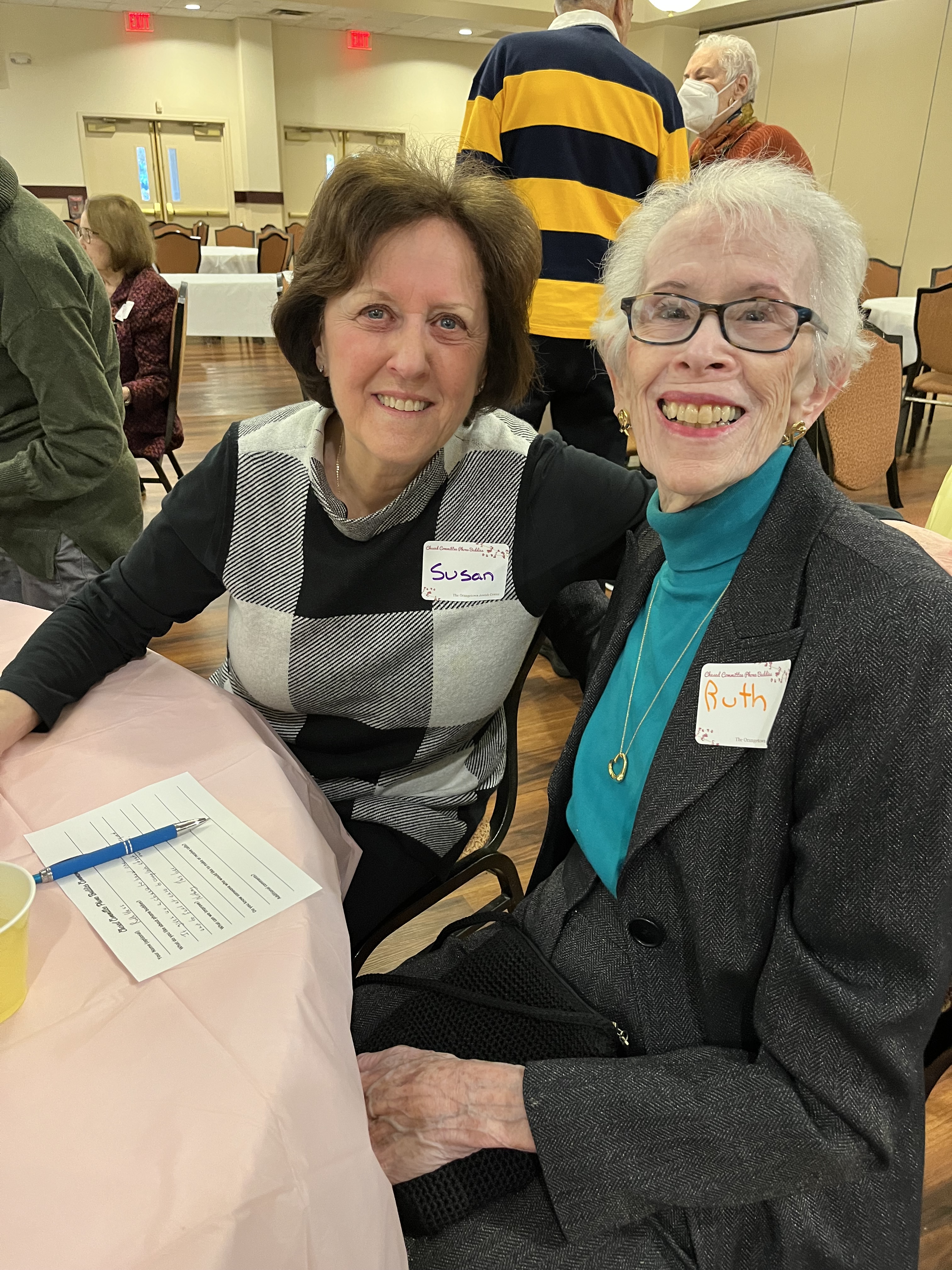
18 congregants learned with Rabbi Dahlia Bernstein about making every day a Mitzvah Day and 30 Phone Buddies connected and celebrated at the Chesed Committee’s tea party in memory of Madeline Roimisher.
90 homemade muffins, 14 children’s coats, and various children’s clothing and shoes were delivered to the Martin Luther King Multi-Purpose Center in Spring Valley and Proyecto Faro in Stony Point.
Almost 20 knitted and crocheted hats and scarves will be gifted to The Rockland Pride Center Youth Program for the December holidays.
So that’s one way to understand the day – by the numbers. We can also understand the day by the emotional experiences and amazing moments felt by everyone participating: the joyful noise of a room full of children creating a craft for an elder, the power of Amichai’s guitar and children singing as Esplanade residents sang and swayed… and some even danced, the full room of people donating blood, the quiet concentration of repairing sacred books, the delight of two congregants meeting face to face for the first time after being phone buddies for two and a half years.
But I actually have another way to comprehend Mitzvah Day 2022. As the building filled with people, as we worked side by side to make this world a little bit better, we all remembered something. We remembered who we are.
For me, Mitzvah Day reminded all of us at OJC that we are who we think we are. And I thank God for that on Mitzvah Day and every day.
With friendship, Rabbi Paula Mack Drill
Antisemitism Hits Home
I’ll just say it in a straightforward manner: I was completely shocked.
Perhaps I should not have been. Like you, I read every day about the uptick in antisemitic actions and bigoted verbiage on social media. Maybe I should have been shocked that I am almost 63 years old and this is the first time I have been a target of an antisemitic incident.
I was enjoying a Shabbat walk in the OJC neighborhood, strolling down Lester on my return to the Scheff house at about 3:45 in the afternoon. I looked like any other neighbor out for a walk, sneakers, shorts and a T-shirt . . . except that I had a kipa on my head.
A dark navy Jeep Wagoneer passed me on the street, windows down, and filled with teenage girls, maybe three or maybe four.
The girls screamed out the windows as they passed me, chanting, screaming horrible curse words punctuated with “Jew.” After two very long sentences were spewed, they broke into wild laughter and drove on.
Teenage girls just having a fun afternoon?
Only after they were out of sight did I realize several things. First, my eyesight was not good enough to see the license plate except to know that it was New York. Second, they were chanting in unison, in rhythm, clearly words that they had chanted before. And third, I was shaking. I felt victimized and angry. I honestly did not feel afraid, but I felt emotionally violated in our sweet, quiet neighborhood.
In my world, the words “shut up” are considered curse words. I do not like hearing curse words and tend to feel it as a punch in my body. The words that these girls used felt like a powerful blow.
It took me another short while to realize that I had just experienced a bias incident. It’s strange how our minds work, trying to protect us from the stark reality.
Today, 24 hours later, I am thinking about appropriate reactions. The incident has already been reported both to the police and to our own security team at OJC. I have made a solemn promise to carry a phone at all times, even on Shabbat, for safety sake.
And sharing the experience in this blog feels particularly important to me. If you have students in middle school or high school, please share this blog with them. The girls in that car are in their peer group. They certainly go to school with some of our children. Make sure that your children know that they should tell you or a responsible adult about anything of a biased or antisemitic nature that happens in their school or social circles, even if it seems insignificant to them at the time. Children might tell you that their “friends were just kidding.” We must educate our youth about what is funny, and what is most certainly not.
And finally, remember Rabbi Scheff’s and my teaching about being proactive rather than only being reactive when it comes to prejudice and bigotry of any kind. We can all make alliances in our own way; knowing our neighbors, participating in civic events, being curious about other minorities. We can show our Judaism proudly for the many beautiful ways in which it teaches us to be good neighbors and citizens.
I am truly fine. And I am also more motivated than ever to be a positive and educative force in our community.
Rabbi Paula Mack Drill
A Ramah Shabbat-a-gram to my community
It started with a letter from my rabbi, Henry Sosland of blessed memory, to my parents. No emails or texts way back in 1976, just a typed letter. It was an invitation to send me to Camp Ramah in New England, accompanied by an offer of financial assistance from the rabbi to help make it happen.
My parents didn’t know much about Ramah. They knew it was a Jewish camp. I think (?) they knew that daily prayer, daily learning and Hebrew were part of the program. They knew the rabbi sent his own kids there. In fact, Rachel Sosland, who was one grade ahead of me, was the only person I knew who attended. I’m not really sure why I agreed at the age of 12, sight unseen, to be shipped off for the summer to a dust bowl in Palmer, Massachusetts. But it was, as they say, the beginning of a beautiful friendship.
This year, Ramah is celebrating 75 years of Jewish camping. Since the founding in 1947 of the first Camp Ramah in Wisconsin—intended in part as a training ground for future Jewish leadership and in part as an experiment in enhancing Jewish education for children—Ramah has grown into a network of five day camps, ten overnight camps, family camps, Israel programs, global partnerships and educational experiences that continues to shape the lives of hundreds of thousands of children, teens and young adults. Ramah has produced a foundation for Judaism’s Conservative movement and continues to be the jewel in its crown. Nearly one quarter of our own synagogue families share a connection to the Ramah vision through camping or staffing. Our proximity to Ramah Day Camp in Nyack in particular has led to a unique relationship that has been mutually beneficial to both communities. Over the past 26 years, our OJC professional staff has been fed by the Ramah pipeline of educators. Today, Rabbi Drill, Rabbi Hersh, our youth director Sharon Rappaport, our music director Amichai Margolis and I can all trace our earliest connections to each other through Ramah.

I learned about the creation of Jewish family and the Jewish home from my parents and grandparents; but I learned about the creation of Jewish community from my time at Camp Ramah. What stayed with me from my three summers as a camper was not the feeling of praying on a Friday night at the lake; it was not the thrill of intra- or inter-camp competition; it was not the excitement of camping out on a three-day canoe trip. What I took away from camp—and what has informed my life all these years later—was an appreciation of the power of Jewish community.

When I finally chose the rabbinate as my career, I knew that my goal in serving a synagogue community would be to help fashion a community in the image of camp, the kind of community that I experienced and loved as a child. I also knew that the way there was not to bring a lake or a sunset to the synagogue, as some suggest. The emotional attachment to a physical space is insufficient for the purposes of creating holy community, though our stained glass windows certainly provide a beautiful focal point for gathering. For me, camp was—and synagogue would need to be—about empowerment, acceptance, and inclusion; about passion, care and connection; about experiences, growth and aspiration. Ramah taught me that Judaism is not a spectator sport, that prayer is best practiced and best received as a communal endeavor, and that Torah is best understood in the context of our personal interactions and shared moments.

Nancy, our four sons and I have 125 combined years of Ramah experiences. This summer, as Jason and I head to Ramah Sports Academy (RSA) for the summer and Nancy continues in her post as Communications Director of National Ramah, that number will climb a little higher. The Hebrew word ramah literally means “level” or “height.” As we give of our passion and experience to raise Ramah, its staff and campers to new heights, I know that we will bring back to our communities a renewed appreciation for what it means to be in kehillah kedoshah, holy community. I know that we will continue to learn, grow and be inspired by what Camp Ramah is teaching us about Jewish living.
Join us this Shabbat as we host Ramah‘s National Director Amy Skopp Cooper and celebrate our community’s connection to Ramah. Hopefully, together, we will continue to reach for new heights in Jewish learning and living, bringing us closer to each other and to the realization of our Divinely imbued potential.
And if you happen to get a letter from one of your rabbis….
Shabbat shalom,
Rabbi Craig Scheff
 Three Rabbis Walk Into A Shul
Recent Comments