Partners for Peace, Day Five
I bring you Rabbi Drill’s continuing journal from Israel:
As we walked back to our hotel from dinner at Piccolino in Jerusalem’s city center tonight, one of the trip participants pointed out that we had been on the go for fourteen hours! Today flew for me; every moment filled with deep new understandings.
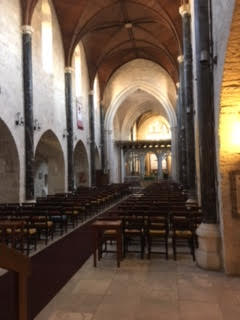


Our day began at the impressive St. George’s Cathedral, where we met with Rabbi David Rosen and Rev. Canon Hosam Naoum to hear about the many ways in which they try to fight back against growing insularity, lack of trust and extremism as people of faith. Hosam explained his complex identity as follows: “I am a Christian, an Arab (but not a Muslim), an Israeli (but not a Jew), and a Palestinian (but not a terrorist).” He mused that this difficult, complicated identity is perhaps a gift as it enables his role as a bridge builder. Rabbi Rosen suggested that he also has a multiple identity. “For conservative Jews, I am liberal and for liberal Jews, I am conservative.” Once the rabbi of the largest Orthodox congregation in South Africa, he became Chief Rabbi of Ireland before coming to Jerusalem. He told us, tongue-in-cheek, that places seem to improve when he leaves. Both men agree that religion is one of the problems in the region but can also be part of the solution. Rabbi Rosen described the tragedy of a zero-sum approach; Palestinian dignity and Israel security are intertwined and so there is a need for dual empathy.
Our next meeting, certainly to become one of the highlights of this trip, was a meeting with Meredith Rothbart and Mohammed Joulany of Kids4Peace.
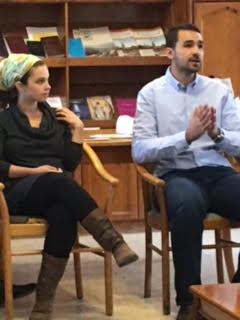

As these two colleagues and dear friends described the work that brings together Palestinian and Jewish children in Jerusalem and prepares them for coexistence through six intensive years of programming, they showed us what could be possible. When Meredith’s three-month-old son Ishai started fussing, Muhamed picked him up where the baby quickly fell asleep in his arms. At the end of their presentation, Meredith mused that in 20 years, Ishai will undoubtedly be serving in the IDF. She said, “I hope he doesn’t look back at this photograph of him passed out in Muhamed’s arms and see a terrible irony.” There was not a dry eye in the room.
After experiencing worship at the Cathedral where Rev. Naoum asked everyone there to pray for Jerusalem, for the Israelis and the Palestinians, we left for a tour of the seam, an in-depth seminar with Col. Danny Tirza, the developer of the security fence. As he explained the history and psychology of the fence (although media calls it a wall, only 5% of the entire 451 kilometers is concrete wall), I realized with a shock that many of my Christian colleagues did not know even the basic history of the first and second Intifadas. Placenames like Sbarro Pizza, the Dolphinarium, Park Hotel, Hebrew University Cafeteria, and Supersol, bus numbers like 6, 823, 32, 22 — all were completely unknown. That which is seared into the soul of the Jewish community was brand-new learning from many of my friends on this trip.
Our trip to Bethlehem and the Church of the Nativity was followed by a visit to Shorashim, a new initiative of community building and grassroots advocacy by settlers and Palestinians working together.

We heard the heart-wrenching stories of Shaul Judelman and Ali Abu Awwad who shared with striking honesty their narratives of assumptions, prejudice and violence and how they both changed over time. Each of them came to a place of understanding that cooperation and knowing the other is the only way forward. Shaul told us about how he learned that the person we are afraid of is afraid of us. Ali Abu told us about how he was transformed from a terrorist to a peacemaker.


When we said goodbye, I looked into the eyes of both these men and shook their hands, thanking them for their heroism, for taking the risk to step outside of the cultural assumptions of their communities to try to build a different future.
Dr. Peter Pettit, one of our trip leaders, framed the core lesson of Partners for Peace: every historical experience, every conflict and every cultural trauma takes place in three steps: events happen, we experience events, and then we create narratives about those events that we carry with us. To those narratives we must commit ourselves to listen open heartedly. We do not have to agree, and we do not have to change our own narratives. But we must acknowledge the narratives of the other if we are ever to break out of this conflict.
With prayers for peace in Jerusalem,
Rabbi Paula Mack Drill
Partners for Peace, Day 3
In case you were confused, I am posting this on behalf of Rabbi Drill, who is the one in Israel this week! She writes:
Imagine, if you can, a day where the sand just keeps shifting under your feet, where everything you thought to be absolutely true is not necessarily the whole truth, where the ceaseless input of new information is both overwhelming and exciting . When I got off the tour bus a few moments ago, I said to the driver, “Todah al haYom.” (Thank you for the day.) He answered, “Yomayim!” (Two days!) Yes, that is certainly how this day felt.
At 7:30 am this morning, when we drove out of Jerusalem toward the West Bank, our guide Mike Rogoff was not with us. In his place, we met Gal Berger, an Israeli journalist who has covered Palestinian issues here in Israel for the last 13 years. I did not know that Israeli citizens are not allowed into the West Bank by law, but Gal was able to accompany us because he has special permission as a journalist. (Point of learning #1.)
Our first stop was Rawabi, a brand new, planned cosmopolitan city in the West Bank rising up out of the desert like the Emerald City, or perhaps like a SIM computer game city! Built with international money (mostly from Qatar), this dream project of a Palestinian American entrepreneur has the intention of becoming a place of normalization. The sales agent, the chief engineer, (both of whom we met) and the 250 families who have moved in already seek to fulfill the marketing tagline of Rawabi: Live, work, grow.


Visiting the luxurious sales center and touring the town by bus, I experienced firsthand a new generation of educated Palestinians who want to model their lives on an international, middle class way of life. Ibrahim, the dynamic young engineer of the construction said, “To build our future we need to leave behind the past.” I never before heard of this project. Have you? Gal explained to us that it is not in the interest of the victim narrative or the purveyors of BDS to publicize this place where young professionals hope to build a life of hi tech work, beautiful parks, and cultural centers. Gal told us that Ibrahim is representative of the majority of younger educated Palestinians, but that majority is silent, leaving the world to hear instead the noise of extreme voices. (Point of learning #2.)

Normalization is a loaded term among Palestinians. It connotes abandoning the cause and cooperating with Israel which is definitely against the interests of right wing Palestinians. Among more radical elements, it is considered to be treason. (Point of learning #3.)
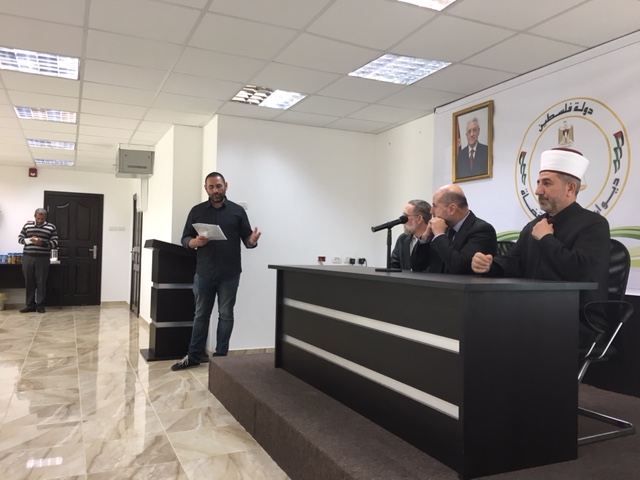
Next we drove to Ramallah, with a police escort and PA soldiers guarding our way, to meet with Mahmoud Harbash, a moderate voice of the Fatah party, Minister of Religious Affairs and a key advisor to Abbas. He was criticized heavily by Hamas for meeting with President Rivlin and the chief Rabbi of Israel just three weeks ago. Next we had lunch with Dr. Hussam Zomlot, an impressive diplomat who is the chief strategic advisor to Abbas.
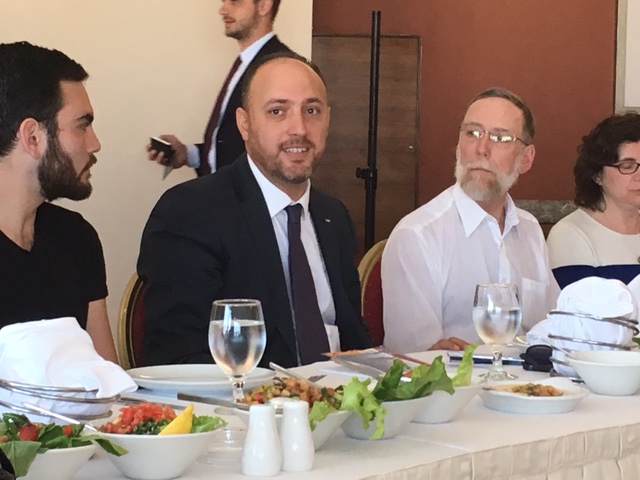
He believes that the two state solution will only come about through the intervention of the international community. He said, “Bilateral negotiations have created a lasting process but not a lasting peace.”
While Gal kept reminding us that Ramallah is different than most of the other cities and villages of the West Bank, we all were shocked by what a normal looking city it is.

In both meetings in Ramallah I heard narratives that included many things I agree with, and many things that were very difficult to listen to. One of the goals of this program is for the participants to learn to sit with the discomfort and hold more than one narrative. (Point of learning #4.).
We returned to Jerusalem for an afternoon session of learning with Mohammed Darawshe, Director of the Jewish Arab research team at Shalom Hartman Institute.
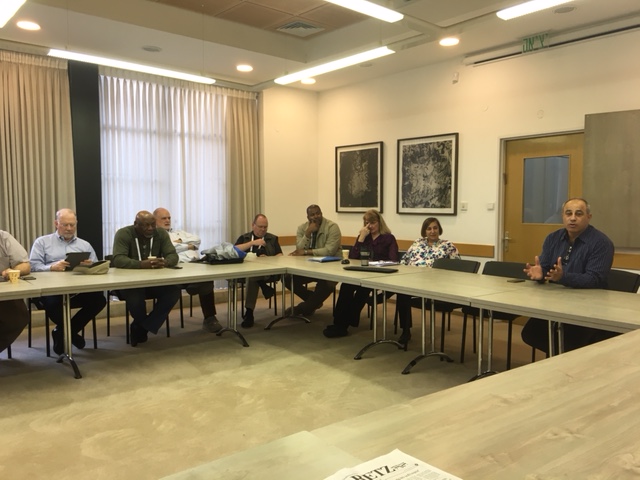
I heard a version of the experience of Israeli Palestinians that was completely different from the narrative we know as American Jews. One of my colleagues described what I felt after the hour as “Breaking the Script.” (Point of learning #5.)
As our day turned into early evening, our group worked together to process all we had experienced in just one day. Know that I will be reading and rereading my notes for weeks to come, seeking to synthesize my experiences into a manageable package that I will be able to share with all of you. I can say with absolute certainty that I finished the experiences of this past day feeling a strange mix: both optimistic and despairing.
But right now, I am about to have the most important moment of this trip so far. I’m at the corner of King George and Ben Yehuda, waiting for Josh to get off the bus so that I can take him to dinner! When a mother has not seen her boy for five months, you can imagine how she feels!

D’rishat shalom meYerushalayim, Greetings from Jerusalem,
Rabbi Paula Mack Drill
Partners for Peace, Day Two
As I write, we are traveling south from the Galilee along the Jordan River toward the West Bank. We are scheduled to visit Shorashim, a program run by Rabbi Hanan Schlesinger and Ali Abu Awad that brings Palestinians and their Israeli neighbors together despite the walls of fear that separate them. We are still not certain if we will be able to go because the checkpoint into the West Bank has been closed for two days since an attack that happened there. And so we are experiencing a very real reminder of the barriers to peace in the every day lives of people who reside in this region.
On the other hand, our touring this morning presented a powerful lesson of how one small group of people can be agents for peace. Visiting Christian holy sites with my mission friends on this trip has given me a new understanding of how deeply cherished this land is by all three major religions. At Mount of the Beatitudes (where Christian tradition teaches that Jesus delivered the Sermon on the Mount), I entered the church with my clergy partner, Rev. Barbara Hoffman. Experiencing the peace and positive energy beside Barbara was a transformative moment for me. I think of Israel as the place where I am the guide, but in that moment, Barbara was teaching me. And so the seeds of peace are sown.

At Kfar Nahum (Caperneum) we learned about the beginnings of Jesus’s ministry in the Galilee and observed groups of pilgrims gather to sing psalms and hymns. I was moved by the piety I witnessed. We also saw ruins that have long been assumed to have been a synagogue from the first century CE, but new archeological evidence puts those assumptions into doubt.

Perhaps it was just a secular structure. Or perhaps it was built long after the first century to show what a synagogue would have looked like. Our guide pointed out that any historical or academic dispute can serve as a model for the work of our mission: to engage in honest dialogue and to learn from one another, we must be humble. When we think that something is true, we must be able to say: this is my truth, but maybe it’s not exactly as I thought it to be. There is room for me to be wrong and for you to be right.
One of those important moments of debate happened over lunch at Café Café (yes, that actually is the name of the café!). Perhaps more important than the sites that we see are the conversations in which we engage. Over toasted haloumi cheese sandwiches and cafe hafuch, I listened to the life stories of a Presbyterian minister who worked as an insurance agent until he was called to serve as a minister, a Reform rabbi from Milwaukee and Barbara Hoffman, the Methodist minister in New City (and my clergy partner). What a blessing to come to know others! Our paths were so different but our passion to serve was the same. Knowing others helps us define ourselves.
Over dinner tonight we learned about the weaving together of secular and religious Israeli cultures in a talk by one of my heroes, Ruth Calderon.

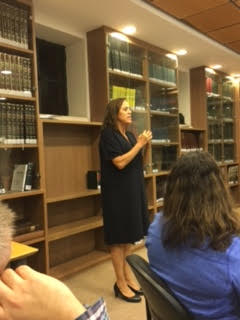
Before dinner began, we learned about the arson today at a Mississippi black church. There are not adequate words to describe the power and compassion of holding a moment of silence in a room filled with rabbis and ministers, several of whom are people of color.
One final note: we were not able to go into the West Bank today after all, but tomorrow we are going to Rawabi and Ramallah to meet with key Palestinian personalities, accompanied by journalist Gal Berger. We have directions to bring our passports for the checkpoint and to refrain from wearing kipot or Jewish/Israeli identifiers of any kind. It seems that learning in order to seek peace can sometimes be a nerve-wracking affair.

With prayers for peace from the Holy Land,
Rabbi Paula Mack Drill
Partners for Peace, Day One
November 1, 2016 — Jerusalem and Tiberias
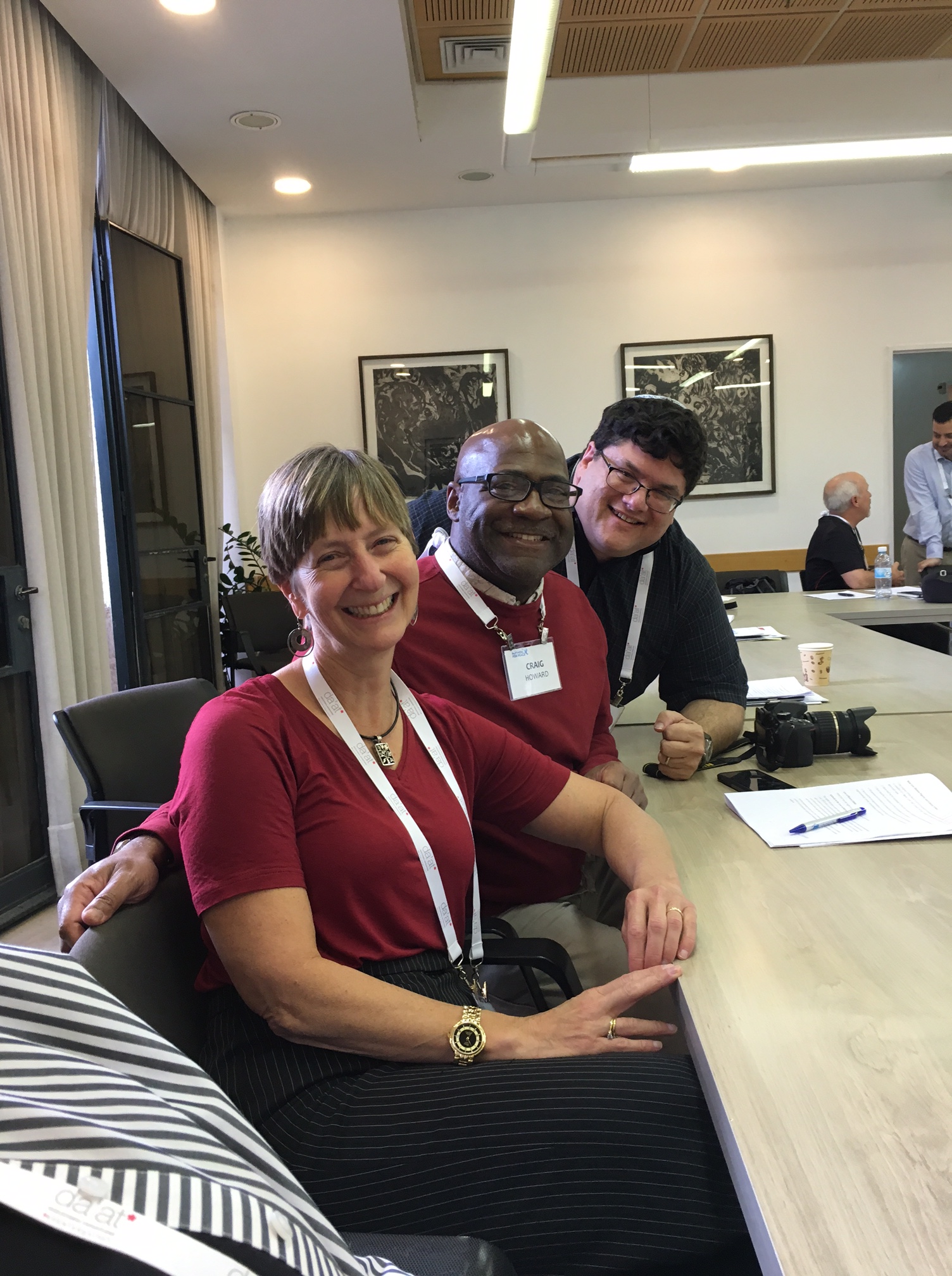
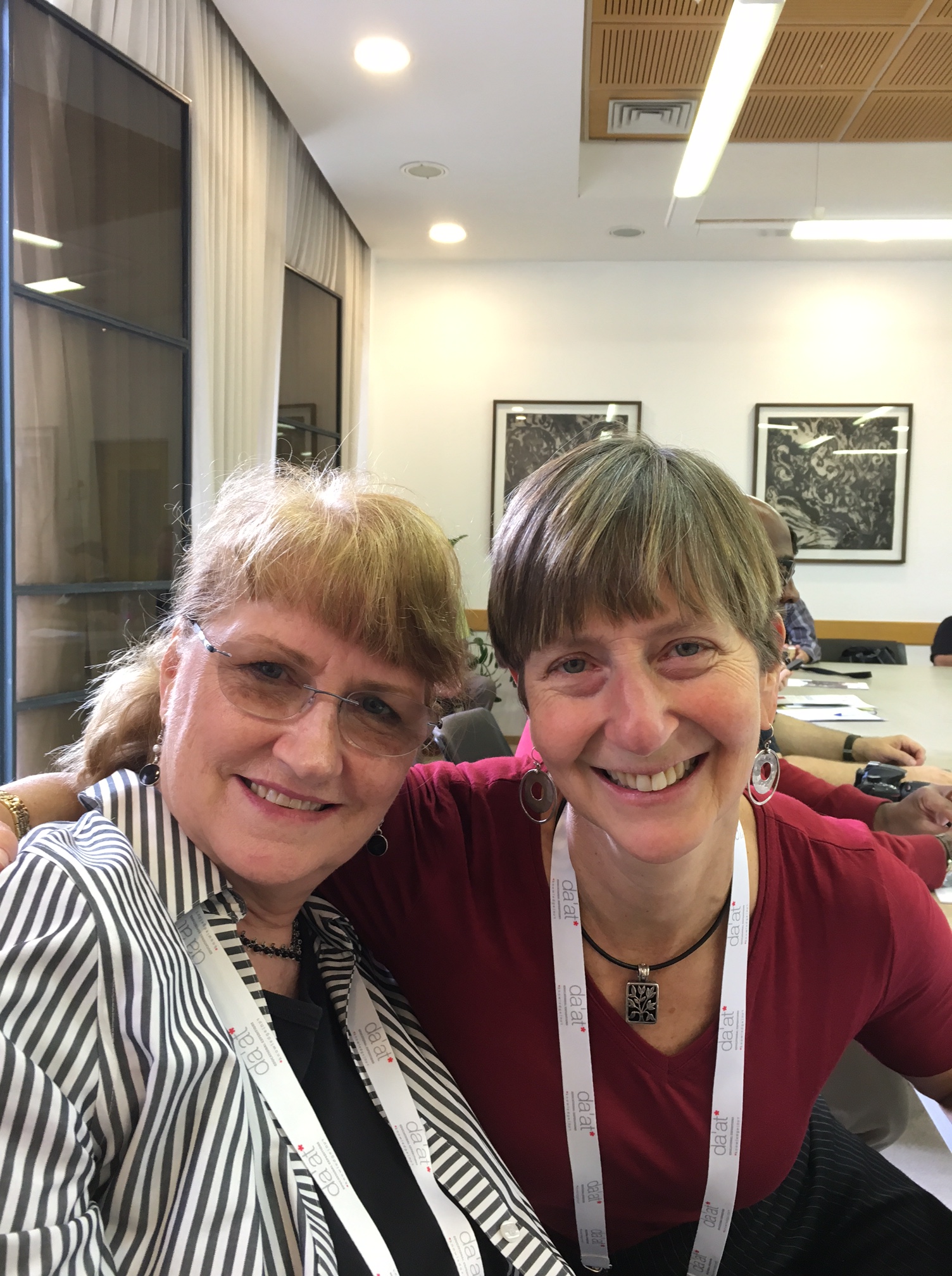
On this mission to Israel, thirty of us, rabbis and Christian clergy together, will listen to Jewish and Palestinian people who are working together, who maintain conversations, and who still believe in the ability to change things for the better. The mission statement of Partners for Peace includes the following aspiration: “Our partnership is born of our desire, as neighbors and faith leaders, to model positive and productive ways to approach the complex Israeli-Palestinian conflict by fostering hope and reconciliation.”

Jewish optimism is not about seeing the glass half full. It’s about seeing the glass half empty but believing that we can keep adding water to the glass. For 2000 years we could not add even one drop of water. Today we have Israel. Today we can.
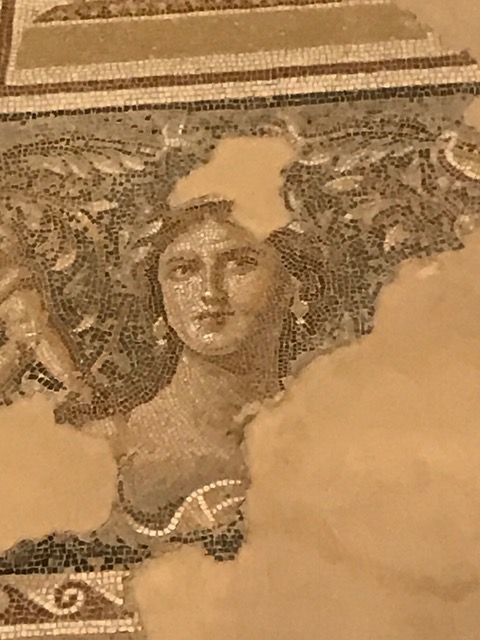
(And on another, lighter note, I cannot resist sharing this picture of the Madonna of Tzippori. All of those who studied “Rav Hisda’s Daughter” by Maggie Anton with me over the summer will recognize this beautiful mosaic as the one that was created of Hisdadukh!)
With blessings from Eretz Yisrael,
Rabbi Paula Mack Drill
Refugees: Take Just One Action
On Rosh Hashana at the Orangetown Jewish Center, I spoke about the worldwide refugee crisis. (Please contact me at Rabbi.Drill@theojc.org if you would like to see the full text of the sermon.) It was a difficult sermon to give because I did not have a decisive answer to offer to this overwhelming, multi-faceted issue. I spoke anyway because I believe that as a rabbi, I have a moral obligation to present the world as an integral part of Judaism. Judaism speaks to our lives, our beliefs, our decisions. I figured that if I am struggling with an issue, probably you are too.
The basic facts of the crisis: 21 million people in the world today have crossed international borders in search of refuge and more than 65 million have been displaced. Sixty five million means that 40,000 people are fleeing every day and 51% of them are children.
The despair that drives people to flee their homes is heartbreaking. Persecuted because of race, religion, nationality, political opinion, or social group, refugees survive terrible ordeals: torture, upheaval, perilous journeys, and tremendous loss.
The largest numbers of refugees are from Syria but crises exist as well for families threatened by civil war in Darfur, Myanmar Muslims in Burma, women and children in Central America fleeing gang violence and human trafficking, minorities in Sudan, Eretria and Afghanistan.
What do we do with overwhelming issues too big for any person or group of people? We take one action. We fix one piece of the problem. In the words of Ruth Messinger, “We do not indulge in the luxury of being overwhelmed.”
In my sermon, I pledged to continue learning and talking about refugees. Happily, many congregants have been in touch to say that they would like to take one action, to set aside the politics and help just one person or one family. Many have asked for specific ways to help.
Tzedaka: Give to http://www.hias.org/ or to http://www.womenforwomen.org. If you find compelling organizations doing resettlement work, please be in touch so that I can continue building a list of places to contribute.
Establish a working committee at the OJC: Engage a friend and offer to co-chair a Synagogue Welcome Campaign through HIAS, educating our community and establishing social justice work on behalf of refugees. More than 200 congregations already participate.
Get involved with individuals. Fill out the form at http://www.hias.org/volunteer and receive information about how you can help in one of these ways:
- Serving as an English language conversation partner with newly resettled refugees and asylum seekers (2-3 hours per week for a year)
- Participating in a letter writing program to asylum seekers in detention (once a month)
- Providing pro bono legal assistance to HIAS clients pursuing asylum or other humanitarian protection in the United States (commitment ranges from 25-150 hours, depending on case type)
- Providing volunteer translation or interpretation for HIAS legal cases (short term opportunities available)
Participate in resettling a family. Call HIAS in New York City: 212-967-4100.
Support a Jewish Yemenite refugee family here in Rockland County. Volunteer to drive to appointments, tutor for the Citizenship test, or help children with school work. Contact Leslie Goldress at igoldress@optonline.net. You can donate to help with rent, tuition and buying clothing for the holidays; make checks payable to “Kahal Adat Teiman” and send to my attention at the OJC.
Organize a visit to MOMA to learn more. An exhibit called “Insecurities” is now showing through January 22, Insecurities Exhibit at MOMA addressing contemporary notions of shelter and calling into question what “safety” means.
Today, I spoke with our Religious School children about Sukkot as a time when we welcome guests into our sukkah. The refugee question seemed quite clear to them. One fifth grader said, “We have homes, they don’t. We have food, they don’t.” A third grader suggested inviting a refugee child into our sukkah. Our impermanent sukkah with a roof through which we see the sky offers more protection than many of the shelters in refugee camps.
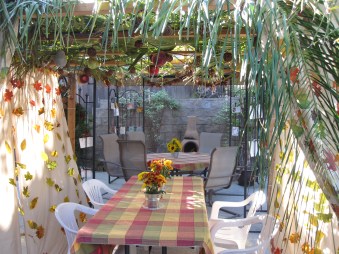
The tagline of HIAS calls to us as individuals: Once, we helped refugees because they were Jewish. Today we help refugees because we are Jewish.
There is plenty to do if we set aside the larger critical issue and consider the number – 21 million – as 21 million individual people. We can ask ourselves, what could we do for just one person?
With blessings for a meaningful start to the year 5777,
Rabbi Paula Mack Drill
Optimism: Naïve or Courageous?
When every prior effort has failed, what is required to continue trying? Where does one find the energy to believe that change for good is possible despite a history of dashed hopes? How is it possible for people of shared good intentions to sit together at a table and dream of a different kind of reality for Rockland County? The answer is: strong minded optimism.
Yesterday I attended a meeting called by Dr. Penny Jennings, Commissioner of the Rockland County Human Rights Commission. She believes that government’s job is not to make change but to support change efforts. New to her post, Dr. Jennings hopes that by bringing together a group of interfaith leaders, she can kick-start efforts to unify our community.

When I received the invitation, I could have said: been there, done that. Instead, I found myself moved by Dr. Jennings’ dedication to change. From the moment Rabbi Scheff and I met her last month at the rally against hate on the New City Courthouse steps, we saw that Dr. Jennings is a catalyst for action, a skilled listener and empathic thinker. I knew that I wanted to be on her team.
Once again I found myself in a board room surrounded by people of good intentions brainstorming ways to heal the divisiveness, insularity, and prejudice that mar our home in Rockland County.
Once again I found myself in discussions about brokenness, distrust and fear without the presence of the people whose voices are required in the room. We need leadership of the Chasidic communities at the table in order to have robust, honest conversation, in order for real change to happen. We must find a way to change hearts and minds enough to successfully bring into the room people who do not want to be there.


Dr. Jennings, however, pointed out that we have to begin somewhere. “Someone has to extend the olive branch and I don’t mind being the one to do it.” Evan Bernstein, Regional Director, and Etzion Neuer, Deputy Regional Director of the New York office of the Anti-Defamation League, brought their wisdom and experience to the table.
But most of all, Dr. Jennings listened to the community and religious leaders gathered at her table. She engaged us in an honest conversation about the most pressing issues of human rights and social justice in our county.
We talked about paths to change and barriers as well.
We all agreed on our destination: a hospitable environment where bad behavior will not be tolerated. Rockland County will be a place where we are gracious to our neighbors. We will have mutual respect. We will have a knowledge of each other’s values and concerns.
Government cannot legislate loving one’s neighbor, but it can legislate against acts of hatred. Attitude shifts can happen in a multitude of small steps. Doing nothing except giving in to frustration and anger cannot be the most reasonable response. The issues in Rockland County are not going away, and neither are we. Rockland County is our home.
After a discussion about the many difficulties in reaching our goals, Dr. Jennings offered the most profound statement of the day: “Oy vey!”
As a rabbi in this county, I am committed to working toward change. As a rabbi of the Orangetown Jewish Center, I am proud to represent our congregation in its desire to be a part of the work that is required.
In these weeks before the High Holy Days, it seems to me that nothing could be more important. In a world where the tone of discourse has become ugly, it is required of us to remember the power of respectful communication. It is essential to defy hatred and refuse to be part of intolerant behavior.
Is being optimistic naïve? I believe that optimism is a courageous choice. Join me in optimism. The alternative, helplessness and hopelessness, is not a real choice.
L’shana tova, a good year for all, Rabbi Paula Mack Drill
Making a Minyan because of Kindness
My teacher, former Chancellor of the Jewish Theological Seminary, Dr. Ismar Schorsch, likes to say that the requirement of a minyan is the secret of Jewish survival throughout the centuries of dispersion.
Every week in News You Need to Know, we remind you to fulfill your obligation to attend a morning or evening minyan.

Every OJC member is assigned a number which represents the day of the month that one is required to attend the minyan at the synagogue.
With regard to a prayer quorum, we singularly use the language of obligation and responsibility. On the one hand, these words are appropriate. Gathering ten to say prayers that praise God’s name publicly is a mitzvah, a commandment of Judaism. On the other hand, perhaps we should instead employ the language of loving kindness. Gathering for a minyan provides a setting for chesed (loving kindness). How so? One of the most painful elements of modern life is a sense of isolation and loneliness which it can foster. A minyan just might be an antidote. I formulated this idea over the past week as I davened with different kinds of OJC minyanim.
Last Tuesday morning, ten of us gathered at Esplanade on the Palisades to make a minyan for Estelle Sollish, our much loved congregant who recently moved there. Bringing the minyan to her was a sign of devotion and our desire to ease her transition to a new living situation.


On Thursday morning as we stood at the Torah, one of the people of the minyan added the name of a loved one during the prayer for healing. The tears in his eyes bespoke a concern and worry that he was not yet able to articulate. But the minyan allowed him a safe space to be vulnerable.
On Saturday afternoon I chanted the words of the memorial prayer on behalf of a congregant’s mother whose twentieth yahrzeit falls this week. As I prayed that her mother’s neshama would have an aliyah, I saw that the gathering of fellow congregants gave her permission to express her grief even after all these years.
Last night there was a minyan at a shivah house. As the family gathered close for comfort, the arrival of fellow congregants brought the sure sense that they were not alone.
Admitting what we need, asking for help, showing our vulnerability — can lead us out of isolation and into community. A twenty-minute prayer service can accomplish all that. Mark Nepo has written: “As water fills a hole and as light fills the dark, kindness wraps around what is soft, if what is soft can be seen.” It is indeed the obligation of a community to create minyanim so that people can pray together. I have no doubt that Dr. Schorsh is correct in his estimation that the minyan has kept the Jewish people together. But perhaps the most important reason for a minyan is that gathering together allows others to be vulnerable, to know one another, to seek a path away from loneliness. Gathering to be one of ten allows us to be our very best selves through this act of loving kindness.
49 Days of the Omer; 49 Innocent Victims
When this past Saturday turned into Sunday, it was the first day of the holiday of Shavuot. We had finished counting 49 days since Passover. It was time to receive Torah. Together with about eighty congregants, I was cozy in the synagogue, studying words of Torah in groups of four, eating coffee ice cream with chocolate sprinkles.

When the sun rose on a new day, I was sleeping for a few hours before holiday services began again at 9:00 a.m. I was a bit groggy as I began chanting the blessings of the morning, but I felt happy and fulfilled in one of my favorite holidays, when we would be celebrating the giving of the Torah at Mount Sinai. I was blissfully unaware of the outside world.
When this past Saturday turned into Sunday in Orlando, Florida, a mad man whose soul was poisoned with hatred and a fanatical view of life was holding more than 100 people hostage in a nightclub intended as a gathering place for celebration. While I was studying words of Torah, he was shooting 49 people dead and wounding 53 others. In the morning, the world that was attached to media started reeling from the news of yet another mass murder, another act of terrorism, a horrifying targeting of the LGBTQ community, an attempt to bring down the joy of Pride Month.
As Saturday turned to Sunday, I was discussing the meaning of: “You shall be holy because I the Lord your God am holy.” In my havruta (study group), we thought that if we could possibly agree on a definition of holiness, we would know exactly what God expects of humanity and particularly of Jews. We would have the key to making our world a better place. At 1:30 in the morning on Sunday, it all felt so simple and uplifting. And all the while, a terrorist was shooting people dead.
How can there possibly be any sense in the world? How can God possibly expect us to be holy?
Since Sunday, people I have spoken with want to know how goodness can possibly matter in the face of evil. My stubborn answer is that goodness is the only thing that does matter.
Every act of kindness takes away the power of hatred and cruelty. I refuse to become a nihilist or a pessimist. Being an optimist is not frivolous or naïve or weak. Being an optimist in days like these requires immense courage.
Author Rebecca Solnit says: “Hope is not a lottery ticket you can sit on the sofa and clutch, feeling lucky. It is an axe you break down doors with in an emergency. Hope should shove you out the door, because it is going to take everything you have to steer the world away from endless war, from the annihilation of the earth’s treasures and from the grinding down of the poor and marginal.”
This past Sunday, the Jewish people celebrated Shavuot, the Festival of Revelation. In our all night study at the OJC, Rabbi Scheff taught that creation and revelation lead us toward redemption. Redemption will not fall out of the heavens above. The promise of redemption is in our hands, and it is what keeps us moving forward with optimism and hope, believing against all odds that we can repair the world. Join me please. Act by act, moment by moment, we can bring redemption to a world desperately in need of repair.
Rabbi Paula Mack Drill
Wedding Day on The Border
After a wedding errand in Sederot with Sagi’s mom Racheli, we waited for a long line of trucks to go by before we could turn left onto the highway back to Mefalasim. When I asked her where all the trucks were coming from, she shrugged and said, “from Gaza”. Why? “They are returning from dropping off the day’s humanitarian aid, food and medicine.” Every day? “Sure. We bring them supplies every day.”
Stymied, I tried to wrap my mind around the simple fact of Israel’s taking care of people in Gaza, the neighbors who are still trying to build terrorism tunnels under the kibbutzim where Sagi grew up.
Racheli says that she does not think about missiles or terrorist attacks when it has been relatively quiet for a period of time. She tells me that she blocks it all from her mind. I am just a visitor, and I am the opposite in my response. When I am here in the south, all I can do is think about that long period of time when missiles fell every day on Sederot and the surrounding kibbutzim of Shaar HaNegev. Long before Iron Dome, missiles reached the ground and took away peace of mind and people’s lives. Since the miraculous protection of Iron Dome, still no one here lives with a complete sense of security.
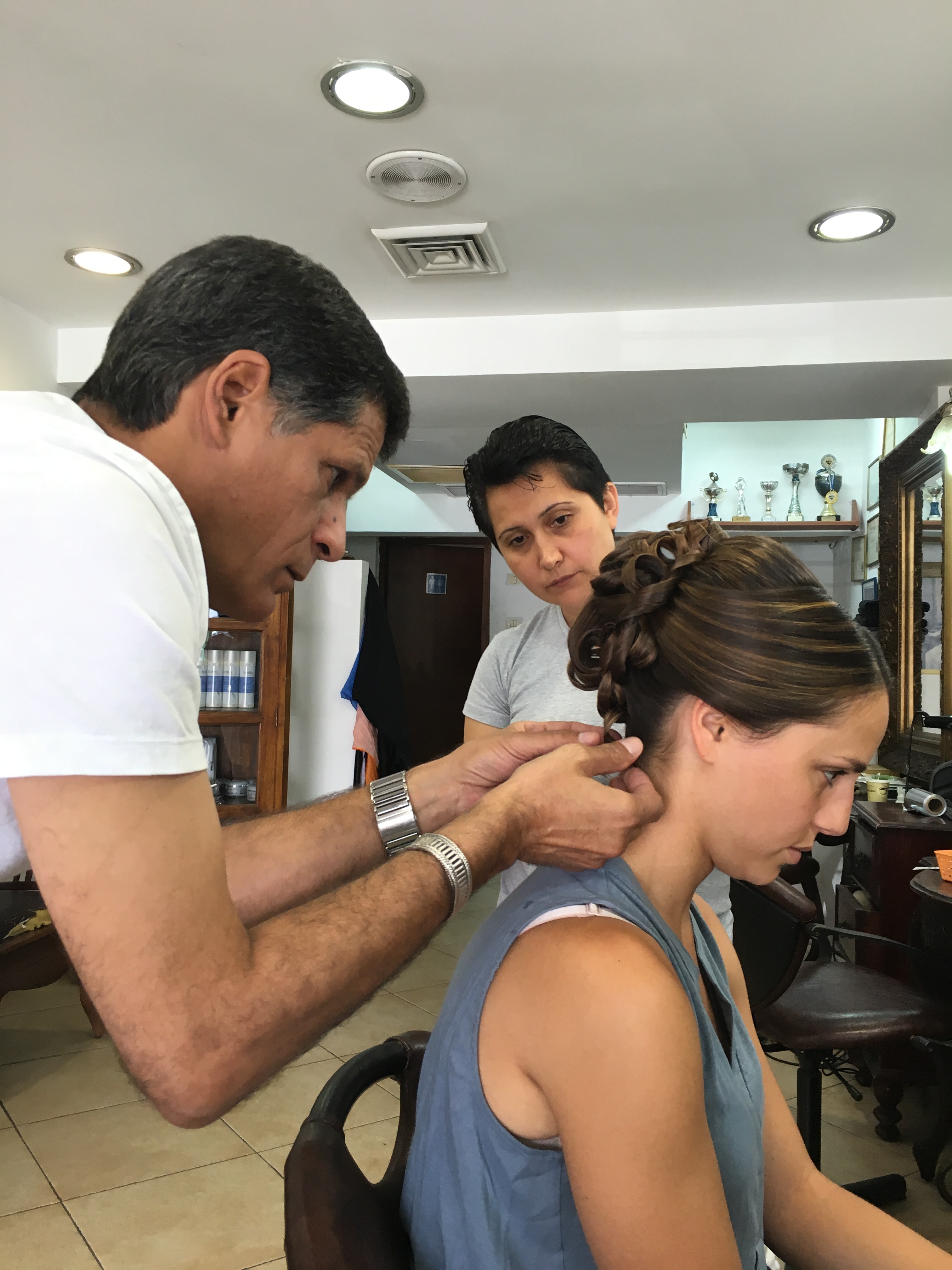
I think about it all the time. I look at the waitress at the restaurant in Sederot and imagine her as a young girl, running for shelter with 15 seconds notice. I sit with Sarah as she has her hair done for the wedding later today and wonder how Shupan kept his business running through those years.

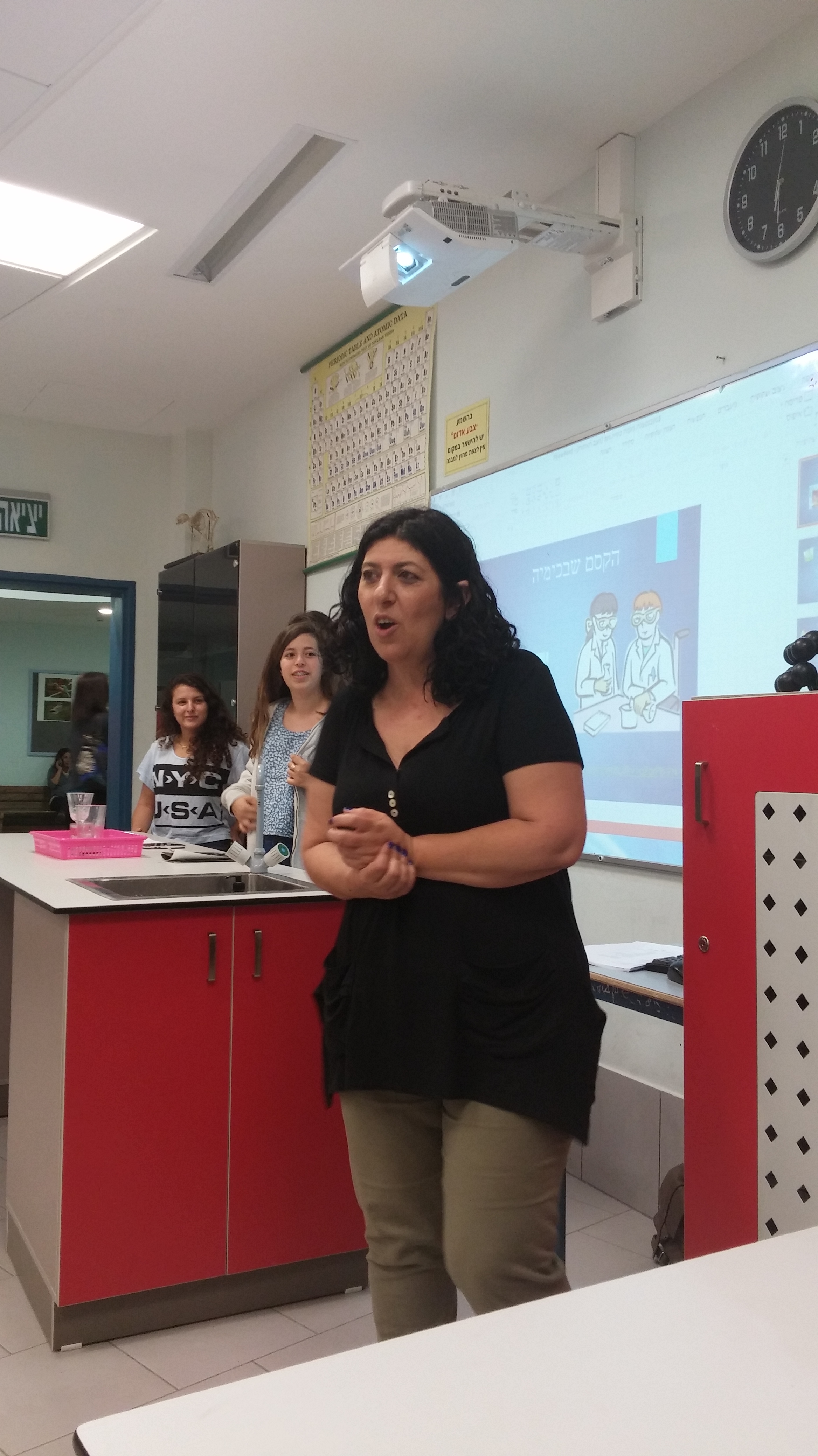
I sit in Racheli’s classroom at Shaar HaNegev High School as she presents an experiment to her chemistry students and notice the sign just next to the whiteboard. It is a sign we would never see in America: in case of tzeva adom, a red alert, do not leave the building. I observe Racheli’s students and acknowledge to myself that they have never lived in a world without threat from their neighbors.

At the entrance of Kibbutz Nir Am, on the way into the guest cottage, I pause to think about the very beginning of Protective Edge… and of two Israeli soldiers who were killed here. On my morning run, I cannot avoid looking at the barbed wire surrounding the entire kibbutz.

But then, I see a sign. I mean that I see a sign and also that I see a sign! It says: Beware! Narrow Bridge.
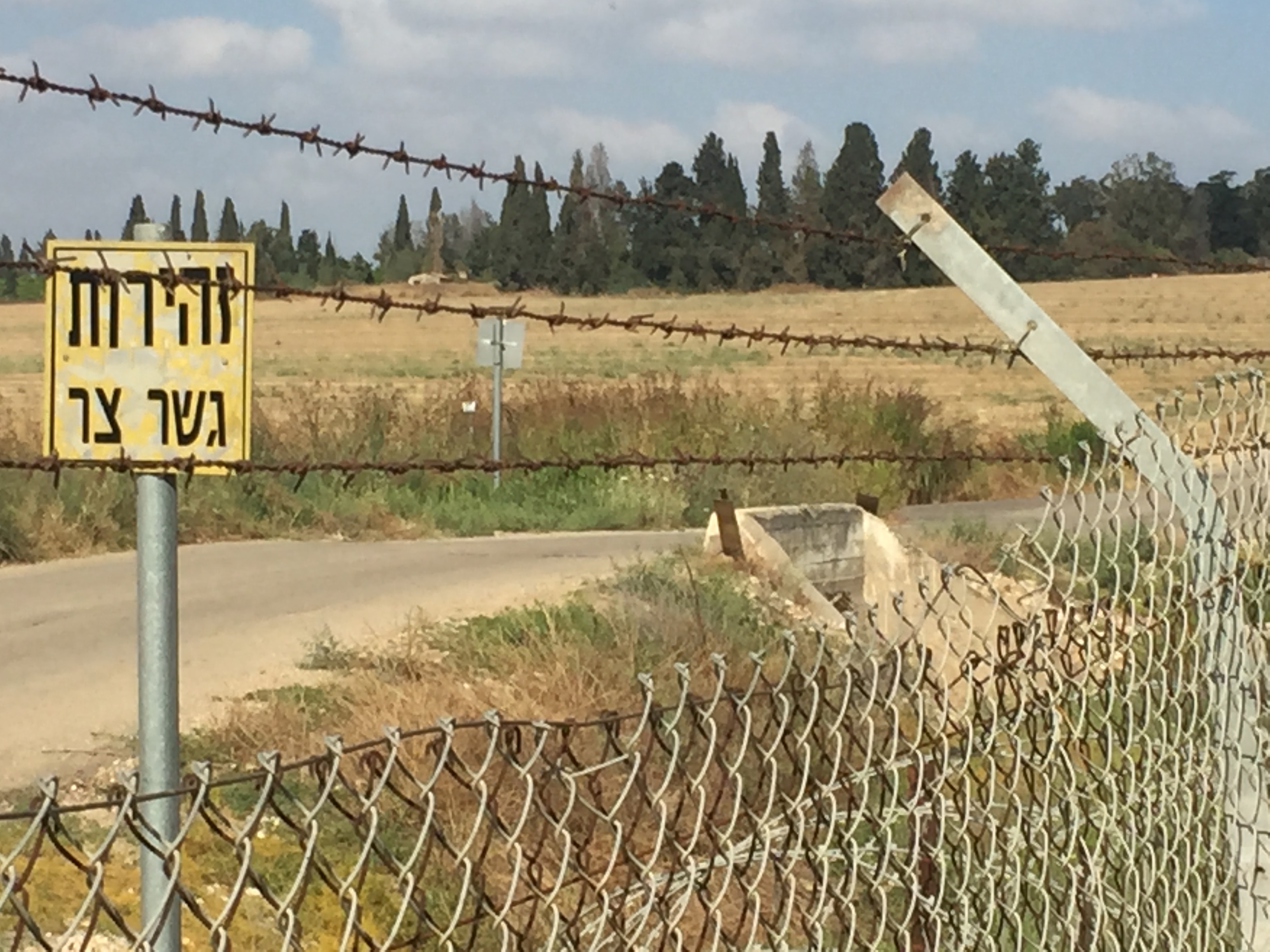
And I complete the significance for myself: all of the world is just a narrow bridge, and the most important thing is not to be afraid.
Praying every day for peace for Israel, Rabbi Paula Mack Drill
Shabbat Here and There and Now and Later
One of my favorite Talmudic teachings asks what one should do if she is lost in the desert and does not know what day it is. How can she know when it is Shabbat? The rabbis answer that she should count six days from the time she remembers and the seventh day will be Shabbat. [Talmud Bavli Shabbat 69b] I love this response because it reminds me that Shabbat is not just a day on a calendar but a sacred time we can enter once a week… and a time that enters us. When Tradition tells us that we receive neshama yeteira (an additional soul) every Shabbat, I think it is talking about this mystical, tangible quality time takes on when it becomes holy.
I was thinking about this Talmudic source as we entered into Shabbat here in Tel Aviv. When I am away from Orangetown Jewish Center for Shabbat, I picture myself sitting in the sanctuary before our stained glass windows and colorful ark curtain as the room fills up with people I love. But of course, I also enter into Shabbat where I am.

Wherever I go and whatever is happening around me, Shabbat enters me and I enter Shabbat… even in Tel Aviv, the City that Never Sleeps. (Ask any Israeli and they will tell you that New York comes in second to Tel Aviv.) On Friday afternoon, as we made our last minute purchases of challah and fruit in the shuk (market) and I dashed back to Sarah and Sagi’s apartment to check on the chicken soup,


young people in Tel Aviv were settling into pubs and cafes for the beginning of their weekend.

We ate Shabbat dinner on the roof of Sarah and Sagi’s apartment and Ben’s voice reciting motzi mixed with the sounds of a band playing at a bar just outside the Kerem haTemanim neighborhood. In the quiet peace of our Shabbat, I blessed my children and we ate our meal.
On Shabbat morning, we walked to a Masorti synagogue, Kehillat Sinai, where we were warmly greeted and where I was asked to help out as a gabbai. The chanting was different, the faces were new, but the atmosphere was friendly and open. It reminded me of the OJC in its lively community feel.
We spent Shabbat afternoon on the Tel Aviv beach, admittedly one cannot do that in Orangeburg! But while I was here in Israel for Shabbat, I was also in New York for Shabbat, and this is where the teaching from Shabbat 69b comes in handy. When I entered Shabbat, my community was in the midst of busy Friday afternoons back home. When I was hearing the Torah reading of Behar, everyone in New York was sound asleep. When I was relaxing on the beach, the congregation was hearing our intern Paula Rose give her sermon. And when Shabbat went out and I counted the twenty-ninth day of the Omer, my friends at the OJC were beginning their Shabbat naps! How could I be two places at once?
Shabbat enters me and I enter Shabbat. It’s not just time on the clock or a day on the calendar. Shabbat is far more than that. Shabbat is a place I go once a week to replenish my soul. Whether here or there, whether surrounded by people keeping Shabbat or having Saturday morning eggs at a café on Dizengoff, it’s all Shabbat. What more do I need?
See you all next Shabbat at the OJC! Blessings from Israel,
Rabbi Paula Mack Drill
 Two Rabbis, One Voice, Three Opinions
Recent Comments