2017 Mitzvah Mission day 4 – For the precious children
This morning we departed Haifa just before 9:00am. (What an amazing group! I say 9:00am on the bus, and they were loaded up, in their seats and ready to go at 8:55! Maybe they were totally pumped by Linda’s Torah reading from the Sephardic scroll?)
In any event, by 10:00am we had arrived at Beit Lid junction just outside of Netanya, meeting up there with a group of young teens from Kfar Ahava who had been rewarded with this experience for their outstanding personal and academic performances. The junction was the site of a terrorist attack on January 22, 1995, when two suicide bombers targeted a bus stop crowded by young soldiers returning to their bases early on a Sunday morning. Twenty one soldiers and one civilian were murdered that morning, with more than sixty wounded. A crude but powerful memorial was erected within days, leaves that had fallen too early representing lives that had been cut far too short.

We learned about the long process that the community undertook to establish a permanent memorial. the site, just a few hundred feet away from the location of the bombing would become a memorial and a community center. The goals of the creators and the community were to remember the tragedy, empower the living, and bring to life the stories of the victims. The impressive sculpture ultimately created was inspired by the Biblical verse that describes Jacob’s ladder with “the angels of God ascending and descending on it” (Genesis 28:12).

Twenty two figures ascend the ladder. Each victim is represented by one of the ascending figures; each family of the victims knows which figure represents its loved one. The ladder ascends to the heavens with no supports, representing the strength of the Jewish nation to support its fallen and its survivors. In completing a mosaic of a flower with the teens from Ahava, we felt empowered to create beauty, and we reaffirmed together our sense of responsibility to give life to the legacies of the fallen. One young man shared with me his feelings that, upon reaching young adulthood, he appreciated the newfound sense of responsibility to remember, to serve, and to make choices that will improve his world.
After an exciting off-road adventure that afforded us a quaint picnic lunch with the teens, it was on to Jerusalem. We arrived at Mount Scopus, Har Hatzofim, with the sunset. We cried a little (surprise!) for the sacrifices Israel demands of her children; we reflected on the hope and love that we share for a land that is far from perfect. Like our feelings for our children, though we may not always like everything she does, we still love her and believe that she represents the best possibility for getting it right. We bask in her glow even as we commit to rebuilding her atop her ruins.
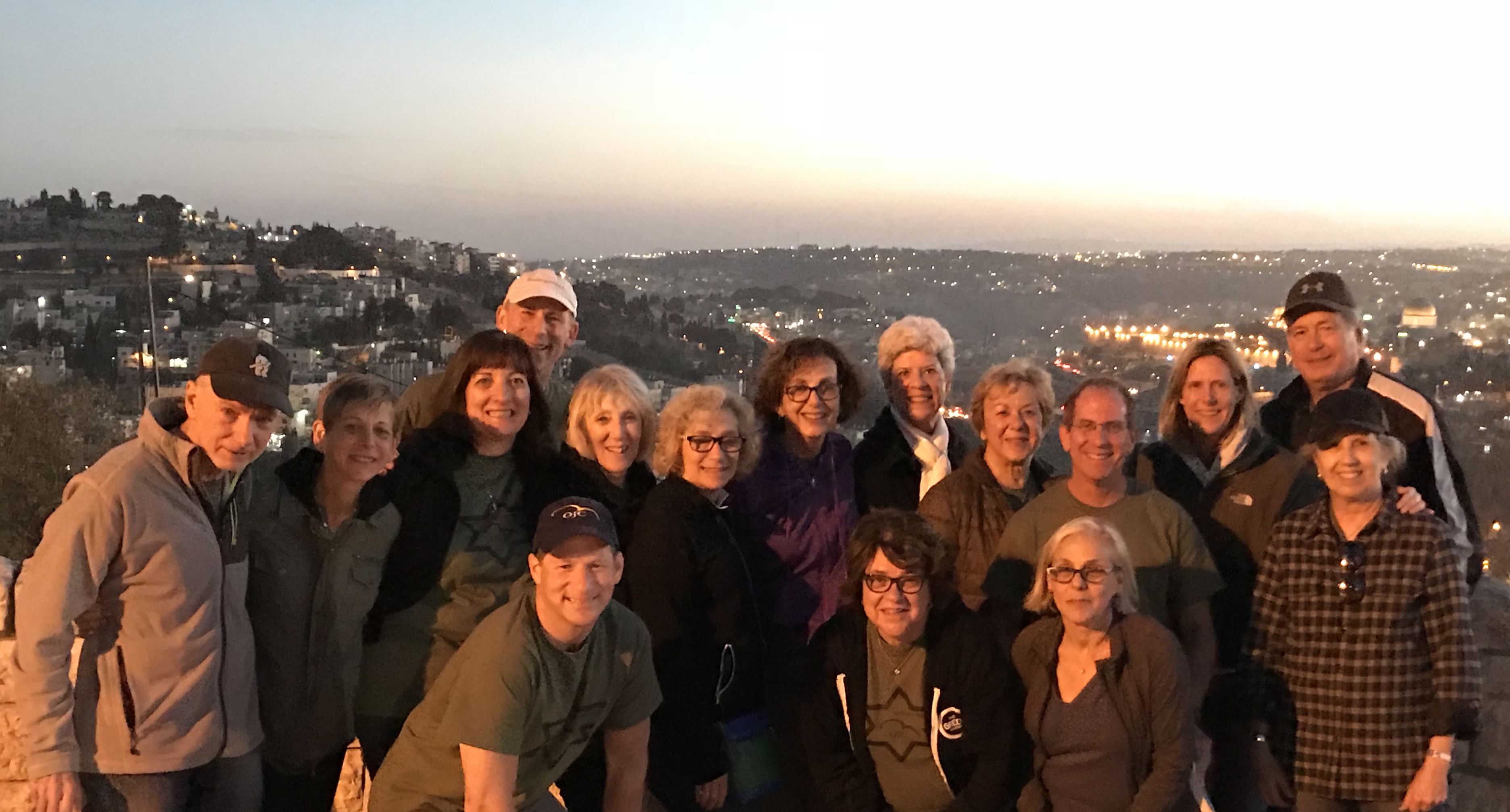
An evening of shopping and enjoying the beginning of the weekend was topped off with a visit (one planned, one purely by chance!) with two of our synagogue teens spending their year in Israel. Jessica’s and Sarah’s smiles said it all. Content, happy, innocent, care-free and learning about themselves and their Jewish identities, they represent our hope so well.

This is what every child deserves. God, they are so precious. Please God, spread your shelter of peace over them. Protect them from any harm or pain. Let the Hope be realized soon, and may Your word go out from Jerusalem to the rest of the world, so that no more of our children need be depicted as angels ascending a ladder in return to You.
Rabbi Craig Scheff
2017 Mitzvah Mission, Day 3 – Love
How does one summon love for the stranger?
At a place called Love (Ahava), the stranger offers love, creating a safe space for the vulnerable; the stranger receives love, and the reassurance that they will not always be rejected; and we are inspired to give enough love to effect a slight change for the better in our world.
My first visit to Kfar Ahava was in 2007. And even in my eleventh year I am so deeply moved and inspired by the experience. Perhaps more so because once again I got to see this remarkable and unique place through the eyes of the newcomers.
After our annual reintroduction to Ahava by Executive Director Yoav Apelboim, the group gathered in the memorial corner we created in memory of, and dedicated to, Danny Klein and Rob Katz. We remembered, cried, and blessed together. Today was Rob’s birthday, so the moment was particularly poignant. We dedicated today’s acts of love to their legacies.

Next, I gave our newcomers—Ellen, Sharon and Andre—a tour of the residential facility, the school and the emergency shelter. The bright skies, cool breezes, colorful mosaics, peaceful gardens and quiet grounds belied all the brokenness and pain that lay behind so many of the closed doors around us.

But what could not be hidden away was the love. The newcomers saw it in the way the 17-year veteran social worker talked about the children she received in the emergency shelter. Every child brought in through her doors, she explained, deserved to be love, especially considering the conditions they had suffered at home, the one place that was supposed to guarantee love.
At lunch, Amy Nelson and I witnessed an eight year-old boy trying to bond with us by insisting that his father was a professional soccer player who played in New York. He just wanted to be loved. A twelve year-old oppositional girl challenged him to stop lying, so clearly lashing out in the pain of her own brokenness. An eighteen year-old doing his year of national service at Ahava subtly shook his head in disapproval of her insensitivity, and her anger was quieted. The foster mother overseeing their care, in her first year of service, turned to us to offer that she was here to change the world for the better in some small way.

Tonight, first-timer Sharon, a stranger to Ahava, reflected to the group that the experience of Ahava stripped away her armor. With the permission to be vulnerable, she felt more authentic. And the more authentic we are, the more capable we are of giving and receiving love.

Thank you, Ahava, for inspiring us all to love even the stranger.
Rabbi Craig Scheff
2017 Mitzvah Mission Day 2 – A Keeper
There are many meanings to the word “shomer,” depending on its context. Guard, observer, and watchman are just a few uses of the word.
Today we served as shomrim in almost every sense of the word. The word “keepers” probably best captures our role today. Most of us were on the beach by 7am, running or walking on the Tayelet, exercising the mitzvah of shmirat ha-guf, or keepers of our bodies. On the bus ride southward, we sang the morning service together, meditating on the mitzvah of shmirat ha-nefesh, keeping of the spirit. As we sang the words to “Shomer Yisrael,” Guardian of Israel, we didn’t appreciate in the moment what those words would come to mean by the end of the day.
On a farm called Amatziya in the Lachish region, across a valley from the city of Hebron, we met the young men of Hashomer Hachadash (“The New Guard”), who shared with us their experiences as watchmen for Israel’s farmers. Protecting farmlands from intruders who might burn their crops and kill their livestock, the Shomrim spend a year of national service learning leadership skills, volunteering on the farms, and serving as nighttime deterrents for those who might consider intruding. Hashomer Hachadash has also engaged thousands of volunteers with the Zionist dream and Israel’s rich historical connection to the land through educational programs and opportunities to work the land with their own hands.

Under Amir the farmer’s direction, we spent the day working in a vineyard, fulfilling the mitzvah of shmirat ha-adamah, keeping the land, clearing the overgrowth and making room for the grapes that will grow in the year ahead. Of course, we had plenty of opportunities to pluck the sweet grapes right from the vine to snack on through the day.

By the end of the day, we had become the keepers of the land and the keepers of the dream. Best of all, as we departed, we took with us the charge of being each other’s keepers.
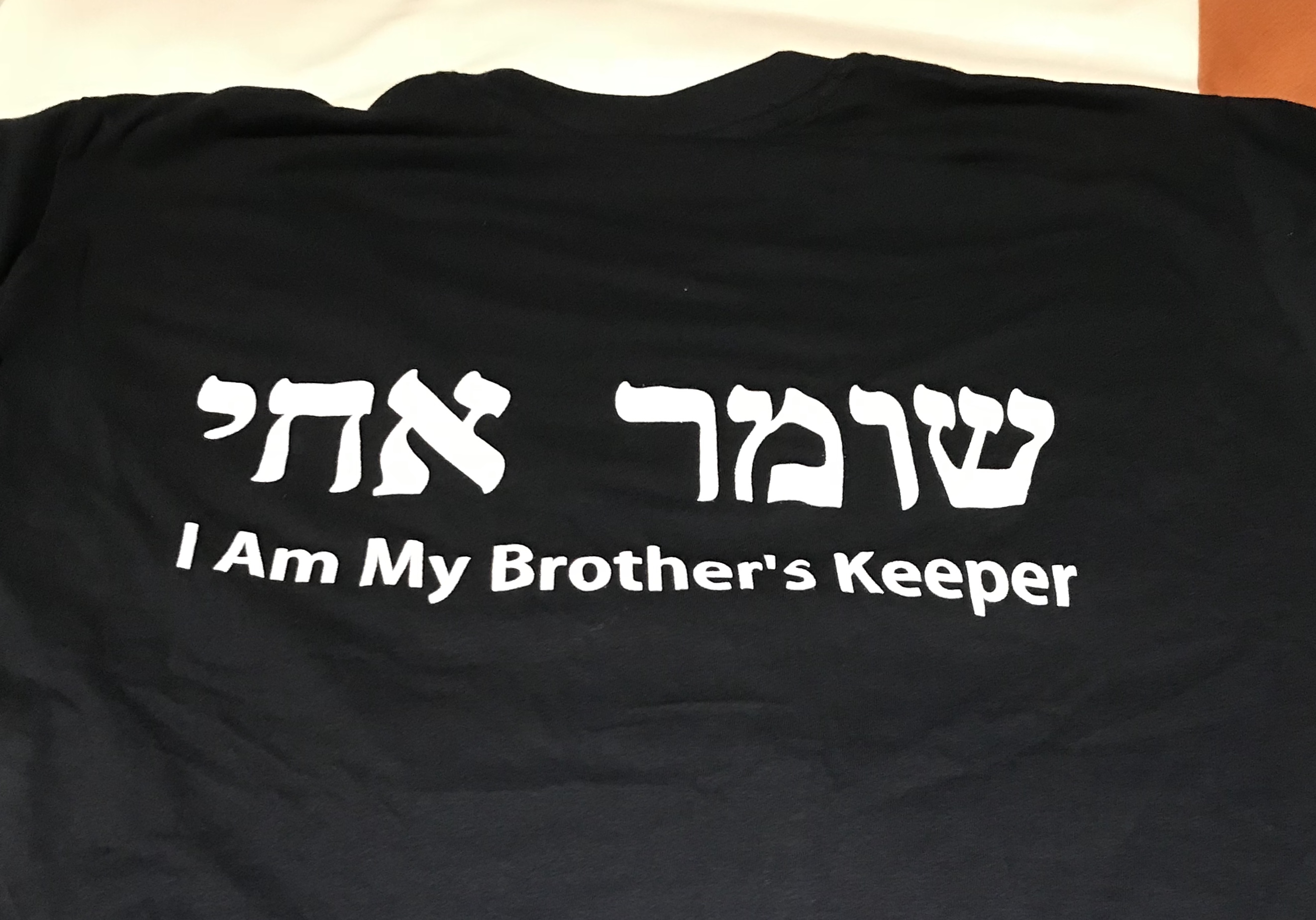
This day was definitely a keeper! Tomorrow morning we are on to Ahava!
Laila tov,
Rabbi Craig Scheff
The lives of Sarah
“The lifetime of Sarah came to be one hundred years and twenty years and seven years, the years of the life of Sarah” (Genesis 23:1).
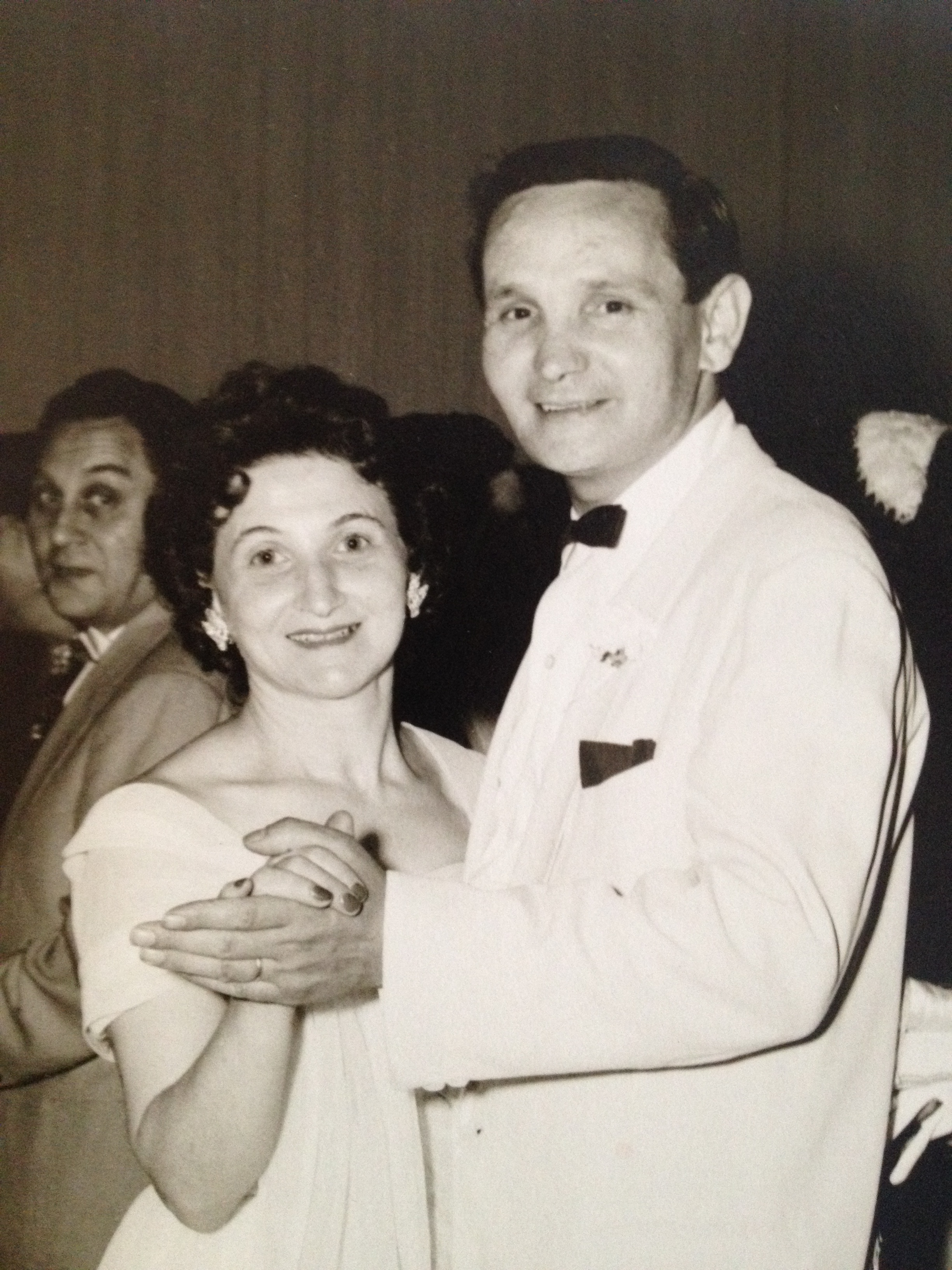
I offer what follows in tribute to the life of Sarah our matriarch, Sarah my grandmother on her 98th birthday, and the occasion of Kristallnacht, the Night of Broken Glass.
They were nights of broken lives and broken dreams, days of broken hearts and broken families. Six years worth of brokenness. Sarah learned to cheat death and to gamble with life, to speak in half-truths to her loved ones and to lie to herself every morning just to get through the day.
The year 1941 was the worst of them all, as she now recalls. With her one-year-old daughter Hannah in her arms, she would leave Siberia and her husband behind with the intention of starting a new life back in Berdichev, where her mother and father (and his 12 siblings and their families) remained. Her husband Izzy would leave his work in Siberia once she was settled with the family. Sarah sensed, however, that Jewish life in Berdichev was coming to an end. She cried to her father endlessly, pleading with him to return to Siberia with her. She ultimately prevailed, but just in the nick of time. She can still recall looking back from afar at the city engulfed in Nazi flames, the agonizing screams of her dying aunts, uncles and cousins being drowned out by the exploding bombs.
The lives of Sarah are 20 years and 6 years and 72 years, 98 years in all.
For twenty years before those six terrible years (1939-1945) of trading tomorrow’s ration slips for today’s bread, Sarah was a mischievous, happy girl. A talented seamstress, she was the choice of the wealthy shop- and factory-owners to make lingerie for their wives (bras, to be exact!). It was a talent that would ultimately keep her growing family fed. She found love; she had dreams.

For the past 72 years, Sarah has known love, and she has known loss. She has derived pride from the four generations that she has birthed, but her arthritic fingers are evidence that she’s worked hard for every morsel of satisfaction she enjoys. Her compromised sight and hearing may frustrate communication, but her mind still knows humor, sarcasm and wit; her heart still knows love, joy, disappointment and worry. And she can still dish out the guilt with the best of them.
Today, she feels her way around her daughter’s kitchen, finding a yogurt and two pieces of bread just where she left them. She carefully washes her plate and the serrated knife in the sink. I️ hold my breath, debating whether I️ should jump in or give her the control she desires.
Let her be, I️ decide. After 98 years, she’s earned the right to control her own destiny, if only until my mother emerges from the bedroom.

These are the lives of Sarah.
Rabbi Craig Scheff
Ecclesiastes, a Sukkot love story
Hevel: vanity, futility, meaninglessness, pointless striving. We may acquire wisdom; we may amass physical comforts and playthings. We may seek pleasure in food and drink; we may build palaces and establish monuments to our accomplishments. It’s all hevel, however, because ultimately everything has its season, and every person has his or her own time. This is the message of the Book of Kohelet (Ecclesiastes), the megillah (scroll) that we read in conjunction with Sukkot, our festival of joy.

Huh? Why yuck my yum? How does this sobering message enhance the joy I am commanded to experience on this festival? Well, I guess it all depends on how one defines joy.
What if we read Kohelet as a treatise on love? After all, the megillot that we read on our other two major festivals are love stories! On Passover, the corresponding megillah we read is the Song of Songs, a story about unrequited love. On Shavuot, the corresponding megillah we read is the Book of Ruth, a story about consummated love. Moreover, Passover celebrates God’s courtship of the Jewish People; Shavuot celebrates the wedding of God and the Jewish People. I see this parallel progression from courtship to consummation as intentional. If so, what can we deduce about Sukkot and its relationship to Kohelet? How can we read hevel into the next stage of this relationship, into our attainment of joy?

Perhaps Kohelet’s conclusion–that life “under the sun” is meaningless–refers to the temporal, fleeting, finite pieces of ourselves and our relationships. The purest joy, however, is not connected to pleasures of food or wine, acquisitions or edifices. As exemplified by our experience of the sukkah, our greatest joy is found despite—if not in—our vulnerability, our authenticity, our simplicity. On Sukkot, we build a sukkah aware of its fragility, porousness, and temporary nature; we embrace it, love it and live in it anyway.
On Sukkot, the corresponding megillah we read is the Book of Ecclesiastes, a story about enduring love. Sukkot celebrates the journey the Jewish People took through a desert, with God as their ultimate shelter. We remember that the love at the heart of God’s relationship with the Jewish People is not sustained by the fireworks of courtship or by the pageantry of a wedding night. It is the love that emanates from a relationship that is resilient, that withstands the highs and the lows, that survives the wilderness wanderings, that thrives without necessarily reaching a promised land.

This season of our joy is rooted in a deep, enduring and timeless love that transcends what we build or acquire. It is the kind of joy that brings us peace and tranquility, and provides us the resilience and strength to go on dwelling in the midst of a tumultuous world.
Rabbi Craig Scheff
Gratitude then, gratitude now
“When you come into the land that the Lord your God has given you, and have possessed and settled it….” These words serve as the Torah’s introduction–in this past week’s portion Ki Tavo— to the thanksgiving ritual of bikkurim, or first fruits. Upon arrival in the Promised Land, the Israelite is to appear in the presence of the kohen, bearing his basket of produce, and offer a scripted monologue detailing the history, context and expression of gratitude for the bounties bestowed.
The timing of this ceremony is a subject of debate among the rabbis. Specifically, does the language of the verse quoted above indicate that the ceremony is performed upon entry into the land, or only after the land has been settled? How this question is answered informs our Jewish understanding of the concept of gratitude. If thanksgiving is to be offered immediately upon entry, the gratitude expressed is in appreciation of God’s goodness, a promise kept, a gift given, even though the gift received has not been opened yet! On the other hand, if thanksgiving is to be offered only after the land has been settled (and it would take years before the land would be entirely settled!), the gratitude expressed in the first fruits ceremony would be accompanied by a very different intention. The gift’s recipient would have had the chance to unwrap the gift, open the box, and make use of the gift. Gratitude would be accompanied by a rational appreciation for the thing itself.
I am certainly not suggesting that we write two thank-you cards for every gift we receive. The trait of gratitude we cultivate, however, should be informed by both perspectives. We should appreciate the generosity of others for the consideration they show us, regardless of the gift itself. And we should recognize and acknowledge the gift itself as we come to recognize its unfolding impact on us.
On this sixteenth anniversary of the life-shattering events of 9/11/01, I remain deeply saddened by the stories of suffering, especially those of individuals who have recently lost their lives as a result of 9/11-related illnesses.
But I also feel gratitude. In the initial aftermath of the tragedy, I was grateful to those who showed supreme heroism, selflessness and compassion in the darkest hours, many of whom gave the gift of life at the cost of their own.
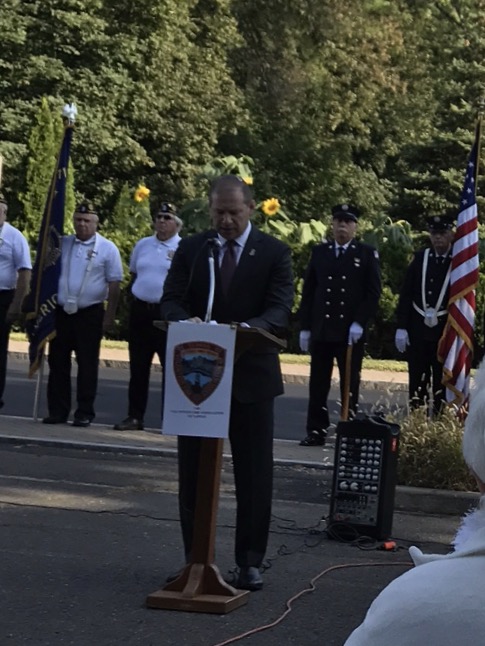
With the passage of time, I have also come to appreciate how these self-sacrificing individuals and their communities of volunteer and professional servants have shaped our neighborhoods and communities. “We are one family” is a refrain I heard repeatedly this morning, and a theme I saw play out in our broader community. As our OJC community joined together in commemoration with our neighbors and volunteers in Tappan, and as we joined in learning with the faith community of the Dominican Sisters of Sparkill, a true sense of brotherhood and sisterhood prevailed.

I am grateful for the care we show one another in the wake of tragic events, and for the human and institutional actions we have witnessed in response to natural disasters Harvey and Irma. Today, I express my gratitude–with a basketful of intentions–to those who serve us each day and to those who work toward creating the kind of community we aspire to be.
In peace,
Rabbi Craig Scheff
The call for moral leadership
As this Hebrew month of Av draws to a close in the week ahead, leading us into the reflective month of Elul, I am reminded of a teaching by Rabbi Abraham Isaac Kook, the first Ashkenazic chief rabbi of pre-state Israel: “If we were destroyed, and the world with us, due to baseless hatred – sinat chinam, then we shall rebuild ourselves, and the world with us, with baseless love — ahavat chinam” (Orot HaKodesh vol. III, p. 324). The destruction to which Rav Kook refers is that of the Holy Temple; but his teaching is as equally valid today as we experience again and again the destructive force of baseless hatred all around us.
These times demand moral leadership. The actions of neo-Nazis and white supremacy groups in Charlottesville–marching with torches, toting guns, chanting hate-filled slogans, intimidating Shabbat worshippers, and ultimately inciting deaths and injuries—or anywhere else, for that matter, cannot be countenanced without a response. In the moment, we cannot afford to be bystanders, though we are not required to put ourselves in harm’s way; in the aftermath, we call for moral leadership. We demand swift and unequivocal condemnation from those elected or appointed to positions of power. Over the past few days, we have read many such statements from organizations and individuals representing our communities. Frankly, I am underwhelmed by all of them.
Statements are important; but they are nothing compared to actions. Of course, we should call out—or expect our leaders to call out—that which we find despicable, abhorrent and unacceptable. But how have we truly changed our world in relying on someone else to speak what we are feeling?
Moral leadership must indeed be demanded; Judaism, however, dictates that we demand it of ourselves. We must be the moral leaders of our day; others may speak for us, but only you and I, individually, can change the landscape. And Judaism tells us how in this week’s reading of R’eih: “Do what is right and good in the eyes of God.” Feed the poor, care for the stranger, let the land regenerate, show gratitude for what you have, don’t take time for granted. Love (the verb).
Love. We’ve been reading all about love in the Torah weekly throughout this month of Av. “Love the Lord your God with all your heart, with all your soul, with all your essence.” “Love the stranger.” In response, I commonly hear expressed the struggle with the notion of being “commanded” to love. How can love be commanded?
If I had to define “love” in the context of what the Torah tells us, it would be the feeling we experience when we give to another at our own expense. The Torah wants us to serve the Other–and others–through our choices and with a generous spirit. (A moral leader is defined typically as a leader whose purpose is to serve, as opposed to be followed.) But we aren’t born with that desire to love. We are taught how to give love by being loved and by loving. Love may be an emotion, but it is also learned by experiences and actions.
“But hate is stronger than love,” I hear. My response: Hate is taught, just as love is taught. Perhaps hate is taught more easily, because hate appeals to our base instinct of self-preservation. Teaching love through our actions demands self-sacrifice, vulnerability and risk-taking. Teaching love means overcoming our reticence, our fear of the stranger, our complacency.
Moral leadership means accepting these challenges for ourselves, and not giving in to insecurity, fear and despair. Moral leadership means embracing and living by the notion that there is a shared code of conduct or set of values, that calls upon us to serve one another and “do what is right and good.” Moral leadership is the constant and intentional endeavor to behave morally and to love.
Some of you struggle with the idea that, as Jews, it is our mission (calling? obligation? command? responsibility? — call it what you wish!) to pursue love in the world, just as we are taught to pursue justice or peace. Love needs to be practiced, exercised and cultivated, just like any other discipline, muscle or character trait. And the more we love, the easier it gets. Trite? Perhaps. But when was the last time you went about your day consciously choosing to give love beyond your friends and family circle? To your neighbor? To a stranger? Try it, and you will soon discover that love is stronger than hate.
What does God/Judaism want of us? To live with a consciousness of our connection to others that guides our choices and our behavior. This is what God hopes will shape the kind of love we experience and bring into the world, the kind of moral leadership you and I provide for the world of tomorrow.
Rabbi Craig Scheff
Spiritual fathers
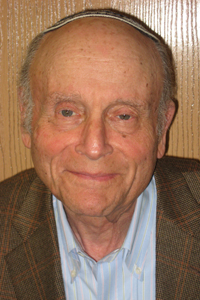
Rabbi Henry Sosland came to the New City Jewish Center in 1958 straight out of the Jewish Theological Seminary. In 2005, after 47 years serving the community, Rabbi Sosland retired to emeritus status. Visiting him this past week with my father, I was reminded of his gentle manner, his amazing recall for names, and the subtle ways in which he empowered, encouraged, inspired and taught me. People tend to mention his name softly, with deep veneration, respect and fondness. I am blessed to call him my rabbi and teacher, and I hope my chosen path has brought him a measure of pride and nachas.
When I entered rabbinical school in 1992, one of my main personal and professional goals was to find the kind of community upon ordination in which I would want to settle down, raise a family, build a career, and retire after 40 years of service. What I could not anticipate then was the great contentment, satisfaction and perspective that would come with sharing with families the cycles of life, from births to death, with so many celebrations in between; the great anticipation of standing under a chuppah for a bride I named when she was a baby; the sadness that would accompany the many losses I have felt so personally yet often carried so privately; the deep familiarity and connection I would enjoy with individuals and families; the pride I would derive from a community that strives to learn, grow, raise the bar for itself and others, and constantly take on new initiatives and challenges while preserving the tradition at our core; the joy upon hearing that one of my students had chosen for himself a career in the rabbinate (thanks, Ben!).
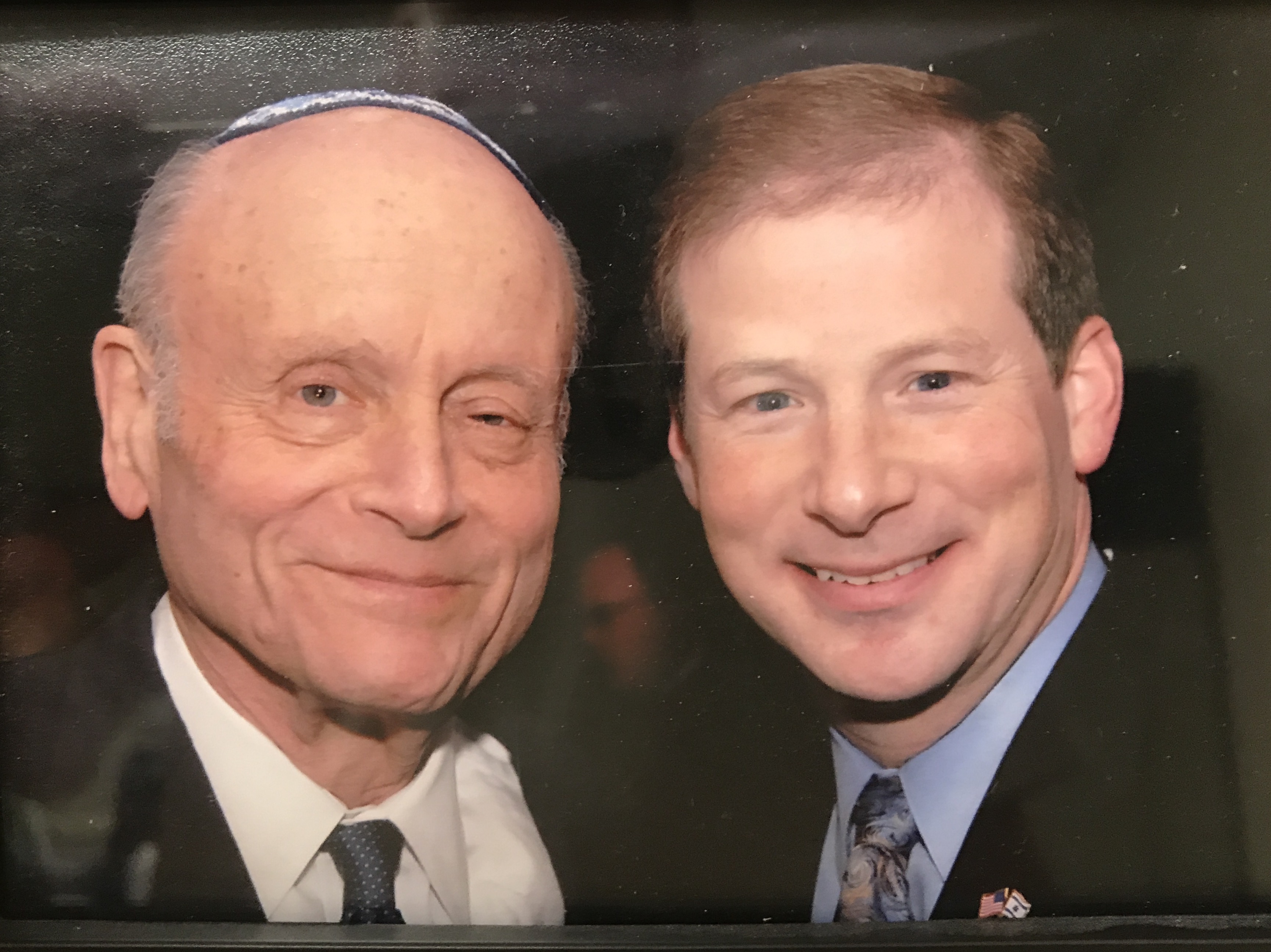
Last night, our OJC community approved the terms of a new contract that will extend my tenure here to 2030. I am so grateful to this community for its professional and personal trust and support, for the mutual respect and love we share. God willing, we’ll reach that year as a community in good health; I’ll be 65, I’ll have served the synagogue 35 years, with my goal of 40 years in the same pulpit in sight.
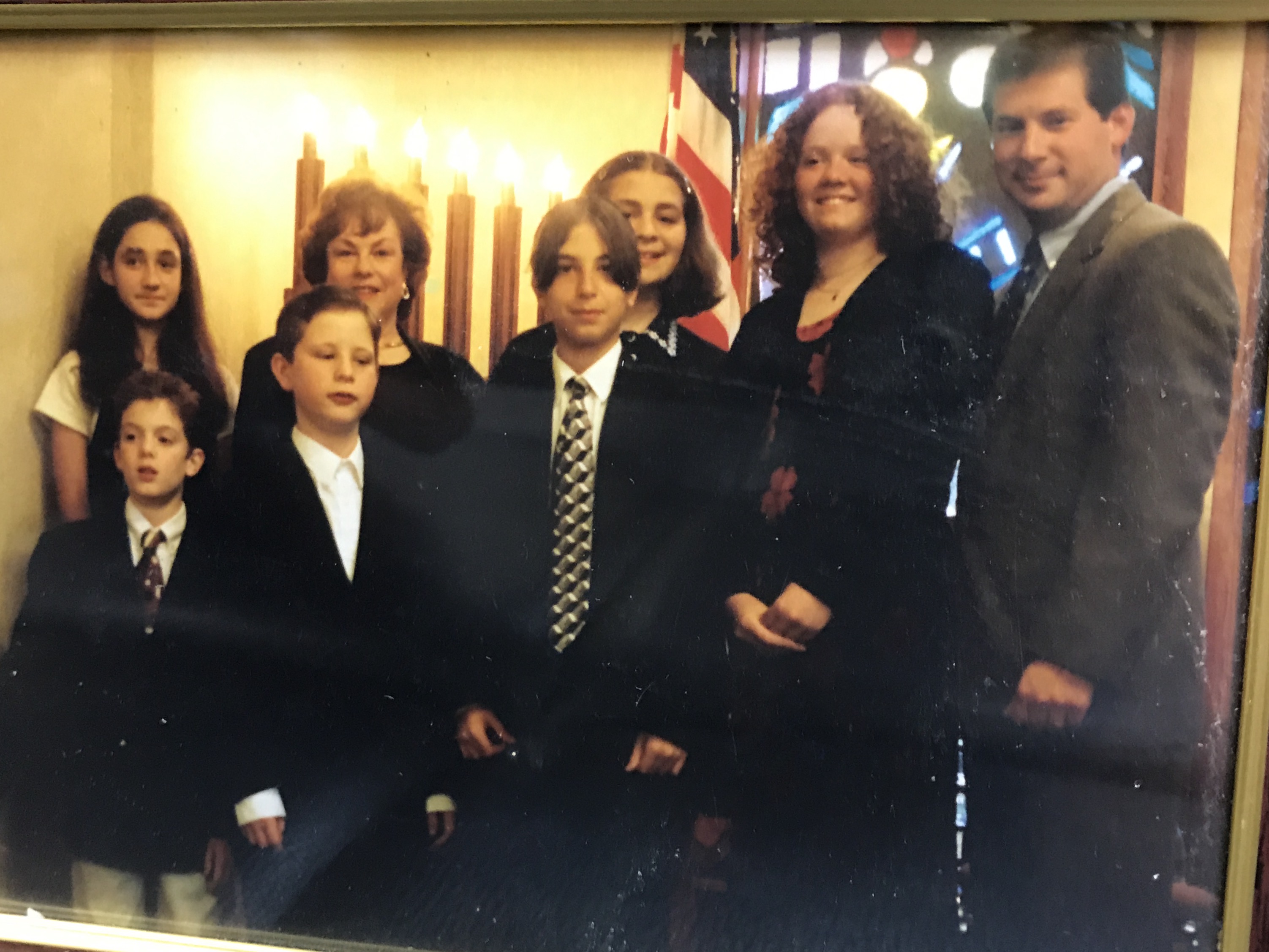
Our Talmud teaches that one who has taught Torah to another is credited with having given them life. That renders the teacher a spiritual parent. So as Father’s Day approaches, I thank all my teachers–my “spiritual parents”–but especially Rabbi Sosland, for sharing his Torah, for inspiring me to follow in his path. And I pray that I will have the privilege to be considered spiritual parent to many students of Torah in my lifetime.
Rabbi Craig Scheff
In pursuit of mental health
When it comes to comforting the mourners or caring for the sick, the Jewish tradition provides ample wise guidance. The one in need of comfort and the one offering, the one in need of healing and the one giving care, the community with which both connect–all benefit from the ritual that the tradition provides in order to manage expectations, overcome insecurities and fears, and offer structure and control where uncertainty and chaos often reign.
In the event of death, broken bones or illnesses that present in noticeable ways, the tradition serves us well. In the case of hidden illnesses, however, the traditional responses are far less effective. After all, if the person suffering illness chooses to remain silent about the affliction, so must the caregiver; and if neither is willing to share publicly that they are in need, the community is rendered ineffective. The resulting failure in connectedness is to the detriment of all three parties in multiple ways.

For a long time, cancer was greeted with this kind of ineffective response, probably because it was viewed as a death sentence. The diagnosis was whispered, family privately grieved, friends had no words. Today, cancer is shouted out and proactively battled with the support of practitioners, caregivers, support networks and public advocacy.
Sadly, mental illness remains a source of shame for those afflicted, isolation and sadness for their caregivers, and helplessness for communities. In general, people still fail to grasp the true nature of mental illness. Those suffering keep their stories and needs to themselves to avoid stigmatization. Victims are often expected to fix themselves, to get over it. All too often, we greet news of suicide with responses–“Why did they do it? They had so much to live for?”–that reflect our own refusal to acknowledge the perniciousness of the disease and that perpetuate the stigma attached to mental illness. Families protect their loved ones’ privacy, so they suffer quietly. Communities passively watch as affiliates recede to the margins.

On the Shabbat of Tazria-Metzora, a reading that offers a ritual through which the priest ministers to those afflicted of a skin disease and thereby keeps them connected to the community despite their temporary quarantine, I chose to address the topic of connecting with those who experience, or care for those who experience, mental illness. I offered that our pursuit of mental wellness must begin by removing the stigma attached to mental illness and to those who seek therapy for their own mental care. After sharing that I have sought therapy for my own mental well-being at various times over the years, and that I recommend therapy as an important part of self care to all the rabbinical students I teach, I invited anyone who has received or is currently receiving therapy to rise in their places. When half of those in the room–scores of people–rose to their feet, there was an audible release, and then tears. People found comfort, validation and relief in discovering that they were not alone. For a moment, any shame or isolation was gone.

I hope that this moment marks a new beginning: when those in crisis know that they need not hide in shame; when their families have permission to speak openly with their clergy and community about the challenges they face; when the community can reach out in care to offer support and to pull into the center those who may otherwise feel marginalized.
Share your story. Offer to be part of the network of support. Join us on June 4 at 5:30pm, whether you are a professional wanting to facilitate or someone seeking to offer or receive support, as we commence this initiative to show that OJC supports you. With your help and participation, we hope to have various support groups and referral services in place by the fall.

Email us at ojccares4u@gmail.com with your intention to attend our opening meeting. If you are interested in having a particular support group, please note that as well.
It’s time to bring this topic out of the shadows. And it starts with you and me stepping into the light, together.
Rabbi Craig Scheff
Passover, Half Over, Leftover
Half way back to chametz, we should be able to hear our seder table conversations, ideally, still echoing in our heads.
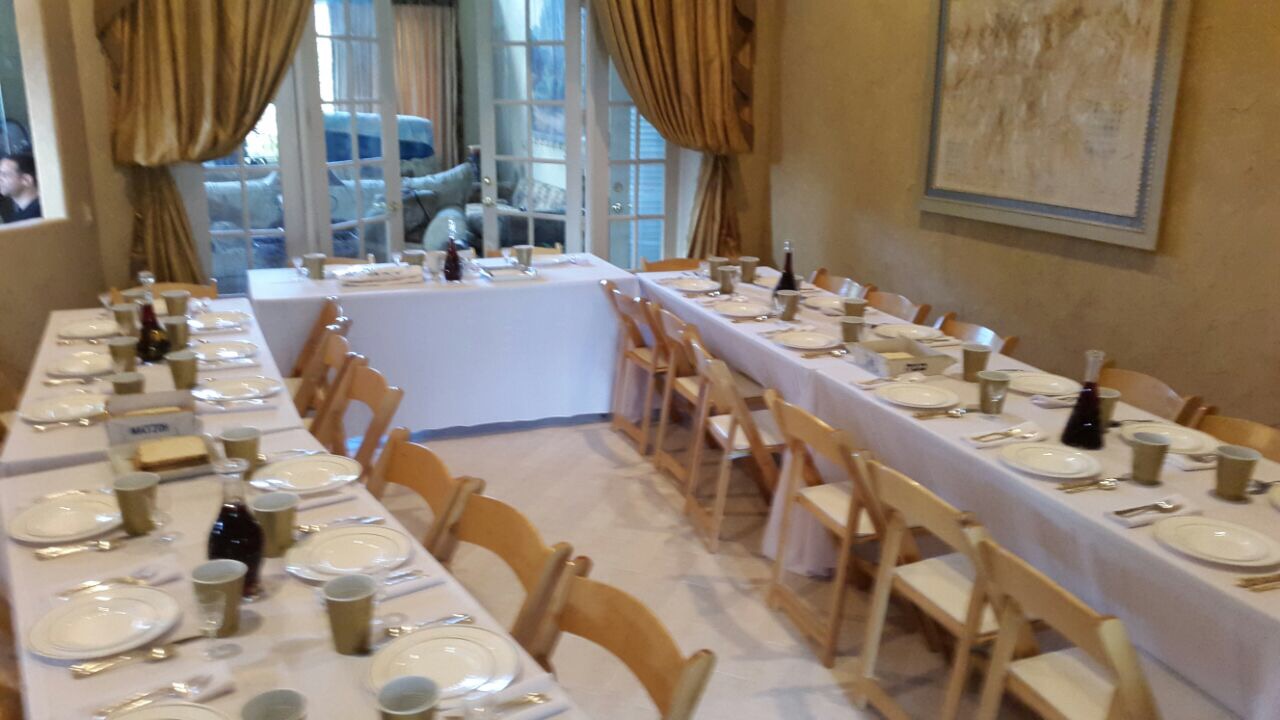
In its original form, the seder was an expression of Jewish modernity. The rabbis who created the ritual were clearly influenced by the social, cultural and political conditions of their time. The resulting seder spoke to modern Jews in their language, literally (note the use of Aramaic in key places) and figuratively (the Greco-Roman practices of leaning, dipping and symposium-dining). While my grandmother and I may hope to perpetuate my family custom of “egg soup,” I highly doubt that was on the menu 1800 years ago!

Your OJC rabbis’ point of emphasis for the holiday this year was to make room for creativity, so as to allow the dynamic and flexible structure of the ritual to make room for greater meaning. “Tradition” doesn’t necessarily mean doing things “the way they have always been done” when the ritual itself calls for relevancy and contemporaneity. How do we see ourselves as having come out of Mitzrayim if we cant incorporate the symbols and language of our day that define enslavement?

To that end, I share with you the questions that I raised at my own family seder this year. I hope you will consider them over the coming weeks as we head to the holiday of Shavuot, celebrating the giving of our Torah. Or perhaps you can slip them into that place where you store your Passover items for next year, so they will be readily available for your next seder! The questions are connected thematically to each section of the seder in the order of the ritual. I hope they will bring meaning to your annual (and daily?) Jewish conversations:
Kadesh: How do you define the word “holy” and what do you consider holy to you in the world?
Urchatz: If there were a severe water shortage and you could only bathe 3 times in a week, when would you do so?
Karpas: What represents spring to you, and what would you add to the Seder plate as a symbol for it?
Yachatz: Is there something about you that you consider “broken” that you carry as a part of what makes you who you are?
Magid: When people ask where you are from, what do you tell them?Wise: What is the best thing Judaism offers to the world?
Wicked: Name something oppressive from which you or your family have been liberated.
Simple: What oppression exists in the world today, and how does it affect you?
Doesn’t know how to ask: Is there a story you tell about yourself over and over?Rochtza: Have you ever used a mikvah, or can you imagine a time you might?
Motzi: What role does food play in your life?
Matzah: What food would be a real sacrifice for you to give up entirely?
Maror: Can you think of a time when your actions unintentionally may have made someone feel like an “other”?
Korech: Is there a family tradition you wish were being passed on to others?
Shulchan Orech: Do you have a relationship with a community? Is it social, religious, historical, or something else?
Tzafun: What aspect of your self do you tend to hide?
Barech: Do I ever say “thank God!” and if so what do I mean when I say it?
Hallel: Is there someone you failed to thank or acknowledge and wish you had the chance to do so?
Nirtzah: What would you add to this experience next year?
Rabbi Craig Scheff
 Three Rabbis Walk Into A Shul
Recent Comments