My Advice: There is No Advice
There are days that offer us lessons we never forget, as long as we are paying attention. One long, overfilled day several years ago was such a day. I paid a shiva call to a community member whose six-year old child had died. As I sat next to him in a rare moment of quiet during that excruciating week, he told me that a visitor earlier in the day had told him that she had also lost a child. She shared that life was never the same, but that he could look at her and know that life would go on. As he shared the story with me, I saw that he was incredibly angry and hurt. When I asked him to explain his response, he did not try to contain his outrage, “How dare she tell me that my life will not be the same? And how dare she tell me that life will go on? What does she know about me and my loss? She barely knows me.”
That same day, I called my cousin whose child had died earlier in the year after a long bout with cancer. When I asked my cousin how she was doing in this moment, she told me she was feeling quite good. She had gone to the grocery store, no small feat in those difficult days, and had bumped into another mother from her children’s school. This parent shared that she had also lost a child. According to my cousin, the mom told her that life was never the same but here she was, still living, taking care of her family, and even finding moments of joy. My cousin told me that this short conversation had opened her heart to a feeling of hope she had not experienced in all the months since Sami had died. “Can you imagine that?” she wondered aloud. “And this woman barely knows me.”

There are days that teach us necessary lessons if we are paying attention. It was a hard day, that confusing and painful day of reaching out to others with the worst kind of traumatic loss. But I was paying attention.
Here is what I know for sure.
There is no one-size-fits-all answer to the question of how we bring comfort to people who are grieving.
I read well-intentioned advice about how to speak with people who have experienced traumatic loss, and I think back to that day. Two people in similar circumstances experienced similar condolences in completely opposite ways. Why? Because we are all different and so we experience loss differently.
People do not suddenly become the same because they have gone through similar losses – death of a child or divorce or chronic illness. To assume that we can offer support in the same way to all people leads to the kind of hurt I heard about from the man in whose shiva house I sat.
But it also just might lead to the kind of elevation and hope that I heard about from my cousin.
My advice regarding offering condolence or support is that there is no advice. What not to do is straightforward. Don’t preach; don’t share your own sorrows as if that is helpful; don’t tell people what they need to do. Don’t tell stories in a loud voice; don’t do business with other visitors. Don’t stay too long; don’t put yourself into the middle of conversations as an expert. Don’t come to a shiva house for lunch.
But what to do? This question is much more nuanced. We who seek to offer loving kindness must depend upon empathy, humility, and deep listening. Jewish tradition has it right when it teaches us to enter a shiva house and be quiet. We are meant to wait for the mourner to speak first and follow their lead. We must listen before we speak and never assume that what we offer is what the person before us needs.
And we must try. Just because it is hard, we must not give up. Long after shiva, after thirty days, after the unveiling, after years, grief continues. We must continue to be present to people in our lives. If we make a false start, we back up and try again. We say that we are sorry that what we tried seems to have been the wrong thing. As a rabbi, I speak with family members and friends who worry because nothing they offer seems to help. In fact, often what they offer seems to infuriate or hurt their loved one. My advice is consistent: This is not about you. The grieving person is the only one who matters in this configuration.
There is no deadline for grief to be complete. People trying to be supportive say, “But he is still so depressed.” or “She isn’t moving forward.” They may be correct; the person might be depressed or stuck. But it is not our job to “fix” something. There will be a moment when someone will offer with an open-handed wisdom that the mourner might find support in therapy or prayer or travel or exercise. But that wisdom will not be motivated by the supportive person’s own discomfort. This is not about us.
Now we are at the beginning of a brand new year. We love the promise of a fresh start. We want to kindle hope in others and believe that good things will happen because of our desire to help. This year, I have been excited about my own fresh start. I am grateful, prayerful and inspired to do good. But I am also thinking about all the people whose current circumstances cheat them out of the gift of beginning anew. I hope that you will join me in thinking about people in the throes of chronic situations that steal away any promise of a good night of sleep, people whose loss is still so raw that tomorrow will bring no relief, people who struggle with depression that scoffs in the face of hope. I hope that I will be able to sit with their pain, sustain their sorrow and be supportive in a way that may help.
This week, as I open my heart to a glorious new year, I pledge to offer support, condolence and hope in small, humble ways. I will not always get it right. There is no ready answer. There is simply listening well, deeply, as carefully as I can and offering in small gifts and gestures what each person needs.
It is hard work to stay steady, to open our hearts to grief.
When we ask, “How are you?” we hope desperately to hear, “Great” or “Much better” or “I’m getting there.” Two years later or ten years later, we don’t want to hear how deep the pain still goes. But that is what grief does. It does not let go.
The point is, those in pain do not have access to a fresh start. If we are the blessed ones who look forward to the new year with joy, then we must carry them too in our hearts. The new year is not about my teshuva alone. Jewish repentance is about the entire community; we all stand before God: the whole, the broken, the lost and the found. I pray you stand with us this year, bringing whatever is in your heart with you.
With prayers for a new year of peace, Rabbi Paula Mack Drill
Preparation in Elul: I lift my eyes to the mountains…
My horse, Naapi, stepped gently through the trees, stopping now and then to munch on the grasses and wildflowers along the trail. I was supposed to pull his head up and give him a heel to the ribs. Of course, I did not have much heart to do that! He knew in an instant that he had a softie in his saddle. Naapi was named for the Old Man in the Blackfeet Indian origin story; he is the one who designs and shapes the world into being. He is also a trickster. (Maybe it was not only my compassion that kept me from steering him away from his mid-ride snacks – I took his name seriously!)


I asked our guide, Shane, what he thought about a Creator who is also a trickster. Shane laughed, and then turned our light banter immediately to a theological discussion. It turns out that not only is Shane a prize winning rodeo competitor, a high school teacher, and an entrepreneur, but he is also pastor of his church.
He told me about his sense of wonder at the birth of his first child just three days earlier, a funeral at which he had officiated the day before, and community healing he hopes to effect in his church. I told him about my synagogue, the social action and prayer in which we engage, and the serious work of preparation for the High Holy Days that begins (tonight!) with Rosh Hodesh Elul.
Shane was especially moved to learn about the Jewish idea of repentance. I explained that the Hebrew word teshuva does not mean punishment or forgiveness; but rather, return. When I told him about returning to our best selves and to God as the true work of repentance, he thought this would be a good lesson for the people in his church.
I joked that I would be teaching about his church on Saturday and he would be preaching about our synagogue on Sunday!
As our scheduled one hour horseback ride lengthened into two hours, we spoke about obligations to family, privileges of community and our connection to God through nature. Shane told me that he believes that there are more atheists in urban areas than in back country. I understood exactly what he meant. In our normal suburban/urban lives, we are surrounded by the accomplishments of humans: bridges and buildings, roadways and highways. We spend our days connected to electronics and social media. It makes sense that there is not much room for God in our busy, human-centered lives. How different it is in the back country where I was privileged to spend ten days of vacation. I spent my days on a bicycle or in hiking shoes. I rarely used my phone. The tallest things in every direction were the glorious mountains of Glacier National Park. When I considered the Rocky Mountains decorated on top by ever-changing cloud formations, glacial lakes, fast-running rivers, endless plains and deep forests, I felt deeply God‘s presence. Who else could have “invented all of this stuff”?!


It is time to prepare for Rosh Hashanah. We will be hearing the blast of the shofar for the first time on Sunday morning. How will we wake up? OJC is offering several opportunities to do the work of Heshbon haNefesh, taking an accounting of our souls.
Women of OJC are invited to a Saturday evening program on September 7 to Envision a New Year . #OJCSupportsU is hosting a workshop, Hope into the new year, at two different times: Monday, September 16 at 4 o’clock in the afternoon or Wednesday, September 18 at 7:30 pm. Hope into the New Year.
After my amazing experience at Glacier National Park, I have one more suggestion for Elul preparation. Consider preparing your soul by connecting to God in nature. Rockland County, New York and Bergen County, New Jersey have some of the most beautiful outdoor areas in our country. Unplug, disconnect, and find the green spaces to quiet your mind and listen to your soul. Bring with you a prayer book, a poetry collection, a journal or a book of Psalms. Close your eyes and breathe in as the trees breathe out. Listen to the sounds of the woods or the ocean. Be present to yourself in the majesty of God’s creation. On my vacation, every morning when I prayed, I could never figure out if I should read a Psalm about God’s creation or simply look up from the page at God’s creation. Ultimately, I chose to do both. I hope that you will do the same.
Whether on footpath or sandy beach, I wish you luck on your journey toward the High Holy Days. Perhaps you will be rewarded, as I was, with a rainbow. God keeps God’s promises. Do we keep ours?

Do Not Stand Idly By…
For me, this was most definitely a first: a protest chant anchored in daf gemara (a page of Talmud). Rabbi Marcus Rubenstein, of Temple Sinai, Middletown, New York had gathered two hundred Jews and allies from the Orange County Hispanic community to protest inhumane conditions for incarcerated undocumented immigrants throughout the United States.


The Babylonian Talmud, Masechet Sanhedrin 73a asks, “From where is it derived that one who sees another drowning in a river or being dragged away by a wild animal or being attacked by bandits is obligated to save him? We learn it from: ‘You shall not stand idly by the blood of your brother.’ (Vayikra 19:16).” Now Rabbi Rubenstein led us in chanting, “Lo Ta’amod” – “Do not stand.” Do not stand idly by. Do not stand for it!
With police protection and a designated area in which to meet, we stood at the edge of a field, up the road from the Orange County Detention Center which glowed eerily in the evening sunset. A volunteer protest band held our attention and kept us motivated. Rabbi Rubenstein had reached out to the Rockland community to invite us to join the protest. Four carloads of my congregants answered the call.


Why were we there?
For me, the answer is best provided in a famous quotation from Rabbi Abraham Joshua Heschel who asked, “What is a sin?” Heschel’s answer was, “The abuse of freedom. A failure to respond to God‘s challenge.”
This time in which we are living presents just such a challenge from God. How are we responding?
If all of us indeed are created in God’s image, then how can we bear to see children separated from parents and suffering alone? How can we read about overcrowded, hopeless conditions for incarcerated individuals? How can we hear that people are detained without representation and languish, with no clear path forward? We can no longer read the news and just turn the page with a sip of our coffee.
The inhumane treatment of undocumented immigrants in our country is not about political party. It is not about ideology. It is about basic decency.
Anonymous emails and several comments on our synagogue Facebook page focus only on the political quagmire that surrounds the questions of immigrants, asylum seekers and borders. It is easy to use immigration issues for political posturing. American leaders on both sides of the aisle have been doing that for years. Meanwhile, human beings are suffering, human beings created in the image of God. While they keep talking, people in custody are languishing in untenable conditions.
I did not go to Goshen, New York to speak against Republicans or Democrats because this is an American problem. I did not go to speak against ICE who are charged with a problem they have no power to fix because this is a mess created by our government. I did not go to speak about a brand new problem because this situation has been building for more than a decade.
Heschel said that few are guilty, but all are responsible. I feel responsible. And so I went to the protest and brought my congregation along.
I went to the protest because it is time to stop wringing our hands. It is time to stop copying and re-posting to the echo chambers of our Facebook pages, waiting to count the “likes.”
I went to the protest because we are American citizens who have rights that are also obligations. In order to change impossible situations, every individual must exercise his and her right to claim a voice in our government.
I went to the protest to tell everyone that it is time to write and call our representatives as our consciences dictate and to do so in a non-stop persevering manner. We must demand that Congress act quickly and responsibly to address the crisis in the conditions of incarcerated undocumented immigrants.
In the Torah we read, “When a stranger resides with you in your land, you shall not wrong him… You shall love them as yourself, for you were strangers in the land of Egypt.” And in case we have any doubt, this statement is punctuated with: “I am the Lord your God.” (Vayikra 19:33 – 34)


Our leaders can disagree and debate about immigrants, borders, the asylum process. While they are busy talking, however, human beings are languishing. We must write letters. We must make phone calls. We must do so without stopping. We must make a loud noise, loud enough for our elected officials to stop posturing and start acting. Our noise must be loud enough for God to know that we are responding to God’s challenge.
Rabbi Paula Mack Drill
Learning for Today’s Reality
I find it useful to start at the end.
At the conclusion of the American Jewish Committee Global Forum, before we boarded buses for the Hill to complete our advocacy assignments, CEO David Harris told the gathering of 2500 people from 39 countries what the purpose of this forum had been. Rabbi Scheff, Leslie and Allen Levinson and I had travelled to Washington DC from June 2 – 4 for days packed with inspiring plenaries and thought-provoking learning sessions with AJC experts, foreign dignitaries and policy analysts. At the closing plenary, David Harris told us that the days in which we live have created an atmosphere of confusion and conflict for the Jewish community. His goal for this year’s Forum had been to get inside the zeitgeist of the American Jewish community today and offer meaningful education and answers.
He then challenged us: the real test begins now. What will you do with all the information you have gained? My first step is to share my learning with all of you.
With anti-Semitism on the rise, global democracy in disarray, and partisanship at an all-time high, I found AJC’s clarity to be effective and refreshing. I strode past the Capitol and into the Senate Office Buildings for my lobbying meetings feeling empowered and ready.
It is difficult to encapsulate two and a half days of learning, but I will highlight three experiences that will provide a sense of what it was like to learn with AJC.
Sunday evening was the first annual gathering of the Community of Conscience. AJC had envisioned an assembly of people from many faiths and ethnicities to speak to the key values of our day. The event was planned for the Lincoln Memorial, but a hail storm kept us instead inside the Hilton. There in front of a jumbo screen showing the Lincoln Memorial, we listened to invocations from two clergymen who know firsthand the trauma of hatred in our country. Reverend Eric Manning, Senior Pastor of the Mother Emmanuel African Methodist Episcopal Church in Charleston and Rabbi Jeffrey Myers, Rabbi of the Tree of Life Synagogue in Pittsburgh spoke eloquently about the need for diverse communities to stand together.
Dr. Bernice King punctuated their messages by telling all of us that hate is too great a burden to bear. She told us, “I have decided to love. He who hates does not know God, but he who loves has the key that unlocks the door to the meaning of ultimate reality.” As her powerful words rolled over us in a cadence reminiscent of her father, in front of an image of the very place where he gave his famous “I have a dream” speech, I knew with certainty that she was right. It is a long arc toward justice indeed, but love and righteousness will ultimately win over hatred.
Early (very early!) the next morning, Rabbi Scheff and I attended a Rabbinic Round Table on the rise of global anti-Semitism. Simone Rodan-Benzaquen, Director of AJC Europe, and Daniel Elbaum, AJC Chief Advocacy Officer, presented a sobering view of the situation around the world. As Daniel Elbaum said, history does not repeat, but it certainly does rhyme. Our task, of course, is to stay alert, speak out, and parse between the various layers of messages being put out into the world.


One of the most inspiring sessions was called: Ghosts from our Past: The legacy of American Racism and a Call for Unity. We were privileged to learn from Mitch Landrieu, Mayor of New Orleans from 2010 until 2018. Author of In the Shadow of the Statues, he provided an engaging and inspiring story of his personal journey growing up as a white child in the South in a neighborhood of African-Americans. He described how he came to understand entrenched racism and to use his position of power to fight back against it. Put his memoir on your reading list!
All of the conversations and lectures prepared us for lobbying on Capitol Hill. In our senators’ and congressmen’s offices, we asked for support of the Protecting Faith-based and Nonprofit Organizations from Terrorism Act and for the Eastern Mediterranean Security and Energy Partnership Act, a bill that my own Senator Menendez co-sponsored. With the power of AJC behind us, we felt affirmed and acknowledged.

David Harris told us that our work comes down to following the Golden Rule. The problem, he said, is not in finding the right words, but in actualizing them. Because we are all created in the image of God, desecrating even one human being is equal to desecrating God. He charged us to delete and discard the word tolerance. No person or group of persons should merely be tolerated. Rather, we must seek and offer respect, understanding and love. That is the work that lies ahead of each one of us.
That is the work that we must do in every interaction every day.
With friendship,
Rabbi Paula Mack Drill
Lo Levad, You are Not Alone…easier said than done.
When I think about my dad at home through all the years of my growing up, I think of him as alone. And when I think about my mom through those same years, I think of her as lonely.
Living with bipolar disorder, my dad spent months at a time inside our house, often in his bed, almost always alone. My mom went out to work every day, and my brother and I went to school. When we got home, there he was, on the couch, watching television. I was a kid. It never occurred to me to wonder about how alone he was.

In the 1950s and 1960s, no one understood my father’s mood swings. My parents’ friends wondered and perhaps pitied, but mostly stayed away. My dad‘s parents fretted that they had done something wrong to cause such brokenness. My mother’s parents urged her to leave my dad, and bring my brother and me to live in their house. Instead, my mother stood by my father, the love of her life. She held him and us together. There were no support groups for her; synagogue was not a safe place; and her friends were not equipped to understand. I wonder who could have possibly listened to her without judgment even if she could have articulated her sorrow and her rage. She must have been very lonely.
I thought a great deal about my parents yesterday as we celebrated a beautiful Shabbat of mental health awareness at OJC.

Thanks to the dedication and planning of #OJCSupportsU chairs Miriam Suchoff and Mark Brownstein, congregants experienced a wealth of opportunities to open our hearts and minds, and to create feelings of well-being and happiness – keystones to nurturing and sustaining good mental health. Through meditative prayer, singing, text study, and guided building of relationships, we practiced experiences that promote resilience.
We walked in silent meditation from the Daily Chapel to the bima in the Sanctuary to receive Torah, a powerful reenactment of Mount Sinai where everyone received Torah in his or her own way. God does not see anyone as broken; everyone is created in God’s image. We walked together as a community, from the four-year-old twins skipping to the 90-year-old couple walking carefully with canes. Being together in a community where everyone is accepted as “just fine,” just the way they are, is a most powerful sustainer of mental wellness. Everyone who was in synagogue yesterday felt this crucial teaching in our very souls.
But what about everyone who was not able to be in synagogue with us? What about the people who struggle with mental illness in their homes or in facilities and cannot leave, trapped there, unable to enter into our community of faith? What about the caregivers of those people, too exhausted and fearful of stigma to come out and join us in community? They probably do not see a sanctuary, rather they see an unbearable barrier to entry. How can we begin to change this reality for Jewish people who feel isolated due to mental illness?
We must continue to speak out. We must work hard to enable people to feel safe enough to be vulnerable in our sanctuary spaces.
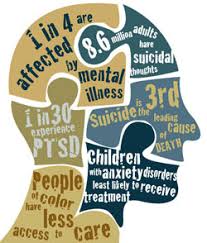
There are many opportunities in the month of May, #MentalHealthAwareness.
Wednesday, May 15 at 7:00 pm at the Rockland Jewish Community Campus, Rockland Jewish Family Service and Board of Rabbis present Lo Levad, You are Not Alone.
Thursdays, May 16, 23 and 30 at 7:30 pm at OJC, join Rabbi Scheff to study Jewish sources and mental health issues.
Thursday, May 30 at 6:30 pm at OJC, join me and Amichai Margolis for a spring time service of healing and harmony.
If you are struggling with mental health issues and you feel alone, reach out to your rabbis or to #OJCSupportsU in any way that you feel able so that we can meet you halfway. Even if you can only reach out a very short distance, we will meet you the rest of the way.
If you are lonely because you are a caregiver for someone you love struggling with mental health issues, we invite you in to listen, share and strengthen yourself.
You might feel alone and you might feel lonely. We want to provide a community for you in whatever way we can, not just in the month of May, but always.

Yesterday, before the Musaf Amidah, Mark Brownstein read Merle Feld’s poem, “Dreaming of Home.” To me, it reads as a clarion call to all homes of worship to be places where people are safe and known.
We want so much to be in that place
where we are respected and cherished,
protected, acknowledged, nurtured, encouraged, heard.
And seen, seen
in all our loveliness,
in all our fragile strength.
And safe, safe in all our trembling
vulnerability. Where we are known
and safe, safe and known —
is it possible?
In closing, I dedicate this post on Mother’s Day to my mother, Frances Weisberg Mack z”l, a woman of extraordinary strength and dedication.
With prayers for a refuah shlayma, a complete healing, a healing of body and healing of spirit,
Rabbi Paula Mack Drill
OJC Pride – Our Youth will Lead Us
As a rabbi, one of my favorite things is when our youth lead Shabbat services. The high school leaders take ownership of the evening; they daven with authority, encourage our religious school kids to participate, and always create and perform an engaging parasha play.


This past Friday, April 12, was all of that and more. In fact, it was a great deal more. Not only was it Youth Shabbat at OJC, but it was also the Day of Silence nationally, and our youth wove these two experiences into one very special evening.
Begun in 1996 at the University of Virginia, the Day of Silence is now observed at colleges and high schools across America to spread awareness about bullying and harassment of people in the LGBTQ community. Students and teachers vow to be silent for the day, showing solidarity for LGBTQ students who are too often silenced.
At services, our OJC kids gave out rainbow stickers, read poems and quotations to educate our congregation, and taught sign language for Sh’ma. One teen read a poem she wrote; in part it follows:
One day a year my silence speaks more than I ever could out loud.
My silence speaks for those who stop talking,
those who are forced to stop talking by a world that can’t accept them
for who they are or who they love.
After services, the brother of one of our congregants shared with me that he had never felt so accepted as a gay man and a religious Jew. He was overwhelmed by the feeling of welcome and comfort that he experienced. This man has been looking for a spiritual home for years. I thank our kids for leading the way in establishing OJC as safe space.

We grownups are doing our part as well. OJC is one of sixteen Conservative Jewish congregations across America in the third cohort being trained by United Synagogue and Keshet to be an inclusive, safe space for people who identify as LGBTQ. During Pride month (June), we are planning a Pride Shabbat (May 31 and June 1) and an inclusion and advocacy training with our Board of Trustees, Pride Committee, and professional staff.
Four of our Pride Committee members are teenagers. They lead the way for all of us, teaching us about what they accept as a natural part of their lives: God created all of us in God’s image. Some of us have brown hair, some are blonde. Some of us have blue eyes and some have green. Some of us are straight and some of us are gay. All of us deserve a seat in a sanctuary. That’s why it’s called a sanctuary.
Please let us know if you are interested in participating in OJC Pride. Contact our chairs, Sabina Tyler and Doug Stone at ojcpride@gmail.com.
And if you have questions about the LGBTQ community, ask a young person. They will be our teachers!
AJWS Rabbinic Convening: A Civics Lesson and More
It was not the most difficult question our American Jewish World Service lobby team faced during our day of advocacy for human rights issues on the Hill, but arriving at an answer required consensus.
Where were we going to eat lunch? Three rabbis plus the AJWS Director of Rabbinic Engagement – four Jews and six opinions.
We agreed to eat in the cafeteria of the Longworth House Office Building. I was glad.
It is hectic and crowded in the cafeterias of the office buildings on Capitol Hill; but there, more than anywhere, one senses her place in the experience of civic engagement.
As I looked around the large room, I saw Americans of every age and ethnicity, from all over the country, spending time in Washington to advocate for their vital issues. I overheard conversations about leadership training for teachers in struggling school systems, sanctuary cities, and Medicare funding of psychological services. Sitting in the midst of New York physicians in their white lab coats, Kentucky firefighters, and environmental activists, we ate our lunches and discussed our meetings in the afternoon ahead.


As part of the AJWS Rabbinic Convening, we had been educated on crucial issues: Burma and the Rohingya crisis, Guatemala and the Rule of Law, and the repeal of the Global Gag Rule. AJWS is an international human rights and advocacy organization operating in 19 countries in the developing world which supports grassroots organizations fighting for human rights. The work of AJWS is inspired by the Jewish commitment to justice.
Almost thirty rabbis accompanied by AJWS staff held 63 meetings with Senate and Congressional offices, reflecting our values through discourse regarding global human rights.


We had access because of the communities we represent (8500 families in our synagogues and organizations). We had moral authority because we spoke in the voice of Torah and Jewish tradition. Senators, congressmen and women and their staff were surprised that rabbis were on the Hill speaking out on issues beyond what they expected – Israel and anti-Semitism. Certainly those critical questions are our core values and concerns. But on this day, we were looking beyond our community to the global community. The world Judaism dreams of is a world where all people are acknowledged as precious creations in the image of God. The human rights issues for which we were lobbying were not about Jews, but we lobbied for them because we are Jews.


In grammar school, I learned a subject that is no longer taught in schools: Civics. More than fifty years later, those lessons came to fruition for me in three days of life experience in civics. Access to elected officials and the right to make our concerns known are two principles of democracy that make our government work for all of us. Even during difficult days in Washington, the privilege to bring our concerns to the public square works. It works for all those people in the cafeteria of the Longworth building, and for thirty rabbis working for the human rights of many of the most vulnerable on our planet.
And now I hope that it will work for the community of OJC as I work to educate and energize our congregation. Together I hope that we will heed the call of our tradition: Justice, justice pursue!
(*Pictures of the entire group in front of the Capitol, of Congressman Engel and of two icons: Engel with Ruth Messinger courtesy of Chuck Kennedy for AJWS.)
With passion and excitement, Rabbi Paula Mack Drill
It’s the 9th of Adar! What are you doing about it?
It is the ninth of Adar Alef on the Jewish calendar. According to the Talmud, almost 2000 years ago on this date, two famous houses of study, Beit Hillel and Beit Shammai, became so entrenched in ideological battle over eighteen legal matters that they turned to violence. Tradition tells us that their destructive impulses led to the death of 3000 scholars and students all on one day. This tragic day was declared a fast day in the Shulchan Aruch, but it was never observed as one. Perhaps the joy associated with the month of Adar stifled the impulse to commemorate a day of shame and sorrow.

To me, this day represents something especially tragic as the disagreements between the Houses of Hillel and Shammai are most often taught as representative of constructive conflict, the ability to disagree with respect for one another’s viewpoints. What could have gone wrong? I imagine that one scholar or another in either or both of the study houses forgot to practice humility. This scholar or that one influenced his students by appealing to their egos, convincing them that arguments were made to be won. Soon the legal scholars no longer abided by the simple rules of a makhloket l’shem shamayim (disagreements for the sake of Heaven). They no longer could argue the issues while respecting their opponents, maintaining good relationships with them, and even admitting to being wrong sometimes. The inability to engage in constructive conflict led to violence as it does to this very day.
In 2013, the Pardes Center for Judaism and Conflict Resolution declared the ninth of Adar as the Jewish Day of Constructive Conflict. 9Adar Project 

We are observing the ninth of Adar this year at Orangetown Jewish Center through a variety of educational opportunities. This past Shabbat, my 9Adar sermon was about civil discourse and the necessity to learn from multiple points of view. Rosh Hodesh Celebrations and OJSalon studied texts about constructive conflict and took pledges to participate on this day in a ta’anit dibbur, a “fast” from destructive speech. The Chafetz Chayim stated that if one chooses to fast for a spiritual purpose, it is far better to fast from speech than from food. We pledged to abstain from lashon hara, gossip. We have worked this past week to notice when we say things that are not truthful, positive, necessary, or kind. On this day, we commit to engaging either in positive speech or in silence.
Will you join us? Never before have the events of the ninth of Adar 2000 years ago felt more compelling and cautionary. In her book, From Enemy to Friend: Jewish Wisdom and the Pursuit of Peace, Rabbi Amy Eilberg offers ten suggestions for practicing the art of sacred disagreement. (You can read all of them here: 10 Ways to Practice Peace on the 9th of Adar) I offer just three here:
- Invite someone of another religion or political perspective to lunch.
- Call or email a friend or relative with whom you have felt tension, expressing a desire to reconnect.
- If someone speaks sharply or critically to you today, stop and ask yourself what pain or pressure in his or her life might have led to that moment of harsh speech.
If you try any of these techniques and are moved, continue the next day, and the day after. As Rabbi Eilberg encourages us, the health of our community and our world may depend upon it.

Says Rabbi Tarfon in Ethics of the Fathers, “It is not your responsibility to finish the work of perfecting the world, but you are not free to desist from it either.” Pirke Avot 2:21
Wishing you empathic, compassionate conversation on the 9th of Adar and all the days that follow,
Rabbi Paula Mack Drill
Healthy Body, Healthy Soul
It is that date on our calendars, December 31. If you are like most people on New Year’s Eve, you will be setting resolutions before the ball drops in Times Square.

Many of those resolutions will be some version of being more healthy. We pledge to start a new exercise regimen, eat a healthier diet, relax more, etc.

And if you are like 80% of people, by February you will no longer be meeting your goals.
I suggest that health and wellness are more achievable as a way of life rather than as a goal to be achieved in the first weeks of January. One of my yoga teachers encourages us to see changing our patterns as a curious experiment. She says that it is more effective to be gentle with ourselves and take several small actions in the direction we want to go rather than setting impossible long-term goals.
“Fine and good,” you say. “But what are these sentiments doing in my rabbi’s blog post?”
I’m glad you asked!
Jewish tradition teaches that our body is the Temple of our Soul. God created each one of us in God’s image; therefore, our body is part of our sacred being, the place where our Godly spark resides. As Rabbi Simon Jacobson has written Read More…
Spirituality and Healing
I celebrated quietly this week. On Monday, I crossed the halfway mark. I completed the fifteenth radiation treatment, leaving only thirteen more. By tomorrow, I’ll be eighteen done and ten to go. That’s nothing, right? Even though each day of radiation and chemotherapy makes me increasingly fatigued, I can do ten of anything . . . except, perhaps, chin ups.
The days and hours from last March until two weeks from tomorrow feel like the longest, slowest period of time in my life. It also feels like it has gone speeding by. I want to ask: how did I get here?
I have had so many blessings along the way: doctors who are healers, compassionate nurses, the newest chemotherapy and technology protocols, health insurance and a loving, understanding workplace. (I think often of ill people without any of these essential pieces in place.)

My family, friends, and OJC community have provided unstinting support.
My self-care practices of healthy eating, yoga, walking, journaling, and meditation have supported and eased the regimen of surgery, chemotherapy and radiation.


But nothing has been as powerful in my healing process as my faith in God.
Make no mistake: I am not saying that the seeming success of my course of treatment and potentially complete healing are the result of my faith. God did not make me sick and God is not healing me.
I am saying that my optimism, positive energy, gratitude and sense of blessing are all a result of my belief in God and that God cares about me.
My spiritual life does not remove moments of fear and despair, but does give me the ability to cope.
Spirituality allows me to experience transcendent meaning in this precious life. For me, it is expressed through my relationship with God. For you, it might be about nature, family, or community. – whatever beliefs and values give you a sense of meaning and purpose in life. When we attend to these beliefs, we feel a deep sense of belonging to something greater than we are.

For me, my spirituality translates into an unshakable trust that God has plans for me. This idea has carried me through my treatment for cancer. And it will carry me through the months and years ahead from scan to scan.
Praised are you, Adonai my God, Who has helped me feel safe and free from undue suffering. Thank you, God for helping me find moments of joy in the midst of this time of challenge. Amen.
 Three Rabbis Walk Into A Shul


Recent Comments