Gratitude then, gratitude now
“When you come into the land that the Lord your God has given you, and have possessed and settled it….” These words serve as the Torah’s introduction–in this past week’s portion Ki Tavo— to the thanksgiving ritual of bikkurim, or first fruits. Upon arrival in the Promised Land, the Israelite is to appear in the presence of the kohen, bearing his basket of produce, and offer a scripted monologue detailing the history, context and expression of gratitude for the bounties bestowed.
The timing of this ceremony is a subject of debate among the rabbis. Specifically, does the language of the verse quoted above indicate that the ceremony is performed upon entry into the land, or only after the land has been settled? How this question is answered informs our Jewish understanding of the concept of gratitude. If thanksgiving is to be offered immediately upon entry, the gratitude expressed is in appreciation of God’s goodness, a promise kept, a gift given, even though the gift received has not been opened yet! On the other hand, if thanksgiving is to be offered only after the land has been settled (and it would take years before the land would be entirely settled!), the gratitude expressed in the first fruits ceremony would be accompanied by a very different intention. The gift’s recipient would have had the chance to unwrap the gift, open the box, and make use of the gift. Gratitude would be accompanied by a rational appreciation for the thing itself.
I am certainly not suggesting that we write two thank-you cards for every gift we receive. The trait of gratitude we cultivate, however, should be informed by both perspectives. We should appreciate the generosity of others for the consideration they show us, regardless of the gift itself. And we should recognize and acknowledge the gift itself as we come to recognize its unfolding impact on us.
On this sixteenth anniversary of the life-shattering events of 9/11/01, I remain deeply saddened by the stories of suffering, especially those of individuals who have recently lost their lives as a result of 9/11-related illnesses.
But I also feel gratitude. In the initial aftermath of the tragedy, I was grateful to those who showed supreme heroism, selflessness and compassion in the darkest hours, many of whom gave the gift of life at the cost of their own.
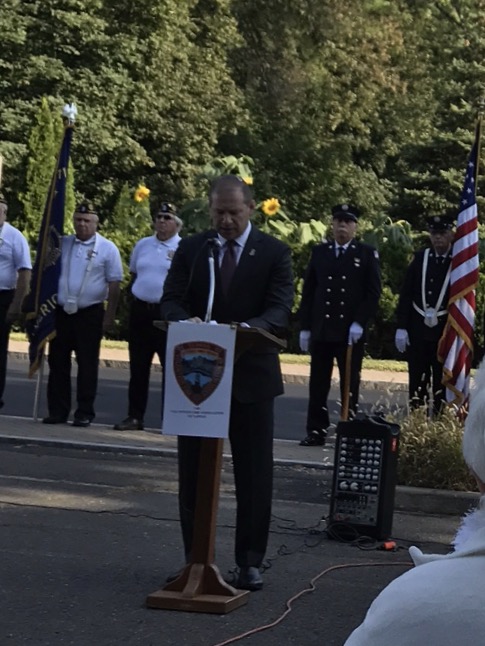
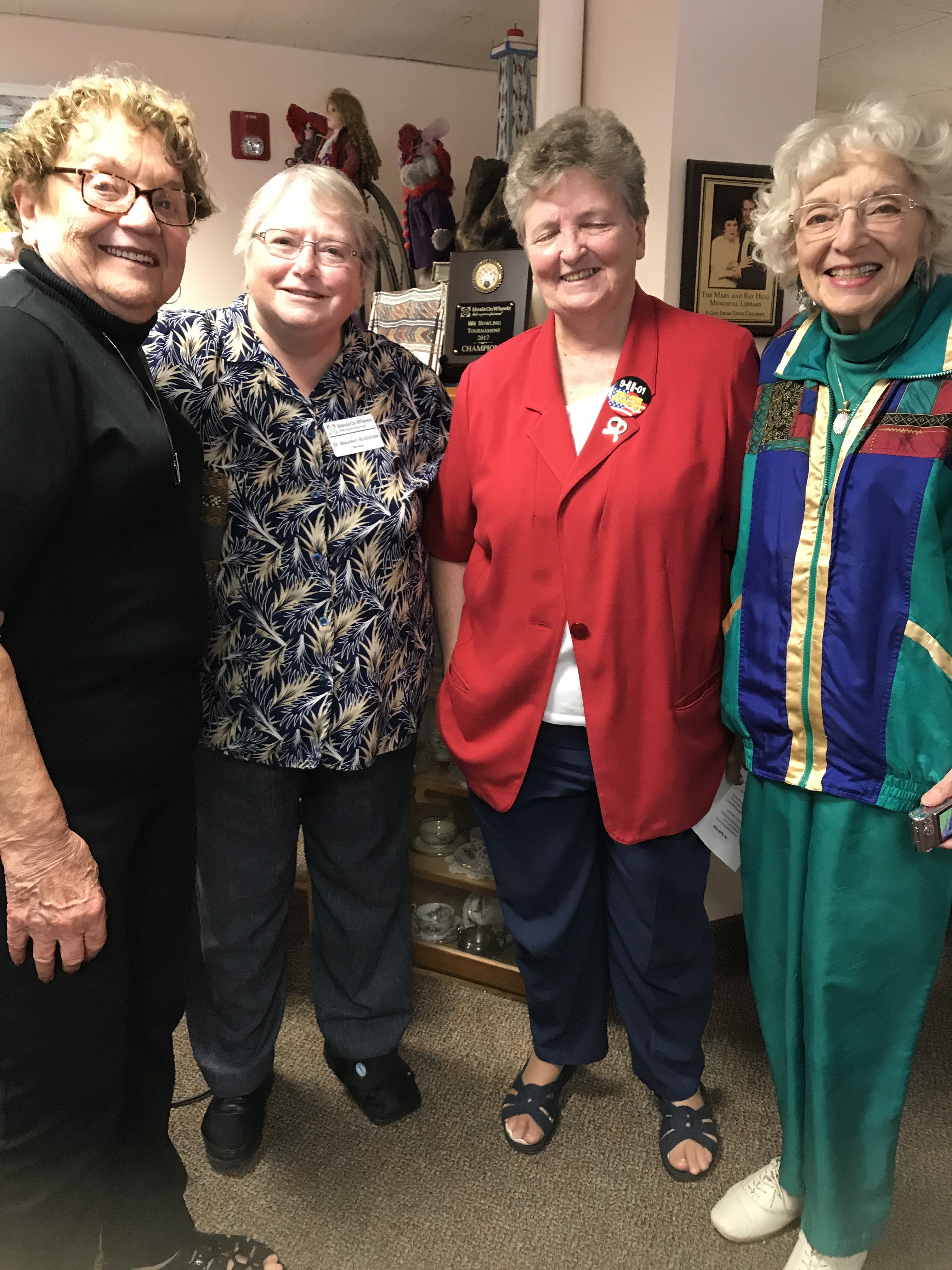
With the passage of time, I have also come to appreciate how these self-sacrificing individuals and their communities of volunteer and professional servants have shaped our neighborhoods and communities. “We are one family” is a refrain I heard repeatedly this morning, and a theme I saw play out in our broader community. As our OJC community joined together in commemoration with our neighbors and volunteers in Tappan, and as we joined in learning with the faith community of the Dominican Sisters of Sparkill, a true sense of brotherhood and sisterhood prevailed.

I am grateful for the care we show one another in the wake of tragic events, and for the human and institutional actions we have witnessed in response to natural disasters Harvey and Irma. Today, I express my gratitude–with a basketful of intentions–to those who serve us each day and to those who work toward creating the kind of community we aspire to be.
In peace,
Rabbi Craig Scheff
The call for moral leadership
As this Hebrew month of Av draws to a close in the week ahead, leading us into the reflective month of Elul, I am reminded of a teaching by Rabbi Abraham Isaac Kook, the first Ashkenazic chief rabbi of pre-state Israel: “If we were destroyed, and the world with us, due to baseless hatred – sinat chinam, then we shall rebuild ourselves, and the world with us, with baseless love — ahavat chinam” (Orot HaKodesh vol. III, p. 324). The destruction to which Rav Kook refers is that of the Holy Temple; but his teaching is as equally valid today as we experience again and again the destructive force of baseless hatred all around us.
These times demand moral leadership. The actions of neo-Nazis and white supremacy groups in Charlottesville–marching with torches, toting guns, chanting hate-filled slogans, intimidating Shabbat worshippers, and ultimately inciting deaths and injuries—or anywhere else, for that matter, cannot be countenanced without a response. In the moment, we cannot afford to be bystanders, though we are not required to put ourselves in harm’s way; in the aftermath, we call for moral leadership. We demand swift and unequivocal condemnation from those elected or appointed to positions of power. Over the past few days, we have read many such statements from organizations and individuals representing our communities. Frankly, I am underwhelmed by all of them.
Statements are important; but they are nothing compared to actions. Of course, we should call out—or expect our leaders to call out—that which we find despicable, abhorrent and unacceptable. But how have we truly changed our world in relying on someone else to speak what we are feeling?
Moral leadership must indeed be demanded; Judaism, however, dictates that we demand it of ourselves. We must be the moral leaders of our day; others may speak for us, but only you and I, individually, can change the landscape. And Judaism tells us how in this week’s reading of R’eih: “Do what is right and good in the eyes of God.” Feed the poor, care for the stranger, let the land regenerate, show gratitude for what you have, don’t take time for granted. Love (the verb).
Love. We’ve been reading all about love in the Torah weekly throughout this month of Av. “Love the Lord your God with all your heart, with all your soul, with all your essence.” “Love the stranger.” In response, I commonly hear expressed the struggle with the notion of being “commanded” to love. How can love be commanded?
If I had to define “love” in the context of what the Torah tells us, it would be the feeling we experience when we give to another at our own expense. The Torah wants us to serve the Other–and others–through our choices and with a generous spirit. (A moral leader is defined typically as a leader whose purpose is to serve, as opposed to be followed.) But we aren’t born with that desire to love. We are taught how to give love by being loved and by loving. Love may be an emotion, but it is also learned by experiences and actions.
“But hate is stronger than love,” I hear. My response: Hate is taught, just as love is taught. Perhaps hate is taught more easily, because hate appeals to our base instinct of self-preservation. Teaching love through our actions demands self-sacrifice, vulnerability and risk-taking. Teaching love means overcoming our reticence, our fear of the stranger, our complacency.
Moral leadership means accepting these challenges for ourselves, and not giving in to insecurity, fear and despair. Moral leadership means embracing and living by the notion that there is a shared code of conduct or set of values, that calls upon us to serve one another and “do what is right and good.” Moral leadership is the constant and intentional endeavor to behave morally and to love.
Some of you struggle with the idea that, as Jews, it is our mission (calling? obligation? command? responsibility? — call it what you wish!) to pursue love in the world, just as we are taught to pursue justice or peace. Love needs to be practiced, exercised and cultivated, just like any other discipline, muscle or character trait. And the more we love, the easier it gets. Trite? Perhaps. But when was the last time you went about your day consciously choosing to give love beyond your friends and family circle? To your neighbor? To a stranger? Try it, and you will soon discover that love is stronger than hate.
What does God/Judaism want of us? To live with a consciousness of our connection to others that guides our choices and our behavior. This is what God hopes will shape the kind of love we experience and bring into the world, the kind of moral leadership you and I provide for the world of tomorrow.
Rabbi Craig Scheff
House and Home
“Mah tovu–How beautiful are your tents, O Jacob, your dwelling places, O Israel” (Numbers 24:5, from this week’s parasha, Balak).

The Bible’s poetry often appears as a parallelism, where elements of a sentence are identical in construction and meaning. On a first reading, we might understand the quote above, spoken by the prophet Balaam, as an example of this technique. Traditional rabbinic commentaries, however, attempt to show that this verse is more than simple repetition of an idea for the sake of poetry, that “Jacob” and “Israel” are not parallels, that “tents” and “dwelling places” carry different connotations.
According to the Sefat Emet, a nineteenth century Hasidic commentary by Rabbi Yehudah Leib Alter of Ger, “Jacob” is the Jew who wanders (in tents) outside the Land of Israel (in Poland, in his case); “Israel” is the Jewish People in the Land, connected to the home of the Temple (the dwelling place). “Beauty” (or holiness), he argues, attaches to both.
We can also draw a distinction in the blessing between the temporary (tents) and the permanent (dwelling place), the fleeting and the fixed. Whether we are on the move or settled at home, out in public or in the privacy of our space, we have the ability to evoke a sense of holiness by virtue of the ways in which we interact with the people and the world around us.

One more distinction that I derive from this blessing, which we are meant to recite every time we enter a place of prayer, is that between body and soul.
For me, the tent represents the physical and tangible things with which we surround ourselves–our homes, our clothing, our financial resources–even as we struggle like Jacob to discover our true identities. These things may be impermanent, but they are necessary, and they can be put to use in a way that garners appreciation and evokes a sense of holiness.
The dwelling place, in contrast, is where the soul resides. It represents the intangibles of our lives–our values, character traits and relationships–that lie at the heart of what it means to be connected with one another as the People of Israel. These things are always part of us, no matter where we find ourselves, no matter where we wander. We welcome beauty and holiness into our lives when we learn to access this dwelling place, this internal sanctuary.
Can we live in two places at once? Can we create for ourselves both a house and a home? Can we open to others both our doors and our hearts? When we are finally able to do so, no matter where we find ourselves in life or in the world, we will find the blessing of God’s presence.
Rabbi Craig Scheff
Interfaith Weddings: Responding to the Questions

My daughter called from Israel yesterday at about 4 o’clock in the afternoon. “Mom, where have you been? Our family has been texting for hours about all of the social media regarding Conservative rabbis and interfaith weddings. We haven’t heard from you at all.”
It was one of those days, trying to get everything done before leaving for a week of vacation. I had not checked into our family text group or Facebook all day. When I finally opened the texts, there they were – my kids waiting for their mom, the family Rabbi, to offer an opinion.
The family discussion was mostly a furious-paced posting and re-posting of various statements that had been published by my colleagues throughout the day. So I read many of the opinions all at the same time. The idea that struck me first was how proud I am to be a rabbi. As I read the comments and opinions, I observed that rabbis ask more questions than offer absolute answers. For the most part, rabbis advocating officiating at interfaith weddings and those opposed wrote with thoughtful consideration and respect for each other. In the modern day pages of Talmud that we call Facebook, I did not see very much disparagement or lack of respect (though I did certainly read some of that). The same cannot be said about the pages of our esteemed Talmud!
I was not available for the family conversation yesterday, but today I am ready to answer my children and their questions. (Full disclosure: They are all in unanimous agreement that Conservative rabbis should not officiate at interfaith weddings.)
Dear Drill kids,
Dad and I are grateful for and proud of the people you have chosen, and are choosing, to spend your lives with. You have fallen in love with good people whose core values match your own. And you have all chosen Jewish people as your partners. We do not take these facts for granted.
I do not say that I am grateful for your choosing Jewish partners out of prejudice or closed mindedness. I do not say that I am proud as if somehow your parents did all the right things that led you to choosing these people. Many people raise their children just as we raised you and not all of them choose to marry or partner with Jewish people. Falling in love is a very personal matter. I could never take credit. The four of you have taken the foundation we provided and moved forward in your own ways.
Still I am grateful and proud. Judaism is a particularistic religion in a world that seems to prefer universal open-mindedness. Being counter-cultural is not easy. It leaves one open to criticism of backwardness, naïveté or bigotry. But as you, my children, have heard me say since you were very young: Judaism is a very long chain and I do not want to be the one to break it.
I love my children more than anything in the world. If you had chosen (or choose one day in the future) a non-Jewish partner, neither I nor your Rabbi, Craig Scheff, will officiate under a chuppah with you. The blessings recited and the ritual enacted there contain holiness when they are completed by two people who share the same covenant with God. It is my obligation as a rabbi and also as a Jewish mother to draw the lines of distinction even when they are painful.
And yet I think you know, that if you chose a non-Jewish spouse, I would welcome that person into our family circle and teach him or her to love and respect Judaism. I would hope that with family and community influence, your future home would be a Jewish one. I know that is not easy, but I have seen many examples in my synagogue of non-Jewish partners supporting a Jewish family.
As the texts were buzzing yesterday on my unattended phone, one of the many things I was busy with was taking photographs with a bat mitzvah and her family – her Jewish mom and her non-Jewish dad. I have been attached to this family since the bat mizvah girl’s naming, seeing them through her older brother’s bar mitzvah, the funeral of her grandfather and her own bat mitzvah studies. Her non-Jewish father calls me his rabbi and I consider him my congregant.
In between the snapping of photos on the bimah, I shared with them the conversation that was going on in social media and with my family. My bat mitzvah’s mother said to me: “I know that as a rabbi you could not have married my husband and me, but as a person, you would have wanted to.”
She said that because she knows how much I respect and cherish her family. But as I thought about it last night, she was not actually correct. As a person and as a rabbi, I cannot officiate at a Jewish wedding ceremony if both people are not Jewish.
I do not think that I will change my mind even if some rabbis of the Rabbinical Assembly move toward officiating at some kind of interfaith wedding ceremony.
My job as a rabbi is to build relationship. It is also to protect a sacred obligation to the holiness of my particular religion. I know that it is possible to be a rabbi to interfaith families, to welcome interfaith couples and to raise their children as Jewish in my synagogue community. I am willing to continue asking questions and hearing the stories of real people. That is my calling.
A wedding is a sacred moment in time, but a marriage is for a lifetime. As a rabbi, in relationships where one partner is not Jewish, I won’t be under the chuppah, but I will be there for the marriage.
Rabbi Paula Mack Drill
Spiritual fathers
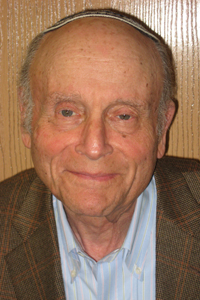
Rabbi Henry Sosland came to the New City Jewish Center in 1958 straight out of the Jewish Theological Seminary. In 2005, after 47 years serving the community, Rabbi Sosland retired to emeritus status. Visiting him this past week with my father, I was reminded of his gentle manner, his amazing recall for names, and the subtle ways in which he empowered, encouraged, inspired and taught me. People tend to mention his name softly, with deep veneration, respect and fondness. I am blessed to call him my rabbi and teacher, and I hope my chosen path has brought him a measure of pride and nachas.
When I entered rabbinical school in 1992, one of my main personal and professional goals was to find the kind of community upon ordination in which I would want to settle down, raise a family, build a career, and retire after 40 years of service. What I could not anticipate then was the great contentment, satisfaction and perspective that would come with sharing with families the cycles of life, from births to death, with so many celebrations in between; the great anticipation of standing under a chuppah for a bride I named when she was a baby; the sadness that would accompany the many losses I have felt so personally yet often carried so privately; the deep familiarity and connection I would enjoy with individuals and families; the pride I would derive from a community that strives to learn, grow, raise the bar for itself and others, and constantly take on new initiatives and challenges while preserving the tradition at our core; the joy upon hearing that one of my students had chosen for himself a career in the rabbinate (thanks, Ben!).
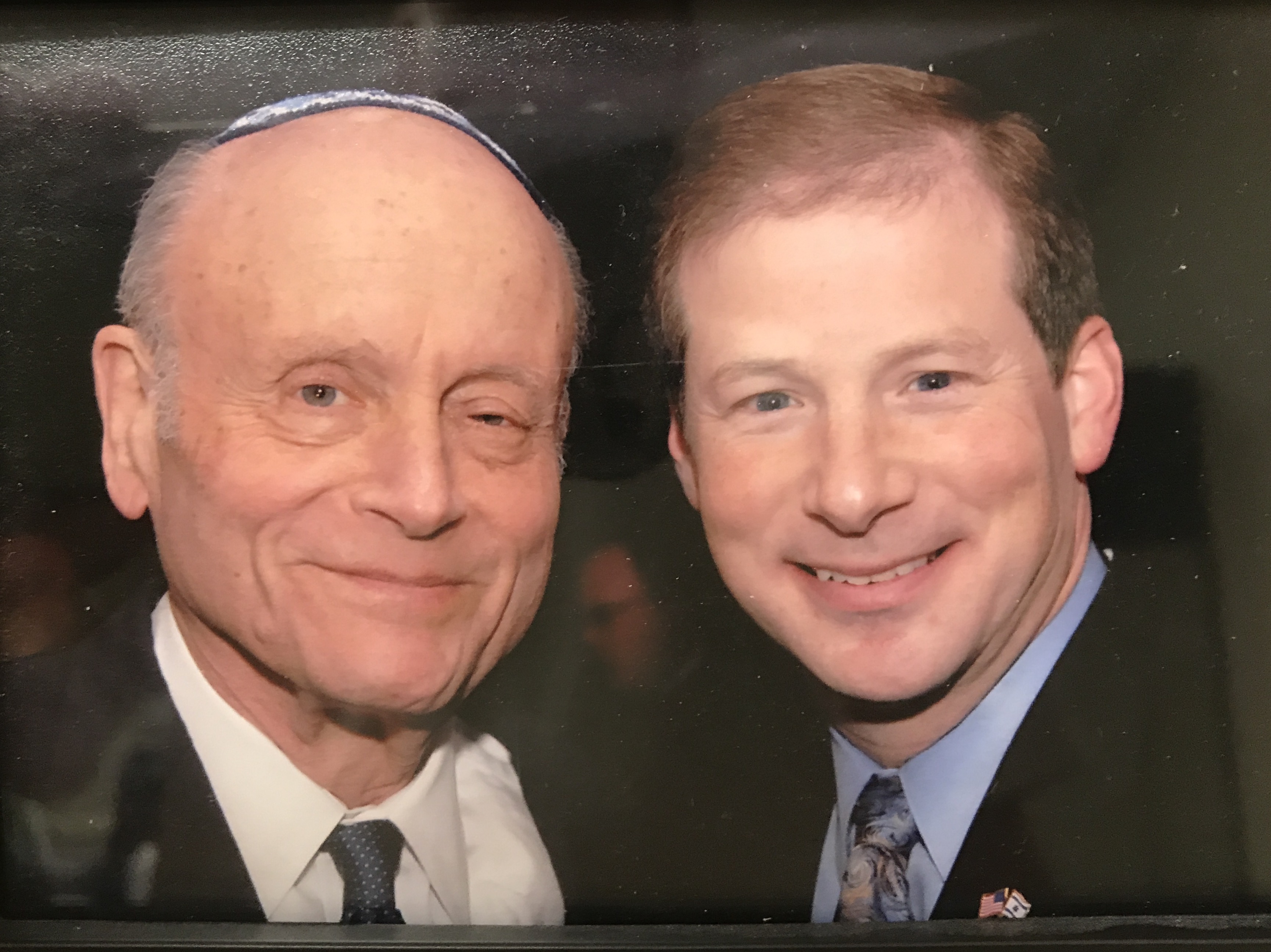
Last night, our OJC community approved the terms of a new contract that will extend my tenure here to 2030. I am so grateful to this community for its professional and personal trust and support, for the mutual respect and love we share. God willing, we’ll reach that year as a community in good health; I’ll be 65, I’ll have served the synagogue 35 years, with my goal of 40 years in the same pulpit in sight.
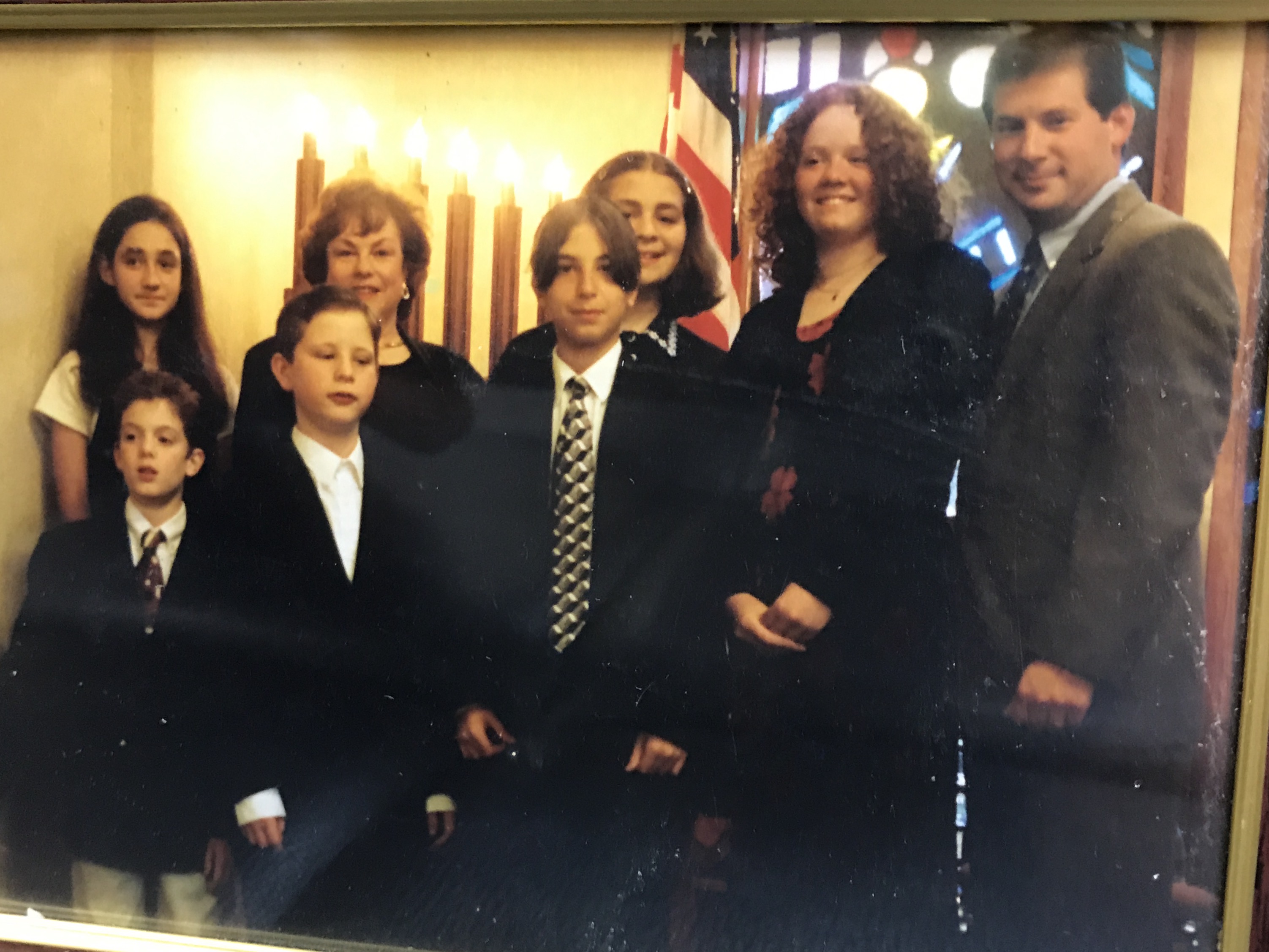
Our Talmud teaches that one who has taught Torah to another is credited with having given them life. That renders the teacher a spiritual parent. So as Father’s Day approaches, I thank all my teachers–my “spiritual parents”–but especially Rabbi Sosland, for sharing his Torah, for inspiring me to follow in his path. And I pray that I will have the privilege to be considered spiritual parent to many students of Torah in my lifetime.
Rabbi Craig Scheff
In pursuit of mental health
When it comes to comforting the mourners or caring for the sick, the Jewish tradition provides ample wise guidance. The one in need of comfort and the one offering, the one in need of healing and the one giving care, the community with which both connect–all benefit from the ritual that the tradition provides in order to manage expectations, overcome insecurities and fears, and offer structure and control where uncertainty and chaos often reign.
In the event of death, broken bones or illnesses that present in noticeable ways, the tradition serves us well. In the case of hidden illnesses, however, the traditional responses are far less effective. After all, if the person suffering illness chooses to remain silent about the affliction, so must the caregiver; and if neither is willing to share publicly that they are in need, the community is rendered ineffective. The resulting failure in connectedness is to the detriment of all three parties in multiple ways.

For a long time, cancer was greeted with this kind of ineffective response, probably because it was viewed as a death sentence. The diagnosis was whispered, family privately grieved, friends had no words. Today, cancer is shouted out and proactively battled with the support of practitioners, caregivers, support networks and public advocacy.
Sadly, mental illness remains a source of shame for those afflicted, isolation and sadness for their caregivers, and helplessness for communities. In general, people still fail to grasp the true nature of mental illness. Those suffering keep their stories and needs to themselves to avoid stigmatization. Victims are often expected to fix themselves, to get over it. All too often, we greet news of suicide with responses–“Why did they do it? They had so much to live for?”–that reflect our own refusal to acknowledge the perniciousness of the disease and that perpetuate the stigma attached to mental illness. Families protect their loved ones’ privacy, so they suffer quietly. Communities passively watch as affiliates recede to the margins.

On the Shabbat of Tazria-Metzora, a reading that offers a ritual through which the priest ministers to those afflicted of a skin disease and thereby keeps them connected to the community despite their temporary quarantine, I chose to address the topic of connecting with those who experience, or care for those who experience, mental illness. I offered that our pursuit of mental wellness must begin by removing the stigma attached to mental illness and to those who seek therapy for their own mental care. After sharing that I have sought therapy for my own mental well-being at various times over the years, and that I recommend therapy as an important part of self care to all the rabbinical students I teach, I invited anyone who has received or is currently receiving therapy to rise in their places. When half of those in the room–scores of people–rose to their feet, there was an audible release, and then tears. People found comfort, validation and relief in discovering that they were not alone. For a moment, any shame or isolation was gone.

I hope that this moment marks a new beginning: when those in crisis know that they need not hide in shame; when their families have permission to speak openly with their clergy and community about the challenges they face; when the community can reach out in care to offer support and to pull into the center those who may otherwise feel marginalized.
Share your story. Offer to be part of the network of support. Join us on June 4 at 5:30pm, whether you are a professional wanting to facilitate or someone seeking to offer or receive support, as we commence this initiative to show that OJC supports you. With your help and participation, we hope to have various support groups and referral services in place by the fall.

Email us at ojccares4u@gmail.com with your intention to attend our opening meeting. If you are interested in having a particular support group, please note that as well.
It’s time to bring this topic out of the shadows. And it starts with you and me stepping into the light, together.
Rabbi Craig Scheff
Passover, Half Over, Leftover
Half way back to chametz, we should be able to hear our seder table conversations, ideally, still echoing in our heads.
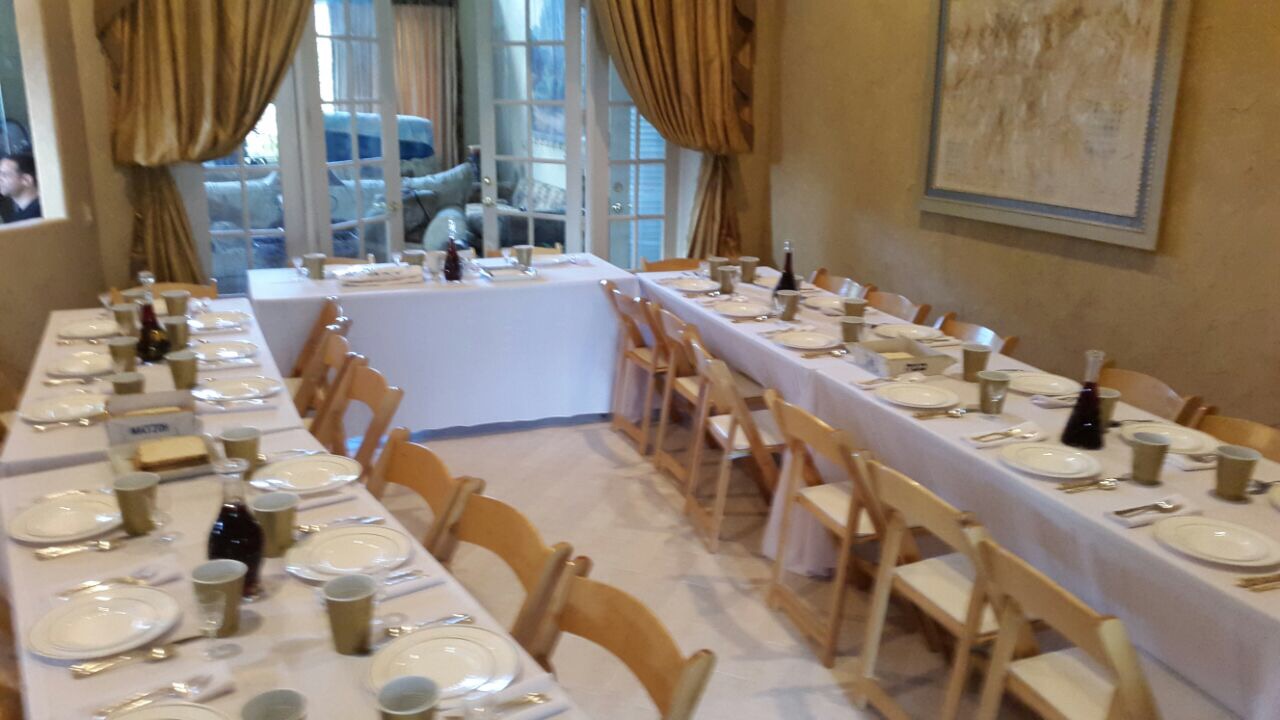
In its original form, the seder was an expression of Jewish modernity. The rabbis who created the ritual were clearly influenced by the social, cultural and political conditions of their time. The resulting seder spoke to modern Jews in their language, literally (note the use of Aramaic in key places) and figuratively (the Greco-Roman practices of leaning, dipping and symposium-dining). While my grandmother and I may hope to perpetuate my family custom of “egg soup,” I highly doubt that was on the menu 1800 years ago!

Your OJC rabbis’ point of emphasis for the holiday this year was to make room for creativity, so as to allow the dynamic and flexible structure of the ritual to make room for greater meaning. “Tradition” doesn’t necessarily mean doing things “the way they have always been done” when the ritual itself calls for relevancy and contemporaneity. How do we see ourselves as having come out of Mitzrayim if we cant incorporate the symbols and language of our day that define enslavement?

To that end, I share with you the questions that I raised at my own family seder this year. I hope you will consider them over the coming weeks as we head to the holiday of Shavuot, celebrating the giving of our Torah. Or perhaps you can slip them into that place where you store your Passover items for next year, so they will be readily available for your next seder! The questions are connected thematically to each section of the seder in the order of the ritual. I hope they will bring meaning to your annual (and daily?) Jewish conversations:
Kadesh: How do you define the word “holy” and what do you consider holy to you in the world?
Urchatz: If there were a severe water shortage and you could only bathe 3 times in a week, when would you do so?
Karpas: What represents spring to you, and what would you add to the Seder plate as a symbol for it?
Yachatz: Is there something about you that you consider “broken” that you carry as a part of what makes you who you are?
Magid: When people ask where you are from, what do you tell them?Wise: What is the best thing Judaism offers to the world?
Wicked: Name something oppressive from which you or your family have been liberated.
Simple: What oppression exists in the world today, and how does it affect you?
Doesn’t know how to ask: Is there a story you tell about yourself over and over?Rochtza: Have you ever used a mikvah, or can you imagine a time you might?
Motzi: What role does food play in your life?
Matzah: What food would be a real sacrifice for you to give up entirely?
Maror: Can you think of a time when your actions unintentionally may have made someone feel like an “other”?
Korech: Is there a family tradition you wish were being passed on to others?
Shulchan Orech: Do you have a relationship with a community? Is it social, religious, historical, or something else?
Tzafun: What aspect of your self do you tend to hide?
Barech: Do I ever say “thank God!” and if so what do I mean when I say it?
Hallel: Is there someone you failed to thank or acknowledge and wish you had the chance to do so?
Nirtzah: What would you add to this experience next year?
Rabbi Craig Scheff
To bean or not to bean, that is the question!
One year ago, the Committee on Jewish Law and Standards of the Conservative movement adopted the position that the eating of legumes, rice and corn (kitniyot) on Passover is a valid legal option for Ashkenazic Jews. Instead of deciding at that time whether to adopt or reject the practice for our community (which is my role as mara d’atra, the religious decisor of our community), I decided to invite our Ritual and Jewish Living Committee–along with anyone else in the community who so desired–to study the topic with me. While the decision was ultimately mine to make, I had no preconceived opinion on the matter and thus invited the input of our community members to help me reach a conclusion.
People tend to be emotionally bound to custom, sometimes even to the exclusion of rational analysis. I appreciate that. We hold tightly onto family customs and tend to reject those things that challenge our sense of tradition, regardless of how or why such practices came about. I was therefore somewhat surprised that only a group of about 10 people made the commitment to study the topic with me. I anticipated far more interest! Nevertheless, our minyan of learners tackled the responsum written by Rabbis Amy Levin and Avram Israel Reiner. Our monthly studies delved into the details of the legal opinion, which reached the following conclusions:
1. Only that which can be made into matzah can become hametz. Wheat, barley, spelt, oats and rye are the only flours that can be used for matzah. Therefore, it is established that rice, beans and legumes cannot fall into the category of hametz. Moreover, the authorities agree that the presence of kitniyot on a plate does not render the plate, the meal or the home unkosher, even for those who observe the custom not to eat kitniyot.
2. The legal authorities of medieval Ashkenaz recognized that forbidding kitniyot was an added restriction to the Passover laws, possibly based in the fear that certain varieties of wheat might possibly get mixed with varieties of kitniyot. Some authorities considered the measure excessive, but the more restrictive custom ultimately prevailed.
3. In the 18th century the debate was revived. The opponents of the restrictive position argued that the high cost of matzah prevented some from experiencing the requisite joy of the holiday, whereas kitniyot were readily available, affordable and not prohibited by law. For the benefit of the masses, they argued, the stumbling block to holiday joy should be removed.
4. The original reason for the restrictive custom is lost. If the reason was concern about the possible admixture with wheat, such confusion does not exist in production and packaging today. But a compelling justification is needed to overturn a long-standing custom. That justification, according to the authors, is the enhancement of our joy. Beans are a significant source of protein for those who don’t eat meat and for those who can’t afford meat, especially considering how prices are inflated as they are on Passover. The enjoyment of food and adequate sources of protein is part of the joy we are meant to experience. Additionally, protecting people’s pocketbooks from those who would seek to gouge is in fact a Jewish value worthy of legal consideration.

Given these legal conclusions and the input provided by those who participated in our studies, I offer my own opinion, which will represent a change in the official position of our community going forward. (Please note: This does not mean you are doing something “wrong” in the eyes of our community should your personal practice differ!)
While I recognize that many people will continue personal practice according to their inherited family custom, I believe there is great value in adopting this change in custom. I don’t believe in change just for the sake of change; but I also will not reject change simply because it is hard or because it is something to which we are unaccustomed. Nor will I reject what is considered a more lenient position out of fear that greater leniency will follow. All too often, necessary change is stifled by the sometimes irrational hold of our emotional attachment to the ways of the past. I choose not to oppose change simply for the sake of opposing change. That is not the way of authentic Jewish thought.
On a practical level, I am in favor of Jewish law that encourages adherence to the law; the more our Passover laws allow people to keep Passover, the better that is for everyone. Contrary to the ways in which some observe Passover, we are not meant to be reliving slavery for seven days or for the days leading up to the holiday. There is no joy or satisfaction to be derived from being more restricted or burdened by the holiday’s laws. Are we supposed to feel different from others and from the way we live for the other 51 weeks of the year? Yes. But Passover is meant to be a time of joy, despite the remembrance of our affliction.
Most importantly, changing dietary habits and sensitivities in our society dictate that alternate sources of protein should be made available if they are not hametz. Moreover, the exorbitant cost of keeping kosher in general, and of kosher meat in particular–not to mention the premiums imposed for Passover–is a compelling justification for offering consumers a more affordable way to stock their pantries.
Finally, I am mindful that this ruling will not necessarily impact individuals in their homes. They can continue to keep Passover as they always have. And even in our synagogue, as studied in the law, serving kitniyot among our foods does not affect the other foods served. So even in the synagogue, those who do not eat kitniyot will still be able to observe Passover in their own way at all times.
Please note that there are controls and restrictions on the purchasing of kitniyot for the holiday. Specifically, fresh corn and beans may be purchased before and during Passover, like other fresh vegetables; dried kitniyot (legumes, rice and corn) can be purchased in bags or boxes and sifted before Passover; canned kitniyot may only be purchased with Passover certification due to the canning process; frozen raw kitniyot (corn, edamame) may be purchased in bags before the holiday without a heksher, though one should still inspect contents before use; and all processed foods (like tofu) require Passover certification.
I am grateful to those who shared this process with me. I believe that the process of seriously engaging with our tradition is as important as any result of such deliberation. May we all have a happy and kosher Passover, whether we are among the bean counters or not!
Rabbi Craig Scheff
#JDAIM Spotlight 4 – Beth Steinberg, Director of Shutaf
Beth is our Scholar in Residence this Shabbat, February 24 and 25, as we honor Jewish Disabilities Awareness and Inclusion Month. Join us for Friday evening services at 6:00 pm, Shabbat morning at 9:00 am and stay after Kiddush for more learning with Beth.

My son’s challenges are significant but I’m not afraid.
I am unsure about the future. His happy adulthood, my happy years as an older adult. What are his rights, what do I deserve, what will be the responsibilities his older brothers will shoulder? Will he be happy?
I worry he might not be happy. But he’s almost always happy. That makes me less afraid.
When I write about Akiva – his needs, his challenges, my challenges – I choose my words carefully but I am not afraid. Except for when I hit ‘publish.’
When I talk about our journey as a family – the tough moments, the tearful moments, the moments that I just wish it were different – I try to be honest. I know honesty is important. I know many people pity us, pity him, don’t truly understand what it means to be his parent, his full-time advocate, his person, his people, his caring community. We’re the people who help him shower and dress, who care for him when he is sick, who sing songs with him. We’re the people who love him. Sometimes, I wish it were different but I am not afraid.
When I post a picture of Akiva, I choose the happy ones, the ones where his cute, uneven teeth, his often crossed-eyes, his sometimes grubby face, are softened by the happy smile on his face. He’s kinda funny-looking but aren’t we all?
I am not afraid to show the face of disability – his disabilities that is – via my son. I am not taking advantage of his well-being. I am letting the world know that disability is happy, disability is every emotion and more. Just like not having a disability is so many things and so many emotions and so many experiences.
I am not afraid of exposing us, of sharing him. While I know he’s unaware of this exposure, I know that showing him to the world, my extended world, will help ease fears and misconceptions about disability. I hope.
But I am afraid of a world that treasures beauty. Where skinny bodies and 6-pack abs, along with being blonde and gorgeous, is regurgitated on television and in movies. There are few positive images shown of real people who look different, as opposed to actors playing a part.
I’m afraid for other parents of children, teens and adults with disabilities. Those who feel unsure that the world will appreciate their loved ones. That the world will look kindly on their stories. Their tales of difference and challenge, of unusual beauty lost and found.
I’m afraid of a world that divides people up according to who can and who can’t. A world that divides those with disabilities according to who’s got this and who’s got that. A world that decides who’s high-functioning – whatever that really means – and who’s not. A world that sentences you and judges you for your difference without knowing what that really means.
So, I work past the fears. I tell his story. I tell our story. I invite you in, to read, listen and comment, so that you can understand and appreciate. So you can smile at the different-looking-behaving-whatever person the next time you see them on the street and be glad that they’re a member of your community. Because their people, those who love them, need you to try to be less afraid.
“And a rock feels no pain. And an island never cries.” Paul Simon
Beth Steinberg
http://blogs.timesofisrael.com/i-am-not-afraid-finding-strength-in-difference/
JDAIM Spotlight 3 – Kenny Hersh

In this mission to remain positive, I want to acknowledge that there are certain situations when grief is deep and time is a key component in the healing. And I also want to acknowledge that there are instances when a positive disposition is not enough.
I’d like to share with you the power of positive thinking and the importance of seeing the good. I’d like to share with you the story of my father-in-law, Kenny Hersh. As a child growing up in New Jersey and, later in life, in Providence, Kenny was someone who took full advantage of every day. He trained and ran 5Ks, was the first one on the dance floor at a simhah, played clarinet in a klezmer band, could manually mix paints at work to match any color, and volunteered at his shul. He was an incredible father, a loving husband to his wife Leah, and for better or worse, a Yankees fan. After working as a high school guidance counselor for a few years, Kenny eventually joined Leah’s family business, American Wallpaper in Fall River, MA. After a series of inexplicable falls and some problems with his coordination, Kenny visited medical experts in Providence and Boston. Through a series of tests, Kenny was diagnosed with Primary Lateral Sclerosis, PLS. A degenerative neurological condition that weakens voluntary muscles. Although relieved to finally have a diagnosis, the condition would mean increasing difficulty with basic tasks like walking, eating, and speaking.
That was more than 10 years ago. And yet, despite the challenges, despite the muscle stiffness, despite the difficulty speaking, despite the mobility issues, despite the fact that he often communicates through his ipad, despite the slips and falls on to icy sidewalks, despite that nearly everything takes longer and can be more frustrating, Kenny continues to be an unstoppable and unignorable presence in our family.
Whether you just met Kenny or you’ve known him all your life, it takes only a few minutes and a few keystrokes to appreciate Kenny’s charm, his humor, his kindness, his compassion, and his intelligence. Kenny continues to go to the gym, using the stair climber to reach the top of a 110-story building every week. Kenny continues to, despite all logic, drive and put in a day’s work at the family business. Kenny continues to be a comedic force at family meals, Kenny continues to be an ezer knegdo, a perfect partner to his wife Leah, a wise and loving parent to his six children and children-in-law, and perhaps most importantly, the most playful and treat-giving saba to his eight grandchildren. Rather than wallow in his sadness, Kenny makes the most out of every day, with a spirit and a love of life that is enviable.
I recently asked Kenny, if he ever got frustrated. “Of course! There are things I miss, but the thing that I find most frustrating is the inability to speak. I love to talk and that is frustrating. I would trade off being in a wheelchair to be able to speak freely again. It is especially hard dealing with my wonderful grandchildren. I would love to be able to read to Nadav and Eliana in English, Spanish, or Hebrew. What joy I miss in not being able to sing with them and talk with them. What a pleasure it would be to walk with them on the beach and swim with them; to run with them, to fly a kite with them and crawl on the floor with them. As I have seen with Micah, [his 7-year-old grandchild], once he was able to read, our relationship really grew as we were able to laugh together and have a “conversation.” I look forward to the day when I can do that with all my grandchildren. I think that there are choices when put in a situation like this: crawl under the covers and hibernate or try to work around the challenges and move forward and enjoy an exciting life. I choose the latter. I don’t want a pity party, but just the realization that I am still the same person I always was, but with a disability. I have so much to be thankful for and get inner strength from my wife, children, and grandchildren. They make me want to push the envelope to be an important part of their lives. Our friends and community in Providence and around the country give me support and make me feel included as an intelligent and mindful part of their lives. And of course, having fun and being able to laugh makes this ride much easier.”
My friends, I do not deny that there are problems in the world. I do not deny that there are times when we feel that we have insurmountable challenges. And I do not deny that at times we have to embrace that sadness. But in 5777, I implore you to also look for the positive in the world. Just by the virtue of where and when we live we are blessed with so much. It is okay to not be burdened by sorrow all the time. It is okay to focus on the positive. Not because we need to ignore the negative. Adarabah, to the contrary, because it is only by recognizing the good that we can tackle the bad. It is only by crying that we can feel the joy more deeply. It is only by rejoicing, that we can be there to understand someone’s sorrow more deeply. Let us cry together. Let us rejoice together. Let us feel the full spectrum of human emotion in the new year.
Rabbi Michael Fel
 Three Rabbis Walk Into A Shul
Recent Comments