On the third night of Chanukah, my rabbi said to me…
A past-president of our synagogue, Nohra Leff, once said to me, “I don’t just believe in miracles, I EXPECT THEM!” What a great way to go through life. Expecting miracles means that we engage in behaviors that ultimately create an environment where what some perceive as the “miraculous” becomes that much more possible.
In the fall of 1995, I took a job as part-time cantor at the OJC. Still a full-time student and father of two young boys, I treated the job like it was the fulfillment of a dream. A year later, I was negotiating my first contract to be Student-Rabbi and to stay on as Rabbi after my ordination. I was advised by people “in the know” to avoid such a commitment. After all, the synagogue had gone through so many rabbis in its relatively short history, and I “could do better,” according to the more experienced. Three years later, another past-president, Michael Scolnick, would ask me how long I thought the honeymoon could last. I am glad to say that, even in my 20th year, I still feel like we met just yesterday. Okay, maybe just the day before yesterday.
When I speak to rabbinical students in their final years at JTS, I try to emphasize that every synagogue community has the potential to be a place that can be transformed and re-dedicated to Torah, service and deeds of loving kindness. That can only happen, however, if the rabbi is willing to see him or herself as spending the rest of their professional life serving that one community. If we invest ourselves in a plan believing that we have only two years to work toward achieving our goals, then we doom ourselves to failure; but if we invest ourselves planning for the long term, we can create an environment where the seemingly impossible is indeed achievable.

In the midst of Chanukah, we consider the nature of miracles, and the role that “dedication” (the literal meaning of the word Chanukah) plays in making one day’s worth of oil last for eight, or in leading one small band of soldiers to victory against overwhelming odds. I am so proud of what we have achieved and how we have continued to grow as a Conservative egalitarian community. Beyond our impressive numbers, we have attained a level of learning, service to the broader community, participation and spirit of which we can all be proud. The dedication that has brought us to this place in our history, however, has also given us the wisdom to understand that we must continue striving to build and to deepen relationships; to reach in to our membership and to reach out to those still searching; to develop more pathways into our OJC community, into a life of purpose and meaning, and into relationship with God; and to lookto the future with faith, optimism and vision. Some people might call our success a miracle. Perhaps we have witnessed something miraculous as a community; if so, the miracle only happened because of the wise people–presidents, boards, volunteers, congregants, professionals and clergy–who were looking for one, who expected one, and who acted to create the environment where such a miracle could take root.

Chag Urim Sameach,
Happy Festival of Lights,
Rabbi Craig Scheff
If only our issues were black and white
It would be so easy if our issues were black and white. Unfortunately, all too often we settle on addressing the issue as if it were black and white. We point fingers, we demonize, we stand up self-righteously, we spout rhetoric, we exhaust ourselves spinning narratives, and we pat ourselves on the back for having taken a stand. And in so doing, we fail to take on the real challenge, that of wresting with the grey.
In this week’s Torah portion, our imperfect work-in-progress-of-a-patriarch-Jacob chooses to confront his brother Esau, the man who vowed to kill him the last time they shared company. Jacob can avoid Esau, but at some level he knows that the courageous and potentially dangerous confrontation is the only way for him to grow and to find a greater sense of self and a better prospect for inner and outer peace.
I have wrestled all week with my response to what is taking place in the streets of America and in the Knesset of Israel. At this point, I have no original thoughts. But I have come across one teacher in Gil Troy who has given the best expression I have found to my feelings. Couched in the context of Israel’s nation-state discussion, his conclusions can be extended to the many events around us. Please click here for the link, or read on below.
Gil Troy is Professor of History at McGill University and a Visting Professor at the IDC in Herzliya. His latest book, Moynihan’s Moment: America’s Fight Against Zionism as Racism, just won the 2014 J.I. Segal Non-fiction award for a Jewish Theme. Visit him at www.giltroy.com.
On Jewish State: The Right is Wrong, The Left’s Not Right
The old joke has a rabbi telling one congregant “you’re right”; the congregant’s rival, “you’re right”; and his wife, who complains they both can’t be right, “you’re right, too.” With Right and Left squabbling about a Jewish Nation law, the Right is wrong; the Left isn’t right; and those who think they both can’t be wrong, are wrong, too.
The Right is wrong because the timing is bad, the optics are worse, and in some legislative drafts the balance is off. Prime Minister Benjamin Netanyahu is again playing partisan arsonist rather than statesmanlike firefighter. Politicians should follow the Hippocratic Oath – first do no harm. Israel operates in an hostile world environment, in a flammable region, during an incendiary time. When many Israelis are worrying about personal safety, seeking governmental leadership to calm tensions, unnecessary legislation stirring primal fears and triggering anti-Israel sentiment is reckless.
Israel’s leaders, including Likud backbenchers, have a responsibility to reassure more than two million non-Jewish Israelis during this sensitive time that they are cherished citizens, and will be protected by THIS government. They deserve reassurances that the “medina” the state, will remain democratic as well as Jewish, which is different than saying it is a Jewish state with a democratic mishtar – regime or government. (Unlike most, I read the versions in Hebrew and English before writing).
Israel’s Jewish character should not be a left-right issue. It’s a Zionist issue. Democratic nations have the right to express their majority culture in the public square. Israel’s Declaration of Independence already “declare[s] the establishment of a Jewish State,” mandating the State’s Jewish character, although certain specifics the proposed laws mention, such as Hatikvah as the national anthem, are not spelled out.
While some post-Zionist ideologues and the Supreme Court’s mushrooming power have triggered fears of eroding Israel’s Jewish character, no pressing danger exists. Netanyahu could have affirmed Israel’s Jewish character by quoting the Declaration of Independence, reinforced by a stack of bills and court cases protecting the precedent. Instead, advancing an extreme draft before his more balanced version, is like a husband blatantly housing a mistress in lesser quarters than the wife; while pretending to placate, it only enrages. Approving a bill’s initial reading while vowing to replace it, evokes John Kerry’s infamous 2003 legislative flip-flop, regarding funding Americans troops, when he said, “I actually did vote for the $87 billion before I voted against it.”
Nevertheless, the Left is not right, emitting shrill arguments, straw men, and premature eulogies over Israeli democracy, while hysterically, irresponsibly fueling Israel’s delegitimization. Netanyahu has promised to guarantee “equal rights for all” Israel’s citizens. He has an established track record of protecting Israel’s liberal democratic character as envisioned by his Zionist mentors Ze’ev Jabotinsky and Menachem Begin.
The insane accusations, ranging from familiar libels about Israel becoming an “Apartheid state” to fear-mongering about Israeli Arabs being forced to wear Green crescents – thank you Ha’aretz — tell more about the perverse, paranoid accusers than the accused. Their outrage meter is broken. They rail against potential Israeli breaches while enabling actual Palestinian totalitarianism, terrorism, and Islamism. If a future Palestinian state – or any Arab state — followed the protocols of the most extreme Jewish state Knesset bill (adapted to their national-religious identity) – we would have the first functional Arab democracy.
Israel’s democratic character should not be a left-right issue. It’s a Zionist issue. Israel was founded as a democratic state that “will ensure complete equality of social and political rights to all its inhabitants.” Ironically, liberals opened this legislative can of worms, hoping to enact a law guaranteeing “democracy,” a word missing from Israel’s Declaration of independence.
The need to caricature this government, and Israel, as repudiating democracy and demonizing Arabs proves what Matti Friedman writes in the Atlantic: “The uglier aspects of Palestinian society are untouchable [and I add, nuanced analyses of Israel as a Jewish-democratic state are unfashionable] because they would disrupt the ‘Israel story,’ which is a story of Jewish moral failure.” That popular, stereotypical, castigatory narrative, which many American Jewish elites are embracing, fails to understand that complex, pluralistic, free democracies balance competing ideals. Even America, which in these debates suddenly is held up as perfect, “hold[s] contradictory ideals in suspension,” the historian Michael Kammen wrote in his Pulitzer-Prize-winning People of Paradox.
Totalitarian regimes are simpler, often imposing one overriding idea. Israel, a Jewish democratic state with 25 percent non-Jewish citizens, will always juggle: struggling with maintaining its Jewish character while guaranteeing equal rights for all; wondering whether Arabs – and Haredim, for that matter – prefer individual rights or group rights; navigating between the religious components in Israel’s Jewish identity and its national dimensions.
These important dilemmas demand consideration. Yet the Left treats this democratic debate as threatening democracy, the Right treats this Jewish disputation as unJewish. Both sides should mature. The Right should avoid its “dog whistles” inciting hatred against Arabs; the Left should avoid its equally reprehensible dog whistles inciting hatred against Israel.
The philosopher John Dewey taught that “Democracy begins in conversation.” Let’s have the conversation, calmly, rationally, respectfully, with nuance and without demonization, sensitive to the many dimensions but understanding that to govern is to choose.
Just as Israel needs expansive centrists who can support the widows of Har Nof and the children of the burned classroom in the Max Rayne Hand in Hand Jerusalem School, we need voices saying “you’re right” to the pro-Jewish and pro-democratic sides. Democracy stems from Jewish ideas of equality. A Jewish-Democratic state is as possible as a state with majority rule and minority rights, committed to liberty and equality, fostering individualism amid nationalism. Embracing such valid if occasionally contradictory Zionist and democratic ideals fosters the kind of “you’re right, too” constructive, creative tension that makes democracies great.
Thank you, Gil, and shabbat shalom,
Rabbi Craig Scheff
Mitzvah Mission 2014, Day 5 – Israel is real


 Amid such a day of recognizing that Israel is indeed a real country with real problems, our final stop was among our most rewarding. We descended to the southern end of the Western Wall as an egalitarian community. We prayed the mincha (afternoon) service together, adding prayers for our congregation, the State of Israel, and those suffering illness. We sat together among the ancient stones and offered blessings of thanksgiving for the experience we had shared, we shed a few tears, and we offered each other warm embraces.
 Before any of us had departed for the airport, we had already begun planning the mission for 2015. It will be celebrated as a special mission, in light of the fact that it will be our 10th consecutive annual trip. And just in case you wanted to know, the dates are November 15-20, 2015. Wanna come?
Mitzvah Mission 2014, Day 4 – Coming home
As we stood together under a warm morning sun, we contemplated spending the day on the beach; how easy and quiet and careless a day we could have. But when you are home, you don’t ever really escape the demands of the real world. And we are indeed home. There was work to be done.
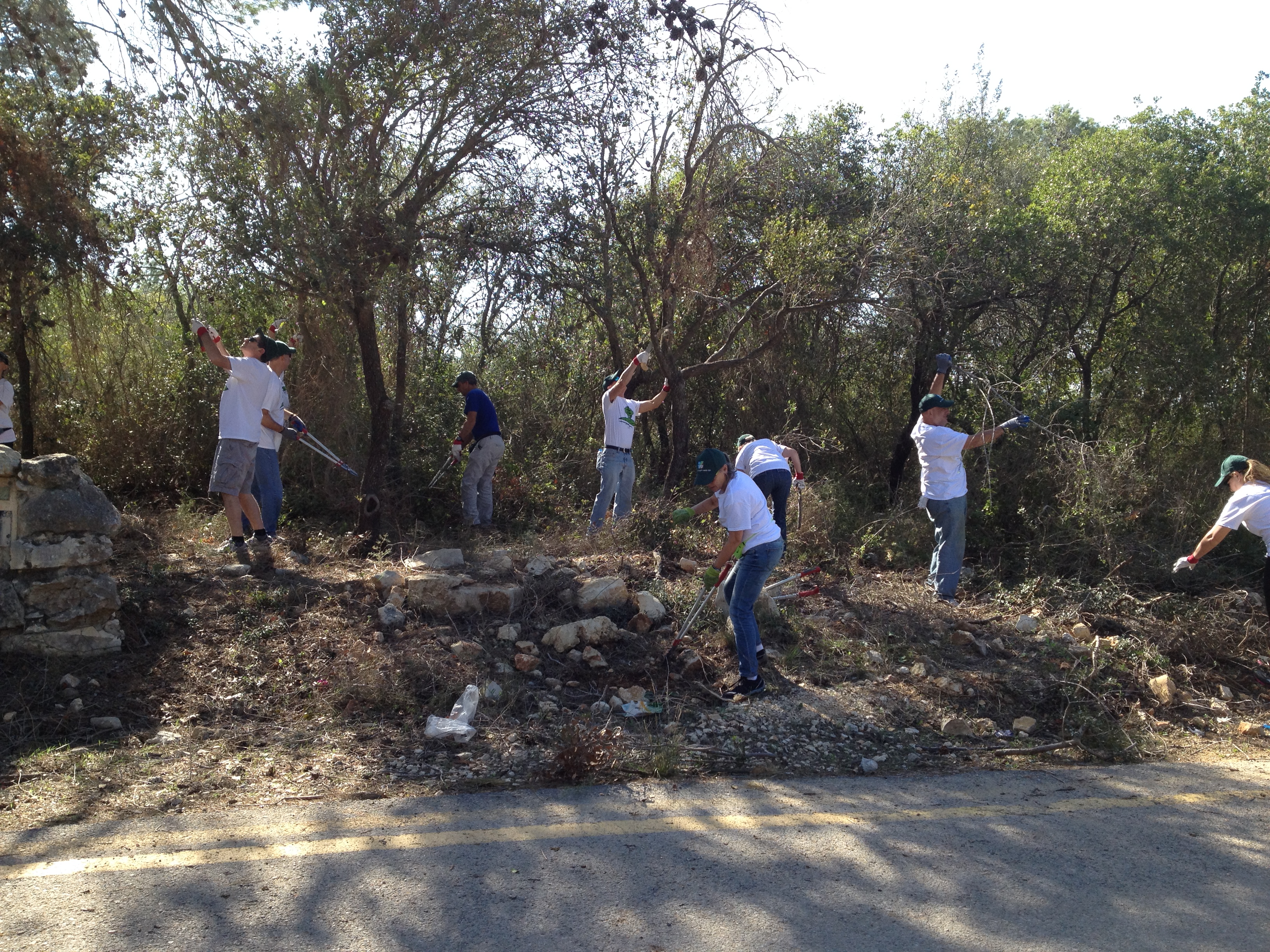
Our JNF guide described our task of the day in these terms. When you are serving for Israel. you are doing something that extends far beyond your self. You are preserving the capital on an investment for a people, for a story, for a future. So we put on our gloves and got to work. Hard work. A few of us bled from the thorns that cut our skin, some of us perspired through our shirts, and all of us got soil in our shoes. In an area of the Carmel mountains where a fire in 2010 had taken 44 lives and devastated much of the vegetation, we cleared thick brush to create a fire break that would slow the progress of any future fire. (See the before and after!)

After lunch, we climbed to Jerusalem in song, and arrived at the overlook to the city just as the sun was shedding its last rays on the golden Dome of the Rock. From where we stood, one might have thought that peace in the Holy City had finally been realized. In the quiet moment, we sanctified the experience with a blessing, and recognized the shared commitment and reciprocal inspiration that brought us to this place and time.

We shared dinner in the new “train” station with some friends who joined us for dinner, including Ben Varon, who had just arrived to share the end of our mission with mom Linda, and Bradley Goldman, who is here studying for the year with the Nativ gap year program. One could sense a bit of nostalgia creeping in among the group as the evening came to an end.

It’s never easy leaving home.
Rabbi Craig Scheff
Mitzvah Mission 2014 Day 3
There is a sense of safety that we feel being in the land of Israel. It is so hard to explain logically, especially given the terrible massacre at Har Nof this morning. With the ocean to our west, we faced Jerusalem to daven the morning service, wrapped by the swirling breeze off the Mediterranean.
 There are many troubling aspects about this morning’s terror attack, from the timing to the place, the setting, and the methods. Of particular concern to the Israelis we encountered throughout the day is the fact that this attack did not occur in some West Bank town. The quiet neighborhood in the far west of Jerusalem represents every person’s neighborhood. The synagogue at the time of prayer represents the most secure of hours. That sense of tranquility and security was shattered this morning, and the reverberations were felt throughout the day.
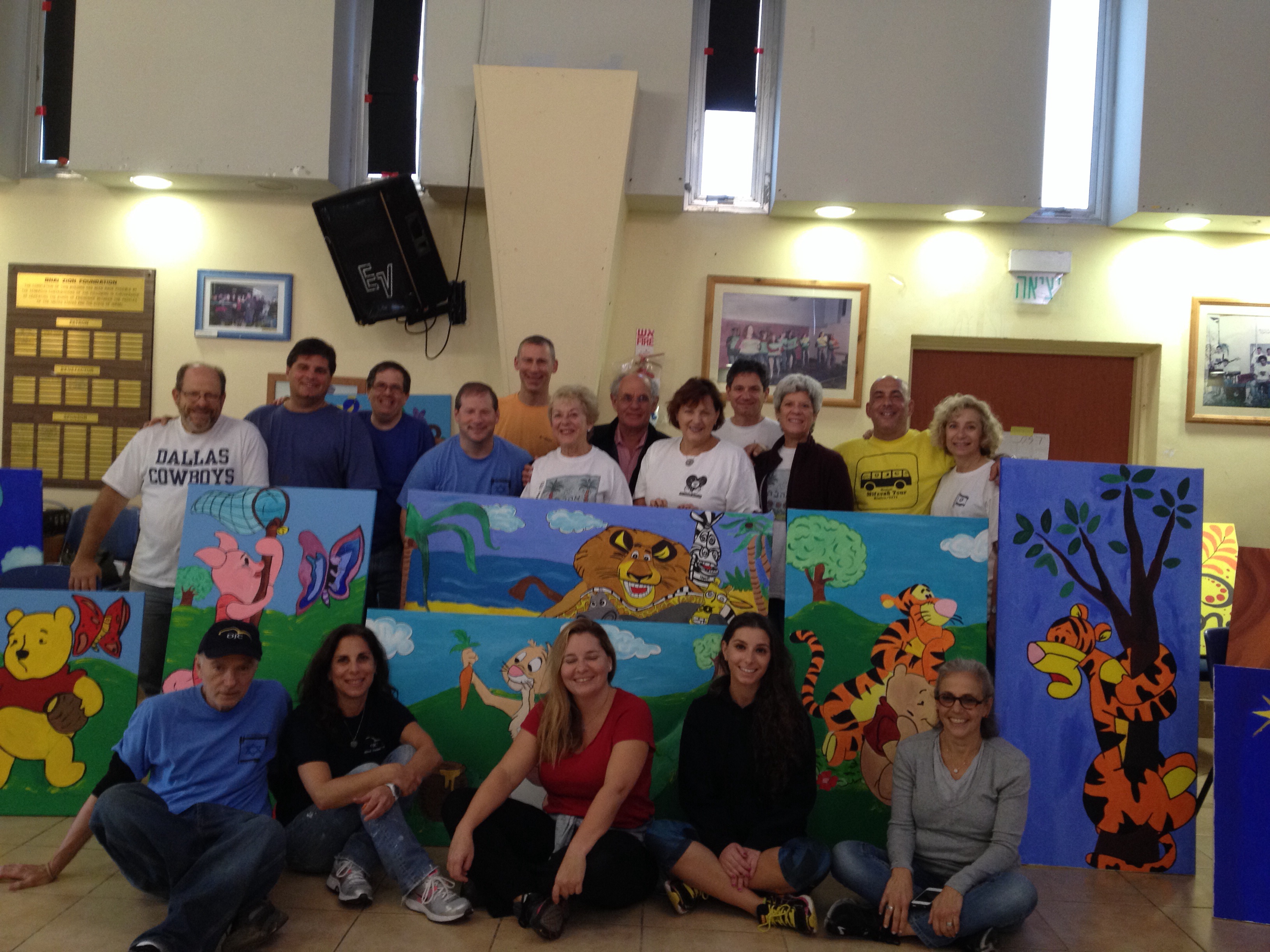
 Like everyone else, we threw ourselves into our work. As we painted, we sang Al kol eileh (“For the bitter and the sweet”), so appropriate for the mixed emotions we were experiencing. Surrounded by children scarred by their abusive homes and a society scarred by the abuse of her neighbors, we recommitted ourselves to creating something remarkable through which our impact would be felt. (Okay, some of us worked, and others of us directed!)

We wrapped up our work and admired the gallery of work that will adorn the walls of the children we served.
After an emotional goodbye with Yoav, Ahava’s executive director, we visited the Technion (Israel’s Institute of Technology), Israel’s first institute of higher learning founded in 1912. Danny Shapiro, Director of Public Affairs and a longtime friend of our own Aram Schwartz, presented us with a history of the institute. The Technion, in its first century, has responded to each of Israel’s needs, ranging from the development of its infrastructure to the development of the Iron Dome. It represents the bright, optimistic, hopeful side of Israel as a producer and exporter of creativity, self-reliance, medical and technological advancement.
Tonight, as I write this blog, the sounds of a public singalong could be heard in the hotel lobby, reminding us all that this is Israel. We sing, we celebrate life, and we awaken to each day with a sense of purpose. Tonight, we all feel safe.
Laila tov,
Rabbi Craig Scheff
Pictures are worth…
We knew from the start that Day Two of the Orangetown Jewish Center’s 2014 Mitzvah Mission was going to be a day of powerful impressions. Linda Varon started the morning with reading Torah for us from the Sephardic Torah, always a special treat!

The sun came up over the bay of Akko, the rain fell for a while, and a rainbow shot across the sky as we were preparing to load the bus for Kfar Ahava.

If anyone told you that you would be spending the majority of your day painting pictures of Winnie the Pooh or Alladin, you might think, “This is what we travelled thousands of miles to do for Israel?”


Understanding the plight of these young at-risk children and the unusual circumstances under which they are raised, however, quickly changes our understanding of what a picture can add to a child’s self-esteem. The murals we are creating will add color, smiles and love to the lives of the children who will open their eyes each morning to the vibrant characters.
We shared lunch with the kids and their foster families. I even had a surprise visit from my sister!

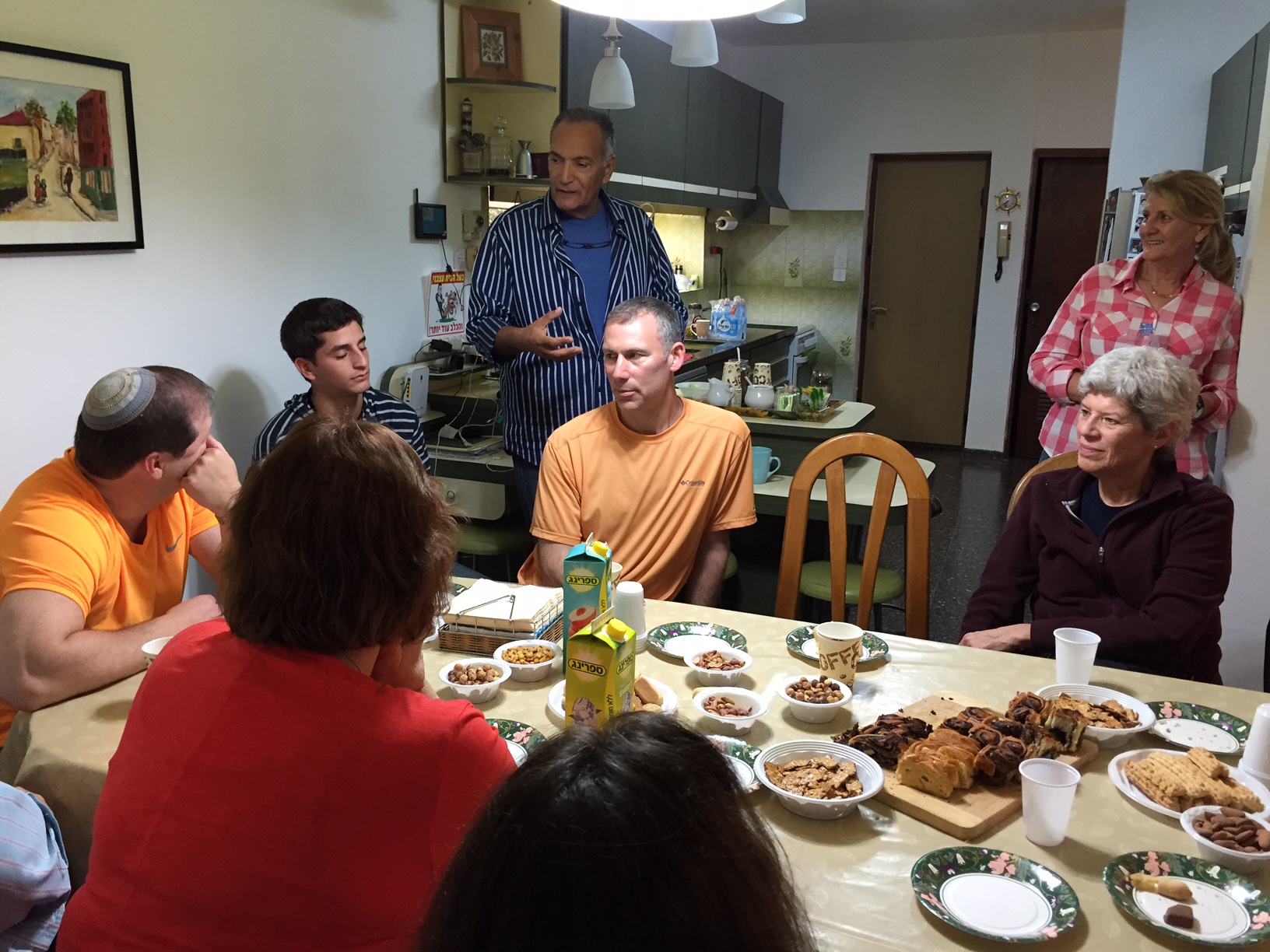
After a day of exercising our fine motor skills, we drove to Zichron Yaakov, where we were welcomed with generous hospitality by OJC’s Yoel Ledany and his new wife Batya in their beautiful home. Over dinner, Josh Drill, who is performing a preparatory year of leadership training before entering the army, shared with us his experiences and reflected on his new social and spiritual environment.

After a full day, you’d think the gang was ready for some sleep before we tackle Day Three. But no one seems to have lost their bounce yet!

Remember
The 2013 Pew Research Center’s recent survey of the American Jewish community reported that, among those people who identify themselves as Jewish, a whopping 73 percent say that remembering the Holocaust is an essential part of what being Jewish means to them. That element of Jewish identity received the highest response rate, outpacing other suggested elements such as leading an ethical life (69 percent), caring about Israel (43 percent) and being part of a Jewish community (28 percent). Why does this element of Jewish identity receive such prominence? Is it the guilt that would accompany not remembering, the notion that we might afford Hitler (may his name be blotted out) a posthumous victory if we forget? Is it the particularistic notion that we must remain vigilant against our enemies who are constantly seeking to eliminate us? Is it the universal lesson that makes us better human beings because we will not idly stand by the persecution of any group?
This past Sunday night we commemorated Kristalnacht, the 76th anniversary of the Night of Broken Glass, the event that many say was the official starting point of the Holocaust. German Jewish shops were destroyed, men were beaten, detained and killed, synagogues burned. And rescue workers stood by to make sure that the fires didn’t spread to the neighboring non-Jewish homes and businesses.
The Rockland community observed the commemoration ceremony this year at the OJC. Over 200 people gathered to see the presentation of colors by the Jewish War Veterans, to hear the words of County Legislator Harriett Cornell and the personal testimony of survivor Paul Galan, and to stand in solemn solidarity with the 30 teens holding candles as the words of El Maleh Rachamim, the Jewish memorial prayer, filled the sanctuary.

As I think about the surprising Pew survey statistics, I can understand the relatively high importance we place on remembering the Holocaust in light of what I witnessed Sunday night. I felt our children’s hearts swell with pride as they watched our Jewish veterans salute the American flag, pledge allegiance and sing Hatikvah.
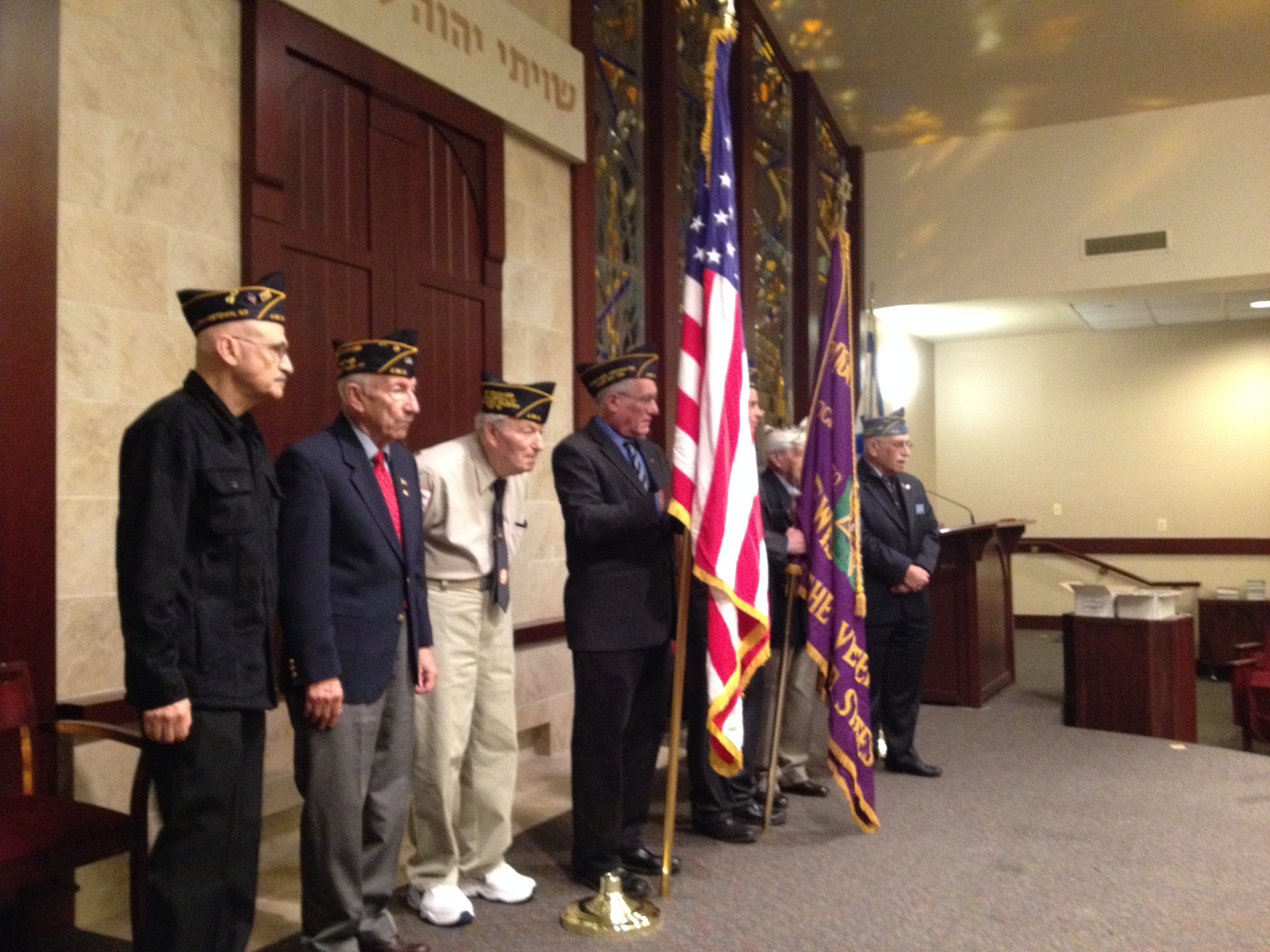
I felt our children’s souls ignited by the memorial candles they held. I felt our children’s minds understand at a level beyond words what it means to remember. Our children recognized that Jewish remembering is not passive. Our remembering is an obligation we fulfill that shapes our Judaism, our identity as Americans, and our humanity. For our children, the lessons of the Holocaust also inform their obligation to defend the values for which they stand, and shape their responses to social issues they confront on a regular basis, like bullying and intolerance. The Holocaust is six million individual Jewish stories of vulnerability, fear, insecurity, cruelty, powerlessness, hope, courage, faith, redemption and love. It is the story of our people as much as the exodus from Egypt, and it is a part of our narrative that must be told.
How will you remember? Participate in our Kaddish project. Match yourself with an individual who died in the Holocaust with no one left to observe their yahrzeit. Learn their story. Say Kaddish for them. Contact Larry Suchoff, our Holocaust Remembrance Committee chairperson, or just walk into the OJC office, to adopt a story. Perhaps remembering the Holocaust will become an essential part of what being Jewish means to you.
Rabbi Craig Scheff
Empowering our children
Foresight. Vision. Strategy. Whatever led to the decision, it was nothing short of brilliant. It will pay dividends in the short run by providing benefits to consumers, and it will bring a return on investment in the long run by developing a broader base of financial supporters and leadership. Brilliant.
This past Sunday night, Jawonio (Rockland’s premiere provider of lifespan services for those with developmental disabilities) held its annual gala at the Paramount Country Club in New City, New York. This relatively pricey, black-tie optional, politician-studded fundraising event has been held for decades and has catered traditionally to a pretty high-end crowd to benefit the organization.

This year, Jawonio got creative. The organization chose to honor the Orangetown Jewish Center Youth. 25 of our finest kids got dressed up, purchased tickets at a reduced price of $36, rubbed elbows with the big shots, and danced the night away like few at this event had ever seen. Oh yeah, Rabbi Drill, our youth director Sharon Rappaport, our youth chair Mitch Brill, our USY division director Bruce Varon and I were there to make sure the kids behaved, to share a few words, to shep a bit of naches, and to shed a few tears as well!
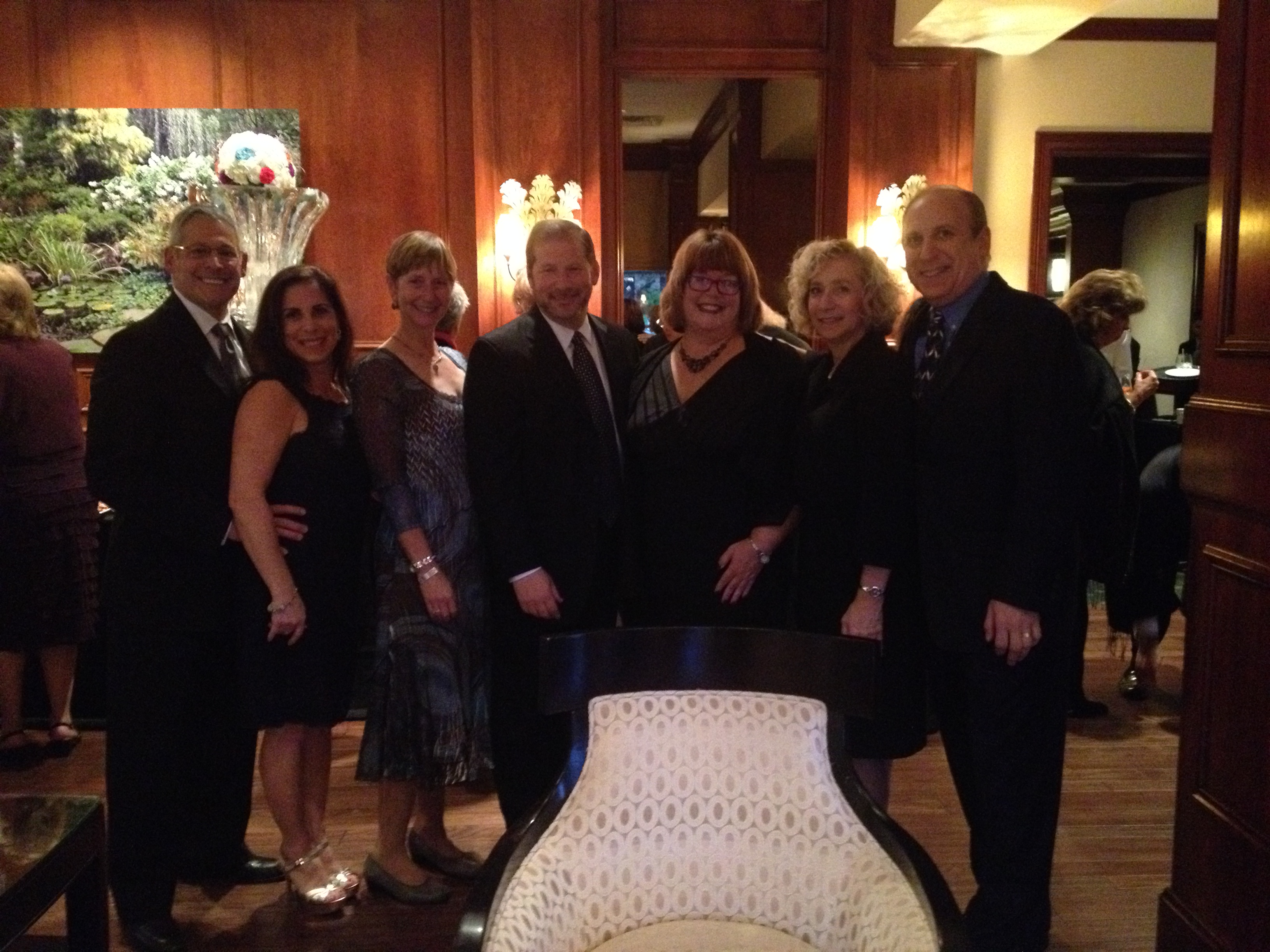
Over the years our youth group has studied the Jewish value that every person is created b’tzelem Elohim, in God’s image. Their learning has led to their communal commitment to serve those of varying abilities by visiting group homes, running carnivals, holding bowl-a-thons and hosting social gatherings. Their actions have helped them individually conquer fears, break down barriers, increase sensitivity, and generate love for all of God’s creations.

Jawonio’s leaders took a risk. By subsidizing the attendance of these youth, and by choosing to honor a group that doesn’t make a large financial commitment to its bottom line, Jawonio chose to inspire. Jawonio inspired our kids by helping them see themselves as valued and contributing members of society who can make a difference; Jawonio inspired its own supporters by showing how its mission is changing the world for the better, both for its consumers and for the larger community; Jawonio reminded us all that our children are our future, deserving of recognition for their contributions and investment in their leadership development. That’s what I call vision!
Mazal tov to our community, to our Naaseh/USY program for empowering our youth to make a difference, to our kids who choose to be a part of holy work, and to Jawonio for helping us see the image of God in every person.
Rabbi Craig Scheff
Smiling willows
Even at the age of 90, Morris is amazing with his hands. And he is so loving and thoughtful. Every year just before Hoshana Rabbah, the seventh day of Sukkot, he collects willow branches and bundles them together in fives with palm branches. He prepares enough for everybody who will attend the early morning service to complete the ceremony of Hoshanot with seven circles around the sanctuary and the beating of the willow branches (aravot). In contrast to the willow branches of my lulav, which are badly browning and bent by the seventh day of the holiday, these bunches of willow are fresh green.
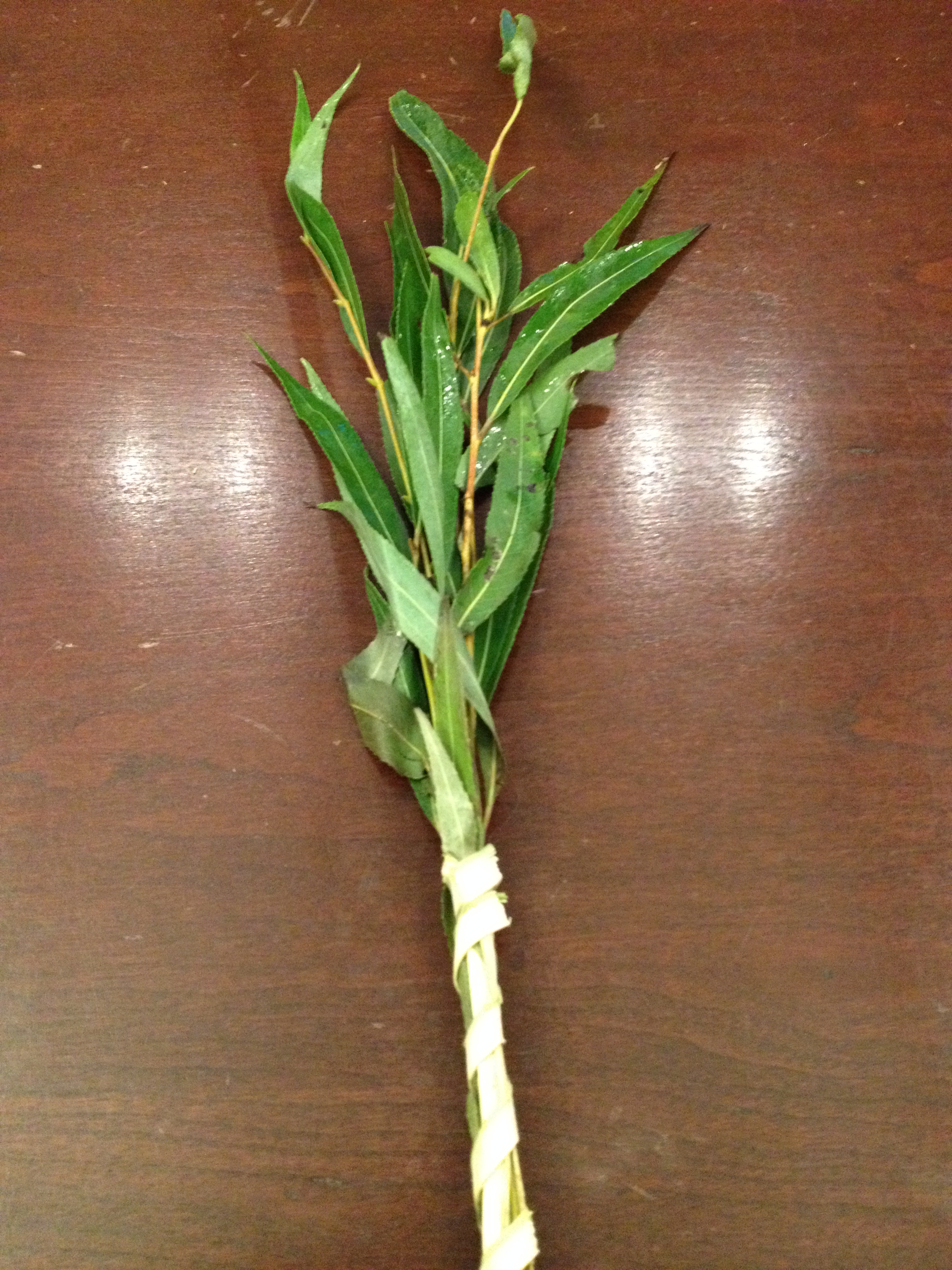
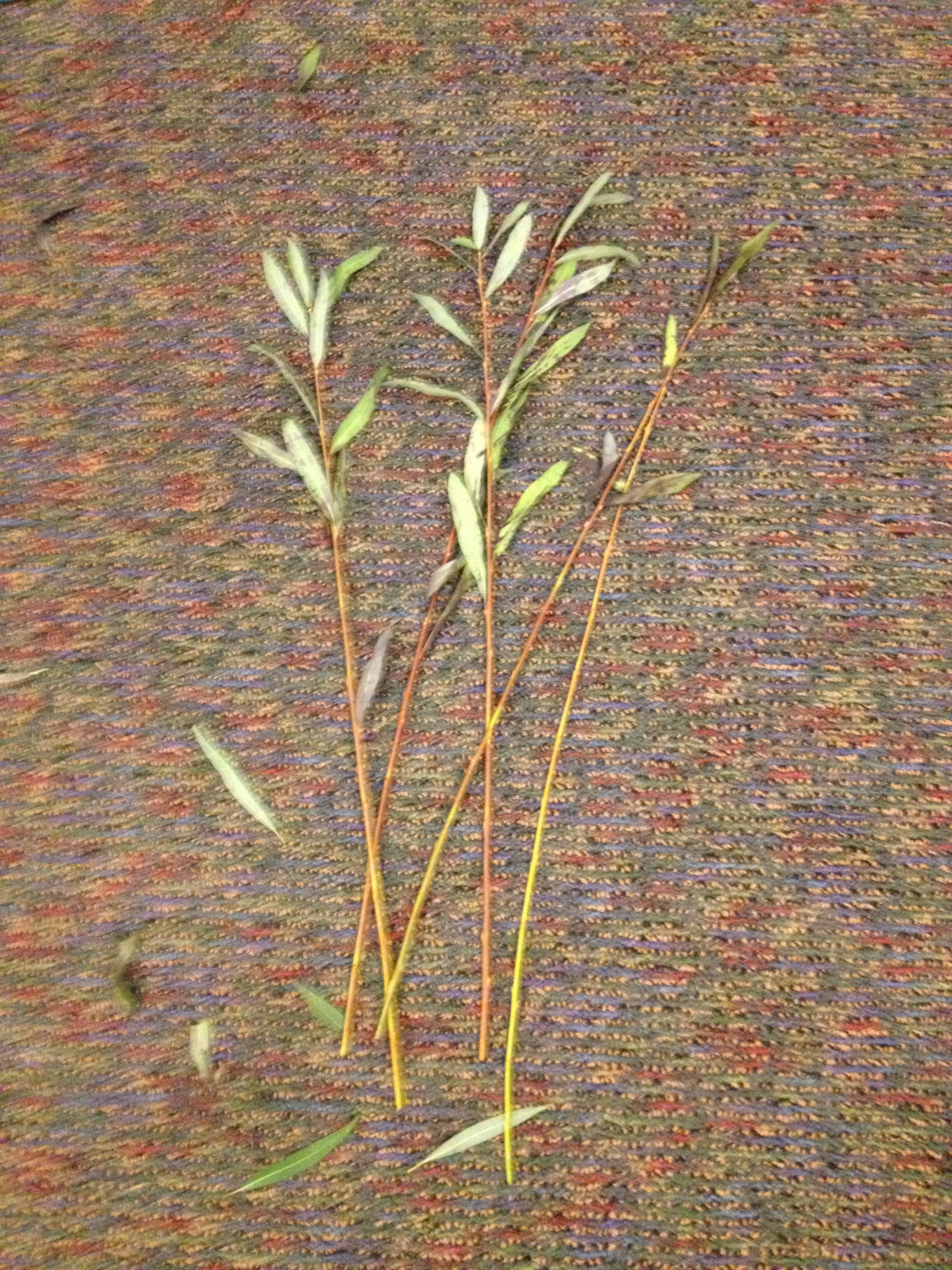
I recite the words of the ceremony “Kol M’vaser m’vaser v’omer” (“The voice of the prophet resounds and proclaims … good news of peace and deliverance”) three times, and I whip the floor hard with the willow branches. As this season of repentance comes to a close, I hope to shed the willow leaves that represent the deeds I want to leave behind in the year that was. Much like the breadcrumbs that I tossed onto the flowing waters of Tashlich, hoping they would be carried far away from me, I hope these willow leaves will be carried away by the wind and rain. But the batch that Morris prepares for our service sheds nothing as I beat the floor! The expertly wrapped bunch is beautiful and green and lush and cool to the touch. The leaves cling tightly to the long, thin branches. And I smile. I smile for myself and for all the other people who know that they have done the work that needs to be done in preparation for this season of repentance. We can dance with joy over the next days with confidence in God’s acceptance of the imperfections that cling to us, the broken pieces that we carry with us and make a part of our lives, like the broken tablets of the Ten Commandments carried in the ark along with the unbroken set.
I can smile because I have faith that, with good intentions and deeds shaped by the desire to heal the world around me, God will forgive me for that which I don’t accomplish in my quest. I smile because the perfect willows, despite having no fragrance and bearing no fruit, remind me that I can forgive myself for being the perfectly imperfect human being that I am.
Chag sameach,
Rabbi Craig Scheff
Make today remarkable
Over the past few days, I have been approached by several individuals who have expressed appreciation for my Rosh Hashanah message, sharing with me how the words I shared have taken hold in the rhythm of their daily lives. While I don’t have a full written text of my sermon, I do have some quotes that I can share. Leaving out the jokes and the stories, I offer you the essence of the message. I hope you will pass it along, and perhaps we can truly shape the world for the better in the year ahead.
From the movie 500 Days of Summer: “Most days of the year are unremarkable. They begin and they end with no lasting memory made in between. Most days have no impact on the course of a life.” What a sad and cynical way to approach a new day. What if we could make every day remarkable? What if each day had one lasting memory, one moment in which we affected someone else for the better? How would the course of our lives be changed?
Our patriarch Abraham committed a single act of kindness, welcoming three strangers into his tent, and in so doing he set a series of events into motion, changing the course of history. His ideology, built upon the performance of deeds that move the world deeper into relationship with the Creator of us all, is still the best ideology to bring about a victory of good over evil. The good deed changes the world; it latches onto our soul. Our acts of goodness reverberate through our souls for eternity.
Abraham Joshua Heschel wrote: “A Jew is asked to take a leap of action, rather than a leap of thought.” Indeed, our prayers are empty if they are not accompanied by action. And those actions need not be super-human, heroic or even self-sacrificing. They just need to be offered with the proper intention, and with the courage and pride to be performed as a Jew performing a mitzvah in the world. We wear the garb of our favorite sports heroes and teams (and I tip my hat to Derek Jeter), associating ourselves with others and with a cause. How much more so must we be prepared to identify ourselves and our mitzvahs as Jewish? Not that we must wear kippot in public as I do, but we must find the hat, the jewelry or the bumper magnet that will let people know whom we are and for what we stand.
Seventy-five years ago, our enemies labeled us with stars and the word “Jew” on our sleeves; the symbols identified us as vermin, disease, and the source of all of society’s ills. There are those who still attempt to cast the Jew in the same light, out of ignorance, fear and hatred. The battles against terror and evil around the world today will be fought with bombs and bullets, but the war is ultimately one of competing ideologies. And if we are to win this war, we must carry our Jewish identity with pride. We must let our deeds define us, as Jews and as human beings who seek the triumph of good.
Two weeks ago, we invited our synagogue’s neighborhood to join us in the building for some long-overdue introductions, refreshments and a tour. Our neighbors finally got to meet the people and see the space on the other side of the stained-glass wall that faces the street. It was an evening of breaking the ice, of tearing down barriers, of creating new relationships, of fighting back against the darkness. And it was a night that changed our small corner of the world. Call me an idealist, call me naïve; but I saw the world change before my eyes, and I felt it as I walked the streets of my neighborhood the next day. My world has been changed forever.
Especially in light of–and in spite of–the spread of anti-Semitism around the world and the ignorance that persists in our own back yards, we must wear our Jewish stars on our sleeves more visibly than ever. We must allow our deeds to define us as Jews more visibly than ever. We must, in this new year of 5775, fight back against the darkness with the light of our shining individual deeds that can transform our days, our lives and the world around us.
Shanah tovah and g’mar chatimah tovah,
Rabbi Craig Scheff
 Three Rabbis Walk Into A Shul
Recent Comments