Replenishing the well
This past Shabbat, Day 8 of the “October 7” War, our synagogue rabbis presided over a ritual marking the transition of a girl to adulthood in the eyes of the community. On Sunday morning, Day 9, we were present for twin girls experiencing the same rite of passage. On Sunday afternoon, I officiated at the naming of a baby girl, linking her to the legacy of her paternal grandfather (a close personal friend who died at a young age) and her maternal great-grandfather.
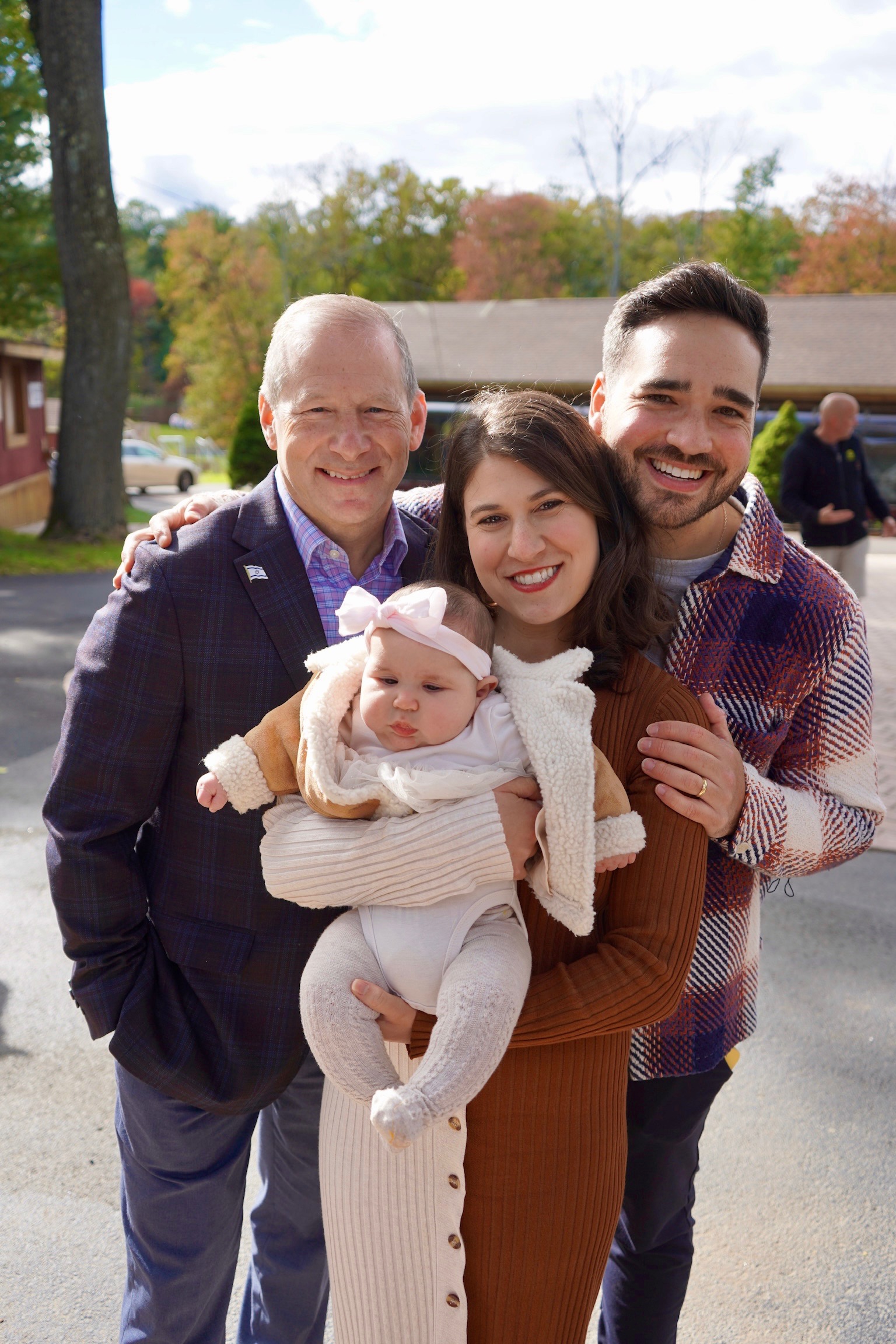
Each of these moments was filled with love and infused with meaning. Each of these rites was held in the embrace of family, friends and community. Each of these children gave honor to their past and held out promise for our shared future. Each of these families prayed and planned for the day to arrive when their respective occasions could be shared.
And each of these events was touched and somewhat shaped by events happening on the other side of the ocean. Parents reached out to their rabbis to inquire on a personal level about the rabbis’ wellbeing and emotional preparedness. They asked whether a postponement might be warranted. They wanted to know that, if the simcha were to take place, it would be framed appropriately in light of tragedy hanging like a cloud over our heads.
The Talmud (Ketubot 17a) teaches that a funeral procession gives way to a wedding procession. In other words, we prioritize the celebration of life over death. The teaching may feel harsh or insensitive to some, especially considering the emphasis we place on caring for mourners. (As an aside, caring for mourners is in fact caring for the needs of the living, as distinguished from the funeral procession itself, which is about the caring for the dead.) But the lesson is one that we need right now.
Caught inside the looping 24-hour newsfeed, glued to images and reports of the dead and the missing, worrying about our family and friends, our well of resilience is being depleted further from hour to hour. We need to exercise the kind of self-care that will replenish that well, so that we can confront and navigate the challenges yet to come. The gift of joy, of celebrating life, is the best form of self-care we can give ourselves.

Like a bridal procession, the celebration of life’s moments of transition fills us with optimism, with a reason to look to the future with hope. The times to be treasured are moments that we are not promised or guaranteed; they are not to be postponed, lest intervening events preclude their being rescheduled. And there’s no guarantee we will be there to enjoy them the next time around.
Seize the moment to celebrate when it presents itself. Join us on November 29 (the date of our rescheduled fall gala, exactly 60 years since the day our building was dedicated!) to celebrate the synagogue and to help us replenish our own communal well of resilience.
Am Yisrael chai, so let’s be sure to celebrate life when we can.
Rabbi Craig Scheff
Ukraine is Personal
Twenty years ago, in April 2002, Sarah and I flew with twenty others on a MetroWest New Jersey Federation Mission to Cherkassy, Ukraine. Sarah had raised $20,000 through her bat mitzvah project to support the nursery school of the burgeoning Jewish community there that called itself Hesed. We traveled with duffel bags filled with medicine, sports equipment and school supplies. I remember that Sarah had a violin as carry-on and I carried an envelope filled with American dollars and a box of donated Women’s League benefactors pins to give away.
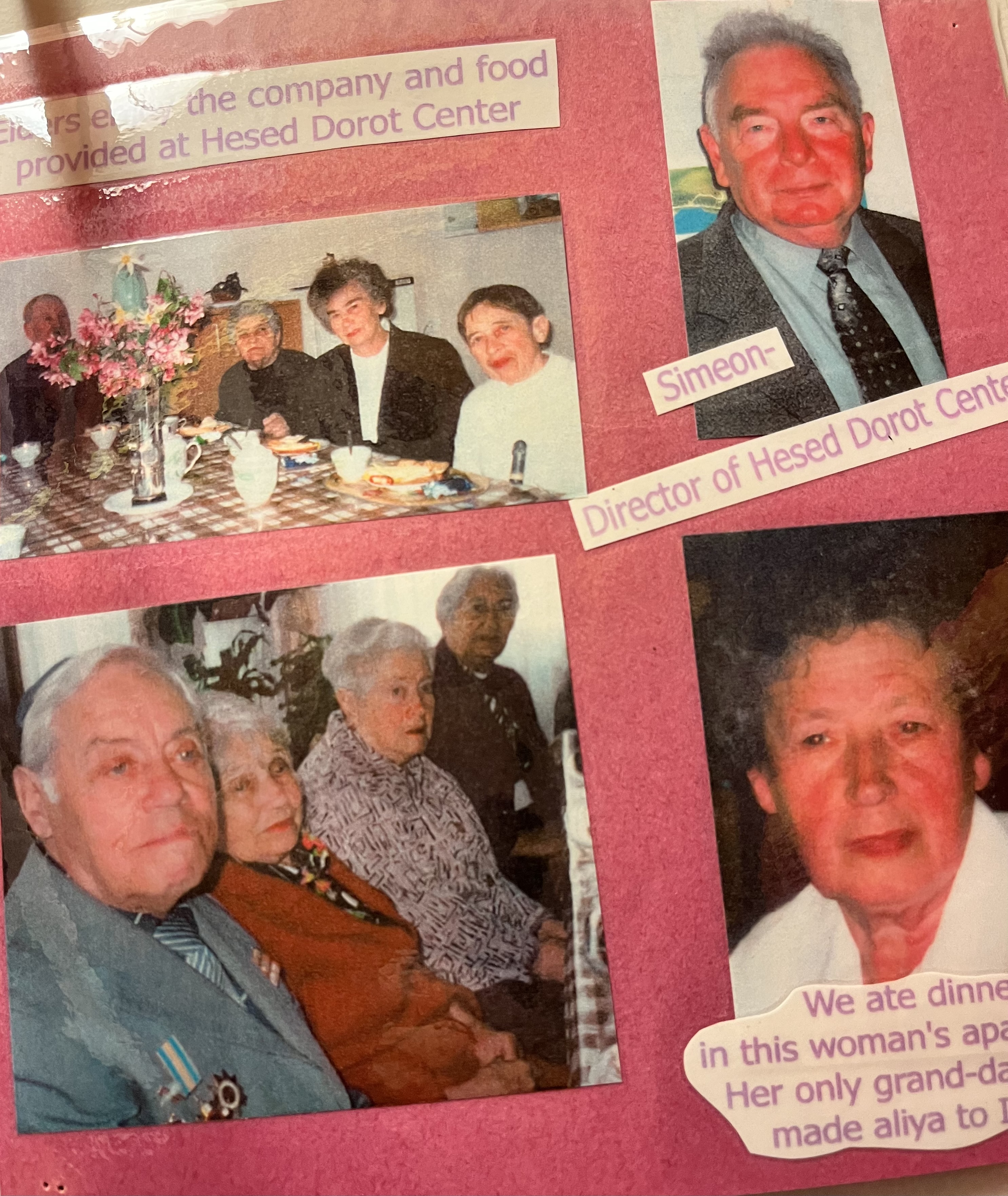
We spent a transformative week in Ukraine, visiting small towns like Smela and Zvenigorodka and the larger cities of Cherkassy and Kyiv where we paid homage to the past by participating in a solemn service at the Babi Yar Memorial, cleaning a Jewish cemetery, and saying Kaddish in a forest where in 1941, three thousand Jews had been murdered and buried in a mass grave. We assisted the present-day communities with home visits to isolated indigent elders, meetings with community leaders, and participation in their Sunday School and Jewish culture club.
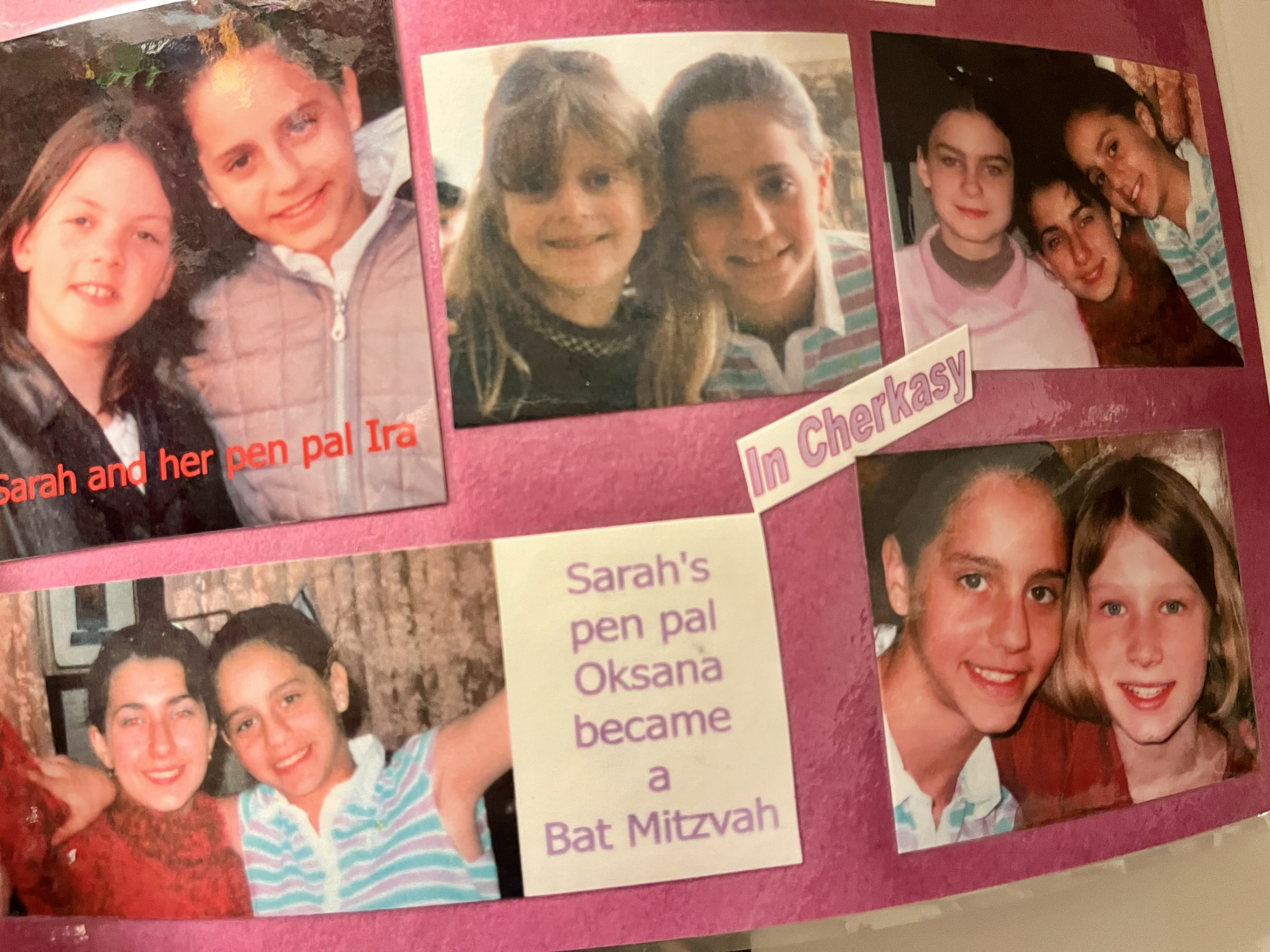
And we dreamed of the future of Cherkassy – young people learning Hebrew as they prepared for aliya and others dedicated to building Jewish community there in their homeland. For me, the highlight was officiating at a group b’nai mitzvah of nineteen teenagers between the ages of 13 and 17. Many of them had no Jewish names and I spent Friday afternoon helping them choose Hebrew names. I felt like Adam in the Garden.

When we were there twenty years ago, the community was only about eight years old. Prior to that, such a Jewish community organization would have been illegal. Many of the children we met on that trip have since made aliya. But many of the people did not leave. They have been building a solid Jewish community of loving care for all this time.
What I remember most about Ukraine is that it is not a beautiful place. My memories are painted in shades of gray. The streets looked frozen from the 1950s, Soviet bloc style buildings created a depressing view. But the people of the Jewish community we met were incredibly beautiful.
For more than a week, like all of you, I have been praying for the people of Ukraine. On Friday morning after the incursion began, I sat with four-month-old Teddy Louis in my arms. I wondered how many four-month-olds were in their grandmothers’ arms in Ukraine on that same day. My biggest concern that morning after his 7:00 feeding was whether he would take a nap in his bassinet or whether he would sleep in my arms. Meanwhile, the Ukrainian grandmothers’ lives had been turned inside out. Their concerns were matters of life and death.

And now we sit helplessly as spectators to the international stage, listening to the platitudes of governments around the world and finding it impossible to tear our eyes away from the pictures on the front page of the newspaper.
Yesterday in synagogue, Rabbi Scheff taught that we must remember our particular Jewish concerns as well as the universal concerns of this war. Because the Jewish people have been refugees since we left Egypt, we must act according to this legacy. We cannot forget what it means to be forced out of homes and endangered by violent actions beyond our control. And so I made one donation to assist the Hesed community in Cherkassy and another to HIAS to help an entire nation that is suffering. I cannot turn away from the suffering but neither can I let it bury me. I continue to use my most powerful tool, my belief in a God of Peace and Justice. I pray to God to bring our world into balance and alignment before more lives are destroyed:
God of our wandering ancestors, protect the innocent people of Ukraine who have left behind their homes, their desire to build democracy, and their hopes for the future in order to save their lives. Give solace and continued courage to their leader and his family. Find the people in bombed buildings, in subway stations and in synagogue basements and bring hope to their souls. Bring a halt to the horrifying plans of a power-driven autocrat. Awaken the leadership of the world to our common bond of humanity and empower them to take action to stop this unjust war. Act speedily, God, because time is fast when designs are evil.
Praying for peace, Rabbi Paula Mack Drill
 Three Rabbis Walk Into A Shul
Recent Comments