You had to be there
A tip of my Red Sox cap to Yankees’ pitcher Domingo German, who threw a perfect game last night (retiring 27 Oakland batters without issuing a walk or giving up a hit). Baseball is the one sport where on any given night something can happen that you as a fan may have never seen before. At the beginning of every major-league game, an average pitcher facing a lineup of average hitters has a .000983 percent chance of pitching a perfect game. This perfect game was only the 24th in the history of the sport!

The only way to truly appreciate such a feat is to be present to it in the moment. It’s simply not the same on replay. Whether you are a fan of the team or not, you hang on every pitch over the last 12 outs of the game to see something that few have ever achieved. A friend texted me earlier today to tell me that he and his son had turned the game off after the first inning last night to go to bed — something they never do — in preparation for an early morning flight. I understand the terrible disappointment they are feeling today.
A few weeks ago, something poignant happened during services that moved our president Matt Schiering to note in his announcements that we never know what we might miss if we are not in synagogue on any given day. There are so many Shabbat mornings when I walk out of the building after the service thinking the very same thing to myself. You simply never know what you are going to be a part of, and if you aren’t here, you never know what you’re going to miss.
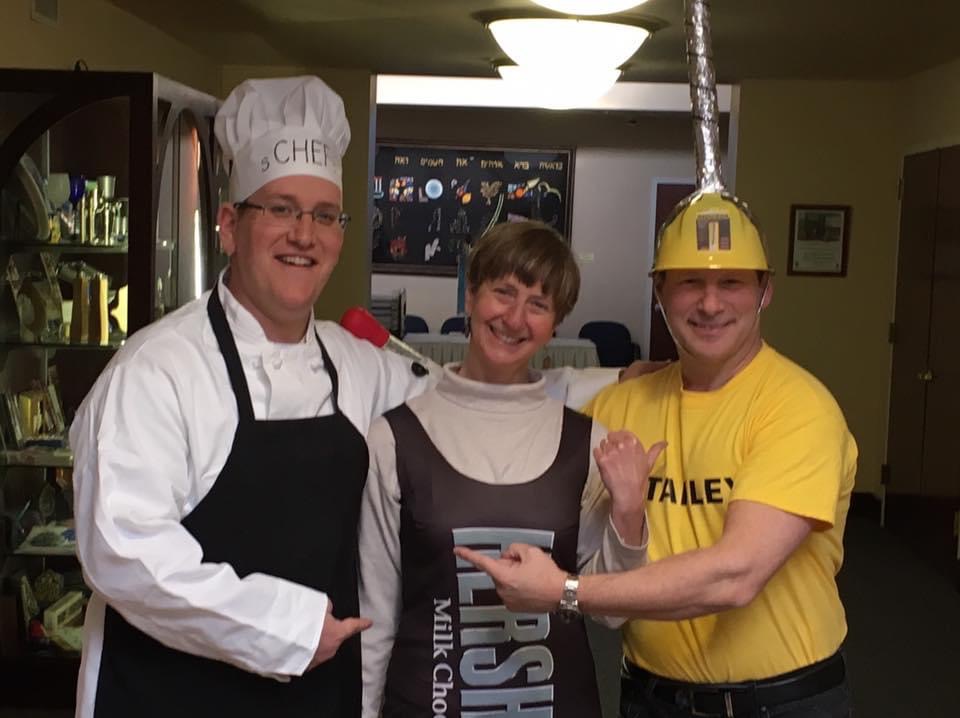
It might be as simple as a 6 year-old girl making her way across the aisle to sit with an unrelated 60 year-old woman. It may be a 95 year-old man standing in front of the Torah to give thanks for another birthday. It may be a person who is deaf reading from the Torah in front of the congregation for the very first time. It may be the naming of a baby belonging to a family you’ve never met, or a 50 year-old person returning to the synagogue where they grew up for the first time in 35 years.

The synagogue experience is not necessarily about prayer. Or mourning, or music, or meditation or memory. Or celebration, or causes or community. Or food or friendship. Or obligation. Or study. Or a heartfelt moment of vulnerability. The synagogue experience may be about any one of these things, about all of these things, or about something else entirely.
Only you can conclude what the synagogue experience is for you. To understand the meaning of it for yourself, you have to be there. If you sleep late, check out early, or pass entirely, know you might be missing something special, something you will probably never experience at a ballpark or anywhere other than the synagogue.
Shabbat shalom,
Rabbi Craig Scheff
On the third night of Hanukkah
“It felt like it used to be….”
We tend to romanticize the past. We say the good old days are gone. We think the successes of the past can’t be matched. We lament that the lights of yesteryear burned a little brighter. And then something spectacular happens to remind us that we can consistently re-create ourselves … and maybe even climb a little higher.
Last night, the third night of Hanukkah in the year 2022/5783, we were reminded as a community who we are and how special we can be.
How was this night different from any other night? What made this night, this holiday, so special? I have some thoughts on the matter, ranging from the logistical and programmatic to the spiritual.
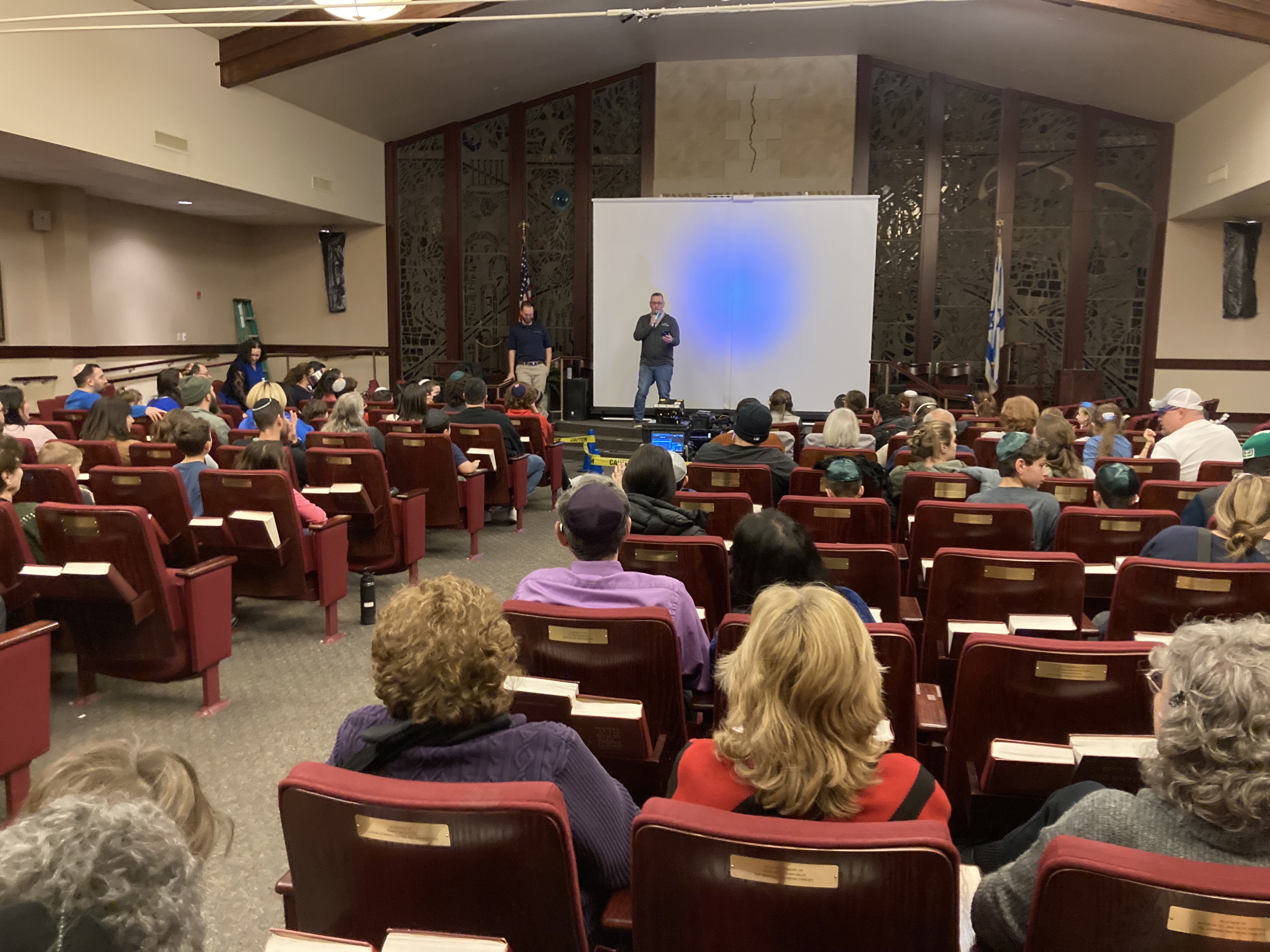
Not by might, not by power – It takes a spirit of collegiality and teamwork to create a successful event. Rabbi Hersh directed a vision that was embraced by the many constituents of our community. Rabbi Kniaz and the Kulanu board had no issue letting our Tuesday session end early to feed into the holiday program. Sharon Rappaport and our Naaseh/USY community were happy to build their evening off our communal time. A 5:30 start time meant that most parents could finish a work day and have younger children home at a reasonable hour. A multigenerational program offered the space for adults to shmooze over desserts after the younger crowd departed. Our planning represented a spirit of giving, of generosity and of shared aspirations.
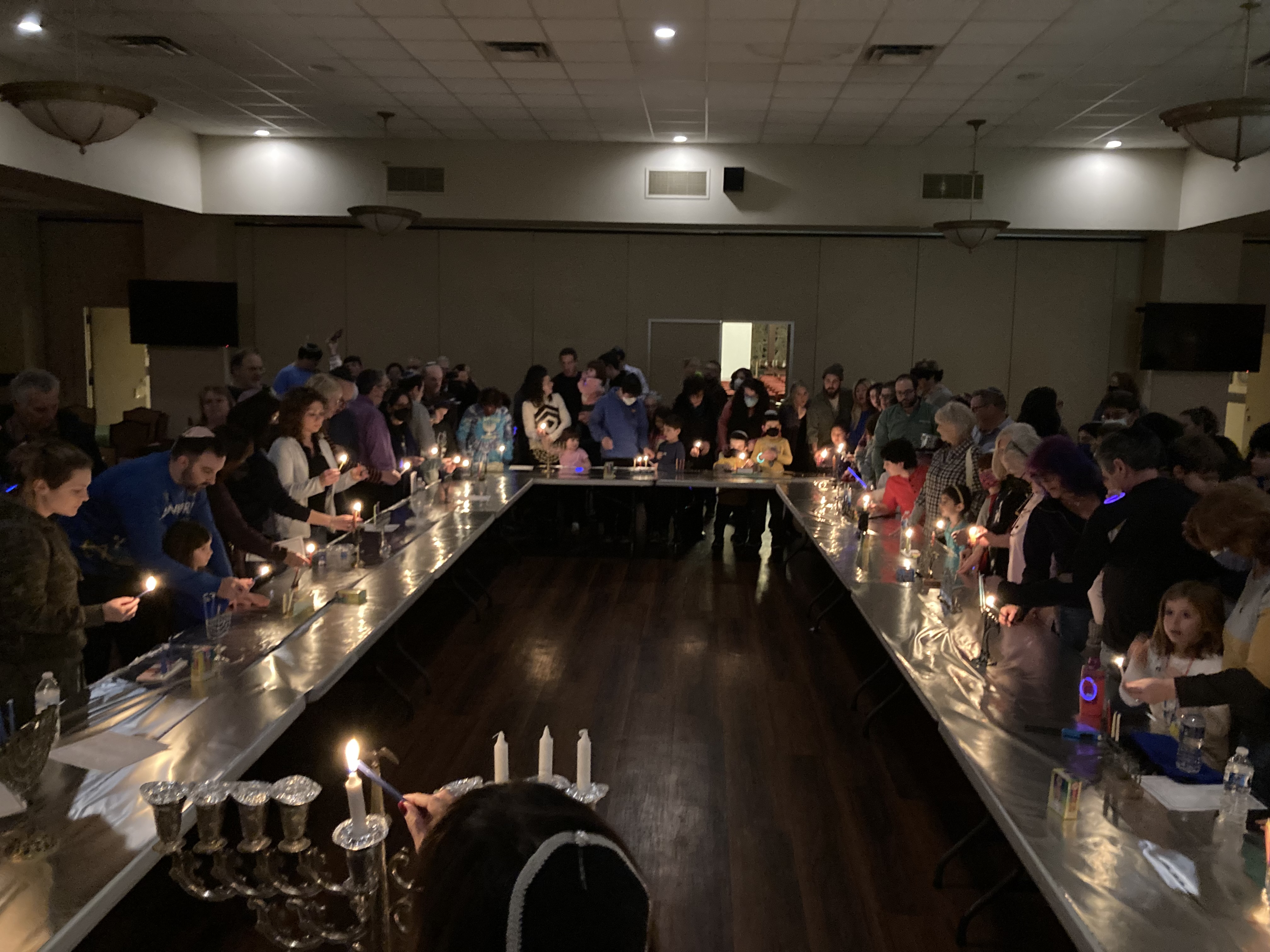
The price is right – Thanks to the generosity of a longtime member of this community who passed away relatively recently, we have the resources to offer certain programs free of charge. For many households, financial concerns impact the choices we make and determine the level of our participation. A program that doesn’t carry an additional fee is an attractive option. Moreover, the model of anonymous giving for the benefit of the community is inspiring. Hopefully, we were all inspired to give of ourselves in some way, financially or otherwise, after last night. And perhaps when people recognize the great value they receive from what is offered, they will be willing to prioritize such experiences even at some financial cost.
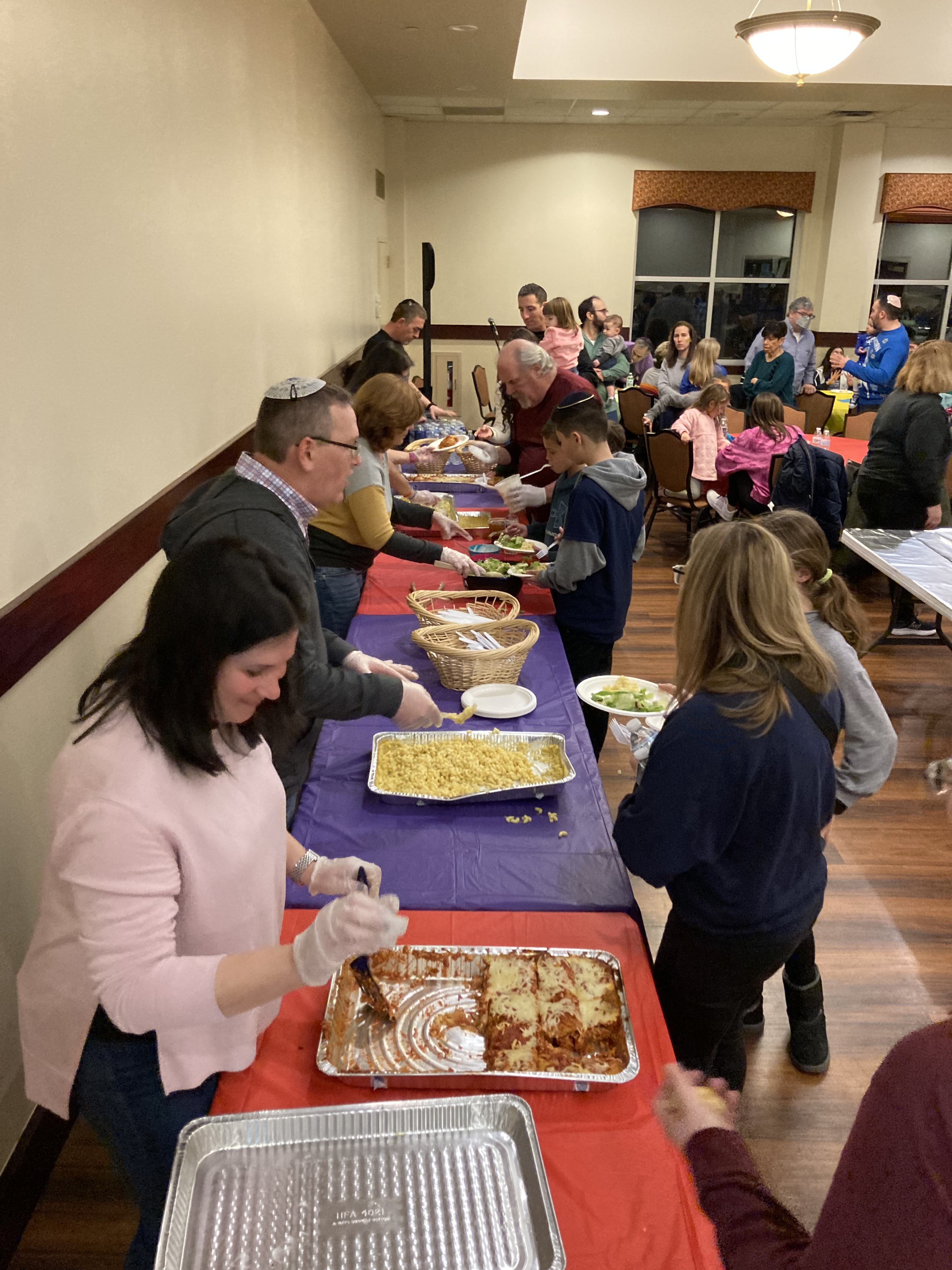
If you feed them… – Food matters. Especially for an early evening program when it means parents don’t have to cook, feed their children, and clean up at home. More importantly, breaking bread together builds community, and feeds our sense of belonging and our sense of bounty.
Give ‘em the old razzle-dazzle – Laser lights are cool; candles are even cooler. Both create a sense of awe for people of all ages, but with candles we can draw close, smell them, feel their glow. They connect us to so many other moments and emotions in our lives. And as a ritual, candle lighting is familiar, accessible and meaningful in a way that not all Jewish rituals are. Hanukkah, the Festival of Lights, offers us the opportunity to experience radical amazement, a sense of awe and appreciation, as a participatory community in our communal space.

‘Tis the season – There is an underlying motif in the biblical story of Joseph (which we read a part of this week) to which we don’t give enough attention. Can we as individuals, as families, as communities and as a people encounter (and even be attracted to!) a culture, adopt some of its enticing elements, adapt our own customs to the prevailing trends, and still not only maintain our sense of identity but thrive? The holiday of Hanukkah answers this question with a resounding yes! Some may perceive the Christmas holiday season to be in conflict with what we hope to experience of Hanukkah; but there is also the possibility that the season brings out our desire to connect with others, to embrace our own identities a bit tighter, to wear and show off our (tacky?) holiday sweaters, socks, ties, and pajamas like never before.
I hope you were among those who got to experience the magic of the evening. I hope you are among those who create some of this magic in their own homes. I hope you’ll be among those coming back to the synagogue to discover the next magical moment created for you.
Chag Urim sameach, wishing you a happy Festival of Lights,
Rabbi Craig Scheff
Partnering into 2021 and beyond
Way back at the end of August, I wrote in this blog:
“The Jewish New Year’s arrival, this year in particular, may help us look back with 20/20 hindsight, and may help us envision the final third of 2020 with a greater sense of gratitude, purpose and optimism.”
Now, as we have endured the summer and fall, ridden out their lows and highs, and taken note of their dark clouds and silver linings, we stand ready to greet the secular new year of 2021. Winter has indeed arrived, yet we are bolstered by the new perspectives on life we have gained, the relationships we have fostered, and the hopes for an effective vaccine that will allow us to come together physically to a greater degree in the year ahead. But of all the lessons taught and learned during these ten unforgettable months of 2020, there is one that I was particularly glad to have internalized personally and professionally almost twenty years ago. Stated most simply by our tradition: Tovim hashnayim min ha-echad, “Two is better than one” (Ecclesiastes 4:9).
For the past two decades, I have advocated that a hierarchical model of religious leadership does not serve the best interests of religious communities or the clergy who serve them. Long before our communities were facing a pandemic, our synagogue community amended its constitution to delete the language of “senior” rabbi, “assistant” or “associate” rabbi, and “cantor.” Instead, the organization consciously chose the broader language of “clergy” with the understanding that the success of our community was dependent upon the ability of our religious leaders and professionals to establish and deepen personal relationships, regardless of their titles.

Moreover, the ability of individual clergy to play to their strengths and to use their diverse talents and skills to cultivate connections would ultimately accrue, we believed, to the benefit of the organization and the entire professional staff. Finally, and perhaps most importantly for the individual professionals and our organizations, we acknowledged that it is very difficult, perhaps even impossible, for leaders to be true partners when one is expected to answer to or be judged by the other. I am proud that our JTS Resnick Interns, through our Debbie Steiner Mentorship Program, have moved into the Jewish world building partnerships and leading vibrant and growing communities with this model in mind.

This pandemic has reinforced my belief that the partnership model provides professionals the opportunity to shoulder equally the burdens, to process the challenges and opportunities, and to share the personal and professional stresses. Partnership maximizes the potential of each professional to acquire and share skills, to broaden vision and reach, and to establish the relationships that will connect more people to each other, the institution and its mission. Finally, partnership models behavior for professional and lay people alike. The stronger the partnership, the more we generate in each other a sense of empowerment, ownership, and investment in a shared vision. The success of one is the success of all.
As we find ourselves in the midst of a time when communities cannot operate by bringing people into regular and consistent physical proximity, it is all the more important that our organizations have professionals who can connect people by facilitating intimate gatherings and cultivating meaningful connection. Some of us have acknowledged (and the forward thinking leaders knew this prior to the pandemic) that certain modes by which we have been operating must become a part of our business-as-usual way of doing things. For example, aging populations who can be served by virtual connection must be given the opportunity to connect from their homes to spiritual, educational and social opportunities as Jewish law permits. Our communities and leaders require partners to share the professional burden of the work and to share the personal burden of the stress that these new modes of operating generate.

In hindsight, we may look back on 2020 as the year that helped us envision the future of our community more clearly. Perhaps 2021 will be the year in which the steps we must take to realize our finest aspirations come into sharp focus!
Wishing us all a happy, healthy and safe 2021 in which we feel connected, cared for, and empowered to partner with those in need,
Rabbi Craig Scheff
The Time of Our Joy
One of my childhood friends told me that he decided to go to a synagogue for Rosh Hashanah and Yom Kippur so that he could say prayers for my healing. Knowing that he is a non-believing, non-practicing Jewish person, I was very touched by his impulse.
But, I wanted to warn him against his plan. Instead, I let him find his own way.
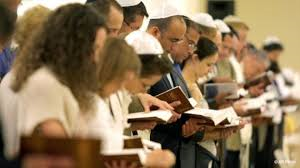
Afterward, I called him to find out how it went.
He told me, “Honestly, this is why I never go to synagogue. I felt empty and lost and very lonely. I could not understand the prayers and they seemed to go on forever. I was to nervous to even say a prayer for you.”
I was not surprised. I told him, “It is not that synagogues are empty of spiritual space for prayer. As a novice, you just went on the wrong days.”
Trying to find a sense of peace, connection to God, and deep prayer experiences on the three most fearsome, awesome and busy days of the Jewish calendar is like trying to learn to speak French by sitting in on a college literature course taught entirely in French… or trying to learn to ice skate by gliding out onto the ice in the midst of a Stanley Cup playoff match.
And yet my old friend is not the only one who tries to pry open the treasure of Judaism once a year for three days. So many of us come to synagogue just for the High Holy Days, and as a rabbi, believe me, I am very glad to see you.
But every year, just five days after Yom Kippur, we enter the joyous festival of Sukkot and I wonder how to convince my fellow Jews to come on these days instead! We sing praises to God while shaking branches of the palm, myrtle, and willow together with an etrog (a lemon-like fruit). It’s inexplicably awesome! We line up with these agricultural treasures and parade around the synagogue singing to God, “Save us!” It’s crazy fun! Everyone is grinning because no one can exactly explain what we’re doing.
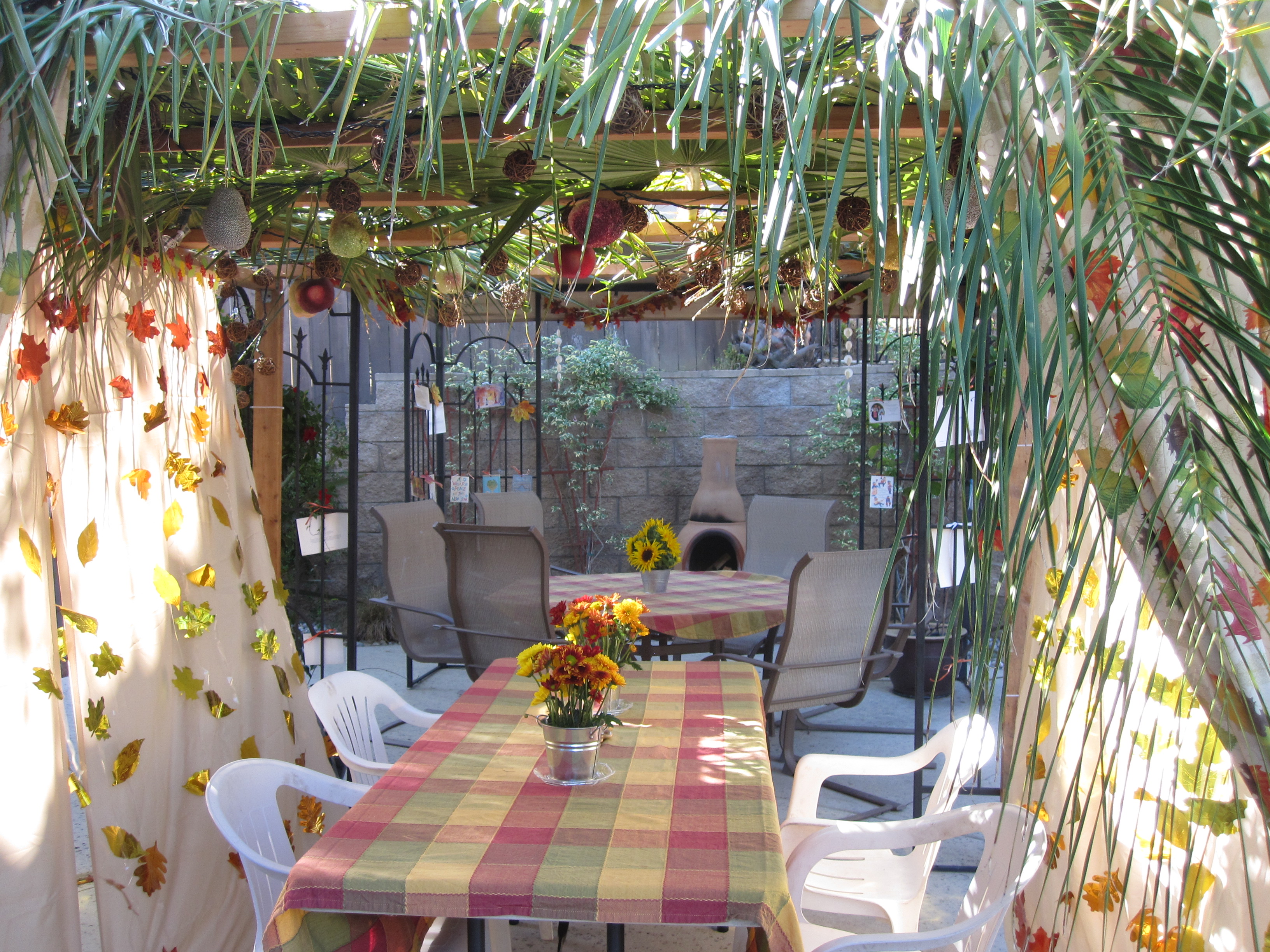
After these prayers, we go outside into a sukkah (a temporary booth) decorated with lights, flowers, fruit, paper chains and posters and partially open to the sky to study, eat and sing. We live in these booths for seven days.
At the end of this lovely festival of connecting to nature, community, and our best selves, we celebrate Simchat Torah (Monday evening 10/1 through Tuesday 10/2), rejoicing as we finish an annual cycle of reading the entire Torah and start again “In the Beginning”. We dance with the Torahs and ensure that everyone gets an honor to the Torah. It’s a raucous Jewish holiday of merriment and true joy.

Attending Rosh Hashanah and Yom Kippur services is meaningful and important. I am not telling you not to do so. But only doing so means that you are missing out on some of the most spiritually connected moments in the Jewish calendar.
Think of it this way:
On Rosh Hashanah your Parent calls you into the study and says: “Let’s just take a look at how you’ve been behaving over the past year and make a plan for you to improve. Perhaps it will help us feel more connected.”
On Yom Kippur, your Parent calls you back into that study and says: “Okay, what have you done about showing some progress over the past 10 days?”
But on Sukkot, your Parent comes out to you in the backyard and says, “Let’s have a great celebration for a week. Let’s enjoy each other’s company and feel close to one another!”
Who would really want the disciplinarian Parent without the celebrating Parent as well?
I’ll take both! I hope you’ll join me.
Rabbi Paula Mack Drill
 Three Rabbis Walk Into A Shul
Recent Comments