Don’t Do This Alone (Coping with these Dark Days)
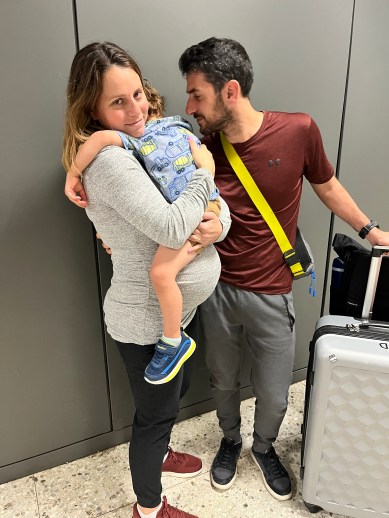
On Friday, October 6, just three things were on my mind.
First, my son Josh and his beloved Shay had just gotten engaged, but they had not yet made it public. I wondered how I could make it through Shabbat and two days of holiday without sharing the good news.

Next, I was feeling quite pleased with my decision to forego shoes and just wear sneakers with my synagogue dresses on Saturday night and Sunday for Simchat Torah dancing.
And third, I was a bit worried about having time to pack after two days of holiday before the car service arrived to drive me to Newark Airport for my flight to Israel. I was making a trip for four days to attend the wedding of my son-in-law‘s brother Omer to his cherished Tal. Jonathan, Sagi and Carmel had already been in Israel for a week and I was looking forward to a fun few days in Tel Aviv and a wonderful Fainshtain celebration.

I didn’t need to have worried about my Sunday night flight to Israel. It was cancelled.
On Saturday, October 7, the world as we knew it ended. We will never be the same.
Jonathan was awakened by sirens on Shabbat morning and travelled out of Tel Aviv to Shay’s family home. That morning, Sagi and Carmel were with Racheli, (Sagi’s mom and Carmel’s savta). Many of you have read Sarah’s account of Sagi’s harrowing escape with his mother, her partner and our grandson Carmel from their home in Mefalsim. In case you didn’t have the chance to read it, here is a link:
https://docs.google.com/document/d/1lng-H_PCVwpDlZrUwvmWFxBjgg2trn-_voJWUMnYGWQ/edit

What do Jewish people do when tragedy strikes but the calendar says it is time to celebrate? We celebrate. With breaking hearts, with tears, and with complete dissonance, we take the Torahs out of the ark and we dance. It’s the hardest thing to do and it’s the only thing to do.
So many congregants of all ages came to OJC for the holidays, drawn in to community like homing pigeons. We knew where to be for comfort and solidarity.
We prayed, we broke bread (and chocolate), and yes, we danced. Our eyes met and we read the grief and bewilderment there. We danced with our children in long “Tayish” lines and circles of “The Tushie Dance” (Od Lo Ahavti Dai). We grinned and laughed with a stubborn refusal to give in to terror. We sang Acheinu softly and walked in slow circles for all those in Israel unable to celebrate Simchat Torah, and the children of our shul saw their rabbis cry. We honored teenagers as Chatanei Torah and a centenarian as Chatan Bereshit and we felt uplifted by them and their proud families.
All of it was necessary. It’s what we Jews have been forced to learn throughout all the centuries of our history. If we stopped celebrating every time we endured suffering, we would never be able to fulfill our calendar year.
At the OJC, we did not celebrate despite our sorrow. We celebrated together with our sorrow.
I was never more proud of our congregation.
Since the holidays have ended, we have truly been prepared for Mar Cheshvan which begins on Saturday night. It will be a bitter month indeed.
After the holidays concluded, the news from Israel continues to be intolerable. As the numbers of injured, kidnapped, and murdered in Israel climb and the inhuman stories emerge, as soldiers are mobilized and in harm’s way, as we speak to precious friends and family in Israel and find that we have no useful words, we find that the reality is more than any one soul can comprehend.
And so, we cannot do it alone. We must find each other in our grief and come together to pray, find comfort, and take action.
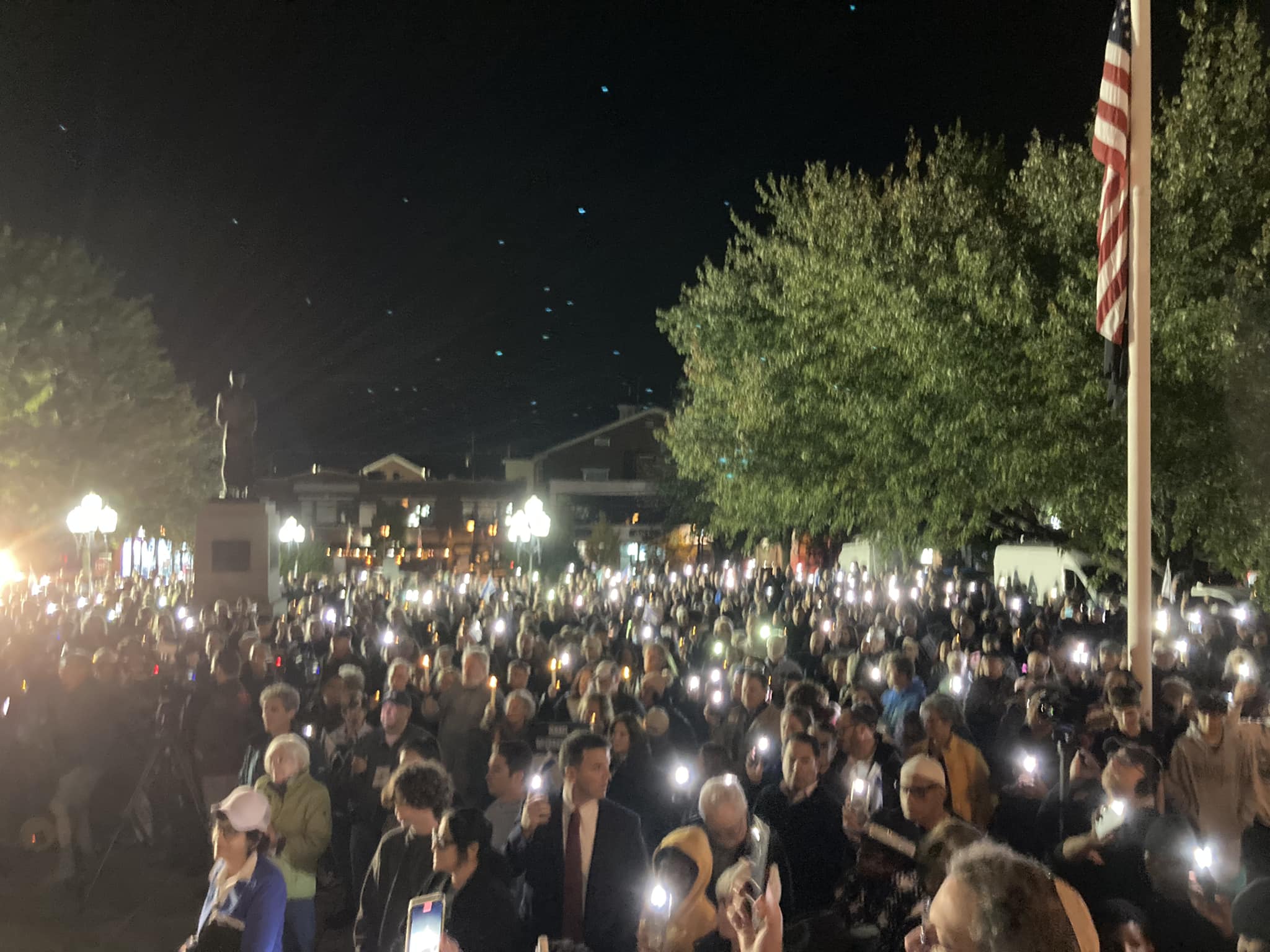
Hundreds came to the rally on Tuesday at the courthouse in New City.
Many of you will be with us on Shabbat to feel the power of community.
I expect that hundreds more will come together on Saturday night at 8 o’clock at Congregation Sons of Israel in Nyack for the Rockland Board of Rabbis Prayer Vigil and Memorial Service.
More opportunities for prayer, healing, and action will be announced soon.
Please don’t try to do this alone. We are a community that knows how to be together in the most joyous times and in the hardest times.
Am Yisrael Chai.
The People of Israel lives!
Rabbi Paula Mack Drill
The Time of Our Joy
One of my childhood friends told me that he decided to go to a synagogue for Rosh Hashanah and Yom Kippur so that he could say prayers for my healing. Knowing that he is a non-believing, non-practicing Jewish person, I was very touched by his impulse.
But, I wanted to warn him against his plan. Instead, I let him find his own way.
Afterward, I called him to find out how it went.
He told me, “Honestly, this is why I never go to synagogue. I felt empty and lost and very lonely. I could not understand the prayers and they seemed to go on forever. I was to nervous to even say a prayer for you.”
I was not surprised. I told him, “It is not that synagogues are empty of spiritual space for prayer. As a novice, you just went on the wrong days.”
Trying to find a sense of peace, connection to God, and deep prayer experiences on the three most fearsome, awesome and busy days of the Jewish calendar is like trying to learn to speak French by sitting in on a college literature course taught entirely in French… or trying to learn to ice skate by gliding out onto the ice in the midst of a Stanley Cup playoff match.
And yet my old friend is not the only one who tries to pry open the treasure of Judaism once a year for three days. So many of us come to synagogue just for the High Holy Days, and as a rabbi, believe me, I am very glad to see you.
But every year, just five days after Yom Kippur, we enter the joyous festival of Sukkot and I wonder how to convince my fellow Jews to come on these days instead! We sing praises to God while shaking branches of the palm, myrtle, and willow together with an etrog (a lemon-like fruit). It’s inexplicably awesome! We line up with these agricultural treasures and parade around the synagogue singing to God, “Save us!” It’s crazy fun! Everyone is grinning because no one can exactly explain what we’re doing.
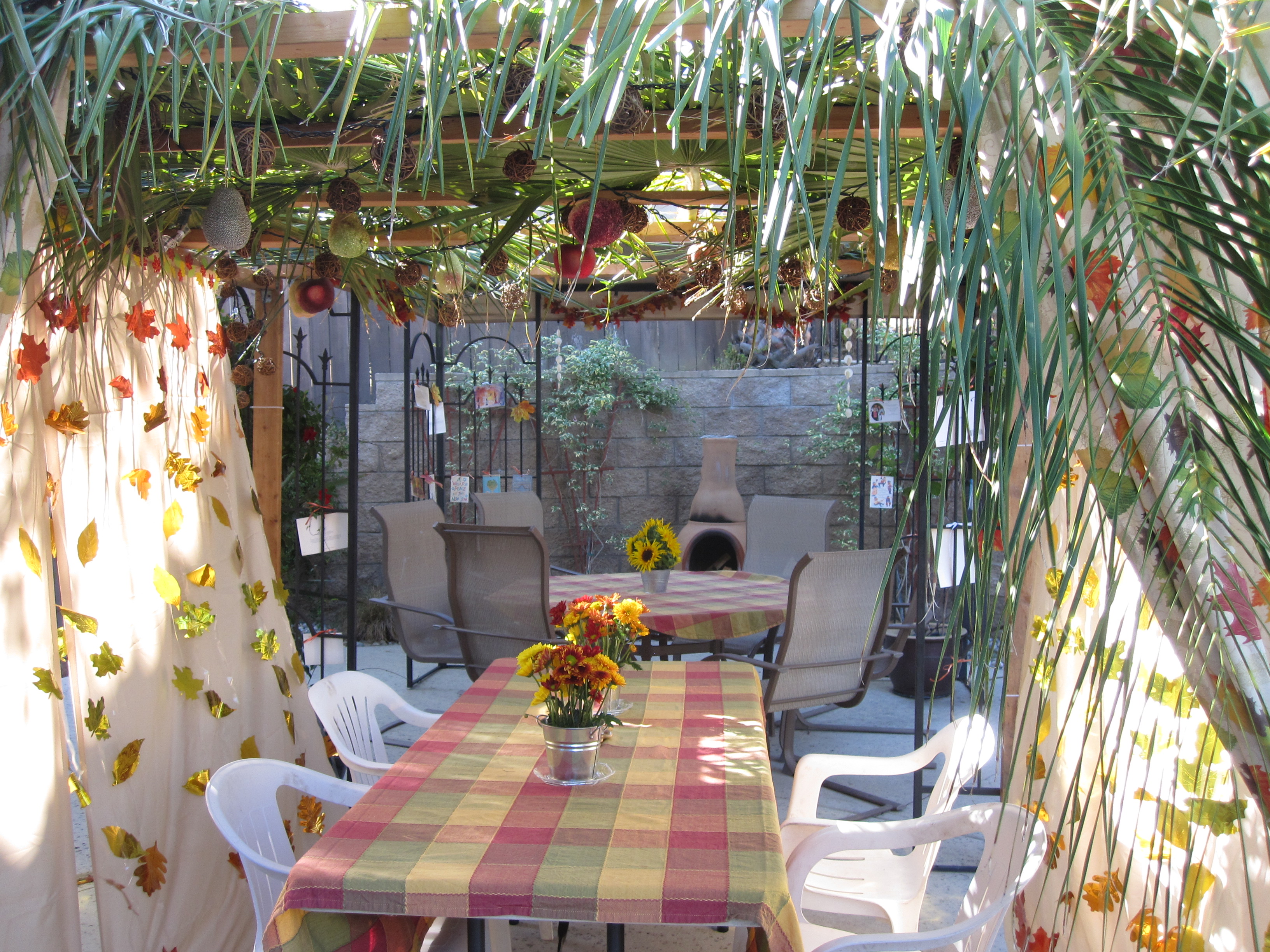
After these prayers, we go outside into a sukkah (a temporary booth) decorated with lights, flowers, fruit, paper chains and posters and partially open to the sky to study, eat and sing. We live in these booths for seven days.
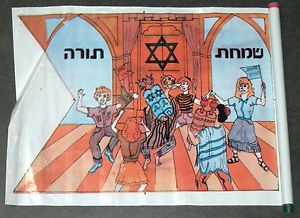
At the end of this lovely festival of connecting to nature, community, and our best selves, we celebrate Simchat Torah (Monday evening 10/1 through Tuesday 10/2), rejoicing as we finish an annual cycle of reading the entire Torah and start again “In the Beginning”. We dance with the Torahs and ensure that everyone gets an honor to the Torah. It’s a raucous Jewish holiday of merriment and true joy.
Attending Rosh Hashanah and Yom Kippur services is meaningful and important. I am not telling you not to do so. But only doing so means that you are missing out on some of the most spiritually connected moments in the Jewish calendar.
Think of it this way:
On Rosh Hashanah your Parent calls you into the study and says: “Let’s just take a look at how you’ve been behaving over the past year and make a plan for you to improve. Perhaps it will help us feel more connected.”
On Yom Kippur, your Parent calls you back into that study and says: “Okay, what have you done about showing some progress over the past 10 days?”
But on Sukkot, your Parent comes out to you in the backyard and says, “Let’s have a great celebration for a week. Let’s enjoy each other’s company and feel close to one another!”
Who would really want the disciplinarian Parent without the celebrating Parent as well?
I’ll take both! I hope you’ll join me.
Rabbi Paula Mack Drill
 Three Rabbis Walk Into A Shul
Recent Comments