A mother’s prayer
Perhaps it was the timing of coming together in these post-October 7 days.
Perhaps it was an escape from all the protests that seem to want to besmirch or obliterate our Jewish identities.
Perhaps it was the complicated vibe of Yom Hazikaron (Israel’s memorial day) and Yom Ha’atzmaut (Israel’s independence day) juxtapositioned back to back, and our desire to connect to that vibe from afar.
Perhaps it was that so many of us were without our mothers, either because of distance or loss, or without children.
Perhaps it was because a young Jewish mother was sitting in front of us on this Mother’s Day morning, having left three of her children overseas, singing to her husband who sat across from her and to us, needing to open her heart and share her music about parents and children and wanting to feel safe in a place she calls home and loving the land and all its problems and wanting no war and wanting her husband to return safely from reserves and believing in peace and needing to spread word about the power of love.

Whatever the reason, what started out in concept as an opportunity to acknowledge Israel’s two days of remembrance and gratitude during this uniquely complicated time was instantaneously transformed into a holy moment. We could not have anticipated the flood of emotion, the sense of hearts opening in our midst, the tear-streaked and smiling faces from the moment Yoni and Nina (“Yonina”) began to sing Al Kol Eleh (“For all these things, watch over me my good Lord, for the honey and the thorn, for the bitter and the sweet”). What might have been a forty-five minute singalong of Israel songs became a timeless ritual of holding our collective breath, inhaling deeply with a sense of wonder, awe and reverence for it all, and then exhaling the exhaustion, anxiety and sadness, only to repeat the exercise with each song.
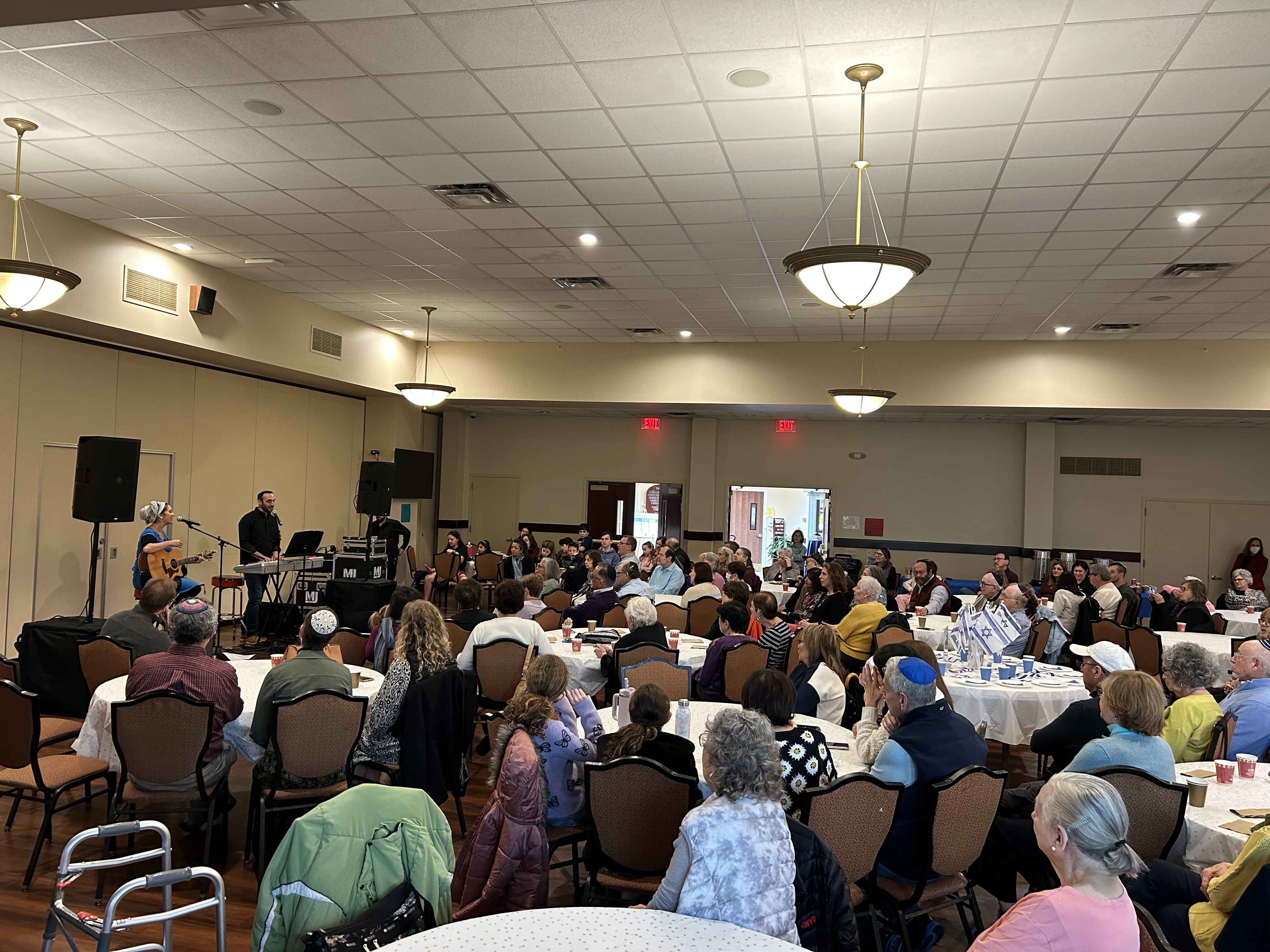
Yoni and Nina came to us with Rabbi Hersh’s urging early in the spring of 2020. They performed via Zoom monthly on Friday morning to help us connect heading into Shabbat in a time when we could not yet gather physically. Their music, for many of us, has continued to feed us, uplift us, connect us. While we felt this personal appearance was a homecoming for them of sorts, I know they felt the conflict of being away from their one home, their parents, and their children.
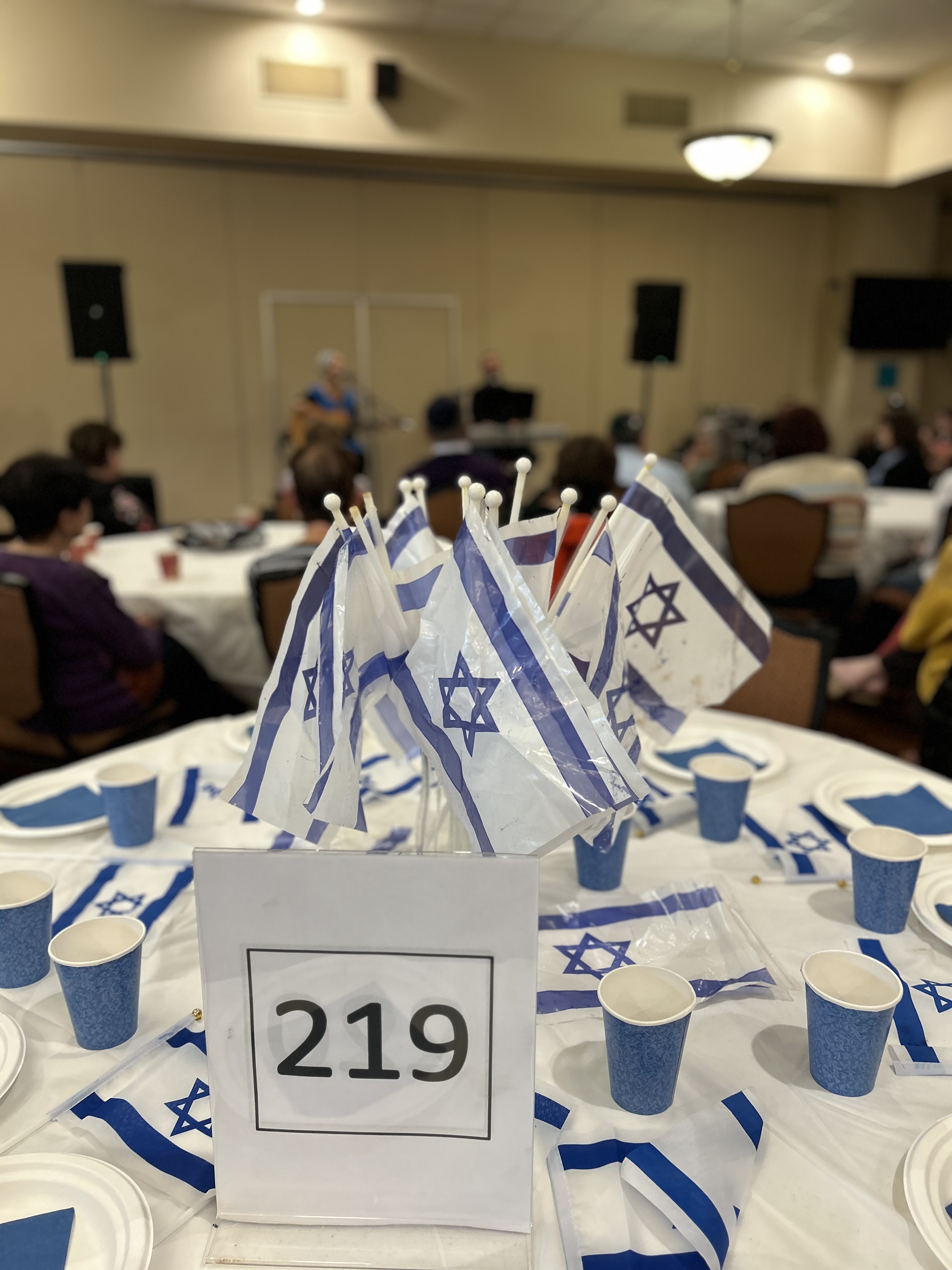
For ninety perfect minutes, with the help of their music, lyrics and heartfelt stories, we ascended together out of the time and space that restricts us. We were all home with one another, all connected to our mothers and fathers, all feeling the love we give away coming back to us, all absorbing the resilience and hope shared by these two loving artists.
In their song Melaketet kochavim (“collecting stars”), Nina and Yoni sing to each other from afar, a mother caring for children and home, a father fighting a war, both hoping to reunite safely and soon, holding onto hope that their dreams will soon be realized:
So now I am gathering all of my strength
of kindness, and of faith
that good days are yet to come
that the songs of joy will return to us
and I hug the children tightly
to protect from the storms outside
and in all the craziness
under black skies
I gather stars
Inhale. Read the words and hear the song. Exhale. Repeat.

Happy 76th birthday, Israel. May this year be better than the last, one in which your children’s dreams come true, one in which your hope is realized.
Rabbi Craig Scheff
Riding the rush to the future
This Friday I begin a three month sabbatical. For those unaware, my professional partner Rabbi Paula Drill and I each have this opportunity for renewal every four years, and we are grateful to our congregation’s leadership and community for recognizing the mutual benefits of the sabbatical to us and to the synagogue. My last sabbatical began in December 2019 and ended in March 2020. I “re-entered” our synagogue’s life just as the COVID-19 pandemic made its presence felt in the community.

Since then, the challenges we have faced as a congregation have been unlike anything we had ever experienced, and unlike anything I ever imagined I would encounter in my rabbinate. The unpredictable and unprecedented challenges often left our congregation and our rabbinates in a reactive mode. The triage approach to pastoring to the community had us on our heels and running on adrenaline, often feeling spent after the rush. Despite the many challenges, our congregation has survived and thrived, revealing untapped strengths and unveiling creative modes of connection. In many ways, we are a stronger community than we were four years ago.

In the early 2000’s, mental health experts identified phases of individual and collective emotional response to disaster, and our individual responses to the pandemic fit the framework well. They labeled and described several of these phases as follows:
- The “Heroics” phase, characterized by adrenaline-induced rescue behavior; high activity; low productivity; a greater sense of altruism.
- The “Disillusionment” phase, where stress and fatigue take their toll; optimism turns into discouragement, resentment, frustration and anger; the larger community returns to business as usual.
- The “Reconstruction” phase, a time of individuals and communities beginning to assume responsibility for rebuilding their lives and adjusting to new circumstances; the recognition of growth and opportunity.

As I think back over the last four years, I believe we defied the suggested model in one very significant way. We largely avoided the “Disillusionment” phase by initiating a strategic planning process while still in our “Heroic” phase and the “Honeymoon” phase of good will that followed. We had enough vision and faith to look beyond our reactive mode and to look to the future proactively. Our “Inventory” phase was a time of taking stock and already planning for the reinvention of our congregation. Seeing the very best of our community and its individuals in action, and in ways that were so aligned with our mission and values, we knew that our core strengths would carry us beyond the pandemic and into the future.

This year, the busy holiday season ended with the tragic and traumatic events of October 7, the hostage ordeal and the days of war that would follow. Our typically quiet month of Cheshvan was suddenly a period that demanded heroics – mobilization, giving, energy, programming. We have responded as I knew we would, with passion, love and generosity. And once again, we are capitalizing on our core strengths and our best resources (you!) to look past this moment, to plan for the future, beyond my sabbatical and even beyond Rabbi Drill’s retirement.
I have no crystal ball. I can’t say what lies ahead for Israel and the Palestinians, and I can’t tell you what our synagogue will look like four years from now (when I’ll be preparing for my next sabbatical!). I can say with certainty, however, that we will still be here, doing what we do best, learning, growing, responding and looking to the future with vision, confidence and hope.
Believe it or not, I miss you already.
Rabbi Craig Scheff
Replenishing the well
This past Shabbat, Day 8 of the “October 7” War, our synagogue rabbis presided over a ritual marking the transition of a girl to adulthood in the eyes of the community. On Sunday morning, Day 9, we were present for twin girls experiencing the same rite of passage. On Sunday afternoon, I officiated at the naming of a baby girl, linking her to the legacy of her paternal grandfather (a close personal friend who died at a young age) and her maternal great-grandfather.
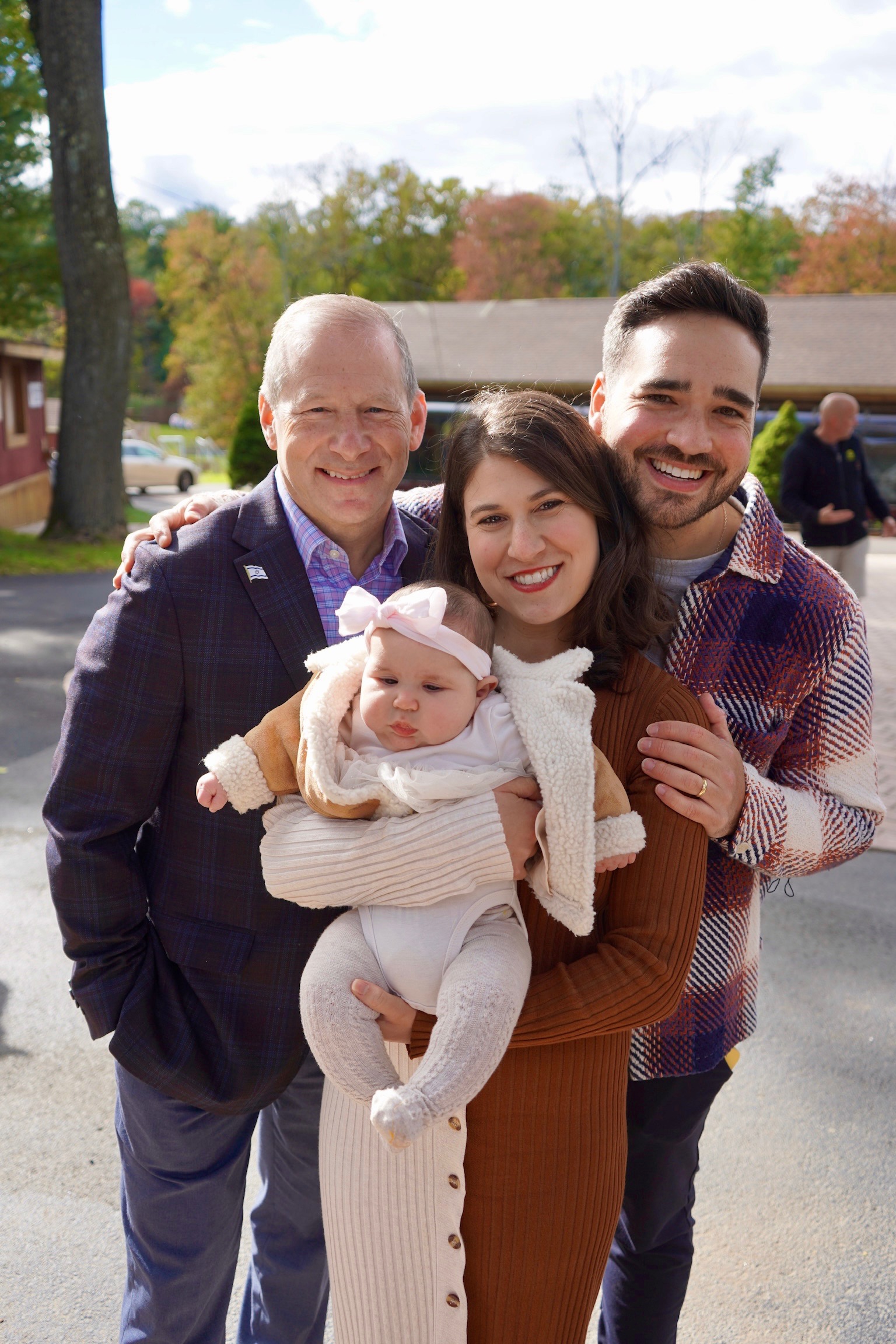
Each of these moments was filled with love and infused with meaning. Each of these rites was held in the embrace of family, friends and community. Each of these children gave honor to their past and held out promise for our shared future. Each of these families prayed and planned for the day to arrive when their respective occasions could be shared.
And each of these events was touched and somewhat shaped by events happening on the other side of the ocean. Parents reached out to their rabbis to inquire on a personal level about the rabbis’ wellbeing and emotional preparedness. They asked whether a postponement might be warranted. They wanted to know that, if the simcha were to take place, it would be framed appropriately in light of tragedy hanging like a cloud over our heads.
The Talmud (Ketubot 17a) teaches that a funeral procession gives way to a wedding procession. In other words, we prioritize the celebration of life over death. The teaching may feel harsh or insensitive to some, especially considering the emphasis we place on caring for mourners. (As an aside, caring for mourners is in fact caring for the needs of the living, as distinguished from the funeral procession itself, which is about the caring for the dead.) But the lesson is one that we need right now.
Caught inside the looping 24-hour newsfeed, glued to images and reports of the dead and the missing, worrying about our family and friends, our well of resilience is being depleted further from hour to hour. We need to exercise the kind of self-care that will replenish that well, so that we can confront and navigate the challenges yet to come. The gift of joy, of celebrating life, is the best form of self-care we can give ourselves.

Like a bridal procession, the celebration of life’s moments of transition fills us with optimism, with a reason to look to the future with hope. The times to be treasured are moments that we are not promised or guaranteed; they are not to be postponed, lest intervening events preclude their being rescheduled. And there’s no guarantee we will be there to enjoy them the next time around.
Seize the moment to celebrate when it presents itself. Join us on November 29 (the date of our rescheduled fall gala, exactly 60 years since the day our building was dedicated!) to celebrate the synagogue and to help us replenish our own communal well of resilience.
Am Yisrael chai, so let’s be sure to celebrate life when we can.
Rabbi Craig Scheff
2020 Hindsight
Dear OJC Family,
One year ago this coming Shabbat, we closed the doors of our synagogue building due to what we thought was an extreme abundance of caution. We had the sense that we would be back together again in a few months. Some of you predicted this “long haul,” but your clergy did not. We were optimistic and naïve.
The doors of our beloved building are still mostly closed. Yet our community has never been more resilient, ambitious, and connected. Dedication, congregational support, and deep resolve have brought us here.

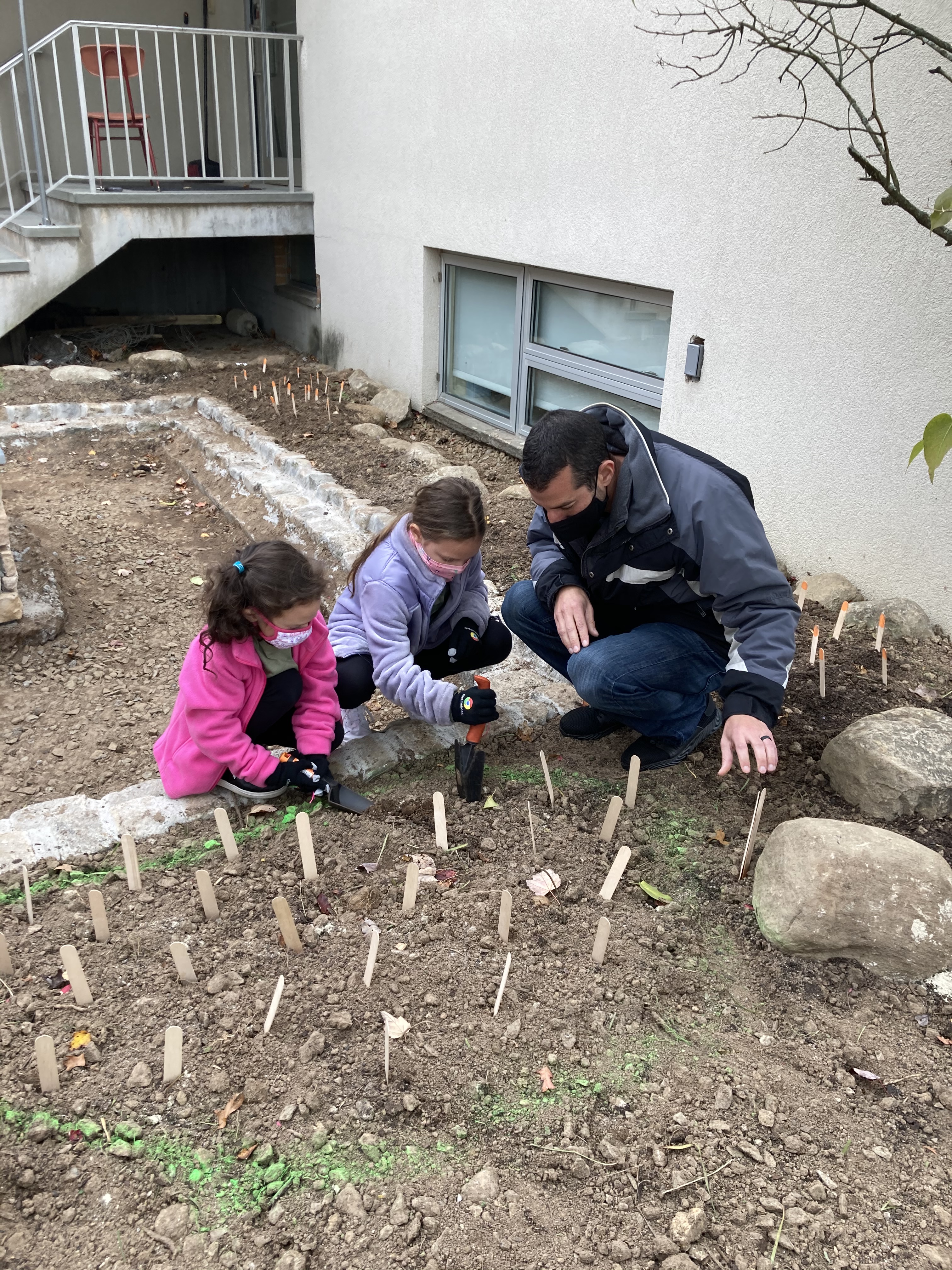


We invite you to mark this anniversary by coming to the OJC on Sunday, March 14, between the hours of 3:00 and 5:00 to greet your rabbis and our president, Michael Pucci, outside, and to mark the passage of time through ritual. We invite you to enter the sanctuary if you so choose, one pod at a time, to spend a short time before the ark to reconnect to the space we have all missed.
Perhaps it feels strange to consider marking such a moment in time. Your rabbis do not want to let this anniversary slip away. This year has been marked by many losses and deep sorrow: illness, death, isolation, unemployment, children’s struggles, and fear. Yet this year has also been filled with loving kindness, optimism, connection, faith, learning, and activism.
At the OJC, we have learned that Jewish tradition and peoplehood can overcome any adversity we face. We took stock, reimagined, and provided the essentials: prayer experience, learning for adults and children, justice work, and social programming. Your rabbis agree that we are a stronger community than we were a year ago.
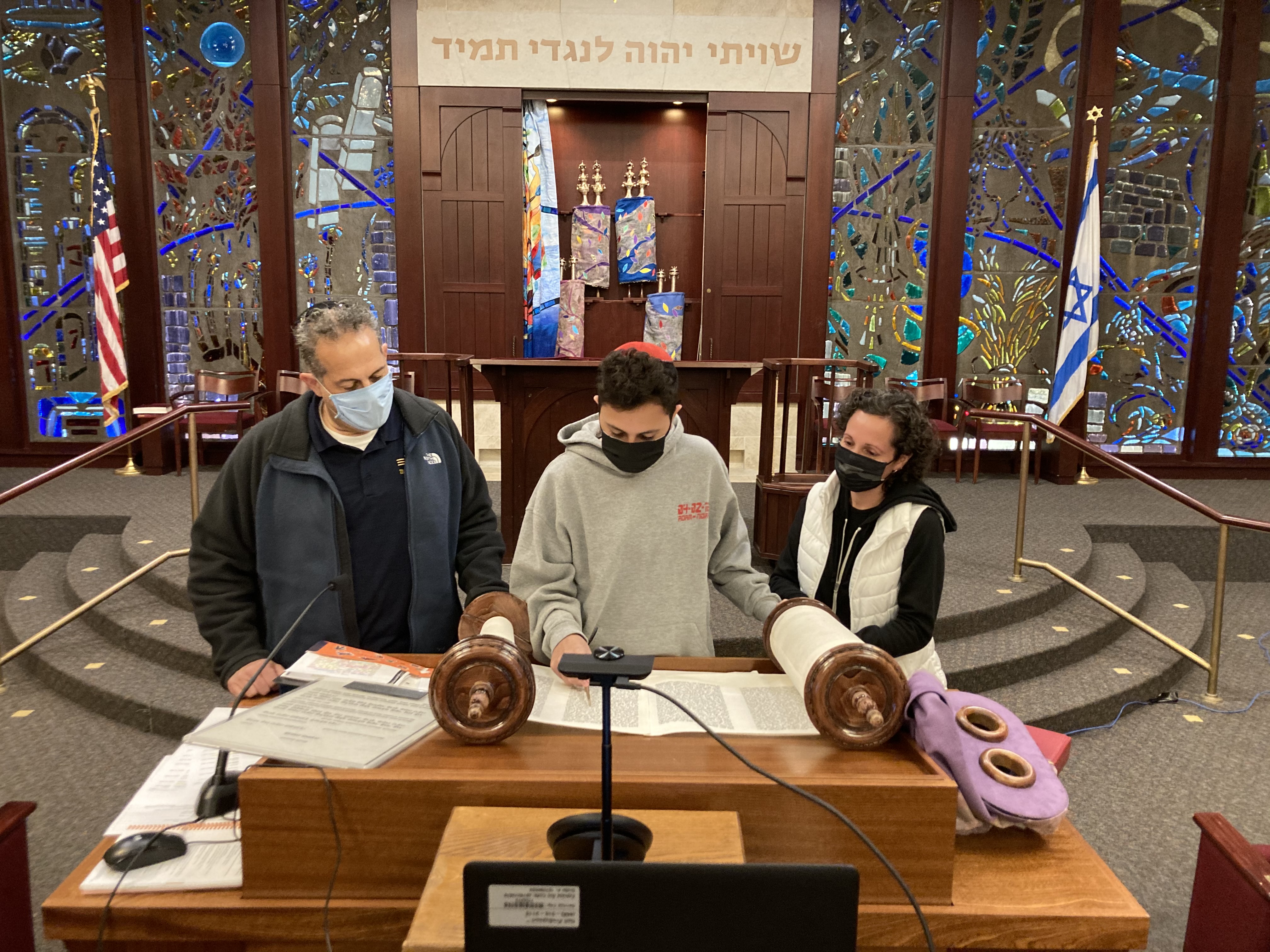


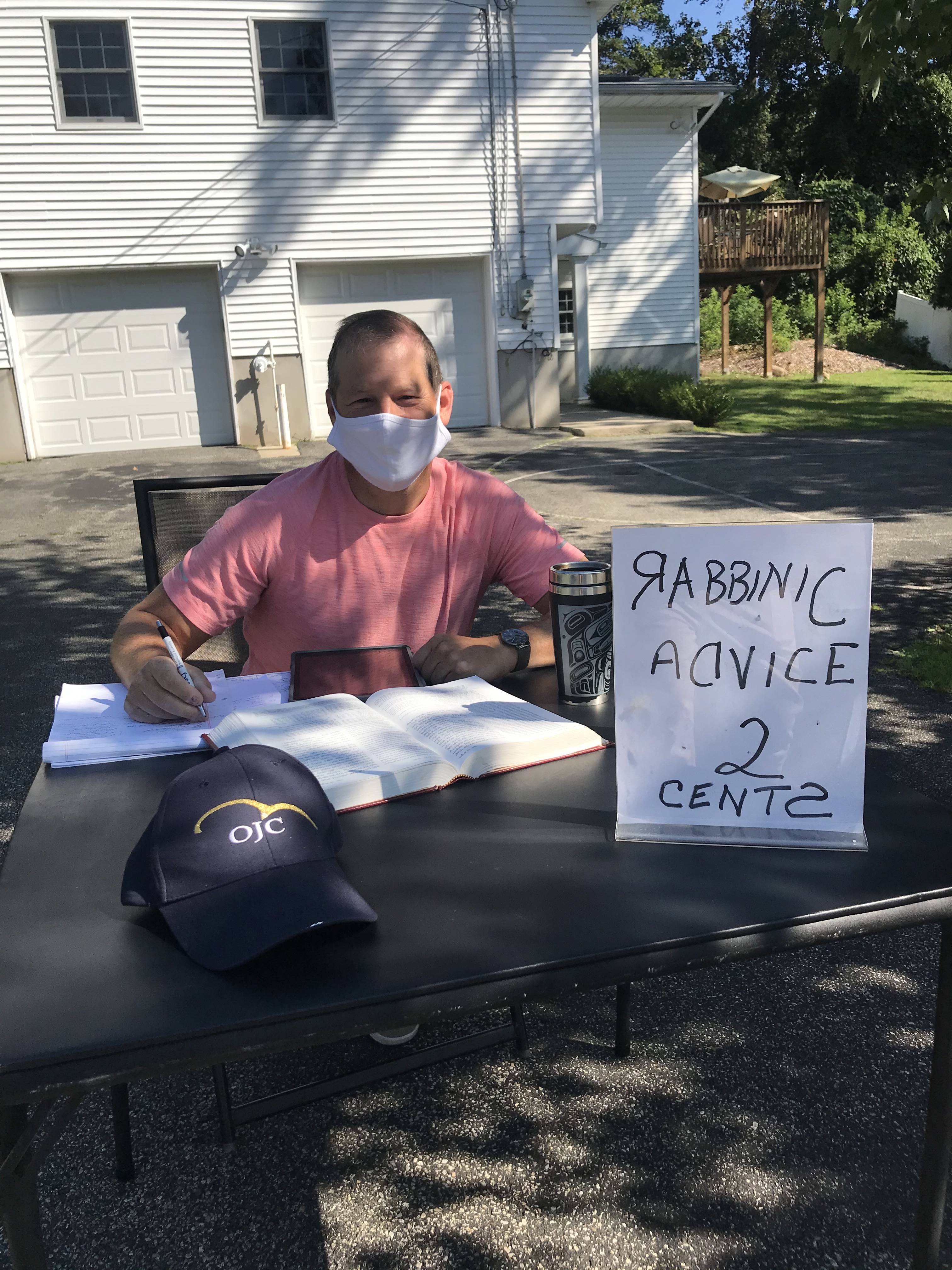
We invite you to think about a moment of the past year with 2020 Hindsight, to remember and feel proud of an OJC moment. Please capture that moment in one or two sentences and send your memory to office@theojc.org with the Subject: 2020 Hindsight. We will gather all of our memories into an online Memory Book, an artifact of this challenging year.
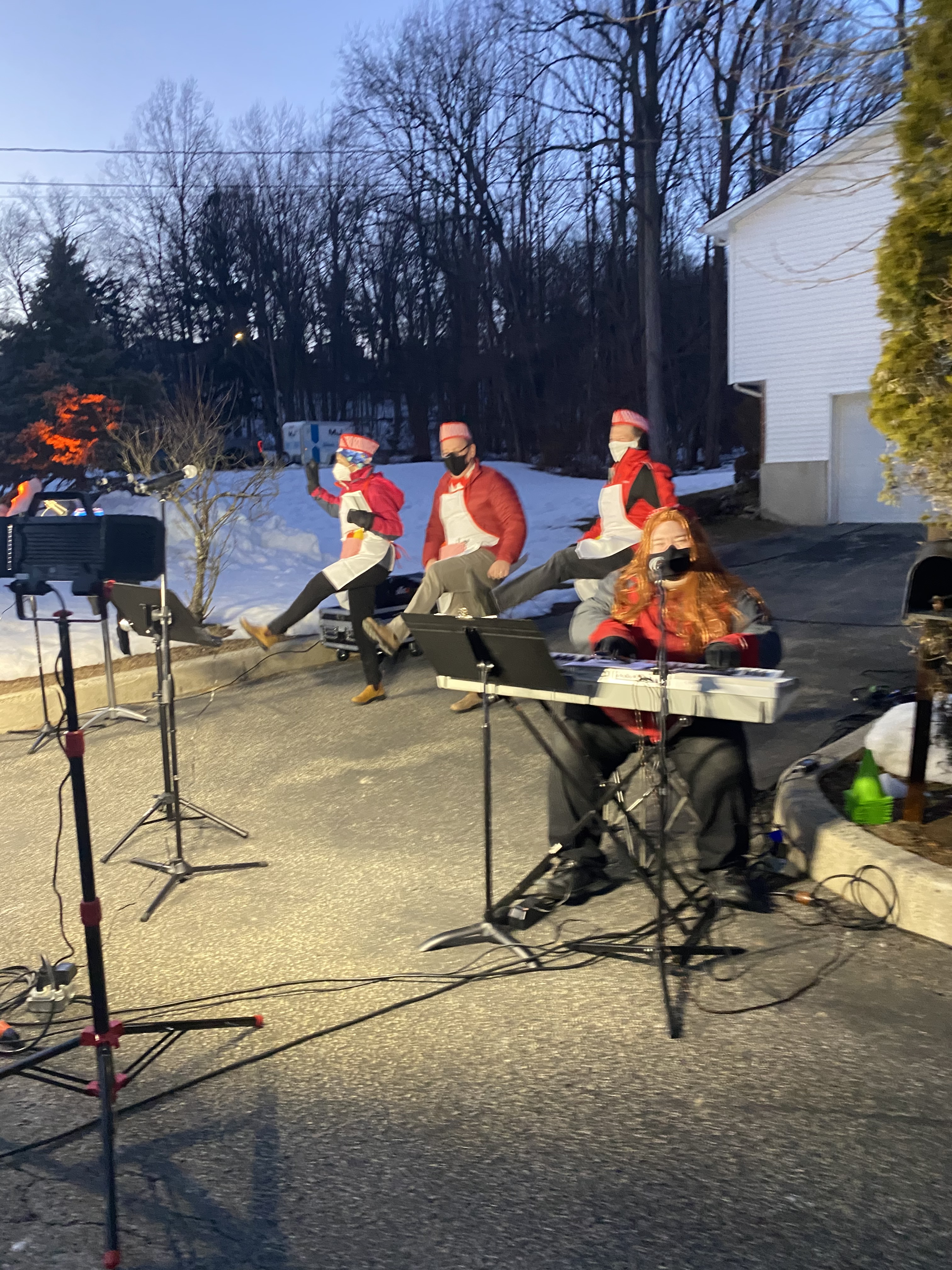


With much gratitude to our Medical Task Force, we commit to continuing our Covid-19 safety protocols of distancing and mask-wearing, in an effort to care for the safety of all our community members.
We commit and call upon each other to reach out in support of those whose struggles are seen and unseen. We are not alone. As a wise congregant said to us: We have learned to live alone; now we must learn how to live together once again.
We are proof of the essential nature of community. May we continue our path forward as a sacred community anchored in Torah, Avodah (prayer) and Gemilut Hasadim (acts of loving kindness).
With gratitude,
Rabbi Craig Scheff, Rabbi Ami Hersh, Rabbi Paula Mack Drill
The resilient child within
The nine year-old Israeli boy with the large soulful eyes stands alone on the stage, his teacher-counselor-accompanist off to the side on a stool with guitar in hand. The youth looks totally relaxed, the microphone a therapeutic pet in his hands.
The strings begin to reverberate their introduction and the child opens his mouth to sing. Time stops and the tears begin to flow from the eyes of the 18 American guests and the 12 Israeli teachers, therapists and foster parents in the audience. The children gathered as a makeshift audience put their arms atop each others’ shoulders and begin to sway side to side. The boy’s sweet voice ascends and descends like an angel on a ladder, and with it our souls soar, almost out of control with the swing of our emotions.
Knowing that the boy’s biological parents are not present, that the child has suffered emotional abuse (at the very least), that at a tender age his life is broken in so many ways, and that but for the presence of the caregivers in the room he might be totally lost, it is no surprise that the group is overcome with emotion in hearing his sweet and powerful voice. But to understand his Hebrew words is to be filled with awe, appreciation, inspiration and hope:
“Be not afraid to fall in love,
That the heart may break,
Be not afraid to lose along the way.
To get up every morning
And to go out into the world
And to try everything before it ends
To search from whence we came
And in the end always return to the beginning
To find yet more beauty in everything
And to dance until overcome
By exhaustion or love.
(Before it ends, Idan Raichel)
Resilience has been defined as the power to be able to recover readily from adversity or challenge. And it is one of those human traits that I consider to be among God’s greatest gifts.
This past week, seventeen of our community members have been in Israel witnessing the power of resilience. We have seen resilience in the ability of an abused child to sing before a crowd of peers and strangers; in the work of Yoav Apelboim, the executive director of Kfar Ahava Youth Village who sees too much suffering, yet continues to make meaningful improvements in the lives of so many; in a society that resumes school and work a day after rockets rained down on its homes; in a kibbutz that has reinvented itself to stand as a beacon of religious pluralism and an advocate for societal change in the face of extremism.

We have seen resilience in ourselves: in our ability to make the sacrifices of time and resources to do the work that takes us out of our comfort zones year after year; in our willingness to suffer the emotional toll of being inside the suffering of children; in sharing the pains of loss, memory and empathy inside our own community family.
We have seen resilience from afar, as the natural elements have wreaked havoc across the ocean, from fires on the west coast to snow on the east coast, families have abandoned homes to survive and begin anew, and individual acts of kindness and sacrifice have eased the burden of others.
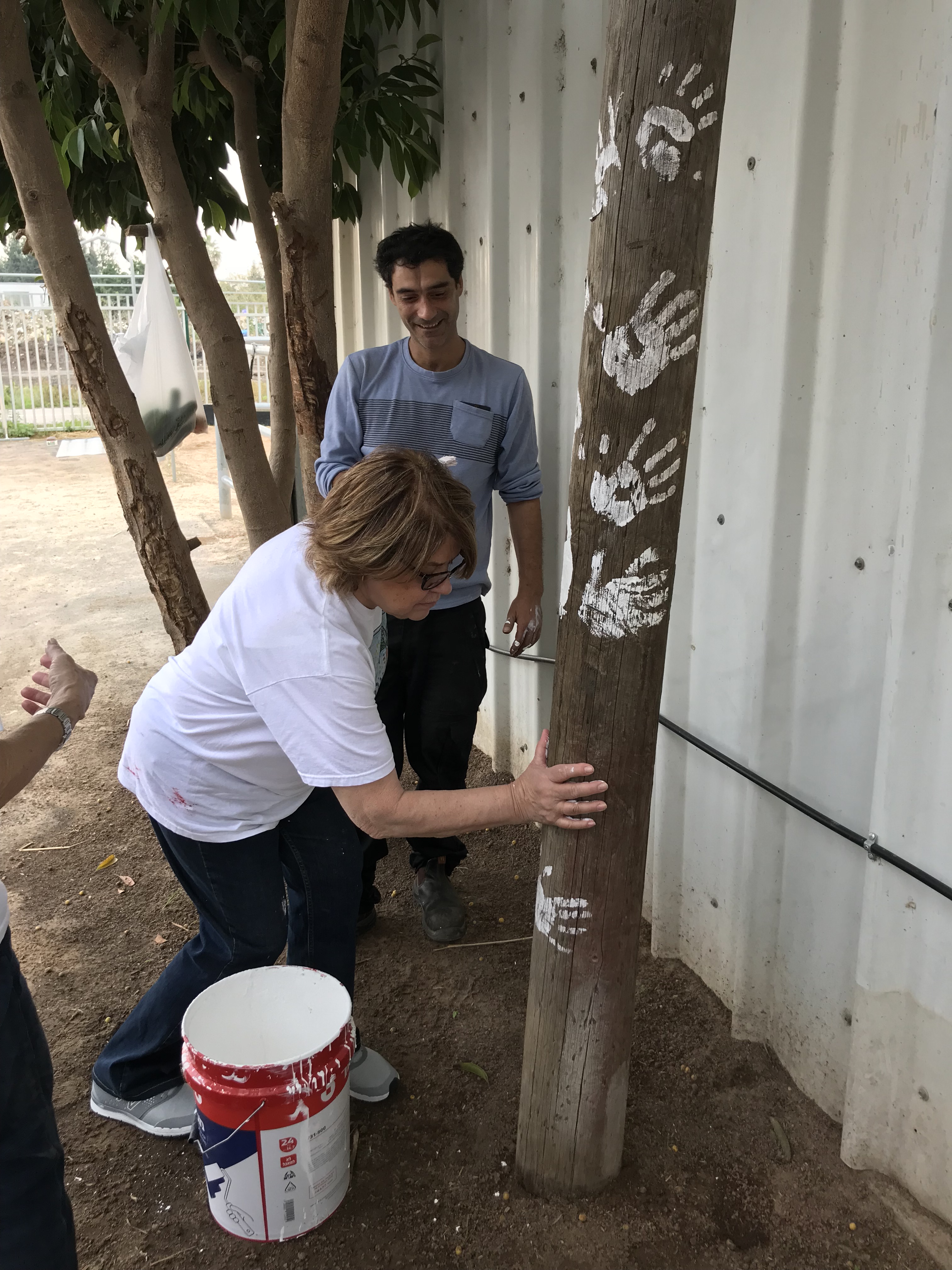
There is something within the human spirit that enables us to get up every morning, to go out into the world, and to try everything before it ends. Despite the disappointment, despite the pain, despite the knowledge that we may not complete our task and that our hearts may be broken yet again. To me, there is nothing more miraculous or more divine.
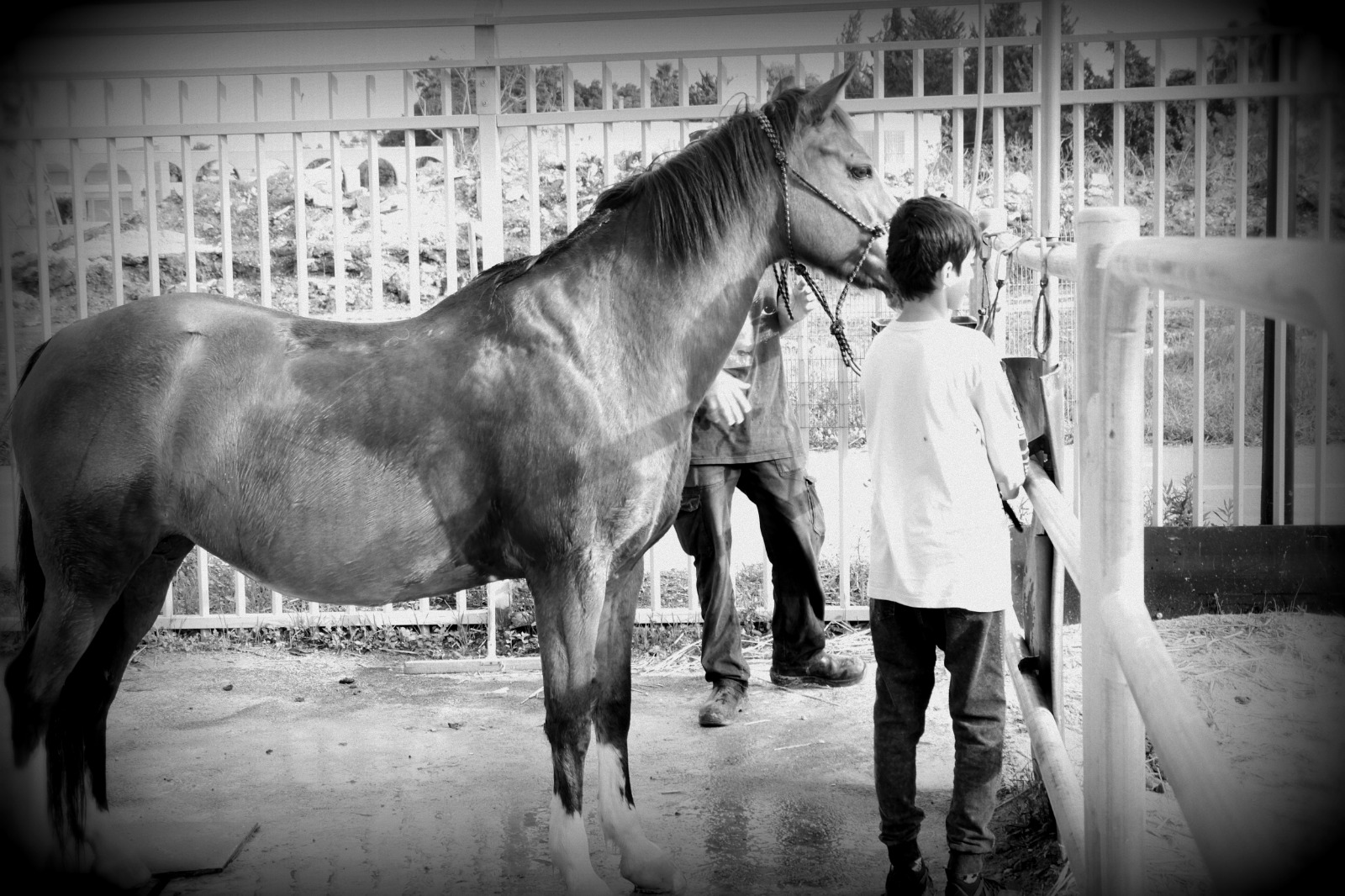
Join us on Monday night, November 19 at 7:30pm, as we explore “Community preparedness and resilience in the face of threats: Lessons from Israel” with Dr. Danny Brom, Director of the Israel Psychotrauma Center. Please register at OJCcares4U@gmail.com for an evening of learning, reflection and discovery. From the scientific to the spiritual, we’ll learn a little more about what keeps us going, and what we can do to bolster that ability “to dance until overcome by exhaustion or love.”
Oh, by the way, the little boy with the angelic voice? His name happens to be Or, meaning light. And as is his name, so is he. May he always know it, and may he always be.
Shabbat shalom from Israel, and hope to see you on Mitzvah Day Sunday!
Rabbi Craig Scheff
 Three Rabbis Walk Into A Shul
Recent Comments