The year of the unicorn (aka “Succeeding successfully”)
When we set out to create a job description for the search for our new rabbi, someone (it may have been our creative president Matt Schiering) suggested that we might as well be looking to replace a unicorn.
I certainly think quite highly of Rabbi Paula Drill, and I am beyond grateful for the partnership we have shared and the many ways in which having her as a co-rabbi has improved my life professionally and personally. But a unicorn?

As we follow Moses through the final year of his tenure leading the Israelites, we are reminded that he is irreplaceable. “There never arose another prophet like Moses….” Joshua is poised to succeed Moses, but not to replace him. Joshua will be a different leader for a different time with a different mission.
All this talk about Moses, Rabbi Drill and unicorns has left me reflecting on the origin story of Rabbi Drill‘s relationship with our community. We weren’t looking for a unicorn, and we didn’t hire one. We hired someone whom we knew could build relationships in the context of our Jewish tradition. There were challenges, doubts and growing pains as we introduced a new leader to our community. Personally, my guiding principle was that Rabbi Drill’s success would be my success. I believed my burden would be lighter, my life would have greater balance, and her achievements would add to the reputation of the OJC community as a place with which people wanted to connect. Our leadership understood that her success connecting, building relationships and offering more pathways into community would benefit our entire community and help us grow. It mattered not that Rabbi Drill started out only coming to OJC one Shabbat each month; it mattered that she was willing to connect with people on their time about their lives and their searches for meaning. Our faith was rewarded!

The partnership model that Rabbi Drill and I promoted from her earliest years here required a true cultural shift away from a hierarchical structure of leadership. We advocated to avoid the “assistant rabbi” title, ultimately establishing a co-rabbi relationship. We were inspired by the Jewish model of learning in partnership (“chavruta”), and by the pairs of rabbinic sages who challenged each other to grow, to refine their knowledge, and to consider alternate perspectives. I believe our synagogue became a kinder, more thoughtful place because of the partnership and team approach that we modeled.
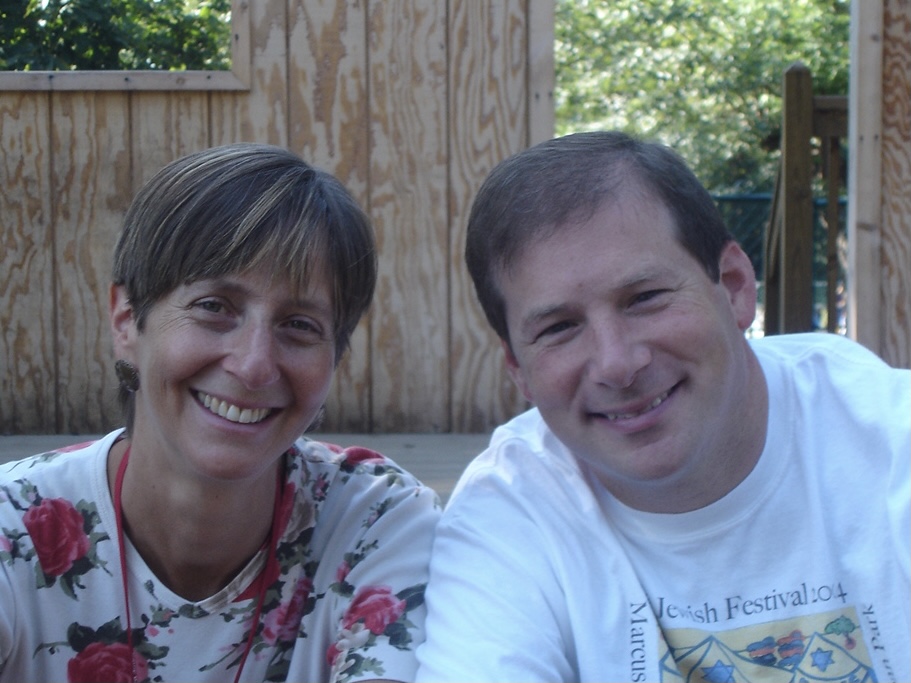
For our succession plan to be successful, we need to remember what has made us successful as a community to date. We need to remember how Rabbi Drill’s tenure became the success it was. It should come as no surprise that the survey we recently sent to the congregation revealed that the rabbinic role most important to our community, by a wide margin, is for the rabbi to share a personal connection with us. We want to be seen, heard, understood and appreciated by someone who can help us forge our own connection with community, tradition and God.

If it takes a unicorn to fill that need, then let the search for the next unicorn begin. If anyone can find one, it’s us!
Rabbi Craig Scheff
#OJCSupportsU
We can be proud of OJC.
I do not write that sentence lightly. It is something to be proud of our synagogue, and let me be clear: I am speaking about the people of the place, not the place itself.
This past Shabbat, #ojcsupportsU, under the creative leadership of Miriam Suchoff and Mark Brownstein, once again served our community with a sacred, meaningful consideration of mental illness and mental health. Together, we spent a Shabbat and Sunday putting a face to mental illness.
A Friday evening Neshama service lead by Music Director Amichai Margolis and a community dinner after established the tone of the Shabbaton: Olam hesed yibaneh. We will build a world with loving kindness.
Shabbat morning services were highlighted by a transformative sermon given by one of our own congregants, Sharona Levine: Sharona Levine’s sermon January 2020. In powerful and accessible words, Sharona shared her story. She explained why she decided to tell her community about her family’s struggles with mental illness: “What made me decide to speak up was the day I finally felt empowered. And I wanted to pass that feeling on to someone else. I went from feeling bereft in the beginning stages, to ashamed, from self-blame to angry – to educated – to empowered. Why am I standing here in front of you today? Because I want you to know: If you are the sufferer – you are not alone; if you are the caretaker – you are the key, and you are not alone; and if you are a community member or passerby in anyone’s life with mental illness— you can make all the difference by your language, your non-whispers, and your role modeling to others.”
Those of us who heard Sharona‘s words will be changed forever. So many people approached her after to share their own story. After all, when it comes to mental illness, everyone has a story.

Miriam Suchoff led a special program for the children of our community and their parents about recognizing emotional responses in others. At the end of kiddush lunch, congregants participated in interactive dramatics and discussion. We had a Rabbis’ Tisch for our teens where we discussed how and when to reach out to others. In the afternoon, we practiced a variety of ways to cultivate mental wellness: a walk, a talk, or yoga were the choices.
On Sunday morning, 25 people attended a breakfast roundtable presented by NAMI.
And the weekend was completed by a seasonal healing service led by Amichai Margolis and me.

So what was accomplished?
The people who participated in the Shabbaton experienced insights, gained information, and felt the support of our community.
The committee was invigorated and is busy planning next steps.
The clear message of OJC as an inclusive community was heard loud and clear.
And what of all the people who could have benefited from the Shabbat or the weekend but were not able to attend? The very people who need support so often are not able to come into community. We know this fact to be true.
We just keep trying. We just keep sharing the message that our intention is to stop the stigma. Want to join us? Contact Miriam and Mark: ojccares4u@gmail.com.
When we put a face to mental illness, we look all around and we see that it affects all of us.
With friendship, hope and optimism, Rabbi Paula Mack Drill
Restoration
“What is certain is that you love bringing things back to life. It is a wonderful feeling to identify the undermining factors, eradicate them, and restore something to its true glory.” Tom Rath, StrengthsFinder 2.0 (Gallup Press, 2007, p. 153)

Strengthsfinder 2.0 is a popular assessment tool for identifying and applying an individual’s strengths. The book is based on the premise that we should spend more time in our professional lives building upon our strengths than trying to overcome our weaknesses. Everyone loves the story of an underdog overcoming overwhelming odds to achieve, but that model of success is not usually the best application of our resources! The quote above refers to the person who possesses a “restorative” talent, the ability to resuscitate and rekindle the vitality of relationships. Indeed, institutions can be revitalized; relationships can be resuscitated. This can only happen, however, when the right “match” is achieved—when a restorer is brought into a relationship where restoration is needed.

As an adjunct lecturer at the Jewish Theological Seminary, I work with students who are preparing to transition into new professional settings. Among my goals is to help budding cantors and rabbis recognize their own strengths, and identify the professional opportunities where they will experience fulfillment and success, and feel valued for what they bring to the task. Not every available opportunity is the right opportunity for every candidate. In the moments of rejection, we learn about the nature of relationships, the needs of our potential partner, and our own strengths and talents.
This week’s haftarah for Shabbat Hagadol, from the prophet Malachi, tells us that a day of restoration is approaching. The children of Israel seemingly stand back to back with God, too ashamed in their imperfection to face the Divine, perhaps anxious about the prospect of confronting their strained relationships. The prophet announces that God will provide a restorer in Elijah, one who will reconcile the open and eager hearts of parents and children to each other.
Passover, the season of restoration is once again upon us. Many of us are headed home at this time of year—children to parents, families to one another, even institutions to their missions–perhaps anxious about the prospect of confronting those with whom we have strained relationships. Not everyone is cut out for every task. Perhaps there is someone among us who is particularly “restorative” by nature, who will restore our hearts to each other?

Who among us is prepared to play the role of Elijah?
Chag sameach,
Rabbi Craig Scheff
 Three Rabbis Walk Into A Shul
Recent Comments