Help me help you!
“Help me help you.” Sports agent Jerry Maguire, played by Tom Cruise in the movie of the same title, offers these words as a plea to his sole client as Jerry strives to secure him a lucrative contract.
Jerry represents disgruntled wide receiver Rod Tidwell (played by Cuba Gooding Jr.) to the best of his abilities; his success would mean a big payday for the football player and a sizable cut for the agent, but Rod isn’t making it easy. Jerry needs Rod to play the game with a better attitude—for the fans and the media—in order to seal the deal. “Help me help you,” Jerry pleads in the face of a stiff-knecked and prideful Rod.
As your shaliach, or agent, this coming high holiday season, I want to represent you as best I can. And I want to see you bring your best. I want your compensation to be your name signed and sealed for a lucrative reward. Of course there is something in it for me as well. But in order for us both to get what we want and deserve, I need you to help me. Help me help you!
It’s not easy for rabbis, year after year, to ascertain what their constituents want and need from them on the few days they have the chance to speak to a large portion of the congregation. There are plenty of self-righteous voices out there telling us what we should be speaking about and what we should be saying on those matters! But they don’t know us; and they don’t know you. Your particulars aren’t even necessarily the same as those of the others on your congregational team whom I represent. Moreover, given the fact that this world is placing so many stumbling blocks in our path, it’s nearly impossible for me to know which of those blocks you find the most difficult to evade.
It’s game on. The horn sounded with the shrill of the opening shofar blasts this morning. We are four weeks away from the opening of the signing period, and I want to do right by you. I can help you best to navigate this path if you tell me what it is that you need to hear from me. Please note: I’m not asking what you think others need to hear; I’m asking what topics you need to hear your rabbi—as your representative and representative of our tradition—address for you and your betterment in the new year.
Email me at Rabbi.scheff@theojc.org with up to 3 questions or ideas about which you would like to hear what our Judaism offers. There are so many topics I’d love to address throughout our holy days. Help me narrow them down to your specific needs. Help me help you!
Rabbi Craig Scheff
The Blessing of Hope
Last night at the OJC, I offered the following words about the great blessing of hope to my community at our annual congregational meeting. I print them here for anyone who was not there or would like to think about the words once again. Whether or not you are an OJC congregant, I hope that my words shed a small light into this dark time in which we find ourselves. B’yedidut, with friendship, Rabbi Paula Mack Drill

Erev tov. I am aware of the profundity of this moment as I offer Torah for the last time at a congregational meeting as your rabbi. I am rejoicing as I stand here with you, knowing you all and caring so deeply about each one of you. And I am sad because soon I’ll be stepping away from the role as your rabbi to begin Act 3. Blessings and curses. Every moment of life includes both: berakha v’toch’ha, plentiful harvest vs. famine, freedom vs. enslavement – in the concrete understanding as well as spiritual. As our Torah portion this week, Parashat Behukotai, says over and over: im v’im. If, but if.
If we have built something beautiful here together for decades, then God will establish God’s abode in our midst, but if we do not observe and live according to our mission and purpose, then God will… Well, I don’t want to be melodramatic. We are not the Israelites in the desert facing God’s furious curses to “break our proud glory.” Still the point remains: Blessings and curses are made of choices that are squarely in our hands.
As we consider Behukotai, we are taught about the power of faith, the blessings that come from walking in God’s ways, and the profound potential each one of us holds to shape our future with positivity and purpose. In our context tonight, it is even more. We are reminded of the power of faith that radiates from a healthy, aspiring, optimistic synagogue. We know that as a congregation, we learn every day to walk in God’s ways – to connect, create relationship, care for our vulnerable, rejoice in our moments of triumph. And most importantly, to embrace our potential, the potential of each one of us, to shape the future of OJC with positivity and purpose.
Parasha Behukotai begins with a simple yet powerful promise: “If you walk in My ways and keep My commandments and perform them, then I will give you rain in its season, the land will yield its produce, and the trees of the field shall yield their fruit.” This is not just a promise of physical sustenance but by extension, a promise of the spiritual and communal abundance that flows from living lives aligned with our highest values and teachings.
In a world that often feels uncertain and tumultuous, these words offer us a beacon of hope. They remind us that by staying true to our principles, by nurturing our relationships, and by supporting one another, we can continue to create a community that thrives against all odds, that will be a beacon to others, that will stand the test of time. The rains will come, the land will produce, and the trees will bear fruit—not just in the agricultural sense, but in the flourishing of our families and our community.
Im v’im. If, but if. If we take a moment to appreciate the blessings we already have, we can be filled with gratitude and pride. If our community will be strong and vibrant, the individuals who are its heartbeat must contribute their talents, kindness, and energy. If we are surrounded by friends who support us, by leaders who guide us, and by opportunities to make a difference in the world, we will be the best OJC we can be. But if, if we become disengaged, if we stay away, if we show cynicism, if we give up hope, our OJC will not be the place we dream it to be.
So tonight, I encourage all of us to look forward with optimism. Just as the Torah promises rewards for our dedication and hard work, we too can anticipate the fruits of our collective efforts. Step up. Do the work quietly. Give generously. And most of all, remember to acknowledge each other with heartfelt gratitude. Every act of kindness, every lesson taught, every moment of shared joy, every welcome to the kiddush table, every voice lifted to sing Eitz Chaim strengthens the fabric of our community. Together, we can overcome challenges, celebrate our successes, and build a future filled with hope and promise.
May we always see the blessings in our lives, may we cultivate gratitude and joy, and may we walk forward with faith, knowing that together, we can create a world that reflects the beauty, kindness, and divine promise of Torah.
May our work here tonight mark a new beginning with a unique path forward. May OJC be blessed with the knowledge that we are a sacred community that serves not only our congregants but also those in the greater community. We serve not only today but the Jewish future. May we know prosperity and may the anthem of our people also be our anthem: HaTikvah.
Being Here, Being There
In the middle of teaching my Kulanu class last week, I was stopped in my tracks by one of my sixth graders who looked up at me and asked, “How can you leave us, Rabbi Drill, when you say that we are your favorite sixth grade ever?” How can I leave indeed? OJC is my spiritual home, my workplace of more than two decades, one of the happiest places for me to be. (Spoiler alert: I have told every sixth grade for the past 23 years that they are my favorite class ever.)
As you know, I announced in November 2022 my decision to retire from full-time pulpit work this coming June 2024. Every day since that announcement has been an opportunity to process what it will mean to leave this beloved community, and to be completely present to the gifts and joys of my work as your rabbi. It has been a time for us to share loving words about what we mean to each other in the context of this community.
Retiring from the full-time work at OJC will mean that I can spend more time with our ever expanding family, and be a very present Bubbe to grandchildren.
From the beginning, I have said that while I am retiring from being a full-time rabbi, I am not yet done “rabbi-ing.” To prepare for “Act Three”, I met with wise colleagues and mentors at the Rabbinical Assembly and spent six months working with an executive coach. My mentors encouraged me to talk to lots of people and ask lots of questions for a full year before making any decisions about what kind of work I might do after OJC. My executive coach helped me articulate my primary values as I considered the kind of work that I would take on. Those values are: working with a fulfilling sense of purpose, acting from a place of love, and having flexibility for life.
In January, I started seriously pursuing some of my ideas and have now established two part-time pieces of rabbinic work that I will be engaged with once I retire from OJC.
Beginning in September, I will be serving my hometown synagogue, Congregation Agudath Israel in Caldwell, New Jersey as Rabbi in Residence, working one quarter time to teach and assist the congregation’s rabbi, Rabbi Ari Lucas, in various clergy tasks.
I will also be working as a Mentor in the JTS Rabbinical School Mechinah Program, meeting virtually to guide candidates spiritually as they prepare for Rabbinical School through a year of Hebrew and text skill preparation.
These two very part-time positions will allow me to feel useful, make the most of my strongest skills, and still allow me the luxury of time and energy for family.
And as I hope I have shown all of you day by day and week by week, until June 30, I am completely Rabbi Paula Mack Drill of the Orangetown Jewish Center.
Shavua tov, have a great week ahead, Rabbi Drill
Three Year Old’s Theology
We have entered the Universe of Why. At the age of 3 1/4, Carmel‘s conversations are now punctuated with a demand for more explanation: Why, Bubbe? But why, Bubbe?
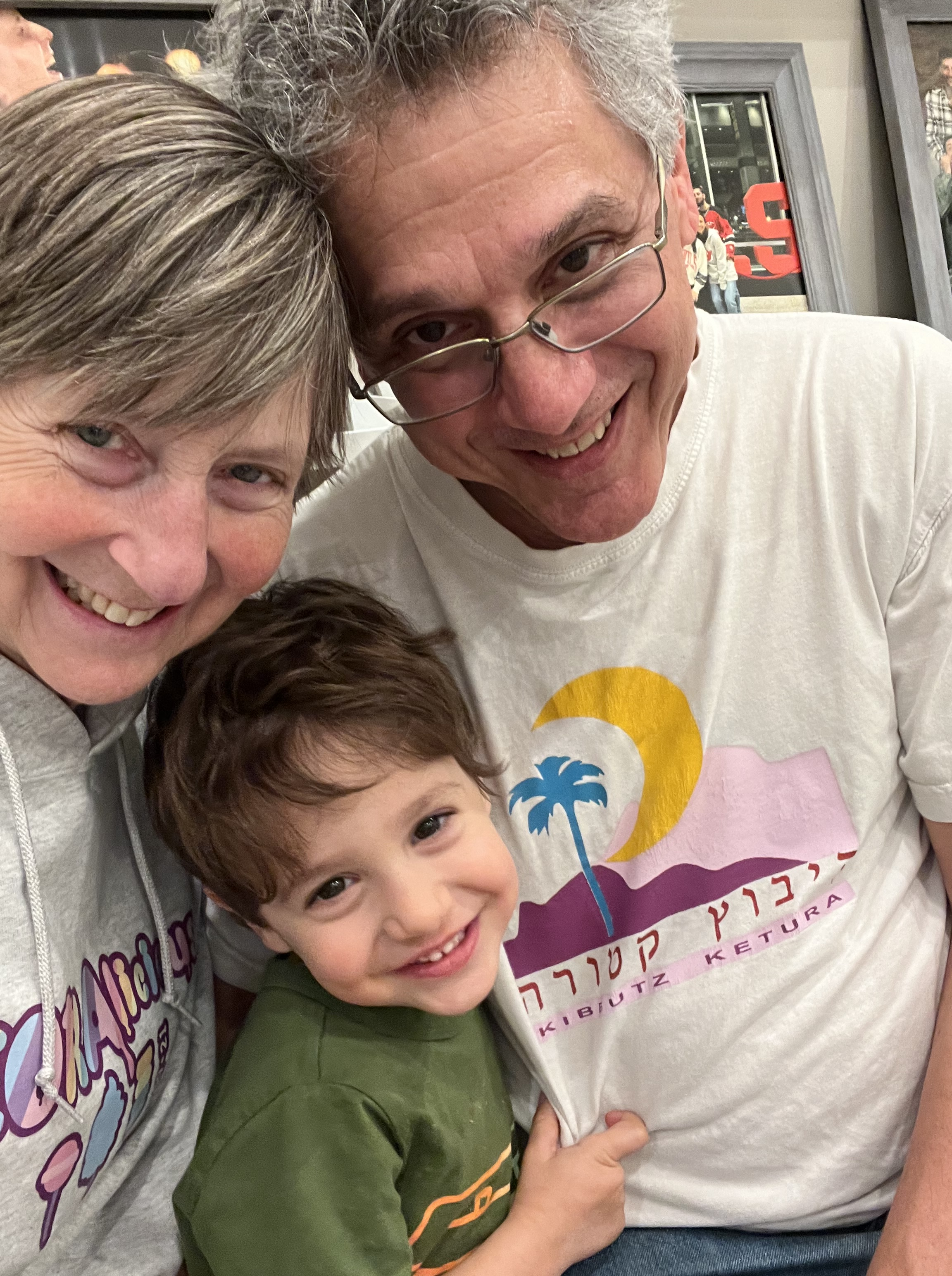
Luckily for me, there is one generalized answer that satisfies Carmel every time and has done so since before he was able to verbalize these questions. My answers are very often about God.
On the way to childcare this morning, many branches are down and lying in the streets. We discuss the heavy wind-driven rain of last night, and Carmel asks me why it happened.
“God made the storm and also blessed us with safe homes so that we can listen to the wind and rain, but not be outside in it.” Carmel agrees, “God keeps us safe and cozy.” (Cozy is a favorite word for Carmel who learned it from his mother who really loves to be cozy at home!)
We see work crews clearing leaves from clogged storm drains and Carmel asks why.
“God plans for snow, rain, and sun to take turns, but sometimes the rain is too fast and hard. So people have to help protect each other and the earth. We are God’s helpers.” This makes sense to Carmel, “I’m a helper.”
The sun suddenly peeks out from between the gray morning clouds so we discuss the rays of light that we can see; and yes, Carmel asks why.
“God created the sun, the moon, and the stars on the fourth day, and God really liked what was created and said that it was very good.” The creation story is one of Carmel‘s favorites, and he accepts it without question. “Tell me that story again, Bubbe!” I suppose God is another character for him alongside the Little Blue Truck and Pinkalicious!

At three years old, Carmel knows that when a breeze passes through the leaves of the tall trees in our yard, God is telling him that he is seen and he is safe. When the stars twinkle in a night sky, God is telling him that God is always with him so he is never alone.
Carmel loves to be in the OJC sanctuary and knows that the Torah is God‘s story of how we can be good people. He understands that God is with us in the sanctuary when we sing and pray together.
As Carmel continues to grow older, life will undoubtedly challenge his easy connection with God. He might just get busy and forget how simply God is the answer to so many questions. He will inevitably come to understand the contradictions and difficulties in the way the world works, and will learn that God cannot be the answer to every question. Life will disappoint or hurt him, and he will hold God responsible.
When these changes happen, I hope that Carmel will hold onto his unquestioning faith in God in the quiet moments when he is alone.
In that way, he can return to his simple and depend upon a connection with God when he grows older, and seeks to understand the answers to far more difficult questions than why branches fall down in a large windstorm.
I only know that the simplicity of his faith reminds me of the possibilities of my own faith. Can we recover the belief of our three year old selves in quiet moments? It might just be a start.
Rabbi Paula Mack Drill, a.k.a., Bubbe
Don’t Do This Alone (Coping with these Dark Days)
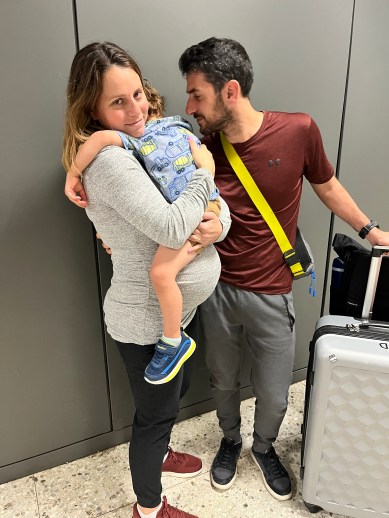
On Friday, October 6, just three things were on my mind.
First, my son Josh and his beloved Shay had just gotten engaged, but they had not yet made it public. I wondered how I could make it through Shabbat and two days of holiday without sharing the good news.

Next, I was feeling quite pleased with my decision to forego shoes and just wear sneakers with my synagogue dresses on Saturday night and Sunday for Simchat Torah dancing.
And third, I was a bit worried about having time to pack after two days of holiday before the car service arrived to drive me to Newark Airport for my flight to Israel. I was making a trip for four days to attend the wedding of my son-in-law‘s brother Omer to his cherished Tal. Jonathan, Sagi and Carmel had already been in Israel for a week and I was looking forward to a fun few days in Tel Aviv and a wonderful Fainshtain celebration.

I didn’t need to have worried about my Sunday night flight to Israel. It was cancelled.
On Saturday, October 7, the world as we knew it ended. We will never be the same.
Jonathan was awakened by sirens on Shabbat morning and travelled out of Tel Aviv to Shay’s family home. That morning, Sagi and Carmel were with Racheli, (Sagi’s mom and Carmel’s savta). Many of you have read Sarah’s account of Sagi’s harrowing escape with his mother, her partner and our grandson Carmel from their home in Mefalsim. In case you didn’t have the chance to read it, here is a link:
https://docs.google.com/document/d/1lng-H_PCVwpDlZrUwvmWFxBjgg2trn-_voJWUMnYGWQ/edit

What do Jewish people do when tragedy strikes but the calendar says it is time to celebrate? We celebrate. With breaking hearts, with tears, and with complete dissonance, we take the Torahs out of the ark and we dance. It’s the hardest thing to do and it’s the only thing to do.
So many congregants of all ages came to OJC for the holidays, drawn in to community like homing pigeons. We knew where to be for comfort and solidarity.
We prayed, we broke bread (and chocolate), and yes, we danced. Our eyes met and we read the grief and bewilderment there. We danced with our children in long “Tayish” lines and circles of “The Tushie Dance” (Od Lo Ahavti Dai). We grinned and laughed with a stubborn refusal to give in to terror. We sang Acheinu softly and walked in slow circles for all those in Israel unable to celebrate Simchat Torah, and the children of our shul saw their rabbis cry. We honored teenagers as Chatanei Torah and a centenarian as Chatan Bereshit and we felt uplifted by them and their proud families.
All of it was necessary. It’s what we Jews have been forced to learn throughout all the centuries of our history. If we stopped celebrating every time we endured suffering, we would never be able to fulfill our calendar year.
At the OJC, we did not celebrate despite our sorrow. We celebrated together with our sorrow.
I was never more proud of our congregation.
Since the holidays have ended, we have truly been prepared for Mar Cheshvan which begins on Saturday night. It will be a bitter month indeed.
After the holidays concluded, the news from Israel continues to be intolerable. As the numbers of injured, kidnapped, and murdered in Israel climb and the inhuman stories emerge, as soldiers are mobilized and in harm’s way, as we speak to precious friends and family in Israel and find that we have no useful words, we find that the reality is more than any one soul can comprehend.
And so, we cannot do it alone. We must find each other in our grief and come together to pray, find comfort, and take action.
Hundreds came to the rally on Tuesday at the courthouse in New City.
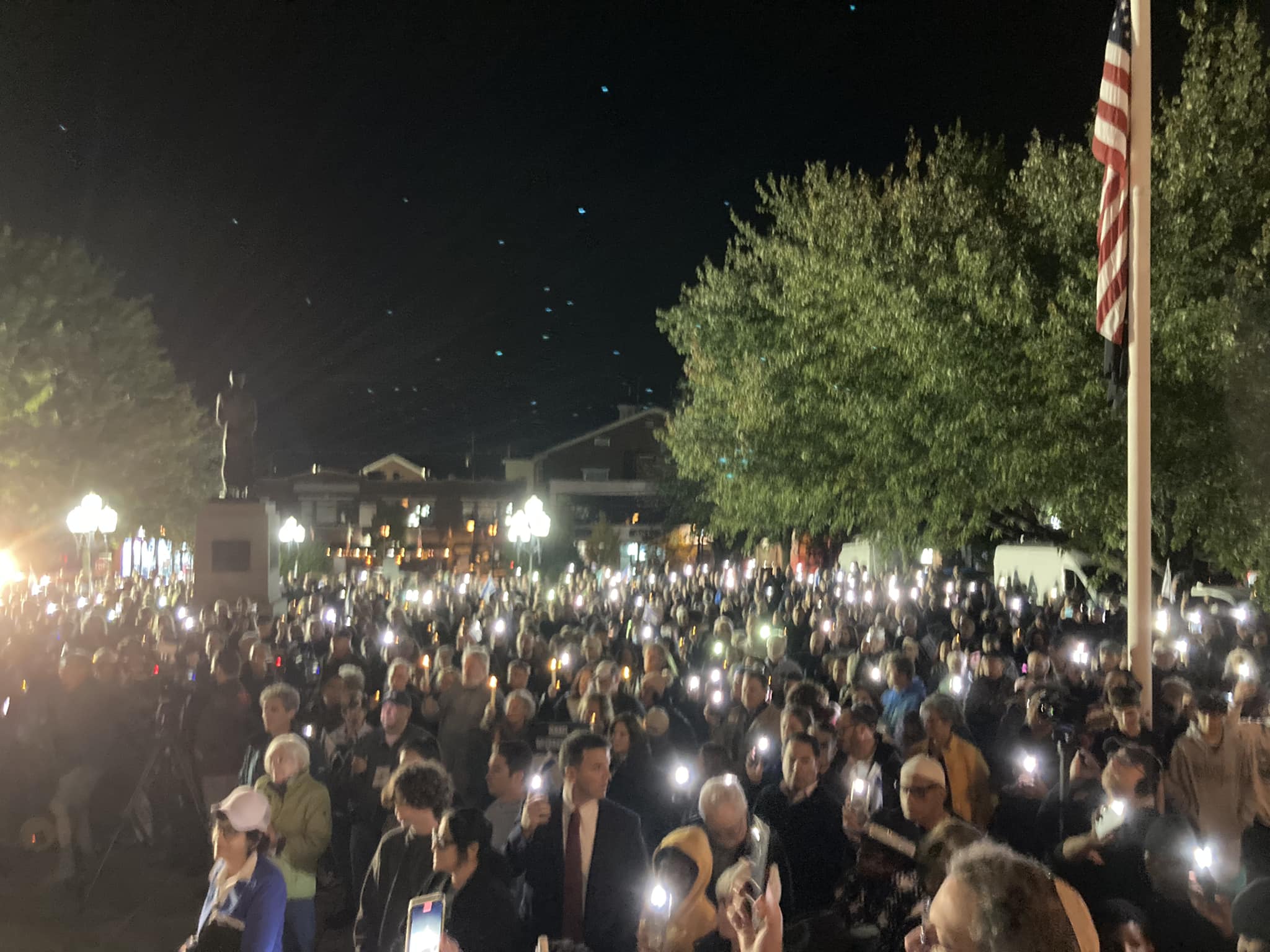
Many of you will be with us on Shabbat to feel the power of community.
I expect that hundreds more will come together on Saturday night at 8 o’clock at Congregation Sons of Israel in Nyack for the Rockland Board of Rabbis Prayer Vigil and Memorial Service.
More opportunities for prayer, healing, and action will be announced soon.
Please don’t try to do this alone. We are a community that knows how to be together in the most joyous times and in the hardest times.
Am Yisrael Chai.
The People of Israel lives!
Rabbi Paula Mack Drill
Wise Aging
My father-in-law, Phil Drill, will turn 96 in August. He works every day at his third-generation construction company, bidding jobs and managing projects. No one is doing him a favor, no one is condescending to give “the old man” a desk and a chair. Project managers and developers consistently seek his opinions and expertise. On weekends, he and my mother-in-law commute to their place in New York City where he goes to a studio to sculpt and where they see movies and plays that most of us have not yet heard of. Twice a week, back in New Jersey, he does Pilates. Every morning before work, he walks his dog Murphy two miles, and many evenings, he cycles around his neighborhood on the bicycle that his kids got him as a present for his 90th birthday. It was his request.

Yes, Phil is 96 years old. He has gotten older but he has not become old.
You could say that he is blessed with relatively good health and excellent longevity genes. True. But Phil’s way of embracing every day is more about his attitude than anything else.
Getting older is a fact of nature. But getting old is a choice we all make.
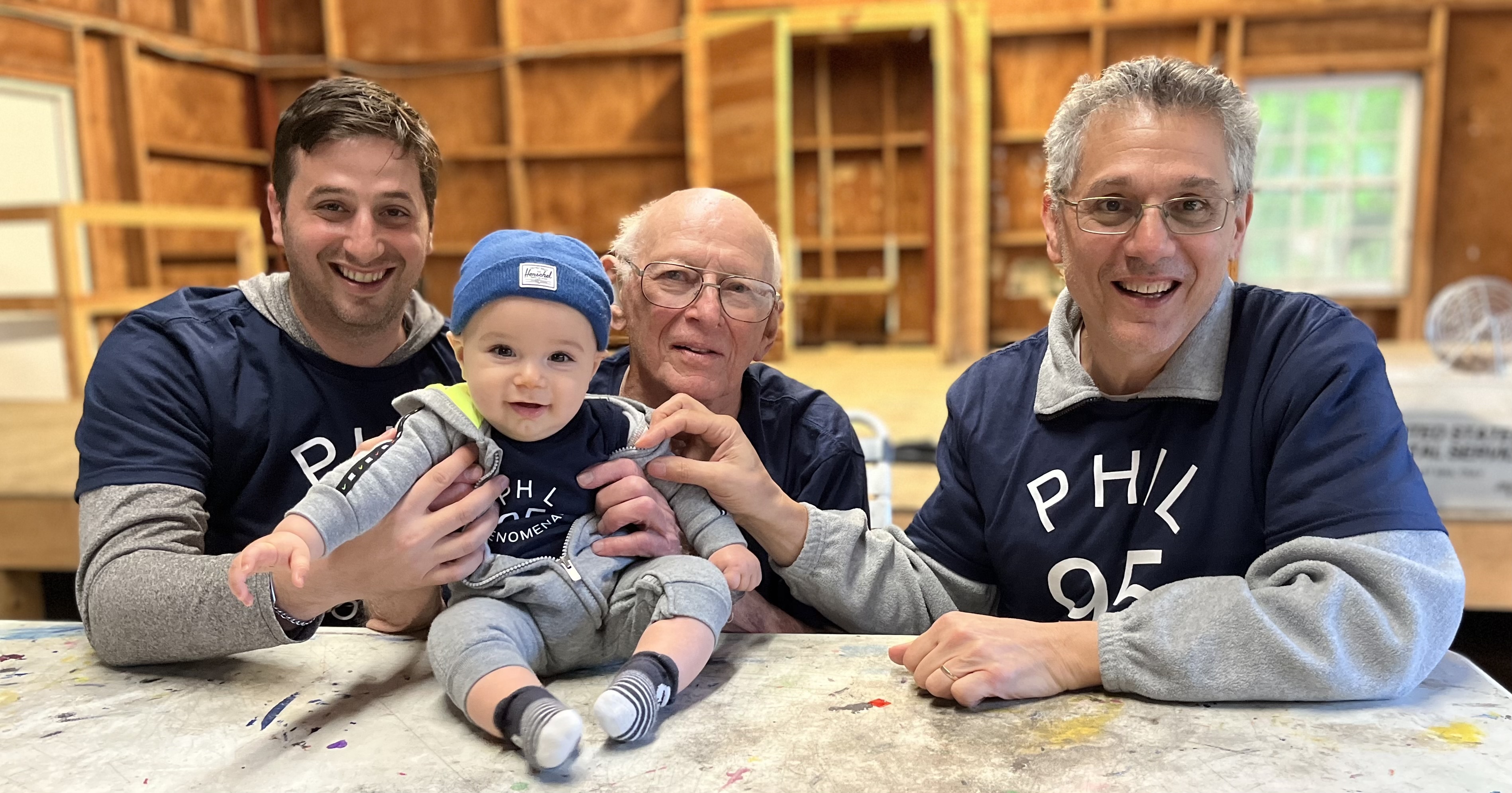

Phil is my inspiration for the class I am teaching at Orangetown Jewish Center this summer, “Wise Aging”. Having learned a great deal from the book by the same name authored by Rabbi Rachel Cowan, z”l and Dr. Linda Thal, I decided to delve into Jewish texts that teach us the secrets of growing older without taking on a declinist view of being old. Yes, we lose things as we age: people we love, full use of our bodies, memory, professional identity, purpose, independence, confidence. You can make this list as easily as I can.
If we adopt the amazing mantra of “the best is yet to be” and accept the inevitable losses as reality, we can take on a different view of aging, a spiritual view. We can see our tasks as shining up our souls and focusing on what is most valuable rather than grasping at what we are losing.
We never know how a class will land when we offer it. This class on wise aging clearly hit the mark. Close to forty participants from younger boomers to elders have been gathering on Monday mornings in a hybrid format. Interestingly, the in-person participants outnumber the virtual students for the first time since before Covid. The class seems to be so highly valued that I will be continuing it monthly in the fall. (Join us this Monday, July 10 at 11:00 am for the final summertime class.)
Poet Stanley Kunitz writes, “Years ago I came to the realization that the most poignant of all lyrical tensions stems from the awareness that we are living and dying at once.” This statement may seem jarring to you, yet I find it to be “very Jewish”. In Judaism, meaning is found in living, not in dying; yet awareness of mortality is essential. Our rabbis teach: “Live every day as if it were your last.” Do something of worth today. Make this day meaningful by a kind word, a phone call, a poem read or written. Jewish thought stubbornly insists that we are here for a purpose, that we are partners with God, that we are meant to be kind to others and to be reverent of life.
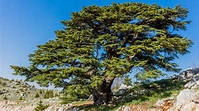
In Psalm 92 we read, “Tzadik katamar yifrach… The righteous flourish like the date palm, thrive like a cedar in Lebanon… In old age they remain fruitful, still fresh and bountiful, proclaiming: Adonai is upright, my rock in whom there is no flaw.” Rabbi Abraham Joshua Heschel wrote about this verse, “One who lives with a sense for the Presence knows that to get older does not mean to lose time but to gain time. And, also, that in all of one’s deeds, a person’s chief task is to sanctify time. All it takes to sanctify time is God, a soul, and a moment. And the three are always here.”
What is the secret to such resilience and graceful aging? How does one make such a choice? Join us to learn together monthly on Monday mornings as we strive to find meaningful answers.
To find out more about the class (in-person and on Zoom), contact me Rabbi.Drill@theojc.org.
Here’s to joy and resilience, Rabbi Paula Mack Drill
Mitzvah Day by the Numbers and So Much More
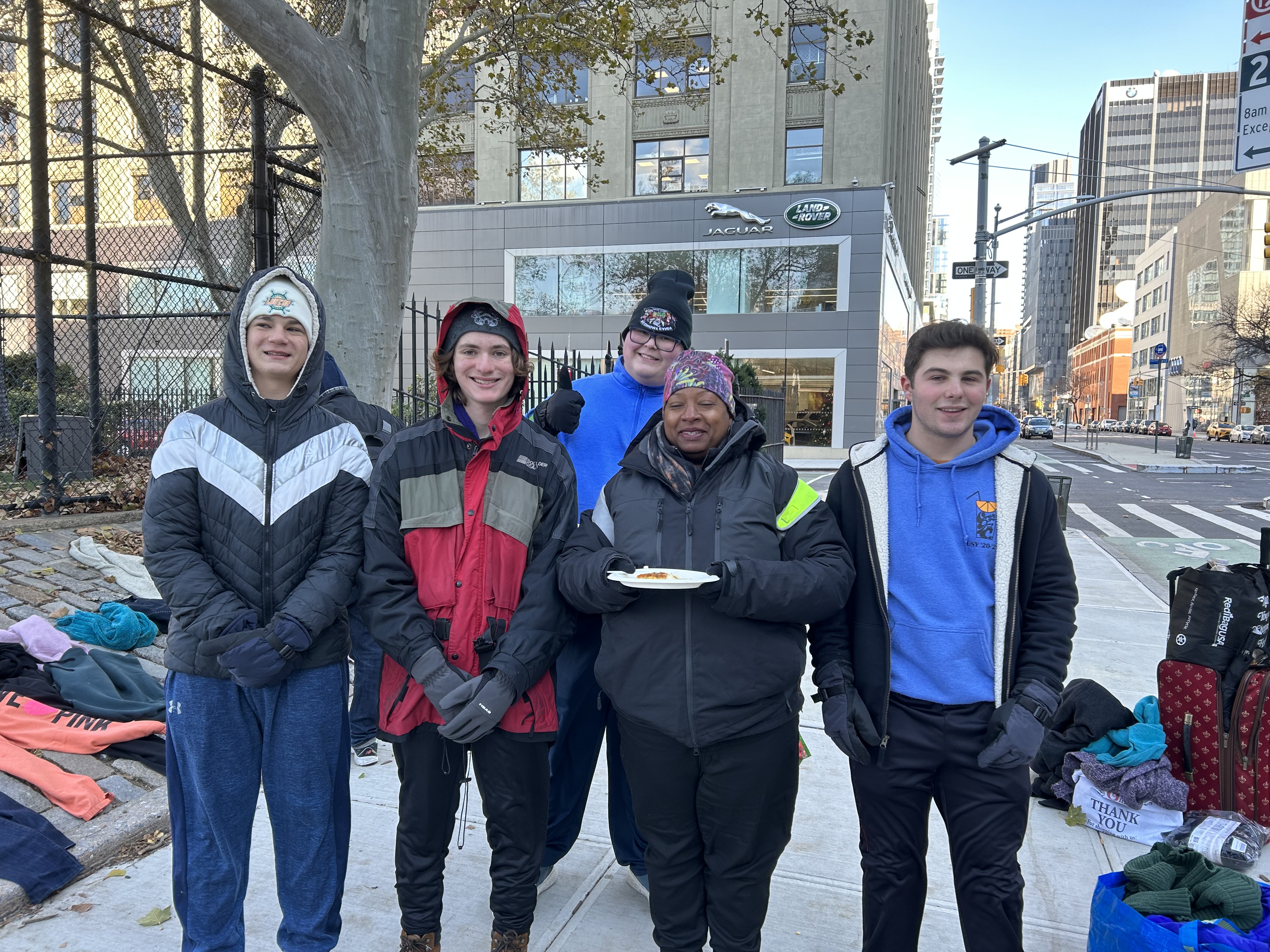
Sunday, November 20 at Orangetown Jewish Center was a hub of activity as mitzvoth of every kind were accomplished. One way to try to describe the day is by the numbers. Our annual Breakfast Run brought 18 large bags overflowing with new and gently used coats, clothing, socks, and toiletries, together with a warm breakfast, to people who are homeless in NYC. This mitzvah was accomplished by 18 hearty volunteers from the age of 15 through 75.
34 congregants were blood donors who helped save over 100 lives in total!
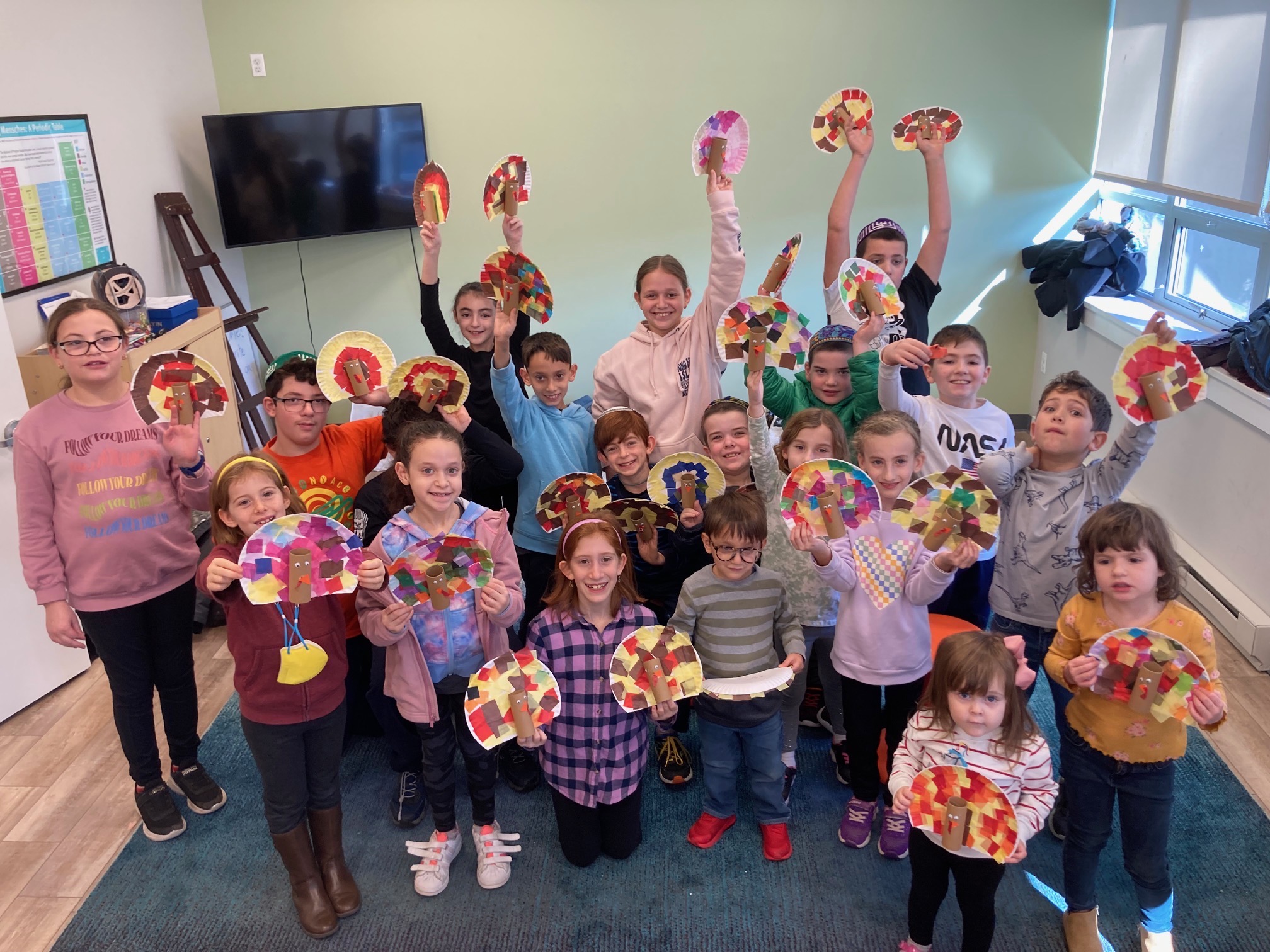
Over 20 children of all ages who handcrafted 40+ colorful Thanksgiving turkey decorations to share with residents at The Esplanade, and 40 congregants, young and old visited with Esplanade on the Palisades residents, singing and interacting with them.

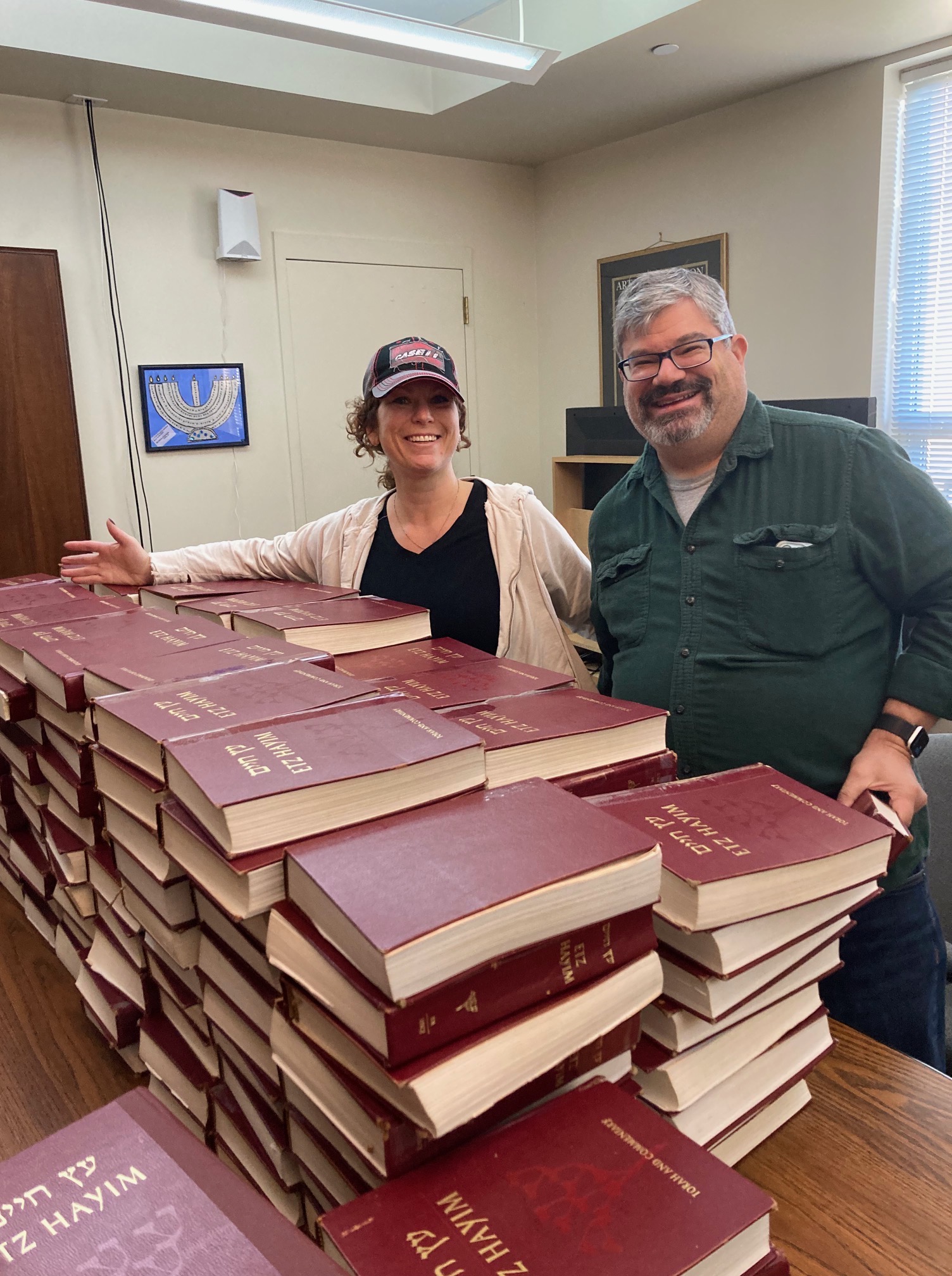
6 Chumash miracle workers mended the book spines, covers and pages of 34 Chumashim that were in disrepair.
12 Rhoda Bloom Kosher Food Pantry packers stood in the cold to load boxes of donated kosher food into recipients’ cars. OJC also collected 70 cans and boxes of food for the Rhoda Bloom Kosher Food Pantry.
10 participants learned with Rabbinic Intern Ilana Sandberg and 8 giggling yogis, raising funds to benefit The Rockland Pride Center.


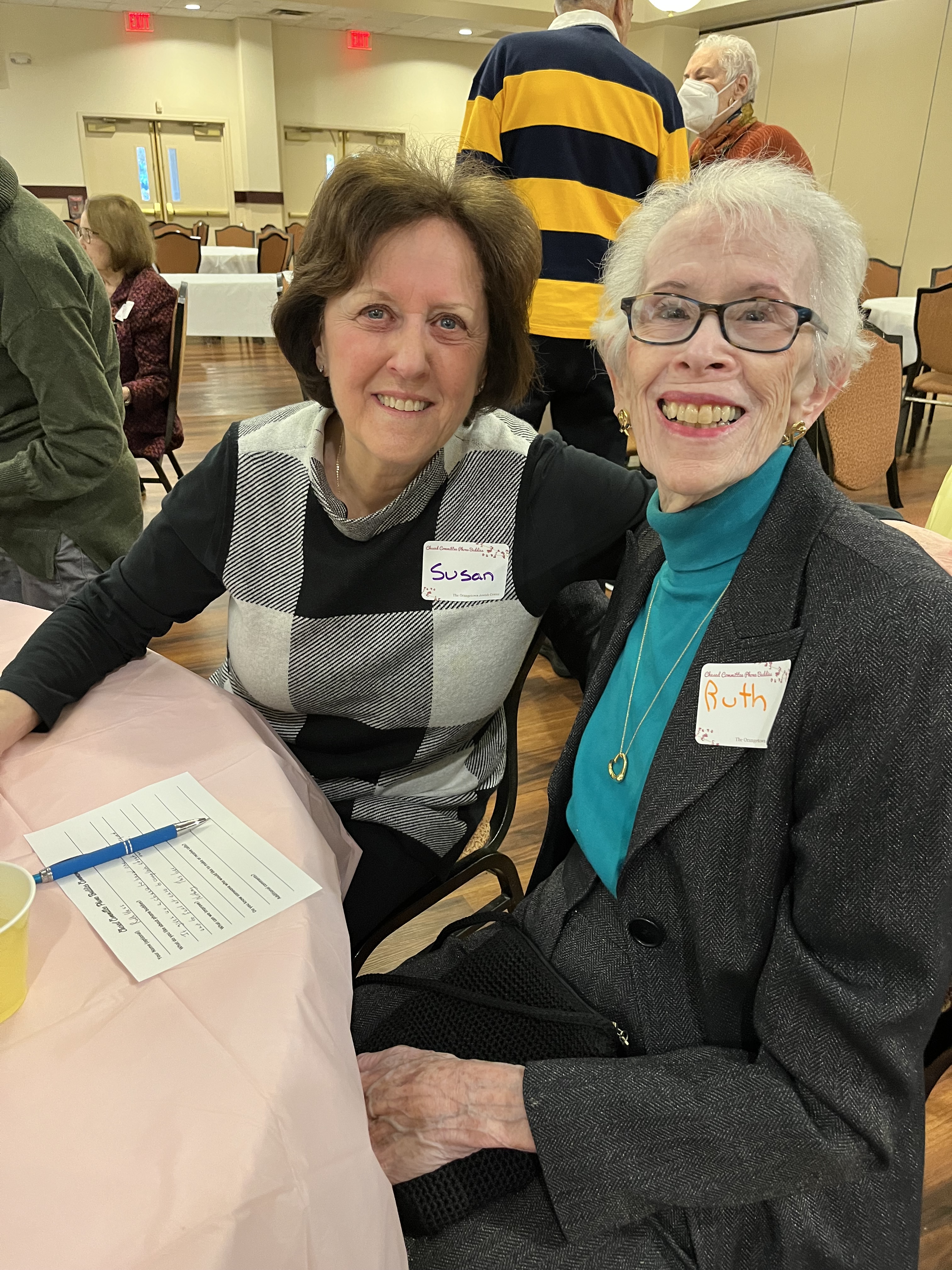
18 congregants learned with Rabbi Dahlia Bernstein about making every day a Mitzvah Day and 30 Phone Buddies connected and celebrated at the Chesed Committee’s tea party in memory of Madeline Roimisher.
90 homemade muffins, 14 children’s coats, and various children’s clothing and shoes were delivered to the Martin Luther King Multi-Purpose Center in Spring Valley and Proyecto Faro in Stony Point.
Almost 20 knitted and crocheted hats and scarves will be gifted to The Rockland Pride Center Youth Program for the December holidays.
So that’s one way to understand the day – by the numbers. We can also understand the day by the emotional experiences and amazing moments felt by everyone participating: the joyful noise of a room full of children creating a craft for an elder, the power of Amichai’s guitar and children singing as Esplanade residents sang and swayed… and some even danced, the full room of people donating blood, the quiet concentration of repairing sacred books, the delight of two congregants meeting face to face for the first time after being phone buddies for two and a half years.
But I actually have another way to comprehend Mitzvah Day 2022. As the building filled with people, as we worked side by side to make this world a little bit better, we all remembered something. We remembered who we are.
For me, Mitzvah Day reminded all of us at OJC that we are who we think we are. And I thank God for that on Mitzvah Day and every day.
With friendship, Rabbi Paula Mack Drill
Antisemitism Hits Home
I’ll just say it in a straightforward manner: I was completely shocked.
Perhaps I should not have been. Like you, I read every day about the uptick in antisemitic actions and bigoted verbiage on social media. Maybe I should have been shocked that I am almost 63 years old and this is the first time I have been a target of an antisemitic incident.
I was enjoying a Shabbat walk in the OJC neighborhood, strolling down Lester on my return to the Scheff house at about 3:45 in the afternoon. I looked like any other neighbor out for a walk, sneakers, shorts and a T-shirt . . . except that I had a kipa on my head.
A dark navy Jeep Wagoneer passed me on the street, windows down, and filled with teenage girls, maybe three or maybe four.
The girls screamed out the windows as they passed me, chanting, screaming horrible curse words punctuated with “Jew.” After two very long sentences were spewed, they broke into wild laughter and drove on.
Teenage girls just having a fun afternoon?
Only after they were out of sight did I realize several things. First, my eyesight was not good enough to see the license plate except to know that it was New York. Second, they were chanting in unison, in rhythm, clearly words that they had chanted before. And third, I was shaking. I felt victimized and angry. I honestly did not feel afraid, but I felt emotionally violated in our sweet, quiet neighborhood.
In my world, the words “shut up” are considered curse words. I do not like hearing curse words and tend to feel it as a punch in my body. The words that these girls used felt like a powerful blow.
It took me another short while to realize that I had just experienced a bias incident. It’s strange how our minds work, trying to protect us from the stark reality.
Today, 24 hours later, I am thinking about appropriate reactions. The incident has already been reported both to the police and to our own security team at OJC. I have made a solemn promise to carry a phone at all times, even on Shabbat, for safety sake.
And sharing the experience in this blog feels particularly important to me. If you have students in middle school or high school, please share this blog with them. The girls in that car are in their peer group. They certainly go to school with some of our children. Make sure that your children know that they should tell you or a responsible adult about anything of a biased or antisemitic nature that happens in their school or social circles, even if it seems insignificant to them at the time. Children might tell you that their “friends were just kidding.” We must educate our youth about what is funny, and what is most certainly not.
And finally, remember Rabbi Scheff’s and my teaching about being proactive rather than only being reactive when it comes to prejudice and bigotry of any kind. We can all make alliances in our own way; knowing our neighbors, participating in civic events, being curious about other minorities. We can show our Judaism proudly for the many beautiful ways in which it teaches us to be good neighbors and citizens.
I am truly fine. And I am also more motivated than ever to be a positive and educative force in our community.
Rabbi Paula Mack Drill
A little more Purim fun before she’s back
The following is a reprise (slightly edited) of a blog I published seven years ago. I figured I’d share it again in the spirit of Purim before Rabbi Drill’s return from her sabbatical tomorrow. Enjoy!
Growing up on the mean streets of New City, New York, I learned the hard way what it meant to be Jewish, short, skinny and unable to jump higher than 8 inches off the ground. In other words … wait for it . . . “scrappy” was my game. The experience hardened me to the outside world’s cold reality. A jaded, chip-on-my-shoulder, eat-or-be-eaten attitude pervaded everything I set out to accomplish. I learned to control most of my impulses, assuming a mild-mannered, soft-spoken persona everywhere I went. Everywhere, that is, except on the basketball court. Between the lines, I could be myself, let go of my inhibitions, run wild, heatedly pursue, charge at the hoop, display my bumps and bruises as badges of honor. Ironically, all that pent up anger, frustration and aggression that found its expression in my game was lauded as something good, something to be admired and copied.

Those of you who have seen me play over the years (with the 9- and 10-year-olds at recess, especially) have called me competitive, like a Mr. Hyde to Rabbi Jekyll. What you see is nothing, however, compared to the dark madness that once lurked in the soles of my high-top Converse sneakers (the white canvas ones). That’s just me having good, clean fun. Once I retired from competitive hoops at the age of 28 (the year I started rabbinical school), the cloud that once enveloped my heart lifted, and the beast was gone forever. Until . . . .

Rabbi Paula Mack Drill, who’s been with our OJC community for 20 years now, began her professional relationship with me at Camp Ramah in Nyack some 22 years ago. She was Program Director as I was Assistant Director, and Assistant Director (a position formerly also held by our own Rabbi Ami Hersh, the topic of another Purim spoof one day soon) as I was Camp Rabbi. We always had a great, easygoing, complementary style of working together. From Day One, people referred to us as the “Craig and Paula Show.” That relationship carried over into her internship here at the OJC, where I functioned formally as her mentor for the Seminary. The day she was ordained was a great day. I should have known something wasn’t quite right, however, when she informed me that her JTS GPA was .0185 higher than mine.

That single fact was the beginning of a disturbing pattern. Two-letter words like “XQ” were suddenly making their way into our Shabbat Scrabble games on triple word scores. She would casually mention to each congregant we met that she was older than me, taller than me (she took up heels), and could stand on her head longer than me. She would give her students colorful stickers and point out that I offered them nothing for their efforts. At the end of a day’s work she would ask me how many hours I had billed, as she filled my e-mail inbox with cc’s of every e-mail she sent out. I lashed back by working later, sleeping less, and leading more trips to Israel. I could feel the old Craig emerging, and it wasn’t pretty.
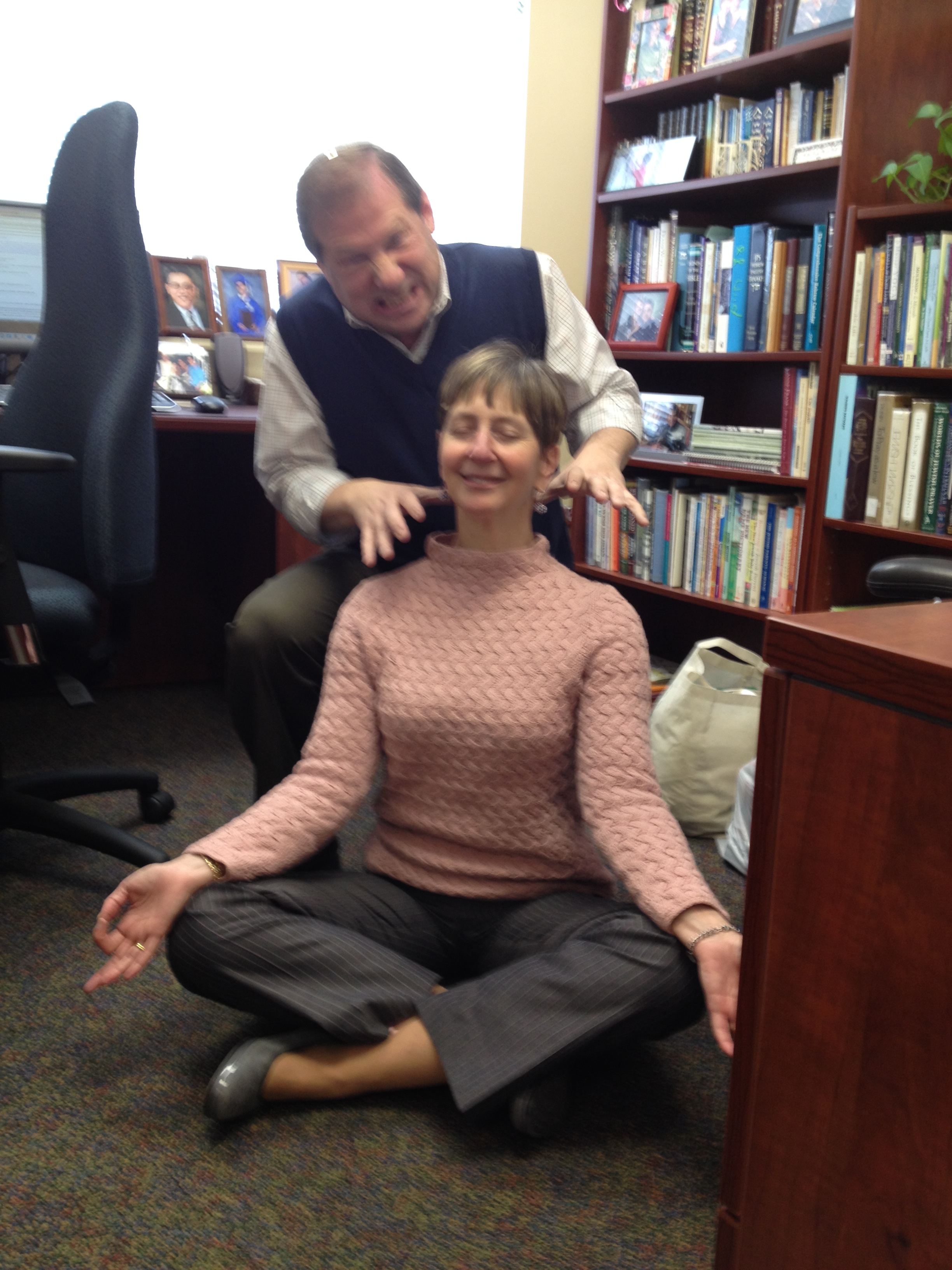
Rabbi Drill’s popularity has grown over the past 20 years. As has my therapy bill. But I have learned how to control the beast. Looking in the mirror each morning, I remind myself that I am good enough, that I am smart enough, and doggone it, people like me. Then I steel myself for the day ahead, trying to appreciate how good each day can be with Rabbi Drill at my side.

And then I pray . . . for the moment I will get her on the basketball court.

Happy Purim to all, and welcome back Rabbi Drill with us this Shabbat! Rabbi Drill, Don’t let anyone tell you otherwise–I’ve missed you and the many ways in which you enrich each of us and our community!
Rabbi Craig Scheff
Humans Plan and God Laughs
I look forward to every Shabbat, but I was particularly excited for this past Shabbat. My daughter Sarah was flying in with baby Carmel and they were planning to come to synagogue with us. During services we were celebrating the auf ruf of Marisa Kelly and Josh Rappaport whom I have known since they were young. And I had prepared a sermon about Lekh L’kha that I was excited to give.

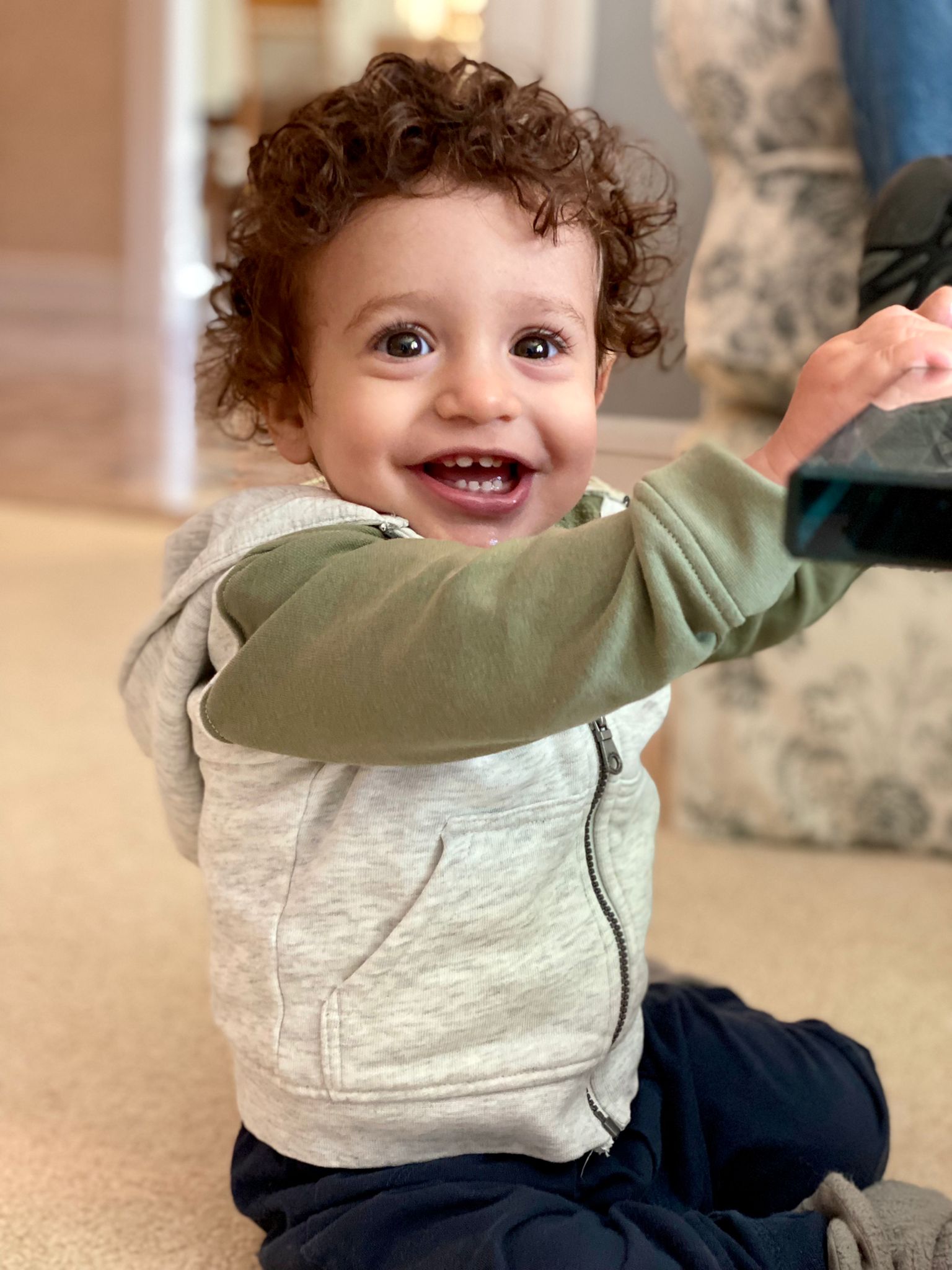
Humans plan and God laughs, they say. Sarah arrived with Carmel at Newark Airport at 3:45 am. We were so happy to greet them, but as the day continued, it became clear that Sarah‘s congestion was not a simple cold. As she felt worse and worse with what turned out to be a serious nasal infection,* it became clear that we were not going to Orangeburg and would be staying home in West Caldwell for Shabbat. “Don’t worry,” I told my friend Sharon, the groom’s mom. “I’ll be logged in to the webinar so you’ll know I’m with you.”
On Shabbat morning, as I approached my computer screen for morning services, however, I realized something was the matter. Once again, humans plan and God laughs. The screen from the synagogue was on mute and the service was completely silenced. I realized that there must have been a disruption to the zoom webinar overnight and proceeded to pray by myself. Of course, I was disappointed not to hear the blessings recited by Marisa and Josh, and sad to miss Rabbi Scheff’s words of Torah. But I quickly came to terms with four interwoven truths. 1. It was Shabbat. 2. There are limits to technology. 3. We are still living through a pandemic. 4. We are a community committed to halakha.
These four points describe the creative tension, the push-me-pull-you nature of OJC and these strange times in which we are living. Throughout the pandemic, we have pushed the halakha to its outer boundaries to enable our congregants and guests to gather and still maintain the integrity of our sacred community.
I understand the disappointment of all those who want to gather for Shabbat. This past Shabbat is not the first time that service has been interrupted for virtual worshippers. Why couldn’t a mistakenly muted microphone be fixed with one tap of a finger? So many of us know intellectually that the answer is clear: in our synagogue, we don’t use electricity, a modern adaptation of the original command to light no fires on Shabbat or holidays. We understand that every opportunity has been protected for those of us who want to gather virtually and maintain this basic Shabbat law.
It’s in our hearts and souls that we don’t want to accept the “imposition” of halakha. Emotionally, it certainly feels that the gathering itself is the ultimate value.
To those of us who respond in this way, I ask the following questions: What is it about OJC that calls you to gather with us and what does gathering really mean?
Think about it… we choose to participate, support and identify with OJC for some reason. What is it?
For me, OJC’s call is anchored in the eternal values that constitute our mission: Torah, prayer and loving kindness. We hold up those values in service to God and community. But the magic of OJC is that we live the mission and the values with integrity. I believe that our synagogue is a beloved community because we stand for something bigger than ourselves and our own individual desires.
And whether it’s in person or virtually, why do we gather at all? Why is it so important to us that we are very disappointed when we are not able to gather? Author Priya Parker (priyaparker.com) defines gatherings in her acclaimed book, The Art of Gathering: How We Meet and Why It Matters. Her words describe the OJC. She writes: “Why do we gather? We gather to solve problems we can’t solve on our own. We gather to celebrate, to mourn, and to mark transitions. We gather to make decisions. We gather because we need one another. We gather to show strength. We gather to honor and acknowledge. We gather to welcome, and we gather to say goodbye.”

Our gatherings are essential. Zoom minyanim, Kabbalat Shabbat in the Lot, Sisterhood programs, Men’s Club tailgates and Na’aseh events, Kulanu classes and Shabbat morning in synagogue – all allow us to connect to God and to each other face to face or through our virtual grid.
There are limits to our virtual community, as our failed technology last Shabbat proved to be true. There are also limits to our community in person, as we await the time when all congregants are safe to gather once again.
As we continue to figure it all out and to negotiate the push-me-pull-you of health and halakhic requirements to preserve our sacred community, two things remain true: First, it is worth the struggle because we at OJC love to gather. And second, I imagine that God takes pleasure in watching us struggle to find our balance as we try to get it all right. I can imagine God saying, “Now there’s a community involved in debate L’shem Shamayim, in the name of heaven.”
(*A special note of gratitude to Dr. Jonathan Lesserson whose professional skill and healing, gentle kindness put Sarah on the road to a refuah shlayma, a complete healing.)
Shabbat shalom, and may it truly be a Shabbat of peace,
Rabbi Paula Mack Drill
 Three Rabbis Walk Into A Shul
Recent Comments