Don’t Do This Alone (Coping with these Dark Days)
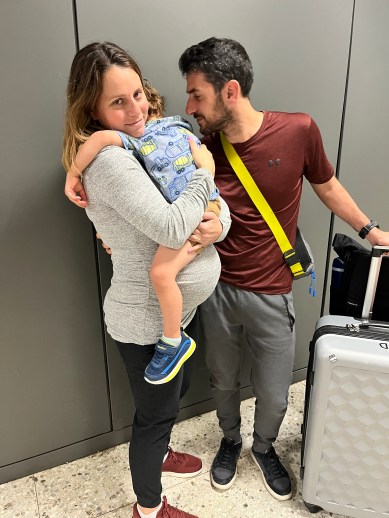
On Friday, October 6, just three things were on my mind.
First, my son Josh and his beloved Shay had just gotten engaged, but they had not yet made it public. I wondered how I could make it through Shabbat and two days of holiday without sharing the good news.

Next, I was feeling quite pleased with my decision to forego shoes and just wear sneakers with my synagogue dresses on Saturday night and Sunday for Simchat Torah dancing.
And third, I was a bit worried about having time to pack after two days of holiday before the car service arrived to drive me to Newark Airport for my flight to Israel. I was making a trip for four days to attend the wedding of my son-in-law‘s brother Omer to his cherished Tal. Jonathan, Sagi and Carmel had already been in Israel for a week and I was looking forward to a fun few days in Tel Aviv and a wonderful Fainshtain celebration.

I didn’t need to have worried about my Sunday night flight to Israel. It was cancelled.
On Saturday, October 7, the world as we knew it ended. We will never be the same.
Jonathan was awakened by sirens on Shabbat morning and travelled out of Tel Aviv to Shay’s family home. That morning, Sagi and Carmel were with Racheli, (Sagi’s mom and Carmel’s savta). Many of you have read Sarah’s account of Sagi’s harrowing escape with his mother, her partner and our grandson Carmel from their home in Mefalsim. In case you didn’t have the chance to read it, here is a link:
https://docs.google.com/document/d/1lng-H_PCVwpDlZrUwvmWFxBjgg2trn-_voJWUMnYGWQ/edit

What do Jewish people do when tragedy strikes but the calendar says it is time to celebrate? We celebrate. With breaking hearts, with tears, and with complete dissonance, we take the Torahs out of the ark and we dance. It’s the hardest thing to do and it’s the only thing to do.
So many congregants of all ages came to OJC for the holidays, drawn in to community like homing pigeons. We knew where to be for comfort and solidarity.
We prayed, we broke bread (and chocolate), and yes, we danced. Our eyes met and we read the grief and bewilderment there. We danced with our children in long “Tayish” lines and circles of “The Tushie Dance” (Od Lo Ahavti Dai). We grinned and laughed with a stubborn refusal to give in to terror. We sang Acheinu softly and walked in slow circles for all those in Israel unable to celebrate Simchat Torah, and the children of our shul saw their rabbis cry. We honored teenagers as Chatanei Torah and a centenarian as Chatan Bereshit and we felt uplifted by them and their proud families.
All of it was necessary. It’s what we Jews have been forced to learn throughout all the centuries of our history. If we stopped celebrating every time we endured suffering, we would never be able to fulfill our calendar year.
At the OJC, we did not celebrate despite our sorrow. We celebrated together with our sorrow.
I was never more proud of our congregation.
Since the holidays have ended, we have truly been prepared for Mar Cheshvan which begins on Saturday night. It will be a bitter month indeed.
After the holidays concluded, the news from Israel continues to be intolerable. As the numbers of injured, kidnapped, and murdered in Israel climb and the inhuman stories emerge, as soldiers are mobilized and in harm’s way, as we speak to precious friends and family in Israel and find that we have no useful words, we find that the reality is more than any one soul can comprehend.
And so, we cannot do it alone. We must find each other in our grief and come together to pray, find comfort, and take action.
Hundreds came to the rally on Tuesday at the courthouse in New City.
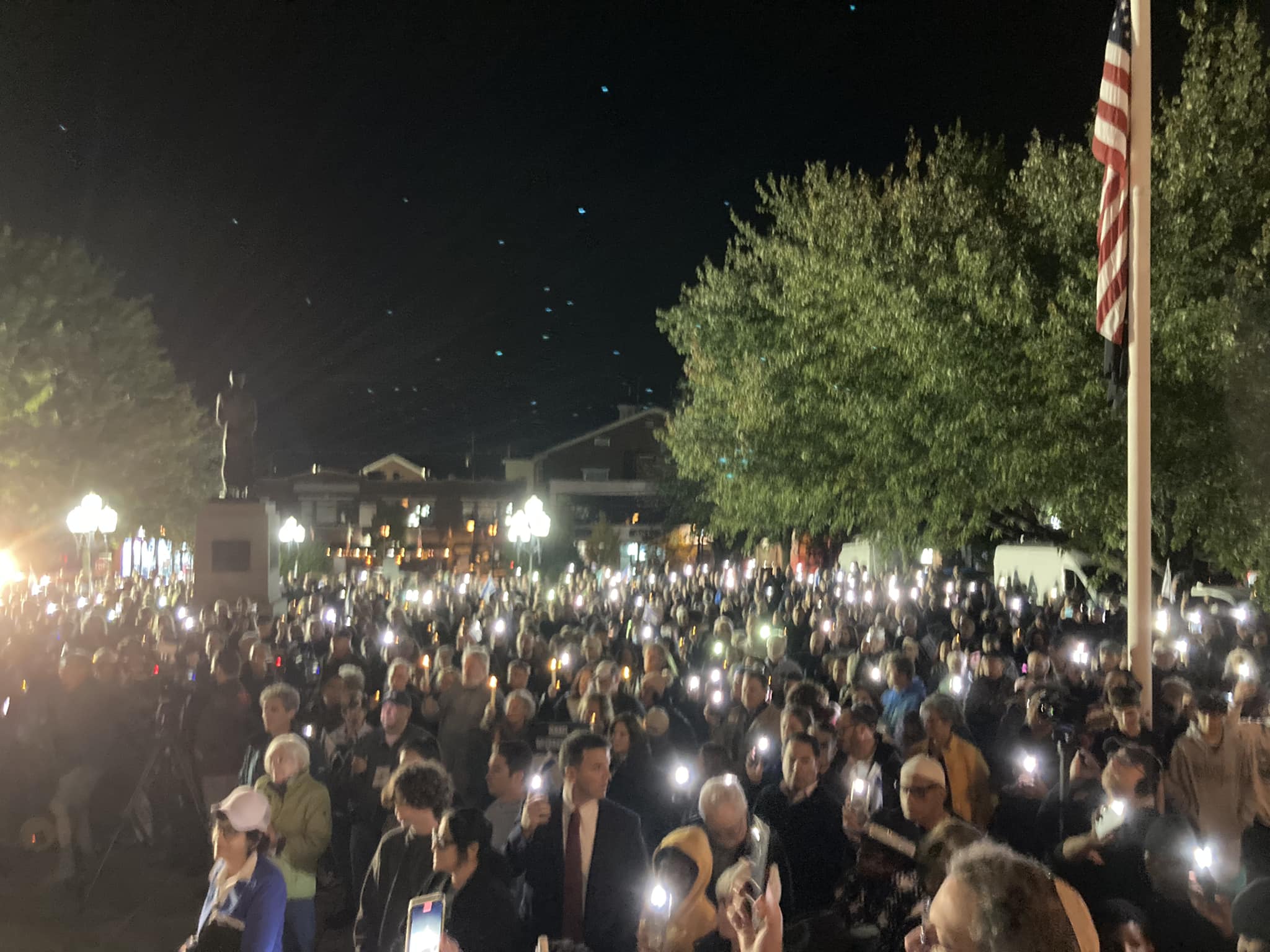
Many of you will be with us on Shabbat to feel the power of community.
I expect that hundreds more will come together on Saturday night at 8 o’clock at Congregation Sons of Israel in Nyack for the Rockland Board of Rabbis Prayer Vigil and Memorial Service.
More opportunities for prayer, healing, and action will be announced soon.
Please don’t try to do this alone. We are a community that knows how to be together in the most joyous times and in the hardest times.
Am Yisrael Chai.
The People of Israel lives!
Rabbi Paula Mack Drill
A time to change, a time to refrain from changing
It started with a pop-up tent in the lot and a friendly greeting; it ended with ice cream sundaes and circle dancing. This year’s holiday season was the culmination of staff, professional and volunteer hours of planning, programming, and executing. The results exceeded our hopes and expectations in so many ways. We gathered in large numbers with enthusiasm and energy, with consideration and sensitivity, to reconnect, reflect and renew our commitment to tradition and community.

For some of us it was the first time in the building literally in years; for others of us it provided just the sense of “normalcy” we had been craving. It was exciting, energizing and comforting to experience the power of hundreds gathering in our physical home these past weeks. At the same time, we remained keenly aware of the absence of those who were not able or ready to join in person. We hope that those who joined us remotely had a meaningful holiday experience, and felt considered, acknowledged and valued.

We are counting on that momentum, energy, enthusiasm and good will as we “reboot” our “new and improved” in-person weekday minyan! Beginning November 1, our daily minyan will return to the traditional model of requiring 10 people physically proximate to each other at OJC, while welcoming virtually our friends who join remotely from near and far. With new technology (thanks to the family of Jack Miller z”l), we will continue to build upon our model of daily praying and learning in a “hybrid” fashion.
As the holidays, Shabbat, Men’s Club, Sisterhood, Naaseh and Kulanu have all returned to in-person programming, adult education (almost entirely) and our weekday evening minyan (entirely) have continued virtually via the Zoom Meeting platform. There are indeed great benefits to having use of this technology. Since the spring of 2020, our daily minyan, teaching and weekly programs have provided connection and comfort to so many who otherwise would have lived in isolation. We have learned so much from this experience about what is possible in terms of building virtual community and building out a virtual synagogue platform (OJC+)! And we are so indebted to those households that regularly supported our virtual community, many of whom were mourners and relied upon those present for their minyan, or required quorum for prayer, for kaddish. Our online portal to daily prayer will continue. The ability to participate virtually and feel the power of OJC’s community is, and will remain, an important piece of how we maintain and grow our community. As we return to our in-person minyan in keeping with Jewish law, we are certain that the 10 or more of your fellow friends who gather in the Daily Chapel will be strengthened by the presence of those who continue to join us remotely.
At the outset of the pandemic, the rabbinic authorities of the Conservative Movement responded swiftly and boldly to the times by declaring a ritual state of emergency, thereby authorizing the creation of “virtual community,” in particular for the purpose of saying Kaddish during weekday prayer. We as a community proudly followed their lead. And we succeeded at creating that community with astounding consistency and participation. At the same time, I was so proud that the OJC community supported my position to maintain the sanctity of Shabbat—by distinguishing the way we used technology on weekdays from the Shabbat webinar format we adopted—while so many other communities seized the rabbinical leniency as an opportunity to ignore our halachic strictures altogether.
Now, on the heels of the holiday season as hundreds have come together in our building, it is evident that the state of emergency upon which the 2020 legal leniency stood has passed. We no longer have a legal, social or moral imperative that demands or permits our creation of a prayer community via virtual attendance. We are blessed that we have the ability to continue including and welcoming remote participants, students and teachers from wherever they may choose to join us – AND WE WILL! We are shaped and enhanced by their presence. As we reassert our core value and primary purpose as a Beit Tefillah, a House of Prayer, we are stronger by virtue of our experience.

It is also important to recognize that while some of us have regularly relied upon a virtual minyan for prayer, there is an equal number among us for whom Zoom is inaccessible or feels impersonal and further isolating. Moreover, for some there is simply no substitute in community for an empathetic ear, an open heart, a shoulder to lean upon, or a hand to hold.
Returning to a daily weekday 7:30pm minyan that will have 10 attendees in person and also welcome virtual attendees will not be an easy feat to achieve. We are hoping that, just as the OJC found a way to be there for you during these past 2+ years day in and day out, you will have been inspired to find your way to being here for us. Perhaps once or twice a week, perhaps once or twice a month, any regular commitment on your part will bring us closer to achieving our goal.
Please click on this link where you will find a Fall/Winter minyan calendar, with 12 spots per day to be filled (yes 12, we are adding 2 extra spots per day just to cover any last minute conflicts!). Please commit to as many evenings as you wish, and check in as often as you wish to see when we may be in need. While you can obviously attend whenever you want, we are only recording 12 spots per date so we know we’ve reached our minimum of 10! This link will live on our website as well, so you can always visit there to see when we may be in need of more participants.
This morning I began taking down my sukkah; the “season of our joy” has reached its conclusion, but I hope we can carry elements of all we’ve learned from this holiday season into the future. In the weeks and months ahead, may we have the opportunity to share many moments of joy with one in another,
In community, good health and peace,
Rabbi Craig Scheff
Partnering into 2021 and beyond
Way back at the end of August, I wrote in this blog:
“The Jewish New Year’s arrival, this year in particular, may help us look back with 20/20 hindsight, and may help us envision the final third of 2020 with a greater sense of gratitude, purpose and optimism.”
Now, as we have endured the summer and fall, ridden out their lows and highs, and taken note of their dark clouds and silver linings, we stand ready to greet the secular new year of 2021. Winter has indeed arrived, yet we are bolstered by the new perspectives on life we have gained, the relationships we have fostered, and the hopes for an effective vaccine that will allow us to come together physically to a greater degree in the year ahead. But of all the lessons taught and learned during these ten unforgettable months of 2020, there is one that I was particularly glad to have internalized personally and professionally almost twenty years ago. Stated most simply by our tradition: Tovim hashnayim min ha-echad, “Two is better than one” (Ecclesiastes 4:9).
For the past two decades, I have advocated that a hierarchical model of religious leadership does not serve the best interests of religious communities or the clergy who serve them. Long before our communities were facing a pandemic, our synagogue community amended its constitution to delete the language of “senior” rabbi, “assistant” or “associate” rabbi, and “cantor.” Instead, the organization consciously chose the broader language of “clergy” with the understanding that the success of our community was dependent upon the ability of our religious leaders and professionals to establish and deepen personal relationships, regardless of their titles.

Moreover, the ability of individual clergy to play to their strengths and to use their diverse talents and skills to cultivate connections would ultimately accrue, we believed, to the benefit of the organization and the entire professional staff. Finally, and perhaps most importantly for the individual professionals and our organizations, we acknowledged that it is very difficult, perhaps even impossible, for leaders to be true partners when one is expected to answer to or be judged by the other. I am proud that our JTS Resnick Interns, through our Debbie Steiner Mentorship Program, have moved into the Jewish world building partnerships and leading vibrant and growing communities with this model in mind.

This pandemic has reinforced my belief that the partnership model provides professionals the opportunity to shoulder equally the burdens, to process the challenges and opportunities, and to share the personal and professional stresses. Partnership maximizes the potential of each professional to acquire and share skills, to broaden vision and reach, and to establish the relationships that will connect more people to each other, the institution and its mission. Finally, partnership models behavior for professional and lay people alike. The stronger the partnership, the more we generate in each other a sense of empowerment, ownership, and investment in a shared vision. The success of one is the success of all.
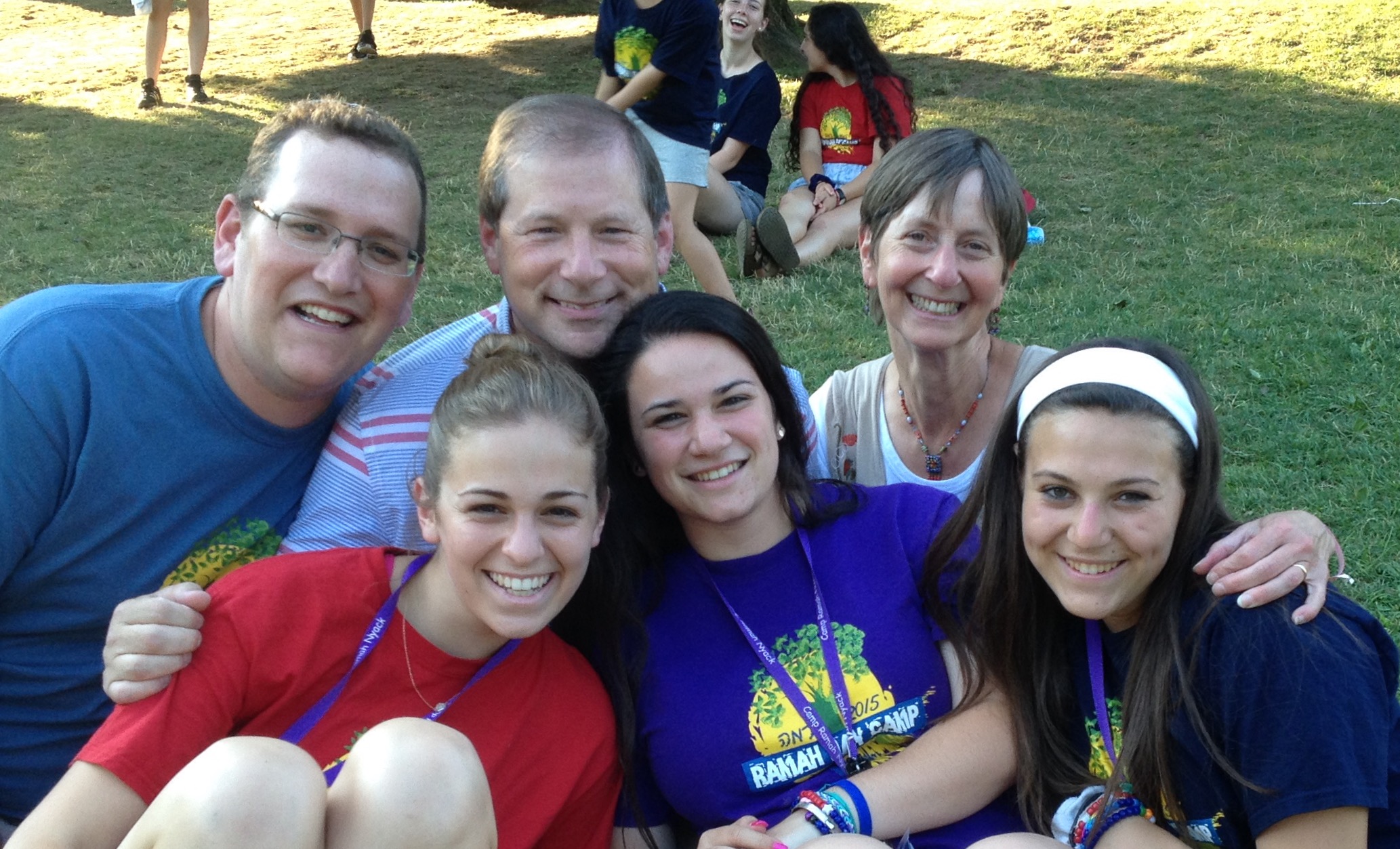
As we find ourselves in the midst of a time when communities cannot operate by bringing people into regular and consistent physical proximity, it is all the more important that our organizations have professionals who can connect people by facilitating intimate gatherings and cultivating meaningful connection. Some of us have acknowledged (and the forward thinking leaders knew this prior to the pandemic) that certain modes by which we have been operating must become a part of our business-as-usual way of doing things. For example, aging populations who can be served by virtual connection must be given the opportunity to connect from their homes to spiritual, educational and social opportunities as Jewish law permits. Our communities and leaders require partners to share the professional burden of the work and to share the personal burden of the stress that these new modes of operating generate.

In hindsight, we may look back on 2020 as the year that helped us envision the future of our community more clearly. Perhaps 2021 will be the year in which the steps we must take to realize our finest aspirations come into sharp focus!
Wishing us all a happy, healthy and safe 2021 in which we feel connected, cared for, and empowered to partner with those in need,
Rabbi Craig Scheff
 Three Rabbis Walk Into A Shul
Recent Comments