Time to reflect
As we reach the end of another academic year, I wanted to share with you the words of Rafi Josselson, a high school senior at The Leffell School who spent the last nine weeks of his academic year interning with me here at the synagogue. As I have shared with his school administration, Rafi has surpassed all our expectations. His work ethic and product have matched that of so many of our previous rabbinic interns, many of whom were at least a decade older in years and in academic pursuit. We have learned from Rafi. His youth was no impediment to his wisdom, his charm and his contributions. I am happy to be re-starting this blog after a year’s hiatus with Rafi’s words, and I look forward to welcoming Rabbi Claire Shoyer as a contributor. Thank you, Rafi. We wish you the very best in all your pursuits!
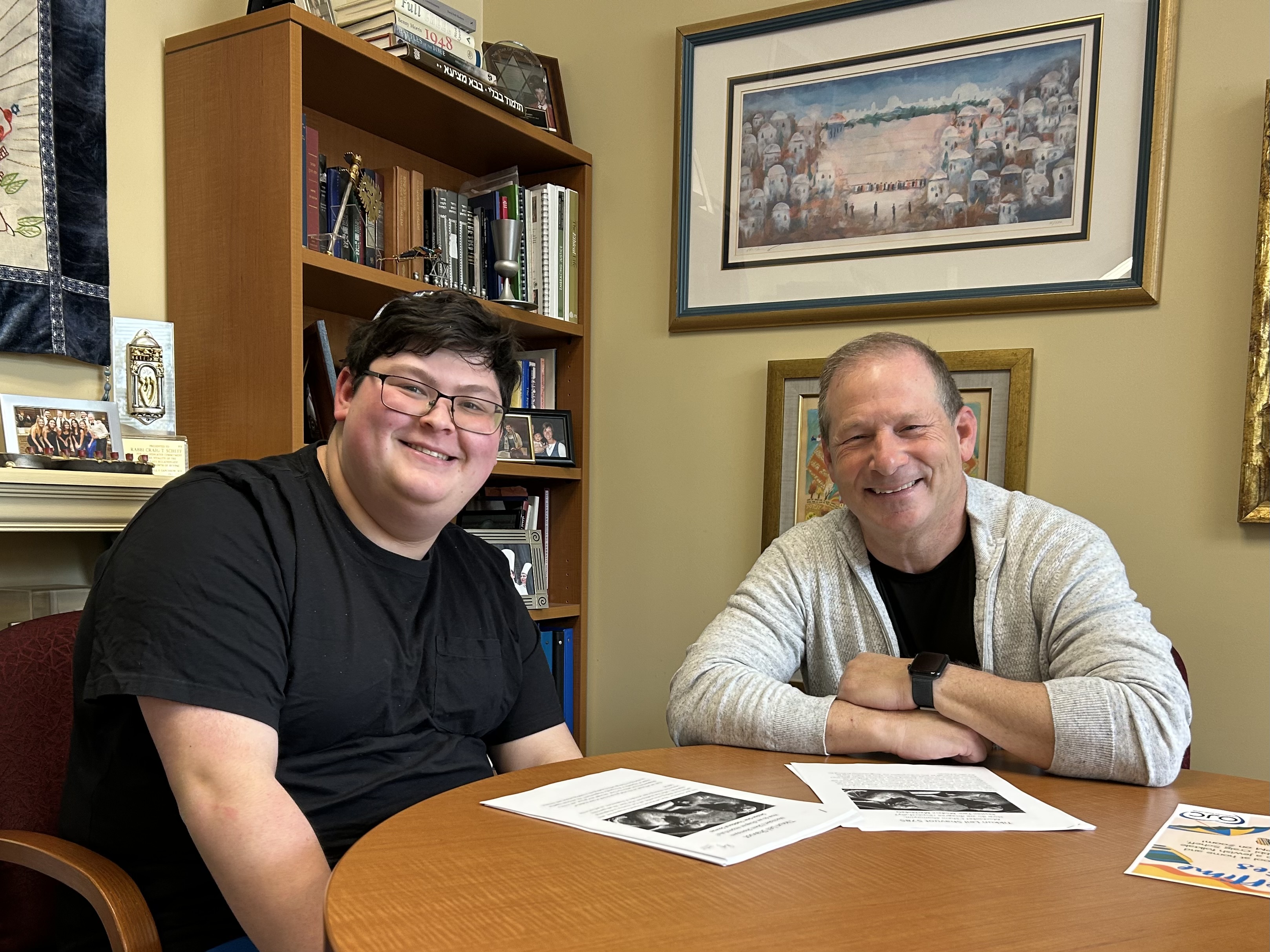
Dear OJC,
Thank you all for allowing me to serve as your synagogue intern this spring. It’s been one of the best experiences of my life. I’ve grown professionally and personally throughout this experience. This wasn’t a difficult transition. Since this is my synagogue, I was already heavily involved. And so, unlike my peers who interned for six weeks, I have been interning for about nine weeks.
Like you, I am a congregant. But, for these nine weeks, I stepped “behind the curtain” to see the work that happens behind the scenes. Our hours are inconsistent. I have had nights when I am working until 9 or 10:30. There are days when I have gone into the city, to a funeral, or to someone’s house to sit shiva with them. My internship wasn’t just about doing stuff; most of my time was spent showing up.
I focused a tremendous amount of my time refining my leyning and oration skills. I have delivered four sermons to the congregation. I am proud of each one of them, but I have worked hard to get better at my delivery, pacing, and length. I hope you’ve noticed my growth in that area. I’ve also worked tirelessly on improving my leyning. I have read Torah or Haftarah almost every Shabbat, and I pushed myself to learn something new: Megillat Ruth.
I had the opportunity to interact with our youth through Kulanu. Being a day school student, my interaction with Kulanu in the past was limited. During this internship, I was very involved with our B’nai Yisrael (3rd-5th Grade) class. The work and energy that is expended for our children’s education is magical. It was a pleasure to work alongside Rabbi Kniaz in her final weeks with our Kulanu students. My experience was enhanced by our teachers, our Kulanu Assistant Ms. Maudeena Jones, and our students, all of whom are critical parts of the educational experience. I was so proud of our B’nai Yisrael students when, for their final project, they compiled a new book of the Tanakh to transmit to future generations. They joyously presented it to Rabbi Kniaz at their moving-up ceremony.
I’ve also noticed, as many of you have, that we as a synagogue are moving into a new stage. Even though she technically starts in July, I can assure you that Rabbi Shoyer and the rest of the OJC team are already busy planning engaging programming for next year. I also got to attend her JTS ordination. Rabbi Shoyer has worked so hard to get to this moment. She has spent five years in rabbinical school, including hundreds of hours in internships. But, as I have heard from so many rabbis before, you don’t learn how to be a rabbi until you are a rabbi. Therefore, as Rabbi Shoyer continues to grow and learn, I ask you: please give her time and space to grow into the rabbi she is meant to be.
Speaking of rabbis’ experiences, throughout the internship, I interviewed 14 rabbis to get a sense of their experiences, careers, and reflections on the title of “Rabbi”. I interviewed both Rabbi Scheff and Rabbi Drill for this project, and I interviewed two of our previous Rabbinic Interns, Rabbi Jesse Nagelberg and Rabbi Ben Varon. These people are the gold standard of what rabbis should be: caring, empathetic, dedicated, and involved. I am glad I had the chance to talk to them, and the OJC is lucky to have been led by them. You can read my takeaways from my interview project here.
To conclude, I want to share why I did this internship. First, I wanted to gain an understanding of the field of rabbinic work. But secondly, I wanted to give back to you, the OJC, which I believe is one of the most magical places on Earth. We aren’t perfect. And we have a lot more ahead of us. But I am confident that, together, we’ll keep OJC a welcoming, safe, and inclusive home for everybody.
Rafi
#JDAIM2021 A Year of Lessons in One Month
Carmel Louis flipped himself from his back to his stomach three times in a row one morning. We fawning adults applauded wildly, so proud of his new feat. What an accomplishment, what prowess, what a genius at 4 1/2 months! Yes, we celebrated his ability. Not one of us questioned why he was not getting up onto all fours to crawl once he was on his stomach. No, we were proud and content with what he accomplished.

Exactly here lies the key takeaway lesson of this year’s Jewish Disabilities Awareness and Inclusion Month. #JDAIM2021 Each Wednesday night through the month of February, our guest teachers shared the same message: Celebrate the abilities of people instead of judging, pitying or harming them for their differences.
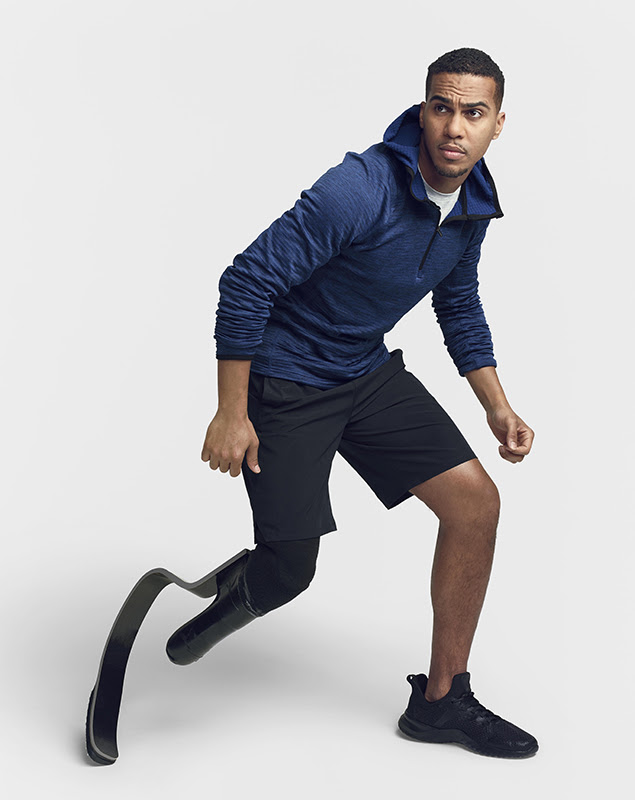
Robert Anthony’s right leg was amputated below the knee when he was 10 months old, but this fact is not what any of us privileged to hear him speak will remember about him. When we think about Robert, we will remember that he is a world ranked athlete, a motivational speaker, and the founder of Limb Possible, a nonprofit organization that supports people who have lost one or more limbs. I will remember the way he lit up with pride when he talked about his two children. Robert Anthony told his story through the prism of learning from every experience. Robert is living proof that with a positive mental attitude, anything is possible.
Pamela Rae Schuller lives with Tourette’s Syndrome, but that is not what we will remember about her. We’ll continue to marvel at the way Pamela uses comedy and storytelling to change people’s minds about what inclusion really means. Pamela taught us that inclusion leads to creativity, that understanding disabilities is not about what people cannot do because someone with special needs is present, but rather what people can do because of the presence of someone with different abilities.

Staff of The Arc Rockland, including our own Esther Schulman, spoke about the challenges and rewards of inclusion in the community. Karen and Alan, two residents of Arc homes, reminded us all that every community is made up of lots of different kinds of people. Their presence as our teachers speaks volumes to us as we dedicate ourselves to fight stigma and advance opportunities for and with people with disabilities.

This coming week, #JDAIM2021 will conclude with a Zoom visit from Steve Possell, a DJ on the radio station WRCR, who is blind. On Wednesday night, February 24 at 7:30, Steve will share his stories and the challenges he has overcome. I am confident that what we will remember about Steve is not that he is blind, but that he is a capable and interesting man who lives his passion.

One month out of every year spent raising awareness, inclusion, and advocacy about people who have special needs is meaningful only when it spurs us to continue the learning and action all year long.
Robert Anthony told us, “I want people to see me as someone who inspires them to do better and be better despite their circumstances.” Robert, Pamela, Karen and Alan, and Steve are teachers for all of us, carrying their message by focusing on what they can do rather than on what they cannot do.
Rabbi Paula Mack Drill
It all started with a ramp
It all started with a ramp, or a lack thereof.
Scotty grew up in the synagogue community, a kid everyone loved. Neither the cerebral palsy diagnosis he received as a baby nor the wheelchair that carried him from his earliest days ever dampened his spirit, his smile, his radiance. Scotty’s determination to play an equal part in our community life demanded so much commitment and effort on his part and that of his family. On the Shabbat morning he celebrated becoming a bar mitzvah, Scotty needed to be lifted in his wheelchair by four family friends up onto the bimah. With each small triumph, and each obstacle overcome, our community celebrated his courage; yet, with each “step” Scotty took, we became more aware of how relatively little we had done, and how far we had to go, to become a truly inclusive community.
In Parashat Ki Tavo, we learn of the Hebrew formula that each Israelite was required to recite upon offering the thanksgiving gift of first fruits in the Promised Land. In one sense, this set liturgy can be seen as unifying and inclusive, creating a ceremony equally accessible and empowering to all. In practice, however, it became clear that not all Israelites could participate in the ceremony in the intended manner. The Mishnah informs us that originally this formula was only to be recited in Hebrew (Sotah 7:2-3). In time, a prompter was provided for those who could not recite the Hebrew. Eventually, to save those individuals in need of prompting the embarrassment of appearing inept, it became standard practice for all to repeat the formula after the prompter (Bikkurim 3:7).
The ramp came first. Then a total redesign of our sanctuary lowered the bimah and brought our podium to the floor. Mezuzot on the bottom halves of our doors; a separate accessible bathroom and remotely activated doors; removable sanctuary seats that will allow space for wheelchairs amongst the congregation, as opposed to being accommodated in a back corner–all these conscious modifications were intended to make our space more welcoming to all. With each step of progress, however, we become more aware of, and sensitive to, the challenges ahead.
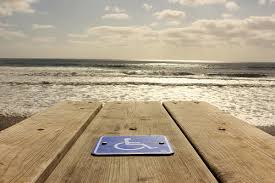
In this week’s parasha, Nitzavim, we are told that the Torah is not in the heavens (“Lo bashamayim hi,” Deut. 30:12), that one should need not climb to the sky to bring it down. Yet, despite all our best intentions, greater access to our bimah awakened us to the fact that–for the one sitting in a wheelchair who approaches our Torah reader’s table–the Torah might as well be in the heavens. It is too high to see for those who cannot stand from their chair. If we had only begun our thought process from the perspective of the one seeking access, the entire design might look different today.
We have much for which we can be proud as we continue to shape our spaces and reshape our understanding of tradition. Our sages certainly understood the need to react according to changing needs and evolve. Our understanding of inclusivity, however, must begin with the perspective of the one who is bringing the gifts of their presence. The reactive approach to others’ needs may be admirable, but it potentially demands too much sacrifice and too high a personal cost for the one seeking access. He might even turn away before placing himself in the situation of asking for accommodation. True empathy would have us examine and shape our rituals, traditions and customs proactively, so that no person seeking access is left feeling like they are fighting for, or being granted, accommodation.
Scotty, you deserved so much more than a ramp.
Rabbi CraigScheff
Reflecting on a Month of Awareness and Inclusion
As February draws to a close, it is time to look back to consider the Orangetown Jewish Center’s commemoration of Jewish Disabilities Awareness and Inclusion Month #JDAIM.
By the end of the month, we will have posted seven spotlights of congregants who have eloquently reflected on lives impacted by disabilities. Rabbi Scheff and I have blogged, taught and reflected in our classes on Jewish values with respect to people who have disabilities. Tonight, congregants will join with our Education Director, Sandy Borowsky, to view and discuss the important film “How Hard Can This Be.”
This coming Shabbat, February 26 and 27 will be dedicated to Disability Awareness as fellow congregant Scott Salmon speaks on Friday evening at 7:00 services. His topic is “Ask Me: the Challenges of Inclusion.” On Shabbat morning, Rabbi Scheff’s sermon will be dedicated to the topic of awareness and inclusion. After kiddush, I will be facilitating a text study tracing Jewish attitudes toward people who are Deaf or hearing impaired from the Torah through Rabbinic texts, leading up to the 2011 watershed Responsa of the Committee on Jewish Law and Standards which grants full obligation and rights to Deaf people and which affirms that ASL is a language by which people can fulfill mitzvot.
At the OJC, we have much of which we can be proud. The month of February and #JDAIM, however, will only prove its lasting value if we reflect carefully on what we have learned and continue to strive toward being an ever more inclusive community.
I offer here the lessons that I have learned and look forward to your adding more to my list:
1. “Persons with a Disability” is not a useful catch-all phrase. People are first and foremost people. To paraphrase a powerful idea of the autism advocacy movement, if you know one person who has a disability . . . you know one person who has a disability. We cannot unilaterally provide services “to the disabled” as there is simply no such thing.
2. Along the spectrum of people and their families whose lives are affected by disability, there are those at one end who never identify themselves or their loved ones according to disability. They go about their lives without regard to hearing loss or the inability to walk. At the other end of the spectrum are those whose identity or whose family is subsumed by the insurmountable challenges of disability. I often think of one congregant who said to me, “We can never see a flier of an OJC activity and make plans to go and enjoy. We always must ask ourselves first, ‘What about our child? Will she be able to handle the program? And our answer is usually no. So then we ask ourselves which one of the parents will stay home.'”
3. We owe gratitude to the congregants who opened up their lives to us through their beautiful words in our spotlights. Sharing vulnerability requires courage and strength. (If you would like to write next year, let Rabbi Scheff or me know. If you do not receive emails from the OJC, you can find all of the spotlights on our Facebook page, Orangetown Jewish Center.)
4. Creating circles of inclusion is hard work. It requires the very best of ourselves. It requires us to take risks and step out of our own circles of comfort. But one thing is certain after a month of awareness: We have created a community of safety and thoughtfulness where anything is possible!
Here’s to making February all year long! B’yedidut,
Rabbi Paula Mack Drill
Circles of inclusion
“Circle time” in my 6th grade classroom is an invaluable teaching tool, especially at the end of the day, after the kids have had 7 hours of public school and another hour of religious school. I ask the students to move the tables against the walls and to pull out their chairs into the center. The students know that something different—maybe even special—is about to happen. A conversation is going to take place. Everyone will be expected to participate. There will be no corners in which to get lost.
When a couple planning a marriage comes to seek my guidance, I ask them if they have ever considered a chuppah in the round. It is certainly non-traditional; the space may not accommodate it; the aisle may not be long enough. But who wants to be in the back row when the friend you love is getting married? And who wants to be the last person standing in a row of bridesmaids, unable to witness the events under the marriage canopy?
Last week, one of my religious school students decided he wasn’t comfortable learning the dance I was teaching in our recess-time elective. Even as I explained that all the best athletes dance for balance, strength and flexibility, I realized that I could not move this boy past the discomfort of joining hands in a circle.

The intimacy of the circle can be discomforting, intimidating, even threatening. In a circle we become vulnerable; we are forced into an encounter, to see and be seen. Frontal presentation is so much safer! I can hide or find solitary space. I can sit up front and see nobody and be distracted by nobody, or sit in the back of the class and be safe from the action.
When we settle for frontal presentation, the best we can be is accommodating. But do we want to settle on being accommodating? Is it enough to make room or create space for someone, even if that space is usually on the corner or at the outskirts where it is convenient, or in the back, at the front or on the side? Most of us find security and comfort in the cushy rows of seats in our sanctuary. If we choose to sit among others, we are surrounded by familiar faces and voices. But those in wheelchairs or with walkers, the elderly and those with other disabilities have to settle for the seats on the fringes and off to the sides. It is difficult for many to slide into the pews and surround themselves by others.
We can learn an important lesson from our mishkan, our portable wilderness sanctuary, which occupied the center of the Israelite camp. The tribes encircled the holy space, directing their energy to the holy center. Situated side by side, no tribe was further away than any other from the sacred space.
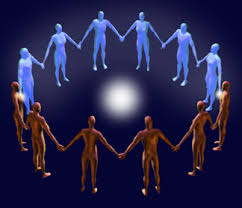
Please don’t get me wrong; I love our sanctuary and generally feel that it is a welcoming space. But I have realized during this month of “awareness and inclusion” that we have work to do in consciously creating circles of inclusion. It isn’t indifference that brings us to allow others to settle on the fringes of our space. Part of it is the way we have traditionally created space for prayer, part of it is practicality, and part of it is a lack of awareness. But part of it is also our fear of circles: the fear of facing our own insecurities, our own shortcomings, our own inability to face the other.
Can we welcome one another to the circle? Are we prepared to step in, to hold a hand and to be held, to look upon another and be seen? If we are to achieve true inclusivity in our community and in our personal spaces, we need to create more circles—and open them wide.
If you haven’t been following our “Jewish Disabilities Awareness and Inclusion Month” stories, please check out our Facebook page at http://www.facebook.com/OrangetownJewishCenter. You will find a series of inspiring “spotlights” featuring members of our community whose stories will touch you and make you think about the things we tend to take for granted. We thank them for their willingness to be part of our circle!
Rabbi Craig Scheff
Including Jews of All Abilities
My friend Anne* recently told me a story about her eighteen year old son, Samuel. “When David (her husband) davens, Samuel loves to be in the room. He sits quietly and most often seems to be completely detached from the prayers. If David pauses, however, Samuel inserts the next word in the prayer. Often, David includes Sam in his prayers by pausing throughout, letting Sam add the next word in order. . . with perfect pitch! Sure enough, Sam seems to know the entire morning service by heart.” 
David’s prayers are enhanced by sharing them with his son. Sam is multiply disabled and autistic. One might assume that religious connections are beyond his level of comprehension. David and Sam’s shacharit experience tells a different story. Judaism is an anchor for Sam, a point of connection to his family and his people. Sam has a spiritual life that is expressed through his participation in his father’s morning prayers. His synagogue, however, was not a place of engagement for Samuel. His requirements for participation proved too difficult for the synagogue to meet his needs. There is a limit to what an organization can do to accommodate one individual, but I wonder if the synagogue could have tried harder.
Certainly, most synagogues pride themselves on opening their doors wide to all Jews and believe that they are welcoming, inclusive places. I believe that the Orangetown Jewish Center is indeed a welcoming, inclusive place where congregants and clergy alike are focused on ensuring that all are comfortable in our synagogue. We have large-print prayer books, ramps for wheelchair accessibility, and interpreters of American Sign Language. The Nefesh program, under Renee Price’s leadership, offers evenings of education around topics of serving children with a variety of disabilities. In recent years, we have welcomed worshippers from the Rockland Psychiatric Hospital and from county adult group homes to Shabbat services, Na’aseh programs and Sukkot experiences. A loyal troupe of Chesed volunteers visits at an ARC group home for holiday celebrations and a group of teens visits bi-monthly at Jawonio’s Salmon House to bake, play games and do crafts. At the OJC, we do a good job. We can, of course, do more and do better.


We are proud of our Inclusion Committee, chaired by Ellen Abramson and Marianne Brown, that meets to consider accommodations such as a hearing loop system for our sanctuary, free access front doors and ASL interpretation. They need your energy and ideas. Please contact them to get involved. Contact Ellen: ema2@optonline.net and Marianne: mariannebrown@verizon.net.
February is Jewish Disabilities Awareness Month. The OJC joins with Jewish Federations, National Jewish Education Organizations and synagogues across the United States to recognize and increase the awareness of the needs, strengths, opportunities and challenges of people with disabilities in our Jewish community. I will be speaking on the topic of inclusion this coming Shabbat to acknowledge and honor our efforts and to encourage our further accomplishments in this arena.
“The question is not how we can help people with disabilities (which is an important question). A more important question is how people with disabilities can give their spiritual gifts to us. — Henri Nouwen, Theologian and Author 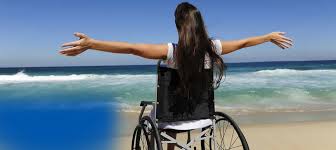
*The names in this story have all been changed to protect anonymity at my friends’ request.
I look forward to sharing Shabbat with you! Rabbi Paula Mack Drill
 Three Rabbis Walk Into A Shul
Recent Comments