Reflections on “Walking as Witnesses”
The following is not the typical blog post from the OJC rabbis. It is a daily recap of the OJC-Poland 2024 experience that ended yesterday. It is meant for those who wanted to follow our experiences without resorting to Facebook. It is a bit long, but hopefully you will find it worthwhile reading! Please note, however, that to truly appreciate the emotional arc of our experiences, you really should read to the end….
OJC-Poland 2024: “Walking as Wintesses”
Day One
On the eve of arrival in Poland, leading a group of 32 (mostly from our synagogue community) to Krakow, Majdanek, Lublin and Warsaw, I wrestle with these thoughts:
How do we bear witness and process the inhumanity that was visited upon us? And how do we avoid permitting this victimization to be the primary motivator of our Jewish identification?
How can we make room for empathy towards those who were bystanders (sometimes innocent and sometimes willing), while also holding accountable those who actively participated in our suffering? What can we learn from those who stood up righteously in our defense or in defense of their own humanity?
How do we appreciate Jewish physical and spiritual resistance in spite of Jewish suffering?
How can Poland remain both home and graveyard?
How do we understand Jewish life in Poland today? What is its meaning and mission?
And how does all our wrestling translate into a productive and empowering way to confront our current circumstances as American Jews?
Though this is my third time leading this trip, I anticipate an emotional, challenging and hopefully meaningful week ahead with what seems to be a very special group of people.
Day Two
Our group convened this afternoon to begin our tour of Krakow. After I offered an intention for the days ahead, we set off for the Jewish quarter in Kazimierz.
Our tour guide walked us through the bustling city and into the heart of Jewish life here, home to the world’s largest annual Jewish festival. We visited the Altshul, the Rema Synagogue and Cemetery, and the Temple Synagogue, tracing the history of a Jewish presence dating back to the 15th century.
Our tour ended at JCC Krakow, where we dined and met with CEO Jonathan Ornstein, who shared with us his perspective on the phenomenon of a growing Jewish presence in what many considered a Jewish graveyard. The work that is being done for those discovering Jewish roots is remarkable, and the JCC has become a safe haven and support center for Ukrainian refugees.
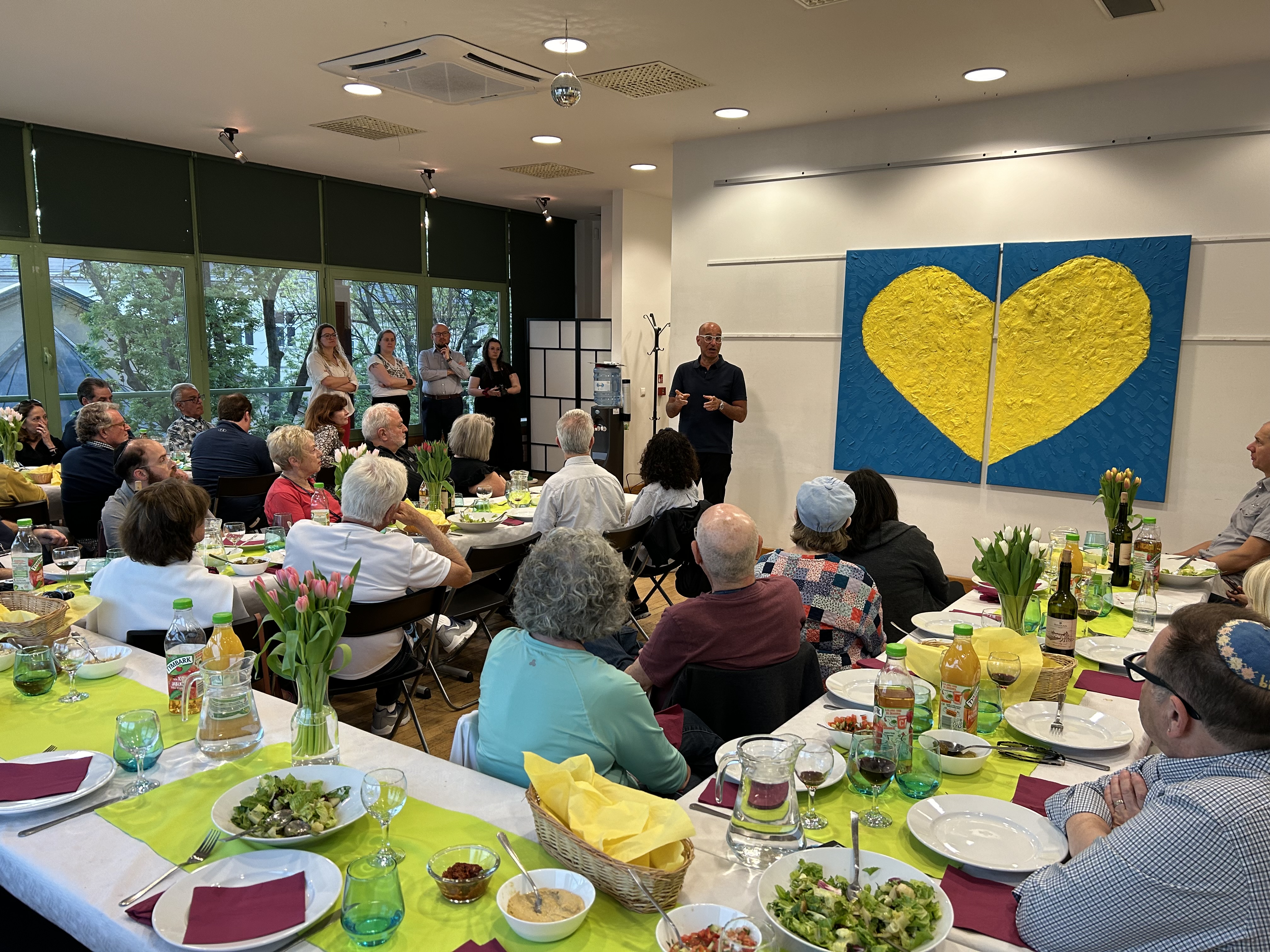
We asked ourselves the question earlier today, “why are we here”? After our first experiences in Krakow, we can answer that we are here to witness the resilience of the Jewish people.
Day Three
An early start on a warm and sunny day took us through the lush Polish countryside, out of Krakow and to Auschwitz and Birkenau. As we approached the site of the slaughter of 1.1 million Jews, I could sense the ghosts of the dead walking through the shadows of the dense woods, beckoning us to come bear witness.
Touring the exhibition halls gave us the history of the site’s construction and the story of how Jewish lives were routed to this final destination for so many. More impactful, however, was seeing the belongings of individuals who were given hope that they were heading from a ghetto to somewhere else — a suitcase, a pot. The piles of eyeglasses, prosthetic limbs and hair told us the unimaginable end that was met instead.

We left Birkenau and stopped at the remaining synagogue of the city of Oswiecim (Oswiecim Synagogue), where we had the opportunity to reflect on our personal reactions to the experience. We felt speechless, overwhelmed, sad, angry, scared, determined, resilient, strong, hopeful, all of the above and more. We felt the cognitive dissonance of walking in the sun on a beautiful day along the path that led to death for so many; of the magnificent weather for a space we associate with the color grey; of the bustling life going on all around, and even within, a torture chamber.
We will continue to let the images settle in our brains and the feelings come to rest in our hearts. It’s time to literally and figuratively wash off the dust as we prepare for Shabbat. This evening we will welcome the Sabbath queen as royalty ourselves. We are here, and we are alive. This Shabbat we make our presence known to God, to one another, and to all the ghosts relying on us to continue their legacies.
Day Four
Krakow is a magnificent city. It avoided destruction during multiple wars, in part because the Poles were quick to retreat in an effort to spare their crown jewel, in part because aggressors made it their center of operations. From castles to churches, we were impressed by the scale, opulence and history reflected by its layers of architectural beauty. Crowded and vibrant public squares and outdoor cafes showed us a free and happy society.
So what does it say about Jewish life in Poland if I tell you we had a perfect Shabbat in Krakow, from sundown to Saturday night? A space of our own in our gracious and inviting boutique hotel, a warm and uplifting Kabbalat Shabbat, and a sumptuous kosher dinner prepared by Chef Alon; morning Shabbat tefillah at the Rema Synagogue with locals and visitors, accompanied by melodies both familiar and new (giving me a couple of ideas to bring home!), where I received an aliyah (thanks David Simkins!) and couldn’t help but tear up thinking about what my grandfather z”l would say; a late morning walking tour to the Old Town; an afternoon walk to the site of the Jewish Ghetto and Schindler’s factory; and, of course, Havdalah.
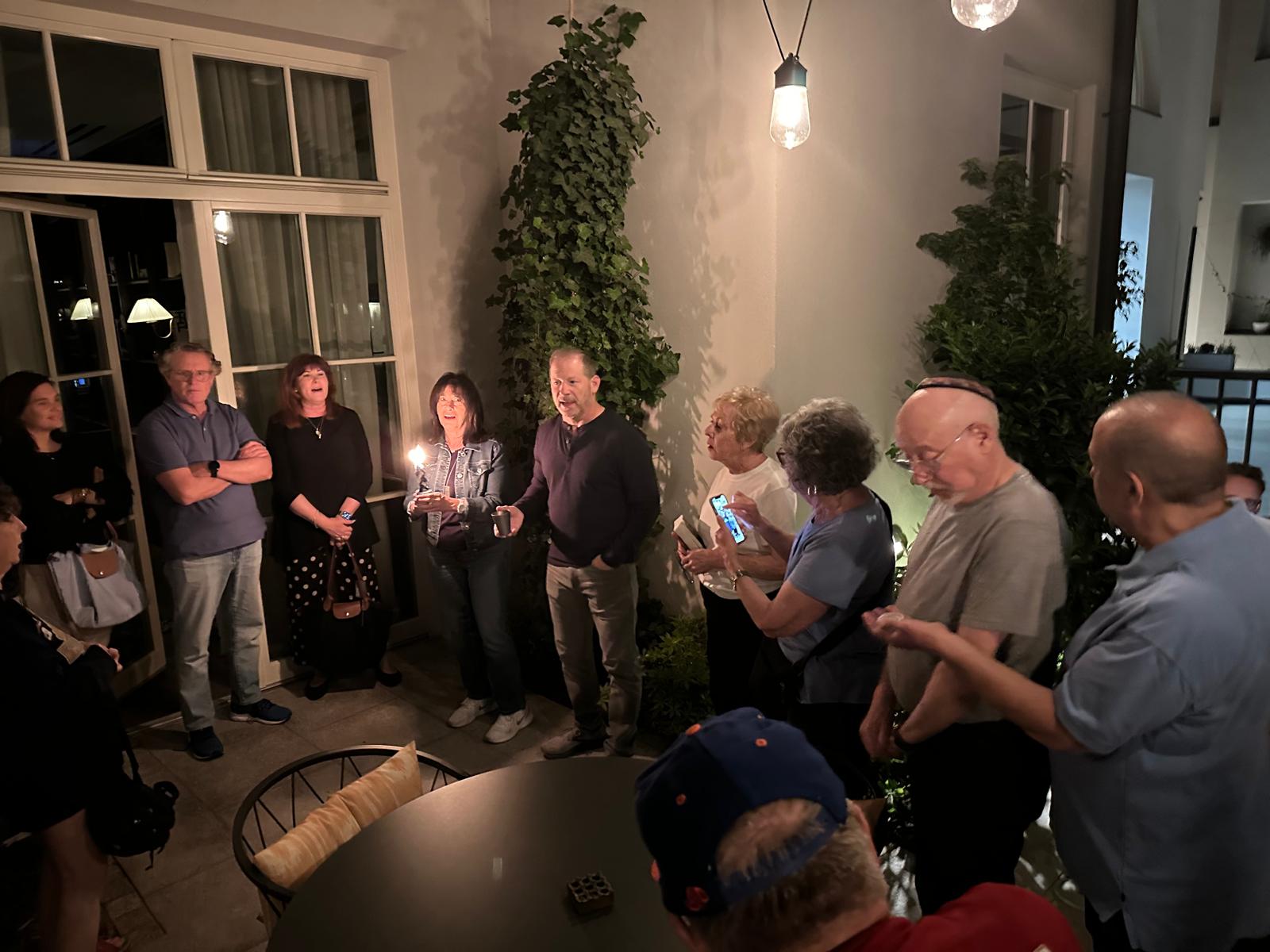
Out of the depths of Friday’s experience at Auschwitz we rose up to feel our souls soar (in stark contrast to our sore soles!), and this morning we once again descend into the pit that was Majdanek.
May we rise once again, Am Yisrael chai.
Day Five
An early departure from Krakow for the long ride to Majdanek was not a given. Despite the inconvenience and the apprehension about committing to experiencing a camp that could be operational in minutes, we knew we had made the right decision immediately upon our arrival.
Simply put, every Jew must see what we saw. It was a comfort to see multiple “March of the Living” groups of teens walking by us, sitting in reflection. On this eve of Yom Hashoah, they are learning the lesson we must all learn: Our Jewish identities and way of life are what has given us the resilience to survive, live and build lives. Our enduring the worst atrocities humans could inflict upon others only proved that we the Jewish People are the source of hope for all humanity.

Sitting in the Yeshiva of Chochmei Lublin, we felt the power that centuries of learning and prioritization of teaching and living Jewishly has brought to our ancestors and continues to provide for our children.
And despite terrible traffic that delayed our arrival in Warsaw by 2 hours, we still managed to hold our own Yom Hashoah commemoration, reflecting on what it means to us in the wake of this experience to be “keepers of the flame”.
Tonight, through the miracle of technology, I was able to share my reflections from this trip on the heroism of my own grandparents, Israel and Sonia Neiman z”l, to see generations representing the survivors of their own families, and to hear Amy Edelstein share her own story. I hope the next 24 hours will provide each of us the opportunity to reflect on what “never forget” means to us in light of where we find ourselves today.
Day Six
Too many people are unaware that the full name of Holocaust Remembrance Day is actually Yom Hashoah v’Hagevurah, meaning the day of remembering the destruction and the heroism.
On this Yom Hashoah, we find ourselves in Warsaw, the place that inspired the full name of the commemoration. The Warsaw Ghetto was obviously a place of terrible suffering as a result of inhumane treatment and living conditions. But while the Nazis tried to strip the Jews of their humanity and ultimately set about liquidating the ghetto, its residents fought until the end. After unexpectedly costing the Nazis soldiers’ lives, resources and time, the persistent and heroic Jews ultimately took their own lives in the face of an overwhelming Nazi military response.
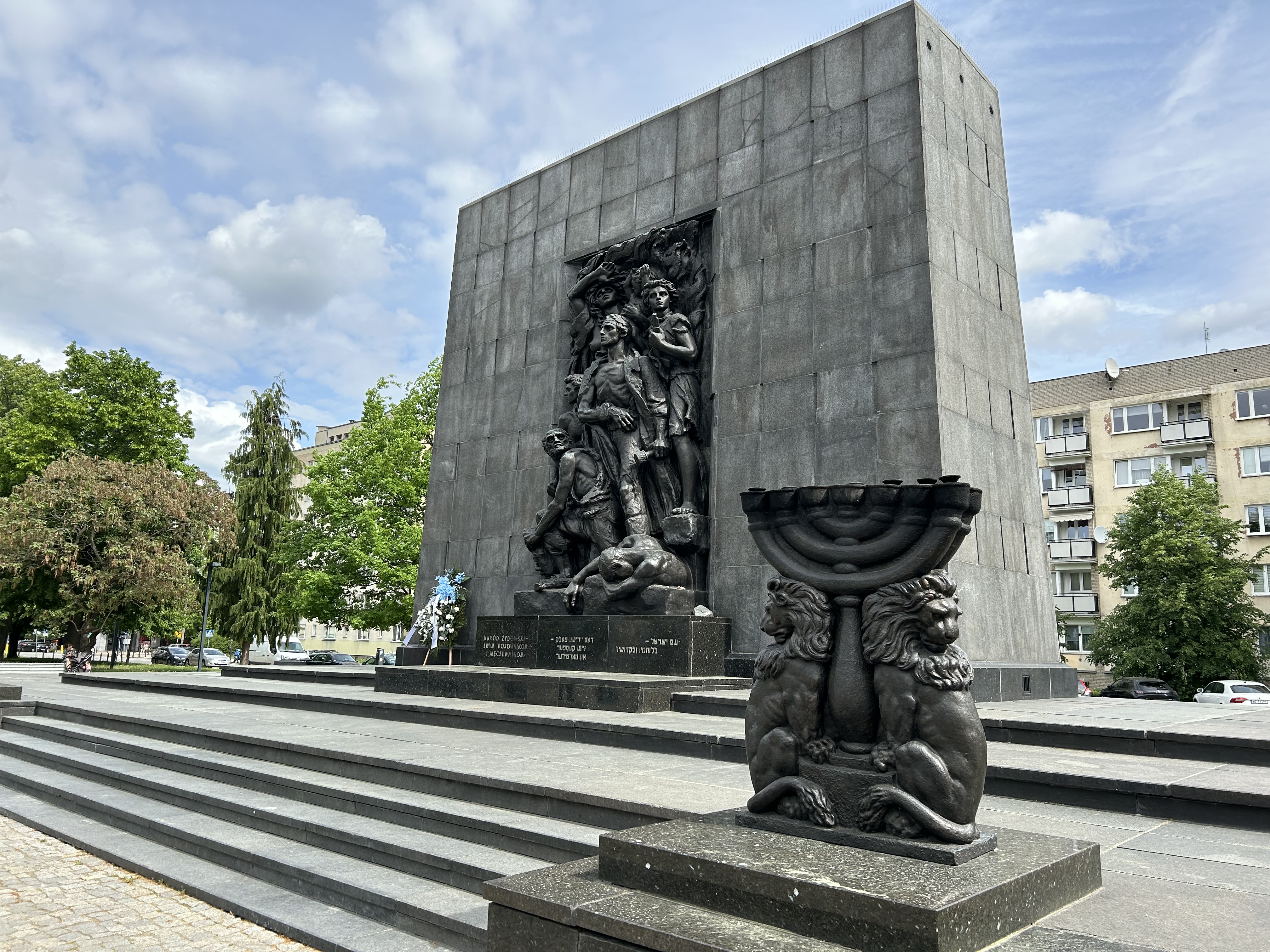
There are few remains of the actual physical ghetto or of the WWII city, given that 85 percent of Warsaw was reduced to rubble. But there are reminders everywhere of Jewish presence, persistence and rebirth, and of the Jewish history that is being rediscovered and examined by so many Polish citizens. From public memorials (plaques, monuments, structures like the deportation platform) to the new Polin Museum, it’s hard to be in Warsaw and not be reminded of the city’s Jewish heritage.
Standing in the Nozyk Synagogue, the only synagogue that remains in Warsaw today, we reflected on the connection between the heroism shown in Warsaw by the likes of Mordechai Anielewicz and the image of the “new Jews” who fought for the establishment of the State of Israel. Our voices echoed in the sanctuary as we sang a prayer for the hostages on this Day 213 of their Gazan captivity, the prayer for the State of Israel, and Am Yisrael Chai.
The Warsaw Jewish cemetery is history told in stone. Parts of the cemetery have been restored with monuments erected symbolically to pay homage to the many greats of Warsaw’s Jewish past. But as Nancy and I went in search of the burial place of our daughter-in-law’s relative who was buried here in 1934, we found ourselves in the deep, dark recesses of an abandoned graveyard with toppled and broken stones, one plot indistinguishable from the next. I felt the shadows closing in on us, and I was reminded of the brutality Jews experienced in a place they once called home.
A day to remember the heroism. A day to remember the destruction. Never again. Never again.
Day Seven
It’s honestly hard to appreciate how we got here without experiencing it for oneself. Considering this emotional roller coaster of a ride we’ve been on and where it started, most of us (if not all) could not have imagined finishing this journey where we did.
Today we took in a presentation from the Polin Museum about the “righteous gentiles” who risked and even gave their own lives protecting Jews. We heard an honest assessment of non-Jewish attitudes towards the Jewish past, and of the ways in which “cultural” antisemitism manifests itself in Polish society.
Today we visited the Jewish Historical Institute, where we saw the written testimonies preserved by “Oyneg Shabbos”, the underground archivists of the Warsaw Ghetto. Their heroic efforts of spiritual resistance have preserved legacies and eyewitness testimonies for Polish and Jewish students of the past.
Today we visited the beautiful Warsaw Zoo, where Jan and Antonina Zabinski hid Jews whom they helped escape from the Warsaw Ghetto, some for days and some for years. We were treated to a piano concert of Chopin and Offenbach, the music Antonina played to signal to the Jews in her basement whether they could emerge from hiding, fall into silence, or head for tunnel that led to the cages beneath the zoo.

We finished our day at the JCC Warszawa, where we dined and learned from CEO Patrycja Dolowy and JDC Entwine fellow Sam Kapner about the continuing revival of Jewish life in Warsaw.
Despite the horrors of the past to which we bore witness, despite the reality that our feet walked above the ruins of Jewish homes, and despite our desire to claim and brandish our victimization against the world, there is a fragrant flowering of Jewish life in Poland. It is youthful, energetic, embracing, and proud. It is unencumbered by the past. It is recognized, appreciated, and even celebrated by non-Jewish Poles.
With great curiosity and a desire for answers, Jewish life is being rediscovered by those with Jewish roots; revealed by those who hid their Jewish identities; explored by those who have recognized that Judaism comprised a substantial piece of Polish history and culture; and remembered by those who don’t want to be condemned to repeat the past. In a Poland that continues to redefine and rebuild itself since its independence from Soviet rule, Warsaw is a safe place to openly identify and practice as a Jew.
Did I just say that?
We heard it from young, proud voices. We heard it from the people who are living it. Who are we to diminish their Jewish enthusiasm, spirit or determination in any way?
As we concluded our night and our Poland experience singing our anthem “Vehi sh’amdah,” the words came out feeling quite different than when we first sang them. May that which has sustained us, despite the enemies in every generation who have sought our destruction, continue enabling us to flourish along with God’s help.

A tale of two sirens
I welcome my younger sister, Randi Galron, as a contributor to this post. Her words will appear italicized in the text.
The first siren introduced herself into my life with no warning. On a quiet and sunny Tel Aviv afternoon in October 1973, as the nine year-old version of me was busy playing a board game with my older sisters, she came through our living room windows, bounced off the walls and took up residence in our floors. The siren grew stronger as she grabbed hold of my feet, causing me to lose my balance. The room had tilted, or so it seemed, as panicked neighbors stopped at our door just long enough to tell us to move down the apartment house stairs to the bomb shelter in the building’s bowels. We sat silently in the dark, dank space for hours until the siren returned to inform us we could emerge, but only to prepare ourselves more adequately for the many times she would return over the next few weeks to send us scurrying back underground.
Every April I steel myself for the visit of the second siren. She comes to visit me in a different way, never catching me off guard. I can anticipate her arrival down to the minute; nevertheless, I am left feeling shaken when she passes. Over the years of my rabbinate, I have busied myself in the month of April with programs, speakers, and songs of Israel. Once the Passover dishes are put back into storage, Yom Hazikaron, Yom Ha’atzmaut, and even Lag B’Omer powerfully reconnect me to Israel and to my Israeli family, friends and places that have become such a foundational piece of my Jewish and spiritual identity. Nothing, however, brings me back to Israel more powerfully than the siren sounded on the morning of Yom Hashoah (Holocaust Remembrance Day). A small piece of me wants to avoid the moment, but the larger piece of me that is insistent upon standing inside it wins out every time.

April 8, 9:09 am, Tel Aviv, Israel
It’s 9:09 am and Craig just texted me. What’s he doing awake at this hour? It’s only 2 am in the States. Riiiiight, he’s the “Keeper of the flame,” a 24 hour vigil that his synagogue observes every Yom Hashoah. I join his “watch” on Zoom and we continue to text. As he writes to me about his reflections, I share my own feelings about what it’s like to have my two sons in the Israeli army at the same time. That both my boys are fighting for and protecting our Jewish homeland is a tremendous legacy to all those who perished. I share with him a picture or two to capture the meaning of this powerful day for me.

April 8, 2:46 am EST, Orangeburg, New York
In a few minutes, the siren will sound in Israel. Most of the country will come to a standstill. Drivers on the highways will pull over to step out of their cars. Merchants will cease their business dealings. The elderly will stand by the young, quietly paying their respects to the fallen.
9:53 am, Tel Aviv
Only 7 minutes to go before the siren. Just a few minutes to quickly finish up what I’m doing to prepare for a moment of reflection and to pay respect to our families and all those who perished in the Holocaust. The time is 9:59 am and from my office on the 48th floor of the midtown office building in Tel Aviv I can already see civilians and soldiers lining the bridge that leads from the Azrieli mall to the Kiryah.
10:00 am, Tel Aviv
The sharp shrill of the siren that pierces the air. The steady siren that symbolizes our mourning and calls us to remember. It’s different from the rise and fall of the air raid “red alert” sirens we hear and heard only a couple of days ago to alert us that our small country is under attack. This siren pierces your heart and stops your breath for an instant. This siren causes the tiny hairs on the back of your neck to stand. This siren calls our entire nation to a halt. An entire nation stopping in its tracks – people, cars, radios, phone calls, the construction site I see down below – all of it. I stand with my head lowered, hands at my sides. I close my eyes. In the background I can hear the faint beating of my heart and I remind myself to take a breath. I try to settle the thoughts and emotions swirling through my mind. I picture the faces of my loved ones, the face of my grandfather who is no longer with us, faces of friends, faces of those whom I don’t even know. But, I remember them. From my office window, I look out at the Ayalon highway. Cars are pulled off to the side, their doors opened, their passengers standing at attention like monuments. I feel a tear on my cheek.

3:00 am, Orangeburg
I stand in our sanctuary before the candles, and I listen to the siren from my sister Randi’s phone. As the alarm pierces the still surroundings, her reverberation connects her listeners one to another, across space and time. Though I stand here seven hours behind, I am transported to that time outside of time, that place outside of space, where the souls of the living and the dead come face-to-face. And even as they are bound up with each other in that moment, the one gazes expectantly, while the other averts its eyes. “Have you learned?” asks the one. The other holds its breath, releases and answers, “I thought I had, but perhaps not.”
While Yom Hashoah and Yom Haatzmaut are inextricably linked on the Jewish calendar, separated only by a week, and while it is so often said that the State of Israel arose from the ashes of the Holocaust like a phoenix, I do not like to perpetuate the idea that Israel exists today due to the Holocaust. There can be no denying that the Holocaust accelerated the realization of a dream that was centuries old, but that dream had already gained major traction in the years leading up to World War II. Even so, the siren of the 1973 Yom Kippur War that lives in my memory and the siren of our annual Yom Hashoah commemoration remind me that Israel’s security and legitimacy–her rootedness in our Jewish past and her aspirations for a Jewish future–are what ultimately give me the luxury of feeling secure as a Jew in the world today.

Randi, kiss your boys for me, and thank them for standing guard on my behalf.
Shalom al Yisrael,
Rabbi Craig Scheff
Under the Wings of the Shechina

It is a unique command of Judaism that we not only remember but must experience history as if we were a part of it. The Passover seder instructs us about the Exodus from Egypt as if we ourselves were slaves in Egypt. Soon at Shavuot, we will once again stand at the foot of Sinai to receive Torah. At each moment in our Jewish lives, ritual bypasses our intellect and goes directly to our hearts, requiring us to remember and re-experience. We fulfill this mitzvah of remembering well, we Jews.
But then Yom Hashoah arrives each year. The command to remember becomes so painful that it takes our breath away. We weep for what we never knew, or as Sister Maureen of the Dominican Ministry said today as we gathered to dedicate our Shoah Memorial, we feel physically ill. With regard to the Shoah, the command to remember requires opening our hearts only to have them broken.
When Rabbi Scheff began teaching his sixth graders about the Holocaust this year, he brought them to the front door of the synagogue and asked how we remember things that we never experienced. He showed his class our memorial, then under construction, and asked them how we should remember.

Today, one hundred and fifty of us dedicated our memorial, thanking Dr. Larry Suchoff and the Holocaust Remembrance Committee for their perseverance and passion to see the project to fruition. Survivors, children of survivors, guests, nuns from the Dominican Sisters, congregants old and young, all gathered to hear shofar blasts and to dedicate ourselves to ensuring that we remember as a community. “Never again” is a goal toward which we will continually strive.

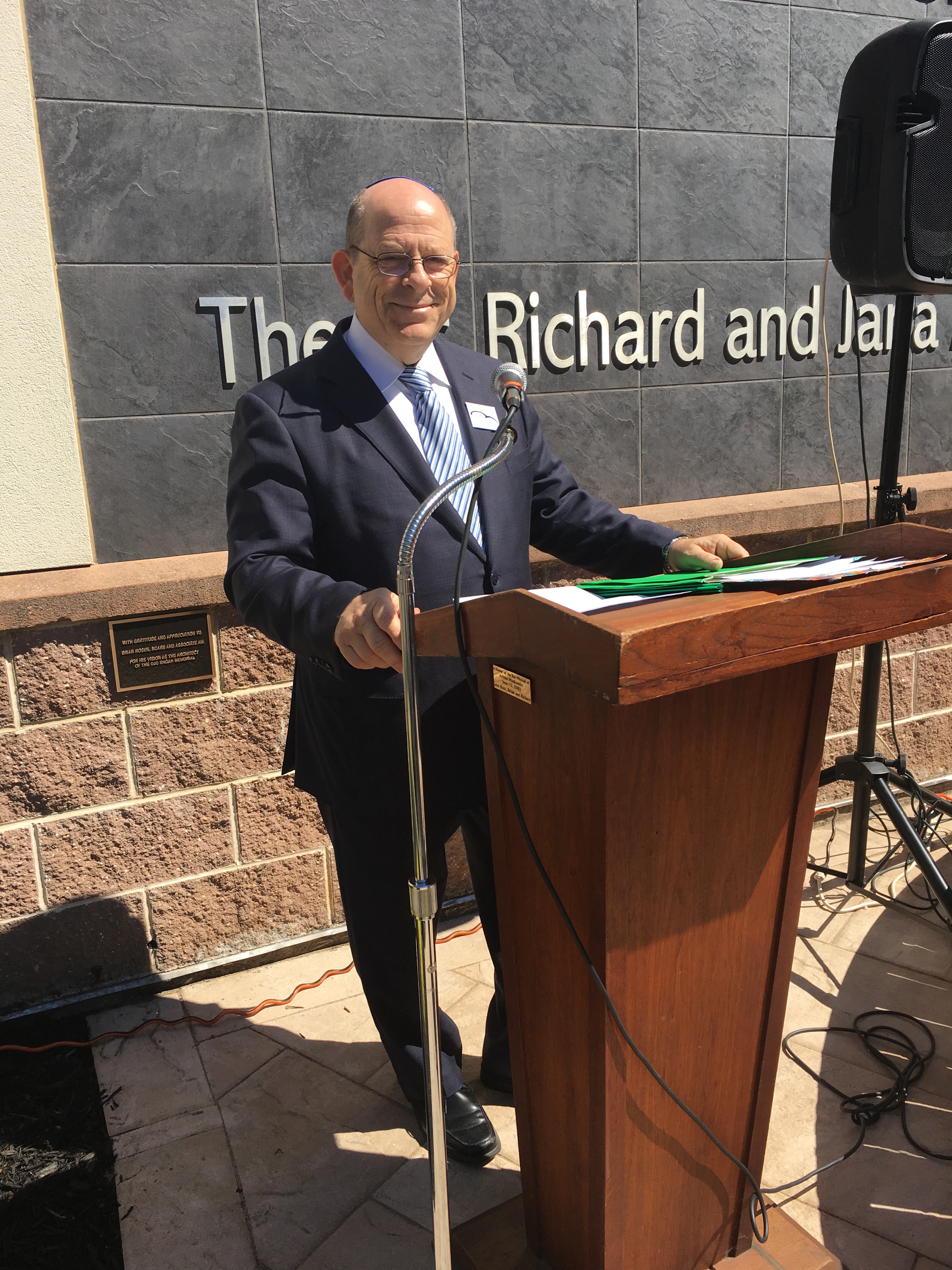
Today, Rabbi Scheff’s sixth graders showed how well they had learned the lessons he taught them. Students read short biographies they had written about survivors who are or were members of the OJC. Each student ended his or her brief statement with: “It is an honor to know you.” Spouses and children accepted the simple statements of these eleven-year old children as gifts. I watched the faces of Frieda and Marie as they listened to their stories being told, and I saw fresh grief, but also validation and hope.


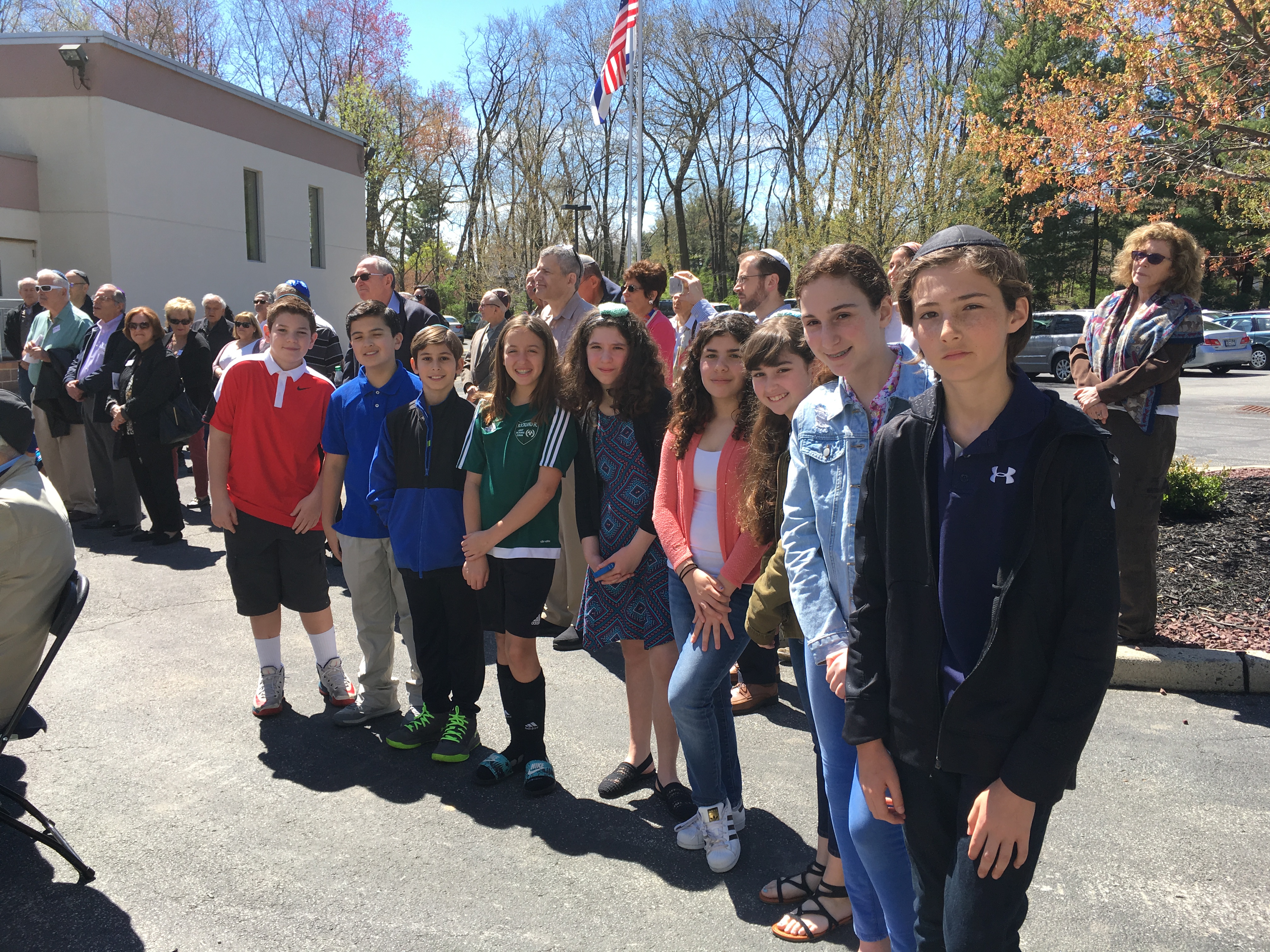
From today forward, we will sit on the benches, reminiscent of train tracks. And we will look at the mosaic which depicts either six candles or six chimneys, depending on your understanding. We will teach and meditate and rest in the sunshine. And we will cherish the wall art chosen for the memorial where under the wingspan of the flying bird, our OJC logo, we read: tachat kanfei haShechina, under the protective wings of God’s Presence. And then, we will enter into our sanctified home knowing that we must act in every moment with remembrance in our hearts.
Through the night and all through tomorrow, we will pass by the memorial and quietly enter the sanctuary where six memorial candles burn as we fulfill our ritual of Keepers of the Flame.

For how long do we need to read and teach about the Shoah? Until the end of days. Until then, we will follow the command to remember m’dor l’dor, from generation to generation. Today’s sixth graders will one day teach their own children.
May Yom HaShoah call us to actions of love and understanding and the overcoming of hate and fear. As Frieda Seidner said, as quoted by her biographers today, “The key is to love all people, but love our people most of all.”
May the memory of six million be sanctified and remembered. Rabbi Paula Mack Drill
Read more and watch the video on LoHud News: http://www.lohud.com/story/news/2017/04/23/orangetown-center-dedicates-holocaust-memorial/100695178/
Remember
The 2013 Pew Research Center’s recent survey of the American Jewish community reported that, among those people who identify themselves as Jewish, a whopping 73 percent say that remembering the Holocaust is an essential part of what being Jewish means to them. That element of Jewish identity received the highest response rate, outpacing other suggested elements such as leading an ethical life (69 percent), caring about Israel (43 percent) and being part of a Jewish community (28 percent). Why does this element of Jewish identity receive such prominence? Is it the guilt that would accompany not remembering, the notion that we might afford Hitler (may his name be blotted out) a posthumous victory if we forget? Is it the particularistic notion that we must remain vigilant against our enemies who are constantly seeking to eliminate us? Is it the universal lesson that makes us better human beings because we will not idly stand by the persecution of any group?
This past Sunday night we commemorated Kristalnacht, the 76th anniversary of the Night of Broken Glass, the event that many say was the official starting point of the Holocaust. German Jewish shops were destroyed, men were beaten, detained and killed, synagogues burned. And rescue workers stood by to make sure that the fires didn’t spread to the neighboring non-Jewish homes and businesses.
The Rockland community observed the commemoration ceremony this year at the OJC. Over 200 people gathered to see the presentation of colors by the Jewish War Veterans, to hear the words of County Legislator Harriett Cornell and the personal testimony of survivor Paul Galan, and to stand in solemn solidarity with the 30 teens holding candles as the words of El Maleh Rachamim, the Jewish memorial prayer, filled the sanctuary.

As I think about the surprising Pew survey statistics, I can understand the relatively high importance we place on remembering the Holocaust in light of what I witnessed Sunday night. I felt our children’s hearts swell with pride as they watched our Jewish veterans salute the American flag, pledge allegiance and sing Hatikvah.
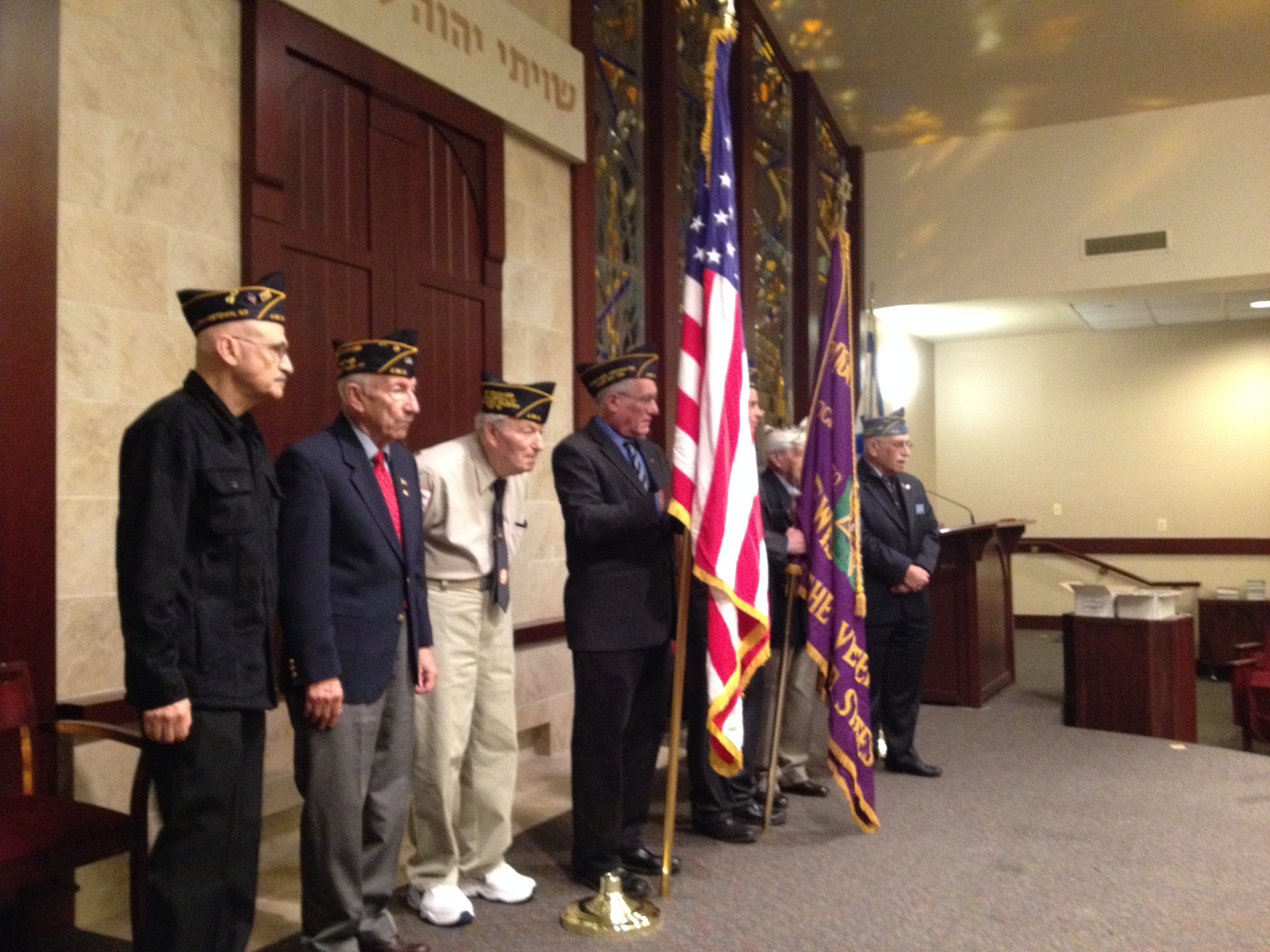
I felt our children’s souls ignited by the memorial candles they held. I felt our children’s minds understand at a level beyond words what it means to remember. Our children recognized that Jewish remembering is not passive. Our remembering is an obligation we fulfill that shapes our Judaism, our identity as Americans, and our humanity. For our children, the lessons of the Holocaust also inform their obligation to defend the values for which they stand, and shape their responses to social issues they confront on a regular basis, like bullying and intolerance. The Holocaust is six million individual Jewish stories of vulnerability, fear, insecurity, cruelty, powerlessness, hope, courage, faith, redemption and love. It is the story of our people as much as the exodus from Egypt, and it is a part of our narrative that must be told.
How will you remember? Participate in our Kaddish project. Match yourself with an individual who died in the Holocaust with no one left to observe their yahrzeit. Learn their story. Say Kaddish for them. Contact Larry Suchoff, our Holocaust Remembrance Committee chairperson, or just walk into the OJC office, to adopt a story. Perhaps remembering the Holocaust will become an essential part of what being Jewish means to you.
Rabbi Craig Scheff
 Three Rabbis Walk Into A Shul
Recent Comments