The Chutzpah of Gratitude
Those pilgrims who established the first Thanksgiving back in1621 had some chutzpah celebrating gratitude. Fleeing religious persecution, they sailed through dangerous waters, accidentally ending up in Massachusetts instead of Virginia. Arriving in winter, they endured bitter cold, food shortages, bewildering farming practices, insufficient shelter, illness and despair. Within a short time, many had died. When we imagine being one of those pilgrims, it becomes clear that it was an act of faith and courage to sit down with new neighbors and give thanks.
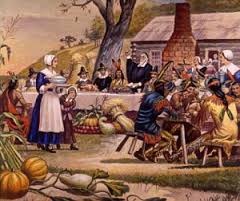
For what did they feel grateful? Perhaps their thanksgiving was an acknowledgement that despite trials and sorrows, it was still necessary to experience gratitude. Perhaps… their gratitude was an antidote to the painful life that was their lot.
Today many of us also struggle. We experience personal challenges, illness, death, family conflict, unemployment. Gratitude is not an emotion that always comes naturally, but Judaism teaches that gratitude is not a choice. As Jews, the expression of thanksgiving is not conditional on whether we have all that we want.
The Talmud teaches that each time we benefit from something in this world, it should be preceded by the recitation of a blessing. Otherwise, we are labeled a thief, stealing from God or the community in which we live. Jews recite berakhot (blessings) to acknowledge the One who provides everything. Jews become blessings when we express our gratitude for the good that is ours by acts of loving kindness toward others. As God’s partners, such behavior is required.
This past weekend, the Orangetown Jewish Center once again remembered to show our gratitude for all the good that is ours by becoming blessings to each other and the general community. For the first time, Mitzvah Day became Mitzvah Weekend. Thanks to the passion and capable organization of Co-Chairs Lorraine Brown and Carolyn Wodar, hundreds of congregants of every age and stage participated in some part of the experience.
After welcoming the Orangeburg Library Interfaith Study Group to Friday evening services led by our youth, seventy congregants gathered for Dinner and Dialogue. We hosted Andrea Weinberger and Rob Grosser, co-presidents of Rockland County Jewish Federation (http://www.jewishrockland.org) and learned together about the organization that anchors all tzedaka in our community, Israel, and around the globe.
On Shabbat morning, just returned from the annual volunteer Mitzvah Mission to Israel with twenty OJCers, Rabbi Scheff reminded us that performing mitzvoth requires stepping out of our comfort zones. Guests from neighboring faith communities joined us at the end of Shabbat for Havdalah and guided conversation to learn about each others’ traditions and beliefs.

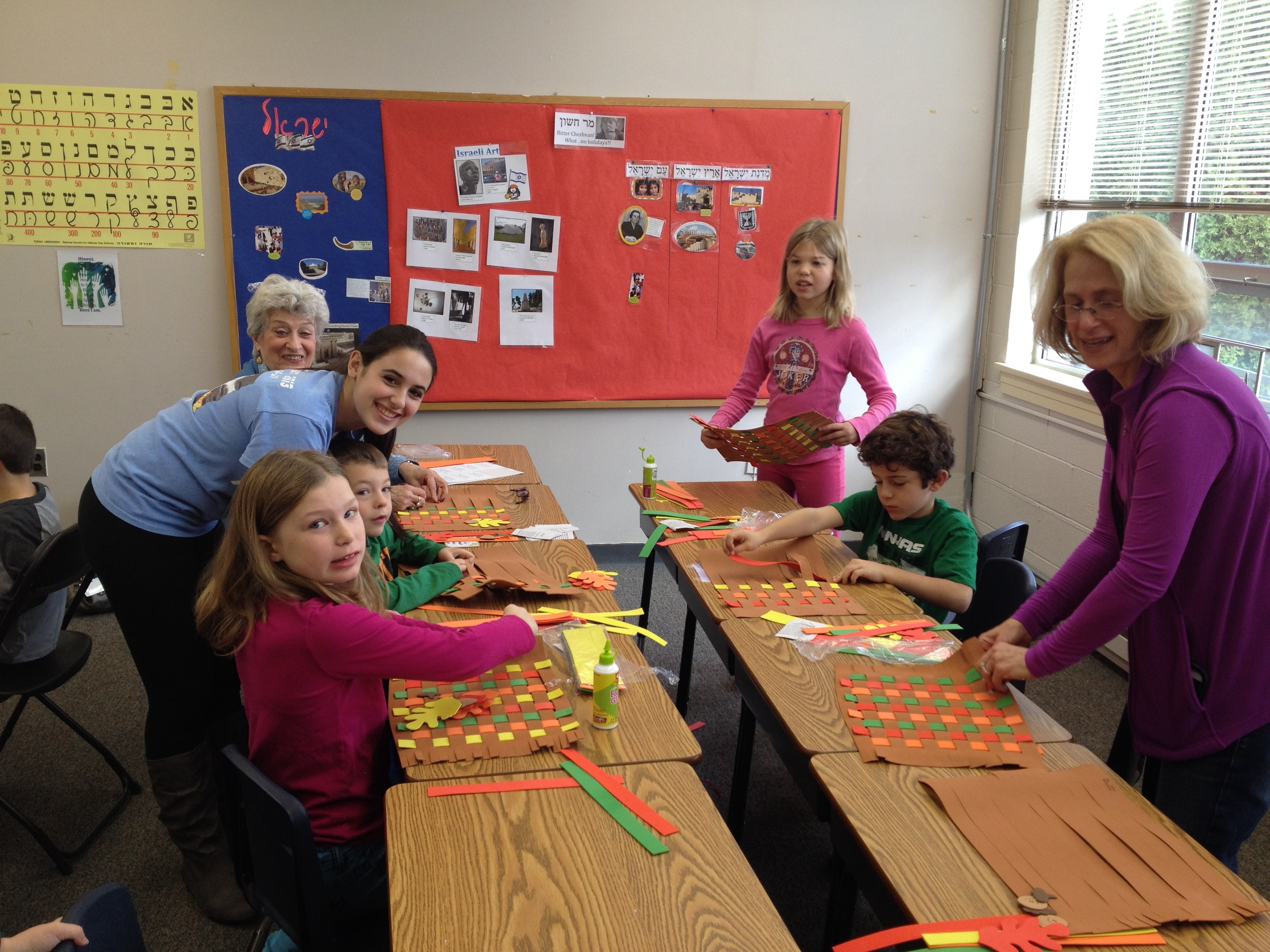
Sunday was the culmination of months of planning as congregants volunteered from early morning with Keep Rockland Beautiful and the annual Breakfast Run to deliver warm blankets and food. Throughout the day, congregants danced to Zumba for United Hospice of Rockland (http://hospiceofrockland.org), learned about TAPS (http://www.taps.org) (support for widows and orphans of American servicemen and women) from CFO (and congregant) Scott Rutter, created flannel blankets and other craft projects for area hospitals and nursing facilities, and went out to visit patients and residents in those places. The day concluded with congregants being invited to minyanim in their neighborhoods.

As many of us enter into the joy and contentment of celebrating Thanksgiving, it is important to remember that for many this time offers neither joy nor contentment. What can we do? If we are surrounded by an abundance of blessings, we can give thanks and become blessings to others. If this time of year emphasizes feelings of need and sadness, still we can find ways to give thanks. All of us can show gratitude to God by becoming blessings to each other. We can offer gratitude as a celebration of God’s gifts or as an antidote to despair.
May you be a blessing,
Rabbi Paula Mack Drill
Saturday night the rabbi slept early
Our sages tell us that we are meant to live as if there is an eye that sees, an ear that hears, and a book that keeps track of all we do. You might think this is enough to drive us to paranoia! In fact, living one’s life as if someone is always watching even our most secretive acts can lead to a more conscious, more intentional existence.
Case in point: a few weeks ago I attended a Saturday night community jazz concert. Shabbat had been a busy one, including a Friday night program, a Shabbat morning bar mitzvah, a lecture after lunch, and a Shabbat afternoon bat mitzvah. Needless to say, I had no Shabbat nap. I settled into the comfortable auditorium seat, the lights were dimmed, and the mellow saxophone began to sing. You can guess what happened next.
That’s right, I fell asleep.
A week later, I had a meeting at our community campus. A colleague said to me, “I heard you are not much of a jazz fan.” “What do you mean?” “I heard you fell asleep!” Ouch. A few days later, while shopping at Fairway, I saw someone from the community I hadn’t seen in a while. “When was the last time we saw each other?” “Actually,” he answered, “I saw you at the jazz concert. You must have been pretty tired.” Double ouch! I actually enjoy jazz; if I ever need some help falling asleep, it’s the Carpenters, John Denver or jazz that does the trick. But one short shloof, induced by exhaustion, mood lighting and music, and I am the talk of the town!
Okay, so I exaggerate a bit to make my point. I understand that I live in a fishbowl, as do many public figures and leaders. The point our sages make, however, is that we should all feel that we are living in a fishbowl, and guard our words and deeds accordingly. Every action, reaction or inaction can be understood as intentional, so we must live intentionally. Every action, reaction or inaction can be understood as a conscious choice, so we must live consciously. In doing so, perhaps we save ourselves a bit of shame, a bit of guilt, a bit of regret, and a bit of being a topic of other people’s conversations!
Rabbi Craig Scheff
 Three Rabbis Walk Into A Shul
Recent Comments