Community as a Salve to Loss
If you read the Orangetown Jewish Center emails, you have seen that we have experienced an inordinate amount of loss in our community in these weeks leading up to Pesach. Answering the needs of every loss in a community includes support for the immediate family, answering the questions of loving friends and acquaintances, advising regarding traditional practices and personal decisions, preparing for a funeral, coordinating shiva houses and minyanim, being present for the mourners in the days and weeks and months following the death. “This must be the hardest part of your job,” say loving, concerned congregants. They ask Rabbi Scheff and me how we cope.
There are two answers to the question. The first answer is that responding to the needs of a family at the time of loss is one of the holiest things that rabbis do. Families open the doors to their hearts and share their stories with us. They depend on us to answer some of the most important questions that humans can ask. And when we can be helpful, it is indeed sad but also uplifting.
The second answer is unique to our community. And the answer is: This community. Without the OJC community, we would not be able to help our families in the loving, respectful way that we do. Sometimes our president or Krista in the office are the first to know of a death. They respond as part of a team and find one of the rabbis immediately. The Ritual Committee delivers chairs and books, finds davenners, alerts Minyan Captains of the alternate sites for minyanim. In these past three weeks, we cannot thank Steve Richter and Jonathan Cohen enough for their responsible and caring attention to every detail. Sisterhood delivers some food for the condolence meal, Chesed finds out if there are any special needs for each family. And then all of you come out to the homes of fellow congregants. Some of you turn plans upside down in order to be there for another. I cannot remember making very many shiva calls without an OJC congregant coming to pay condolences at the same time. Tomorrow night, we will have four shiva homes in addition to the minyan here at the OJC. Some people are understandably hesitant about going to the home of a mourner they do not know. Not every mitzvah is easy. But the hard thing is almost always the right thing to do.You can be a part of the compassionate outreach of our synagogue by attending one of those minyanim. You might just be the tenth.
If you would like to know of a shiva house that would benefit from your attendance Sunday evening, please email one of your rabbis at Rabbi.Scheff@theojc.org or Rabbi.Drill@theojc.org.
B’yedidut, With friendship, Rabbi Paula Mack Drill
Us and Us — A Community Conversation
Growing up in Rockland County, I remember my religious school’s class trip to New Square back in 1976. It was like a trip to Museum Village, a journey back in time, a glimpse into the world of Fiddler on the Roof. We walked through the dusty village square, gawking at the black-clad men and the long-skirted girls, shopping in the grocery store for kosher snacks. It was a museum trip–souvenirs and all–to witness a Jewish community frozen in time. Thirty-eight years later, the community is far from little frozen Anatevka. It has grown exponentially in population and geography, and it has developed into a powerful and well-organized entity. Sadly, religious and political leaders of this insular Jewish community have earned a reputation of hiding social ills, coercing those who dare dissent, engaging in questionable politics, and dismantling a public school system for its own benefit.
When it comes to Jewish law, truly pious Jews have always believed in living beyond the letter of the law. “Fences” are erected around the law to make sure that core principles are not violated. While the Sabbath technically begins at sundown on Friday, we bring in the Sabbath with candle lighting 18 minutes before sundown so as not to encroach on the boundary and possibly err. Religiously observant Jews have similarly tried to abide by the spirit of the law. While I would be within the law to leave a television on in order to watch a Friday night playoff game, I would certainly be violating the spirit of Sabbath rest. Another fact to consider is that, wherever Jews have lived in the world, we have always lived by the principle that the law of the land is the law, so long as it doesn’t demand that we violate our religious law.
It is so disappointing, therefore, whenever we see religiously observant Jews engaged in questionable ethical and legal behavior. To hide behind the legality of one’s actions, knowing that one is in violation of the spirit of the law, is unethical conduct whether the law is of a religious or secular nature. And to ignore that reality is to ignore the Divine calls to the Jewish people: “Be holy because I am holy” and “I shall be sanctified by those who draw near to me.” Finally, such bad behavior falls far short of the prophet Isaiah’s expectation that we would be a “light unto the nations.”
As Jews we are obligated to recognize that we are all responsible for one another; therefore the unethical and possibly illegal actions of our brothers in the East Ramapo School District-whether they involve the use of school funds, the hiding of domestic or sexual abuses, or the corruption of public officials-must be exposed and investigated. If there are ways to bring state and federal powers to bear and to trump local interests, we must advocate to that end. We are further obligated as Jews to value every person as having been created in the image of God and to strive for good relationships with our neighbors. By Jewish law, if we stand idly by the wrongdoing of another, we inherit that sin as our own.
As Jews-and as Americans-we are obligated to wear our Jewishness with pride. We must continue to advocate for the rich diversity of a society that has been such a haven for the Jewish people, and for others who have come here with a dream to live free and succeed by individual aspirations and efforts. We should tout our historic and ongoing charitable support for the public, cultural and social institutions that define this great country.
Join Rabbi Drill, our Rabbinic intern Ariella Rosen, Rabbi Adam Baldachin of the Montebello Jewish Center, and me in a “Community Conversation with Clergy” on Thursday night at 7:30pm at the OJC. Together we will explore the difficult issues confronting the East Ramapo school district and its predominantly Orthodox school board. We will discuss the ethical obligations that shape our private and public response to these events, and learn about an interfaith clergy effort that is currently taking shape.
Rabbi Craig Scheff
A Circle of Chesed
 At a recent meeting with the volunteers of our Chesed Committee, I suggested that one goal of the committee was to need such a committee no longer. Won’t it be great when we are a Chesed Community, and everyone’s needs are taken care of by each one of us doing our part. Until that day arrives, however, we still have a lot of work to do.
One fact that makes me proud and yet also stymies me is why we have fifty volunteers on the Chesed Committee. Fifty is a great number of committed people who make meals anonymously, drive people to appointments, call on the phone and visit shut-ins. Those fifty, however, are not available for every need that arises. In a community of more than 500 families, how do we ensure that the number grows?
Another fact that has surprised me over time is how many people hesitate to ask for help. Many congregants have a broad and steady support network of family and friends and so do not need the support offered by the OJC Chesed Committee. But I have found that many people simply do not want to ask for help. A willingness to ask for help completes the circle of Chesed (loving kindness): today I need your help but tomorrow I’ll be able to offer mine. The work of loving kindness completed by the Chesed Committee is done so discreetly and compassionately. Performing a mitzvah quietly gives a unique feeling of pride. This kindness that I do — I do simply to bring an uplift to someone else.
Perhaps you say that you’d love to help but cannot because you have a full time job and a long commute. Perhaps you say that in a few years you’ll help when the kids are older. Maybe you think that you have too many hard issues of your own. To each of you, I say: your life will be enriched by the good that you will do. There are volunteer positions that range from ten minute phone calls once a week to preparing a meal for one or two – once every six weeks or so. Some families complete their friendly visiting with kids in tow; the children learning from their parents’ modeling how to be a true mentsch. And if you yourself are struggling, helping another is a  powerful prescription for healing.
Please consider finding out how you could become a part of the dream of the OJC as a Community of Chesed … by becoming a part of the Chesed Committee. Get in touch with our Chesed chairs, Adele Garber (Ahg19@optonline.net) or Maddy Roimisher (845-359-4846), before you close this blog! You’ll be part of a circle of loving kindness, and who couldn’t use that in our lives?
Kol tuv, All the best, Rabbi Paula Mack Drill
Celebrating Ramah
This past weekend, OJC’s rabbis, cantor, and youth director attended a celebration for Ramah Day Camp in Nyack (the place that introduced us to each other!) and its director, Amy Skopp Cooper, who is entering her 18th year in the role. The hall was filled with some of the Conservative movement’s finest young rabbis, innovative educators, and budding leaders, all of whom have received a piece of their training at camp. While Ramah as the camping arm of Conservative Judaism is certainly one of the brightest spots among our achievements, and a major factor in shaping and ensuring our children’s future Jewish identities, it has also been crucial in shaping the leadership of our movement. Most synagogue success stories will include in their narratives the profound effect that Ramah’s model of experiential education has had on clergy, educators and youth leaders. The experience of a camp Shabbat is something we all try to replicate for our synagogue communities, and those synagogues with engaging and participatory services usually point to the Ramah model as a major part of that success.

Past OJC rabbinic interns, present rabbis
(L-R) Rabbis Jesse Olitzky, Paula Mack Drill,
Craig Scheff, Dahlia Bernstein, and Ami Hersh
For our own synagogue, Ramah has deeply influenced our professional leadership and the way we try to educate. We have been blessed with some marvelous rabbinic interns over the past 12 years; most of them have come to us with Ramah experience that has enabled them to offer creative programming and to transition with ease into the role of educators in our synagogue, and later in synagogues of their own. Our award-winning youth program is directed by a long-time Ramah division head. We take great pride in our religious school and our youth programs, and it is no coincidence that the leaders among our youth in both of those settings usually have had some Ramah experience as part of their resumes. We are blessed to be able to boast of dozens of campers and staff members in our synagogue community who have attended and worked at Ramah camps, and our services and programs have benefited immensely from their experiences, their comfort level in leading prayer, and their love for Jewish community.
I believe that the future success of the Conservative movement will largely depend upon the extent to which the the Ramah educational model will be utilized in our synagogue communities for our children, our families, and our adult educational experiences. Camp Ramah has the advantage of a unique eight-week laboratory every summer in which Jewish educational experiences can be offered to learners of every age. If given the opportunity and support to work in partnership with our other institutions (including our synagogues, Schechter day schools, USY, and Hillel), Ramah could serve as the primary educational resource for our schools, our youth groups, our family education, and our ongoing learning.
At the end of each of my summers at Ramah Day Camp in Nyack, I would tell the college-age staff members that they had been trained to be our future builders, but that it would take work and determination on their part. Perhaps that was not fair of me; perhaps I have expected too much and offered too little. Instead of losing our most promising young leaders to communities with stronger senses of belonging and Jewish connection, it is time that we reclaim and promote our own, empower and support them, help them recreate their best Jewish moments and reshape our synagogues in their image. Ramah has already begun doing so through a variety of projects being heavily funded by major foundations. While there are few experiences as intense as a summer at camp, our congregational communities can become places of growth, of empowerment, of participation, of communal caring, and of holiness if we allow Ramah to serve as the model. Funders are apparently seeing the possibilities of what Ramah can do for the Jewish future. It is time for our synagogues communities to recognize the same potential, and to bring Ramah–and our Ramahniks–home at summer’s end.
Rabbi Craig Scheff
Beyond the Walls of the OJC to the DC Convention Center
Truth is, on a daily basis, there is no where I would rather be than at the Orangetown Jewish Center. My creative energy runs high at the shul, interactions feel profound, learning feels new, and God feels close. My rabbinate makes sense when I am with you in the classroom, my office or the sanctuary.
It is necessary, however, to throw open the windows of our synagogue and look around at the world we inhabit. And it is important to go out into that world to learn about what is going on. If you are with us on Shabbat or in a class, you know that one of the values of the OJC is that our Torah moves from the text to the lives we lead. The lives we lead are fulfilling when we are having an impact on the world: improving families, communities, Jewish organizations and secular institutions. You hear it in our teaching and in our sermons. Find a passion and pursue it! We begin in Torah, but we use Torah to move to issues about Israel, the Jewish world, Conservative Judaism, and social justice.
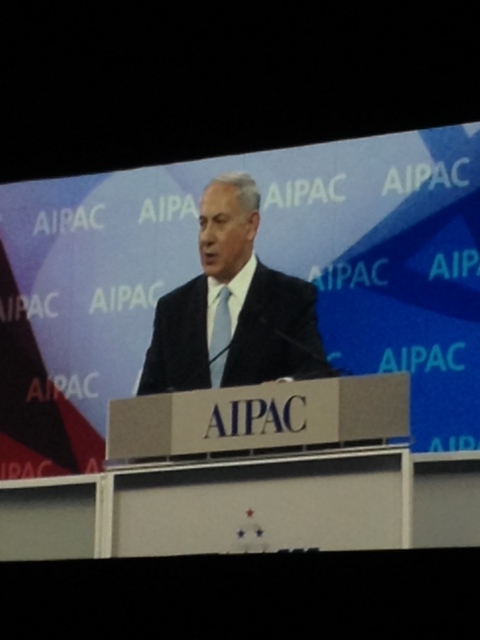
This past week, I spent time in the wide world beyond Independence Avenue in Orangeburg, New York. I returned today renewed, re-energized and ready to bring all that I learned back to the synagogue. I spent three days with twenty four OJC congregants and 14,000 of our pro-Israel allies at the AIPAC Policy Conference. 
At AIPAC, many of the messages resonated with all that I have experienced and learned over eight years of participation in Israel advocacy through AIPAC. Our elected officials on both sides of the aisle unambiguously support Israel as a valued friend. Israeli leadership is grateful to feel the power of our support. People of color and leaders of many faith movements join with us every year to add their voices with ours as important allies in support of Israel. 2300 college leaders, Jewish and not Jewish, join us to state clearly that young people are learning how to advocate for Israel.
The rabbinic leaders of the Reform, Conservative and Modern Orthodox streams stood together on the dais and proclaimed, “Jewish life is not about singing in unison but rather in harmony.” Rabbi Steve Wernick, CEO of United Synagogue of Conservative Judaism stated, “We are not asserting the perfect nature of Israel. There is no perfect country. But we are here to protect the precious relationship between Israel and America.” The ideal of shared values and creating relationships rings true to all of us who have heard Israel sermons in our sanctuary or traveled to Israel on an OJC trip.
Something new was ringing loud and clear throughout the Policy Conference. We have heard the message before at AIPAC, but now it feels like a central theme ino all that we are doing: Despite being in the middle of seemingly intractable conflicts, Israel is a dynamic country filled with innovators who are improving life around the world. We heard from Israeli scientists, technology gurus, and medical researchers breaking through to new frontiers in medicine, security, communication and economic cooperation. There is another story of Israel being played out and we had an opportunity to feel its power. The Israeli Ambassador to the U.N. had a clear answer to the magnificent success of Israeli progress. Ron Prosor said that the secret is The Jewish Mother who believes that her child is a genius and the world just does not yet know it. So if that child takes a risk and fails, the Mother says, “Just go and try again.” And thus we have the Start-Up Nation! It’s a brilliant theory, no?
There was optimism in the air despite the heaviness of world realities right now. John Kerry said, “When Bibi looks me in the eyes and says, ‘We cannot accept a treaty that does not make Israel safer than she is right now,’ he and I agree 100%.” On Monday morning, Netanyahu was downright buoyant (honestly!). He claimed that Israel must be strong to make peace, but peace will make us stronger. 
World events change on the hour and I am no prophet. Three days of learning and advocacy, however, allows me to believe that our Torah will lead us eventually to a stable Israel. As Rev. Dr. DeeDee Coleman shouted to an AIPAC crowd that loves her dearly, “Am Yisrael Chai! The people of Israel live!”
I am grateful to have gone out to learn. I am grateful to return home and share it with all of you.
Rabbi Paula Mack Drill
I need a hero
Those of you who know me well know that I love movies. And while I don’t talk about movies to a great degree in my sermons, I am always watching with an eye for Jewish values and teachings reflected in our mainstream media. Having just seen the LEGO movie with my family, for example, I was struck by the many lessons that could be applied to the Torah readings of these past several weeks about the instructions for the building of the Tabernacle.
But that’s a topic for a sermon on another occasion. My real movie passion is superheroes. I can’t explain why. Perhaps a few weeks with a therapist would open a window into my psyche that would reveal a deep desire to have an impenetrable alter-ego. Or perhaps it’s just that I’ve always wanted to be able to fly, to soar above the fray, to see the world from a different perspective.
When Top Gun hit the theaters in 1986, I admit that I fantasized abandoning my plans for law school and heading to the Air Force Academy instead. Most Jewish children, however, especially those getting married and thinking of starting families, put aside such fantasies. Instead, they follow the more conventional routes (like law school, a short stint as an attorney, and then off to Rabbinical school). Unless you are a Jewish child living in Israel.
In Israel, children dream of flying, and some of them (though only a small percentage) will actually get to live out their dream. With hard work, intellectual and physical training, and a bit of luck, Jewish children have grown up to be the defenders from above, true Top Guns, the creme of the crop, Israeli fighter pilots. Some, sadly, have died protecting Israel’s borders and securing a Jewish homeland, and some have gone on to be leaders in politics and business. Some have even gone to space, carrying Torah with them higher than the heavens.
One such Top Gun happens to be a husband and father of three who lives next door to my younger sister in Israel. Colonel Ariel Brickman is my age, he has commanded a fighter squadron of F-16’s, and he has been the Commander of an air force base in Haztor. Our community has been fortunate to visit his base, to experience the flight simulator, to climb into the jets, and to mourn with pilots’ families on Yom Hazikaron, Israel’s Memorial Day. Today, he serves as General Manager of the Ramon Foundation, which promotes and initiates projects aimed at improving society through science and space, and inspiring young people to dream and to achieve. (Ilan Ramon was Israel’s first astronaut, who died with the crew of the Space Shuttle Columbia; Asaf Ramon, his son, was a fighter pilot who died in a training accident. Ilan’s wife, Rona, decided to coordinate and manage the many efforts to commemorate her husband and son and celebrate their legacy under the umbrella of the Ramon Foundation. Learn more at http://www.ramonfoundation.org.il.)
Did I mention the Colonel (that’s what his friends call him) is my age? Did I mention that I feel like a child when I am in his presence? Did I mention he is my hero? Did I mention he will be visiting our community this Shabbat morning, sharing his story, and what the legacy of the Ramon family means to Israel?
Well now you know. There will be a real live action hero in the house this Shabbat morning. Perhaps you will join me in greeting him.
Rabbi Craig Scheff
Including Jews of All Abilities
My friend Anne* recently told me a story about her eighteen year old son, Samuel. “When David (her husband) davens, Samuel loves to be in the room. He sits quietly and most often seems to be completely detached from the prayers. If David pauses, however, Samuel inserts the next word in the prayer. Often, David includes Sam in his prayers by pausing throughout, letting Sam add the next word in order. . . with perfect pitch! Sure enough, Sam seems to know the entire morning service by heart.” 
David’s prayers are enhanced by sharing them with his son. Sam is multiply disabled and autistic. One might assume that religious connections are beyond his level of comprehension. David and Sam’s shacharit experience tells a different story. Judaism is an anchor for Sam, a point of connection to his family and his people. Sam has a spiritual life that is expressed through his participation in his father’s morning prayers. His synagogue, however, was not a place of engagement for Samuel. His requirements for participation proved too difficult for the synagogue to meet his needs. There is a limit to what an organization can do to accommodate one individual, but I wonder if the synagogue could have tried harder.
Certainly, most synagogues pride themselves on opening their doors wide to all Jews and believe that they are welcoming, inclusive places. I believe that the Orangetown Jewish Center is indeed a welcoming, inclusive place where congregants and clergy alike are focused on ensuring that all are comfortable in our synagogue. We have large-print prayer books, ramps for wheelchair accessibility, and interpreters of American Sign Language. The Nefesh program, under Renee Price’s leadership, offers evenings of education around topics of serving children with a variety of disabilities. In recent years, we have welcomed worshippers from the Rockland Psychiatric Hospital and from county adult group homes to Shabbat services, Na’aseh programs and Sukkot experiences. A loyal troupe of Chesed volunteers visits at an ARC group home for holiday celebrations and a group of teens visits bi-monthly at Jawonio’s Salmon House to bake, play games and do crafts. At the OJC, we do a good job. We can, of course, do more and do better.



We are proud of our Inclusion Committee, chaired by Ellen Abramson and Marianne Brown, that meets to consider accommodations such as a hearing loop system for our sanctuary, free access front doors and ASL interpretation. They need your energy and ideas. Please contact them to get involved. Contact Ellen: ema2@optonline.net and Marianne: mariannebrown@verizon.net.
February is Jewish Disabilities Awareness Month. The OJC joins with Jewish Federations, National Jewish Education Organizations and synagogues across the United States to recognize and increase the awareness of the needs, strengths, opportunities and challenges of people with disabilities in our Jewish community. I will be speaking on the topic of inclusion this coming Shabbat to acknowledge and honor our efforts and to encourage our further accomplishments in this arena.
“The question is not how we can help people with disabilities (which is an important question). A more important question is how people with disabilities can give their spiritual gifts to us. — Henri Nouwen, Theologian and Author 
*The names in this story have all been changed to protect anonymity at my friends’ request.
I look forward to sharing Shabbat with you! Rabbi Paula Mack Drill
Where have all the snow days gone?
I certainly don’t mean that we haven’t had enough of them! The students I met on the eve of our last snow day were actually dreading another day at home! It’s boring, they say, and they don’t want to have any of their vacation days taken away.
Snow is one of those things that brings me a sense of “radical amazement,” a term that Rabbi Abraham Joshua Heschel used to describe the state of witnessing God’s presence in the world around us. I look out my window at this moment, and I see a snowplow in an exercise of futility, fighting its way across the synagogue lot, only to have its tracks entirely covered in seconds. I realize that as much as we try to control time and space, the world is much bigger, and God’s majesty is to be witnessed all around us if we would only take the time to see.

Snow days are just not what they used to be. If you are around my age, I hope that snow days presented ideal opportunities to enjoy family, a warm fire, home-baked cookies, playtime in the snow and hot chocolate made with milk. (Sorry, the Olympics were only being seen recorded during prime time! And there was no Net Flix, On Demand or DVR to binge watch!) Today, the snow may be an inconvenience, but it doesn’t stop most of us from working. Our technology has enabled us to be productive from home, and we are content knowing that the xbox will keep our kids out of the way long enough to let us conduct our business.
There is a good reason why our Halachah with respect to virtual minyans has only evolved to a point. The rule is as follows: an individual may “call in” through electronic means to a minyan for the purpose of communal prayer or to say kaddish. It is indeed wonderful that we can bring people together in this way, especially for the homebound. However, there needs to be an actual, physical minyan present somewhere that is being joined. Ten individuals in separate homes, connected virtually, cannot comprise a minyan. Ultimately, there is simply no substitute for the ideal of being there. Radical amazement can only happen when we are truly present to the moment and to each other.
Snow day. A chance to be there with ourselves or with the ones we love, to appreciate blessings and to acknowledge that we can’t always be in control of time and space. Can’t make it happen on the next snow day? Hang in there, Shabbat is coming!
Rabbi Craig Scheff
Israel Cabinet Rabbinic Mission, Day 4
What a full, exhilarating and emotional day! Day 4 contained all the elements of what this mission is about. Landing back in Newark this morning, we realize that just the experience of the last day was enough to make the trip worth while.
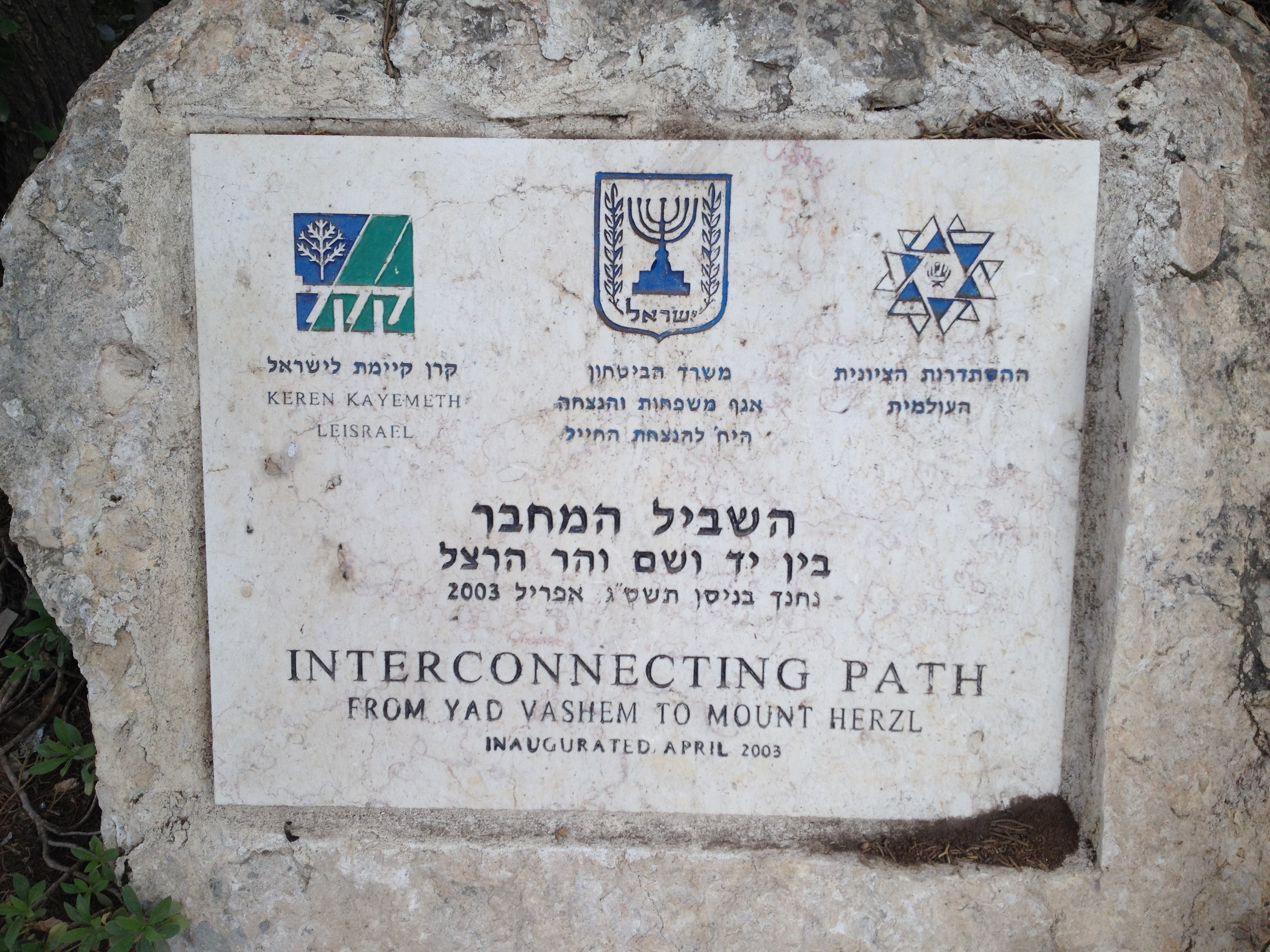
Thursday morning we began our day with an early minyan, a little teaching from a colleague and breakfast. After breakfast we walked a new path that connects Yad Vashem (Israel’s Holocaust memorial museum) to Har Herzl (Israel’s military cemetery). The path is marked by historic milestones and pictured events that carried us from the Jewish People’s survival to the founding of the State of Israel. Our tour guide shared stories and created images of individuals who survived the Nazi persecution, only to die in defense of the new state. At the cemetery itself, we gave honor to those who died with no family left to grieve for them, and to those who were laid to rest surrounded by family and a loving country.

Following our tour of the burial place of Israel’s heroes, we met with parents of fallen soldiers, directors of Yal L’banim, an organization that assists mourning families and helps every community memorialize its sons and daughters who die in service of the country. Their stories were poignant, powerful and inspiring, and we hope–as rabbis and as communities–to partner with them in furthering their efforts.
After a short lunch break (McDonald’s for most of us!!!), we visited one of the most exciting infrastructure projects taking place in Israel today. A high speed train from Jerusalem to Tel Aviv (28 minutes including a 2 minute stop at the airport) is under construction. Among the many remarkable features of this project are the efforts to preserve the natural landscape. The train will travel from point to point only through tunnels and on bridges. Slated for completion by January 2018 (I will believe it when I see it!), the electric train will reduce pollution and improve lifestyle for many immeasurably! We marveled at the engineering ingenuity as we walked through the mountain tunnel, and were excited to see our Bonds dollars at work!


Our next stop was another new experience for most of the rabbis. The 9/11 memorial in Jerusalem is the only other memorial in the world tot he victims of the tragic attack on the United States, and the presence of the memorial is a testament to our bonds of friendship and shared values. The memorial is a statue of an American flag rising like a flame, with a piece of a girder housed in its base, and a ring of the victim’s names encircling the monument.

Our closing dinner gave us the opportunity to debrief from the day, to express our appreciation of the collegiality we shared, and to affirm our commitment to Israel Bonds and the State of Israel. We left full-hearted, with the desire to return to Israel and to one another, and to share all we had learned. Rabbi Drill and I look forward to sharing so much more with you in the weeks ahead.
Our gratitude to Rabbi Hersh for being on call and responding to the synagogue’s needs as he did in our absence.
Shabbat shalom,
Rabbi Craig Scheff
Israel Bonds Rabbinic Cabinet Mission, Day Three
 Three Rabbis Walk Into A Shul
Recent Comments