Filling My Mind and Soul with Israel
On Wednesday, I boarded a 5:45 am train for Washington, D.C. filled with excitement and anticipation of a day filled with learning at the National Rabbinic Symposium of AIPAC. When I arrived home late that night, I felt satisfied that I had been correct. One may wonder how a day spent discussing the difficult, intractable current affairs of Israel could possibly be uplifting, but it was just that. Surrounded by 250 rabbinic colleagues hearing from great thinkers and actors on the stage of Israel affairs, I felt supported and optimistic. Why? As always at AIPAC events, I was reminded of the incredible difference one person can make by exercising her American right to be an advocate for a cause. The cause of AIPAC is protecting and enhancing the American-Israel relationship. Throughout the day, one of my friends kept chanting, “Thank God, Thank God, Thank God for America’s friendship” every time the Iron Dome Defense System was mentioned. I was reminded all day that America is Israel’s staunch ally.
How much more talking and listening can we do about Israel, you may ask. All summer we wrote and read and talked about Israel. Rabbi Scheff and I will both be speaking about Israel on Yom Kippur — me at Kol Nidre and Rabbi Scheff on Yom Kippur morning. The answer is that we will not stop talking about Israel and that was the point of yesterday’s symposium.
I share with you now just one moment of learning in the midst of seven hours of speakers, discussion groups and presentations. At the lunchtime plenary, we were honored to meet and listen to Mosab Hassan Yousef, author of Son of Hamas, his autobiography about his childhood in Ramallah, his work as a spy for the Shin Bet (Mossad) for ten years and his eventual asylum here in America. Mosab’s father is Seikh Hassan Yousef, is a founding leader of Hamas, yet this son came to understand that murder and violence are not answers to the issues of Israel and her Arab neighbors. It felt like all of us in the room were holding our breath as Mosab shared his story with calm humility and courage. He does not believe that he is a hero; rather, he feels that he is a person who came to understand that saving even one life is worth the world. He was asked how he would bring peace to the Middle East given all that he knows about Hamas, Gaza and the West Bank, Israel and America. I cannot stop thinking about his answer. He looked out at all of us and said, “The only thing I can say is Israel must protect herself.” When all is said and done, he is right. Israel must protect herself, but she cannot do it without us. And so we must continue to protect Israel. That is why we’ll continue to read, write, talk and discuss Israel. Am Yisrael Chai!
Kol tuv, All the best, Rabbi Paula Mack Drill
Listen
It came in a long blue velvet bag, with my Hebrew name in gold lettering. I still remember how, a few weeks short of my thirteenth birthday, I was so excited that my sisters had cared enough to buy me a present. Not a ram’s horn, it was the horn of a Greater Kudu. I loved the shape, the color, the size of the mouthpiece and the sound that emerged as I blew it like my trumpet. I couldn’t wait for Sunday morning minyan; maybe Rabbi Sosland would permit me to sound the shofar at the end of the service: tekiah, shevarim, teruah, tekiah.
Thirty seven years later, almost to the day, I unzip the blue velvet bag and slide the twisting shofar from the sack. I blow into the mouthpiece a steady stream of air, just to remove the imaginary cobwebs and to clear the pathway that the sound will eventually travel. Now I purse my lips and press them against the round mouthpiece, not too tightly, and push the air out. The sound emerges always as a surprise, a cross between a trumpet’s call and a cry for help. Thirty seven years later, I continue to discover new meanings in the craggy screech, the staccato siren, the triumphant call. If I close my eyes tightly enough, I can feel the many yearnings of my heart emerge from the end of the horn. I am simultaneously saddened and gladdened, remorseful and hopeful, broken and resolute.
Thirty seven years ago, my rabbi, teacher and mentor wasn’t so thrilled about a twelve year old boy blowing a shofar that was almost as big as he was. Rabbi Sosland took great care to teach me the proper method for the ritual and the appropriate length for each of the sounds. He asked me to sound the shofar facing the ark; he asked me not to hold the final blast so long. He even asked if I would consider blowing a smaller horn. My teacher taught me that those hearing the sound should not be distracted by what they might see: the red face, the puffed cheeks, the winding horn. The only thing that matters in hearing the shofar is the ability to hear with the proper intention. Any visual or aural distraction only serves to diminish that intention and the potential impact of the ritual. In those days leading up to my thirteenth birthday and Rosh Hashanah, Rabbi Sosland was trying to teach me humility.
Close your eyes and let the primal cries enter your ears. If we experience the sounds as entertainment, we are not allowing the reverberations to reach our hearts. But if we listen to the sound of the shofar the way it was meant to be heard, we will learn to hear its call every day: in the still, small voice of God within.
Rabbi Craig Scheff
A Chance to Start Anew

Soon, we will check the calendar, gather our tickets, put on something new and come to synagogue for Rosh Hashana. Many of us arrive with optimism, a hope that we’ll feel something magical, a believe that we can be moved spiritually. Many of us are disappointed by our experience of the New Year. Year after year. The purpose of Rosh Hashana is to start anew, but somehow, it just feels like the same old thing. What are we doing wrong?
Perhaps we are beginning too late. Without realizing it, we are putting off the work that needs to be done before the High Holy Days arrive. Showing up to Rosh Hashana services unprepared is like showing up for a job interview without first doing some research about the company. Would we show up for an interview without a resume?
This Monday night, Tuesday and Wednesday marks Rosh Hodesh Elul, the new month of Elul. During the month of Elul, tradition offers us an opportunity to draw close to God, and in so doing, to draw close to our best selves. This drawing close requires introspection and honest self-assessment. Such interior work is uncomfortable and many of us put it off until we forget about it altogether. If we make use of this coming month before the New Year, however, we will have a better chance of finding something lasting and holy in our synagogue experience.
Tradition tells us that in the month of Elul, God is out in the field, travelling back to God’s palace. There are no guards, no entourage, no barrier between us and God. We can simply fall into step, walk alongside God, and introduce ourselves. By the time we reach the High Holy Days, God is back in the palace. We can still approach, but it is much harder work. The month of Elul is the easiest time to make God’s acquaintance.
Many guides can help us make use of each day of Elul to prepare for the new year. One of the finest books of preparation is Rabbi Alan Lew’s This is Real and You are Completely Unprepared.
The following books are daily journals that provide readings, reflections and challenges for each day as we approach the evening of September 24:
Rabbis Kerry Olitzky and Rachel Sabath, Preparing Your Heart for the High Holy Days
Rabbi Dov Peretz Elkins, Forty Days of Transformation
Simon Jacobson, 60 Days: A Spiritual Guide to the High Holidays
If you are more of a self starter, attend Shabbat services each week leading up to the High Holy Days so that you are not a stranger at God’s door when the day arrives. If you are a member of the OJC, consider coming on Shabbat morning promptly at 9:00 to participate in the contemplative preparatory service. Join me on Monday evening September 15 at 7:30 pm or Tuesday morning September 16 at 10:00 am for Heshbon haNefesh, an Accounting of the Soul. Join with the OJC community (or your own community) on Saturday night, September 20 at 10:00 pm for our Selichot program followed by midnight services.
Choose the path that is right for you. But if you wait until Wednesday, September 24 at 6:30 pm to begin the work of transformation, you might be disappointed once again.
May the month of Elul hold for you the promise of a return to your own soul, to the best that you are meant to be!
B’yedidut, With friendship, Rabbi Paula Mack Drill
In memoriam
God of men and mountains,
Master of people and planets,
Creator of the universe: I am afraid.
I am afraid of the angels
Thou hast sent to wrestle with me:
The angel of success
who carries a two-edged sword
The angels of darkness
Whose names I do not know,
The angel of death
For whom I have no answer.
I am afraid of the touch
Of Thy great hand on my feeble heart.
Yet must I turn to Thee and praise Thee
Awful and great though Thou art,
For there is none else.
There is no strength nor courage
But in Thee.
There is no life, no light, no joy,
But in Thee.
— Ruth Brin
We have not been placed on this earth to answer the question “why” God takes a beautiful child from her parents and family so suddenly at such a young age. Nor are we here to assert that she is in a better place. The arms of her loving parents are the very best place for a daughter to be. We are here to embrace a soul: to keep her in our hearts, our thoughts and, most importantly, our deeds.
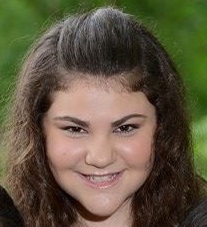
Emily Sarah Levine
May 27, 2001 – August 12, 2014
In memory of a beautiful child who cherished her Jewish identity, please consider supporting a Jewish camping experience or educational opportunity for another child who may grow to be the proud Jew and fine human being that Emily became in her short 13 years.
May Emily’s family, friends and community find comfort, and may her memory always be for a blessing.
Rabbi Craig Scheff
Boundaries around Grief

Tisha B’Av, the fast day commemorating the destruction of the two Temples of the ancient Jewish people, is the longest, slowest fast of all. Twenty-five hours of mourning practices, restrictions on joy (even a prohibition to greet people), and the most gruesome, tragic liturgy in our canon are legislated in the halacha of the day that just ended a few hours ago.
Over the years, I have struggled to assign meaning to the day as I sat on the floor to chant Eicha (Lamentations), refrained from tallit and tefillin at morning services, and of course, did not eat or drink through a hot summer workday.
I have tried focusing on the Jewish command to hear text and experience it as if we were there. I have studied history on Tisha B’Av to realize that Jews are not the ever-dying people but rather the never-dying people. I have used the intention that just as in the days of the Temple, we Jews have repair work to do with regard to sinat chinam, senseless hatred, and lashon hara, evil speech.
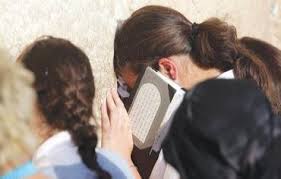
When Tisha B’Av began last night, the congregations of the Rockland County Board of Rabbis came together as we have done for the past three years. We met last night at Montebello Jewish Center where it felt like a gift to be together with so many fellow Jews. This year, like many of you, I was exhausted with grief before the sun even set to begin my fast. I was saddened by stories of families in the south of Israel whose lives have been traumatically interrupted for weeks and weeks by Red Alert sirens. I had been crying every time I read another eulogy for another soldier written by his mother. (How do Israeli mothers manage to do that?) I was exhausted by the biased angle of so many news articles and reports. I was distraught by the clear evidence of a terrorist organization that inhumanely proved its truest colors by devaluing the lives of Israelis and Palestinians alike. I was appalled by the sheer evil of building terrorist tunnels instead of hospitals and schools. I was frightened by the ongoing news of rampant anti-Semitism in Europe and the emigration of hundreds of thousands of Jews from there.
Before I even began, I didn’t have the energy to make any sense of the mourning of Tisha B’Av.
And then Rabbi Adam Baldachin of Montebello Jewish Center opened the services for Tisha B’Av by saying that this day is different from every other day on the calendar. “We always take action,” he said. “But on this day, we just allow ourselves to feel grief.” His explanation gave me permission to do exactly what I needed to do this year on Tisha B’Av: nothing. No meaning-making. No action plan. I just grieved.
Now the fast is over. Blintzes and bialys have been enjoyed. As the day ended, so did my feelings of intense grief. Not so much has changed in the world since one day ago. But I feel a sense of relief after having submitted to the emotion of grief.
Judaism, in its wisdom, carves out moments of time for us to be in the throes of the difficult emotions we need to feel. And then the day ends. Judaism puts boundaries around our grief. We are safe to enter in and then leave the construct.
Praying for the peace of Israel,
Rabbi Paula Mack Drill
The quest for balance, interrupted
At 2:00am New York time, I wrote these words:
Cease fire. Who knows whether it will hold, and who knows whether or to whom it will be of benefit. Israel has committed itself to the task of destroying an infrastructure of tunnels that pose a terrifying threat to her citizens. Hopefully, whatever agreement is ultimately reached will include the completion of that task to the mutual benefit of Israelis and Palestinians. Hopefully, this time will empower voices of wisdom and moderation to prevail against the grip of terror and extremism. Hopefully, those who advocate for economic prosperity, mutual recognition and responsible governance will seize this moment to paint a picture of the possible. In the interim, I catch my breath and consider where I am on the Jewish calendar, only to be reminded once again of the dangers all types of extremism represent.
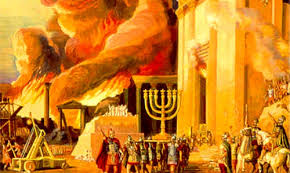
This coming Monday night and Tuesday, we commemorate Tisha B’Av (the ninth day of the month Av), the saddest day on the Jewish calendar, as we recall the destruction of the Holy Temple in Jerusalem and several other tragic events of our past. We actually begin a period of mourning three weeks before the date (no weddings, among other things), and intensify our mourning in the last nine days. Our sages teach us that the Holy Temple fell due to the baseless hatred Jews harbored against one another. In the face of an oppressive Roman presence, the Jewish community of two thousand years ago fell in on itself. Political alliances, religious sectarian infighting and power-hungry leaders rendered the Jewish community fractured and vulnerable. The Temple was destroyed, and in the wake of the unthinkable disaster, Judaism had to recreate itself.
When we teach the lessons of Tisha B’Av today, we focus on the values of respecting one another despite our differences, hearing each other’s opinions, and searching for roads to peace between us. The recreated Judaism of the rabbis taught us that we learn best when paired with others, especially with whom we disagree. In so doing, we allow our basic assumptions to be challenged, we learn to refine our own positions and to make room for the opinions of others. We discover a greater sense of compassion and we give ourselves the possibility of growth.
Some day, God willing soon, it will be time for us to consider how we move forward from this conflict as a Jewish community. We need to express our anger, frustrations and fears, but doing so at the expense of our ability to learn from one another leads only to baseless hatred and destruction.

This was my prayer before sleep last night:
This Tisha B’Av, I pray that we find and hold our center; that we rediscover the language of respect; that we embrace and learn from our plurality and dissonance of opinions; that we combat our own tendencies toward extremism; and that our neighbors have the strength and courage to do the same.
But the light of day brings news of a suicide bomber’s attack, the fear of an IDF soldier’s kidnapping, and a fiercely desperate Israeli response with more civilian casualties. And I am knocked off balance again. And the only voices I can hear are the cries of a kidnapped soldier’s parents. And on this morning, I must tell you, compassion for anyone else is so much harder to feel.

Dear God, in this time of mourning, restore the balance to my humanity. Assuage my wrath. Set me on a course of faith and hope. Help me forge a path to peace. And let me be a source of comfort and compassion to others.
Rabbi Craig Scheff
Simple Abundance in a Time of Lack
In a time lacking in truth and certainty and filled with anguish and despair, no one should be shamefaced in attempting to give back to this world, through her work, a portion of its lost heart. — Louise Bogan

As the crisis in Israel continues to unfold, I am feeling acutely aware of how much I currently lack. I lack peace of mind. I lack my typical sense of expansiveness and contentment. I lack a sense of wellbeing regarding those I love in Israel. I lack confidence about the place of the Jewish people in the world. I lack optimism about the United Nations and international leaders. I lack hope for secure borders and true peace for Israel in my lifetime.
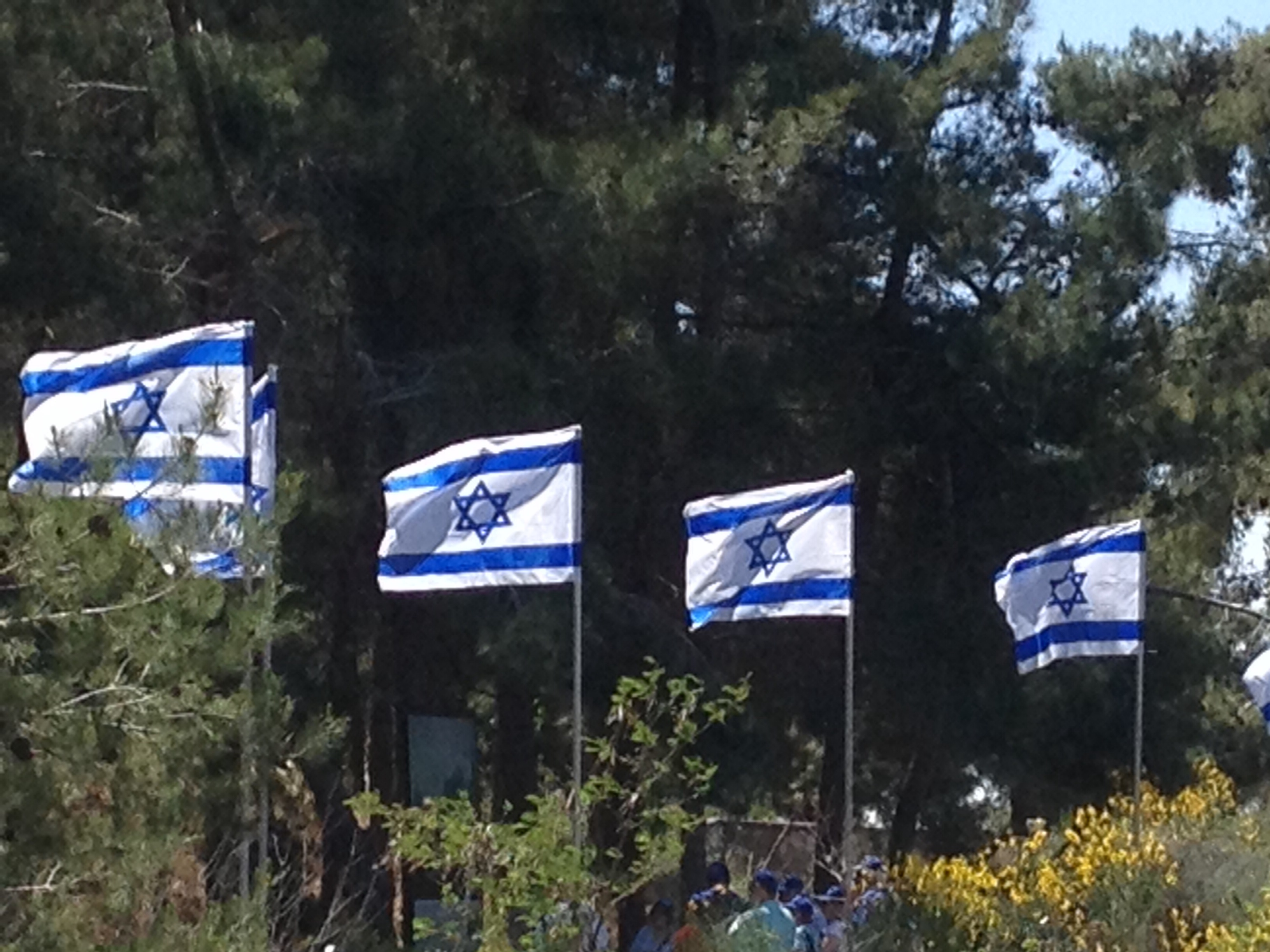
Perhaps it is Divine Providence or maybe just luck, but exactly now, when I feel the emptiness of that glass half filled, I am teaching a summer course at the Orangetown Jewish Center called Simple Abundance. In a class based on the book by Sarah Ban Breathnach, twenty-five students share Monday mornings as a time to focus on all of our blessings. Anchoring Breathnach’s work in Jewish values and texts, we talk about the principles of gratitude, simplicity, order, harmony, beauty and joy as a way to realize that we possess all that we need to be genuinely happy.
In Breathnach’s words: “When I surrendered my desire for security and sought serenity instead, I looked at my life with open eyes. I saw that I had much for which to be grateful. I felt humbled by my riches and regretted that I took for granted the abundance that already existed in my life.”
Just before teaching the first class, I thought that I could not possibly facilitate a learning experience about finding personal joy when Israel was in crisis. As soon as I began teaching, however, the connections being made and the kindnesses being shown shifted my understanding of what was actually taking place. In our corner of the world, we were bringing God into our midst and sharing ways in which we could be our best possible selves.
I cannot change the make-up of the United Nations Human Rights Council. I don’t know how to solve the complicated issues of Israel in her dangerous neighborhood. I cannot protect all of my children and friends in Israel from harm.
But I can do something. I can maintain my best self in the midst of the fear, anxiety and loss in Israel. It is so much easier to fall into despair. I realized through the path toward simple abundance that the courageous response to world events is to be optimistic and positive. Rabbi Scheff declared at our Kiddush time discussion about Israel this past Shabbat, “I am an idealist and I make no apology for that. When I give up hope, I might as well stop this work that I do.”
Be courageous! Reclaim optimism. Empower yourself by taking one small action for Israel and for yourself. Join us for the next Simple Abundance class on August 4th at 11:00 am.
Praying for the peace of Israel, Rabbi Paula Mack Drill
What’s your story?
I want to say something tonight that will change the minds of those who are blinded by ignorance, prejudice or worse. Something that will reach every heart, from the Hasidic Jew in New York City this afternoon protesting Israel’s right to exist to the Muslim protester in Antwerp yesterday calling for the slaughter of the Jews. Something that will reach the heart of every person who calls for the indiscriminate death of Palestinians–as if that will end the conflict–without considering those boys and girls who must do the dirty work, how many lives it will cost, and what could be the toll on the collective Jewish soul.
What I have heard time and again over the last days, unfortunately, is that there is no changing people’s minds through the media. Most people who read my words or hear me teach, by and large, share a worldview similar to my own. They will “like” me and “follow” me because I affirm their way of thinking. If I don’t, chances are, they are hearing opinions different from my own. And if we do engage with people who disagree with us on a charged subject, we are typically responding in anger, dismissing the other as out of touch with reality.
What can I offer, then, to move people just a little from where they are? Perhaps the personal story. The narrative that isn’t filled with history or facts or politics or agenda. Just a real life story of one person’s experience that dares the listener to identify, to empathize and maybe even to change perspective for a moment.
Ariel is a father of 3, a great guy, my sister’s neighbor on the moshav. Looking at him in a t-shirt, jeans and flip-flops, you’d never know he was one of Israel’s top fighter pilots. A retired pilot now, a former commander of an air force base, now serving as general manager of a charitable foundation. A couple of weeks ago, Ariel’s 18 year old son, Guy, finished his army training, receiving an award as the outstanding soldier of his unit. Guy is a fun-loving boy who has no desire to hurt anyone. Ariel loves flying to reach the heavens, where he finds peace. Today, Ariel is back in active service, flying over Gaza, giving cover to the troops below. Giving cover to his son.
Israel just reported its first casualty of the ground incursion. I hope you will pray with me for the peace that Ariel and Guy want, the safety of their family and the prosperity of their neighbors. Pray with me that they come home safely and to safety. Soon.
Feels good to share a story. Perhaps you’ll share one of your own?
Rabbi Craig Scheff
Pray for the Peace of Israel

History has been outpacing my ability to write a blog that can address how we are feeling. We had just finished watching the funerals of our three boys for whom we had prayed for eighteen hopeful days. We had not yet begun to grieve fully for Naftali Fraenkel, Gilad Shaar and Eyal Yifrach, when we were hit in the stomach by the news that a sixteen year old Palestinian boy, Mohammad Abu-Khdeir had been murdered violently by Jews. Before we could adjust our minds to that news, eighty rockets fell on the south of Israel, in just a few hours of one night. Then before we could even sit down, last night, Operation Protective Edge, Tzuk Eitan, began as Israel sought to protect her civilians from the ceaseless missiles that have been raining from Gaza for three weeks.
If you are like me, it has been a hard week to focus on life in the present moment. I found it difficult to do anything as mundane as make a phone call to the dentist or order a book. Instead, I follow the updates of my Israel news apps, read every email that arrives in my inbox, call my cousins in Tel Aviv to learn that they are in their safe room for the night, and text with my daughter Sarah and her boyfriend to ensure that she is okay on her base and to wonder when Sagi, a reservist infantry officer, will be called up.
If you are like me, you are here and you are also there. Experiencing this strange kind of time travel, you want to know what you can do. The following is a list of suggestions.
1. Write letters of condolence to the Fraenkel, Shaar and Yifrach families. As I explained on Shabbat, they will be comforted to know that we are thinking of them in their mourning. State your name, mention the OJC and your town and state. Send your letters to
mail@masortiolami.org or mail your letters to: Masorti Olami;32 General Pierre Koenig Street, 4th Floor; Jerusalem, Israel 93469. Our letters will be delivered after shloshim.
2. Plant trees in Israel in memory of the three young men who were kidnapped and killed on their way home from school for Shabbat. Check out http://www.israeltrees.org or http:www.jnf.org.
3. As I suggested on Shabbat, commit to perform four acts of loving kindness in memory of three Jewish boys and one Palestinian boy. Torah asks us to turn away from darkness as a response to violence and turn instead toward light. If you would like to share with Rabbi Scheff and me what chesed you choose to do, we would love to collect your anecdotes.
4. Pray. Pray for the peace of Israel. Pray for security of her borders and a return to normal life for all civilians in the area. Pray for the wisdom of Israel’s leaders and the courage of the soldiers of the IDF. Pray for a speedy cessation of this war so that the toll of human life is as low as possible. Pray for seeds of understanding to be planted even as we are at war. Pray in your own words or with the words of psalms or the Prayer for the State of Israel. Pray by yourself or come and be with us at the OJC to pray with your community.
5. Stay updated about what is going on in Israel. Sign on to an Israeli news service like ynet.co.il or jta.org. Download Jerusalem Post and Ha’aretz apps to your smart phones. Find out what is happening and share the information with your Jewish and non-Jewish friends. Do not assume that they understand all that is going on.
6. Use social media to promote Israel’s story. Write with moderation and intelligence, and with all your heart. It is not possible to learn from someone who writes with hostility and anger. Write to teach. Share essays and pictures that are meaningful to you. If a picture is worth a thousand words, then this short video must be worth a million. Cut and paste into your browser: https://www.youtube.com/watch?v=zQmpiEotWME&feature=youtu.be.
Rabbi Scheff, as you know from the most recent blog entry, is in Israel with Nancy to celebrate their niece’s wedding. Scheduled for tomorrow night, it is unclear what will take place for Kellie and Gonen since gatherings of more than forty are prohibited for safety and guests at Israeli weddings typically number in the hundreds.
From his sister Randi and Avi’s bomb shelter on the moshav, Rabbi Scheff wrote a letter home. In part, he wrote: “Today, more than 150 rockets left the Gaza strip, aimed at civilian population centers, including Tel Aviv. They continue to fly… Watching Fox and CNN, I have learned that only rockets that kill people will make headlines around the world. No news of the trauma to our children, the interruption to life, the prohibition against public gathering, the fact that tens of thousands are sleeping in bomb shelters because no defense system is fool-proof. What you will see on the news is Israel’s response, the destruction surrounding missile sites (sometimes footage from Russian aggression passed off as damage in Gaza), the number injured and killed by Israel’s attempts to put an end to the days and nights of terror.
Rabbi Scheff asks us to contact our elected officials regarding the need to understand and appreciate the reality of this situation, and thank them for their financial support of the Iron Dome project. He reminds us to call family and friends in Israel and tell them that they are not alone.
Rabbi Scheff and Nancy will return early Friday morning. We hope that you will be at the OJC on Shabbat to hear all that he learned with his head and heart from being in Israel at this turbulent time.
Have mercy, dear God. Draw Your peace into the world and let it spread among all Your people. End conflict for You know how much evil and sorrow it creates. Show us Your compassion. Send Israel love, life, and peace. (Rebbe Nachman of Bratslov)
Pray for the peace of Israel. Shalom, Rabbi Paula Mack Drill
Summertime, and the living is easy?
It’s hot here in Israel this time of year. So hot that brush fires are popping up all around the country. They are only mildly dangerous and easily extinguished. Sometimes they are man-made and sometimes inadvertently sparked. One such brush fire was ignited in the field behind my sister’s house a couple of weeks ago by a tractor’s blades. My nephew frantically called my sister, vacated the house and waited for the fire company to arrive. The bougainvillea plants that bordered the yard are gone now, but the house is safe and the fear is gone.
Mostly. After all, how does a boy of 12 rid himself of the images of the flames approaching his house? How does a child protect himself against the fear that accompanies hearing a recording of 3 teenagers being kidnapped and shot, their captors rejoicing, and the message being played across every media outlet? How does a family find normalcy when each person’s tablet and phone rings with an alert of every “color red” that is declared for the neighborhoods twenty miles away?
Nancy and I arrived here yesterday for my niece’s wedding celebration. We enjoyed a trip to McDonald’s for dinner, and attended my sister’s community choir concert. The kids got up this morning and went next door to hang out in the pool overlooking the scorched field. Life is as normal as ever, it would seem.

Except for the anxiety just beneath the surface. The “safe room” is 45 seconds away if needed, they joke. Two “Iron Domes” are in the area, they assure themselves. The police are present in large numbers on the roads in and out of Jerusalem to assure the public and to dissuade any who might be tempted to kindle a new fire. The family is monitoring the news, praying that a thorough police investigation will reveal that the killing of a young Palestinian boy was something other than an act of Israeli revenge.
It is hot here, that is for sure. But Israel won’t let us see her sweat. Life is more complicated than ever. Our children who are visiting here are as safe as anywhere else, I assure you. And there could not be a more important time for us to be here to offer some love and comfort. The difference is that we will return to the United States, to a place where independence means not relying on others for political, financial or even emotional support. For those who call this place home, there is no place else to go. So they will live with the anxiety, and keep praying for rain.
Shabbat will be here soon. I think I’ll join my nephew in the pool.
Shabbat shalom,
Rabbi Craig Scheff
 Three Rabbis Walk Into A Shul
Recent Comments