Pictures are worth…
We knew from the start that Day Two of the Orangetown Jewish Center’s 2014 Mitzvah Mission was going to be a day of powerful impressions. Linda Varon started the morning with reading Torah for us from the Sephardic Torah, always a special treat!

The sun came up over the bay of Akko, the rain fell for a while, and a rainbow shot across the sky as we were preparing to load the bus for Kfar Ahava.

If anyone told you that you would be spending the majority of your day painting pictures of Winnie the Pooh or Alladin, you might think, “This is what we travelled thousands of miles to do for Israel?”


Understanding the plight of these young at-risk children and the unusual circumstances under which they are raised, however, quickly changes our understanding of what a picture can add to a child’s self-esteem. The murals we are creating will add color, smiles and love to the lives of the children who will open their eyes each morning to the vibrant characters.
We shared lunch with the kids and their foster families. I even had a surprise visit from my sister!

After a day of exercising our fine motor skills, we drove to Zichron Yaakov, where we were welcomed with generous hospitality by OJC’s Yoel Ledany and his new wife Batya in their beautiful home. Over dinner, Josh Drill, who is performing a preparatory year of leadership training before entering the army, shared with us his experiences and reflected on his new social and spiritual environment.
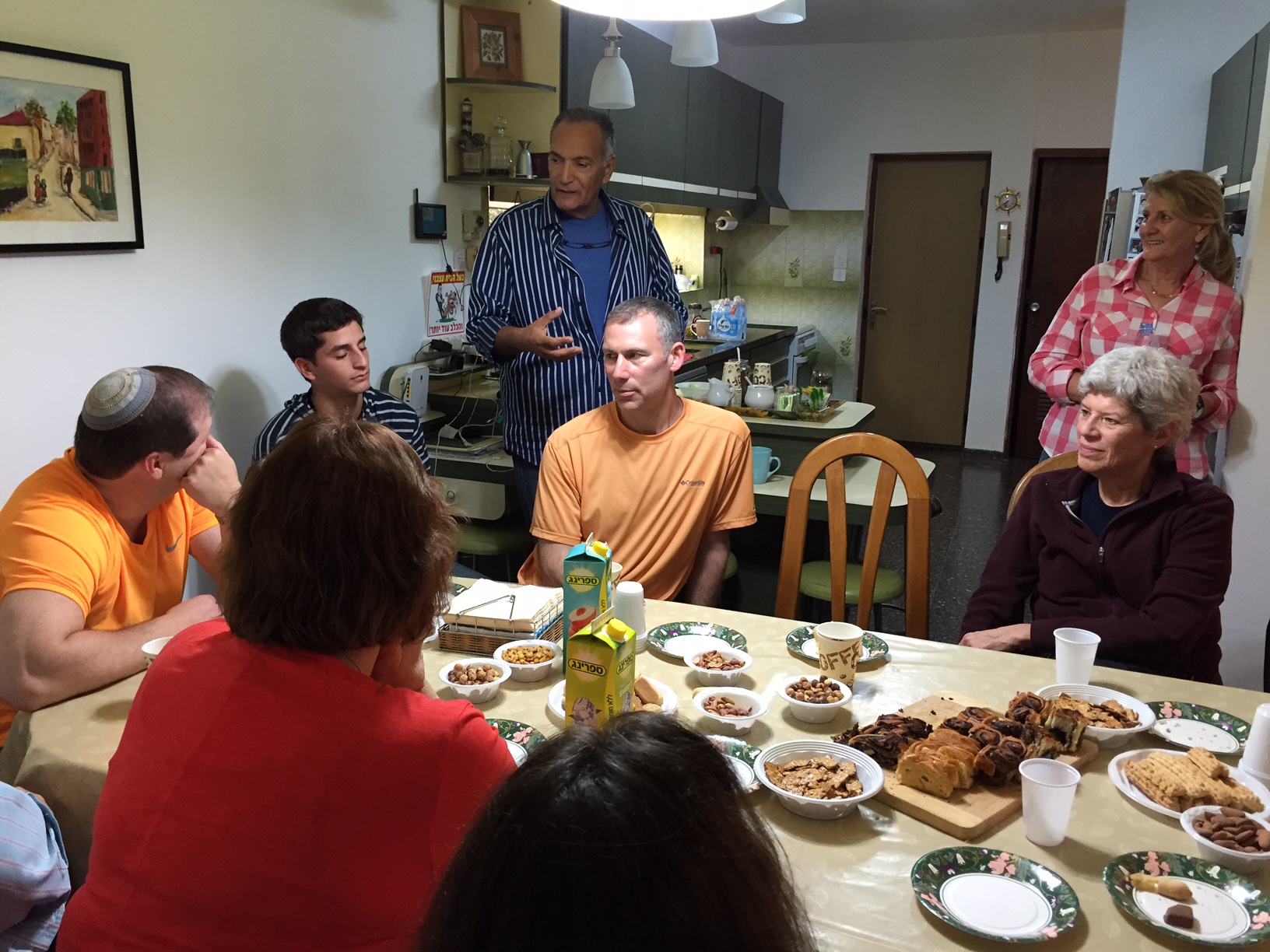

After a full day, you’d think the gang was ready for some sleep before we tackle Day Three. But no one seems to have lost their bounce yet!

Mitzvah Mission to Israel Day One
Sunday, November 16
Akko, Israel
Over the next few days, a group of congregants from the OJC, ranging in number from 18 to 21, will be kicking off Mitzvah Weekend with our ninth annual mitzvah mission in Israel. The work may be taxing, it may be easy; it may be with children, or with the land, or with cans of food and boxes of dry goods. Ultimately, the nature of our work doesn’t matter as much as the purpose. We are here on a mission to serve, to give back, to do our part in bringing support, comfort and love in the way we know best: through acts of self-sacrifice and loving kindness.
This experience is unlike any Israel tour one will ever take. Not much sight-seeing. Plenty of purpose.
I hope you will follow our activities and experiences. To do so, log on to blog.theojc.org at the end of each day. Or better yet, subscribe to our blog the first time you go there, and it will automatically be delivered to your inbox each day.
Plenty of rain here this evening. For Israel, it is a blessing. Rain or shine, we pray that the work of our hands will be a blessing to the State, the Land, and the People of Israel in the days ahead.
Laila tov,
Rabbi Craig Scheff
Remember
The 2013 Pew Research Center’s recent survey of the American Jewish community reported that, among those people who identify themselves as Jewish, a whopping 73 percent say that remembering the Holocaust is an essential part of what being Jewish means to them. That element of Jewish identity received the highest response rate, outpacing other suggested elements such as leading an ethical life (69 percent), caring about Israel (43 percent) and being part of a Jewish community (28 percent). Why does this element of Jewish identity receive such prominence? Is it the guilt that would accompany not remembering, the notion that we might afford Hitler (may his name be blotted out) a posthumous victory if we forget? Is it the particularistic notion that we must remain vigilant against our enemies who are constantly seeking to eliminate us? Is it the universal lesson that makes us better human beings because we will not idly stand by the persecution of any group?
This past Sunday night we commemorated Kristalnacht, the 76th anniversary of the Night of Broken Glass, the event that many say was the official starting point of the Holocaust. German Jewish shops were destroyed, men were beaten, detained and killed, synagogues burned. And rescue workers stood by to make sure that the fires didn’t spread to the neighboring non-Jewish homes and businesses.
The Rockland community observed the commemoration ceremony this year at the OJC. Over 200 people gathered to see the presentation of colors by the Jewish War Veterans, to hear the words of County Legislator Harriett Cornell and the personal testimony of survivor Paul Galan, and to stand in solemn solidarity with the 30 teens holding candles as the words of El Maleh Rachamim, the Jewish memorial prayer, filled the sanctuary.

As I think about the surprising Pew survey statistics, I can understand the relatively high importance we place on remembering the Holocaust in light of what I witnessed Sunday night. I felt our children’s hearts swell with pride as they watched our Jewish veterans salute the American flag, pledge allegiance and sing Hatikvah.
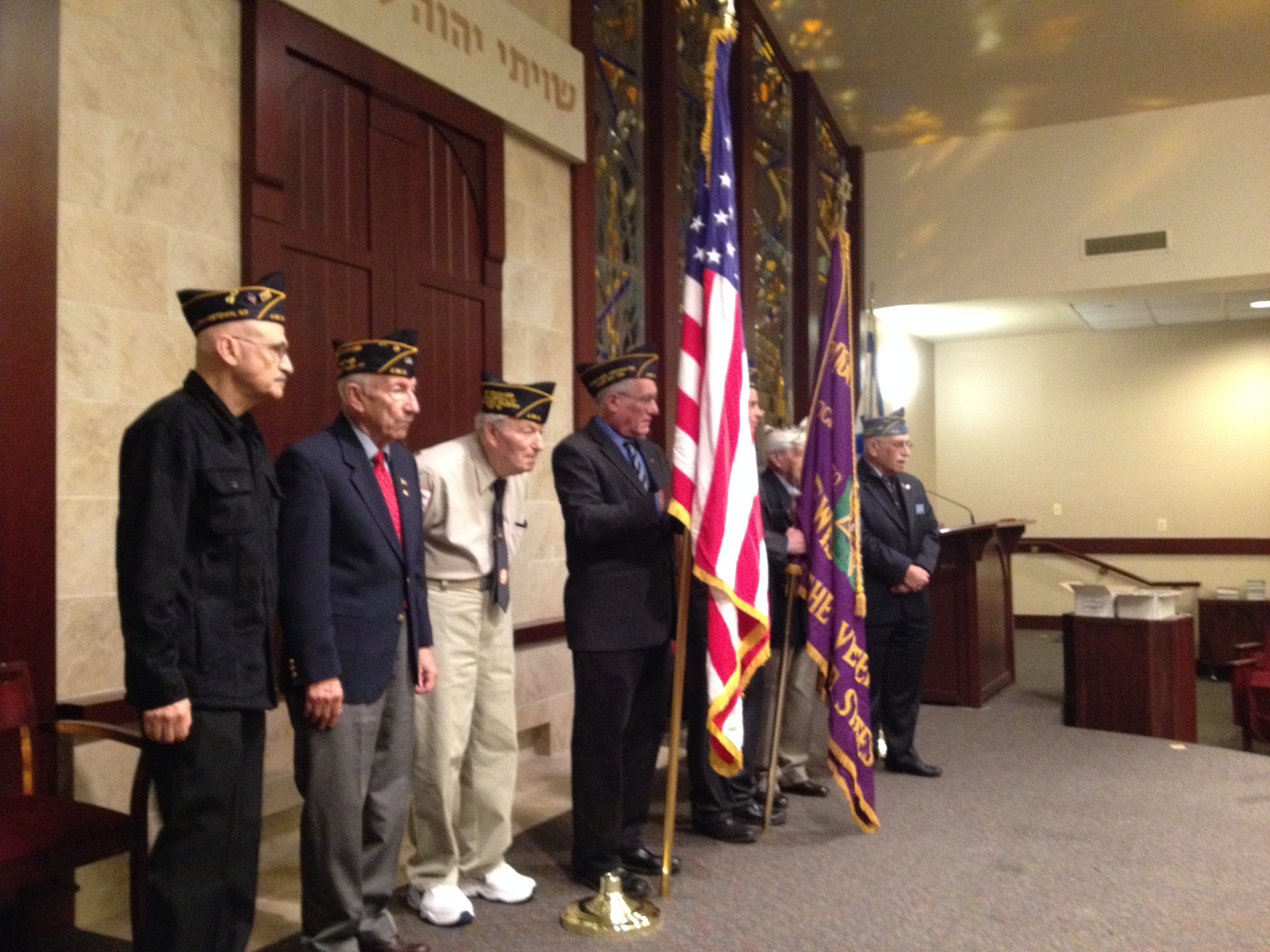
I felt our children’s souls ignited by the memorial candles they held. I felt our children’s minds understand at a level beyond words what it means to remember. Our children recognized that Jewish remembering is not passive. Our remembering is an obligation we fulfill that shapes our Judaism, our identity as Americans, and our humanity. For our children, the lessons of the Holocaust also inform their obligation to defend the values for which they stand, and shape their responses to social issues they confront on a regular basis, like bullying and intolerance. The Holocaust is six million individual Jewish stories of vulnerability, fear, insecurity, cruelty, powerlessness, hope, courage, faith, redemption and love. It is the story of our people as much as the exodus from Egypt, and it is a part of our narrative that must be told.
How will you remember? Participate in our Kaddish project. Match yourself with an individual who died in the Holocaust with no one left to observe their yahrzeit. Learn their story. Say Kaddish for them. Contact Larry Suchoff, our Holocaust Remembrance Committee chairperson, or just walk into the OJC office, to adopt a story. Perhaps remembering the Holocaust will become an essential part of what being Jewish means to you.
Rabbi Craig Scheff
An Exclamation Point and not a Question Mark
I had the privilege to attend the Annual Benefit for the Rockland County Holocaust Museum and Study Center on Sunday, November 2nd. The plan to construct a captivating, interactive center in space given to the Museum by Rockland Community College means that the mission of our Holocaust Museum and Study Center will continue and expand. The Museum is the place where the Jewish community fulfills our obligation to remember and where citizens of all cultures and faiths learn lessons of acceptance and tolerance.
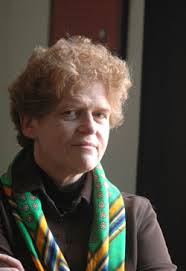
Sunday’s speaker, Dr. Deborah Lipstadt, shared the frightening and depressing picture of anti-Semitism that we have been reading about for several years. Anti-Semitism is rampant in the world and cannot be dismissed as an aberration in time or as anchored only in one quadrant of the world. She cautioned us, however, not to equate the violence and hatred being experienced now with that of the beginnings of the Holocaust, violence which at that time was State sponsored.
Lipstadt emphasized that seventy years after the Holocaust, many Jews in Europe no longer feel safe. As she wrote in a New York Times article on August 20, 2014, “Hiring an armed guard to protect people coming for weekly prayer is not the action of a secure people. In too many cities worldwide, directions to the local synagogue conclude with, ‘You will recognize it by the police car in front of the building.’”
While she did not diminish the necessity of concern for all who value a free, democratic, open, multicultural and enlightened society, she did urge us to refuse the lachrymose theory of Jewish history. As historian Salo Baron said decades ago, we can choose to see the story of the Jewish people in chapters that jump from pogrom to pogrom or we can choose to look at the great triumphs in scholarship, culture and world impact in between those pogroms. When we say, “I am a Jew” we must say it with an exclamation point and not with a question mark.
How then do we teach a new generation that being a Jew is about more than a history of physical and emotional attacks? How do we teach the Holocaust in a way that instills Jewish pride? How do we raise children secure enough to wear a Jewish star or a kipa in public? According to Lipstadt, the answer is that we identify as Jews not because of anti-Semitism, but af al pi… despite anti-Semitism.
At the Orangetown Jewish Center, we can begin the process now. We are proud to be this year’s host for the Holocaust Museum and Study Center Annual Kristallnacht Commemoration on Sunday, November 9 at 5:00 pm. http://images.shulcloud.com/380/uploads/Krista_s_Calendar_Folder/kristalnacht-2014-final_1.jpg
Bring your middle school and older children to participate in a candle lighting ritual. Learn from Museum President Paul Galan. The time is now to say that we are proud Jews despite anti-Semitism. The time is now to say, “I am a Jew” and complete that statement with an exclamation point.
I am a Jew! Rabbi Paula Mack Drill
Empowering our children
Foresight. Vision. Strategy. Whatever led to the decision, it was nothing short of brilliant. It will pay dividends in the short run by providing benefits to consumers, and it will bring a return on investment in the long run by developing a broader base of financial supporters and leadership. Brilliant.
This past Sunday night, Jawonio (Rockland’s premiere provider of lifespan services for those with developmental disabilities) held its annual gala at the Paramount Country Club in New City, New York. This relatively pricey, black-tie optional, politician-studded fundraising event has been held for decades and has catered traditionally to a pretty high-end crowd to benefit the organization.

This year, Jawonio got creative. The organization chose to honor the Orangetown Jewish Center Youth. 25 of our finest kids got dressed up, purchased tickets at a reduced price of $36, rubbed elbows with the big shots, and danced the night away like few at this event had ever seen. Oh yeah, Rabbi Drill, our youth director Sharon Rappaport, our youth chair Mitch Brill, our USY division director Bruce Varon and I were there to make sure the kids behaved, to share a few words, to shep a bit of naches, and to shed a few tears as well!
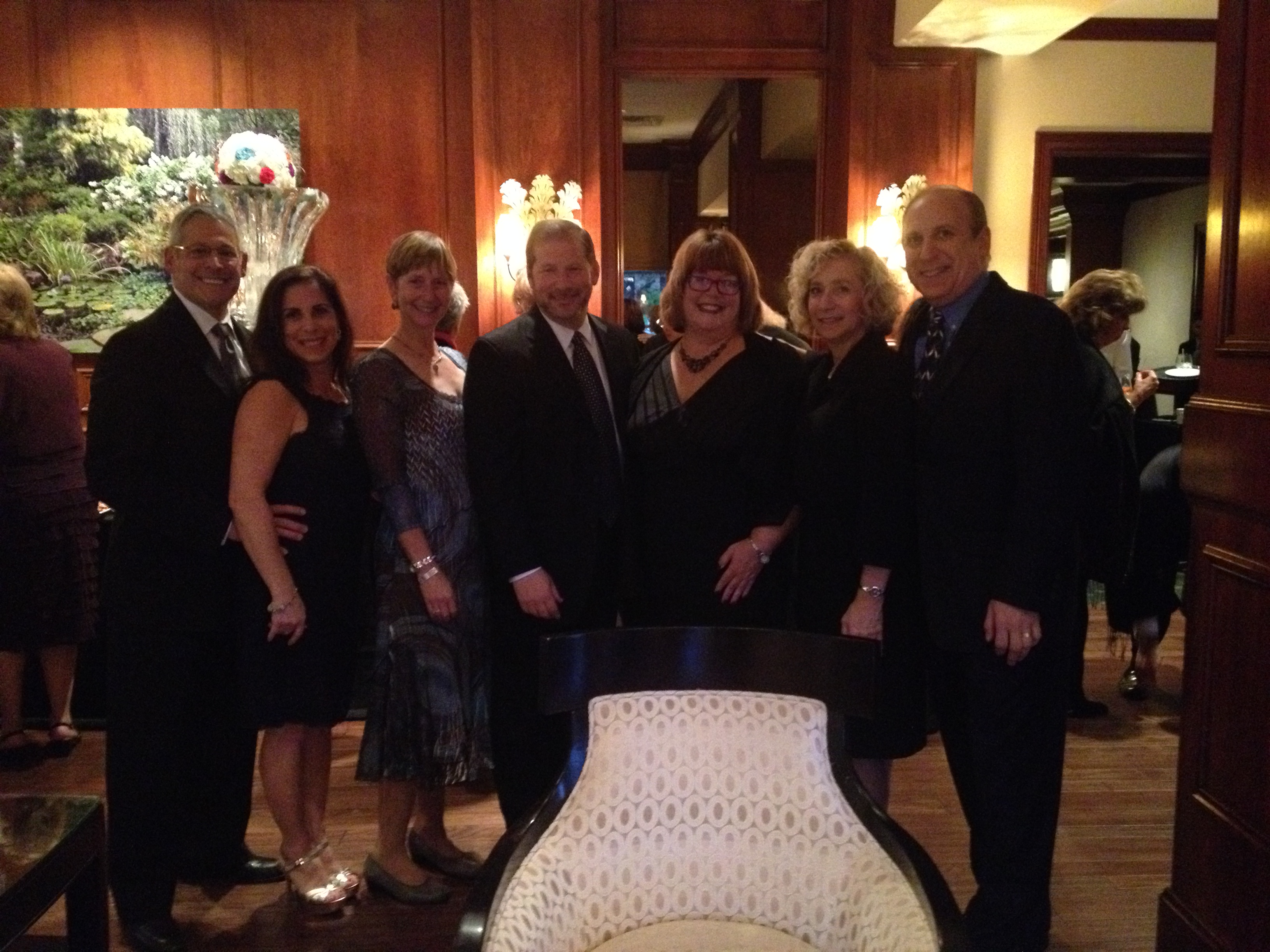
Over the years our youth group has studied the Jewish value that every person is created b’tzelem Elohim, in God’s image. Their learning has led to their communal commitment to serve those of varying abilities by visiting group homes, running carnivals, holding bowl-a-thons and hosting social gatherings. Their actions have helped them individually conquer fears, break down barriers, increase sensitivity, and generate love for all of God’s creations.

Jawonio’s leaders took a risk. By subsidizing the attendance of these youth, and by choosing to honor a group that doesn’t make a large financial commitment to its bottom line, Jawonio chose to inspire. Jawonio inspired our kids by helping them see themselves as valued and contributing members of society who can make a difference; Jawonio inspired its own supporters by showing how its mission is changing the world for the better, both for its consumers and for the larger community; Jawonio reminded us all that our children are our future, deserving of recognition for their contributions and investment in their leadership development. That’s what I call vision!
Mazal tov to our community, to our Naaseh/USY program for empowering our youth to make a difference, to our kids who choose to be a part of holy work, and to Jawonio for helping us see the image of God in every person.
Rabbi Craig Scheff
Sukkot Success by the Numbers
Here I am, heading into the month of Heshvan this week, not a holiday in sight after four intense weeks… and there is only one question on my mind: How do we measure the success of celebrating Sukkot at the OJC?
I could try to count the hundreds of congregants and guests who spent time in our sukkah. I might count the number of times we gathered to pray together as a community, marching with lulav and etrog or dancing with the Torahs. I’d count the number of programs and classes in the sukkah that we all enjoyed (eight, by my count!).

I’d certainly count the number of young children and their grown-ups who attended one of Rabbi Hersh’s programs: EKS with spaghetti in the sukkah, grilled cheese supper before Simchat Torah eve and ice cream party on the day. I would add in the number of Religious School children who tried to keep up with Rabbi Scheff’s My Sukkah it has Three Walls routine.

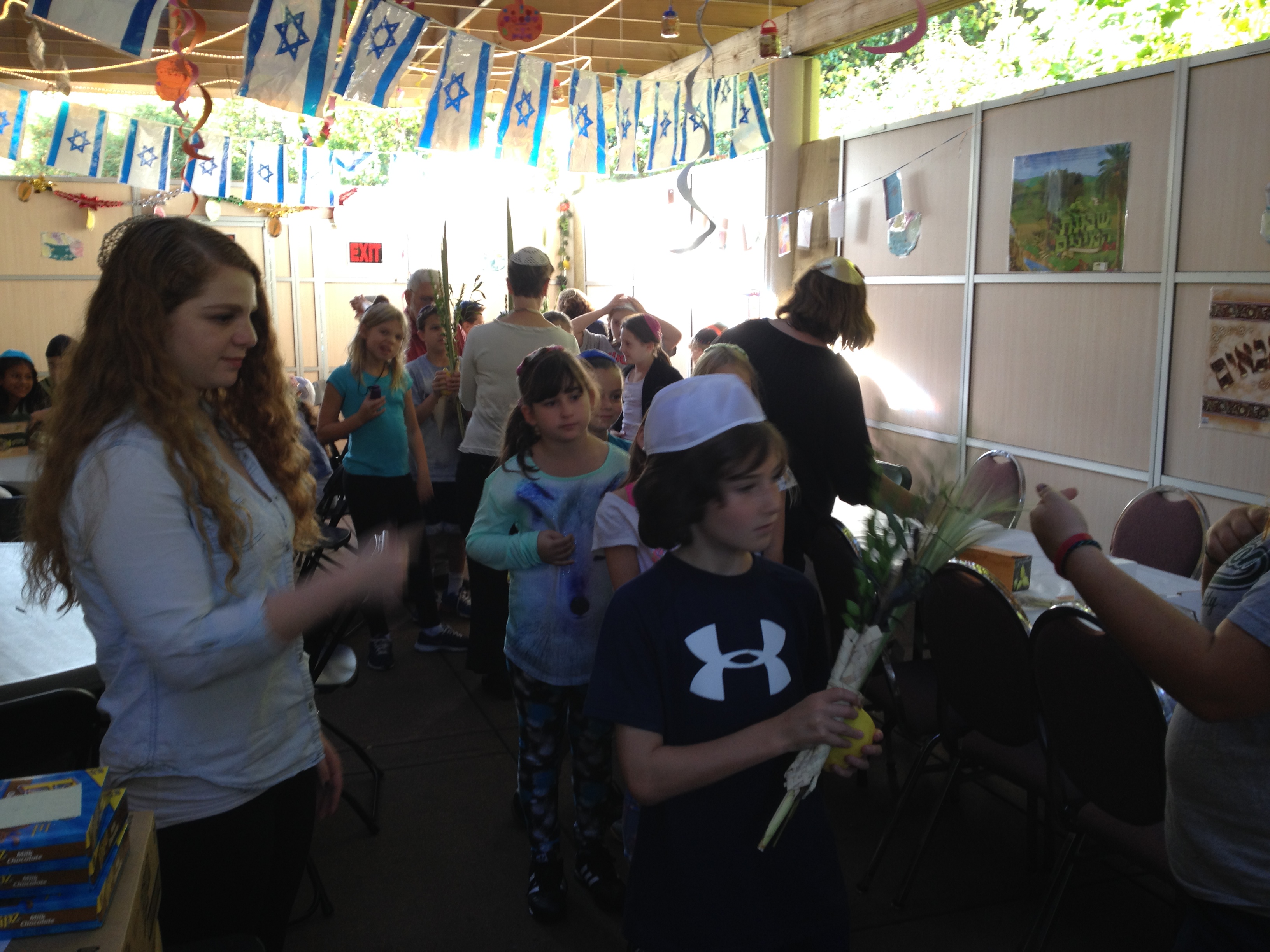
I could absolutely count our success by these numbers.
And I would have it all wrong.
Success in a synagogue community is about holiness, moments of Godliness, and the joyful heights reached through ritual.
I cannot measure such success by counting to eight or one hundred and fifty students or three hundred.
I can only measure holy success with the number one.
I count one congregant who joyfully bentsched (said the blessings for shaking) lulav and etrog at a rehabilitation center. He told his rabbis that October 17 had been his goal for release after surgery because he didn’t want to miss Simchat Torah at the OJC. He could not make it this year, but promised himself and us that he’d be dancing with a Torah next year.
I count one congregant who came to celebrate the holidays with her family each holy day. She is mourning her mother, but rose to the joy of the days. Just as she was kept home from school to attend synagogue when she was a child, so she now keeps her children home from school.
I count one congregant who came into the sukkah after Shabbat evening services to make Kiddush with us and was so entranced by the little ones celebrating that he joined in for a plate of spaghetti and meatballs.
I count one congregant who danced while holding onto her walker with a four year old who danced by jumping with both feet to the rhythm of the Orangetones at our annual Sukkot dinner.
I count one congregant who read Torah at Simchat Torah for the first time (and second, third and fourth) as everyone in the synagogue received an aliya.
I count one congregant who told me that he had never before celebrated the festival and was so excited by the energy and joy that he was going to plan now to take off these days from his busy medical practice next year to celebrate again.
I can only measure holy success with the number one:
One holy moment experienced by one cherished congregant.
One moment of eternity, one moment of Torah.
One community together celebrating joy as commanded by One God.
It is what we are all about at the Orangetown Jewish Center.
May this new year be one of holy moments for each and every one of us,
Rabbi Paula Mack Drill
Smiling willows
Even at the age of 90, Morris is amazing with his hands. And he is so loving and thoughtful. Every year just before Hoshana Rabbah, the seventh day of Sukkot, he collects willow branches and bundles them together in fives with palm branches. He prepares enough for everybody who will attend the early morning service to complete the ceremony of Hoshanot with seven circles around the sanctuary and the beating of the willow branches (aravot). In contrast to the willow branches of my lulav, which are badly browning and bent by the seventh day of the holiday, these bunches of willow are fresh green.
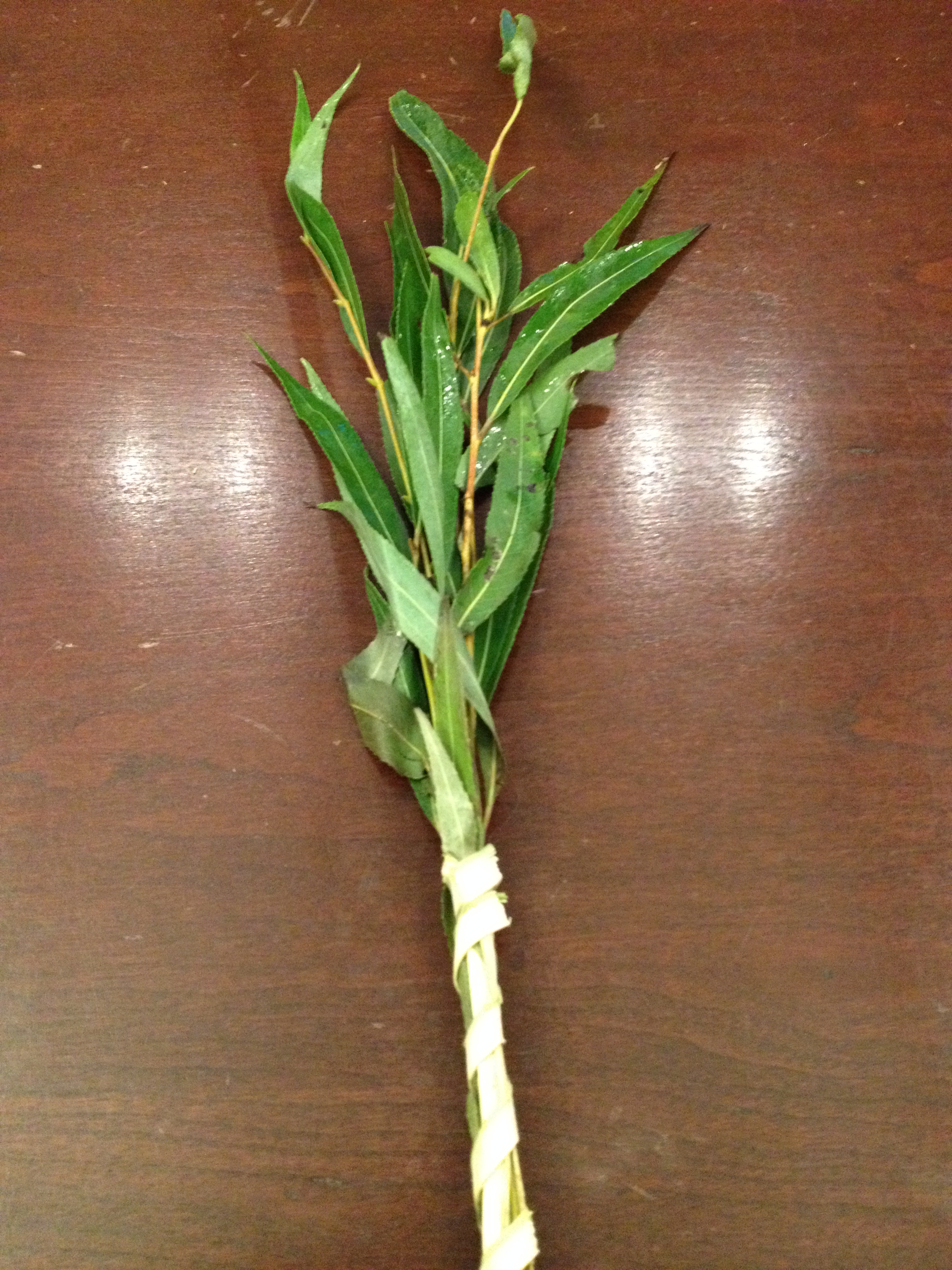
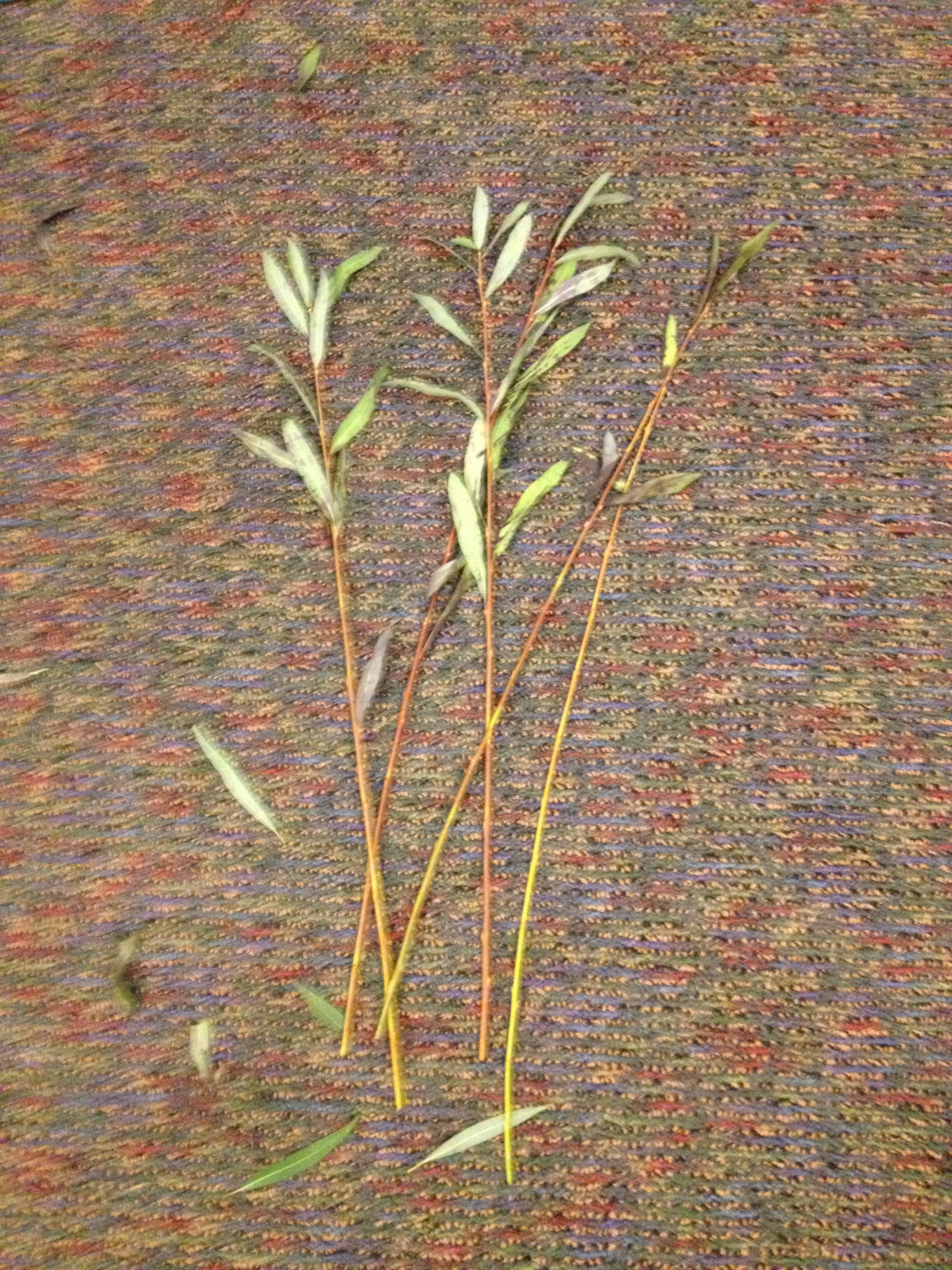
I recite the words of the ceremony “Kol M’vaser m’vaser v’omer” (“The voice of the prophet resounds and proclaims … good news of peace and deliverance”) three times, and I whip the floor hard with the willow branches. As this season of repentance comes to a close, I hope to shed the willow leaves that represent the deeds I want to leave behind in the year that was. Much like the breadcrumbs that I tossed onto the flowing waters of Tashlich, hoping they would be carried far away from me, I hope these willow leaves will be carried away by the wind and rain. But the batch that Morris prepares for our service sheds nothing as I beat the floor! The expertly wrapped bunch is beautiful and green and lush and cool to the touch. The leaves cling tightly to the long, thin branches. And I smile. I smile for myself and for all the other people who know that they have done the work that needs to be done in preparation for this season of repentance. We can dance with joy over the next days with confidence in God’s acceptance of the imperfections that cling to us, the broken pieces that we carry with us and make a part of our lives, like the broken tablets of the Ten Commandments carried in the ark along with the unbroken set.
I can smile because I have faith that, with good intentions and deeds shaped by the desire to heal the world around me, God will forgive me for that which I don’t accomplish in my quest. I smile because the perfect willows, despite having no fragrance and bearing no fruit, remind me that I can forgive myself for being the perfectly imperfect human being that I am.
Chag sameach,
Rabbi Craig Scheff
Make today remarkable
Over the past few days, I have been approached by several individuals who have expressed appreciation for my Rosh Hashanah message, sharing with me how the words I shared have taken hold in the rhythm of their daily lives. While I don’t have a full written text of my sermon, I do have some quotes that I can share. Leaving out the jokes and the stories, I offer you the essence of the message. I hope you will pass it along, and perhaps we can truly shape the world for the better in the year ahead.
From the movie 500 Days of Summer: “Most days of the year are unremarkable. They begin and they end with no lasting memory made in between. Most days have no impact on the course of a life.” What a sad and cynical way to approach a new day. What if we could make every day remarkable? What if each day had one lasting memory, one moment in which we affected someone else for the better? How would the course of our lives be changed?
Our patriarch Abraham committed a single act of kindness, welcoming three strangers into his tent, and in so doing he set a series of events into motion, changing the course of history. His ideology, built upon the performance of deeds that move the world deeper into relationship with the Creator of us all, is still the best ideology to bring about a victory of good over evil. The good deed changes the world; it latches onto our soul. Our acts of goodness reverberate through our souls for eternity.
Abraham Joshua Heschel wrote: “A Jew is asked to take a leap of action, rather than a leap of thought.” Indeed, our prayers are empty if they are not accompanied by action. And those actions need not be super-human, heroic or even self-sacrificing. They just need to be offered with the proper intention, and with the courage and pride to be performed as a Jew performing a mitzvah in the world. We wear the garb of our favorite sports heroes and teams (and I tip my hat to Derek Jeter), associating ourselves with others and with a cause. How much more so must we be prepared to identify ourselves and our mitzvahs as Jewish? Not that we must wear kippot in public as I do, but we must find the hat, the jewelry or the bumper magnet that will let people know whom we are and for what we stand.
Seventy-five years ago, our enemies labeled us with stars and the word “Jew” on our sleeves; the symbols identified us as vermin, disease, and the source of all of society’s ills. There are those who still attempt to cast the Jew in the same light, out of ignorance, fear and hatred. The battles against terror and evil around the world today will be fought with bombs and bullets, but the war is ultimately one of competing ideologies. And if we are to win this war, we must carry our Jewish identity with pride. We must let our deeds define us, as Jews and as human beings who seek the triumph of good.
Two weeks ago, we invited our synagogue’s neighborhood to join us in the building for some long-overdue introductions, refreshments and a tour. Our neighbors finally got to meet the people and see the space on the other side of the stained-glass wall that faces the street. It was an evening of breaking the ice, of tearing down barriers, of creating new relationships, of fighting back against the darkness. And it was a night that changed our small corner of the world. Call me an idealist, call me naïve; but I saw the world change before my eyes, and I felt it as I walked the streets of my neighborhood the next day. My world has been changed forever.
Especially in light of–and in spite of–the spread of anti-Semitism around the world and the ignorance that persists in our own back yards, we must wear our Jewish stars on our sleeves more visibly than ever. We must allow our deeds to define us as Jews more visibly than ever. We must, in this new year of 5775, fight back against the darkness with the light of our shining individual deeds that can transform our days, our lives and the world around us.
Shanah tovah and g’mar chatimah tovah,
Rabbi Craig Scheff
Casting Away
Will you be among the two hundred congregants of the OJC who walk to the stream behind the Tappan Library on the afternoon of the first day of Rosh Hashana to cast away our sins? With bread in our pockets and good intentions in our hearts, we perform the ritual of Tashlich. We recite the words of the prophet Micah: “You will return to us compassionately, overcoming the consequences of our sin, hurling our sins into the depths of the sea.” We throw crumbs into the flowing river, hoping to cast away our sins, and Rabbi Scheff blows the shofar to remind us to “wake up.”

(Every year a family of ducks joins us to eat up all those crumbs. I am convinced that youngsters in our community believe that on the first day of Rosh Hashana we fulfill some commandment to feed the ducks, but that is another story for another blog entry!)

This past week, adult students considered the deeply personal and often difficult work of Heshbon haNefesh, an Accounting of the Soul, in preparation for Rosh haShana which arrives in just one week. Studying a poem about Tashlich, we wondered if it is truly possible to cast off sin, or if that is even a useful metaphor for the change we hope to effect in ourselves.
Casting Away
We cast into the depths of the sea
our sins, and failures, and regrets.
Reflections of our imperfect selves
flow away.
What can we bear
with what can we bear to part?
We upturn the darkness,
bring what is buried to light.
What hurts still lodge,
what wounds have yet to heal?
We empty our hands,
release the remnants of shame,
let go of fear and despair
that have dug their home in us.
Open hands,
opening heart —
The year flows out,
the year flows in.
Marcia Falk
The verses of Micah we recite at Tashlich are full of power and terror as we ask God to “hurl our sins into the depths of the sea.” Falk envisions a different path for us into the new year. A wave approaches and then pulls back, there is ebb and flow. Once we do the difficult work of bringing to light all that we have buried, we just release it by opening our hands. In so doing, we open our hearts. In this way, we start anew.
Perhaps the work of Rosh Hashana does not need to be so frightening after all. There is urgency and seriousness, yes. But maybe change is truly a process. We remember to engage with our souls, with community and with God at the new year, but if we don’t get it just right by the end of Yom Kippur, maybe it is okay. We have the next day and the next. If each day is filled with moments for change, any one of those moments is perfectly suited for us to become our best selves. Rosh Hashana is a great reminder of the way we are supposed to live our lives every day of the entire year.
Join us for Tashlich this year, leaving from the OJC on September 25 at 5:30 pm.
Praying for a new year of peace, positive change and good health,
L’shana tova, Rabbi Paula Mack Drill
First responders
This morning I participated in a memorial service at the fire house in Tappan. Police officers, firefighters, and emergency medical technicians from around our community came to give honor to the fallen. Equally as important to the remembrance of the deceased, however, was the honor given to those who were present in the tragedy’s aftermath: Construction workers who came into the city to dig through the rubble for survivors; civil servants who took extra shifts just to serve water to the weary; clergy who trekked across the country to stand beside others who so clearly needed help finding the words to a prayer.

This week’s parasha, Ki Tavo, details the blessings we realize as a consequence of living according to God’s commandments, and the curses we experience in disregarding the same. Torah teaches us that to live in a constant state of dread is a curse. We should not be constantly looking over our shoulder, worrying about what tragedy will befall us next. That is the life of the cursed. We can, however, choose to live life as first responders. We can choose a life of action, a life of courage, a life of readiness to step into the breach. We can choose to know our neighbors and to express our love for them through our deeds. We can confront hatred with kindness, fanaticism with moderation, fear with hope. In so doing, we will go to sleep at night with clear consciences and awaken to mornings of possibility, productivity and hope. We can revisit those early post-9/11 days, recommit ourselves with determination and vigilance in the battle against all forms of extremism, and give gratitude for the freedoms we have as Americans.
May God bless America, may God bless the souls of those we remember this day, and may God bless us with the wisdom to recognize the blessings that accompany us daily.
Rabbi Craig Scheff
 Three Rabbis Walk Into A Shul
Recent Comments