Vote Now for Israel’s Future

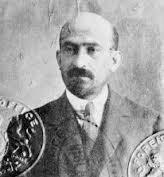
There is a story that charms me from the annals of Zionist history at the turn of the 20th century. Arthur Balfour, a Member of the House of Lords asked Chaim Weizmann, who later would become President of Israel, “Why do you Jews insist on Palestine when there are so many undeveloped countries you could settle in more conveniently?” According to the story, Weizmann answered, “That’s like my asking you why you drove twenty miles to visit your mother last Sunday when there are so many old ladies living on your street. Mr. Balfour, if you were offered Paris instead of London, would you take it?” Lord Balfour was shocked and surprised by the question, “But London is our own!” Weizmann answered, “Jerusalem was our own when London was a marsh.” This same Member of the House of Lords famously crafted the Balfour Declaration in 1917 that made public British support of a Jewish homeland in Palestine.
At the Orangetown Jewish Center, we talk about Israel, our Jewish homeland, proudly, passionately and with the assurance of safety. There is room for debate and discussion, but we all agree that our home had to be established in 1948 on that tiny strip of desert and marsh. Then Palestine, today Israel, is “our own.”
We also agree that while we advocate and educate about the need for secure borders and freedom from terrorism in Israel, we must also pay close attention to Israel’s soul. As Conservative Jews, we have a specific vision of Israel that is anchored in religious freedom. We yearn to be a part of an Israel that is a pluralistic Jewish and democratic state with which every Jew can proudly identify.
Rabbi Scheff and I often suggest ways to lift our voices in support of the official recognition in Israel of all the major streams of Judaism. We believe that the authority of rabbis from non-Orthodox movements should be respected regarding all issues of personal status and ritual. Rabbis of the Conservative and Reform movements should be able to officiate at weddings, conversions, divorces and funerals in Israel as they do here in America.

Today, there is one specific action you can take to be a part of the potential Israel you envision. It is time now to vote in the World Zionist Congress that will meet this year in Jerusalem. The World Zionist Congress has met since 1897 when it first laid out the principles of Zionism, the belief that the Jewish people of the world must have a homeland of their own, the land of Israel. Today the WZC elects the officers and decides on the policies of the World Zionist Organization and the Jewish Agency.
It is time now to vote. It is time to vote for Mercaz, the political arm of the Conservative–Masorti Movement of Judaism. According to the Mercaz mission statement, a vote for Mercaz is a vote for an Israel that is pluralistic and inclusive, egalitarian and unified, sustainable and diverse.
Go to http://votemercaz.org/ to get started, to get educated, and to cast your ballot. It costs just $10 for your opportunity to change the future of Israel. And while you are at the website, you can see a great photograph and statement by our own Josh Drill. He writes about what Mercaz means to him as a young man making aliya this August.
Mercaz has also made a series of short, informative videos that you can share to educate friends and family about the important vision we share about the soul of Israel. https://www.youtube.com/watch?v=FnfPe8s6VCU
It is time now to vote! 
With friendship, Rabbi Paula Mack Drill
The Chutzpah of Gratitude
Those pilgrims who established the first Thanksgiving back in1621 had some chutzpah celebrating gratitude. Fleeing religious persecution, they sailed through dangerous waters, accidentally ending up in Massachusetts instead of Virginia. Arriving in winter, they endured bitter cold, food shortages, bewildering farming practices, insufficient shelter, illness and despair. Within a short time, many had died. When we imagine being one of those pilgrims, it becomes clear that it was an act of faith and courage to sit down with new neighbors and give thanks.
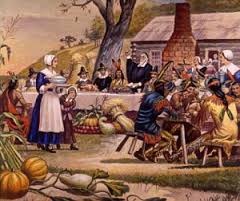
For what did they feel grateful? Perhaps their thanksgiving was an acknowledgement that despite trials and sorrows, it was still necessary to experience gratitude. Perhaps… their gratitude was an antidote to the painful life that was their lot.
Today many of us also struggle. We experience personal challenges, illness, death, family conflict, unemployment. Gratitude is not an emotion that always comes naturally, but Judaism teaches that gratitude is not a choice. As Jews, the expression of thanksgiving is not conditional on whether we have all that we want.
The Talmud teaches that each time we benefit from something in this world, it should be preceded by the recitation of a blessing. Otherwise, we are labeled a thief, stealing from God or the community in which we live. Jews recite berakhot (blessings) to acknowledge the One who provides everything. Jews become blessings when we express our gratitude for the good that is ours by acts of loving kindness toward others. As God’s partners, such behavior is required.
This past weekend, the Orangetown Jewish Center once again remembered to show our gratitude for all the good that is ours by becoming blessings to each other and the general community. For the first time, Mitzvah Day became Mitzvah Weekend. Thanks to the passion and capable organization of Co-Chairs Lorraine Brown and Carolyn Wodar, hundreds of congregants of every age and stage participated in some part of the experience.
After welcoming the Orangeburg Library Interfaith Study Group to Friday evening services led by our youth, seventy congregants gathered for Dinner and Dialogue. We hosted Andrea Weinberger and Rob Grosser, co-presidents of Rockland County Jewish Federation (http://www.jewishrockland.org) and learned together about the organization that anchors all tzedaka in our community, Israel, and around the globe.
On Shabbat morning, just returned from the annual volunteer Mitzvah Mission to Israel with twenty OJCers, Rabbi Scheff reminded us that performing mitzvoth requires stepping out of our comfort zones. Guests from neighboring faith communities joined us at the end of Shabbat for Havdalah and guided conversation to learn about each others’ traditions and beliefs.

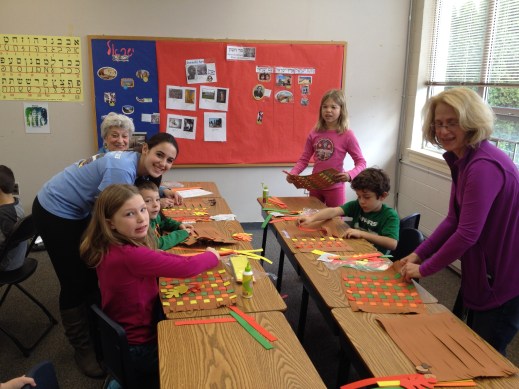
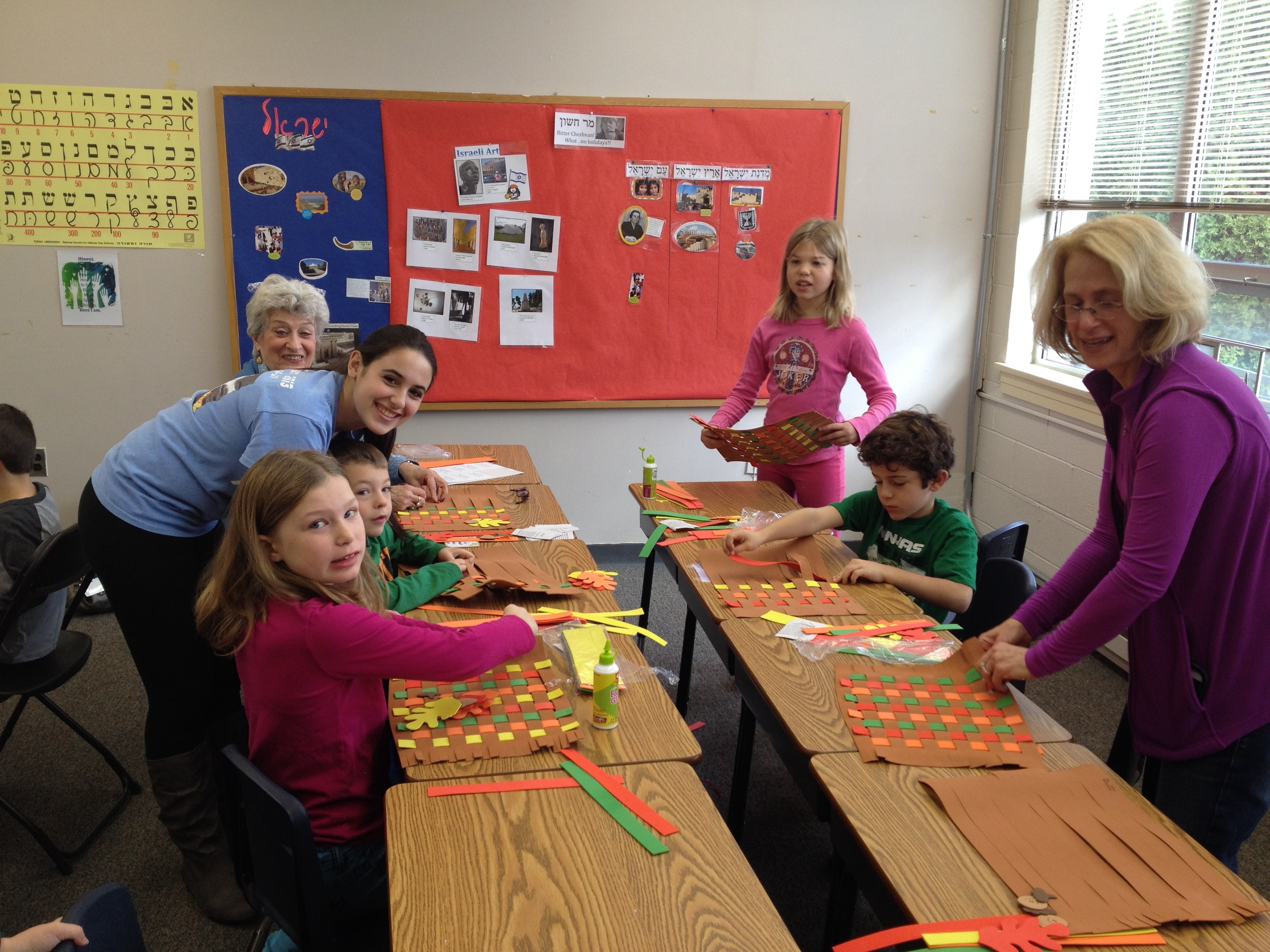
Sunday was the culmination of months of planning as congregants volunteered from early morning with Keep Rockland Beautiful and the annual Breakfast Run to deliver warm blankets and food. Throughout the day, congregants danced to Zumba for United Hospice of Rockland (http://hospiceofrockland.org), learned about TAPS (http://www.taps.org) (support for widows and orphans of American servicemen and women) from CFO (and congregant) Scott Rutter, created flannel blankets and other craft projects for area hospitals and nursing facilities, and went out to visit patients and residents in those places. The day concluded with congregants being invited to minyanim in their neighborhoods.

As many of us enter into the joy and contentment of celebrating Thanksgiving, it is important to remember that for many this time offers neither joy nor contentment. What can we do? If we are surrounded by an abundance of blessings, we can give thanks and become blessings to others. If this time of year emphasizes feelings of need and sadness, still we can find ways to give thanks. All of us can show gratitude to God by becoming blessings to each other. We can offer gratitude as a celebration of God’s gifts or as an antidote to despair.
May you be a blessing,
Rabbi Paula Mack Drill
Mitzvah Mission 2014, Day 4 – Coming home
As we stood together under a warm morning sun, we contemplated spending the day on the beach; how easy and quiet and careless a day we could have. But when you are home, you don’t ever really escape the demands of the real world. And we are indeed home. There was work to be done.
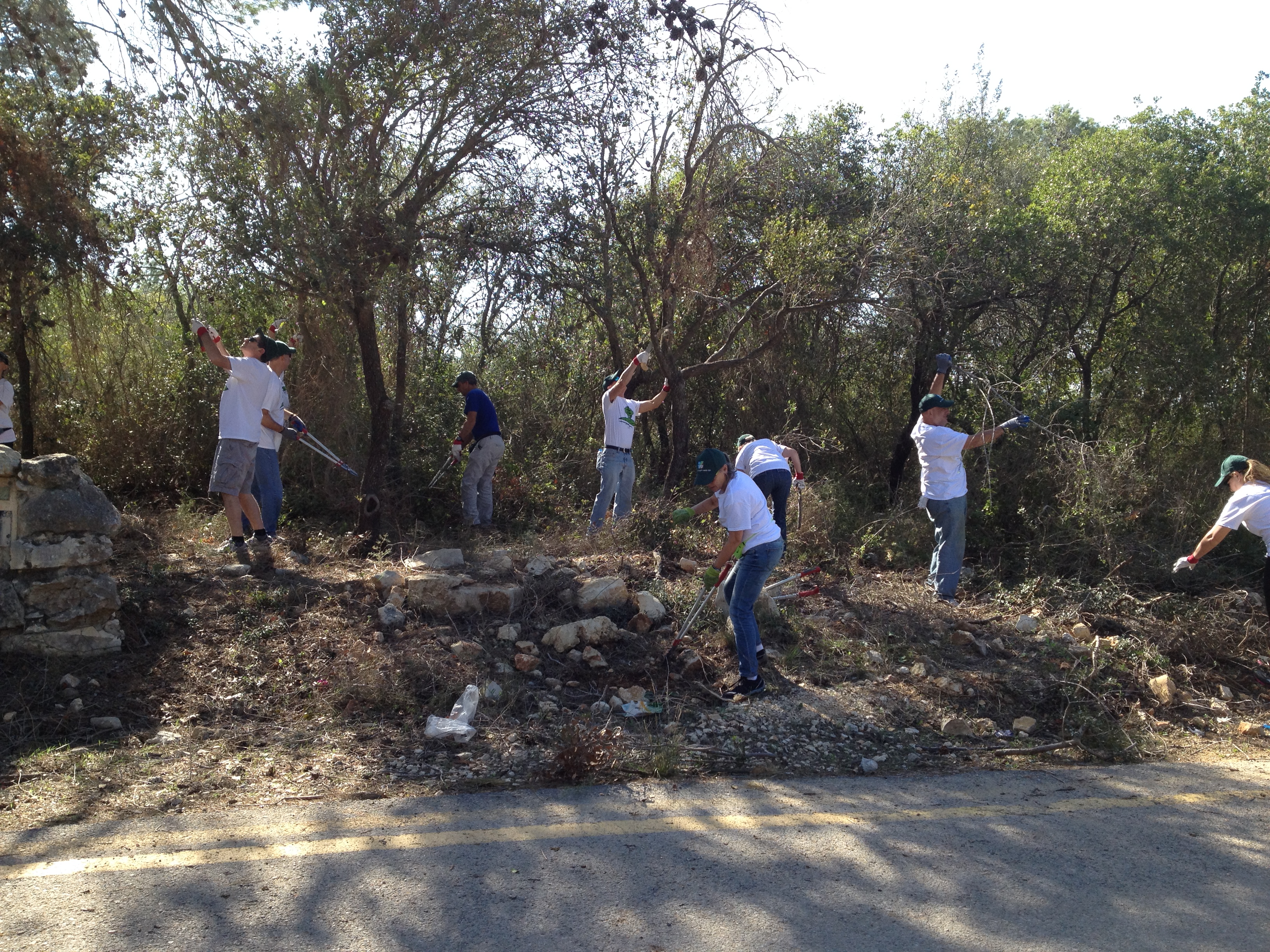
Our JNF guide described our task of the day in these terms. When you are serving for Israel. you are doing something that extends far beyond your self. You are preserving the capital on an investment for a people, for a story, for a future. So we put on our gloves and got to work. Hard work. A few of us bled from the thorns that cut our skin, some of us perspired through our shirts, and all of us got soil in our shoes. In an area of the Carmel mountains where a fire in 2010 had taken 44 lives and devastated much of the vegetation, we cleared thick brush to create a fire break that would slow the progress of any future fire. (See the before and after!)

After lunch, we climbed to Jerusalem in song, and arrived at the overlook to the city just as the sun was shedding its last rays on the golden Dome of the Rock. From where we stood, one might have thought that peace in the Holy City had finally been realized. In the quiet moment, we sanctified the experience with a blessing, and recognized the shared commitment and reciprocal inspiration that brought us to this place and time.

We shared dinner in the new “train” station with some friends who joined us for dinner, including Ben Varon, who had just arrived to share the end of our mission with mom Linda, and Bradley Goldman, who is here studying for the year with the Nativ gap year program. One could sense a bit of nostalgia creeping in among the group as the evening came to an end.

It’s never easy leaving home.
Rabbi Craig Scheff
News from Far (Israel) and Near (East Ramapo)
Shalom Chaverim,
The news this morning from Jerusalem was shocking and tragic. As soon as I woke up, I checked the news from Israel as I always do. Reading about a brutal murder of four Jews davenning their morning prayers in their shul, I called my friend Rena in Jerusalem. “What a long, lonely day this has been,” she told me. “I have been alone here in Israel with this news since 7:00 this morning, while all of my loved ones in America were sleeping. Now that morning is arriving in America, I have to go through the story again and again, as you wake up on the East Coast, then my family in the Midwest, and then on to California.”
By now you have read Rabbi Scheff’s blog, so you know that our fellow OJCers on the Volunteer Work Mission are far from Jerusalem, up in the North. They are all safe, but like us, their hearts are broken. Truly, this is the meaning of Am Echad, One People: When one of us is hurt, we are all hurt.
Call your friends and family in Israel today. Tell them that we are thinking of them. We are well aware of the shocking terrorist attacks that have been happening in these last few weeks, and we care deeply about the people of Israel. As my friend Rena said, they are feeling lonely.
Closer to home, last evening the State Appointed Monitor, Hank Greenberg, gave his report to the Chancellery in Albany after months of research into the crisis in the East Ramapo Central School District. As I listened to the live broadcast, I felt both proud of the work that the Rockland Clergy for Social Justice has done and undaunted, knowing how much work lies ahead. You can view an archive of the broadcast for a limited period of time. Copy and paste this link into your browser:
Please consider the dozen volunteers who are spending time at the Early Childhood Center at the Kakiat School. When I go to help in Mrs. Greenwood’s classroom, I experience in my very being the urgency of the issue of the education of the children of our county. Contact Sally Kagan: sallykagan@gmail.com or call 845-290-0085.
With prayers for peace and blessings, Rabbi Paula Mack Drill
Mitzvah Mission to Israel Day One
Sunday, November 16
Akko, Israel
Over the next few days, a group of congregants from the OJC, ranging in number from 18 to 21, will be kicking off Mitzvah Weekend with our ninth annual mitzvah mission in Israel. The work may be taxing, it may be easy; it may be with children, or with the land, or with cans of food and boxes of dry goods. Ultimately, the nature of our work doesn’t matter as much as the purpose. We are here on a mission to serve, to give back, to do our part in bringing support, comfort and love in the way we know best: through acts of self-sacrifice and loving kindness.
This experience is unlike any Israel tour one will ever take. Not much sight-seeing. Plenty of purpose.
I hope you will follow our activities and experiences. To do so, log on to blog.theojc.org at the end of each day. Or better yet, subscribe to our blog the first time you go there, and it will automatically be delivered to your inbox each day.
Plenty of rain here this evening. For Israel, it is a blessing. Rain or shine, we pray that the work of our hands will be a blessing to the State, the Land, and the People of Israel in the days ahead.
Laila tov,
Rabbi Craig Scheff
An Exclamation Point and not a Question Mark
I had the privilege to attend the Annual Benefit for the Rockland County Holocaust Museum and Study Center on Sunday, November 2nd. The plan to construct a captivating, interactive center in space given to the Museum by Rockland Community College means that the mission of our Holocaust Museum and Study Center will continue and expand. The Museum is the place where the Jewish community fulfills our obligation to remember and where citizens of all cultures and faiths learn lessons of acceptance and tolerance.
Sunday’s speaker, Dr. Deborah Lipstadt, shared the frightening and depressing picture of anti-Semitism that we have been reading about for several years. Anti-Semitism is rampant in the world and cannot be dismissed as an aberration in time or as anchored only in one quadrant of the world. She cautioned us, however, not to equate the violence and hatred being experienced now with that of the beginnings of the Holocaust, violence which at that time was State sponsored.
Lipstadt emphasized that seventy years after the Holocaust, many Jews in Europe no longer feel safe. As she wrote in a New York Times article on August 20, 2014, “Hiring an armed guard to protect people coming for weekly prayer is not the action of a secure people. In too many cities worldwide, directions to the local synagogue conclude with, ‘You will recognize it by the police car in front of the building.’”
While she did not diminish the necessity of concern for all who value a free, democratic, open, multicultural and enlightened society, she did urge us to refuse the lachrymose theory of Jewish history. As historian Salo Baron said decades ago, we can choose to see the story of the Jewish people in chapters that jump from pogrom to pogrom or we can choose to look at the great triumphs in scholarship, culture and world impact in between those pogroms. When we say, “I am a Jew” we must say it with an exclamation point and not with a question mark.
How then do we teach a new generation that being a Jew is about more than a history of physical and emotional attacks? How do we teach the Holocaust in a way that instills Jewish pride? How do we raise children secure enough to wear a Jewish star or a kipa in public? According to Lipstadt, the answer is that we identify as Jews not because of anti-Semitism, but af al pi… despite anti-Semitism.
At the Orangetown Jewish Center, we can begin the process now. We are proud to be this year’s host for the Holocaust Museum and Study Center Annual Kristallnacht Commemoration on Sunday, November 9 at 5:00 pm. http://images.shulcloud.com/380/uploads/Krista_s_Calendar_Folder/kristalnacht-2014-final_1.jpg
Bring your middle school and older children to participate in a candle lighting ritual. Learn from Museum President Paul Galan. The time is now to say that we are proud Jews despite anti-Semitism. The time is now to say, “I am a Jew” and complete that statement with an exclamation point.
I am a Jew! Rabbi Paula Mack Drill
Sukkot Success by the Numbers
Here I am, heading into the month of Heshvan this week, not a holiday in sight after four intense weeks… and there is only one question on my mind: How do we measure the success of celebrating Sukkot at the OJC?
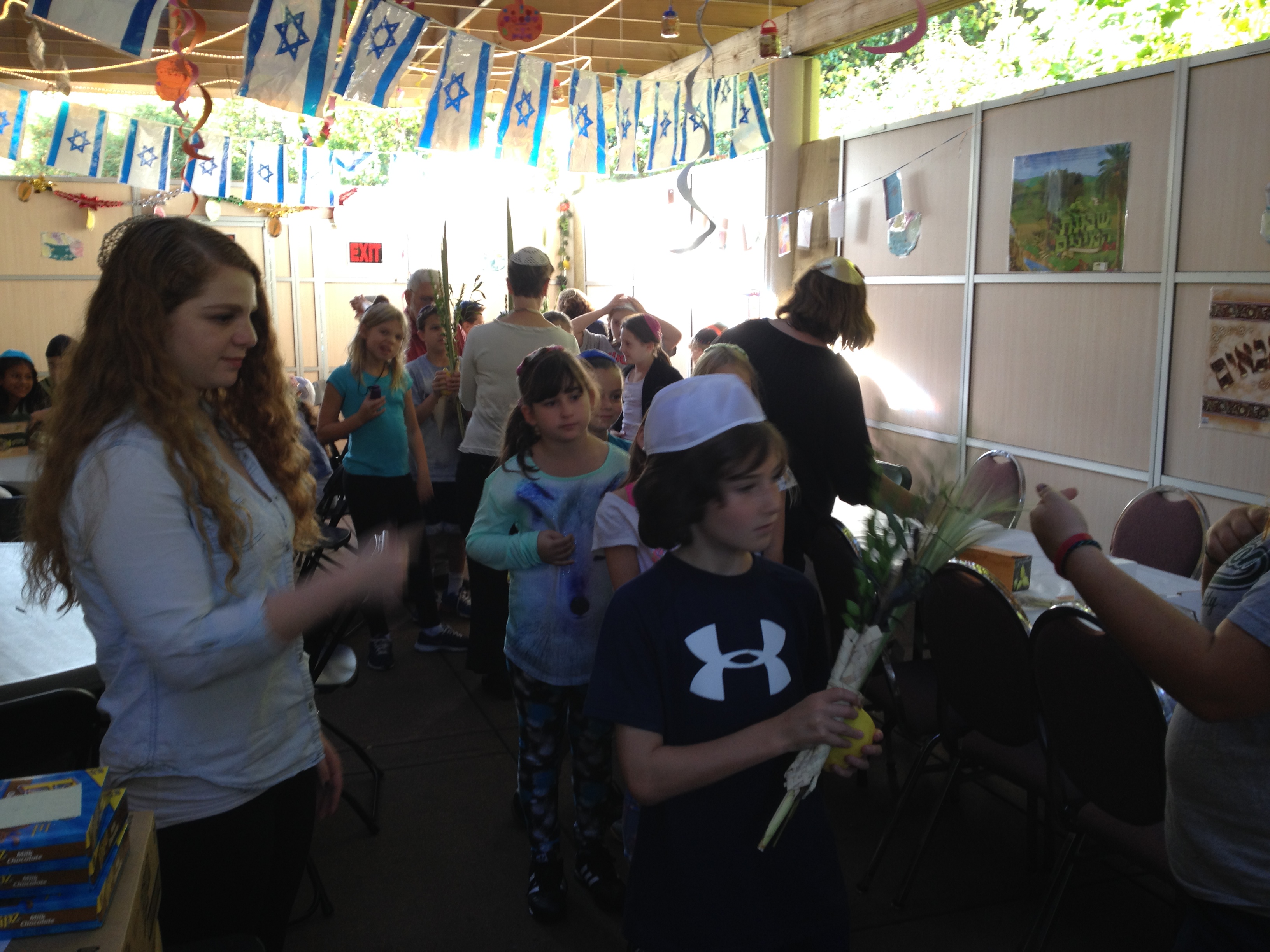
I could try to count the hundreds of congregants and guests who spent time in our sukkah. I might count the number of times we gathered to pray together as a community, marching with lulav and etrog or dancing with the Torahs. I’d count the number of programs and classes in the sukkah that we all enjoyed (eight, by my count!).

I’d certainly count the number of young children and their grown-ups who attended one of Rabbi Hersh’s programs: EKS with spaghetti in the sukkah, grilled cheese supper before Simchat Torah eve and ice cream party on the day. I would add in the number of Religious School children who tried to keep up with Rabbi Scheff’s My Sukkah it has Three Walls routine.

I could absolutely count our success by these numbers.
And I would have it all wrong.
Success in a synagogue community is about holiness, moments of Godliness, and the joyful heights reached through ritual.
I cannot measure such success by counting to eight or one hundred and fifty students or three hundred.
I can only measure holy success with the number one.
I count one congregant who joyfully bentsched (said the blessings for shaking) lulav and etrog at a rehabilitation center. He told his rabbis that October 17 had been his goal for release after surgery because he didn’t want to miss Simchat Torah at the OJC. He could not make it this year, but promised himself and us that he’d be dancing with a Torah next year.
I count one congregant who came to celebrate the holidays with her family each holy day. She is mourning her mother, but rose to the joy of the days. Just as she was kept home from school to attend synagogue when she was a child, so she now keeps her children home from school.
I count one congregant who came into the sukkah after Shabbat evening services to make Kiddush with us and was so entranced by the little ones celebrating that he joined in for a plate of spaghetti and meatballs.
I count one congregant who danced while holding onto her walker with a four year old who danced by jumping with both feet to the rhythm of the Orangetones at our annual Sukkot dinner.
I count one congregant who read Torah at Simchat Torah for the first time (and second, third and fourth) as everyone in the synagogue received an aliya.
I count one congregant who told me that he had never before celebrated the festival and was so excited by the energy and joy that he was going to plan now to take off these days from his busy medical practice next year to celebrate again.
I can only measure holy success with the number one:
One holy moment experienced by one cherished congregant.
One moment of eternity, one moment of Torah.
One community together celebrating joy as commanded by One God.
It is what we are all about at the Orangetown Jewish Center.
May this new year be one of holy moments for each and every one of us,
Rabbi Paula Mack Drill
Casting Away
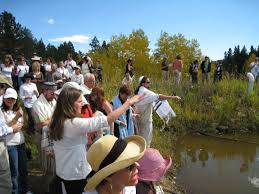
Will you be among the two hundred congregants of the OJC who walk to the stream behind the Tappan Library on the afternoon of the first day of Rosh Hashana to cast away our sins? With bread in our pockets and good intentions in our hearts, we perform the ritual of Tashlich. We recite the words of the prophet Micah: “You will return to us compassionately, overcoming the consequences of our sin, hurling our sins into the depths of the sea.” We throw crumbs into the flowing river, hoping to cast away our sins, and Rabbi Scheff blows the shofar to remind us to “wake up.”

(Every year a family of ducks joins us to eat up all those crumbs. I am convinced that youngsters in our community believe that on the first day of Rosh Hashana we fulfill some commandment to feed the ducks, but that is another story for another blog entry!)

This past week, adult students considered the deeply personal and often difficult work of Heshbon haNefesh, an Accounting of the Soul, in preparation for Rosh haShana which arrives in just one week. Studying a poem about Tashlich, we wondered if it is truly possible to cast off sin, or if that is even a useful metaphor for the change we hope to effect in ourselves.
Casting Away
We cast into the depths of the sea
our sins, and failures, and regrets.
Reflections of our imperfect selves
flow away.
What can we bear
with what can we bear to part?
We upturn the darkness,
bring what is buried to light.
What hurts still lodge,
what wounds have yet to heal?
We empty our hands,
release the remnants of shame,
let go of fear and despair
that have dug their home in us.
Open hands,
opening heart —
The year flows out,
the year flows in.
Marcia Falk
The verses of Micah we recite at Tashlich are full of power and terror as we ask God to “hurl our sins into the depths of the sea.” Falk envisions a different path for us into the new year. A wave approaches and then pulls back, there is ebb and flow. Once we do the difficult work of bringing to light all that we have buried, we just release it by opening our hands. In so doing, we open our hearts. In this way, we start anew.
Perhaps the work of Rosh Hashana does not need to be so frightening after all. There is urgency and seriousness, yes. But maybe change is truly a process. We remember to engage with our souls, with community and with God at the new year, but if we don’t get it just right by the end of Yom Kippur, maybe it is okay. We have the next day and the next. If each day is filled with moments for change, any one of those moments is perfectly suited for us to become our best selves. Rosh Hashana is a great reminder of the way we are supposed to live our lives every day of the entire year.
Join us for Tashlich this year, leaving from the OJC on September 25 at 5:30 pm.
Praying for a new year of peace, positive change and good health,
L’shana tova, Rabbi Paula Mack Drill
First responders
This morning I participated in a memorial service at the fire house in Tappan. Police officers, firefighters, and emergency medical technicians from around our community came to give honor to the fallen. Equally as important to the remembrance of the deceased, however, was the honor given to those who were present in the tragedy’s aftermath: Construction workers who came into the city to dig through the rubble for survivors; civil servants who took extra shifts just to serve water to the weary; clergy who trekked across the country to stand beside others who so clearly needed help finding the words to a prayer.

This week’s parasha, Ki Tavo, details the blessings we realize as a consequence of living according to God’s commandments, and the curses we experience in disregarding the same. Torah teaches us that to live in a constant state of dread is a curse. We should not be constantly looking over our shoulder, worrying about what tragedy will befall us next. That is the life of the cursed. We can, however, choose to live life as first responders. We can choose a life of action, a life of courage, a life of readiness to step into the breach. We can choose to know our neighbors and to express our love for them through our deeds. We can confront hatred with kindness, fanaticism with moderation, fear with hope. In so doing, we will go to sleep at night with clear consciences and awaken to mornings of possibility, productivity and hope. We can revisit those early post-9/11 days, recommit ourselves with determination and vigilance in the battle against all forms of extremism, and give gratitude for the freedoms we have as Americans.
May God bless America, may God bless the souls of those we remember this day, and may God bless us with the wisdom to recognize the blessings that accompany us daily.
Rabbi Craig Scheff
A Chance to Start Anew

Soon, we will check the calendar, gather our tickets, put on something new and come to synagogue for Rosh Hashana. Many of us arrive with optimism, a hope that we’ll feel something magical, a believe that we can be moved spiritually. Many of us are disappointed by our experience of the New Year. Year after year. The purpose of Rosh Hashana is to start anew, but somehow, it just feels like the same old thing. What are we doing wrong?
Perhaps we are beginning too late. Without realizing it, we are putting off the work that needs to be done before the High Holy Days arrive. Showing up to Rosh Hashana services unprepared is like showing up for a job interview without first doing some research about the company. Would we show up for an interview without a resume?
This Monday night, Tuesday and Wednesday marks Rosh Hodesh Elul, the new month of Elul. During the month of Elul, tradition offers us an opportunity to draw close to God, and in so doing, to draw close to our best selves. This drawing close requires introspection and honest self-assessment. Such interior work is uncomfortable and many of us put it off until we forget about it altogether. If we make use of this coming month before the New Year, however, we will have a better chance of finding something lasting and holy in our synagogue experience.
Tradition tells us that in the month of Elul, God is out in the field, travelling back to God’s palace. There are no guards, no entourage, no barrier between us and God. We can simply fall into step, walk alongside God, and introduce ourselves. By the time we reach the High Holy Days, God is back in the palace. We can still approach, but it is much harder work. The month of Elul is the easiest time to make God’s acquaintance.
Many guides can help us make use of each day of Elul to prepare for the new year. One of the finest books of preparation is Rabbi Alan Lew’s This is Real and You are Completely Unprepared.
The following books are daily journals that provide readings, reflections and challenges for each day as we approach the evening of September 24:
Rabbis Kerry Olitzky and Rachel Sabath, Preparing Your Heart for the High Holy Days
Rabbi Dov Peretz Elkins, Forty Days of Transformation
Simon Jacobson, 60 Days: A Spiritual Guide to the High Holidays
If you are more of a self starter, attend Shabbat services each week leading up to the High Holy Days so that you are not a stranger at God’s door when the day arrives. If you are a member of the OJC, consider coming on Shabbat morning promptly at 9:00 to participate in the contemplative preparatory service. Join me on Monday evening September 15 at 7:30 pm or Tuesday morning September 16 at 10:00 am for Heshbon haNefesh, an Accounting of the Soul. Join with the OJC community (or your own community) on Saturday night, September 20 at 10:00 pm for our Selichot program followed by midnight services.
Choose the path that is right for you. But if you wait until Wednesday, September 24 at 6:30 pm to begin the work of transformation, you might be disappointed once again.
May the month of Elul hold for you the promise of a return to your own soul, to the best that you are meant to be!
B’yedidut, With friendship, Rabbi Paula Mack Drill
 Three Rabbis Walk Into A Shul
Recent Comments