Mission Accomplished
At 6:00 this morning, I returned to the Orangetown Jewish Center after participating for five days on the Jewish Federation of Rockland County Lily Steuer ATID Leadership Mission. Atid means future and this mission fulfilled its call to set our sights on the future. As I write this, I am filled with tikvah (hope) that the future of Jewish Rockland and of Israel is bright.

I felt tikvah when we visited Susan’s House, an on-the-job training workshop for youth at risk in Jerusalem. Teens learn to make jewelry, glass plates, wooden objects and macramé as they learn life skills and self esteem. There I met a young woman named Aliana who slouched in her chair as the other teens brightly showed off the art that they were creating. When we started shopping, many of us chose beautiful wire jewelry, the work of Aliana, who joined us in the shop and proudly took pictures with each of us who were purchasing her creations. Aliana was standing up straight. I felt tikvah because I know that thanks to our Jewish Federation dollars, the vulnerable in Israel won’t be left behind.

I felt tikvah when we visited Har Hertzl, the national military cemetery of Israel. We stood, weeping, before a line of new graves from this past summer’s Protective Edge Operation. We stood before the grave of American lone soldier Max Steinberg. I felt tikvah because I know that Israel will defend our right to a Jewish home. Thanks to the support of Jews world wide, Israel will never stand alone.
I felt tikvah when we danced at the Sol and Bea Kramer Senior Center in Kiryat Ata. Elders enjoy support, socialization, hot meals and warmth thanks to Elana, the dedicated and passionate director, and thanks to Rockland Federation support from the Kramer family and from the Lily Steuer Fund. Languages from all over the world – Hebrew, Yiddish, Russian, Hungarian, Spanish – could be heard as Day Center participants sang and danced with us. I felt tikvah because I know that thanks to our Jewish Federation dollars, the mitzvah of honoring our elders will be fulfilled in Israel just as it is here in Rockland County.

I felt tikvah when we visited the Mevaseret Tzion Absorption Center to meet with new olim (immigrants to Israel) from Ethiopia. We experienced awe as we watched Mission Mentor and Federation Campaign Chair Bob Silverman meet family members with whom he flew from Ethiopia to Israel one and a half years ago.  I felt tikvah because I know that we in Rockland County help to ensure that all Jews are responsible one for the other.

The experience of our trip was heightened for all of us (but for me most of all!) by the participation on the mission of my son Josh, a student in Mechinat Rabin (a preparation year for the Israel Defense Forces). Josh’s passion for Israel, his questions and many conversations with mission participants made me proud as a mom and made me feel tikvah for the future of the Jewish people.
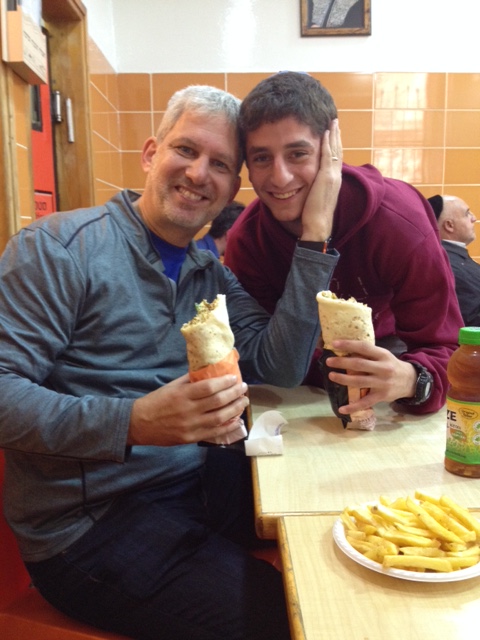
I thank Diane Sloyer and the staff of Jewish Federation of Rockland County for educating us, lifting us and giving us hope.
It is easy to be a cynic. Things go wrong and one can say, “See, I told you so.” But it takes courage to be an optimist. We continue, against all odds, to find hope and possibility in our world. Our plans and dreams might fail and we are often disappointed, but still we get up the next day and start again. It takes courage to be an optimist.
The 2014 ATID Mission gave us all many reasons to be optimists.
Shabbat shalom, Rabbi Paula Mack Drill
The Chutzpah of Gratitude
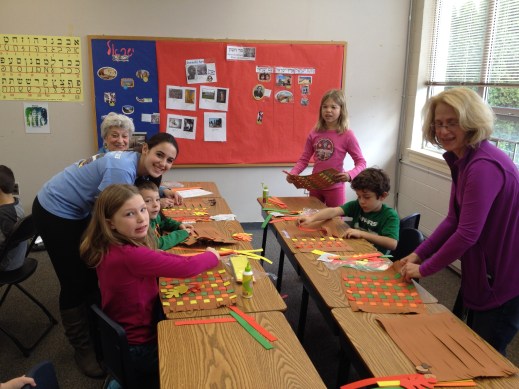
Those pilgrims who established the first Thanksgiving back in1621 had some chutzpah celebrating gratitude. Fleeing religious persecution, they sailed through dangerous waters, accidentally ending up in Massachusetts instead of Virginia. Arriving in winter, they endured bitter cold, food shortages, bewildering farming practices, insufficient shelter, illness and despair. Within a short time, many had died. When we imagine being one of those pilgrims, it becomes clear that it was an act of faith and courage to sit down with new neighbors and give thanks.
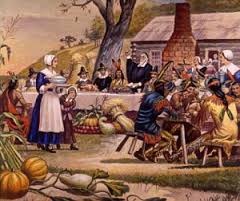
For what did they feel grateful? Perhaps their thanksgiving was an acknowledgement that despite trials and sorrows, it was still necessary to experience gratitude. Perhaps… their gratitude was an antidote to the painful life that was their lot.
Today many of us also struggle. We experience personal challenges, illness, death, family conflict, unemployment. Gratitude is not an emotion that always comes naturally, but Judaism teaches that gratitude is not a choice. As Jews, the expression of thanksgiving is not conditional on whether we have all that we want.
The Talmud teaches that each time we benefit from something in this world, it should be preceded by the recitation of a blessing. Otherwise, we are labeled a thief, stealing from God or the community in which we live. Jews recite berakhot (blessings) to acknowledge the One who provides everything. Jews become blessings when we express our gratitude for the good that is ours by acts of loving kindness toward others. As God’s partners, such behavior is required.
This past weekend, the Orangetown Jewish Center once again remembered to show our gratitude for all the good that is ours by becoming blessings to each other and the general community. For the first time, Mitzvah Day became Mitzvah Weekend. Thanks to the passion and capable organization of Co-Chairs Lorraine Brown and Carolyn Wodar, hundreds of congregants of every age and stage participated in some part of the experience.
After welcoming the Orangeburg Library Interfaith Study Group to Friday evening services led by our youth, seventy congregants gathered for Dinner and Dialogue. We hosted Andrea Weinberger and Rob Grosser, co-presidents of Rockland County Jewish Federation (http://www.jewishrockland.org) and learned together about the organization that anchors all tzedaka in our community, Israel, and around the globe.
On Shabbat morning, just returned from the annual volunteer Mitzvah Mission to Israel with twenty OJCers, Rabbi Scheff reminded us that performing mitzvoth requires stepping out of our comfort zones. Guests from neighboring faith communities joined us at the end of Shabbat for Havdalah and guided conversation to learn about each others’ traditions and beliefs.

Sunday was the culmination of months of planning as congregants volunteered from early morning with Keep Rockland Beautiful and the annual Breakfast Run to deliver warm blankets and food. Throughout the day, congregants danced to Zumba for United Hospice of Rockland (http://hospiceofrockland.org), learned about TAPS (http://www.taps.org) (support for widows and orphans of American servicemen and women) from CFO (and congregant) Scott Rutter, created flannel blankets and other craft projects for area hospitals and nursing facilities, and went out to visit patients and residents in those places. The day concluded with congregants being invited to minyanim in their neighborhoods.
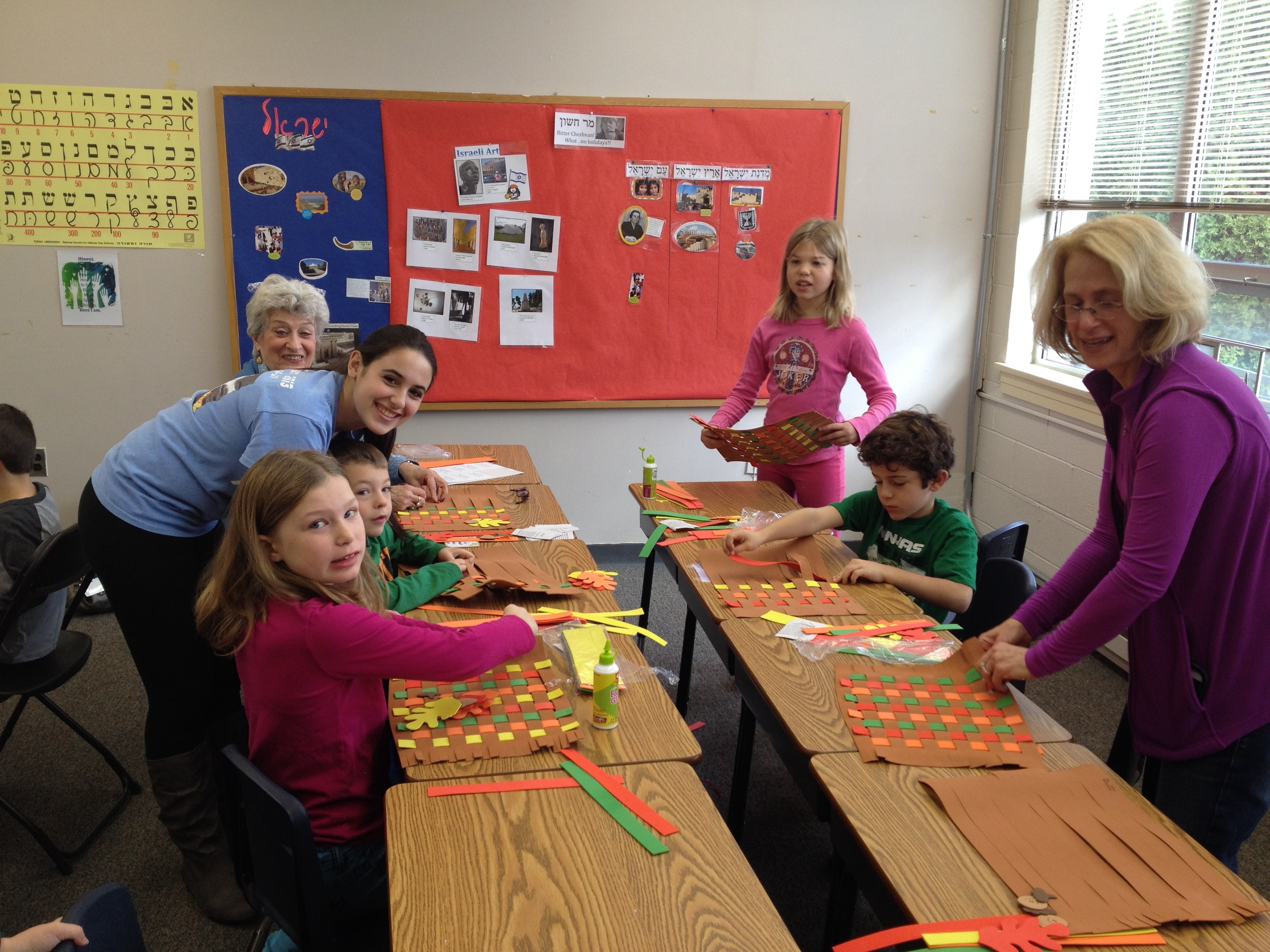

As many of us enter into the joy and contentment of celebrating Thanksgiving, it is important to remember that for many this time offers neither joy nor contentment. What can we do? If we are surrounded by an abundance of blessings, we can give thanks and become blessings to others. If this time of year emphasizes feelings of need and sadness, still we can find ways to give thanks. All of us can show gratitude to God by becoming blessings to each other. We can offer gratitude as a celebration of God’s gifts or as an antidote to despair.
May you be a blessing,
Rabbi Paula Mack Drill
News from Far (Israel) and Near (East Ramapo)
Shalom Chaverim,
The news this morning from Jerusalem was shocking and tragic. As soon as I woke up, I checked the news from Israel as I always do. Reading about a brutal murder of four Jews davenning their morning prayers in their shul, I called my friend Rena in Jerusalem. “What a long, lonely day this has been,” she told me. “I have been alone here in Israel with this news since 7:00 this morning, while all of my loved ones in America were sleeping. Now that morning is arriving in America, I have to go through the story again and again, as you wake up on the East Coast, then my family in the Midwest, and then on to California.”
By now you have read Rabbi Scheff’s blog, so you know that our fellow OJCers on the Volunteer Work Mission are far from Jerusalem, up in the North. They are all safe, but like us, their hearts are broken. Truly, this is the meaning of Am Echad, One People: When one of us is hurt, we are all hurt.
Call your friends and family in Israel today. Tell them that we are thinking of them. We are well aware of the shocking terrorist attacks that have been happening in these last few weeks, and we care deeply about the people of Israel. As my friend Rena said, they are feeling lonely.
Closer to home, last evening the State Appointed Monitor, Hank Greenberg, gave his report to the Chancellery in Albany after months of research into the crisis in the East Ramapo Central School District. As I listened to the live broadcast, I felt both proud of the work that the Rockland Clergy for Social Justice has done and undaunted, knowing how much work lies ahead. You can view an archive of the broadcast for a limited period of time. Copy and paste this link into your browser:
Please consider the dozen volunteers who are spending time at the Early Childhood Center at the Kakiat School. When I go to help in Mrs. Greenwood’s classroom, I experience in my very being the urgency of the issue of the education of the children of our county. Contact Sally Kagan: sallykagan@gmail.com or call 845-290-0085.
With prayers for peace and blessings, Rabbi Paula Mack Drill
Mitzvah Mission to Israel Day One
Sunday, November 16
Akko, Israel
Over the next few days, a group of congregants from the OJC, ranging in number from 18 to 21, will be kicking off Mitzvah Weekend with our ninth annual mitzvah mission in Israel. The work may be taxing, it may be easy; it may be with children, or with the land, or with cans of food and boxes of dry goods. Ultimately, the nature of our work doesn’t matter as much as the purpose. We are here on a mission to serve, to give back, to do our part in bringing support, comfort and love in the way we know best: through acts of self-sacrifice and loving kindness.
This experience is unlike any Israel tour one will ever take. Not much sight-seeing. Plenty of purpose.
I hope you will follow our activities and experiences. To do so, log on to blog.theojc.org at the end of each day. Or better yet, subscribe to our blog the first time you go there, and it will automatically be delivered to your inbox each day.
Plenty of rain here this evening. For Israel, it is a blessing. Rain or shine, we pray that the work of our hands will be a blessing to the State, the Land, and the People of Israel in the days ahead.
Laila tov,
Rabbi Craig Scheff
An Exclamation Point and not a Question Mark
I had the privilege to attend the Annual Benefit for the Rockland County Holocaust Museum and Study Center on Sunday, November 2nd. The plan to construct a captivating, interactive center in space given to the Museum by Rockland Community College means that the mission of our Holocaust Museum and Study Center will continue and expand. The Museum is the place where the Jewish community fulfills our obligation to remember and where citizens of all cultures and faiths learn lessons of acceptance and tolerance.
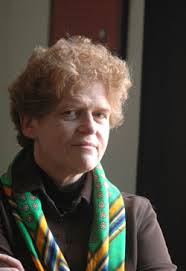
Sunday’s speaker, Dr. Deborah Lipstadt, shared the frightening and depressing picture of anti-Semitism that we have been reading about for several years. Anti-Semitism is rampant in the world and cannot be dismissed as an aberration in time or as anchored only in one quadrant of the world. She cautioned us, however, not to equate the violence and hatred being experienced now with that of the beginnings of the Holocaust, violence which at that time was State sponsored.
Lipstadt emphasized that seventy years after the Holocaust, many Jews in Europe no longer feel safe. As she wrote in a New York Times article on August 20, 2014, “Hiring an armed guard to protect people coming for weekly prayer is not the action of a secure people. In too many cities worldwide, directions to the local synagogue conclude with, ‘You will recognize it by the police car in front of the building.’”
While she did not diminish the necessity of concern for all who value a free, democratic, open, multicultural and enlightened society, she did urge us to refuse the lachrymose theory of Jewish history. As historian Salo Baron said decades ago, we can choose to see the story of the Jewish people in chapters that jump from pogrom to pogrom or we can choose to look at the great triumphs in scholarship, culture and world impact in between those pogroms. When we say, “I am a Jew” we must say it with an exclamation point and not with a question mark.
How then do we teach a new generation that being a Jew is about more than a history of physical and emotional attacks? How do we teach the Holocaust in a way that instills Jewish pride? How do we raise children secure enough to wear a Jewish star or a kipa in public? According to Lipstadt, the answer is that we identify as Jews not because of anti-Semitism, but af al pi… despite anti-Semitism.
At the Orangetown Jewish Center, we can begin the process now. We are proud to be this year’s host for the Holocaust Museum and Study Center Annual Kristallnacht Commemoration on Sunday, November 9 at 5:00 pm. http://images.shulcloud.com/380/uploads/Krista_s_Calendar_Folder/kristalnacht-2014-final_1.jpg
Bring your middle school and older children to participate in a candle lighting ritual. Learn from Museum President Paul Galan. The time is now to say that we are proud Jews despite anti-Semitism. The time is now to say, “I am a Jew” and complete that statement with an exclamation point.
I am a Jew! Rabbi Paula Mack Drill
Sukkot Success by the Numbers
Here I am, heading into the month of Heshvan this week, not a holiday in sight after four intense weeks… and there is only one question on my mind: How do we measure the success of celebrating Sukkot at the OJC?
I could try to count the hundreds of congregants and guests who spent time in our sukkah. I might count the number of times we gathered to pray together as a community, marching with lulav and etrog or dancing with the Torahs. I’d count the number of programs and classes in the sukkah that we all enjoyed (eight, by my count!).

I’d certainly count the number of young children and their grown-ups who attended one of Rabbi Hersh’s programs: EKS with spaghetti in the sukkah, grilled cheese supper before Simchat Torah eve and ice cream party on the day. I would add in the number of Religious School children who tried to keep up with Rabbi Scheff’s My Sukkah it has Three Walls routine.

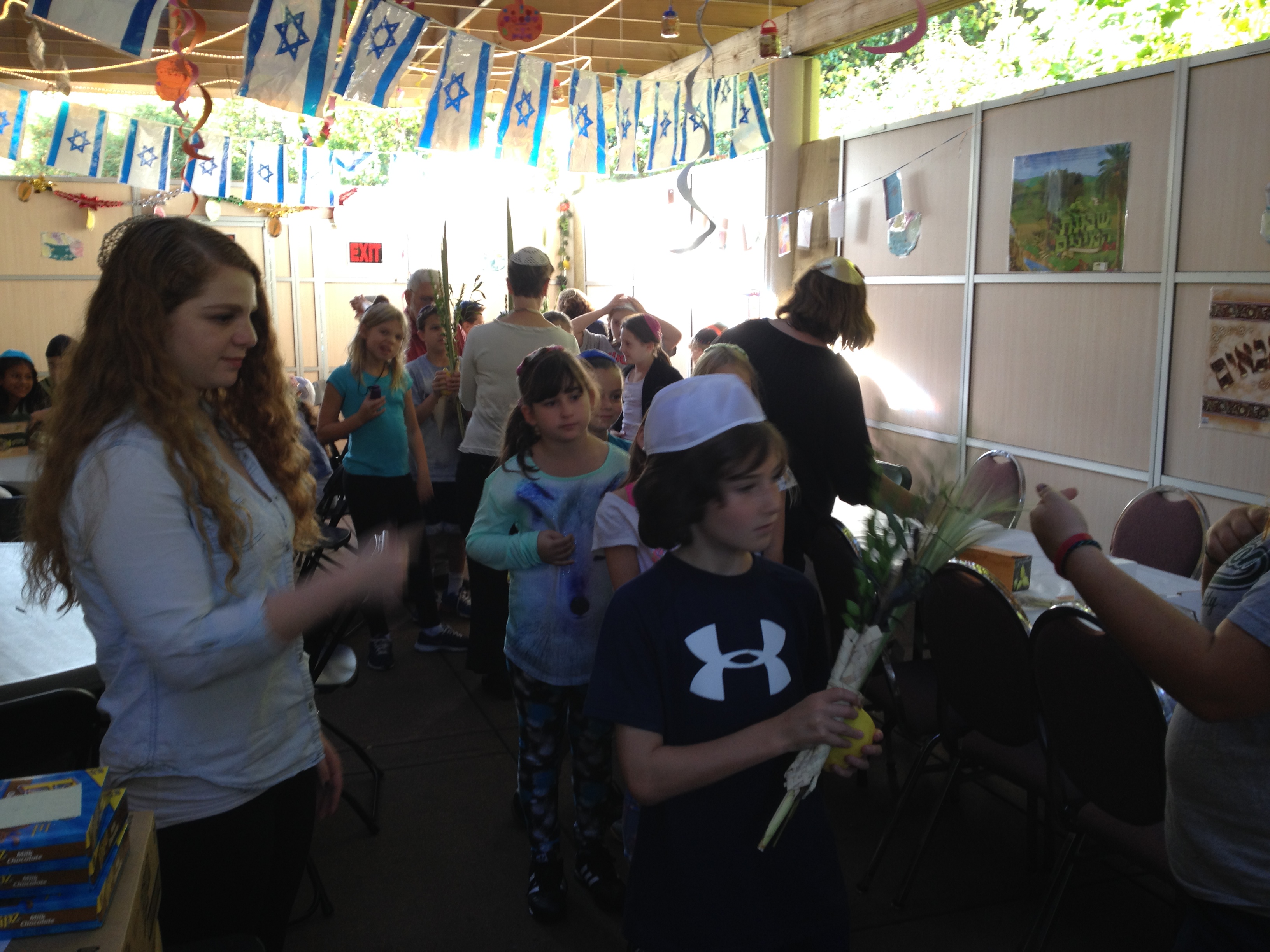
I could absolutely count our success by these numbers.
And I would have it all wrong.
Success in a synagogue community is about holiness, moments of Godliness, and the joyful heights reached through ritual.
I cannot measure such success by counting to eight or one hundred and fifty students or three hundred.
I can only measure holy success with the number one.
I count one congregant who joyfully bentsched (said the blessings for shaking) lulav and etrog at a rehabilitation center. He told his rabbis that October 17 had been his goal for release after surgery because he didn’t want to miss Simchat Torah at the OJC. He could not make it this year, but promised himself and us that he’d be dancing with a Torah next year.
I count one congregant who came to celebrate the holidays with her family each holy day. She is mourning her mother, but rose to the joy of the days. Just as she was kept home from school to attend synagogue when she was a child, so she now keeps her children home from school.
I count one congregant who came into the sukkah after Shabbat evening services to make Kiddush with us and was so entranced by the little ones celebrating that he joined in for a plate of spaghetti and meatballs.
I count one congregant who danced while holding onto her walker with a four year old who danced by jumping with both feet to the rhythm of the Orangetones at our annual Sukkot dinner.
I count one congregant who read Torah at Simchat Torah for the first time (and second, third and fourth) as everyone in the synagogue received an aliya.
I count one congregant who told me that he had never before celebrated the festival and was so excited by the energy and joy that he was going to plan now to take off these days from his busy medical practice next year to celebrate again.
I can only measure holy success with the number one:
One holy moment experienced by one cherished congregant.
One moment of eternity, one moment of Torah.
One community together celebrating joy as commanded by One God.
It is what we are all about at the Orangetown Jewish Center.
May this new year be one of holy moments for each and every one of us,
Rabbi Paula Mack Drill
Casting Away
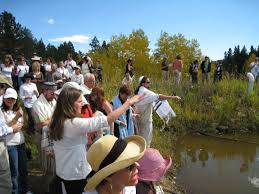
Will you be among the two hundred congregants of the OJC who walk to the stream behind the Tappan Library on the afternoon of the first day of Rosh Hashana to cast away our sins? With bread in our pockets and good intentions in our hearts, we perform the ritual of Tashlich. We recite the words of the prophet Micah: “You will return to us compassionately, overcoming the consequences of our sin, hurling our sins into the depths of the sea.” We throw crumbs into the flowing river, hoping to cast away our sins, and Rabbi Scheff blows the shofar to remind us to “wake up.”

(Every year a family of ducks joins us to eat up all those crumbs. I am convinced that youngsters in our community believe that on the first day of Rosh Hashana we fulfill some commandment to feed the ducks, but that is another story for another blog entry!)

This past week, adult students considered the deeply personal and often difficult work of Heshbon haNefesh, an Accounting of the Soul, in preparation for Rosh haShana which arrives in just one week. Studying a poem about Tashlich, we wondered if it is truly possible to cast off sin, or if that is even a useful metaphor for the change we hope to effect in ourselves.
Casting Away
We cast into the depths of the sea
our sins, and failures, and regrets.
Reflections of our imperfect selves
flow away.
What can we bear
with what can we bear to part?
We upturn the darkness,
bring what is buried to light.
What hurts still lodge,
what wounds have yet to heal?
We empty our hands,
release the remnants of shame,
let go of fear and despair
that have dug their home in us.
Open hands,
opening heart —
The year flows out,
the year flows in.
Marcia Falk
The verses of Micah we recite at Tashlich are full of power and terror as we ask God to “hurl our sins into the depths of the sea.” Falk envisions a different path for us into the new year. A wave approaches and then pulls back, there is ebb and flow. Once we do the difficult work of bringing to light all that we have buried, we just release it by opening our hands. In so doing, we open our hearts. In this way, we start anew.
Perhaps the work of Rosh Hashana does not need to be so frightening after all. There is urgency and seriousness, yes. But maybe change is truly a process. We remember to engage with our souls, with community and with God at the new year, but if we don’t get it just right by the end of Yom Kippur, maybe it is okay. We have the next day and the next. If each day is filled with moments for change, any one of those moments is perfectly suited for us to become our best selves. Rosh Hashana is a great reminder of the way we are supposed to live our lives every day of the entire year.
Join us for Tashlich this year, leaving from the OJC on September 25 at 5:30 pm.
Praying for a new year of peace, positive change and good health,
L’shana tova, Rabbi Paula Mack Drill
Filling My Mind and Soul with Israel
On Wednesday, I boarded a 5:45 am train for Washington, D.C. filled with excitement and anticipation of a day filled with learning at the National Rabbinic Symposium of AIPAC. When I arrived home late that night, I felt satisfied that I had been correct. One may wonder how a day spent discussing the difficult, intractable current affairs of Israel could possibly be uplifting, but it was just that. Surrounded by 250 rabbinic colleagues hearing from great thinkers and actors on the stage of Israel affairs, I felt supported and optimistic. Why? As always at AIPAC events, I was reminded of the incredible difference one person can make by exercising her American right to be an advocate for a cause. The cause of AIPAC is protecting and enhancing the American-Israel relationship. Throughout the day, one of my friends kept chanting, “Thank God, Thank God, Thank God for America’s friendship” every time the Iron Dome Defense System was mentioned. I was reminded all day that America is Israel’s staunch ally.
How much more talking and listening can we do about Israel, you may ask. All summer we wrote and read and talked about Israel. Rabbi Scheff and I will both be speaking about Israel on Yom Kippur — me at Kol Nidre and Rabbi Scheff on Yom Kippur morning. The answer is that we will not stop talking about Israel and that was the point of yesterday’s symposium.
I share with you now just one moment of learning in the midst of seven hours of speakers, discussion groups and presentations. At the lunchtime plenary, we were honored to meet and listen to Mosab Hassan Yousef, author of Son of Hamas, his autobiography about his childhood in Ramallah, his work as a spy for the Shin Bet (Mossad) for ten years and his eventual asylum here in America. Mosab’s father is Seikh Hassan Yousef, is a founding leader of Hamas, yet this son came to understand that murder and violence are not answers to the issues of Israel and her Arab neighbors. It felt like all of us in the room were holding our breath as Mosab shared his story with calm humility and courage. He does not believe that he is a hero; rather, he feels that he is a person who came to understand that saving even one life is worth the world. He was asked how he would bring peace to the Middle East given all that he knows about Hamas, Gaza and the West Bank, Israel and America. I cannot stop thinking about his answer. He looked out at all of us and said, “The only thing I can say is Israel must protect herself.” When all is said and done, he is right. Israel must protect herself, but she cannot do it without us. And so we must continue to protect Israel. That is why we’ll continue to read, write, talk and discuss Israel. Am Yisrael Chai!
Kol tuv, All the best, Rabbi Paula Mack Drill
A Chance to Start Anew

Soon, we will check the calendar, gather our tickets, put on something new and come to synagogue for Rosh Hashana. Many of us arrive with optimism, a hope that we’ll feel something magical, a believe that we can be moved spiritually. Many of us are disappointed by our experience of the New Year. Year after year. The purpose of Rosh Hashana is to start anew, but somehow, it just feels like the same old thing. What are we doing wrong?
Perhaps we are beginning too late. Without realizing it, we are putting off the work that needs to be done before the High Holy Days arrive. Showing up to Rosh Hashana services unprepared is like showing up for a job interview without first doing some research about the company. Would we show up for an interview without a resume?
This Monday night, Tuesday and Wednesday marks Rosh Hodesh Elul, the new month of Elul. During the month of Elul, tradition offers us an opportunity to draw close to God, and in so doing, to draw close to our best selves. This drawing close requires introspection and honest self-assessment. Such interior work is uncomfortable and many of us put it off until we forget about it altogether. If we make use of this coming month before the New Year, however, we will have a better chance of finding something lasting and holy in our synagogue experience.
Tradition tells us that in the month of Elul, God is out in the field, travelling back to God’s palace. There are no guards, no entourage, no barrier between us and God. We can simply fall into step, walk alongside God, and introduce ourselves. By the time we reach the High Holy Days, God is back in the palace. We can still approach, but it is much harder work. The month of Elul is the easiest time to make God’s acquaintance.
Many guides can help us make use of each day of Elul to prepare for the new year. One of the finest books of preparation is Rabbi Alan Lew’s This is Real and You are Completely Unprepared.
The following books are daily journals that provide readings, reflections and challenges for each day as we approach the evening of September 24:
Rabbis Kerry Olitzky and Rachel Sabath, Preparing Your Heart for the High Holy Days
Rabbi Dov Peretz Elkins, Forty Days of Transformation
Simon Jacobson, 60 Days: A Spiritual Guide to the High Holidays
If you are more of a self starter, attend Shabbat services each week leading up to the High Holy Days so that you are not a stranger at God’s door when the day arrives. If you are a member of the OJC, consider coming on Shabbat morning promptly at 9:00 to participate in the contemplative preparatory service. Join me on Monday evening September 15 at 7:30 pm or Tuesday morning September 16 at 10:00 am for Heshbon haNefesh, an Accounting of the Soul. Join with the OJC community (or your own community) on Saturday night, September 20 at 10:00 pm for our Selichot program followed by midnight services.
Choose the path that is right for you. But if you wait until Wednesday, September 24 at 6:30 pm to begin the work of transformation, you might be disappointed once again.
May the month of Elul hold for you the promise of a return to your own soul, to the best that you are meant to be!
B’yedidut, With friendship, Rabbi Paula Mack Drill
Boundaries around Grief

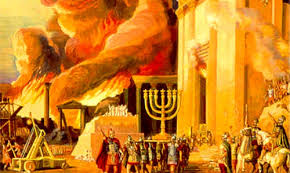
Tisha B’Av, the fast day commemorating the destruction of the two Temples of the ancient Jewish people, is the longest, slowest fast of all. Twenty-five hours of mourning practices, restrictions on joy (even a prohibition to greet people), and the most gruesome, tragic liturgy in our canon are legislated in the halacha of the day that just ended a few hours ago.
Over the years, I have struggled to assign meaning to the day as I sat on the floor to chant Eicha (Lamentations), refrained from tallit and tefillin at morning services, and of course, did not eat or drink through a hot summer workday.
I have tried focusing on the Jewish command to hear text and experience it as if we were there. I have studied history on Tisha B’Av to realize that Jews are not the ever-dying people but rather the never-dying people. I have used the intention that just as in the days of the Temple, we Jews have repair work to do with regard to sinat chinam, senseless hatred, and lashon hara, evil speech.
When Tisha B’Av began last night, the congregations of the Rockland County Board of Rabbis came together as we have done for the past three years. We met last night at Montebello Jewish Center where it felt like a gift to be together with so many fellow Jews. This year, like many of you, I was exhausted with grief before the sun even set to begin my fast. I was saddened by stories of families in the south of Israel whose lives have been traumatically interrupted for weeks and weeks by Red Alert sirens. I had been crying every time I read another eulogy for another soldier written by his mother. (How do Israeli mothers manage to do that?) I was exhausted by the biased angle of so many news articles and reports. I was distraught by the clear evidence of a terrorist organization that inhumanely proved its truest colors by devaluing the lives of Israelis and Palestinians alike. I was appalled by the sheer evil of building terrorist tunnels instead of hospitals and schools. I was frightened by the ongoing news of rampant anti-Semitism in Europe and the emigration of hundreds of thousands of Jews from there.
Before I even began, I didn’t have the energy to make any sense of the mourning of Tisha B’Av.
And then Rabbi Adam Baldachin of Montebello Jewish Center opened the services for Tisha B’Av by saying that this day is different from every other day on the calendar. “We always take action,” he said. “But on this day, we just allow ourselves to feel grief.” His explanation gave me permission to do exactly what I needed to do this year on Tisha B’Av: nothing. No meaning-making. No action plan. I just grieved.
Now the fast is over. Blintzes and bialys have been enjoyed. As the day ended, so did my feelings of intense grief. Not so much has changed in the world since one day ago. But I feel a sense of relief after having submitted to the emotion of grief.
Judaism, in its wisdom, carves out moments of time for us to be in the throes of the difficult emotions we need to feel. And then the day ends. Judaism puts boundaries around our grief. We are safe to enter in and then leave the construct.
Praying for the peace of Israel,
Rabbi Paula Mack Drill
 Three Rabbis Walk Into A Shul
Recent Comments