The Palace is Either Lit Up or On Fire
We welcome our colleague and congregant, Rabbi Ted Lichtenfeld, as a guest blogger this week. He offered these powerful words on Parashat Lech L’cha this past Shabbat to honor the brit mitzvah of his child.
The Torah tells us nothing about Abraham’s personality or motivation. It
just begins his story by telling us of his family background and then that
God instructs him to move from the city of Ur in Mesopotamia to “a land
that I will show you.” We learn more about his character as the Torah goes
on, but pre-rabbinic legends and the Rabbinic midrash spend a good deal
of time explaining why God chose Abram. Abraham was the person who
discovered the one true God, setting the stage for Judaism, Christianity,
and Islam. The Midrash Rabbah on Genesis tells the following parable:
This is analogous to one who was passing from place to place, and
saw a palace all lit up. [Noting that such a beautiful illuminated palace
must have been built by somebody,] he said: ‘Is it possible that this
palace has no one in charge of it?’ The master of the palace looked
out at him and said: ‘I am the master of this palace.’ So, because
Abraham our patriarch was saying: ‘Is it possible that this world is
without someone in charge?’ The Holy One blessed be He looked at
him and said to him: ‘I am the master of the world.’
In this way, Abraham through intellectual investigation comes to believe in
what we call the teleological argument for the existence of God. A world of
such seeming order and wonder – like a many-roomed palace – could only
have come about through a Creator, and it must have a Master watching
over it.
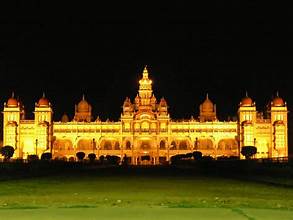
But there is another way of translating this midrash. In this version the
Hebrew birah doleket means not “a palace all illuminated,” but rather, a
“palace completely on fire.” In this version, the traveler sees a building
completely on fire, thinks, “Well, someone must have built this thing.
Where the heck is he?!” By and by, the owner of the palace sticks his head
out and says, “I am the master of this palace.” The midrash now means
that Abraham sees the world as a dumpster fire. He thinks, “Where the
heck is the Creator of the world?! Has he completely stopped paying
attention?! And then Adonai reveals Himself as “the Master of the world.”
Without belaboring the point, the world as dumpster fire probably feels to
many of us like a not unreasonable analogy to the present moment.
The original meaning of the “palace on fire” story was probably more
comforting to the Rabbis than it is to us. In fact, the original idea was that
the world only looks like an out-of-control conflagration. In fact, all the
recent disasters that Abram knows about, like Noah’s flood, were a result of
a God who is completely in charge, and were a means of just punishment
of the wicked.
But our teacher Rabbi Abraham Joshua Heschel, z”l sees much more
complexity in all the bad that happens in the world. Heschel, ud mutzal
me-esh, a brand plucked from the fire, lost his whole family in the
Holocaust and was not one to sugarcoat the cruel reality of the world. In
fact, in God in Search of Man, he tells our midrash twice. Early on he tells
the “a palace filled with light” version and speaks of how our wonder at the
world can inspire faith in God. Chapters later, he tells the “palace on fire”
version, as an introduction to the section entitled, “The Problem of Evil.”
His summary of our midrash poignantly declares, “The world is in flames,
consumed by evil. Is it possible there is no one who cares?”
The idea that God cares, and even more important, that we as human
beings must, pervades Heschel’s discussion of evil. Writing ten years after
Auschwitz was liberated and the Germans surrendered, he worries that we
have become “callous to catastrophes” and that “our sense of horror is on
the wane.” (I think of Lewiston, where my reaction was both horror and the
thought, “Oh, another one.”) But even more worrisome to him, rather
prophetically, is the confusion of good and evil.
In this world it seems, the holy and the unholy do not exist apart, but
are mixed, interrelated, and confounded. It is a world where idols
may be rich in beauty, and where the worship of God may be tinged
with evil.
This seems truer than ever in a world where students rightly concerned
with fair treatment of the Palestinians descend into frightening
anti-Semitism. A world where an Israel which in the wake of horror must
rightly neutralize Hamas maintains a Jewish terrorist as national security
minister.
So how do we face a world burning out of control? As much as the God of
Abraham may be the Guide, the sovereign of the world, what we do is much more important than what we believe about God’s justice. Torah is
the antidote. The mitzvah is the response. Heschel expands on this idea:
Neither the recognition of the peril nor faith in the redemptive power
of God is sufficient to solve the tragic predicament of the world. We
cannot stem the tide of evil by taking refuge in temples, by fervently
imploring the restrained omnipotence of God. The mitzvah, the
humble single act of serving God, of helping man, of cleansing the
self, is our way of dealing with the problem.
In this moment of disaster upon disaster, I wish I had a more expansive
answer. But I find hope in the fact that Judaism has endured through the
ages with a healthy understanding that the world is a palace that is
sometimes miraculous and beautifully illuminated and sometimes burning
down. May we respond by doing mitzvot, by shoring up the spirit of our
fellow Jews, by contributing to the welfare of all people. May our faith in the
one God of Abraham lead, however slowly and gradually, to a universal
belief in the oneness of all humanity.
Replenishing the well
This past Shabbat, Day 8 of the “October 7” War, our synagogue rabbis presided over a ritual marking the transition of a girl to adulthood in the eyes of the community. On Sunday morning, Day 9, we were present for twin girls experiencing the same rite of passage. On Sunday afternoon, I officiated at the naming of a baby girl, linking her to the legacy of her paternal grandfather (a close personal friend who died at a young age) and her maternal great-grandfather.
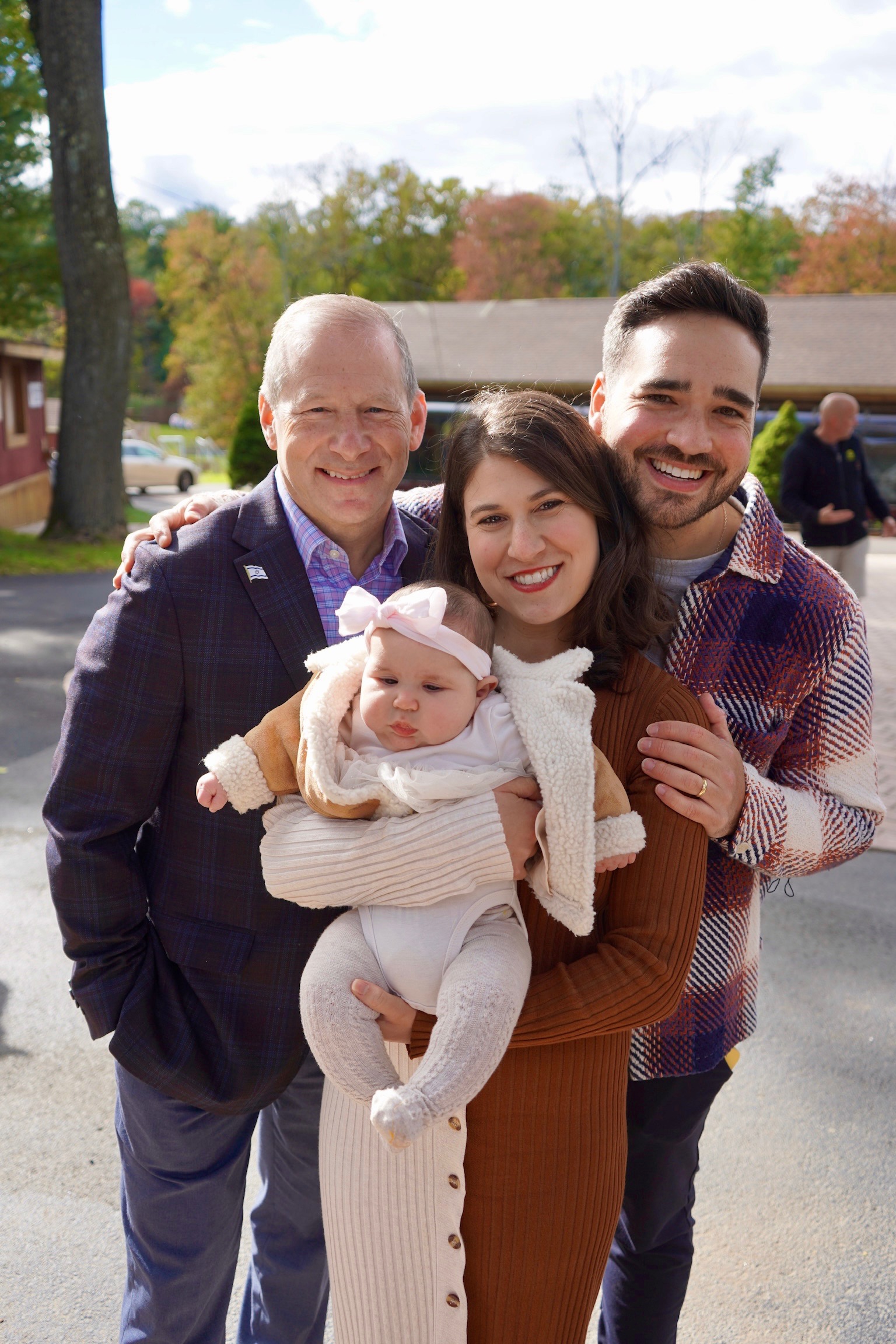
Each of these moments was filled with love and infused with meaning. Each of these rites was held in the embrace of family, friends and community. Each of these children gave honor to their past and held out promise for our shared future. Each of these families prayed and planned for the day to arrive when their respective occasions could be shared.
And each of these events was touched and somewhat shaped by events happening on the other side of the ocean. Parents reached out to their rabbis to inquire on a personal level about the rabbis’ wellbeing and emotional preparedness. They asked whether a postponement might be warranted. They wanted to know that, if the simcha were to take place, it would be framed appropriately in light of tragedy hanging like a cloud over our heads.
The Talmud (Ketubot 17a) teaches that a funeral procession gives way to a wedding procession. In other words, we prioritize the celebration of life over death. The teaching may feel harsh or insensitive to some, especially considering the emphasis we place on caring for mourners. (As an aside, caring for mourners is in fact caring for the needs of the living, as distinguished from the funeral procession itself, which is about the caring for the dead.) But the lesson is one that we need right now.
Caught inside the looping 24-hour newsfeed, glued to images and reports of the dead and the missing, worrying about our family and friends, our well of resilience is being depleted further from hour to hour. We need to exercise the kind of self-care that will replenish that well, so that we can confront and navigate the challenges yet to come. The gift of joy, of celebrating life, is the best form of self-care we can give ourselves.

Like a bridal procession, the celebration of life’s moments of transition fills us with optimism, with a reason to look to the future with hope. The times to be treasured are moments that we are not promised or guaranteed; they are not to be postponed, lest intervening events preclude their being rescheduled. And there’s no guarantee we will be there to enjoy them the next time around.
Seize the moment to celebrate when it presents itself. Join us on November 29 (the date of our rescheduled fall gala, exactly 60 years since the day our building was dedicated!) to celebrate the synagogue and to help us replenish our own communal well of resilience.
Am Yisrael chai, so let’s be sure to celebrate life when we can.
Rabbi Craig Scheff
Don’t Do This Alone (Coping with these Dark Days)
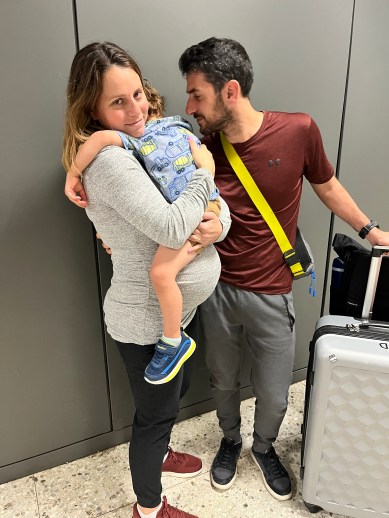
On Friday, October 6, just three things were on my mind.
First, my son Josh and his beloved Shay had just gotten engaged, but they had not yet made it public. I wondered how I could make it through Shabbat and two days of holiday without sharing the good news.

Next, I was feeling quite pleased with my decision to forego shoes and just wear sneakers with my synagogue dresses on Saturday night and Sunday for Simchat Torah dancing.
And third, I was a bit worried about having time to pack after two days of holiday before the car service arrived to drive me to Newark Airport for my flight to Israel. I was making a trip for four days to attend the wedding of my son-in-law‘s brother Omer to his cherished Tal. Jonathan, Sagi and Carmel had already been in Israel for a week and I was looking forward to a fun few days in Tel Aviv and a wonderful Fainshtain celebration.

I didn’t need to have worried about my Sunday night flight to Israel. It was cancelled.
On Saturday, October 7, the world as we knew it ended. We will never be the same.
Jonathan was awakened by sirens on Shabbat morning and travelled out of Tel Aviv to Shay’s family home. That morning, Sagi and Carmel were with Racheli, (Sagi’s mom and Carmel’s savta). Many of you have read Sarah’s account of Sagi’s harrowing escape with his mother, her partner and our grandson Carmel from their home in Mefalsim. In case you didn’t have the chance to read it, here is a link:
https://docs.google.com/document/d/1lng-H_PCVwpDlZrUwvmWFxBjgg2trn-_voJWUMnYGWQ/edit

What do Jewish people do when tragedy strikes but the calendar says it is time to celebrate? We celebrate. With breaking hearts, with tears, and with complete dissonance, we take the Torahs out of the ark and we dance. It’s the hardest thing to do and it’s the only thing to do.
So many congregants of all ages came to OJC for the holidays, drawn in to community like homing pigeons. We knew where to be for comfort and solidarity.
We prayed, we broke bread (and chocolate), and yes, we danced. Our eyes met and we read the grief and bewilderment there. We danced with our children in long “Tayish” lines and circles of “The Tushie Dance” (Od Lo Ahavti Dai). We grinned and laughed with a stubborn refusal to give in to terror. We sang Acheinu softly and walked in slow circles for all those in Israel unable to celebrate Simchat Torah, and the children of our shul saw their rabbis cry. We honored teenagers as Chatanei Torah and a centenarian as Chatan Bereshit and we felt uplifted by them and their proud families.
All of it was necessary. It’s what we Jews have been forced to learn throughout all the centuries of our history. If we stopped celebrating every time we endured suffering, we would never be able to fulfill our calendar year.
At the OJC, we did not celebrate despite our sorrow. We celebrated together with our sorrow.
I was never more proud of our congregation.
Since the holidays have ended, we have truly been prepared for Mar Cheshvan which begins on Saturday night. It will be a bitter month indeed.
After the holidays concluded, the news from Israel continues to be intolerable. As the numbers of injured, kidnapped, and murdered in Israel climb and the inhuman stories emerge, as soldiers are mobilized and in harm’s way, as we speak to precious friends and family in Israel and find that we have no useful words, we find that the reality is more than any one soul can comprehend.
And so, we cannot do it alone. We must find each other in our grief and come together to pray, find comfort, and take action.
Hundreds came to the rally on Tuesday at the courthouse in New City.
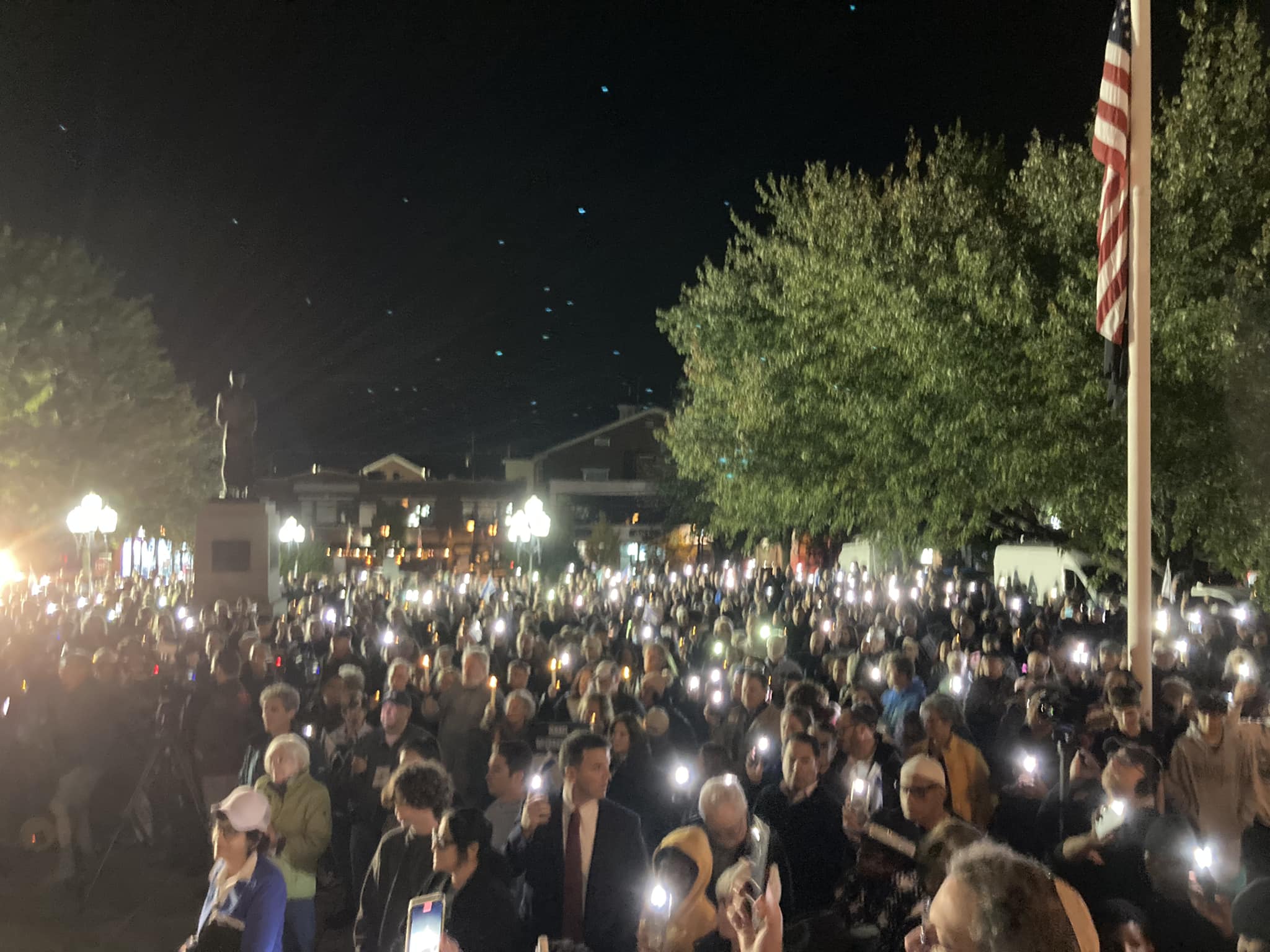
Many of you will be with us on Shabbat to feel the power of community.
I expect that hundreds more will come together on Saturday night at 8 o’clock at Congregation Sons of Israel in Nyack for the Rockland Board of Rabbis Prayer Vigil and Memorial Service.
More opportunities for prayer, healing, and action will be announced soon.
Please don’t try to do this alone. We are a community that knows how to be together in the most joyous times and in the hardest times.
Am Yisrael Chai.
The People of Israel lives!
Rabbi Paula Mack Drill
 Three Rabbis Walk Into A Shul
Recent Comments