Traveling with Two Hearts
Perhaps it is always the case that when a Jew travels in Europe, one travels simultaneously with two minds. Or more correctly, with two hearts.
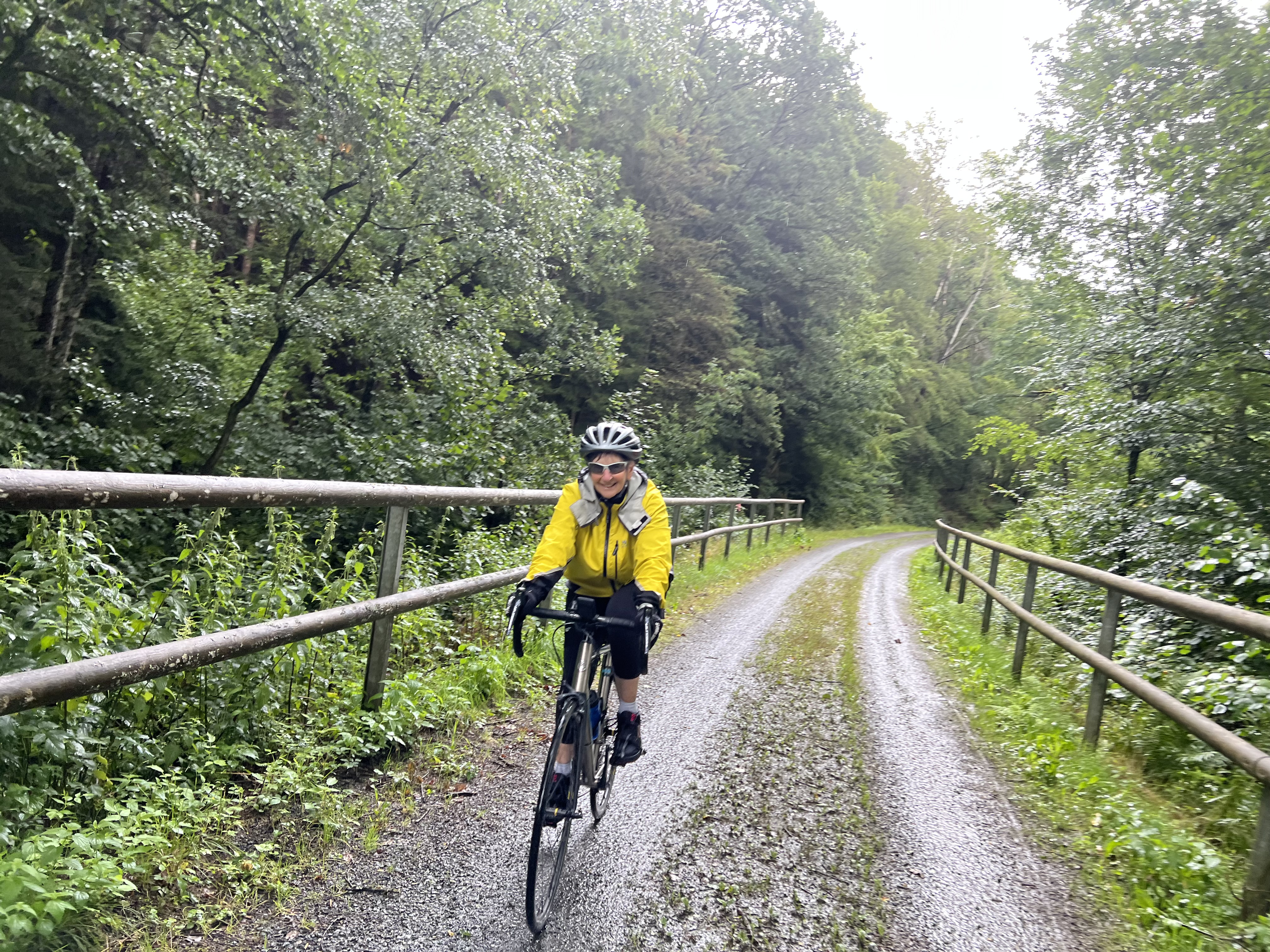
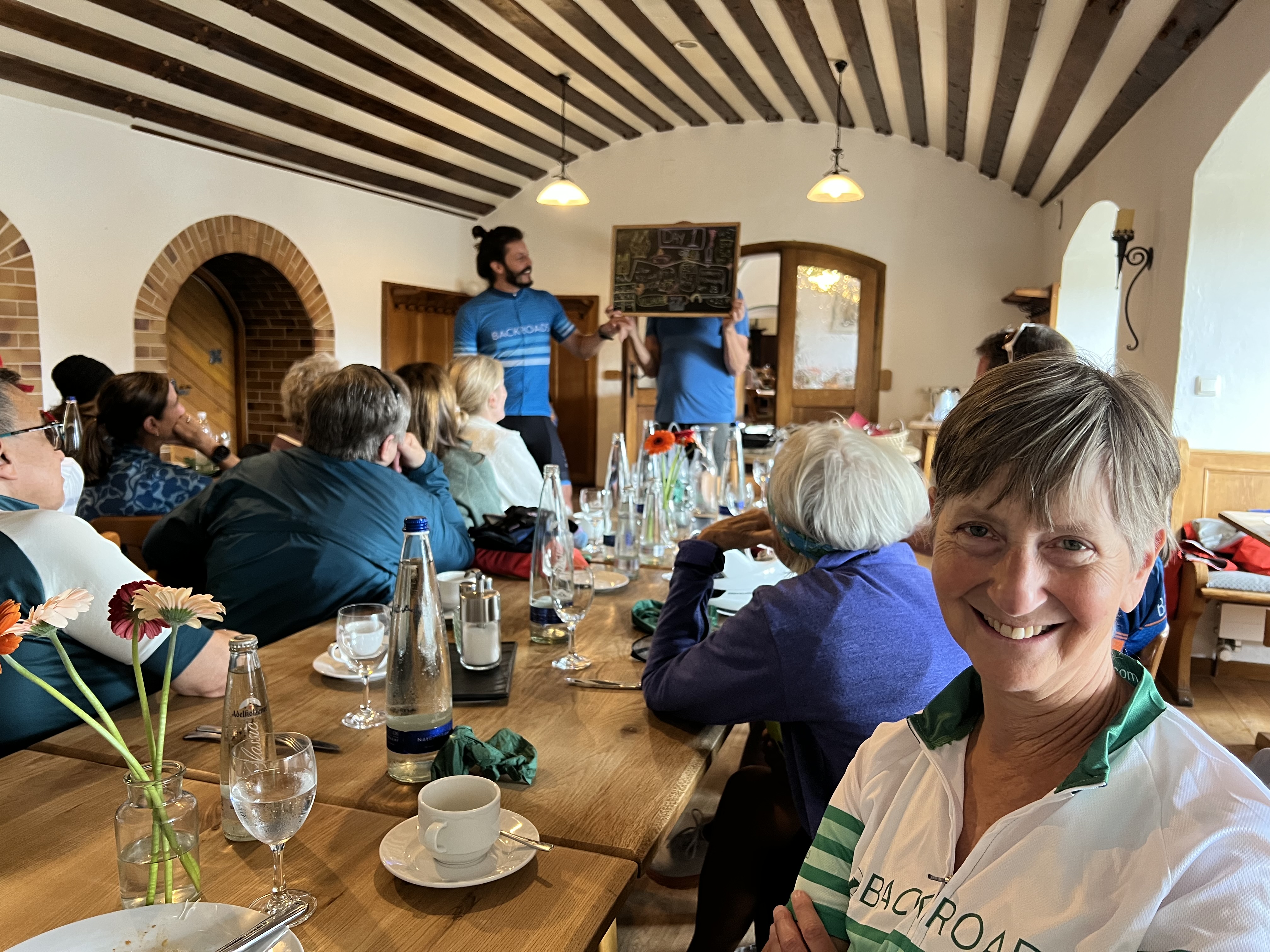
Of the first mind, here is an amazing vacation filled with everything one could desire, and for which I am grateful. We cycled and cruised the Danube from Prague to Budapest, enjoying river paths and forests, orchards and vineyards, castles and medieval forts, small villages and impressive cities. Jonathan and I enjoyed the fellowship of other cyclists, great food, and a Mozart concert.
And in the other chamber of my heart, there are the unstoppable thoughts. What is the Jewish history of this place?
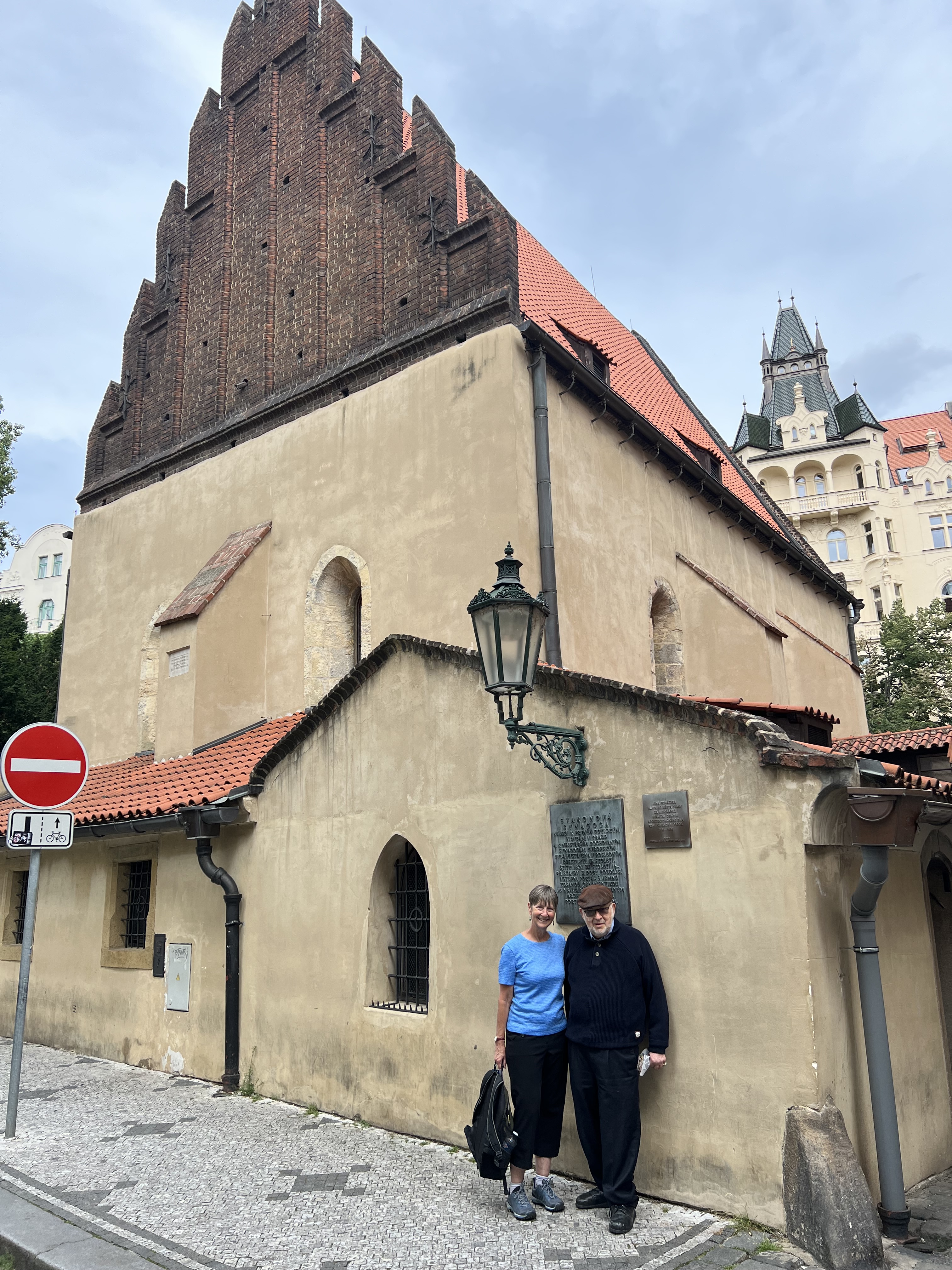
The answers were not completely absent from the week. We spent Shabbat in Prague with my friend and colleague, Rabbi Ron Hoffberg and the Masorti community there. Before Shabbat, Rabbi Hoffberg gave us a tour of the Jewish quarter. We saw four synagogues including the New Old Synagogue, the Jewish cemetery, and the stairs to the attic where the Golem is locked away. We viewed Prague from the perspective of the Jewish history there.

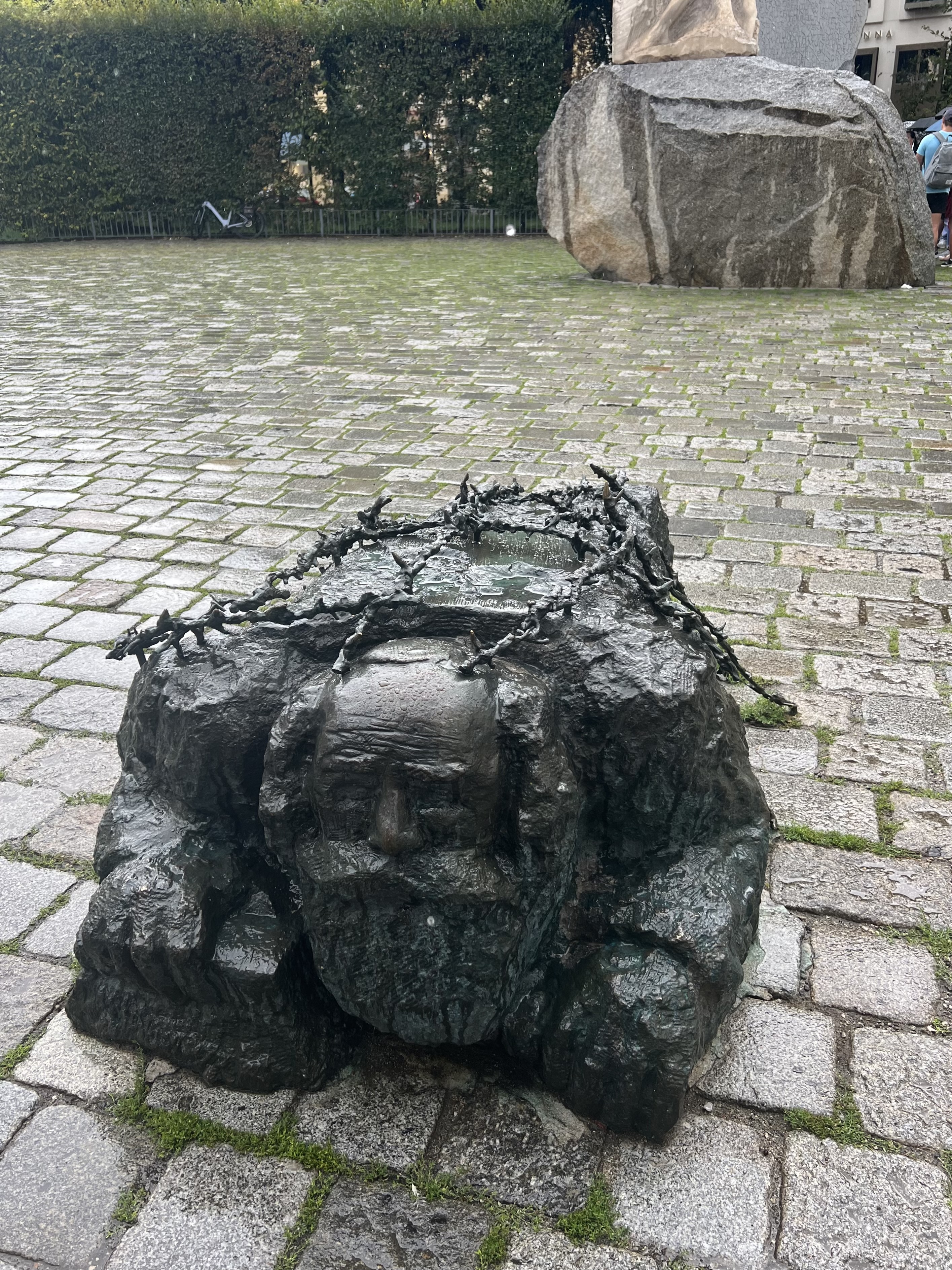
Once we joined our bike tour group, there was still acknowledgment of Jewish presence. In every historical explanation by a guide, there would be a mention: Franz Joseph was a strong protector of the Jews. All of these apartment buildings were inhabited by Jews who were welcomed into Linz for their merchant and banking skills. Sigmund Freud was a prized son of Vienna until “World War II forced him to leave.” See this statue of Princess Sisi and that of the great liberator of Vienna, Jan Sabieski – oh, and here is the representation of a Jew forced to clean the cobblestones with a tiny brush, very sad”. “Over here was a very large Jewish ghetto and around the corner is Bratislava’s Memorial to the Jews.”
The monologue in my mind offered quite a different tour:
Consider this quaint village. Did they round up their Jews or hide them?
Cycle in a windy, cold downpour through the Bavarian forests. How did Jewish refugees ever get warm when they were on the run?
Admire the large and prospering farm along the bike path. Did Jews hide in the barn or the haystacks?
The interior of this abbey is inspiring. Did the nuns here hide Jewish children or turn them in? View the sweeping interior of yet another Catholic Church. I wonder what the priests taught their parish about the Jews.
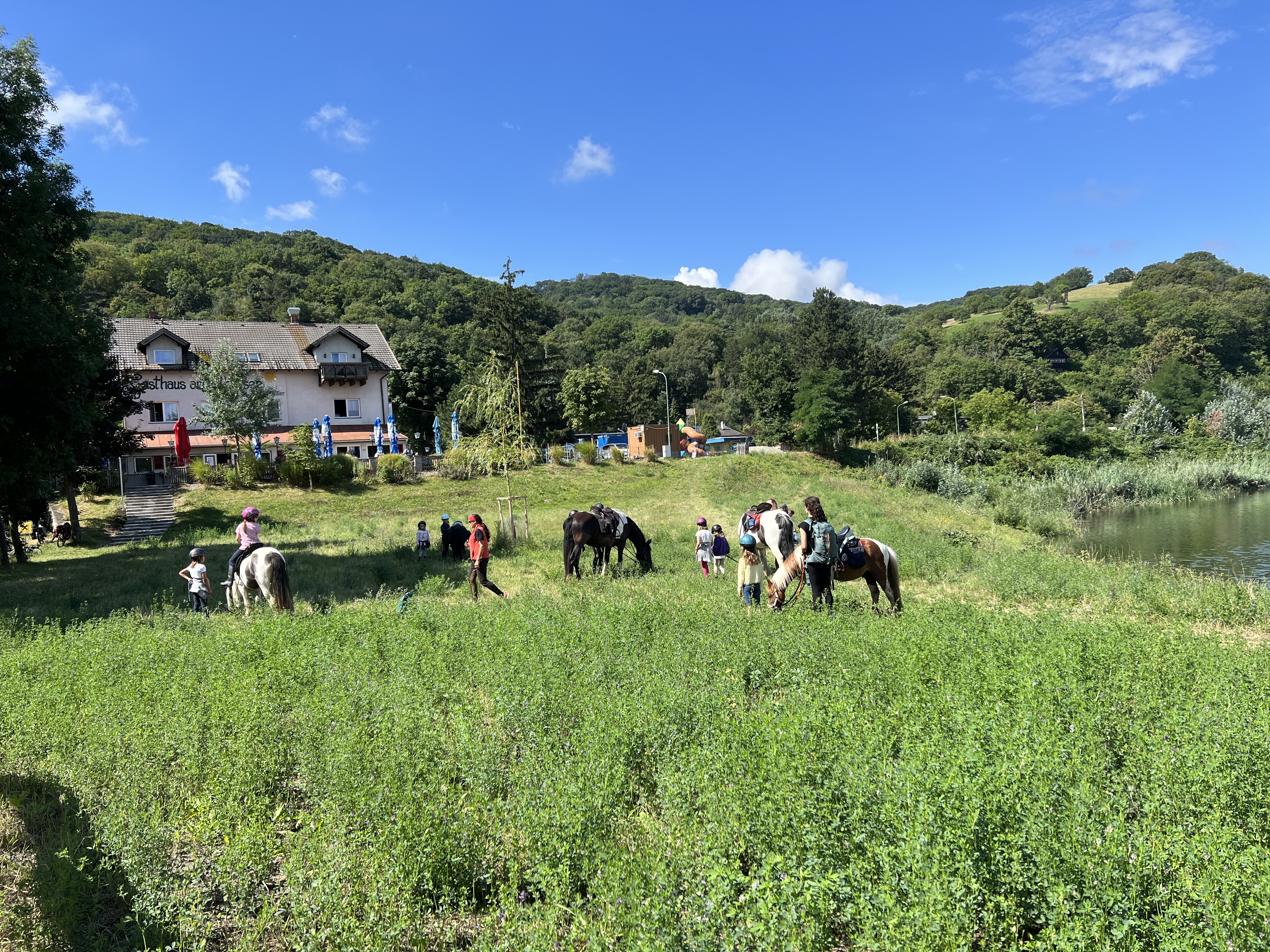


I thought that I was alone in these thoughts. But yesterday, our group had a walking tour of Budapest, and were guided to the haunting sculpture Shoes along the Danube. These bronze shoes are a memorial to the Budapest Jews who were rounded up at the very end of the War, and shot and killed at the edge of the Danube where the river turned red with their blood. Afterward, many members of our group came to just give me a hug or ask a question. I felt held and understood by very good human beings.

Last night, our guides asked everyone to share a highlight of the week. People spoke about cycling up a very hard mountain pass, or riding through the vineyards to a wine tasting. One of my fellow travelers began his memory by reflecting that we should all take seriously the sculpture of the shoes that we had seen earlier that day. He said that we are privileged to be able to travel the world, but we should be mindful that we are living in dark times. We should remember the fellowship of our travelers and live our lives to prove that kindness is stronger than hate.
In his few meaningful words, the two simultaneous travelers in my mind and heart united as one.
Wherever you are and whatever you are enjoying this summer, remember the superpower of kindness.
Rabbi Paula Mack Drill
The year of the unicorn (aka “Succeeding successfully”)
When we set out to create a job description for the search for our new rabbi, someone (it may have been our creative president Matt Schiering) suggested that we might as well be looking to replace a unicorn.
I certainly think quite highly of Rabbi Paula Drill, and I am beyond grateful for the partnership we have shared and the many ways in which having her as a co-rabbi has improved my life professionally and personally. But a unicorn?

As we follow Moses through the final year of his tenure leading the Israelites, we are reminded that he is irreplaceable. “There never arose another prophet like Moses….” Joshua is poised to succeed Moses, but not to replace him. Joshua will be a different leader for a different time with a different mission.
All this talk about Moses, Rabbi Drill and unicorns has left me reflecting on the origin story of Rabbi Drill‘s relationship with our community. We weren’t looking for a unicorn, and we didn’t hire one. We hired someone whom we knew could build relationships in the context of our Jewish tradition. There were challenges, doubts and growing pains as we introduced a new leader to our community. Personally, my guiding principle was that Rabbi Drill’s success would be my success. I believed my burden would be lighter, my life would have greater balance, and her achievements would add to the reputation of the OJC community as a place with which people wanted to connect. Our leadership understood that her success connecting, building relationships and offering more pathways into community would benefit our entire community and help us grow. It mattered not that Rabbi Drill started out only coming to OJC one Shabbat each month; it mattered that she was willing to connect with people on their time about their lives and their searches for meaning. Our faith was rewarded!

The partnership model that Rabbi Drill and I promoted from her earliest years here required a true cultural shift away from a hierarchical structure of leadership. We advocated to avoid the “assistant rabbi” title, ultimately establishing a co-rabbi relationship. We were inspired by the Jewish model of learning in partnership (“chavruta”), and by the pairs of rabbinic sages who challenged each other to grow, to refine their knowledge, and to consider alternate perspectives. I believe our synagogue became a kinder, more thoughtful place because of the partnership and team approach that we modeled.
For our succession plan to be successful, we need to remember what has made us successful as a community to date. We need to remember how Rabbi Drill’s tenure became the success it was. It should come as no surprise that the survey we recently sent to the congregation revealed that the rabbinic role most important to our community, by a wide margin, is for the rabbi to share a personal connection with us. We want to be seen, heard, understood and appreciated by someone who can help us forge our own connection with community, tradition and God.

If it takes a unicorn to fill that need, then let the search for the next unicorn begin. If anyone can find one, it’s us!
Rabbi Craig Scheff
 Three Rabbis Walk Into A Shul
Recent Comments