Wise Aging
My father-in-law, Phil Drill, will turn 96 in August. He works every day at his third-generation construction company, bidding jobs and managing projects. No one is doing him a favor, no one is condescending to give “the old man” a desk and a chair. Project managers and developers consistently seek his opinions and expertise. On weekends, he and my mother-in-law commute to their place in New York City where he goes to a studio to sculpt and where they see movies and plays that most of us have not yet heard of. Twice a week, back in New Jersey, he does Pilates. Every morning before work, he walks his dog Murphy two miles, and many evenings, he cycles around his neighborhood on the bicycle that his kids got him as a present for his 90th birthday. It was his request.

Yes, Phil is 96 years old. He has gotten older but he has not become old.
You could say that he is blessed with relatively good health and excellent longevity genes. True. But Phil’s way of embracing every day is more about his attitude than anything else.
Getting older is a fact of nature. But getting old is a choice we all make.
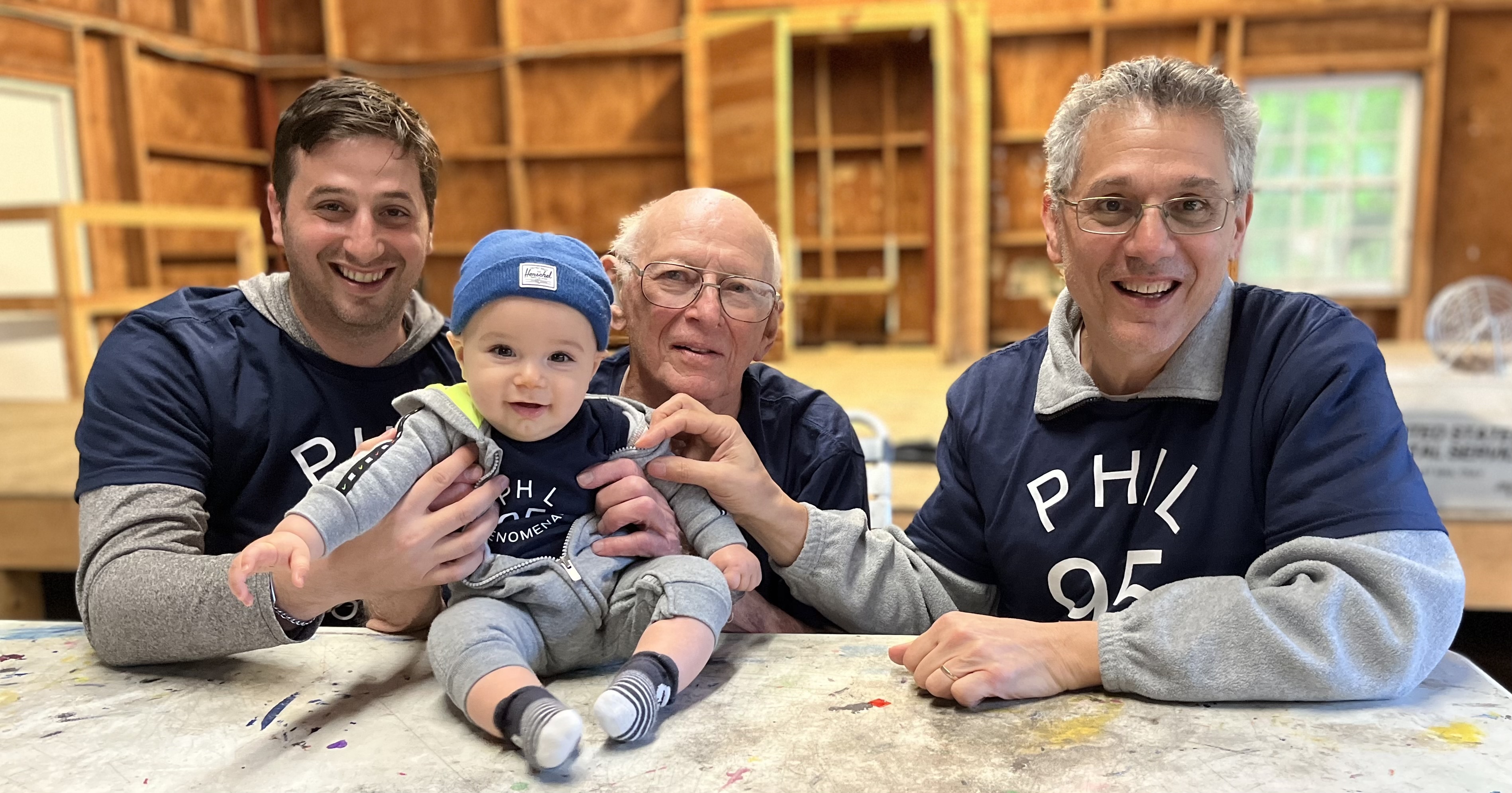

Phil is my inspiration for the class I am teaching at Orangetown Jewish Center this summer, “Wise Aging”. Having learned a great deal from the book by the same name authored by Rabbi Rachel Cowan, z”l and Dr. Linda Thal, I decided to delve into Jewish texts that teach us the secrets of growing older without taking on a declinist view of being old. Yes, we lose things as we age: people we love, full use of our bodies, memory, professional identity, purpose, independence, confidence. You can make this list as easily as I can.
If we adopt the amazing mantra of “the best is yet to be” and accept the inevitable losses as reality, we can take on a different view of aging, a spiritual view. We can see our tasks as shining up our souls and focusing on what is most valuable rather than grasping at what we are losing.
We never know how a class will land when we offer it. This class on wise aging clearly hit the mark. Close to forty participants from younger boomers to elders have been gathering on Monday mornings in a hybrid format. Interestingly, the in-person participants outnumber the virtual students for the first time since before Covid. The class seems to be so highly valued that I will be continuing it monthly in the fall. (Join us this Monday, July 10 at 11:00 am for the final summertime class.)
Poet Stanley Kunitz writes, “Years ago I came to the realization that the most poignant of all lyrical tensions stems from the awareness that we are living and dying at once.” This statement may seem jarring to you, yet I find it to be “very Jewish”. In Judaism, meaning is found in living, not in dying; yet awareness of mortality is essential. Our rabbis teach: “Live every day as if it were your last.” Do something of worth today. Make this day meaningful by a kind word, a phone call, a poem read or written. Jewish thought stubbornly insists that we are here for a purpose, that we are partners with God, that we are meant to be kind to others and to be reverent of life.
In Psalm 92 we read, “Tzadik katamar yifrach… The righteous flourish like the date palm, thrive like a cedar in Lebanon… In old age they remain fruitful, still fresh and bountiful, proclaiming: Adonai is upright, my rock in whom there is no flaw.” Rabbi Abraham Joshua Heschel wrote about this verse, “One who lives with a sense for the Presence knows that to get older does not mean to lose time but to gain time. And, also, that in all of one’s deeds, a person’s chief task is to sanctify time. All it takes to sanctify time is God, a soul, and a moment. And the three are always here.”
What is the secret to such resilience and graceful aging? How does one make such a choice? Join us to learn together monthly on Monday mornings as we strive to find meaningful answers.
To find out more about the class (in-person and on Zoom), contact me Rabbi.Drill@theojc.org.
Here’s to joy and resilience, Rabbi Paula Mack Drill
 Three Rabbis Walk Into A Shul
Recent Comments