Help me help you!
“Help me help you.” Sports agent Jerry Maguire, played by Tom Cruise in the movie of the same title, offers these words as a plea to his sole client as Jerry strives to secure him a lucrative contract.
Jerry represents disgruntled wide receiver Rod Tidwell (played by Cuba Gooding Jr.) to the best of his abilities; his success would mean a big payday for the football player and a sizable cut for the agent, but Rod isn’t making it easy. Jerry needs Rod to play the game with a better attitude—for the fans and the media—in order to seal the deal. “Help me help you,” Jerry pleads in the face of a stiff-knecked and prideful Rod.
As your shaliach, or agent, this coming high holiday season, I want to represent you as best I can. And I want to see you bring your best. I want your compensation to be your name signed and sealed for a lucrative reward. Of course there is something in it for me as well. But in order for us both to get what we want and deserve, I need you to help me. Help me help you!
It’s not easy for rabbis, year after year, to ascertain what their constituents want and need from them on the few days they have the chance to speak to a large portion of the congregation. There are plenty of self-righteous voices out there telling us what we should be speaking about and what we should be saying on those matters! But they don’t know us; and they don’t know you. Your particulars aren’t even necessarily the same as those of the others on your congregational team whom I represent. Moreover, given the fact that this world is placing so many stumbling blocks in our path, it’s nearly impossible for me to know which of those blocks you find the most difficult to evade.
It’s game on. The horn sounded with the shrill of the opening shofar blasts this morning. We are four weeks away from the opening of the signing period, and I want to do right by you. I can help you best to navigate this path if you tell me what it is that you need to hear from me. Please note: I’m not asking what you think others need to hear; I’m asking what topics you need to hear your rabbi—as your representative and representative of our tradition—address for you and your betterment in the new year.
Email me at Rabbi.scheff@theojc.org with up to 3 questions or ideas about which you would like to hear what our Judaism offers. There are so many topics I’d love to address throughout our holy days. Help me narrow them down to your specific needs. Help me help you!
Rabbi Craig Scheff
Time to reflect
As we reach the end of another academic year, I wanted to share with you the words of Rafi Josselson, a high school senior at The Leffell School who spent the last nine weeks of his academic year interning with me here at the synagogue. As I have shared with his school administration, Rafi has surpassed all our expectations. His work ethic and product have matched that of so many of our previous rabbinic interns, many of whom were at least a decade older in years and in academic pursuit. We have learned from Rafi. His youth was no impediment to his wisdom, his charm and his contributions. I am happy to be re-starting this blog after a year’s hiatus with Rafi’s words, and I look forward to welcoming Rabbi Claire Shoyer as a contributor. Thank you, Rafi. We wish you the very best in all your pursuits!
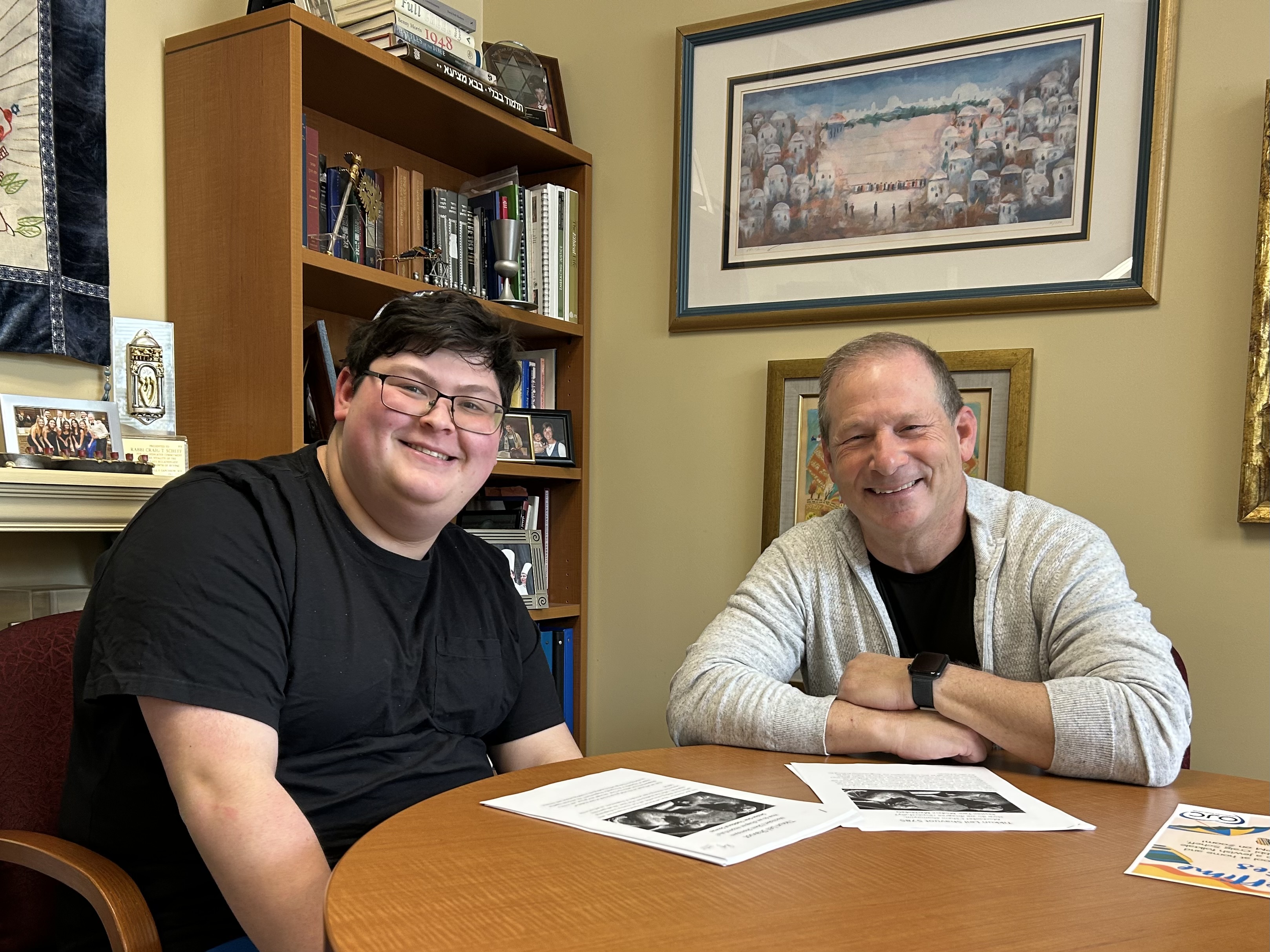
Dear OJC,
Thank you all for allowing me to serve as your synagogue intern this spring. It’s been one of the best experiences of my life. I’ve grown professionally and personally throughout this experience. This wasn’t a difficult transition. Since this is my synagogue, I was already heavily involved. And so, unlike my peers who interned for six weeks, I have been interning for about nine weeks.
Like you, I am a congregant. But, for these nine weeks, I stepped “behind the curtain” to see the work that happens behind the scenes. Our hours are inconsistent. I have had nights when I am working until 9 or 10:30. There are days when I have gone into the city, to a funeral, or to someone’s house to sit shiva with them. My internship wasn’t just about doing stuff; most of my time was spent showing up.
I focused a tremendous amount of my time refining my leyning and oration skills. I have delivered four sermons to the congregation. I am proud of each one of them, but I have worked hard to get better at my delivery, pacing, and length. I hope you’ve noticed my growth in that area. I’ve also worked tirelessly on improving my leyning. I have read Torah or Haftarah almost every Shabbat, and I pushed myself to learn something new: Megillat Ruth.
I had the opportunity to interact with our youth through Kulanu. Being a day school student, my interaction with Kulanu in the past was limited. During this internship, I was very involved with our B’nai Yisrael (3rd-5th Grade) class. The work and energy that is expended for our children’s education is magical. It was a pleasure to work alongside Rabbi Kniaz in her final weeks with our Kulanu students. My experience was enhanced by our teachers, our Kulanu Assistant Ms. Maudeena Jones, and our students, all of whom are critical parts of the educational experience. I was so proud of our B’nai Yisrael students when, for their final project, they compiled a new book of the Tanakh to transmit to future generations. They joyously presented it to Rabbi Kniaz at their moving-up ceremony.
I’ve also noticed, as many of you have, that we as a synagogue are moving into a new stage. Even though she technically starts in July, I can assure you that Rabbi Shoyer and the rest of the OJC team are already busy planning engaging programming for next year. I also got to attend her JTS ordination. Rabbi Shoyer has worked so hard to get to this moment. She has spent five years in rabbinical school, including hundreds of hours in internships. But, as I have heard from so many rabbis before, you don’t learn how to be a rabbi until you are a rabbi. Therefore, as Rabbi Shoyer continues to grow and learn, I ask you: please give her time and space to grow into the rabbi she is meant to be.
Speaking of rabbis’ experiences, throughout the internship, I interviewed 14 rabbis to get a sense of their experiences, careers, and reflections on the title of “Rabbi”. I interviewed both Rabbi Scheff and Rabbi Drill for this project, and I interviewed two of our previous Rabbinic Interns, Rabbi Jesse Nagelberg and Rabbi Ben Varon. These people are the gold standard of what rabbis should be: caring, empathetic, dedicated, and involved. I am glad I had the chance to talk to them, and the OJC is lucky to have been led by them. You can read my takeaways from my interview project here.
To conclude, I want to share why I did this internship. First, I wanted to gain an understanding of the field of rabbinic work. But secondly, I wanted to give back to you, the OJC, which I believe is one of the most magical places on Earth. We aren’t perfect. And we have a lot more ahead of us. But I am confident that, together, we’ll keep OJC a welcoming, safe, and inclusive home for everybody.
Rafi
The Blessing of Hope
Last night at the OJC, I offered the following words about the great blessing of hope to my community at our annual congregational meeting. I print them here for anyone who was not there or would like to think about the words once again. Whether or not you are an OJC congregant, I hope that my words shed a small light into this dark time in which we find ourselves. B’yedidut, with friendship, Rabbi Paula Mack Drill

Erev tov. I am aware of the profundity of this moment as I offer Torah for the last time at a congregational meeting as your rabbi. I am rejoicing as I stand here with you, knowing you all and caring so deeply about each one of you. And I am sad because soon I’ll be stepping away from the role as your rabbi to begin Act 3. Blessings and curses. Every moment of life includes both: berakha v’toch’ha, plentiful harvest vs. famine, freedom vs. enslavement – in the concrete understanding as well as spiritual. As our Torah portion this week, Parashat Behukotai, says over and over: im v’im. If, but if.
If we have built something beautiful here together for decades, then God will establish God’s abode in our midst, but if we do not observe and live according to our mission and purpose, then God will… Well, I don’t want to be melodramatic. We are not the Israelites in the desert facing God’s furious curses to “break our proud glory.” Still the point remains: Blessings and curses are made of choices that are squarely in our hands.
As we consider Behukotai, we are taught about the power of faith, the blessings that come from walking in God’s ways, and the profound potential each one of us holds to shape our future with positivity and purpose. In our context tonight, it is even more. We are reminded of the power of faith that radiates from a healthy, aspiring, optimistic synagogue. We know that as a congregation, we learn every day to walk in God’s ways – to connect, create relationship, care for our vulnerable, rejoice in our moments of triumph. And most importantly, to embrace our potential, the potential of each one of us, to shape the future of OJC with positivity and purpose.
Parasha Behukotai begins with a simple yet powerful promise: “If you walk in My ways and keep My commandments and perform them, then I will give you rain in its season, the land will yield its produce, and the trees of the field shall yield their fruit.” This is not just a promise of physical sustenance but by extension, a promise of the spiritual and communal abundance that flows from living lives aligned with our highest values and teachings.
In a world that often feels uncertain and tumultuous, these words offer us a beacon of hope. They remind us that by staying true to our principles, by nurturing our relationships, and by supporting one another, we can continue to create a community that thrives against all odds, that will be a beacon to others, that will stand the test of time. The rains will come, the land will produce, and the trees will bear fruit—not just in the agricultural sense, but in the flourishing of our families and our community.
Im v’im. If, but if. If we take a moment to appreciate the blessings we already have, we can be filled with gratitude and pride. If our community will be strong and vibrant, the individuals who are its heartbeat must contribute their talents, kindness, and energy. If we are surrounded by friends who support us, by leaders who guide us, and by opportunities to make a difference in the world, we will be the best OJC we can be. But if, if we become disengaged, if we stay away, if we show cynicism, if we give up hope, our OJC will not be the place we dream it to be.
So tonight, I encourage all of us to look forward with optimism. Just as the Torah promises rewards for our dedication and hard work, we too can anticipate the fruits of our collective efforts. Step up. Do the work quietly. Give generously. And most of all, remember to acknowledge each other with heartfelt gratitude. Every act of kindness, every lesson taught, every moment of shared joy, every welcome to the kiddush table, every voice lifted to sing Eitz Chaim strengthens the fabric of our community. Together, we can overcome challenges, celebrate our successes, and build a future filled with hope and promise.
May we always see the blessings in our lives, may we cultivate gratitude and joy, and may we walk forward with faith, knowing that together, we can create a world that reflects the beauty, kindness, and divine promise of Torah.
May our work here tonight mark a new beginning with a unique path forward. May OJC be blessed with the knowledge that we are a sacred community that serves not only our congregants but also those in the greater community. We serve not only today but the Jewish future. May we know prosperity and may the anthem of our people also be our anthem: HaTikvah.
A mother’s prayer
Perhaps it was the timing of coming together in these post-October 7 days.
Perhaps it was an escape from all the protests that seem to want to besmirch or obliterate our Jewish identities.
Perhaps it was the complicated vibe of Yom Hazikaron (Israel’s memorial day) and Yom Ha’atzmaut (Israel’s independence day) juxtapositioned back to back, and our desire to connect to that vibe from afar.
Perhaps it was that so many of us were without our mothers, either because of distance or loss, or without children.
Perhaps it was because a young Jewish mother was sitting in front of us on this Mother’s Day morning, having left three of her children overseas, singing to her husband who sat across from her and to us, needing to open her heart and share her music about parents and children and wanting to feel safe in a place she calls home and loving the land and all its problems and wanting no war and wanting her husband to return safely from reserves and believing in peace and needing to spread word about the power of love.

Whatever the reason, what started out in concept as an opportunity to acknowledge Israel’s two days of remembrance and gratitude during this uniquely complicated time was instantaneously transformed into a holy moment. We could not have anticipated the flood of emotion, the sense of hearts opening in our midst, the tear-streaked and smiling faces from the moment Yoni and Nina (“Yonina”) began to sing Al Kol Eleh (“For all these things, watch over me my good Lord, for the honey and the thorn, for the bitter and the sweet”). What might have been a forty-five minute singalong of Israel songs became a timeless ritual of holding our collective breath, inhaling deeply with a sense of wonder, awe and reverence for it all, and then exhaling the exhaustion, anxiety and sadness, only to repeat the exercise with each song.
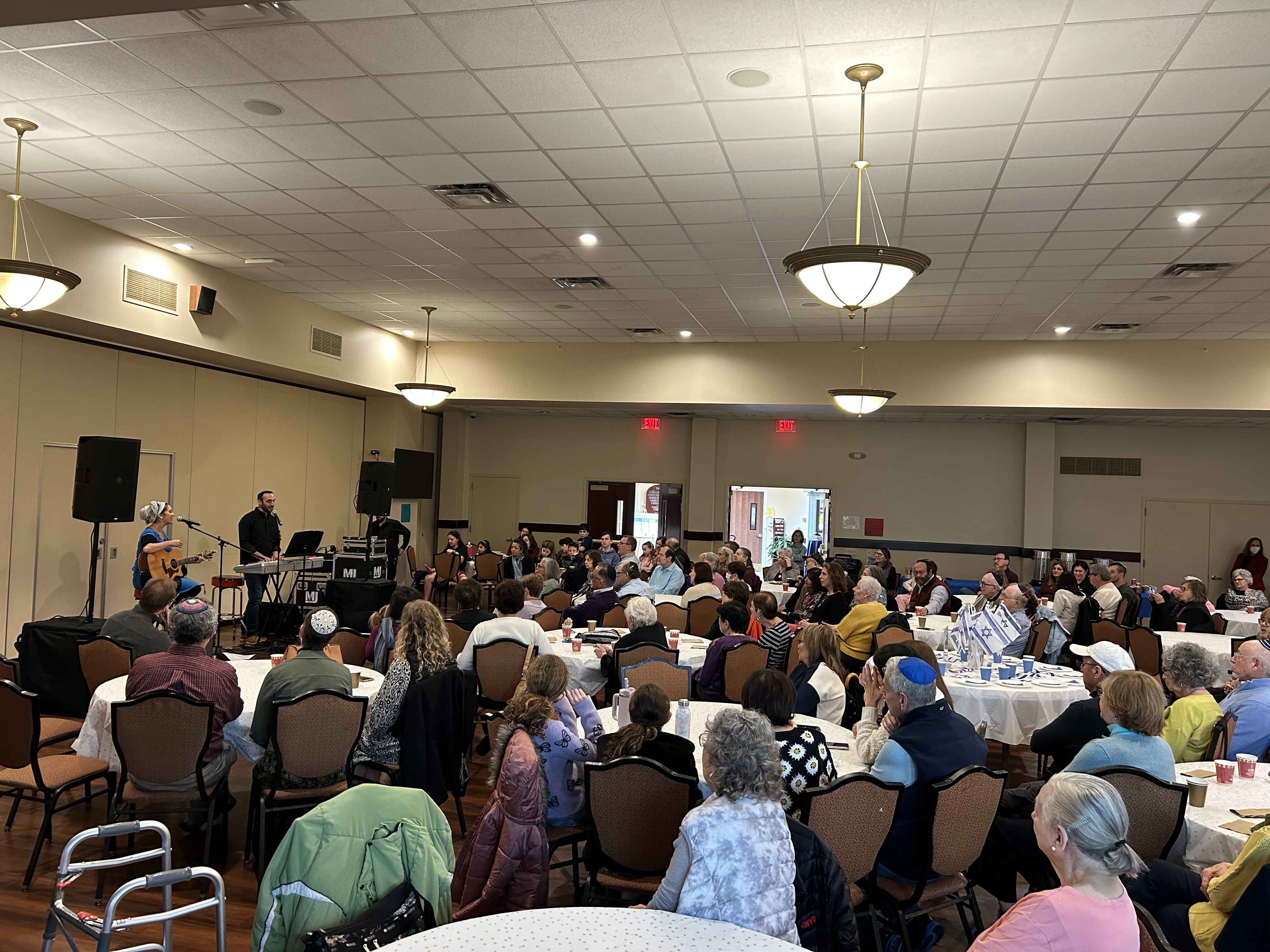
Yoni and Nina came to us with Rabbi Hersh’s urging early in the spring of 2020. They performed via Zoom monthly on Friday morning to help us connect heading into Shabbat in a time when we could not yet gather physically. Their music, for many of us, has continued to feed us, uplift us, connect us. While we felt this personal appearance was a homecoming for them of sorts, I know they felt the conflict of being away from their one home, their parents, and their children.
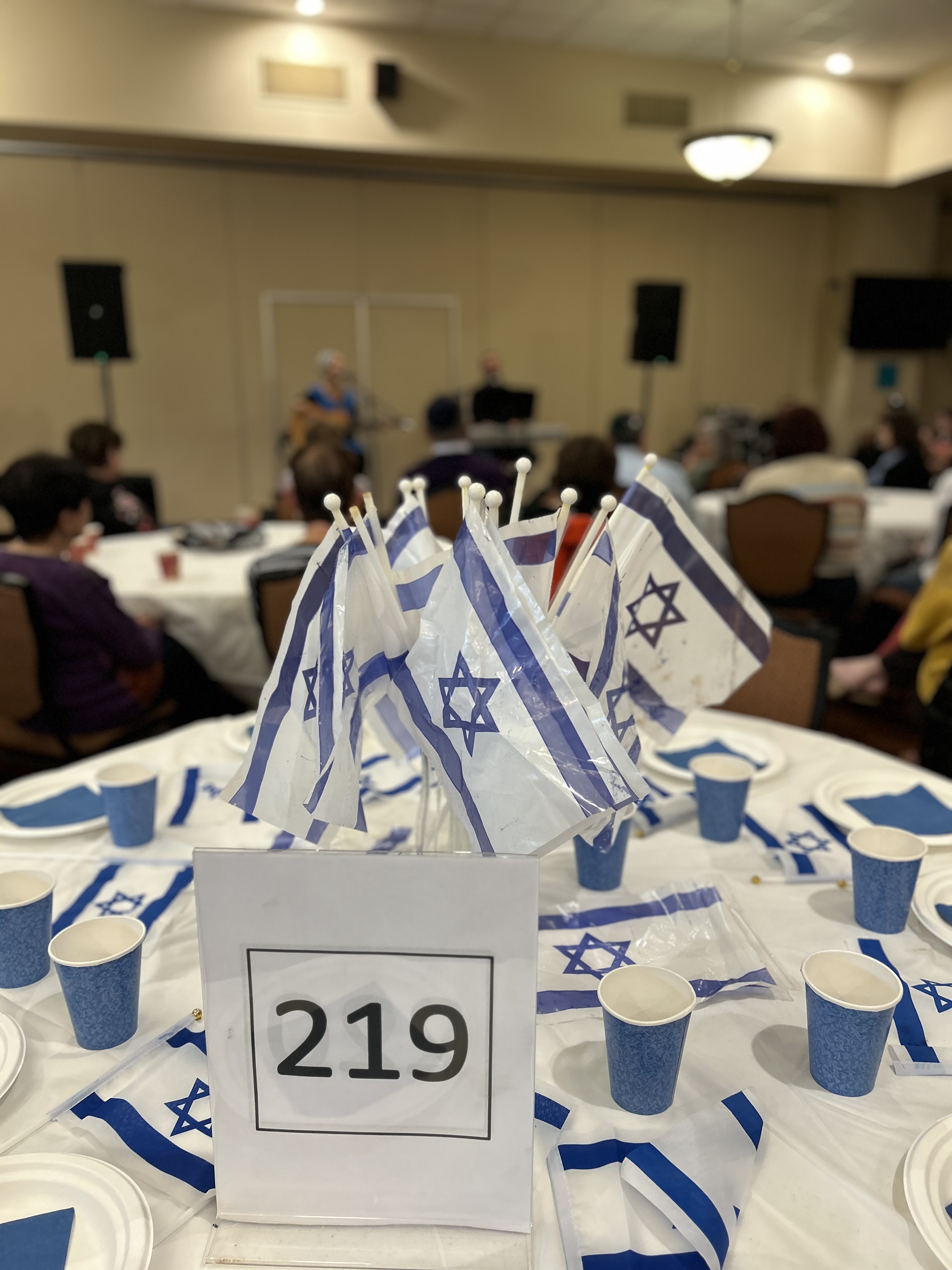
For ninety perfect minutes, with the help of their music, lyrics and heartfelt stories, we ascended together out of the time and space that restricts us. We were all home with one another, all connected to our mothers and fathers, all feeling the love we give away coming back to us, all absorbing the resilience and hope shared by these two loving artists.
In their song Melaketet kochavim (“collecting stars”), Nina and Yoni sing to each other from afar, a mother caring for children and home, a father fighting a war, both hoping to reunite safely and soon, holding onto hope that their dreams will soon be realized:
So now I am gathering all of my strength
of kindness, and of faith
that good days are yet to come
that the songs of joy will return to us
and I hug the children tightly
to protect from the storms outside
and in all the craziness
under black skies
I gather stars
Inhale. Read the words and hear the song. Exhale. Repeat.

Happy 76th birthday, Israel. May this year be better than the last, one in which your children’s dreams come true, one in which your hope is realized.
Rabbi Craig Scheff
Reflections on “Walking as Witnesses”
The following is not the typical blog post from the OJC rabbis. It is a daily recap of the OJC-Poland 2024 experience that ended yesterday. It is meant for those who wanted to follow our experiences without resorting to Facebook. It is a bit long, but hopefully you will find it worthwhile reading! Please note, however, that to truly appreciate the emotional arc of our experiences, you really should read to the end….
OJC-Poland 2024: “Walking as Wintesses”
Day One
On the eve of arrival in Poland, leading a group of 32 (mostly from our synagogue community) to Krakow, Majdanek, Lublin and Warsaw, I wrestle with these thoughts:
How do we bear witness and process the inhumanity that was visited upon us? And how do we avoid permitting this victimization to be the primary motivator of our Jewish identification?
How can we make room for empathy towards those who were bystanders (sometimes innocent and sometimes willing), while also holding accountable those who actively participated in our suffering? What can we learn from those who stood up righteously in our defense or in defense of their own humanity?
How do we appreciate Jewish physical and spiritual resistance in spite of Jewish suffering?
How can Poland remain both home and graveyard?
How do we understand Jewish life in Poland today? What is its meaning and mission?
And how does all our wrestling translate into a productive and empowering way to confront our current circumstances as American Jews?
Though this is my third time leading this trip, I anticipate an emotional, challenging and hopefully meaningful week ahead with what seems to be a very special group of people.
Day Two
Our group convened this afternoon to begin our tour of Krakow. After I offered an intention for the days ahead, we set off for the Jewish quarter in Kazimierz.
Our tour guide walked us through the bustling city and into the heart of Jewish life here, home to the world’s largest annual Jewish festival. We visited the Altshul, the Rema Synagogue and Cemetery, and the Temple Synagogue, tracing the history of a Jewish presence dating back to the 15th century.
Our tour ended at JCC Krakow, where we dined and met with CEO Jonathan Ornstein, who shared with us his perspective on the phenomenon of a growing Jewish presence in what many considered a Jewish graveyard. The work that is being done for those discovering Jewish roots is remarkable, and the JCC has become a safe haven and support center for Ukrainian refugees.
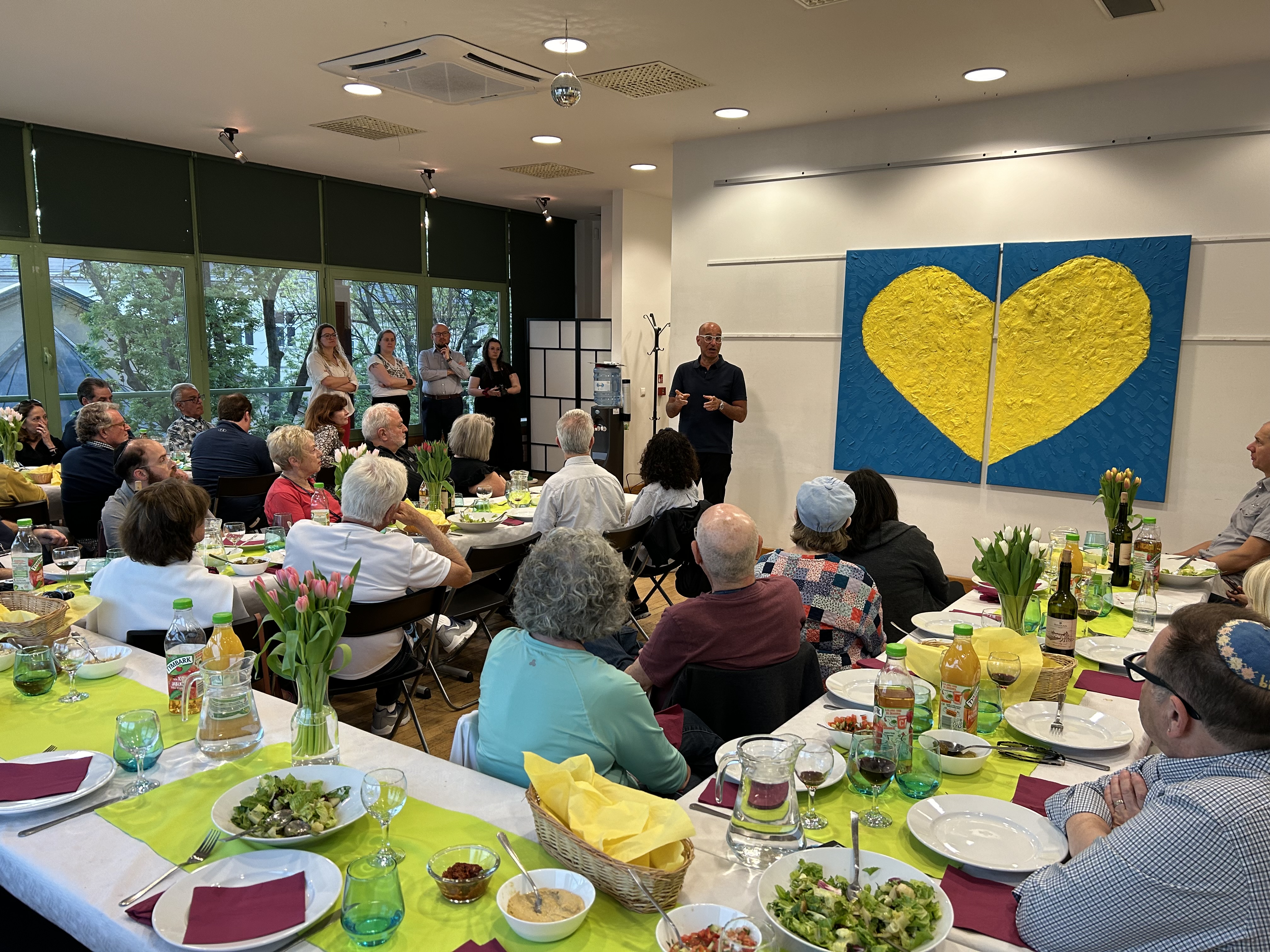
We asked ourselves the question earlier today, “why are we here”? After our first experiences in Krakow, we can answer that we are here to witness the resilience of the Jewish people.
Day Three
An early start on a warm and sunny day took us through the lush Polish countryside, out of Krakow and to Auschwitz and Birkenau. As we approached the site of the slaughter of 1.1 million Jews, I could sense the ghosts of the dead walking through the shadows of the dense woods, beckoning us to come bear witness.
Touring the exhibition halls gave us the history of the site’s construction and the story of how Jewish lives were routed to this final destination for so many. More impactful, however, was seeing the belongings of individuals who were given hope that they were heading from a ghetto to somewhere else — a suitcase, a pot. The piles of eyeglasses, prosthetic limbs and hair told us the unimaginable end that was met instead.

We left Birkenau and stopped at the remaining synagogue of the city of Oswiecim (Oswiecim Synagogue), where we had the opportunity to reflect on our personal reactions to the experience. We felt speechless, overwhelmed, sad, angry, scared, determined, resilient, strong, hopeful, all of the above and more. We felt the cognitive dissonance of walking in the sun on a beautiful day along the path that led to death for so many; of the magnificent weather for a space we associate with the color grey; of the bustling life going on all around, and even within, a torture chamber.
We will continue to let the images settle in our brains and the feelings come to rest in our hearts. It’s time to literally and figuratively wash off the dust as we prepare for Shabbat. This evening we will welcome the Sabbath queen as royalty ourselves. We are here, and we are alive. This Shabbat we make our presence known to God, to one another, and to all the ghosts relying on us to continue their legacies.
Day Four
Krakow is a magnificent city. It avoided destruction during multiple wars, in part because the Poles were quick to retreat in an effort to spare their crown jewel, in part because aggressors made it their center of operations. From castles to churches, we were impressed by the scale, opulence and history reflected by its layers of architectural beauty. Crowded and vibrant public squares and outdoor cafes showed us a free and happy society.
So what does it say about Jewish life in Poland if I tell you we had a perfect Shabbat in Krakow, from sundown to Saturday night? A space of our own in our gracious and inviting boutique hotel, a warm and uplifting Kabbalat Shabbat, and a sumptuous kosher dinner prepared by Chef Alon; morning Shabbat tefillah at the Rema Synagogue with locals and visitors, accompanied by melodies both familiar and new (giving me a couple of ideas to bring home!), where I received an aliyah (thanks David Simkins!) and couldn’t help but tear up thinking about what my grandfather z”l would say; a late morning walking tour to the Old Town; an afternoon walk to the site of the Jewish Ghetto and Schindler’s factory; and, of course, Havdalah.
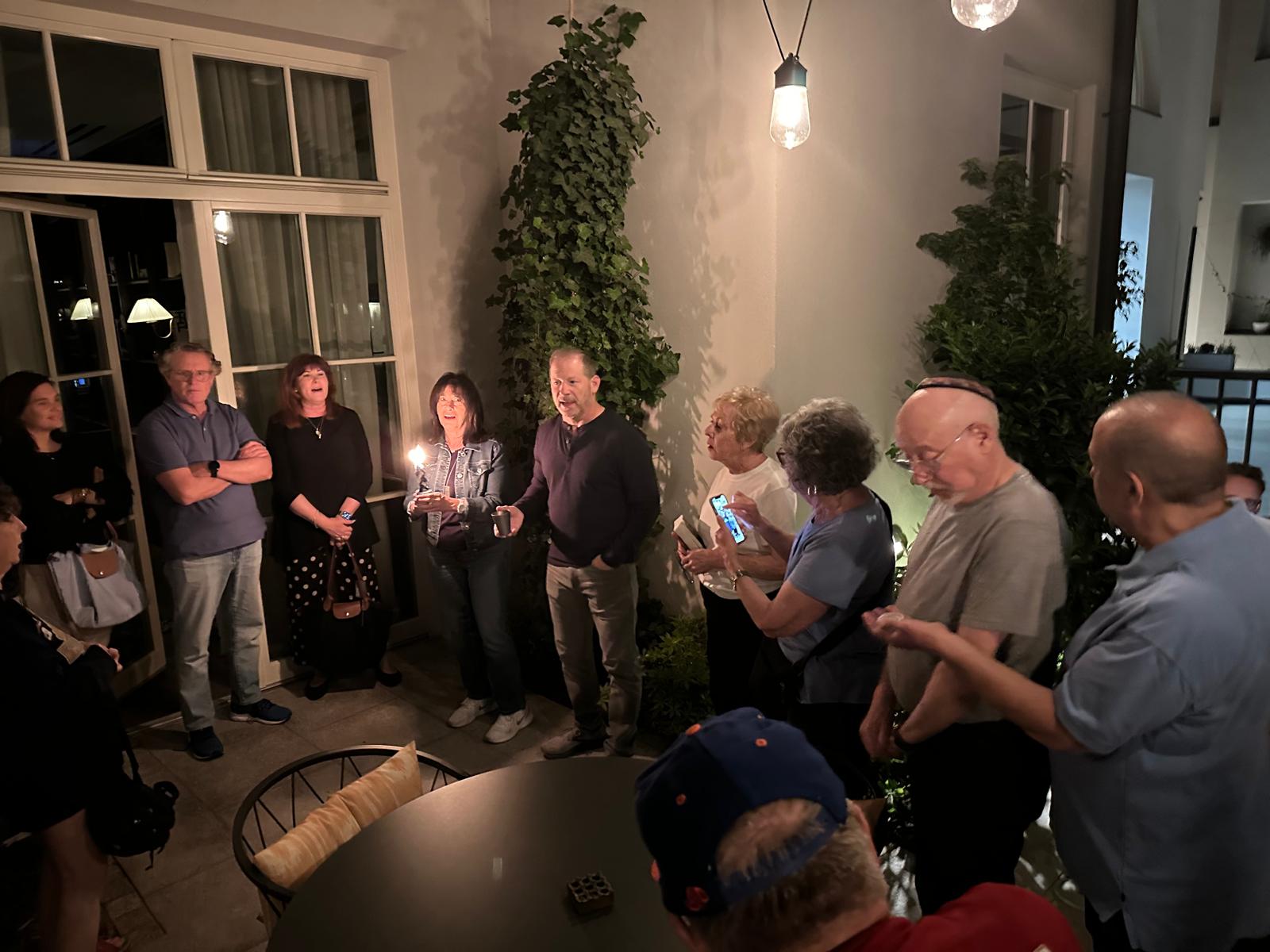
Out of the depths of Friday’s experience at Auschwitz we rose up to feel our souls soar (in stark contrast to our sore soles!), and this morning we once again descend into the pit that was Majdanek.
May we rise once again, Am Yisrael chai.
Day Five
An early departure from Krakow for the long ride to Majdanek was not a given. Despite the inconvenience and the apprehension about committing to experiencing a camp that could be operational in minutes, we knew we had made the right decision immediately upon our arrival.
Simply put, every Jew must see what we saw. It was a comfort to see multiple “March of the Living” groups of teens walking by us, sitting in reflection. On this eve of Yom Hashoah, they are learning the lesson we must all learn: Our Jewish identities and way of life are what has given us the resilience to survive, live and build lives. Our enduring the worst atrocities humans could inflict upon others only proved that we the Jewish People are the source of hope for all humanity.

Sitting in the Yeshiva of Chochmei Lublin, we felt the power that centuries of learning and prioritization of teaching and living Jewishly has brought to our ancestors and continues to provide for our children.
And despite terrible traffic that delayed our arrival in Warsaw by 2 hours, we still managed to hold our own Yom Hashoah commemoration, reflecting on what it means to us in the wake of this experience to be “keepers of the flame”.
Tonight, through the miracle of technology, I was able to share my reflections from this trip on the heroism of my own grandparents, Israel and Sonia Neiman z”l, to see generations representing the survivors of their own families, and to hear Amy Edelstein share her own story. I hope the next 24 hours will provide each of us the opportunity to reflect on what “never forget” means to us in light of where we find ourselves today.
Day Six
Too many people are unaware that the full name of Holocaust Remembrance Day is actually Yom Hashoah v’Hagevurah, meaning the day of remembering the destruction and the heroism.
On this Yom Hashoah, we find ourselves in Warsaw, the place that inspired the full name of the commemoration. The Warsaw Ghetto was obviously a place of terrible suffering as a result of inhumane treatment and living conditions. But while the Nazis tried to strip the Jews of their humanity and ultimately set about liquidating the ghetto, its residents fought until the end. After unexpectedly costing the Nazis soldiers’ lives, resources and time, the persistent and heroic Jews ultimately took their own lives in the face of an overwhelming Nazi military response.
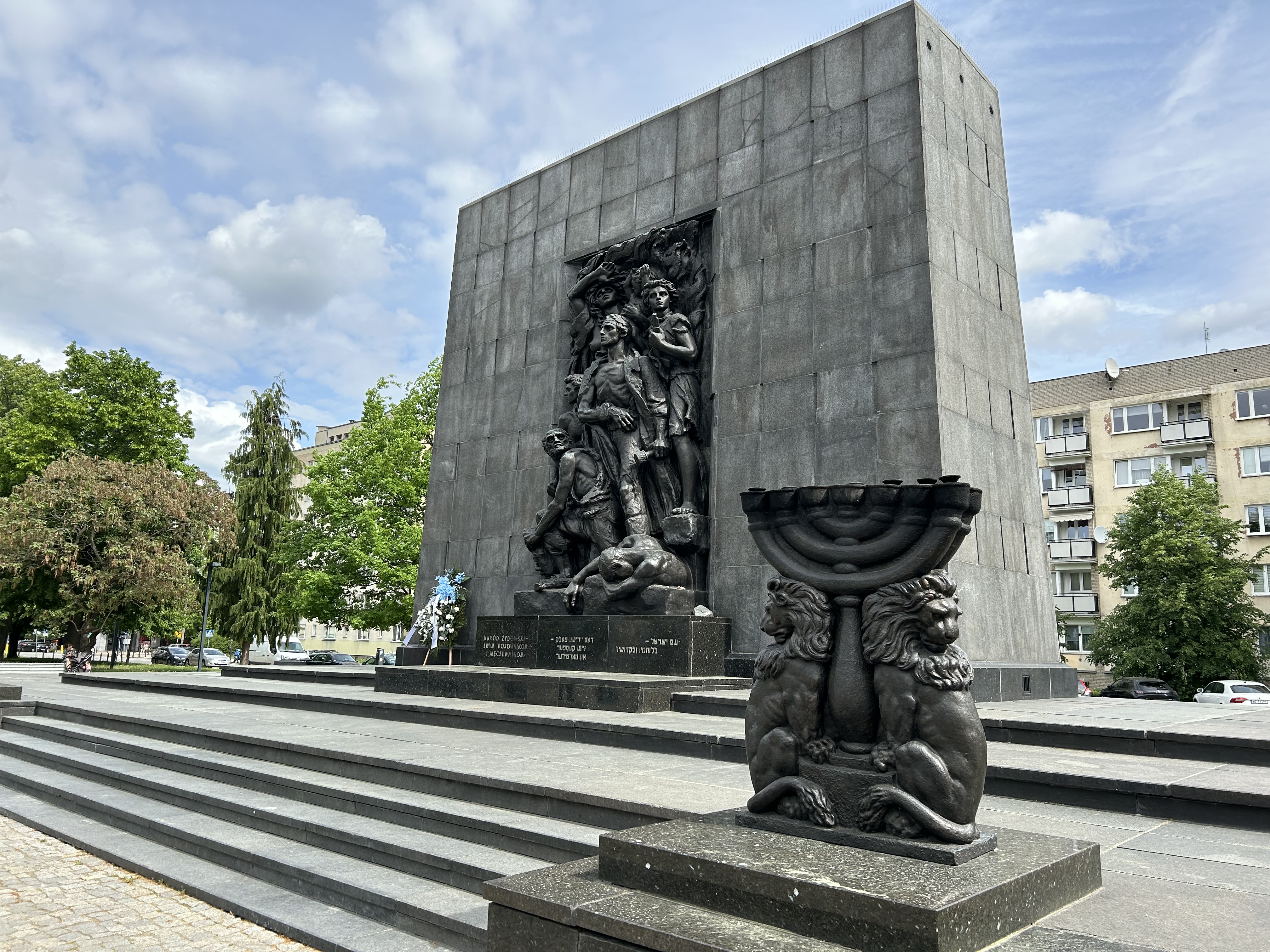
There are few remains of the actual physical ghetto or of the WWII city, given that 85 percent of Warsaw was reduced to rubble. But there are reminders everywhere of Jewish presence, persistence and rebirth, and of the Jewish history that is being rediscovered and examined by so many Polish citizens. From public memorials (plaques, monuments, structures like the deportation platform) to the new Polin Museum, it’s hard to be in Warsaw and not be reminded of the city’s Jewish heritage.
Standing in the Nozyk Synagogue, the only synagogue that remains in Warsaw today, we reflected on the connection between the heroism shown in Warsaw by the likes of Mordechai Anielewicz and the image of the “new Jews” who fought for the establishment of the State of Israel. Our voices echoed in the sanctuary as we sang a prayer for the hostages on this Day 213 of their Gazan captivity, the prayer for the State of Israel, and Am Yisrael Chai.
The Warsaw Jewish cemetery is history told in stone. Parts of the cemetery have been restored with monuments erected symbolically to pay homage to the many greats of Warsaw’s Jewish past. But as Nancy and I went in search of the burial place of our daughter-in-law’s relative who was buried here in 1934, we found ourselves in the deep, dark recesses of an abandoned graveyard with toppled and broken stones, one plot indistinguishable from the next. I felt the shadows closing in on us, and I was reminded of the brutality Jews experienced in a place they once called home.
A day to remember the heroism. A day to remember the destruction. Never again. Never again.
Day Seven
It’s honestly hard to appreciate how we got here without experiencing it for oneself. Considering this emotional roller coaster of a ride we’ve been on and where it started, most of us (if not all) could not have imagined finishing this journey where we did.
Today we took in a presentation from the Polin Museum about the “righteous gentiles” who risked and even gave their own lives protecting Jews. We heard an honest assessment of non-Jewish attitudes towards the Jewish past, and of the ways in which “cultural” antisemitism manifests itself in Polish society.
Today we visited the Jewish Historical Institute, where we saw the written testimonies preserved by “Oyneg Shabbos”, the underground archivists of the Warsaw Ghetto. Their heroic efforts of spiritual resistance have preserved legacies and eyewitness testimonies for Polish and Jewish students of the past.
Today we visited the beautiful Warsaw Zoo, where Jan and Antonina Zabinski hid Jews whom they helped escape from the Warsaw Ghetto, some for days and some for years. We were treated to a piano concert of Chopin and Offenbach, the music Antonina played to signal to the Jews in her basement whether they could emerge from hiding, fall into silence, or head for tunnel that led to the cages beneath the zoo.

We finished our day at the JCC Warszawa, where we dined and learned from CEO Patrycja Dolowy and JDC Entwine fellow Sam Kapner about the continuing revival of Jewish life in Warsaw.
Despite the horrors of the past to which we bore witness, despite the reality that our feet walked above the ruins of Jewish homes, and despite our desire to claim and brandish our victimization against the world, there is a fragrant flowering of Jewish life in Poland. It is youthful, energetic, embracing, and proud. It is unencumbered by the past. It is recognized, appreciated, and even celebrated by non-Jewish Poles.
With great curiosity and a desire for answers, Jewish life is being rediscovered by those with Jewish roots; revealed by those who hid their Jewish identities; explored by those who have recognized that Judaism comprised a substantial piece of Polish history and culture; and remembered by those who don’t want to be condemned to repeat the past. In a Poland that continues to redefine and rebuild itself since its independence from Soviet rule, Warsaw is a safe place to openly identify and practice as a Jew.
Did I just say that?
We heard it from young, proud voices. We heard it from the people who are living it. Who are we to diminish their Jewish enthusiasm, spirit or determination in any way?
As we concluded our night and our Poland experience singing our anthem “Vehi sh’amdah,” the words came out feeling quite different than when we first sang them. May that which has sustained us, despite the enemies in every generation who have sought our destruction, continue enabling us to flourish along with God’s help.

Seven days to home
I “left home” almost 3 months ago.
I can count on my 2 hands the number of days I’ve slept in my own bed since December 1, when I started my sabbatical. Family guest rooms, hotel rooms and ship cabins are where I’ve laid my head to pillow. Remarkably, I’ve slept fairly well!

I do not take for granted the multiple blessings I enjoy in the luxury of this experience: a long-standing and mutually beneficial relationship with a synagogue; a community that cares for the physical and mental wellbeing of its clergy; the financial resources and good health to enjoy a series of getaways and revitalizing experiences; colleagues and laypeople who are able to support our shul in my absence; a family that can accommodate my needs.

Perhaps the greatest blessing of all is the feeling I have now, with seven days to go, the feeling of looking forward to coming home.
In these past weeks, I’ve experienced cultures and vistas very different from my own surroundings. I’ve explored and deepened family relationships. I’ve even imposed upon myself periods of solitude in my efforts to understand better my relationships with myself, others and God.

As I reach the end of this life detour, I feel my chosen paths have been validated and reaffirmed. The values and lessons I’ve tried to live by and teach have guided me on a fulfilling and meaningful life journey. Along the way, I’ve been blessed to connect with so many people who have chosen to share the journey with me. And best of all, I am reminded that all roads lead back to community: to a shared sense of responsibility, purpose and destiny.
And I didn’t even have to stop for directions!
I’m ready and excited to continue our shared work. May we pave the way to a life of learning, service and kindness together.

Shabbat shalom,
Rabbi Craig Scheff
Being Here, Being There
In the middle of teaching my Kulanu class last week, I was stopped in my tracks by one of my sixth graders who looked up at me and asked, “How can you leave us, Rabbi Drill, when you say that we are your favorite sixth grade ever?” How can I leave indeed? OJC is my spiritual home, my workplace of more than two decades, one of the happiest places for me to be. (Spoiler alert: I have told every sixth grade for the past 23 years that they are my favorite class ever.)
As you know, I announced in November 2022 my decision to retire from full-time pulpit work this coming June 2024. Every day since that announcement has been an opportunity to process what it will mean to leave this beloved community, and to be completely present to the gifts and joys of my work as your rabbi. It has been a time for us to share loving words about what we mean to each other in the context of this community.
Retiring from the full-time work at OJC will mean that I can spend more time with our ever expanding family, and be a very present Bubbe to grandchildren.
From the beginning, I have said that while I am retiring from being a full-time rabbi, I am not yet done “rabbi-ing.” To prepare for “Act Three”, I met with wise colleagues and mentors at the Rabbinical Assembly and spent six months working with an executive coach. My mentors encouraged me to talk to lots of people and ask lots of questions for a full year before making any decisions about what kind of work I might do after OJC. My executive coach helped me articulate my primary values as I considered the kind of work that I would take on. Those values are: working with a fulfilling sense of purpose, acting from a place of love, and having flexibility for life.
In January, I started seriously pursuing some of my ideas and have now established two part-time pieces of rabbinic work that I will be engaged with once I retire from OJC.
Beginning in September, I will be serving my hometown synagogue, Congregation Agudath Israel in Caldwell, New Jersey as Rabbi in Residence, working one quarter time to teach and assist the congregation’s rabbi, Rabbi Ari Lucas, in various clergy tasks.
I will also be working as a Mentor in the JTS Rabbinical School Mechinah Program, meeting virtually to guide candidates spiritually as they prepare for Rabbinical School through a year of Hebrew and text skill preparation.
These two very part-time positions will allow me to feel useful, make the most of my strongest skills, and still allow me the luxury of time and energy for family.
And as I hope I have shown all of you day by day and week by week, until June 30, I am completely Rabbi Paula Mack Drill of the Orangetown Jewish Center.
Shavua tov, have a great week ahead, Rabbi Drill
Three Year Old’s Theology
We have entered the Universe of Why. At the age of 3 1/4, Carmel‘s conversations are now punctuated with a demand for more explanation: Why, Bubbe? But why, Bubbe?
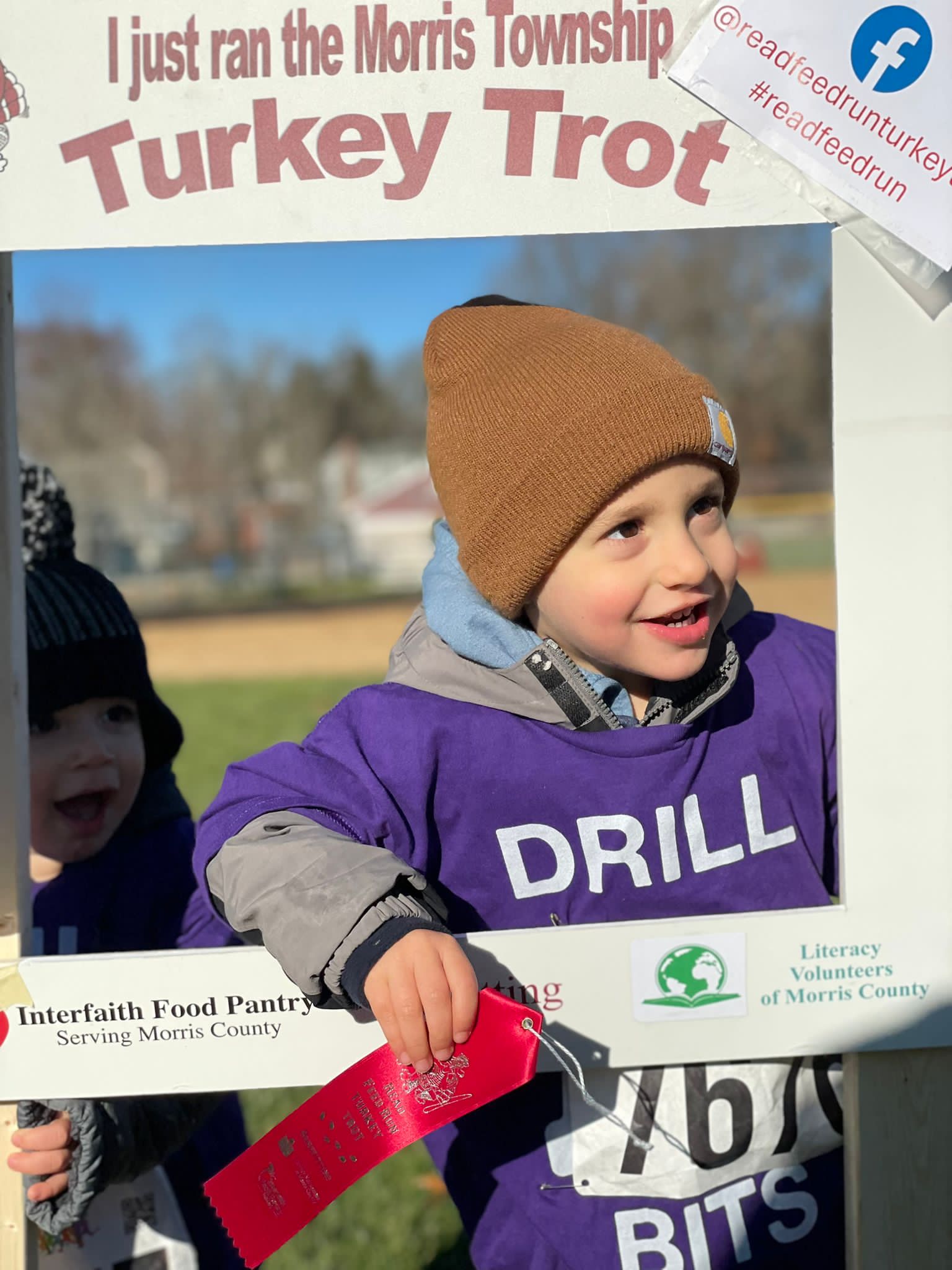
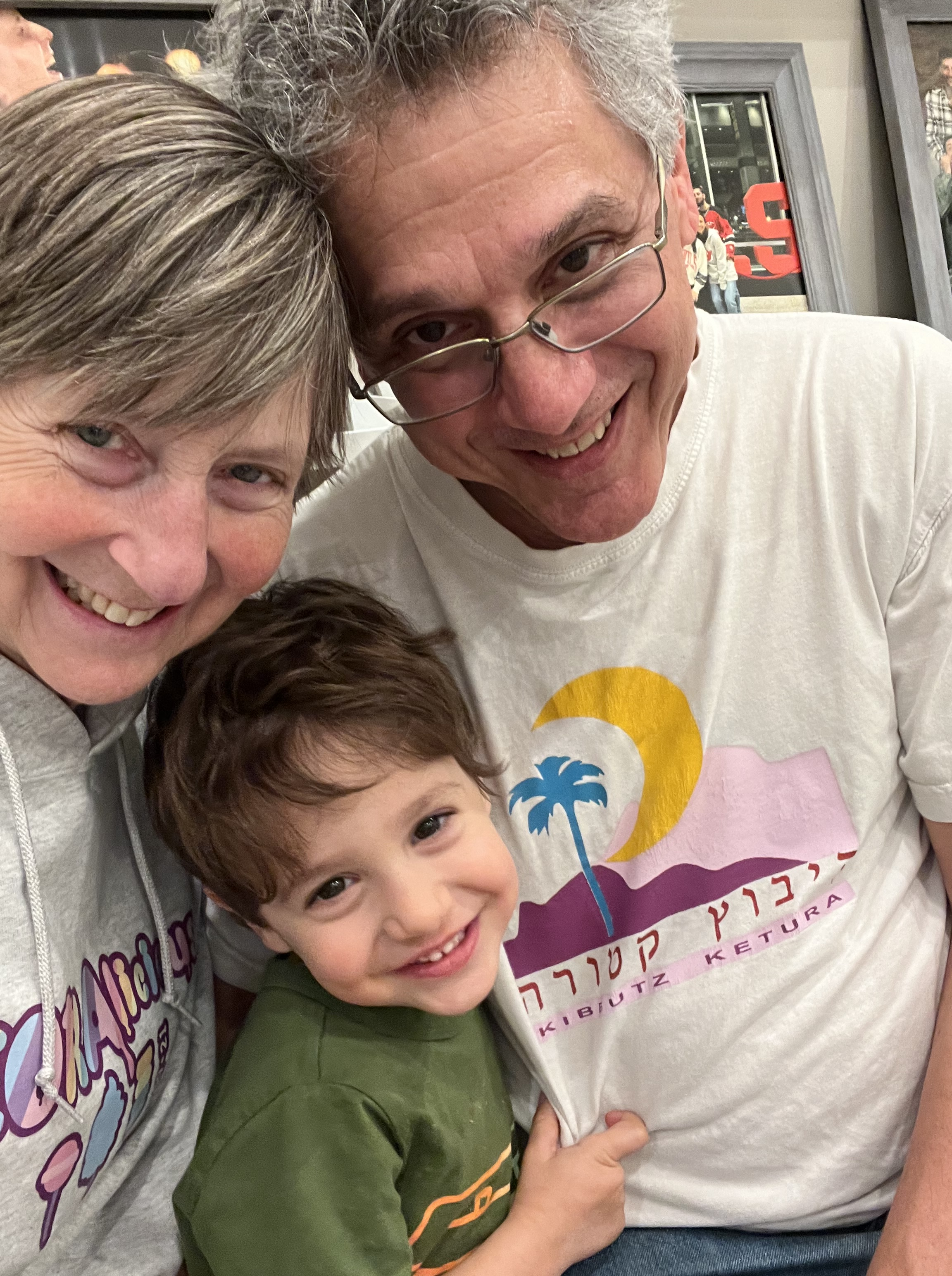
Luckily for me, there is one generalized answer that satisfies Carmel every time and has done so since before he was able to verbalize these questions. My answers are very often about God.
On the way to childcare this morning, many branches are down and lying in the streets. We discuss the heavy wind-driven rain of last night, and Carmel asks me why it happened.
“God made the storm and also blessed us with safe homes so that we can listen to the wind and rain, but not be outside in it.” Carmel agrees, “God keeps us safe and cozy.” (Cozy is a favorite word for Carmel who learned it from his mother who really loves to be cozy at home!)
We see work crews clearing leaves from clogged storm drains and Carmel asks why.
“God plans for snow, rain, and sun to take turns, but sometimes the rain is too fast and hard. So people have to help protect each other and the earth. We are God’s helpers.” This makes sense to Carmel, “I’m a helper.”
The sun suddenly peeks out from between the gray morning clouds so we discuss the rays of light that we can see; and yes, Carmel asks why.
“God created the sun, the moon, and the stars on the fourth day, and God really liked what was created and said that it was very good.” The creation story is one of Carmel‘s favorites, and he accepts it without question. “Tell me that story again, Bubbe!” I suppose God is another character for him alongside the Little Blue Truck and Pinkalicious!

At three years old, Carmel knows that when a breeze passes through the leaves of the tall trees in our yard, God is telling him that he is seen and he is safe. When the stars twinkle in a night sky, God is telling him that God is always with him so he is never alone.
Carmel loves to be in the OJC sanctuary and knows that the Torah is God‘s story of how we can be good people. He understands that God is with us in the sanctuary when we sing and pray together.
As Carmel continues to grow older, life will undoubtedly challenge his easy connection with God. He might just get busy and forget how simply God is the answer to so many questions. He will inevitably come to understand the contradictions and difficulties in the way the world works, and will learn that God cannot be the answer to every question. Life will disappoint or hurt him, and he will hold God responsible.
When these changes happen, I hope that Carmel will hold onto his unquestioning faith in God in the quiet moments when he is alone.
In that way, he can return to his simple and depend upon a connection with God when he grows older, and seeks to understand the answers to far more difficult questions than why branches fall down in a large windstorm.
I only know that the simplicity of his faith reminds me of the possibilities of my own faith. Can we recover the belief of our three year old selves in quiet moments? It might just be a start.
Rabbi Paula Mack Drill, a.k.a., Bubbe
Riding the rush to the future
This Friday I begin a three month sabbatical. For those unaware, my professional partner Rabbi Paula Drill and I each have this opportunity for renewal every four years, and we are grateful to our congregation’s leadership and community for recognizing the mutual benefits of the sabbatical to us and to the synagogue. My last sabbatical began in December 2019 and ended in March 2020. I “re-entered” our synagogue’s life just as the COVID-19 pandemic made its presence felt in the community.

Since then, the challenges we have faced as a congregation have been unlike anything we had ever experienced, and unlike anything I ever imagined I would encounter in my rabbinate. The unpredictable and unprecedented challenges often left our congregation and our rabbinates in a reactive mode. The triage approach to pastoring to the community had us on our heels and running on adrenaline, often feeling spent after the rush. Despite the many challenges, our congregation has survived and thrived, revealing untapped strengths and unveiling creative modes of connection. In many ways, we are a stronger community than we were four years ago.

In the early 2000’s, mental health experts identified phases of individual and collective emotional response to disaster, and our individual responses to the pandemic fit the framework well. They labeled and described several of these phases as follows:
- The “Heroics” phase, characterized by adrenaline-induced rescue behavior; high activity; low productivity; a greater sense of altruism.
- The “Disillusionment” phase, where stress and fatigue take their toll; optimism turns into discouragement, resentment, frustration and anger; the larger community returns to business as usual.
- The “Reconstruction” phase, a time of individuals and communities beginning to assume responsibility for rebuilding their lives and adjusting to new circumstances; the recognition of growth and opportunity.

As I think back over the last four years, I believe we defied the suggested model in one very significant way. We largely avoided the “Disillusionment” phase by initiating a strategic planning process while still in our “Heroic” phase and the “Honeymoon” phase of good will that followed. We had enough vision and faith to look beyond our reactive mode and to look to the future proactively. Our “Inventory” phase was a time of taking stock and already planning for the reinvention of our congregation. Seeing the very best of our community and its individuals in action, and in ways that were so aligned with our mission and values, we knew that our core strengths would carry us beyond the pandemic and into the future.

This year, the busy holiday season ended with the tragic and traumatic events of October 7, the hostage ordeal and the days of war that would follow. Our typically quiet month of Cheshvan was suddenly a period that demanded heroics – mobilization, giving, energy, programming. We have responded as I knew we would, with passion, love and generosity. And once again, we are capitalizing on our core strengths and our best resources (you!) to look past this moment, to plan for the future, beyond my sabbatical and even beyond Rabbi Drill’s retirement.
I have no crystal ball. I can’t say what lies ahead for Israel and the Palestinians, and I can’t tell you what our synagogue will look like four years from now (when I’ll be preparing for my next sabbatical!). I can say with certainty, however, that we will still be here, doing what we do best, learning, growing, responding and looking to the future with vision, confidence and hope.
Believe it or not, I miss you already.
Rabbi Craig Scheff
When Asked How I Am, What Do I Say?
“What am I supposed to say when people ask how I am?” I complained to my Israeli friend, “I have no idea how to answer that question these days. Am I supposed to say I’m fine? Am I supposed to say I am not fine?”
“In Israel,” he said, “we are answering, ‘K’mo kulam’,” like everyone.
How are you? Like everyone.
I tried it on for size for a day. I wondered if it was fair for me to say that my feelings were like everyone’s feelings. Here in America, I am on the mezzanine, not even in the orchestra, and certainly not on the main stage.


My heart is broken regarding the massacres and kidnappings of October 7. I worry about the IDF soldiers in Gaza. I feel hopeless about the mounting number of casualties and deaths of Palestinians in Gaza. My anxiety is high regarding the unleashing of virulent antisemitism here in America and around the world.
I don’t sleep well at night. I wake up from the middle of horrible dreams.
But my situation is not the same as my cousins’ whose four adult children are all serving on the front lines. I cannot compare myself to my son-in-law‘s mother whose entire community, her entire personal and professional world, was devastated on October 7. I am not my dear friend who had to move to safety from her home and whose son and son-in-law are both serving in the IDF at the same time.
And although I teach that there is no hierarchy of suffering, I know that my suffering is not the same, and can never be weighted as heavily, as those families whose loved ones have been murdered and abducted.
So I faltered for a couple of days when people asked me how I was.
Now, it is true that a rabbi in a community carries the weight of a congregation’s fear and concern. We are looked to for optimism and hope when we might feel quite lacking in those categories ourselves. We are asked questions for which there are no answers.
But still, I did not feel that I deserved to say, “K’mo kulam.”

And then one Friday evening at minyan, I led the community in the traditional words we say to a mourner. L’cha Dodi ended and we turned toward the man in shivah for his mother. We said, “HaMakom yinachem etchem b’toch sha’ar avalei Tzion v’Yerushalayim.” May God comfort you among all of the mourners of Zion and Jerusalem.
We say these words so often, counting on them to offer comfort to those who are bereft. On this particular night, I paused and considered their intention. I did not say these words to tell this particular man that his sorrow was exactly like all other Jews who were mourning. I meant that he is not alone in his grief. As a Jew, he was one of a great number of people at any given time who are held by God in our grief. We are all connected. That very fact offers comfort.
And the next day I went back to answering the question, how are you with the answer “k’mo kulam”.
I am not alone in my grief. And neither are you.
Rabbi Paula Mack Drill

 Two Rabbis, One Voice, Three Opinions
Recent Comments