The year of the unicorn (aka “Succeeding successfully”)
When we set out to create a job description for the search for our new rabbi, someone (it may have been our creative president Matt Schiering) suggested that we might as well be looking to replace a unicorn.
I certainly think quite highly of Rabbi Paula Drill, and I am beyond grateful for the partnership we have shared and the many ways in which having her as a co-rabbi has improved my life professionally and personally. But a unicorn?

As we follow Moses through the final year of his tenure leading the Israelites, we are reminded that he is irreplaceable. “There never arose another prophet like Moses….” Joshua is poised to succeed Moses, but not to replace him. Joshua will be a different leader for a different time with a different mission.
All this talk about Moses, Rabbi Drill and unicorns has left me reflecting on the origin story of Rabbi Drill‘s relationship with our community. We weren’t looking for a unicorn, and we didn’t hire one. We hired someone whom we knew could build relationships in the context of our Jewish tradition. There were challenges, doubts and growing pains as we introduced a new leader to our community. Personally, my guiding principle was that Rabbi Drill’s success would be my success. I believed my burden would be lighter, my life would have greater balance, and her achievements would add to the reputation of the OJC community as a place with which people wanted to connect. Our leadership understood that her success connecting, building relationships and offering more pathways into community would benefit our entire community and help us grow. It mattered not that Rabbi Drill started out only coming to OJC one Shabbat each month; it mattered that she was willing to connect with people on their time about their lives and their searches for meaning. Our faith was rewarded!

The partnership model that Rabbi Drill and I promoted from her earliest years here required a true cultural shift away from a hierarchical structure of leadership. We advocated to avoid the “assistant rabbi” title, ultimately establishing a co-rabbi relationship. We were inspired by the Jewish model of learning in partnership (“chavruta”), and by the pairs of rabbinic sages who challenged each other to grow, to refine their knowledge, and to consider alternate perspectives. I believe our synagogue became a kinder, more thoughtful place because of the partnership and team approach that we modeled.
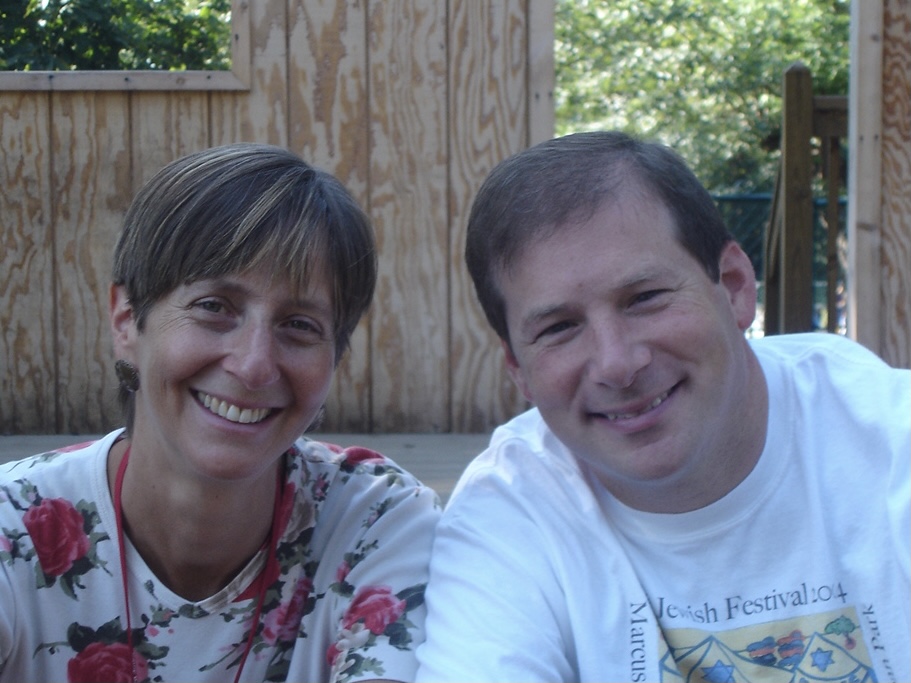
For our succession plan to be successful, we need to remember what has made us successful as a community to date. We need to remember how Rabbi Drill’s tenure became the success it was. It should come as no surprise that the survey we recently sent to the congregation revealed that the rabbinic role most important to our community, by a wide margin, is for the rabbi to share a personal connection with us. We want to be seen, heard, understood and appreciated by someone who can help us forge our own connection with community, tradition and God.

If it takes a unicorn to fill that need, then let the search for the next unicorn begin. If anyone can find one, it’s us!
Rabbi Craig Scheff
The Lead Story
Earlier this year, a chaver (friend) of our synagogue informed the rabbis that he was ending his official affiliation with our synagogue. The reason he offered was that, despite loving so many things about the synagogue and its clergy, he wanted a less “activist” (his word) synagogue for his family. I’ve always advocated that people should find houses of worship and communities where they would be motivated to connect, to attend, and to add meaning to their lives. I found it particularly sad that, especially in this day and age, one would seek a faith community that would not “actively” pursue its stated mission and the values of our tradition.
Our sage Hillel famously taught (about two thousand years ago and in the face of immense social and political upheaval): “If am not for myself, who will be for me? And if I am only for myself, what am I? And if not now, when?”

As participants in Jewish community, we have all likely felt at one time or another that we must be our own best advocates, because others so rarely advocate for us. And, naturally, our own preservation and security must come first if we are to be any good to ourselves or anyone else.
Hillel’s teaching reflects his understanding that our values and way of life must also serve the betterment of our society in general and of all humanity. That is the fulfillment of Isaiah’s prophetic call that we must be a “light unto the nations.” That is our understanding of the responsibility that comes along with the “chosen-ness” to be a “kingdom of priests,” ministering to the needs of God and the rest of the world.

What has become equally apparent is that in our times there are fewer and fewer institutions that are willing to lead and leaders who are willing to recognize or accept the influence they may have beyond their own walls. Our communities are sorely lacking the leadership that models the values we espouse. As a faith-based institution with a sustained record of dedication to and service in the community, we are uniquely placed to lead. As leaders of a faith-based community with a sizeable constituency, a stable presence, a fair amount of goodwill with our neighbors, and a track record for partnering well with others, your rabbis see it as their duty to speak to those issues that affect the public welfare and to embrace the value that we must protect the image of God reflected in every individual. As leaders of a faith community, Rabbi Drill, Rabbi Hersh and I see it as our duty to actively pursue the values that our tradition dictates we prioritize.
This “activism” does not come at the expense of our responsibilities to offer personal connections to God, to our synagogue or to each other. Rather, it offers our community’s constituents the opportunity to “walk the talk,” to put into practice the potentially transformative effects of engaging in learning, prayer and community building.

We are called to battle antisemitism in the public arena. We are equally called to protect the vulnerable; to stand as partners with the leaders of the LGBTQ+ community; to advocate for women’s reproductive rights; to feed the hungry, to clothe the naked and to welcome the stranger. And pikuach nefesh, saving lives, supersedes them all.
Last week, Rabbi Drill and I attended an interfaith conference sponsored by UJA Federation of New York and the JCRC (Jewish Community Relations Council) of New York entitled “Facing the Gun Violence Epidemic: the Voices of Faith and Community.“ Reverend Charles Galbreath of Brooklyn urged us to heed the words of Zachariah, to imagine a world where children can play on city streets without fear and to work as faith leaders towards that vision. Michael Dowling, CEO of Northwell Health, urged us to see our responsibility as faith leaders as extending beyond our own churches and synagogues. Our esteemed panelists coming from a range of disciplines put before us the reality that the solution to ending gun violence lies beyond restricting access to automatic weapons. The solution lies in addressing many systemic issues ranging well beyond our mental health systems and the administration of law enforcement. The overriding message of the conference was that, beyond the politicization of these and other ills, each one of us has a role to play in ensuring the safety–the lives–of others. That role needs to be taught, informed and modeled by our houses of worship.

Where do we start? With ourselves and our priorities. Is that where it ends? No, we must extend our caring to addressing the needs of others. When do we start? If you are reading this, you already have.
Here is a link to the all resources that we received last week, including an action guide, should you want to take the next step. Lead on.
Rabbi Craig Scheff
Partnering into 2021 and beyond
Way back at the end of August, I wrote in this blog:
“The Jewish New Year’s arrival, this year in particular, may help us look back with 20/20 hindsight, and may help us envision the final third of 2020 with a greater sense of gratitude, purpose and optimism.”
Now, as we have endured the summer and fall, ridden out their lows and highs, and taken note of their dark clouds and silver linings, we stand ready to greet the secular new year of 2021. Winter has indeed arrived, yet we are bolstered by the new perspectives on life we have gained, the relationships we have fostered, and the hopes for an effective vaccine that will allow us to come together physically to a greater degree in the year ahead. But of all the lessons taught and learned during these ten unforgettable months of 2020, there is one that I was particularly glad to have internalized personally and professionally almost twenty years ago. Stated most simply by our tradition: Tovim hashnayim min ha-echad, “Two is better than one” (Ecclesiastes 4:9).
For the past two decades, I have advocated that a hierarchical model of religious leadership does not serve the best interests of religious communities or the clergy who serve them. Long before our communities were facing a pandemic, our synagogue community amended its constitution to delete the language of “senior” rabbi, “assistant” or “associate” rabbi, and “cantor.” Instead, the organization consciously chose the broader language of “clergy” with the understanding that the success of our community was dependent upon the ability of our religious leaders and professionals to establish and deepen personal relationships, regardless of their titles.

Moreover, the ability of individual clergy to play to their strengths and to use their diverse talents and skills to cultivate connections would ultimately accrue, we believed, to the benefit of the organization and the entire professional staff. Finally, and perhaps most importantly for the individual professionals and our organizations, we acknowledged that it is very difficult, perhaps even impossible, for leaders to be true partners when one is expected to answer to or be judged by the other. I am proud that our JTS Resnick Interns, through our Debbie Steiner Mentorship Program, have moved into the Jewish world building partnerships and leading vibrant and growing communities with this model in mind.

This pandemic has reinforced my belief that the partnership model provides professionals the opportunity to shoulder equally the burdens, to process the challenges and opportunities, and to share the personal and professional stresses. Partnership maximizes the potential of each professional to acquire and share skills, to broaden vision and reach, and to establish the relationships that will connect more people to each other, the institution and its mission. Finally, partnership models behavior for professional and lay people alike. The stronger the partnership, the more we generate in each other a sense of empowerment, ownership, and investment in a shared vision. The success of one is the success of all.
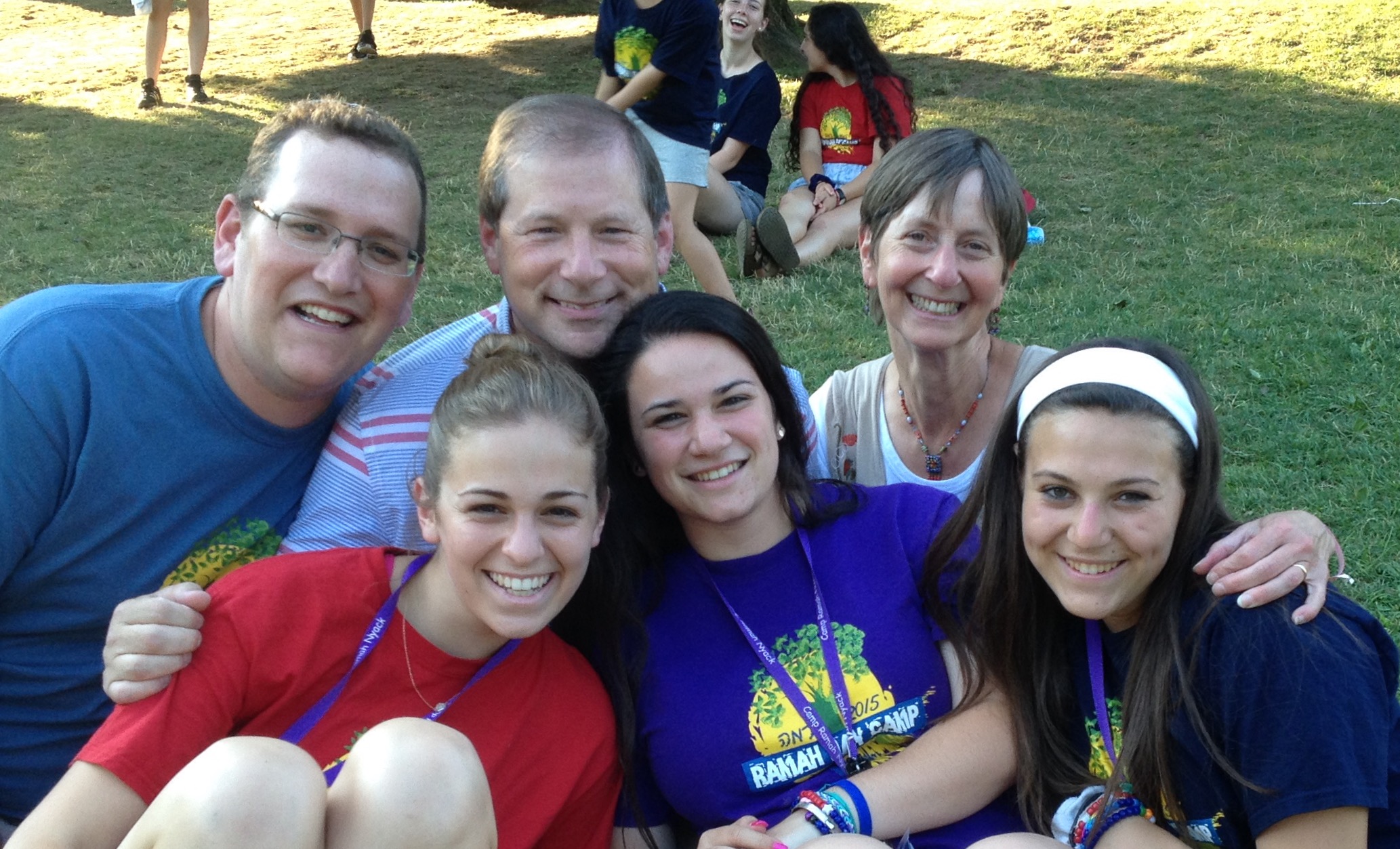
As we find ourselves in the midst of a time when communities cannot operate by bringing people into regular and consistent physical proximity, it is all the more important that our organizations have professionals who can connect people by facilitating intimate gatherings and cultivating meaningful connection. Some of us have acknowledged (and the forward thinking leaders knew this prior to the pandemic) that certain modes by which we have been operating must become a part of our business-as-usual way of doing things. For example, aging populations who can be served by virtual connection must be given the opportunity to connect from their homes to spiritual, educational and social opportunities as Jewish law permits. Our communities and leaders require partners to share the professional burden of the work and to share the personal burden of the stress that these new modes of operating generate.

In hindsight, we may look back on 2020 as the year that helped us envision the future of our community more clearly. Perhaps 2021 will be the year in which the steps we must take to realize our finest aspirations come into sharp focus!
Wishing us all a happy, healthy and safe 2021 in which we feel connected, cared for, and empowered to partner with those in need,
Rabbi Craig Scheff
 Three Rabbis Walk Into A Shul
Recent Comments