To bean or not to bean, that is the question!
One year ago, the Committee on Jewish Law and Standards of the Conservative movement adopted the position that the eating of legumes, rice and corn (kitniyot) on Passover is a valid legal option for Ashkenazic Jews. Instead of deciding at that time whether to adopt or reject the practice for our community (which is my role as mara d’atra, the religious decisor of our community), I decided to invite our Ritual and Jewish Living Committee–along with anyone else in the community who so desired–to study the topic with me. While the decision was ultimately mine to make, I had no preconceived opinion on the matter and thus invited the input of our community members to help me reach a conclusion.
People tend to be emotionally bound to custom, sometimes even to the exclusion of rational analysis. I appreciate that. We hold tightly onto family customs and tend to reject those things that challenge our sense of tradition, regardless of how or why such practices came about. I was therefore somewhat surprised that only a group of about 10 people made the commitment to study the topic with me. I anticipated far more interest! Nevertheless, our minyan of learners tackled the responsum written by Rabbis Amy Levin and Avram Israel Reiner. Our monthly studies delved into the details of the legal opinion, which reached the following conclusions:
1. Only that which can be made into matzah can become hametz. Wheat, barley, spelt, oats and rye are the only flours that can be used for matzah. Therefore, it is established that rice, beans and legumes cannot fall into the category of hametz. Moreover, the authorities agree that the presence of kitniyot on a plate does not render the plate, the meal or the home unkosher, even for those who observe the custom not to eat kitniyot.
2. The legal authorities of medieval Ashkenaz recognized that forbidding kitniyot was an added restriction to the Passover laws, possibly based in the fear that certain varieties of wheat might possibly get mixed with varieties of kitniyot. Some authorities considered the measure excessive, but the more restrictive custom ultimately prevailed.
3. In the 18th century the debate was revived. The opponents of the restrictive position argued that the high cost of matzah prevented some from experiencing the requisite joy of the holiday, whereas kitniyot were readily available, affordable and not prohibited by law. For the benefit of the masses, they argued, the stumbling block to holiday joy should be removed.
4. The original reason for the restrictive custom is lost. If the reason was concern about the possible admixture with wheat, such confusion does not exist in production and packaging today. But a compelling justification is needed to overturn a long-standing custom. That justification, according to the authors, is the enhancement of our joy. Beans are a significant source of protein for those who don’t eat meat and for those who can’t afford meat, especially considering how prices are inflated as they are on Passover. The enjoyment of food and adequate sources of protein is part of the joy we are meant to experience. Additionally, protecting people’s pocketbooks from those who would seek to gouge is in fact a Jewish value worthy of legal consideration.

Given these legal conclusions and the input provided by those who participated in our studies, I offer my own opinion, which will represent a change in the official position of our community going forward. (Please note: This does not mean you are doing something “wrong” in the eyes of our community should your personal practice differ!)
While I recognize that many people will continue personal practice according to their inherited family custom, I believe there is great value in adopting this change in custom. I don’t believe in change just for the sake of change; but I also will not reject change simply because it is hard or because it is something to which we are unaccustomed. Nor will I reject what is considered a more lenient position out of fear that greater leniency will follow. All too often, necessary change is stifled by the sometimes irrational hold of our emotional attachment to the ways of the past. I choose not to oppose change simply for the sake of opposing change. That is not the way of authentic Jewish thought.
On a practical level, I am in favor of Jewish law that encourages adherence to the law; the more our Passover laws allow people to keep Passover, the better that is for everyone. Contrary to the ways in which some observe Passover, we are not meant to be reliving slavery for seven days or for the days leading up to the holiday. There is no joy or satisfaction to be derived from being more restricted or burdened by the holiday’s laws. Are we supposed to feel different from others and from the way we live for the other 51 weeks of the year? Yes. But Passover is meant to be a time of joy, despite the remembrance of our affliction.
Most importantly, changing dietary habits and sensitivities in our society dictate that alternate sources of protein should be made available if they are not hametz. Moreover, the exorbitant cost of keeping kosher in general, and of kosher meat in particular–not to mention the premiums imposed for Passover–is a compelling justification for offering consumers a more affordable way to stock their pantries.
Finally, I am mindful that this ruling will not necessarily impact individuals in their homes. They can continue to keep Passover as they always have. And even in our synagogue, as studied in the law, serving kitniyot among our foods does not affect the other foods served. So even in the synagogue, those who do not eat kitniyot will still be able to observe Passover in their own way at all times.
Please note that there are controls and restrictions on the purchasing of kitniyot for the holiday. Specifically, fresh corn and beans may be purchased before and during Passover, like other fresh vegetables; dried kitniyot (legumes, rice and corn) can be purchased in bags or boxes and sifted before Passover; canned kitniyot may only be purchased with Passover certification due to the canning process; frozen raw kitniyot (corn, edamame) may be purchased in bags before the holiday without a heksher, though one should still inspect contents before use; and all processed foods (like tofu) require Passover certification.
I am grateful to those who shared this process with me. I believe that the process of seriously engaging with our tradition is as important as any result of such deliberation. May we all have a happy and kosher Passover, whether we are among the bean counters or not!
Rabbi Craig Scheff
JDAIM Spotlight 3 – Kenny Hersh

In this mission to remain positive, I want to acknowledge that there are certain situations when grief is deep and time is a key component in the healing. And I also want to acknowledge that there are instances when a positive disposition is not enough.
I’d like to share with you the power of positive thinking and the importance of seeing the good. I’d like to share with you the story of my father-in-law, Kenny Hersh. As a child growing up in New Jersey and, later in life, in Providence, Kenny was someone who took full advantage of every day. He trained and ran 5Ks, was the first one on the dance floor at a simhah, played clarinet in a klezmer band, could manually mix paints at work to match any color, and volunteered at his shul. He was an incredible father, a loving husband to his wife Leah, and for better or worse, a Yankees fan. After working as a high school guidance counselor for a few years, Kenny eventually joined Leah’s family business, American Wallpaper in Fall River, MA. After a series of inexplicable falls and some problems with his coordination, Kenny visited medical experts in Providence and Boston. Through a series of tests, Kenny was diagnosed with Primary Lateral Sclerosis, PLS. A degenerative neurological condition that weakens voluntary muscles. Although relieved to finally have a diagnosis, the condition would mean increasing difficulty with basic tasks like walking, eating, and speaking.
That was more than 10 years ago. And yet, despite the challenges, despite the muscle stiffness, despite the difficulty speaking, despite the mobility issues, despite the fact that he often communicates through his ipad, despite the slips and falls on to icy sidewalks, despite that nearly everything takes longer and can be more frustrating, Kenny continues to be an unstoppable and unignorable presence in our family.
Whether you just met Kenny or you’ve known him all your life, it takes only a few minutes and a few keystrokes to appreciate Kenny’s charm, his humor, his kindness, his compassion, and his intelligence. Kenny continues to go to the gym, using the stair climber to reach the top of a 110-story building every week. Kenny continues to, despite all logic, drive and put in a day’s work at the family business. Kenny continues to be a comedic force at family meals, Kenny continues to be an ezer knegdo, a perfect partner to his wife Leah, a wise and loving parent to his six children and children-in-law, and perhaps most importantly, the most playful and treat-giving saba to his eight grandchildren. Rather than wallow in his sadness, Kenny makes the most out of every day, with a spirit and a love of life that is enviable.
I recently asked Kenny, if he ever got frustrated. “Of course! There are things I miss, but the thing that I find most frustrating is the inability to speak. I love to talk and that is frustrating. I would trade off being in a wheelchair to be able to speak freely again. It is especially hard dealing with my wonderful grandchildren. I would love to be able to read to Nadav and Eliana in English, Spanish, or Hebrew. What joy I miss in not being able to sing with them and talk with them. What a pleasure it would be to walk with them on the beach and swim with them; to run with them, to fly a kite with them and crawl on the floor with them. As I have seen with Micah, [his 7-year-old grandchild], once he was able to read, our relationship really grew as we were able to laugh together and have a “conversation.” I look forward to the day when I can do that with all my grandchildren. I think that there are choices when put in a situation like this: crawl under the covers and hibernate or try to work around the challenges and move forward and enjoy an exciting life. I choose the latter. I don’t want a pity party, but just the realization that I am still the same person I always was, but with a disability. I have so much to be thankful for and get inner strength from my wife, children, and grandchildren. They make me want to push the envelope to be an important part of their lives. Our friends and community in Providence and around the country give me support and make me feel included as an intelligent and mindful part of their lives. And of course, having fun and being able to laugh makes this ride much easier.”
My friends, I do not deny that there are problems in the world. I do not deny that there are times when we feel that we have insurmountable challenges. And I do not deny that at times we have to embrace that sadness. But in 5777, I implore you to also look for the positive in the world. Just by the virtue of where and when we live we are blessed with so much. It is okay to not be burdened by sorrow all the time. It is okay to focus on the positive. Not because we need to ignore the negative. Adarabah, to the contrary, because it is only by recognizing the good that we can tackle the bad. It is only by crying that we can feel the joy more deeply. It is only by rejoicing, that we can be there to understand someone’s sorrow more deeply. Let us cry together. Let us rejoice together. Let us feel the full spectrum of human emotion in the new year.
Rabbi Michael Fel
You can lead a wheelchair to water, but…..

There are those times though… I’m human, I fail, I fall short. In my family, we have a Christmas Eve tradition of meeting all the Hartmans (my in-laws) for dinner at a kosher restaurant in NYC. This year, the night was unseasonably warm and dry. Some rain earlier in the day had cleared out. The parking near midtown was typically tricky so we had several blocks to traverse to get from our parking garage to the restaurant. Our start into the city from home was typically late so we were in a bit of a rush. It’s those times when I’m a bit stressed that the young boy with sharp teeth comes back. I was going to set the pace and it would be brisk. I was going to push the wheelchair myself. Well, I should have thought that one through. The second curb that we came to was hidden under dark puddle of rain water… at least I hope it was rain water. I approached at “lift off” speed. Unfortunately, my wheelchair didn’t “lift off” … the wheelchair stopped cold. You know what else was cold? The water was cold! I know because I bounced out of my wheelchair and was sitting in that puddle and soaked to the skin. My wife and a kind stranger helped me back into the wheelchair. I hadn’t learned my lesson yet though. I was still intent on pushing myself. That wasn’t the last time I fell out of my wheelchair that night…twice more. I was very stubborn; I was very wet; I was very cold. Ever sit through a 2-and-a-half-hour dinner with wet pants? After you were three years old? That was a 4-scotch dinner. The story I tell now has Hara pushing me into the puddle and trying to drown me for the insurance….
As Bruce Wayne’s father said to him, “Why do we fall…? So we can learn to pick ourselves up” Forgive me for having the audacity to think I could improve on Thomas Wayne’s quote… “Why do we fall…? So we can learn to accept the blessing of help from others.” But you should still watch out for the sharp teeth.
I’ve enjoyed telling you this story. I hope you’ve found it fun and amusing. It’s true in all its absurdity but I would be remiss if I didn’t add a serious aside. The blessing in allowing someone to help me is only fully realized by me when I am confident that I could achieve the same physical result without help. In other words, if physical barriers exist to my access to a place that I reasonably want to go on my own (i.e., reasonable means not necessarily access to the peak of Mt. Everest) and the place is accessible to the average Joe, my joy and fulfillment are diminished. It’s complicated, I know….
Michael Pucci
Leading a faith community
The traditional names for the synagogue–beit knesset, beit tefilah, beit midrash–connote a house of assembly, a house of worship and a house of inquiry and learning. These days, the synagogue is also considered the center of a faith community.
What does it mean to me to be a faith community? It means collectively embracing a hopeful and optimistic view of the world, where faith in God, in people, and in the potential Godliness of every person shapes values, morals and personal choices. In keeping with the ethical codes of our sages, it means giving others the benefit of the doubt without taking unreasonable risk to one’s own well being.
Judaism’s prophetic tradition envisioned a world order where all people would ultimately see God as one and recognize one another as the creation of that one God. In post-Biblical times, this vision of an era to come (olam ha-ba) was transformed into an other-worldly vision, one that could only arrive through divine intervention. Some even embraced the idea that a super-human or semi-divine figure would be needed to bring about this new world order.
Our sages of Rabbinic Judaism brought us back to our emphasis on human agency. We don’t rely on divine fiat to bring about the days of the era to come. Our messianic age is not ushered in by God, but by those of us here doing the work of God.
Israel and America are two potential entities through which this new world order can be brought about. There is nothing wrong with America or Israel wanting to put themselves “first” in this new order, so long as being first doesn’t mean being exclusive. Being first in this order means leading the way for all of humanity to ultimately be a part of the same vision, the same order. If I am first, and no one is following, then I am also last. Isolation and exclusivity did not fit with the prophets’ notion that Judaism’s values would serve as a light drawing humanity to unite as one.
As a leader of a faith community, I will continue to have faith in God; in people; and in policies that move us closer to a world order where all people search for the image of God in others. Our assembly, our worship, our inquiry and learning all point us in this direction as a worldview. Your vision of where we need to go as a society, as a country, as a world or as Jews may differ from mine; but as someone (who doesn’t see the world as I do) recently told me, I must speak the words that are in my heart. They are the wisdom of my experiences and my truths, and my responsibility to espouse in leading a faith community.
I don’t seek to be political in my views or to take sides. Different times demand that different values be prioritized and championed. I will speak out against Islamic fundamentalism that threatens my security and I will call out Jewish fundamentalism that chips away at my identity. I will warn against Islamophobia and I will defend against anti-Semitism. I will advocate for the rights of women to control their own bodies and I will demand the need for people to make responsible choices. I will educate for Jewish continuity and I will explore new ways to welcome interfaith households. I will support the rights of countries to protect their citizens, and I will march to demand the protection of the stranger, the vulnerable and those who can’t protect themselves. I will teach towards a greater awareness of the needs of people with disabilities and I will push for us to see one another as people first. I will own responsibility for my actions and I will accept the collective responsibility we have to our neighbors.
These are the values, among others, that I believe our faith community must advance in moving our world toward a better era for humankind. May that time come soon and in our day.

Shabbat shalom,
Rabbi Craig Scheff
I am one of four
I am one of four, the third of four to be exact. Being one of four is part of the way I see myself in the world, a central component of my identity and the way I have come to understand people and relationships. My mother is the oldest of three. Her place as the firstborn sibling to a younger brother and sister has shaped her sense of responsibility and the ways in which she derives satisfaction and meaning in the world.
A few weeks ago, my mother lost her younger sister. My aunt Debbie was much more than that to us all. As one of my sons phrased it, she was his grandmother-once-removed. Despite the loss, my mother will always be one of three.
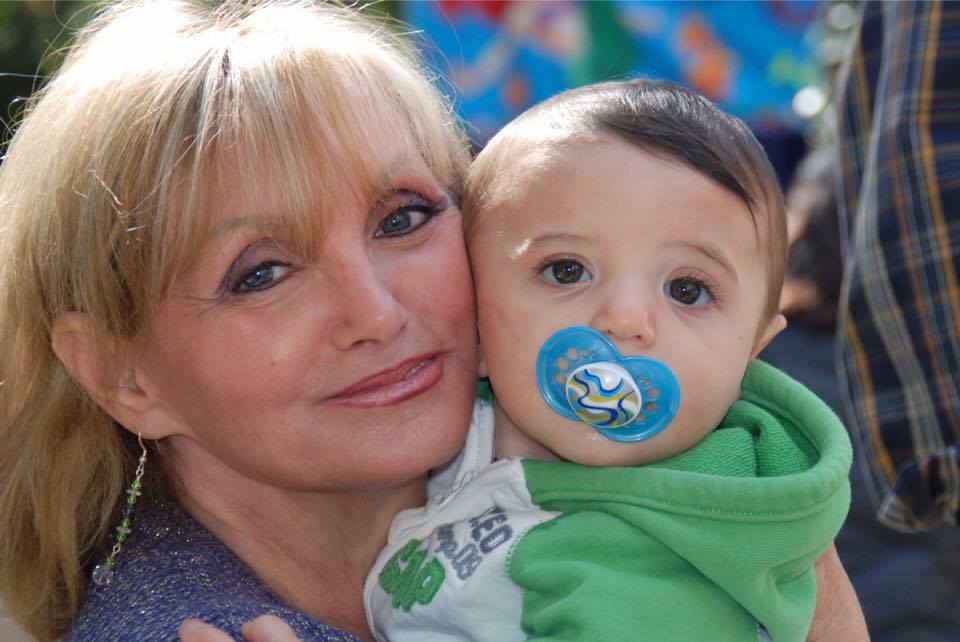
The shiva period afforded siblings and cousins the opportunity to reunite in appreciating the many blessings that come along with being part of a big family. In one particular conversation, my first cousin-once-removed (that’s my mother’s cousin) shared with me that, despite losing a younger sister decades ago, she describes herself to this day as one of four when asked about her family.
As the narrative of Joseph and his brothers builds towards its climax, Jacob, facing a famine with no end in sight, sends his ten older sons to Egypt for food. Joseph, the vizier in charge of dispensing rations, recognizes his brothers and decides to test them, accusing them of being spies. They respond in one voice: “We your servants are twelve brothers, sons of one man in Canaan; the youngest is with our father, and the one is not” (Genesis 42:13). Leaving aside the fact that the brothers exclude their sister Dinah (a topic for another blog), the brothers see themselves as twelve; it is their identity, even though their brother Joseph has been absent for years and they have passed him off as dead.
In speaking with people who have lost a child, I have learned that parents will often shape answers to questions about their families based on what is most comfortable for them in the moment, on who is asking, and on whether they feel like engaging about their loss. No matter the public response in the moment, these parents count their deceased children as part of the family, still shaping the identity of the family unit.
Such is the nature of memory in the Jewish tradition. In times both happy and sad, we strive to keep the souls of our departed loved ones as a presence in our lives—shaping our identities, defining our priorities, inspiring gratitude for the gifts we possess that can never be taken away.
May our memories of our loved ones be for a blessing to us,
Rabbi Craig Scheff
OJC Israel Experience 5777, Day 3 – A community is revealed
Our Day 3 experience kicked off in the early morning with a prayer service at Azarat Yisrael, the portion of the Kotel that our community calls home. Eliana Pressman, our Bat Mitzvah celebrant, led us in prayer, read from the Torah, and taught us about treating people according to their needs. Her words were a fitting lesson for a day of meeting others’ needs. Amidst so much celebration (the naming of a 3-month old girl in absentia; conferring a Hebrew name upon Jack and Janet Miller’s granddaughter Julia; Marvin Shapiro’s upcoming 90th birthday; Michael and Bryna Schoenbarts’ 35th anniversary; and Mark Katz’s birthday), we had reminders throughout our day that the best way we can show our gratitude for blessings is by being there for others in need.
Today we marveled at the majesty and mystery of Jerusalem’s holy sites and history. We walked the length of the Western Wall underground, appreciating the architectural feats of 2 thousand years ago in the construction of mikvahs, cisterns and towering walls.


It was the simple acts of kindness, however–literally raising up the fallen, celebrating special moments in life’s cycles, restoring lost items, comforting the bereaved, and feeding the hungry–that truly made this day what it was.
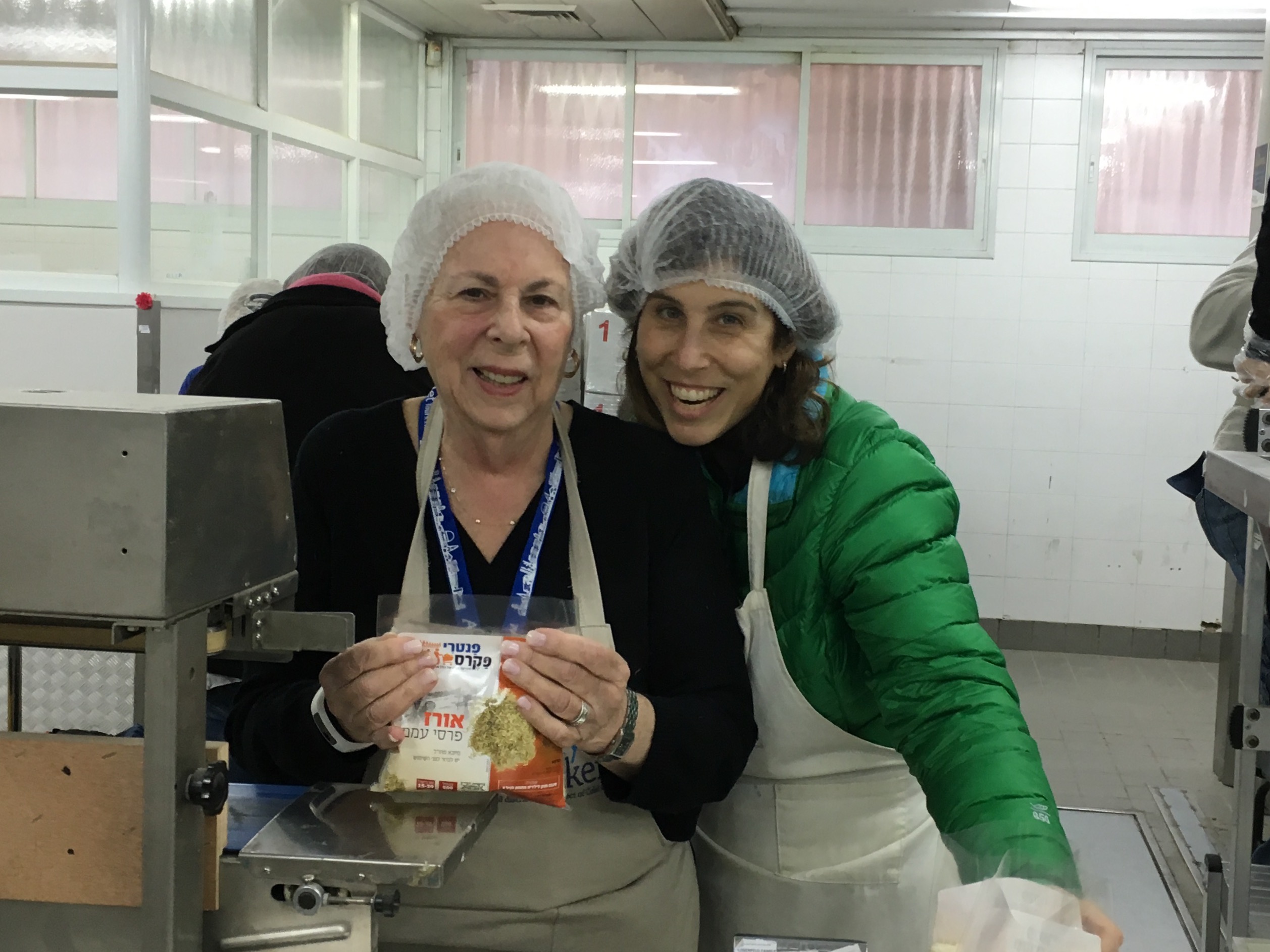
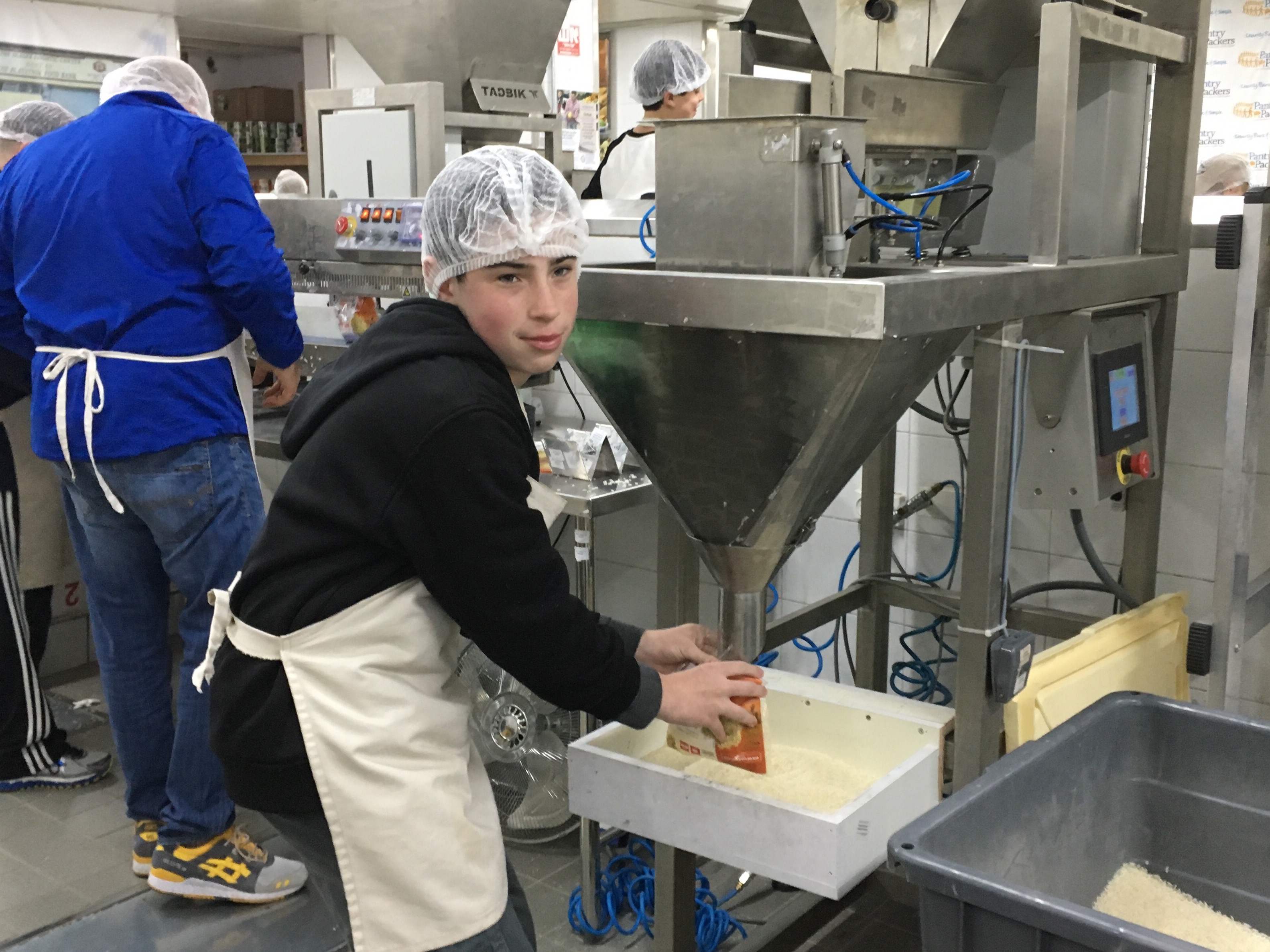

Today, our group of pilgrims and tourists became a community.
As I hand over the group to Rabbi Drill after Shabbat, I am so comforted by the knowledge that a new community within our community has been born. Thank you, God, for giving us life, sustaining us, and bringing us to this moment in time.
Rabbi Craig Scheff
Israel Experience 5777, Day 2
Shalom me’Yisrael!
Our flight brought us into Ben Gurion this morning just after 9am, Israel time. After collecting our bags, we paused to consider whether we would be taking in the next week as pilgrims or as tourists. It didn’t take us long to get “down and dirty” (so much for being tourists!) as we visited the landscape of the Bible at Ne’ot Kedumim. Our ancestors’ stories came to life as we drew water from the ancient cisterns and crushed olives to make oil. As we herded sheep and reflected on the challenges we faced, the words of Psalms became part of our lesson on leadership, responsibility and compassion. I’ll never read “The Lord is my shephard” the same way again.


Next stop, lunch. And with Chanukah Eve approaching, it is far more likely to find these tasty delights in storefronts, as opposed to tinsel. They seem to be everywhere food is found, and they are called SUFGANIYOT! They are a thick and cakey version of the doughnut, and they are wildly decorated to flavor.

It wasn’t long before we were eating again, as we drank a L’chayim and broke bread (over two very long challahs!) upon our pre-sunset entry into Jerusalem. We were introduced to the many dichotomies Jerusalem (it’s very name a plural) represents: the Jerusalem on high and the Jerusalem of this world, old and new, ancient and modern, east and west, physical and spiritual … and the list goes on. No doubt we will spend many hours considering the complexity of this holiest of cities through the end of the week.

After checking in at the hotel in Jerusalem, we met to process our first day’s experiences in Israel. The most common expression of surprise was how cosmopolitan and developed the country feels. It’s a minor miracle we were still awake to share our thoughts, and perhaps even more miraculous that we still had room for dinner!
Early wake-up call as we head to the Kotel for a Bat Mitzvah celebration in the morning.
God, I am so filled up and full!
Laila tov from us all,
Rabbi Craig Scheff
The “long arm” of the OJC
Look, up in the sky! It’s a bird! It’s an F-35! No, it’s OJC on United 84, leaving Newark and headed for Tel Aviv’s Ben Gurion Airport. OJC?! Yes, OJC, where just one month after sending 24 people on a week-long volunteer mitzvah mission, the congregation is sending a delegation of 39 for the 5777 OJC Israel Experience.
Last week, Prime Minister Netanyahu called Israel’s “long arm” longer and mightier with the arrival of two F-35 fighter jets. There is no debating the qualitative advantage these machines provide to Israel for the protection of the Jewish homeland. I like to think of our frequent Israel trips as the long arm of OJC, made longer and mightier with each trip, providing a qualitative advantage to the Jewish identities of those participating in our trips.
It is remarkable to consider, in a community of 500 households, how many people will represent us in Israel in the year 5777. Between our synagogue trips, college students on Birthright, Conservative Yeshiva or semesters abroad, high schoolers on USY or Ramah summer programs, 8th and 12th graders participating in Schechter school trips, our children making aliyah, congregants visiting friends and families, and individual families taking a 2-week tour, I estimate that at least 120 individuals will touch down in Tel Aviv. It brings your rabbis tremendous naches (comfort/pride) to sense the strong connection that our OJC community shares with Eretz Yisrael. As a factor that heavily influences Jewish engagement and future identification, our Israel connection bodes well for the next generation, despite the widely reported trends to the contrary.
The OJC Israel experience is also one committed to appreciating the nuances of the relationship we share with Israel. Firmly committed to her security and longevity as the Jewish state, we also acknowledge the challenges–particularly the political, religious and social–that Israel faces in maintaining a democratic and pluralistic character and in living up to our Jewish ideals. Our journey will take us back in time to trace forward the progression of the Zionist dream: from the history of Jerusalem (the city of Zion) to the earliest Zionist dreamers, to the British Mandate, to the survival of Shoah, to the founding of a State, to the development of the Negev, to the birth of a start-up nation. We’ll celebrate a bat mitzvah and the holiday of Chanukah, experience a Jerusalem Shabbat, reunite with friends and family, and partner with communities. We’ll learn, feel, struggle and grow. We’ll fly, float, eat, climb, ride, eat, shepherd, plant, eat, sing, package, eat, pray and maybe even jog. I guarantee you, we’ll come back more tired than we left (and perhaps a couple pounds heavier!). We’ll strengthen our understanding, our commitment, our identities and our community.

This is the OJC Family Israel Experience 5777. And today is Day One. We depart from the synagogue lot today at 12:30pm, only hours from now. Follow us for the next 10 days with our daily blog and Facebook posts.
L’hitraot,
Rabbi Craig Scheff
OJC Mitzvah Mission 2016, Conclusion
The beauty of Jerusalem was on full display this morning, as our running club jogged through the gentrified railway station and the German Colony and the rising sun burned through the early haze to clear the sky. Our first formal stop was the Masorti Kotel, the spot where we are most comfortable praying as a community, and one that has generated much controversy in the last months. The Israeli government has failed to implement legislation, passed last year, that would formally extend the Kotel, its plaza and its security, to the southern end of the western wall. Our presence here is, in part, a stand for what we believe and what we expect from the state we call our Jewish homeland.

The morning service was participatory and upbeat; Amy Schwartz led shacharit, Linda Varon and Mikalah Weinger read Torah. Most special of all, however, was the moment our group quietly stepped over to the next Torah station at the wall to complete a minyan for a family’s bar mitzvah celebration. When they boy looked up from reciting his blessings, he was shocked to see 23 of us standing around him! And when we started to sing “mazel tov,” we could see the boy’s joy and the parents’ emotion and appreciation. It’s always amazing how the most meaningful moments are often the ones not planned. Add one more beautiful mitzvah to the list of the many fulfilled this week!

We drove west to Motza, where we visited Beit Yellin, established in 1860 as the first Jewish agricultural settlement outside the Old City. We learned the history and historical significance of this home, now rebuilt and revitalized by the Jewish National Fund. An hour of digging, planting and staining gave us the satisfaction of preserving a piece of our pioneering history and beautifying another natural setting.
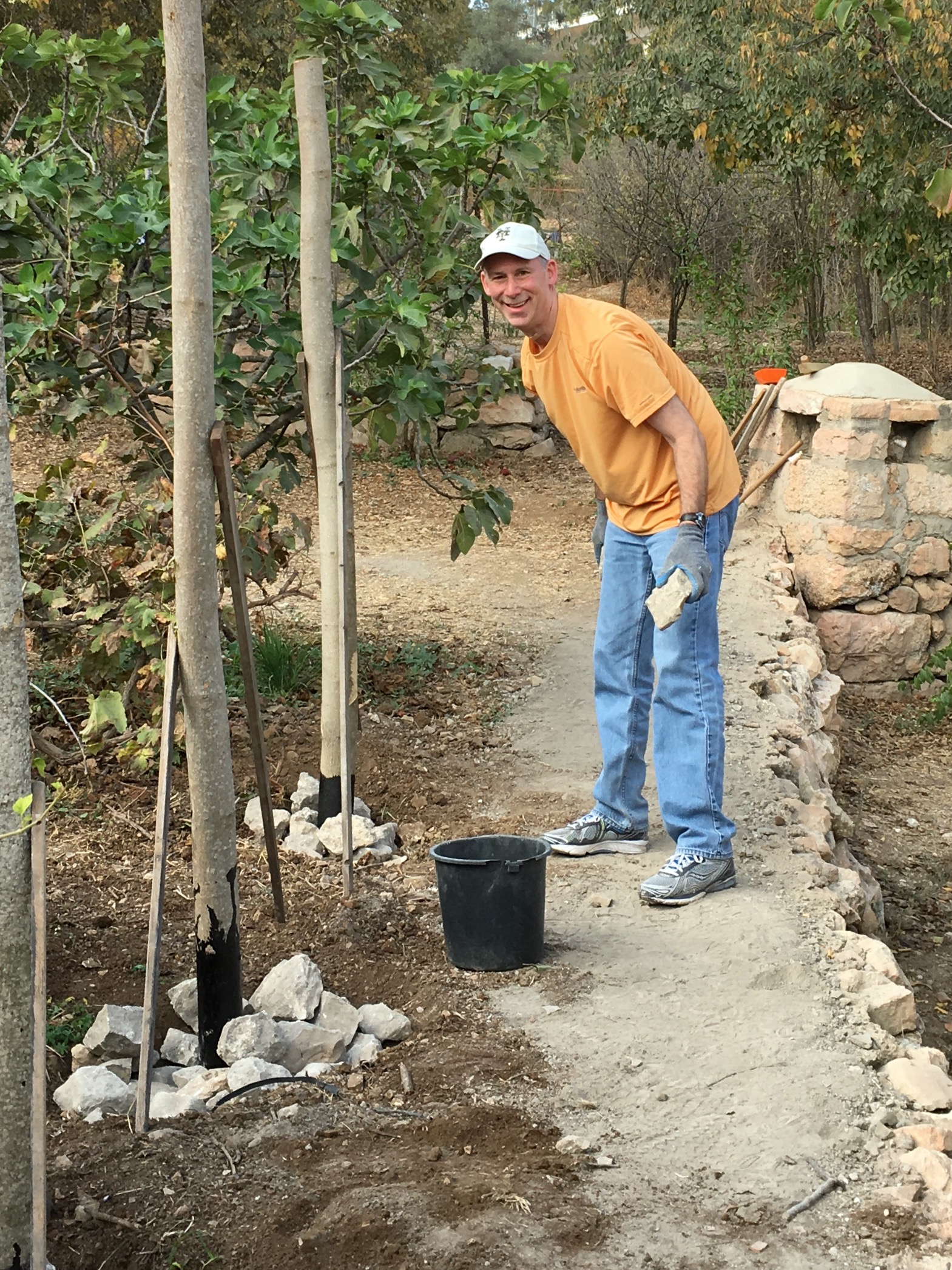
Our closing lunch once again was an emotional time of sharing impressions and highlights, validating our decisions to commit to this unusual and challenging experience, whether for the first time or the eleventh.

As I sit on the plane anxiously awaiting takeoff, I am looking forward to my own pillow and a restful Shabbat. Leaving Israel, however, is never easy. There is so much work still to be done. That being said, I take solace in knowing that, as the sun sets on this mission, in 4 short weeks I will return with our OJC Israel Family Experience with a group of 39; and in one short year, the sun will rise upon OJC’s 12th annual mitzvah mission, November 12-19, 2017. Join us!
Shabbat shalom,
Rabbi Craig Scheff
OJC Mitzvah Mission 2016, Day Four
Yoav greeted us at Ahava this morning as family, with all his warmth, sincere care and passion, as if we had just come home after a semester abroad. He enthusiastically described the new projects taking place around the village; in particular, a soccer field where children and their fathers typically play on visiting days, accompanied by coach, social worker and therapist. At other times, groups of children play together, observed by the social worker who will then sit the boys down and process their interactions. Brimming with pride, he shared that Ahava had just been awarded another 5-star rating for the beauty of its facility, and a certificate of recognition for its efficient operation as a nonprofit. And he attributes these successes–at least in part–to our OJC contributions and the unique relationship we share.

So much life, empowerment and hope in a place potentially filled with so much pain. Mikalah spent last evening partying with girls of Ahava, ages 6 to 17, at an opening event for an initiative called the “Girls Project.” It was a night of music, food, fun, and companionship, celebrating healthy relationships and positive self-image. We met with the class of children beginning the process of study towards bar mitzvah and gave them watches donated to us back home. We delivered beautiful artwork from our own Naaseh/USY kids to our host families.
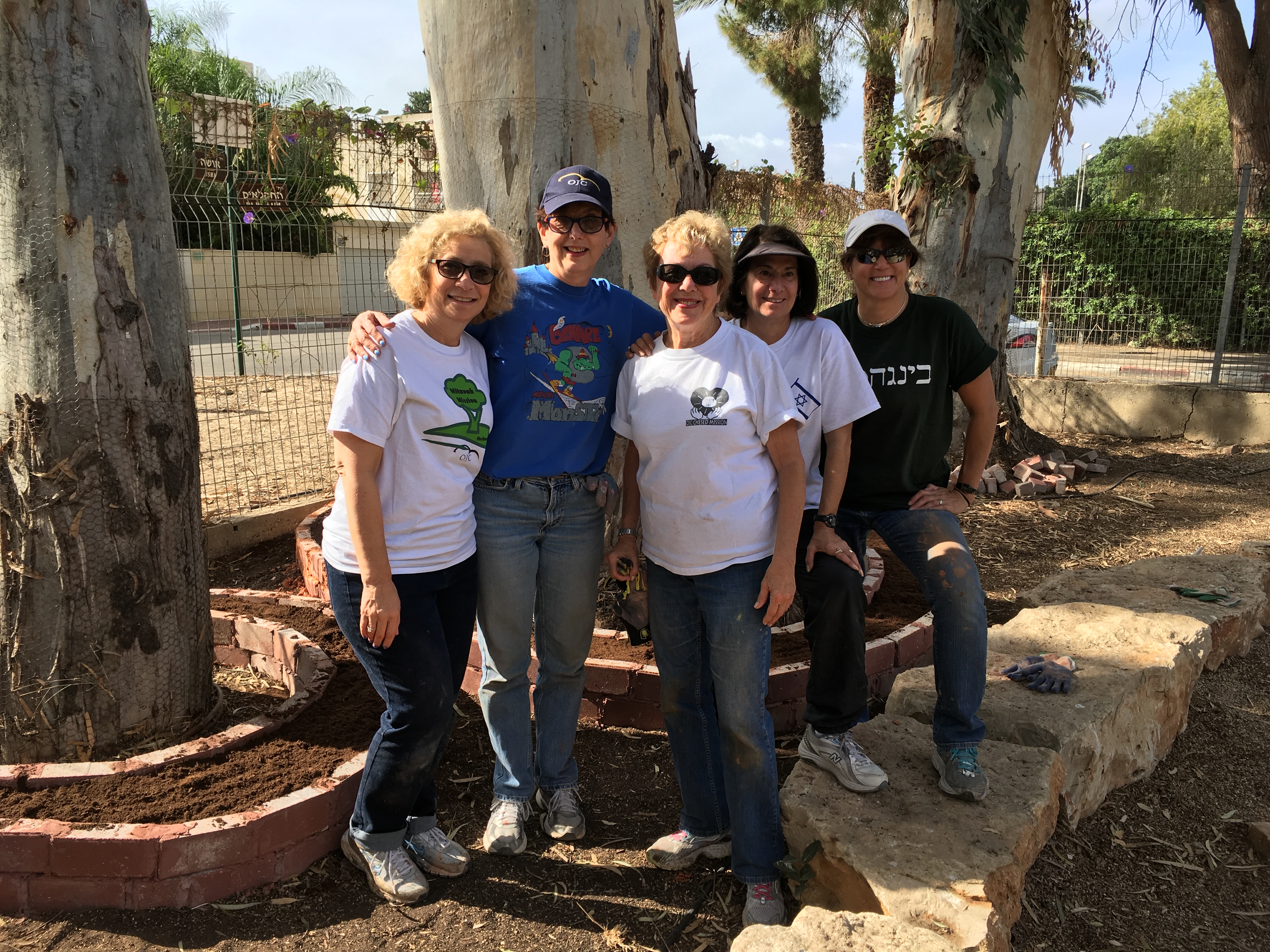
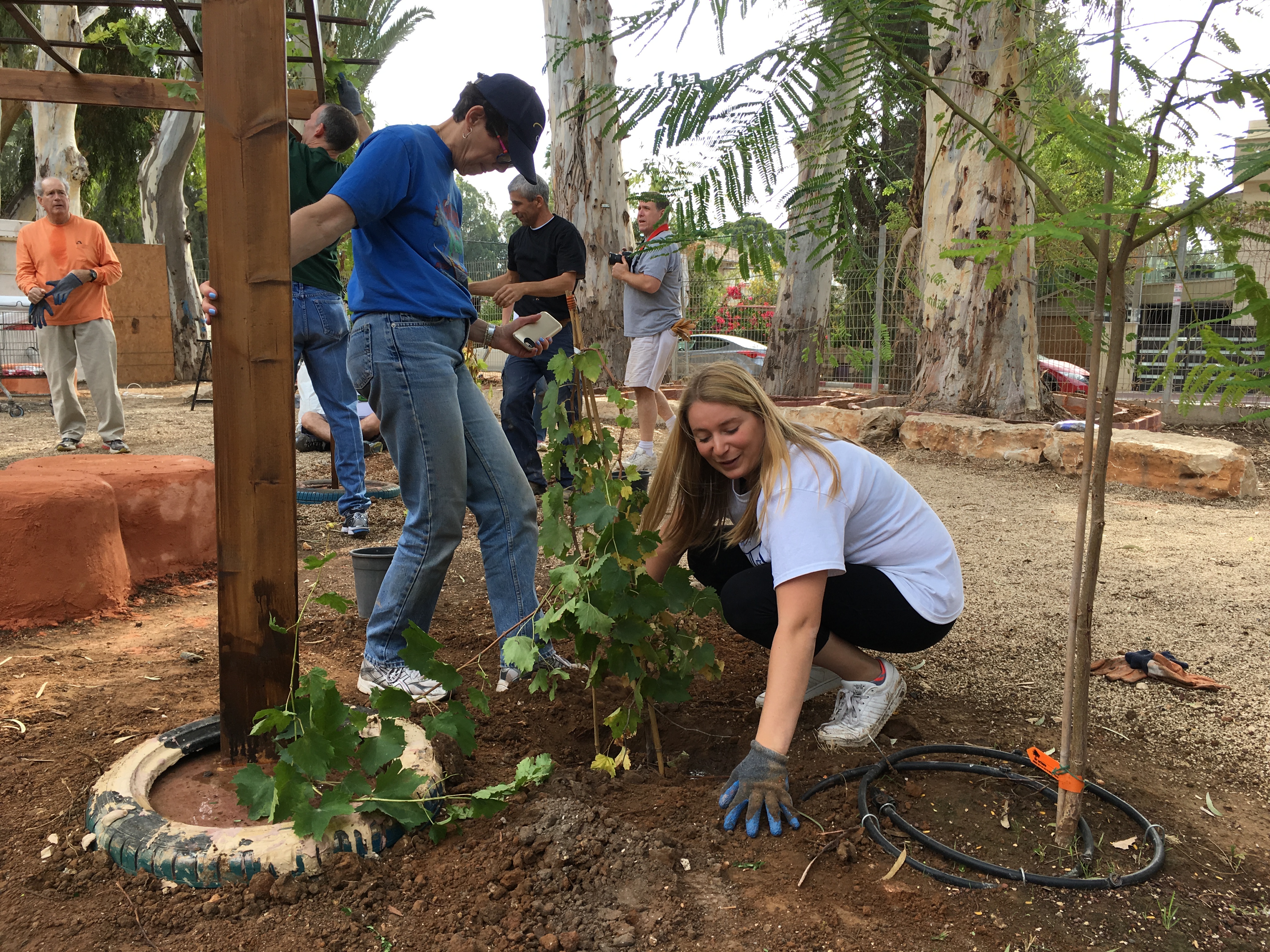
And finally, we created another beautiful space (with the assistance of the talented staff) that serves, literally and symbolically, as a place of life, growth, fruition and hope.


That’s what this place is all about. That’s what we want to be all about. And as we finished the day gazing at Jerusalem, we realized that’s what this land of Israel, at its heart, is all about.

Laila tov,
Rabbi Craig Scheff
 Three Rabbis Walk Into A Shul
Recent Comments