Can this be God’s will?
The video message arrived as an attachment from a trusted source. I opened it and began watching. The scenes of smogless skies, clear waters, and lush fauna served as a reminder that a world was being reborn around us, and that our stay-at-home quarantine was having the side benefit of giving Mother Earth a sabbatical, the chance to catch her breath. The beauty of the world around us could serve as a silver lining of this challenging time.
The second video message arrived within a couple of hours. It came from a name I knew, though someone I hadn’t connected with in quite some time. I opened it and began watching. It depicted similar scenes of smogless skies, clear waters and lush fauna, with facts about how much cleaner our world is today than at any other time in recent history. The video, however, was not a PSA for climate change. Its final scene was a man with the title of “Rabbi” trying to reassure me that the current pandemic was God’s will, part of the divine plan to renew the earth.

I was surprised, to say the least. Did the sender of the second video actually think that I would find comfort in its message? Have I ever given off the sense that I embrace and am comforted by a God who would will the death of hundreds of thousands of innocent people to advance a plan? What then could I say about God’s role in the Holocaust? About an innocent pedestrian hit by a drunk driver? About a cancer victim? About a parent losing a child? About a natural disaster that claims dozens or hundreds?
I don’t need to rely on theologians for my answer about the nature of God, instructive though their perspectives may be. Buber, Heschel, Wiesel and Kushner (with all due respect) don’t know anything more than you or I do when it comes to God. The rabbis across the centuries have offered many paths to faith, some that even stand in conflict with one another. God is, after all, infinitely unknowable. What theologians have going for them is that they think about the question of God long enough to develop consistency. Want to be a theologian? Work at it, test your opinion against theological questions, and be consistent!
Somewhere along the line of time, well before The Wizard of Oz, we started referring to God as perfect, all-knowing and all-powerful. While God does credit God’s self in the Torah as the Creator, God never uses these other descriptors for God’s self. God changes God’s mind, God admits to making mistakes, God learns and grows. At best, God says God is compassionate and loving, truthful and holy, and more powerful than other gods; at worst, jealous and judgmental, begrudging and impatient. The notion that God is all-powerful and all-good can’t withstand the test of consistency by my standards of goodness and justice. The notion that God is all-powerful but not all-good is untenable personally.
These weeks on the Jewish calendar would be a challenge to Jewish theology without a pandemic raging around us. From the death of Aaron’s sons for their “foreign” sacrifice to the command to be “holy” because “I the Lord your God am holy”, from Yom Hashoah and Yom Hazikaron (Memorial Day) to Yom Ha’atzmaut (Independence Day), it can be so tempting to conclude that all is connected in some divine plan that necessitates God‘s intervention at certain times but doesn’t warrant God‘s intervention at others. I cannot and will not place my hope in an omnipotent god who requires the sacrifice of innocents or matyrs for the sake of learning lessons, realizing dreams, or cleaning the air. God promised us: No more floods at God’s direction to destroy the earth.
But that doesn’t mean there won’t be floods.

Personally, I’ve come to the conclusion that God is perfectly imperfect, as are we. God purposefully gave us free will and God intentionally introduced an element of chance into our existence. Without this measure of unpredictability, we’d be as naive as Adam and Eve in the Garden of Eden, without the ability to make choices that reflect God’s glory (and goodness) in the world. As our sages taught, “Everything is in God’s hands except for the fear of God.” God controls everything except the choices we make. Those choices have long-ranging consequences that God will not control, and those same choices can reflect well or poorly on God. But in God’s love and goodness, God has given us the infinite potential to learn, grow and change course. It’s God’s hope that we see the God-given strength within to persevere, to live, to celebrate and to spread our hope.
We have been divinely inspired to create a way of living that reveals God’s goodness in an imperfect world. It’s that very imperfection that presents us with the opportunity to rise to the level of the divine. I will appreciate that which I perceive as miraculous without understanding what merits such grace. I will bemoan that which I perceive as tragic without attempting to explain, justify or defend. I will hold onto my faith that the goodness of God, as reflected in the actions of others and in my own choices, will raise us all towards a higher plane of meaning and love.

God is hope, faith, and goodness, along with the strength to live our lives accordingly in a perfectly imperfect world.
Rabbi Craig Scheff
Social Bridging
For the past 3 months, with several notable exceptions, I have been in a self-imposed social isolation of sorts. Not due to any physical condition, I have spent the last 13 weeks exercising spiritual self-care as part of a sabbatical the synagogue I serve grants me every four years. This time around, I set out to explore my “identity.” After serving a community for 25 years, I wanted to reflect on who I am, independent of my rabbinic persona — as a husband, father, son, and brother. As a human being. For three months I avoided contact with the people whose stories I carry, whose worries I assuage, whose needs I accommodate, and whom I embrace on a weekly basis.

The distance from my daily routine afforded me the opportunity to reconnect with people who don’t usually get my primary attention. The clarity of mind granted me by this break allowed me to grieve recent losses, to read for growth and pleasure, to write creatively and give birth to ideas, to exercise body and spirit, and to breathe deeply. I was not immune to life going on around me. I was present to loss and to celebration, current on events affecting us all, and informed of developments in our community. I was also insulated from responsibility and excused from control.
The distance also, however, came at a cost. There were hours, even days, where my “aloneness” moved into loneliness. There were times I craved social interaction, just wanting someone–anyone–to see me. I began going out of my way as I was running an errand or taking a walk to be noticed, if only by asking a stranger how their day was going. I was grateful for the occasions when I had a book with a noticeable cover, a hat with an emblem, a t-shirt with a logo that invited a passerby into conversation.

As my date of return to synagogue life drew closer, I actually had the pleasure of being in community several times. Aside from the occasions when I would sneak into our sanctuary late at night to sit in the presence of our glowing windows, I attended minyan with my father for my grandfather’s yahrzeit; I celebrated my son’s aufruf; and I made a masked appearance to read Megillah on Purim eve. Each time I came into the building, I felt the joy and satisfaction of my chosen life path. And my sabbatical “exploration” brought me to the conclusion that who I am as a human being is inextricably bound up with what I do. Living Jewishly, for me, means utilizing learning, ritual and daily choices as a way of bringing people closer together.
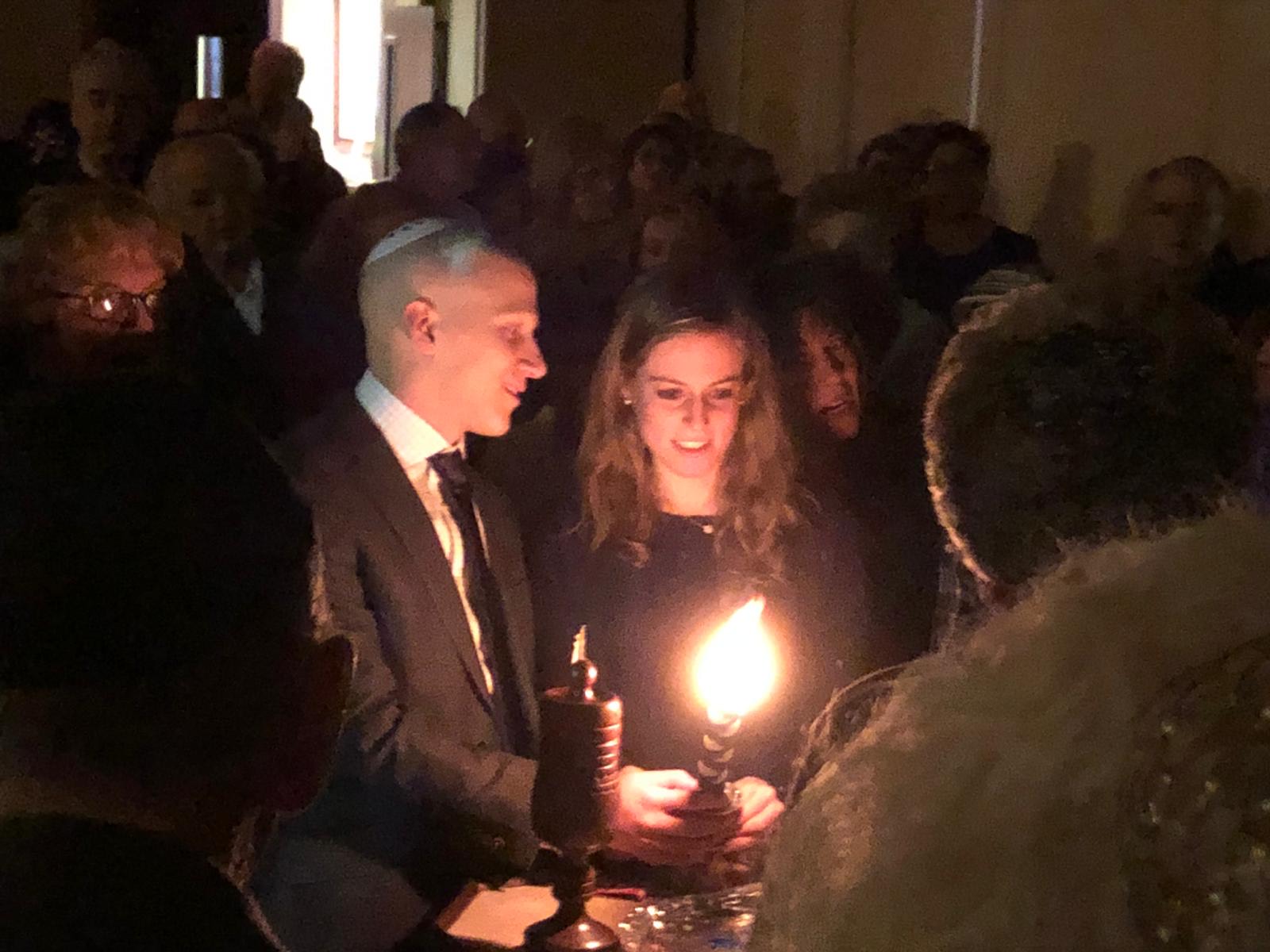
I return to the synagogue energized, excited and anxious to resume the duties that afford me the privilege of connecting with others in a meaningful way. I WANT TO SEE YOU!!! Yet here I am, required out of caution to keep my physical distance a bit longer.
So here is what I suggest. As I go about getting caught up on the status of individuals in need of more immediate attention and the community as a whole, I invite you to reach out to me in the days ahead. Come Tuesday, please call me and leave a message (so much nicer than an email!), and I’ll call back within 24 hours. Even better? If you are sufficiently tech-savvy, pick up your phone, go to your camera, slide the setting to video mode, and record your message to me. Upload it to your email, and send it to me. And I promise that I will do the same in response!
The “social distance” we’ve been asked to maintain to “flatten the curve” of the Coronavirus spread is certainly a challenge to the way community was meant to be experienced, but it also challenges us to be our best at building social caring bridges to those who need us most. This moment also presents the opportunities for individuals to experience personal exploration and creative rejuvenation, and for communities to explore how they can maximize the use of “virtual community” to their benefit.
It is a moment like no other. I’m glad I’m back to experience it with you. And I pray that the time comes soon when we will be free to congregate as we choose once again.
With love,
Rabbi Craig Scheff
Bringing rituals to life and lives to ritual
From experience, she anticipated the tears. She knew that the moment the cloth was torn, the crying would commence. So she looked at Nancy, and before taking the scissors to the material she paused and asked, “Are you ready?”
Nancy took a deep breath and nodded in assent. Only then did Amy begin cutting the lace away from the satin. What was once Nancy’s bridal gown more than three decades earlier now looked like a tablecloth. And Nancy cried.
Amy the counselor comforted her. She assured Nancy that her reaction was normal, and that only a happy marriage could yield these tears. As she spoke her words of consolation, Amy the designer seamlessly moved the lace to a long narrow table and held it in place with a six-foot ruler. She noted how remarkably pristine and strong the lace was, and how much of it was salvageable. Just a few seconds and several snips later, what lay before us had been transformed from a mere remnant to a magnificent wrap.


Amy the teacher’s questions now came fast, teasing out Nancy’s reactions, drawing out her emotional connections to the significance of tallit, to the ritual of prayer, to family, to life cycle and to legacy.Amy the artist held Nancy’s responses and guided her through the creative process. After considering several connections to the number four, Nancy decided that the four corners of the garment would bear the names of our four sons. When Nancy shared that she had designed graphics for each of our son’s bnei mitzvah depicting the season of their celebrations, Amy suggested that we incorporate the graphic into each satin corner along with their names. The occasion on which they each first wore tallitot as adults would thus become a part of Nancy’s ritual every Shabbat and holiday.


The garment is not actually a tallit until its fringes are affixed. Within a matter of a couple of days of our meeting with Amy in Needham, Massachusetts, we received word that the project was on its way to our home, with two fringes yet to be tied. Perhaps the two sons “tying the knot” in the months ahead, along with their fiancées, will each have a hand in tying the remaining knots of the tzitzit to render the tallit “kosher.”
Some people grab a prayer shawl off a rack and toss it around their neck as a matter of custom. Some people choose a tallit for the way it hangs on their shoulders. Amy Lassman is a guide, teacher and artist who connects a potentially perfunctory ritual with time, emotion, memory and dreams. Amy, you are Bezalel, a visionary who thinks deep thoughts, who gives birth to holy moments and holy creations, who constructs sacred spaces under the wings of the Divine Presence. You have given my family a new pathway into our tradition. You have reshaped my family’s story, possibly for generations to come. And though you may not have earned a formal degree towards that end, you are my rabbi.
Thank you. I hope you don’t mind if I share your Torah with the world.
Check out Amy Rosenstein Lassman’s work at adardesigns.com.
On the eighth day of Chanukah
On the first night of Chanukah…. On the second night of Chanukah….
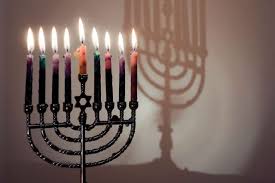
Like a bad horror movie, the reports of violent attacks on Jews reached us day by day. With each candle, our anxieties increased. The seventh attack struck our Rockland community in Monsey with 5 people stabbed as they celebrated the holiday together. Lighting candles on the eighth night, we were as aware as we have ever been of the meaning of this holiday, determined to fight back the darkness, dedicated to brazenly defying the temptation to retreat into hiding.
In the light of the eighth day, we are left trying to make sense of it all. Officials and lawmakers step forward to proclaim their indignation and resolve, a reassuring fact that distinguishes our home from 1939 Germany. Reporters ask us to assess the damage, to identify the causes, and to suggest countermeasures.
Jewish resilience — founded in our peoplehood, a sense of shared destiny, a belief in the power of goodness, and faith in God — will sustain us, just as it has through the centuries. Just as it did the Maccabees. But neither Jewish might, nor Jewish power, nor even Jewish spirit will cure the societal illness we call anti-Semitism.
Over the past twenty centuries and more, this illness has presented in different ways. Depending on whether the form taken was political, social or religious, the symptoms differed in the kinds of stereotypes the illness relied upon to spread. From the Greco-Roman empires to the Golden Age of Islam, from the Medieval Ages to the Enlightenment, from socialists to capitalists, from Ukrainian pogroms to Nazi death camps, “the Jew” has been an object of hatred and marginalization, characterized according to the needs of the hater, colored to be the cause of their ailments.
Today, however, the illness is different. The world is, as we know, a much smaller place. Social media has given hate an unparalleled platform. Anti-Semitism shape-shifts by the day. Its spread is not bound to any particular ideology or political party, and its expression has taken violent form in an age when speech is unbounded, inflammatory, and empowering.
But let’s not fool ourselves. Regulating speech, punishing terrorists and pushing hatred into hiding won’t defeat anti-Semitism. There may be places in the world where anti-Semitic incidents don’t occur, but that doesn’t mean that anti-Semitism doesn’t live in the hearts of inhabitants. In fact, sadly, it most likely means that Jews don’t live there.
Anti-Semitism lives in our neighbors’ hearts and homes, in the mouths of parents and the ears of their children. And the only way for “us” to defeat it is to confront it where it lives.
A solidarity rally may comfort us, provide a forum to air our sadness and fear, help us know we are not alone. But anti-Semitism will only be defeated when our non-Jewish neighbors want to fight it. When they are willing to examine and discuss their beliefs; when schools can require and facilitate meaningful conversations among students and parents; when churches, mosques, and synagogues come together in common cause—only then will we as a society have a fighting chance to win this battle.

On the eve of 2020, may we resolve to stand against hatred; to know our neighbors and to help them know us; to build alliances outside our Jewish community with those who will advocate for the conversations and education necessary to bring days of appreciation, understanding, and light.
Rabbi Craig Scheff
Clergy care
I care. If I didn’t, I wouldn’t have been in this line of work for the last 25 years. I care about teaching a Torah that is alive, relevant and instructive; about creating moments of meaningful connection for people with their Jewish identities; about our shared past and our shared future; about empowering people to use Judaism as a perspective by which they can view, understand and influence the world around them.
I care about raising people up in their moments of joy, and about being present to those who are brought low by life’s circumstances.
I care about challenging people’s assumptions and about shaking people from their complacency, and about exposing biases and calling out intellectual laziness. I care about their ability to communicate what they believe and why.
I care about an organization, its financial health, its administration and operations and about the people who staff and volunteer their time to make it successful. I care about its reputation, its ability to welcome and meet diverse personalities, needs and challenges. I care about its mission and goals, and about the processes and procedures it follows to achieve them. I care about policies and consistency, and about the flexibility to allow for exceptions and individual needs.
I care about a building, its sanctuary and its learning spaces, its social spaces, its sound systems, WiFi, heat and air conditioning. I care about its security.
Living on the synagogue grounds for the past 25 years, I’ve been able to look out my bedroom window every morning and every night to see the parking lot and who is in it, the synagogue front door, my office window. When someone has left a light on in the building, I know it.
And I can’t imagine living my rabbinate any other way.
Of course, I also care about my family. And I care about myself and my ability to keep doing what I love. And I am so grateful that my synagogue community cares about its clergy as well.

As an adjunct faculty member at the Jewish Theological Seminary teaching the senior class of the Rabbinical School for the past 15 years, I advise the future rabbis and cantors who want to work in pulpits that while a synagogue may commit itself initially to a clergy-person for a two- or three-year term, the clergy-person will be at their best if they approach their commitment to the community from the outset as a lifelong commitment. Once that commitment is recognized and appreciated, the congregation will want to honor, nurture and reward that commitment. I believe that if clergy care, congregations care.

In the world of academia, the sabbatical is a time for a scholar to pursue intellectual and personal growth. In the world of clergy, the sabbatical is an opportunity to regenerate. Just as God rested (or refrained) from the work of creating (shavat) and recharged (vayinafash), a clergy-person’s sabbatical is ideally spent re-energizing for the future. Just as the Shabbat allows us to cease from “doing” and provides the time just to “be” in order to renew our creative energy for the week ahead, the sabbatical offers clergy the opportunity to process what has been and reimagine what can be. If a community cares about its long term well-being, it will care for the long term well-being of its clergy as well.
I am grateful for the gift of a 3-month sabbatical every four years, and for the community’s care and commitment this opportunity reflects. My absence doesn’t reflect in any way a lack of care. If anything, it should tell you that I’m already preparing for the next chapter with you, excited to greet the next set of opportunities and challenges refreshed and renewed.

I already look forward to catching up with you again in March. And if you happen to see me around before then, please don’t be afraid to say hello!
L’hitraot,
Rabbi Craig Scheff
Getting “ahead” as an egalitarian community
This past week, 36 years ago, the Rabbinical School of the Jewish Theological Seminary decided to admit women into its program. And after 36 years of a “battle being won,” there is still much work to be done in making Judaism truly egalitarian in our communities and institutions. Language, symbols, existing Torah education, and deeply rooted emotional attachments have made the process of change a slow one. Practically two generations later, our daughters (and sons) still lack role models, teachers, rituals and customs that support an equality of access to our tradition and, by extension, to God. Conservative Jews, by and large, still seem content with perpetuating a tradition shaped by men for men.
Six years ago I authored the following piece about our synagogue’s choice to continue advancing the cause of egalitarianism in our community by promoting the use of headcoverings for men and women. We have had limited success in this effort, and have learned that we can’t let six years go by again without reiterating this teaching. So here it is:
Here is how the conversation with my Kitah Vav (sixth grade) students went. I asked, “Why do we require boys to wear a kippah or some kind of head covering?” The bright youngsters answered: “It is a sign of respect for God.” “Great answer,” I responded. “It shows that we know God is with us,” another suggested. “Fantastic,” I replied. “So,” I continued, “why don’t girls cover their heads?” Silence. No good answer. Finally, one student offered, “There is no good reason. It doesn’t make sense. Girls should show respect the same way boys do!”
It seems like such a simple and logical conclusion, and yet it is so complicated to teach, especially when generations of communities have held onto customs based in outdated norms, reinforced by bad education and laziness. It is true that long-held customs over time gain the weight of law; but when those customs undercut the values of a community, they must be changed. Especially for an egalitarian Conservative community, it is important to understand what we do, why we do it, and how our customs advance or detract from our ideals. If you ask most women who cover their heads in our community why they do so, they will say it is out of an acknowledgment of, or respect for, God’s presence when we pray or study. The fact that most of these women are married, and didn’t start covering their heads until they were married, stems from an understanding of this custom in an entirely different light. In Orthodox circles, married women cover their heads out of modesty, not out of respect for God. Whether the custom was generated from the desire to make single women easily identifiable, or the notion that a married woman who exposed herself to others beside her husband brought shame to herself or her family is irrelevant for our purposes. Neither rationale holds true any longer in our egalitarian communities. To hold onto a distinction between married and unmarried women in our community is to perpetuate a belief system that is untrue to our values. How are we supposed to explain to our ten year old daughters why they are not required to cover their heads? In a similar vein, how do we explain to our sons why they must? The Conservative movement set out on a bold path decades ago to empower women in all areas of Jewish life, ritual and leadership. We are so much stronger in so many ways as a result; yet, we have been lazy and slow to teach a sense of equality of obligation. One of the most difficult aspects of this change has been the absence of role models for our daughters. When something new is presented as a choice, and there are few who exercise it, what adolescent wants to stand out from among her peers? Our daughters for too long have only seen married women and rabbis covering their heads, even though true egalitarianism lies in the equality of obligation for all.
As it is our goal to advance the egalitarian ideal, and to give every child and adult, male and female, the opportunity to experience a connection to God through all rituals available to us as Jews, our OJC Ritual Committee has adopted a new policy that will go into effect in January (2014). We will continue to require all males to cover their heads in the sanctuary and daily chapel at all times (though we would never demand that anyone leave for their refusal to do so). We will continue to request that all females cover their heads in the sanctuary and daily chapel; however, anyone who ascends the bimah or who functions in a role of ritual leadership (like davening, receiving an aliyah or reading Torah) will be expected to wear a headcovering. In this way, the people who choose to lead us or represent us in prayer will model our understanding of how we show respect to God.
We understand that any change involves an ongoing process of education. The Ritual Committee undertook a year of studying the topic of headcovering, taking time out of its monthly meetings to learn before reaching this policy decision. Rabbi Drill offered three teaching sessions following Shabbat services in the summer of 2012 that ignited the committee’s consideration. Last spring (2013) I lead a session of The Observant Life dedicated to the topic. Prior to the beginning of the academic year, the majority of our teaching staff studied the issue, and took on the obligation to model for our religious school children, all of whom are now covering their heads in class and prayer. Our teachers’ aides, the group for whom fulfilling this obligation as role models is least comfortable given social (and stylistic) considerations, engaged in a text study with me and has been encouraged to continue the conversation. Our religious school children are being engaged in hands-on activities to learn the significance of the ritual. For children who will grow up seeing role models and peers following one mode of ritual expression, the only question remaining will be whether their sanctuary will be consistent with their classroom.
I recognize that so many of our customs are emotionally rooted in “how we grew up.” Intellectual and spiritual honesty with ourselves and our children, however, sometimes requires that we revisit and revise what we do so that our norms don’t lose their meaning. Our policy does not result in the exclusion of anyone from being a participant in our community as they always have. It only asks that people who want to assume a place of ritual leadership be willing to model what we want the next generation to comfortably own.”
Since the original writing of this piece, I’ve adopted a fairly liberal interpretation of what qualifies as a headcovering. Anyone may choose to wear a kippah or a hat; just as anyone may choose to wear a lace “doily” or a wide headband. It is the intention that matters most: the headwear itself is symbolic, and one’s hairstyle need not be an obstacle to giving expression to the intention.
After six years, it is clear that without the support of women sharing this passion and owning this effort, an egalitarian understanding of how Torah applies in our lives will remain elusive. I still believe that the issue of headcovering is the lowest rung of the ladder to be climbed, and the one that makes the most intellectual and educational sense as a first step.
I hope we can dare to achieve a new height together.
B’chavod,
Rabbi Craig Scheff
Beyond the numbers
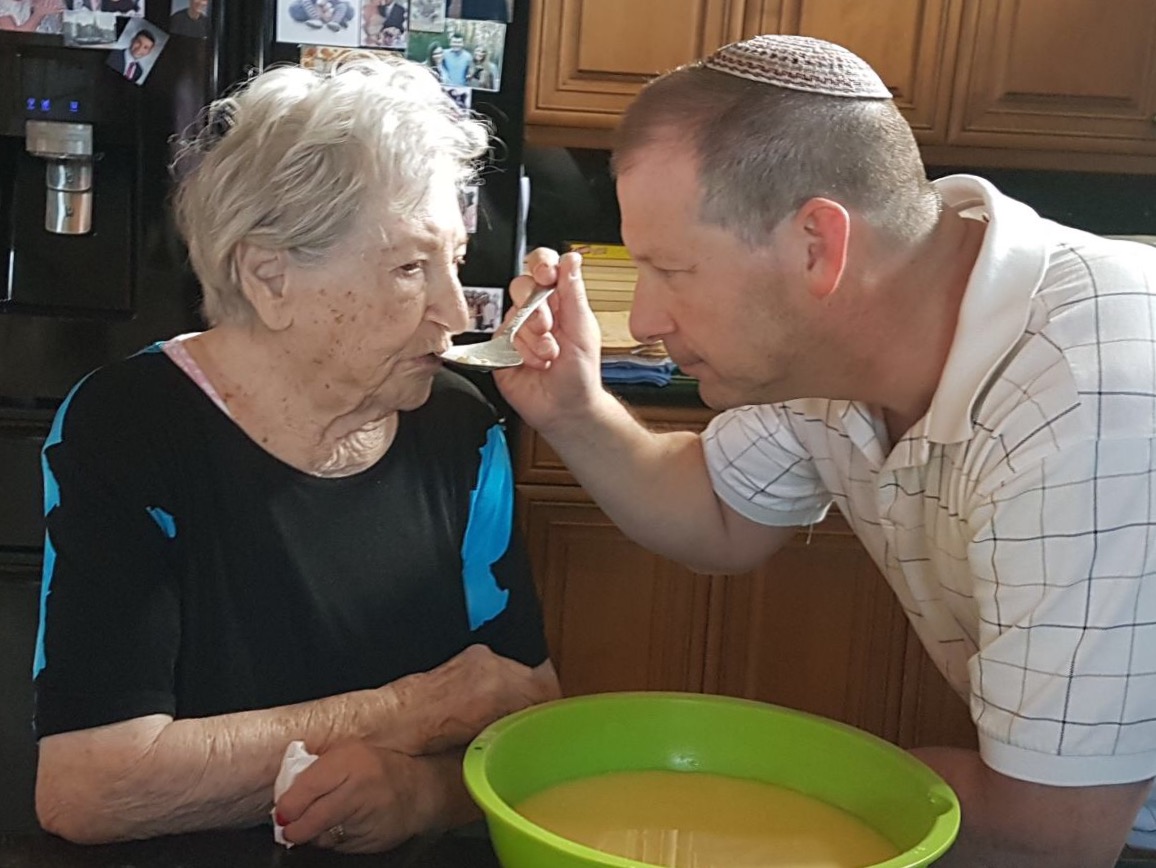
Well, there was that one stint in a Siberian labor camp in 1940 (when she needed to be eating for two) that tested her endurance. Otherwise, fighting a cold was about as sick as I can recall her ever being. Despite living during the darkest of decades and through the most uncertain of conditions, Sonia Neiman arose every day to make time matter.

Her age, the years of marriage, the number of grandchildren, great-grandchildren, and great-great-grandchildren … all make for a fascinating human interest story beyond the relatable experiences of most. As she approaches her 100th birthday, however, it is remarkable that she has never been one to count.
My Baba is a superstitious person. And while there is a bias in the Jewish tradition against counting people (it invites the evil eye?), I don’t believe that is what has motivated her to ignore her numerical accomplishments.
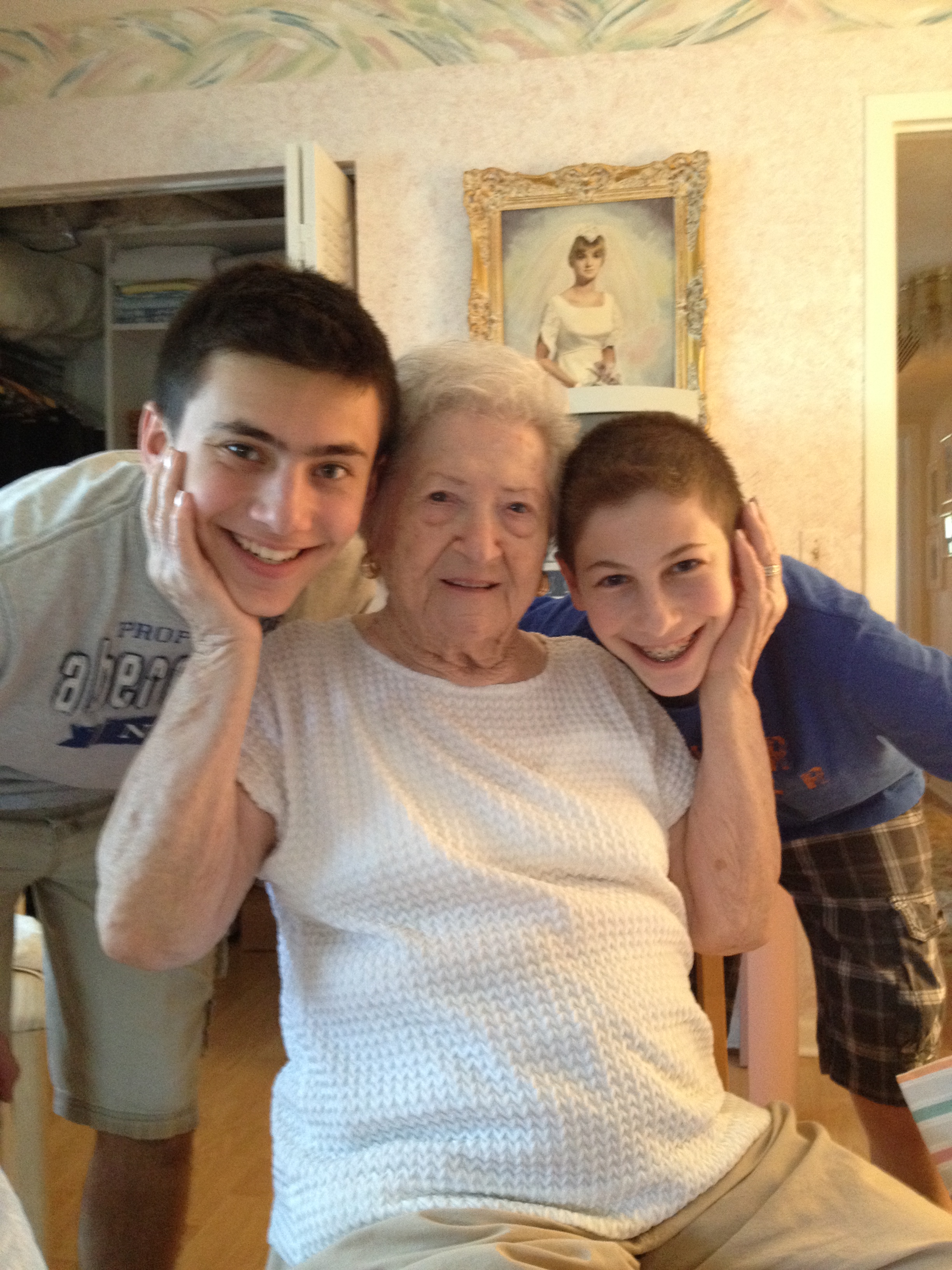
The true achievement of my grandmother’s life has been arising to every day with a sense of purpose—a friend to call, a husband to clothe, a child to nurse, a meal to prepare, a kitchen to clean, a holiday gathering to relish, a simcha to celebrate—and investing all her emotional energy—her laughter, her tears, her disappointments—in her waking hours.

When I consider the greatest lessons my grandmother has taught me, the most important one of all will be to live beyond the numbers. One love, one friend, one conversation, one laugh, one cry, one opportunity to matter—any one of these is enough of a reason to live one more day.
As we approach the Jewish new year of 5780, I am personally wrestling with the awareness that my grandmother is no longer finding meaning in her daily life. All of the roles from which she gained pleasure throughout her days are no longer possible for her to fulfill. I know, however, that the best way I can honor her in the year ahead is to live best (and not just exist) by taking note of the one thing I do each day that makes my life worth living.
L’shanah tovah umetukah,
Rabbi Craig Scheff
Let my people go … to camp
“Tell me and I forget. Teach me and I remember. Involve me and I learn.” – Benjamin Franklin
Your grandmother passes down her recipe (in writing!) for her famous chicken soup. You follow it to a tee. But if you are a vegetarian and don’t actually taste it, can you ever create a soup that replicates hers?
You can describe what it feels like to be loved. You can use every modifier known to human language. But can your audience truly relate, unless they themselves have experienced such love?
You can teach about Shabbat. You can try to relate the benefits of a day of unplugging and of being present to the people and world around you. But to your average listener, the description simply sounds like a series of dos and don’ts. Unless you have fully lived Shabbat, will it ever find its fullest expression in your mind and heart?
Decades ago, Jewish life shifted from urban areas to the suburbs. As Jews settled in neighborhoods, tightly knit Jewish communities dissipated into spread out regions. Jewish identification, which had been facilitated by the smells, sights, sounds, rhythms and culture that permeated daily life, suddenly became something that needed to be sought out. Over a relatively short period of time, Jewish identity became an extracurricular pursuit, and the synagogue became the place to find it.
But as wonderful as the synagogue and its community might be, so long as Jewish identification was a choice as opposed to a fact of life, the Judaism of your average Jewish household would have to be scheduled — usually against athletics, the arts, school and leisure time. And the competition has only gotten stiffer over the last decades.
Enter Jewish camping.
This summer, I visited 6 different Jewish camps, 5 of them in the Ramah network, the camping arm of the Conservative Movement. Each camp had its own culture, its own particular appeal and camper demographic. What the camps shared, however, was a commitment to building Jewish identity and community rooted in Jewish values. These camps have moved far past Friday night prayer and kosher food as the defining features of their Jewishness. They have created models of education that infuse Jewish values and Jewish living into the daily activities of the campers. Values like community, pride, and joy are reinforced on the climbing wall, on the basketball court and in the art room. At these camps, Judaism is alive, relevant and informative. And Jewish community is the all-encompassing context of daily life.
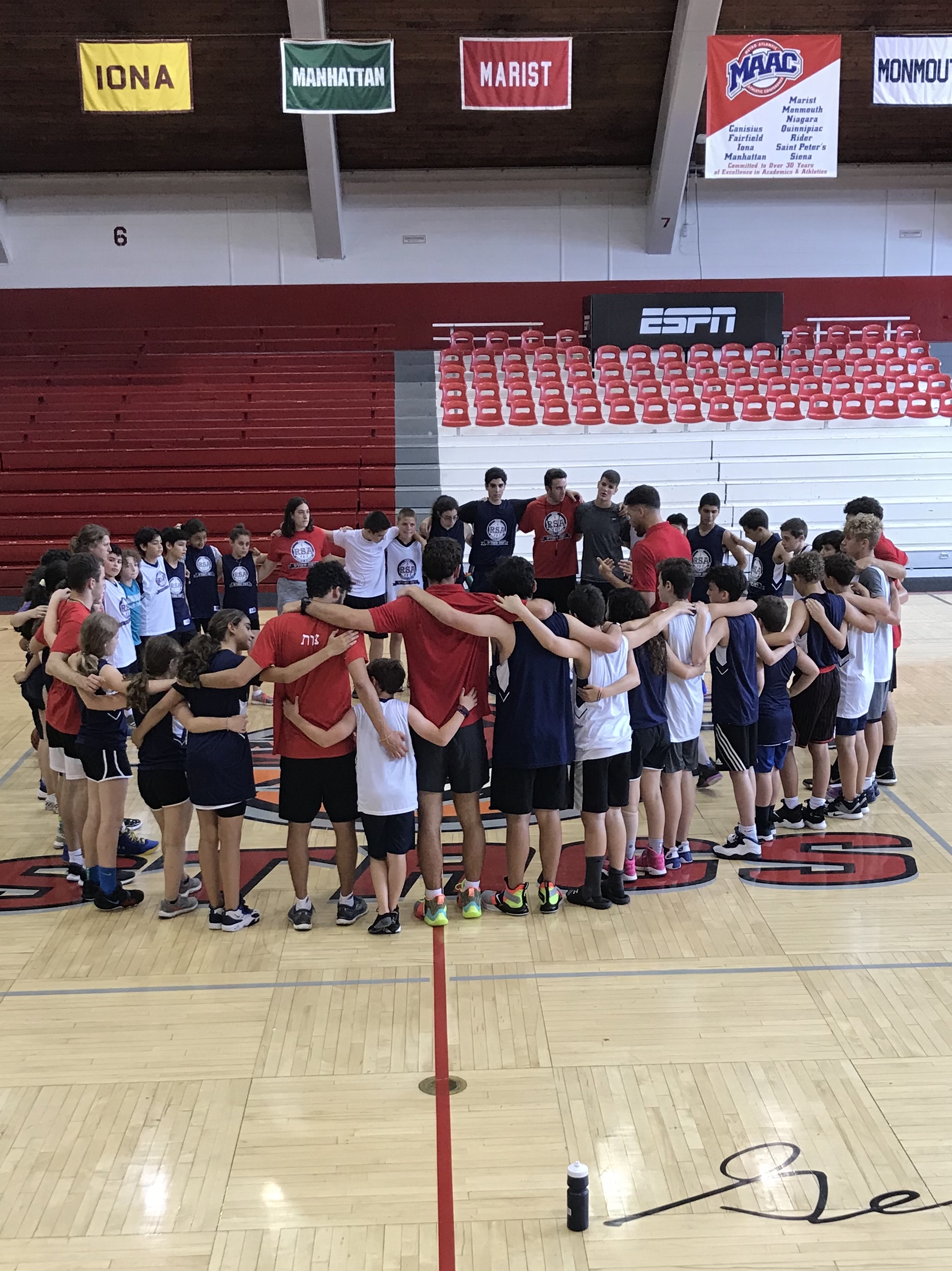

From my somewhat limited perspective, the great magic of Ramah camps is the way in which the staff members live and grow. Especially given how concerned we are about life on college campuses, it is refreshing and heartening to see teens seriously engaged in Jewish living and learning, wrestling with one another and with Rabbis and teachers over issues of theology, observance and the centrality of Israel as parts of Jewish identity. Again, it is one thing to engage in these discussions in an intellectual fashion; it is quite another to do so from within the framework of Jewish community.


After a week of volunteering at Ramah Sports Academy and an afternoon of revisiting my childhood at Camp Ramah in New England, I am more convinced than ever that Benjamin Franklin had it right. Even the best teachers will not transform the lives of their students unless the teachers create the moments and contexts in which students can participate in and live out the lessons learned.

In the year ahead, we as a synagogue community are dedicating ourselves to creating Jewish living experiences for our children. We are excited about the “campy” program we have created. But it takes more for us to be successful; it takes commitment and resources to support experiences beyond the synagogue walls. It takes parents who encourage their children to attend a two-week experience like USY Encampment (coming soon, call me, Bruce Varon or Sharon Rappaport for more information). It takes donors to make Jewish camping more affordable to families who prioritize Jewish identity-building. And it takes parents who recognize that a summer job as a Jewish camp counselor is as—if not more—important to Jewish community and continuity than a career-boosting internship.
Like you, I want our children and grandchildren to have it all, including the richness of our Jewish tradition. This summer, I got a glimpse of how our dreams could be achieved.
Shabbat shalom,
Rabbi Craig Scheff
The Power of Two
Eldad and Meidad are infused with the spirit of God, and they go about the camp in an ecstatic state (in last week’s parasha, Beha’alotecha). Joshua is concerned, but Moses doesn’t see the two as a threat to his leadership or to the community. In fact, he expresses the wish that everyone would be so graced.
Caleb and Joshua scout the Promised Land along with ten other spies. In contrast to the ten who see the challenges presented by their destination as insurmountable, the two urge the community to trust in God and to take what God promises to deliver (this week’s parasha, Shlach).
We often reflect on the difference that one person can make in the world. The influence of our actions ripple across distance and time. The work, however, is not easy. Though it might not be our individual obligation to finish the task in which we engage (“Lo alecha hamlacha ligmor…” Pirkei Avot 2:21), it is challenging to remain engaged when we feel alone, isolated, unsupported, suspect in others’ estimation, and perhaps even doubt in our capabilities.
Perhaps that is why the Torah presents so many examples of people working in tandem—for good or bad—to achieve a common goal. The solitary figures are often models of the exceptional. The duos, however, find strength and support, clarity and confidence, in each other. “Two are better off than one, in that they derive greater benefit from their efforts. For if they should fall, the one will raise up the other, as opposed to if one falls when there is no one to raise him” (Ecclesiastes 4:10-11).

Moses struggles with frustration and anger in his efforts because he is so alone. Time and time again we see that the weight of the burdens he bears is too much for him to carry alone. And delegating only goes so far in its effectiveness. God also experiences this frustration: “How long will they frustrate me? I’ll destroy them and start over with you,” says God. But Moses doesn’t want a new people to lead; Moses wants a partner. I imagine that when Moses calls upon God to show God’s strength through a display of compassion, he is actually saying to God: “We are both frustrated, we are in this together, we need to hear each other, learn from each other, and make this work.” God heeds Moses’ plea, anger is assuaged, and a partnership is born.

We can’t bear the burdens of our challenges alone. Creating partnerships and finding allies helps us become more self-aware, more reflective. Sharing our passion for a cause with another affords us the luxury of checking ourselves, of measuring our opinions and responses, of learning from another’s experience how to better achieve our goal.
As a faith community, we take our role of being a prophetic voice to the world seriously. While we are made up of many individual and diverse voices, we tackle issues and challenges as one. But working as a community alone can feel isolating and frustrating, often leading to feelings of anger, resentment and hopelessness. And that is why we have been so dedicated this year, and are so dedicated for the future, to building organizational partnerships. In the past week alone, we have partnered with the Rockland County Pride Center, Moms Demand Action for Gun Sense, and VCS (Volunteer counseling Services) to create opportunities for education, advocacy and empowerment and to serve those who find themselves on the margins of our society. We have stood for equality, learned how to better protect and advocate for the innocent, and feed the hungry. Thanks to these other organizations, our capacity to serve has increased.
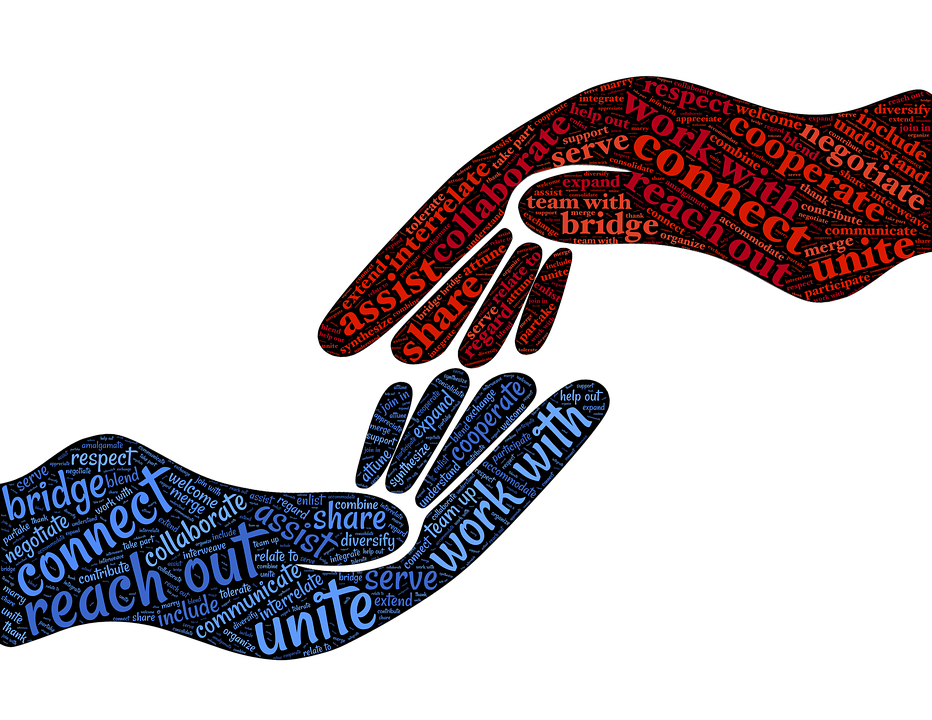
As our tradition demands, we will love our neighbors, we will pursue justice, we will serve as a light to others in darkness. As these times demand, we will extend our hands in partnership to those who seek to do the same. And as we do so, our compassion, our power, our confidence and our love will only grow. And the Promised Land will not appear to us as an unattainable goal.
Shabbat shalom,
Rabbi Craig Scheff
I pledge allegiance to three flags
I pledge allegiance to three flags:
Of the United States of America
And to the republic for which it stands
One nation
Under God
Indivisible
With liberty and justice for all;
Of the State of Israel
And to the hope for which it stands
One People
Sharing a prophetic vision of God’s sovereignty
United in diversity
With equal rights and religious freedom for all;
Of the Rainbow of Pride
And to the sexuality and gender identities for which it stands
One emanation of God refracted in a multitude of ways
Indistinguishable as humans in the Divine image
With love for and inclusion of all.
My allegiance to any one of these three flags does not preclude my allegiance to any other. I can raise them side by side and pledge myself to each, for they are in consonance with one another. In fact, each demands my allegiance to the others. To believe in that which the American flag symbolizes is to believe in that which the others symbolize.
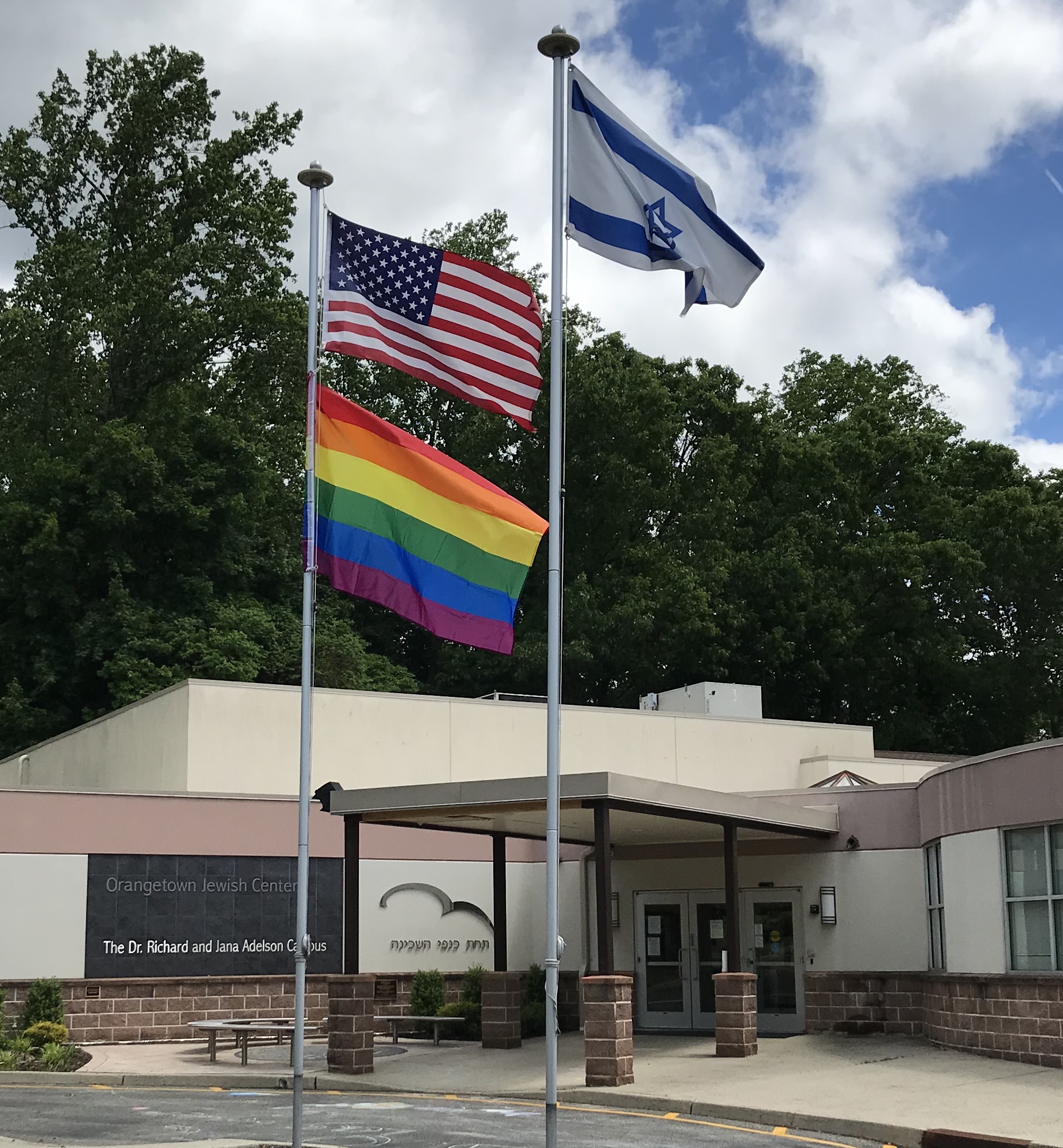
And though we sometimes fall short—as communities and as individuals—of the ideals to which we profess to aspire when we wrap ourselves in those flags, in pledging our allegiance we nonetheless commit ourselves to working towards the realization of the aspirations each represents. We pledge to respect the rule of law; we pledge to exercise our right to advocate, educate and vote; we pledge to demand that every person be treated equally regardless of race, religion, gender or romantic orientation.
In the short span of seven days, I will have paid honor in memorium to those who sacrificed their lives so that we could breathe freely as Americans, even as I lament the treatment of families at our borders; I will have marched up 5th Avenue to celebrate the State of Israel and its remarkable achievements, even as I let it be known that I am a concerned stakeholder in the ongoing Zionist project; and I will have celebrated “Pride Shabbat” at our synagogue as an introduction to a month of events in and around our community, even as I know we have so much education to do before “inclusion” no longer needs a committee of its own.
So the next time someone asks how it is that one can pledge allegiance to three different flags, tell them that it is your God-given right and responsibility to do so. And then ask them how it is that they don’t.
Rabbi Craig Scheff
 Three Rabbis Walk Into A Shul
Recent Comments