Atypical Shabbat in Warsaw – Day Three
Cold. Wet. Gray. Like the grainy images we have all seen of past Jewish life in Poland. That is the way I imagine Warsaw, and every other city in which Jews were crowded into just 70 years ago on the eve of their destruction. And that is the city of Warsaw that we experienced today.
After a Shabbat morning service and Torah study, we headed to explore the new Museum of Jewish Life in Poland, slated to open in October. We were all deeply affected by our docent, Martha, who clearly had not anticipated our questions. Sure, she could describe the construction and architecture of the museum. She could address each period of Jewish life in Poland. But when asked about her own identity, she seemed taken aback. The daughter of a Catholic father and a Jewish mother, she was raised in a home where Communism was the official family religion. A class trip to Israel reintroduced her to her ancestry, and after five years in Israel and a brief stay in America, she returned to Poland to reclaim her past. Now, she sees it as her mission to restore the place of the Jews in Poland’s historical narrative. It was powerful to see a personal struggle to rediscover an identity; it was inspiring to learn this perspective on why we are here.
While the museum’s emphasis is the many contributions of Jewish life in Poland, our walking tour of the monuments to Jewish life in the Warsaw ghetto certainly took us back to the suffering of the Jewish people in this place. We were cold and wet as we sloshed through the gray landscape. But we did not dare complain. We were all acutely aware that we had sturdy shoes, multiple layers of clothing, some of us had gloves, and all of us were fed and headed ultimately for shelter. Who were we to complain, especially standing in the footsteps of those whom we were here to remember.
The topic of our Torah study this morning, from today’s parasha Kedoshim, was the Torah’s commandments not to stand idly by the suffering of our brothers, not to hate others in our hearts, and to love our neighbors as ourselves. Tonight, as we put our heads to our feathery soft pillows, we are confronted by challenges that make sleep elusive. How can we begin to empathize with the suffering of the Holocaust’s victims without feeding the flames of anger and hatred? How do we formulate an active and instructive response to these events such that we become more attuned to the suffering of others, be they Jewish or not? How do we own this victimization without victimizing others?
Tonight, international stage and synagogue star Dudu Fisher sang us songs of lament, prayer and hope. It was a poignant way to bring in the new week and the difficult commemoration ahead. I pray I can find the one melody that will bring me just a little sleep before the sun rises to the new day.
Laila tov,
Rabbi Craig Scheff
I am a Jew – Days 1 and 2 of OJC’s March of the Living
Traveling to Eastern Europe with a congregational tour is nothing like traveling to Israel. It is one thing to be greeted gruffly by an El Al security guard or bumped aside by a Jewish grandmother trying to be the first to the overhead bin; it is another thing altogether to be identified so easily as an outsider. Okay, maybe it is just in my head. But that’s the only place that really matters as I reflect on the meaning of this trip to Warsaw and this growing feeling of anticipation.
I am a Jew. I feel it most acutely when I am traveling abroad, especially headed for Poland. I am identified by my language, my idioms, my jeans and my kippah. My conversation with the person next to me invites curiosity, apologetics, perhaps a touch of pity (and a measure of resentment?). Must we live in the past? Must we dwell on the horrors? Must we constantly remind others of our suffering? Must we be so overtly distinctive? And yet, as I go through customs to board the plane from Frankfurt to Warsaw on this morning, I have never been more proud to be a Jew.
I am a Jew. And I am headed back to the place where it was made clear, on more than one occasion throughout the history of Europe, that the Jews were not wanted. I am soon to set foot in the land of my grandparents’ birth, the site of my namesake’s death. (My great uncle Shmiel was an officer in the Polish army. He died in World War II defending his home, even while his wife and children were buried alive there. The rest of my family escaped to much brighter futures, while he chose to stay behind.) Still, I ask myself as a Jew, what is my mission?
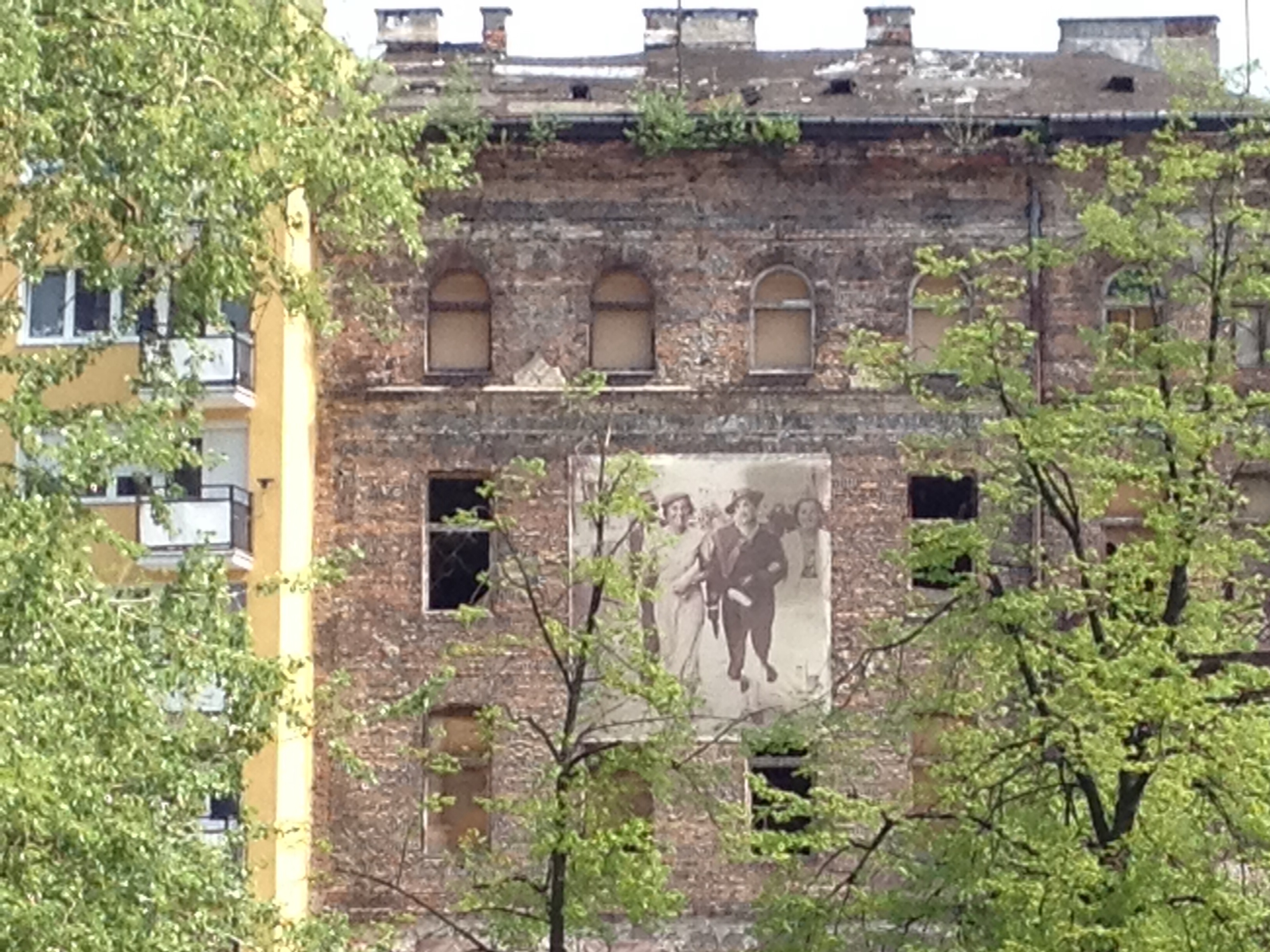
I am a Jew. So I will go to the ancient synagogue, and I will see the restored town center, and I will visit the Jewish cemetery and the site of the ghetto. I will struggle with the significance of an enlarged photo of long-gone Jewish life decorating a remaining ghetto facade in the middle of a bustling city.
But I will also pray with the new Warsaw Jewish progressive community. And I will share Shabbat dinner with hundreds of others from around the world sharing my journey. And I will make Shabbat in a place that is not my own, but guard it dearly nonetheless.
I am a Jew, and I am here. In spite of history and to spite history. In the name of my family and in revenge for the atrocities. In solidarity with my community and in testimony to the world. In prayer for humanity. Sh’ma Yisrael, Adonai eloheinu, Adonai echad.
Shabbat shalom from Warsaw,
Rabbi Craig Scheff
Us and Us — A Community Conversation
Growing up in Rockland County, I remember my religious school’s class trip to New Square back in 1976. It was like a trip to Museum Village, a journey back in time, a glimpse into the world of Fiddler on the Roof. We walked through the dusty village square, gawking at the black-clad men and the long-skirted girls, shopping in the grocery store for kosher snacks. It was a museum trip–souvenirs and all–to witness a Jewish community frozen in time. Thirty-eight years later, the community is far from little frozen Anatevka. It has grown exponentially in population and geography, and it has developed into a powerful and well-organized entity. Sadly, religious and political leaders of this insular Jewish community have earned a reputation of hiding social ills, coercing those who dare dissent, engaging in questionable politics, and dismantling a public school system for its own benefit.
When it comes to Jewish law, truly pious Jews have always believed in living beyond the letter of the law. “Fences” are erected around the law to make sure that core principles are not violated. While the Sabbath technically begins at sundown on Friday, we bring in the Sabbath with candle lighting 18 minutes before sundown so as not to encroach on the boundary and possibly err. Religiously observant Jews have similarly tried to abide by the spirit of the law. While I would be within the law to leave a television on in order to watch a Friday night playoff game, I would certainly be violating the spirit of Sabbath rest. Another fact to consider is that, wherever Jews have lived in the world, we have always lived by the principle that the law of the land is the law, so long as it doesn’t demand that we violate our religious law.
It is so disappointing, therefore, whenever we see religiously observant Jews engaged in questionable ethical and legal behavior. To hide behind the legality of one’s actions, knowing that one is in violation of the spirit of the law, is unethical conduct whether the law is of a religious or secular nature. And to ignore that reality is to ignore the Divine calls to the Jewish people: “Be holy because I am holy” and “I shall be sanctified by those who draw near to me.” Finally, such bad behavior falls far short of the prophet Isaiah’s expectation that we would be a “light unto the nations.”
As Jews we are obligated to recognize that we are all responsible for one another; therefore the unethical and possibly illegal actions of our brothers in the East Ramapo School District-whether they involve the use of school funds, the hiding of domestic or sexual abuses, or the corruption of public officials-must be exposed and investigated. If there are ways to bring state and federal powers to bear and to trump local interests, we must advocate to that end. We are further obligated as Jews to value every person as having been created in the image of God and to strive for good relationships with our neighbors. By Jewish law, if we stand idly by the wrongdoing of another, we inherit that sin as our own.
As Jews-and as Americans-we are obligated to wear our Jewishness with pride. We must continue to advocate for the rich diversity of a society that has been such a haven for the Jewish people, and for others who have come here with a dream to live free and succeed by individual aspirations and efforts. We should tout our historic and ongoing charitable support for the public, cultural and social institutions that define this great country.
Join Rabbi Drill, our Rabbinic intern Ariella Rosen, Rabbi Adam Baldachin of the Montebello Jewish Center, and me in a “Community Conversation with Clergy” on Thursday night at 7:30pm at the OJC. Together we will explore the difficult issues confronting the East Ramapo school district and its predominantly Orthodox school board. We will discuss the ethical obligations that shape our private and public response to these events, and learn about an interfaith clergy effort that is currently taking shape.
Rabbi Craig Scheff
Celebrating Ramah
This past weekend, OJC’s rabbis, cantor, and youth director attended a celebration for Ramah Day Camp in Nyack (the place that introduced us to each other!) and its director, Amy Skopp Cooper, who is entering her 18th year in the role. The hall was filled with some of the Conservative movement’s finest young rabbis, innovative educators, and budding leaders, all of whom have received a piece of their training at camp. While Ramah as the camping arm of Conservative Judaism is certainly one of the brightest spots among our achievements, and a major factor in shaping and ensuring our children’s future Jewish identities, it has also been crucial in shaping the leadership of our movement. Most synagogue success stories will include in their narratives the profound effect that Ramah’s model of experiential education has had on clergy, educators and youth leaders. The experience of a camp Shabbat is something we all try to replicate for our synagogue communities, and those synagogues with engaging and participatory services usually point to the Ramah model as a major part of that success.

Past OJC rabbinic interns, present rabbis
(L-R) Rabbis Jesse Olitzky, Paula Mack Drill,
Craig Scheff, Dahlia Bernstein, and Ami Hersh
For our own synagogue, Ramah has deeply influenced our professional leadership and the way we try to educate. We have been blessed with some marvelous rabbinic interns over the past 12 years; most of them have come to us with Ramah experience that has enabled them to offer creative programming and to transition with ease into the role of educators in our synagogue, and later in synagogues of their own. Our award-winning youth program is directed by a long-time Ramah division head. We take great pride in our religious school and our youth programs, and it is no coincidence that the leaders among our youth in both of those settings usually have had some Ramah experience as part of their resumes. We are blessed to be able to boast of dozens of campers and staff members in our synagogue community who have attended and worked at Ramah camps, and our services and programs have benefited immensely from their experiences, their comfort level in leading prayer, and their love for Jewish community.
I believe that the future success of the Conservative movement will largely depend upon the extent to which the the Ramah educational model will be utilized in our synagogue communities for our children, our families, and our adult educational experiences. Camp Ramah has the advantage of a unique eight-week laboratory every summer in which Jewish educational experiences can be offered to learners of every age. If given the opportunity and support to work in partnership with our other institutions (including our synagogues, Schechter day schools, USY, and Hillel), Ramah could serve as the primary educational resource for our schools, our youth groups, our family education, and our ongoing learning.
At the end of each of my summers at Ramah Day Camp in Nyack, I would tell the college-age staff members that they had been trained to be our future builders, but that it would take work and determination on their part. Perhaps that was not fair of me; perhaps I have expected too much and offered too little. Instead of losing our most promising young leaders to communities with stronger senses of belonging and Jewish connection, it is time that we reclaim and promote our own, empower and support them, help them recreate their best Jewish moments and reshape our synagogues in their image. Ramah has already begun doing so through a variety of projects being heavily funded by major foundations. While there are few experiences as intense as a summer at camp, our congregational communities can become places of growth, of empowerment, of participation, of communal caring, and of holiness if we allow Ramah to serve as the model. Funders are apparently seeing the possibilities of what Ramah can do for the Jewish future. It is time for our synagogues communities to recognize the same potential, and to bring Ramah–and our Ramahniks–home at summer’s end.
Rabbi Craig Scheff
I need a hero
Those of you who know me well know that I love movies. And while I don’t talk about movies to a great degree in my sermons, I am always watching with an eye for Jewish values and teachings reflected in our mainstream media. Having just seen the LEGO movie with my family, for example, I was struck by the many lessons that could be applied to the Torah readings of these past several weeks about the instructions for the building of the Tabernacle.
But that’s a topic for a sermon on another occasion. My real movie passion is superheroes. I can’t explain why. Perhaps a few weeks with a therapist would open a window into my psyche that would reveal a deep desire to have an impenetrable alter-ego. Or perhaps it’s just that I’ve always wanted to be able to fly, to soar above the fray, to see the world from a different perspective.
When Top Gun hit the theaters in 1986, I admit that I fantasized abandoning my plans for law school and heading to the Air Force Academy instead. Most Jewish children, however, especially those getting married and thinking of starting families, put aside such fantasies. Instead, they follow the more conventional routes (like law school, a short stint as an attorney, and then off to Rabbinical school). Unless you are a Jewish child living in Israel.
In Israel, children dream of flying, and some of them (though only a small percentage) will actually get to live out their dream. With hard work, intellectual and physical training, and a bit of luck, Jewish children have grown up to be the defenders from above, true Top Guns, the creme of the crop, Israeli fighter pilots. Some, sadly, have died protecting Israel’s borders and securing a Jewish homeland, and some have gone on to be leaders in politics and business. Some have even gone to space, carrying Torah with them higher than the heavens.
One such Top Gun happens to be a husband and father of three who lives next door to my younger sister in Israel. Colonel Ariel Brickman is my age, he has commanded a fighter squadron of F-16’s, and he has been the Commander of an air force base in Haztor. Our community has been fortunate to visit his base, to experience the flight simulator, to climb into the jets, and to mourn with pilots’ families on Yom Hazikaron, Israel’s Memorial Day. Today, he serves as General Manager of the Ramon Foundation, which promotes and initiates projects aimed at improving society through science and space, and inspiring young people to dream and to achieve. (Ilan Ramon was Israel’s first astronaut, who died with the crew of the Space Shuttle Columbia; Asaf Ramon, his son, was a fighter pilot who died in a training accident. Ilan’s wife, Rona, decided to coordinate and manage the many efforts to commemorate her husband and son and celebrate their legacy under the umbrella of the Ramon Foundation. Learn more at http://www.ramonfoundation.org.il.)
Did I mention the Colonel (that’s what his friends call him) is my age? Did I mention that I feel like a child when I am in his presence? Did I mention he is my hero? Did I mention he will be visiting our community this Shabbat morning, sharing his story, and what the legacy of the Ramon family means to Israel?
Well now you know. There will be a real live action hero in the house this Shabbat morning. Perhaps you will join me in greeting him.
Rabbi Craig Scheff
Where have all the snow days gone?
I certainly don’t mean that we haven’t had enough of them! The students I met on the eve of our last snow day were actually dreading another day at home! It’s boring, they say, and they don’t want to have any of their vacation days taken away.
Snow is one of those things that brings me a sense of “radical amazement,” a term that Rabbi Abraham Joshua Heschel used to describe the state of witnessing God’s presence in the world around us. I look out my window at this moment, and I see a snowplow in an exercise of futility, fighting its way across the synagogue lot, only to have its tracks entirely covered in seconds. I realize that as much as we try to control time and space, the world is much bigger, and God’s majesty is to be witnessed all around us if we would only take the time to see.

Snow days are just not what they used to be. If you are around my age, I hope that snow days presented ideal opportunities to enjoy family, a warm fire, home-baked cookies, playtime in the snow and hot chocolate made with milk. (Sorry, the Olympics were only being seen recorded during prime time! And there was no Net Flix, On Demand or DVR to binge watch!) Today, the snow may be an inconvenience, but it doesn’t stop most of us from working. Our technology has enabled us to be productive from home, and we are content knowing that the xbox will keep our kids out of the way long enough to let us conduct our business.
There is a good reason why our Halachah with respect to virtual minyans has only evolved to a point. The rule is as follows: an individual may “call in” through electronic means to a minyan for the purpose of communal prayer or to say kaddish. It is indeed wonderful that we can bring people together in this way, especially for the homebound. However, there needs to be an actual, physical minyan present somewhere that is being joined. Ten individuals in separate homes, connected virtually, cannot comprise a minyan. Ultimately, there is simply no substitute for the ideal of being there. Radical amazement can only happen when we are truly present to the moment and to each other.
Snow day. A chance to be there with ourselves or with the ones we love, to appreciate blessings and to acknowledge that we can’t always be in control of time and space. Can’t make it happen on the next snow day? Hang in there, Shabbat is coming!
Rabbi Craig Scheff
Israel Cabinet Rabbinic Mission, Day 4
What a full, exhilarating and emotional day! Day 4 contained all the elements of what this mission is about. Landing back in Newark this morning, we realize that just the experience of the last day was enough to make the trip worth while.
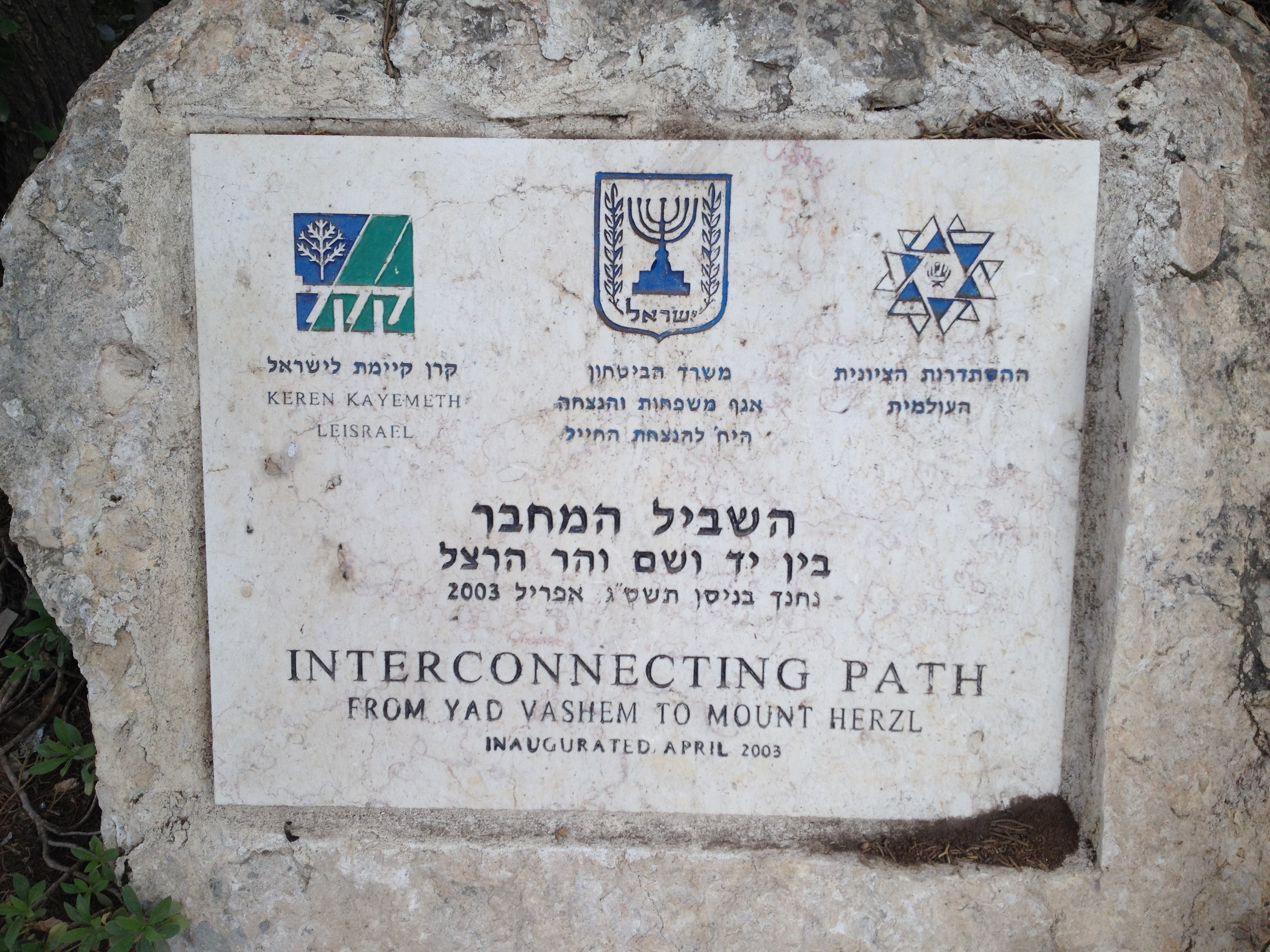
Thursday morning we began our day with an early minyan, a little teaching from a colleague and breakfast. After breakfast we walked a new path that connects Yad Vashem (Israel’s Holocaust memorial museum) to Har Herzl (Israel’s military cemetery). The path is marked by historic milestones and pictured events that carried us from the Jewish People’s survival to the founding of the State of Israel. Our tour guide shared stories and created images of individuals who survived the Nazi persecution, only to die in defense of the new state. At the cemetery itself, we gave honor to those who died with no family left to grieve for them, and to those who were laid to rest surrounded by family and a loving country.

Following our tour of the burial place of Israel’s heroes, we met with parents of fallen soldiers, directors of Yal L’banim, an organization that assists mourning families and helps every community memorialize its sons and daughters who die in service of the country. Their stories were poignant, powerful and inspiring, and we hope–as rabbis and as communities–to partner with them in furthering their efforts.
After a short lunch break (McDonald’s for most of us!!!), we visited one of the most exciting infrastructure projects taking place in Israel today. A high speed train from Jerusalem to Tel Aviv (28 minutes including a 2 minute stop at the airport) is under construction. Among the many remarkable features of this project are the efforts to preserve the natural landscape. The train will travel from point to point only through tunnels and on bridges. Slated for completion by January 2018 (I will believe it when I see it!), the electric train will reduce pollution and improve lifestyle for many immeasurably! We marveled at the engineering ingenuity as we walked through the mountain tunnel, and were excited to see our Bonds dollars at work!


Our next stop was another new experience for most of the rabbis. The 9/11 memorial in Jerusalem is the only other memorial in the world tot he victims of the tragic attack on the United States, and the presence of the memorial is a testament to our bonds of friendship and shared values. The memorial is a statue of an American flag rising like a flame, with a piece of a girder housed in its base, and a ring of the victim’s names encircling the monument.

Our closing dinner gave us the opportunity to debrief from the day, to express our appreciation of the collegiality we shared, and to affirm our commitment to Israel Bonds and the State of Israel. We left full-hearted, with the desire to return to Israel and to one another, and to share all we had learned. Rabbi Drill and I look forward to sharing so much more with you in the weeks ahead.
Our gratitude to Rabbi Hersh for being on call and responding to the synagogue’s needs as he did in our absence.
Shabbat shalom,
Rabbi Craig Scheff
Ten things
We hear of “The 10 Commandments” and we think Charlton Heston, fire and brimstone, an awe-inspiring and perhaps frightening and coercive encounter. And perhaps at some level we are intended to quake in our boots when we consider how the Israelite experience at Mount Sinai (no matter how you understand it)–and the resulting written words–have shaped the course of humanity.
That being said, I believe we get a bit too hung up on the “Thou shalt” and “Thou shalt not” language, and in so doing we often miss the gift of the beautiful and simple wisdom inherent in these utterances. (Note: the Torah never refers to the big 10 as mitzvot, or commandments. They are called dibrot, from the root meaning “speak”). So I offer you below my personal restatement of the 10 expressions:
I am.
And as such you need rely on no other.
Don’t overstate or minimize my presence.
One day each week, appreciate the ability to just BE, and treat it as a gift from me.
Don’t forget who brought you into this world.
No one life is more precious than another.
Control your physical appetites.
Control your material appetites.
Be honest in pursuit of your personal sense of justice.
Work for what you want, and live with the reality that you won’t always get it.
Live these statements, and perhaps we too will experience the Divine.
Shabbat shalom,
Rabbi Craig Scheff
Celebrating a new year
2014! We ushered in a new year this week, perhaps with a bottle of bubbly, an evening with friends, watching a ball drop with Miley Cyrus (oy!), or a morning to lazily lounge around the house. Perhaps we even resolved to change something about our personal habits or exercise routines.
What distinguishes the calendar’s new year from the Jewish new year, however, is the amount of preparation that goes into the celebration. The Times Square event may take months to prepare and rehearse, but most of us don’t put much effort into preparing for our personal celebrations. Perhaps we make a phone call to establish whom our company will be for the evening; perhaps we prepare a dish or buy a new outfit. Perhaps we make a resolution to lose 10 pounds as the ball drops.

Contrast with this our celebration of the Jewish new year. Traditionally, we spend a month preparing for Rosh Hashanah. We reflect, examine, resolve and repair in order to bring about real change in our relationships. And while the potential lies within us all year, it is in the month leading up to Rosh Hashanah that we harness the energy to do the necessary work that will bring about change.
Today is the first day of the month of Shevat. According to Beit Shammai, it is also the new year of the trees. You may be more familiar with Beit Hillel’s ruling that we celebrate the new year of the trees on the 15th of this Hebrew month (Tu Bi-Shevat). But two thousand years ago, the date of the trees’ new year was a matter of debate. And this year, Beit Shammai’s new year of the trees fell one day after we celebrated the arrival of 2014. The proximity is significant because the new year of the trees can inform the way we mark and celebrate the passage of time. We plant for the future; we explore that which has been dormant within us; we gather the energy to bring forth new fruits; we express gratitude for those things we enjoy.
Oh yeah, then there are those 4 cups of wine, symbolizing the 4 seasons: white, pink, rose and red. So go ahead, drink a toast (or four) to the new year! Just don’t forget to add boreh p’ri ha-gafen!
Saturday night the rabbi slept early
Our sages tell us that we are meant to live as if there is an eye that sees, an ear that hears, and a book that keeps track of all we do. You might think this is enough to drive us to paranoia! In fact, living one’s life as if someone is always watching even our most secretive acts can lead to a more conscious, more intentional existence.
Case in point: a few weeks ago I attended a Saturday night community jazz concert. Shabbat had been a busy one, including a Friday night program, a Shabbat morning bar mitzvah, a lecture after lunch, and a Shabbat afternoon bat mitzvah. Needless to say, I had no Shabbat nap. I settled into the comfortable auditorium seat, the lights were dimmed, and the mellow saxophone began to sing. You can guess what happened next.
That’s right, I fell asleep.
A week later, I had a meeting at our community campus. A colleague said to me, “I heard you are not much of a jazz fan.” “What do you mean?” “I heard you fell asleep!” Ouch. A few days later, while shopping at Fairway, I saw someone from the community I hadn’t seen in a while. “When was the last time we saw each other?” “Actually,” he answered, “I saw you at the jazz concert. You must have been pretty tired.” Double ouch! I actually enjoy jazz; if I ever need some help falling asleep, it’s the Carpenters, John Denver or jazz that does the trick. But one short shloof, induced by exhaustion, mood lighting and music, and I am the talk of the town!
Okay, so I exaggerate a bit to make my point. I understand that I live in a fishbowl, as do many public figures and leaders. The point our sages make, however, is that we should all feel that we are living in a fishbowl, and guard our words and deeds accordingly. Every action, reaction or inaction can be understood as intentional, so we must live intentionally. Every action, reaction or inaction can be understood as a conscious choice, so we must live consciously. In doing so, perhaps we save ourselves a bit of shame, a bit of guilt, a bit of regret, and a bit of being a topic of other people’s conversations!
Rabbi Craig Scheff
 Three Rabbis Walk Into A Shul
Recent Comments