Time for some new habits
Perhaps this is hard to believe, given that we have just passed the holiday of Shavuot and are about two weeks away from the end of the hectic end-of-schoolyear rush, but I am already looking forward to next year. New programs (just to name a few: Sunday evening multi-generational a cappella with Amichai Margolis; Conversations with Clergy that will meet once a month outside the synagogue in a home near you; an expanded Mitzvah Day format that will encompass an entire weekend; a “Good Neighbor” program that will invite our synagogue neighbors into the building to meet our clergy, staff and leadership to learn more about how the OJC serves our community) will add more opportunities for relationship building within our community and for connecting with our rich heritage. We are busily planning our calendar so you can include these experiences among the other items that fill your calendar. We know how fast our lives get filled with commitments come the fall. Perhaps, with some advance notice and planning, Jewish family time, Jewish learning, Jewish celebrating, and Jewish service can capture a few more protected time slots in our busy lives.
Unfortunately, it is often the case that, by the time September arrives, we are too caught up in our old commitments and habits to envision the possibility for modification. That is where the summer can be such a blessing. As the pace slows down just a bit, now is the ideal time to insert moments into our routine that can become indispensable for the year ahead. An exercise routine, a journal, a weekly phone call, a blessing of gratitude–now is the time for some new habits. Make them part of the rhythm of your life now, and in the year ahead they will be as protected as any other commitment you currently value.
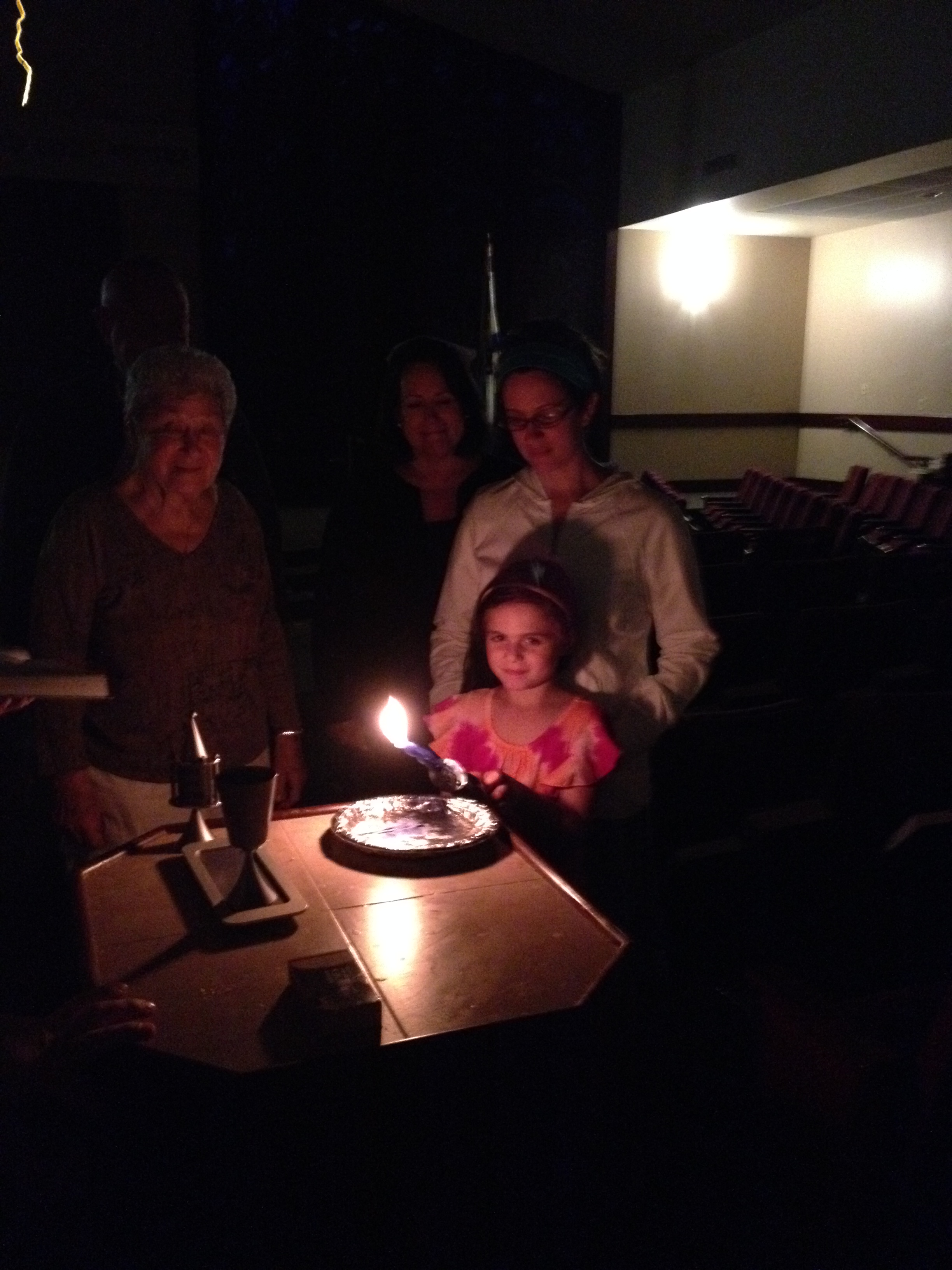
Attend a Havdallah service once a month with your family or friends.
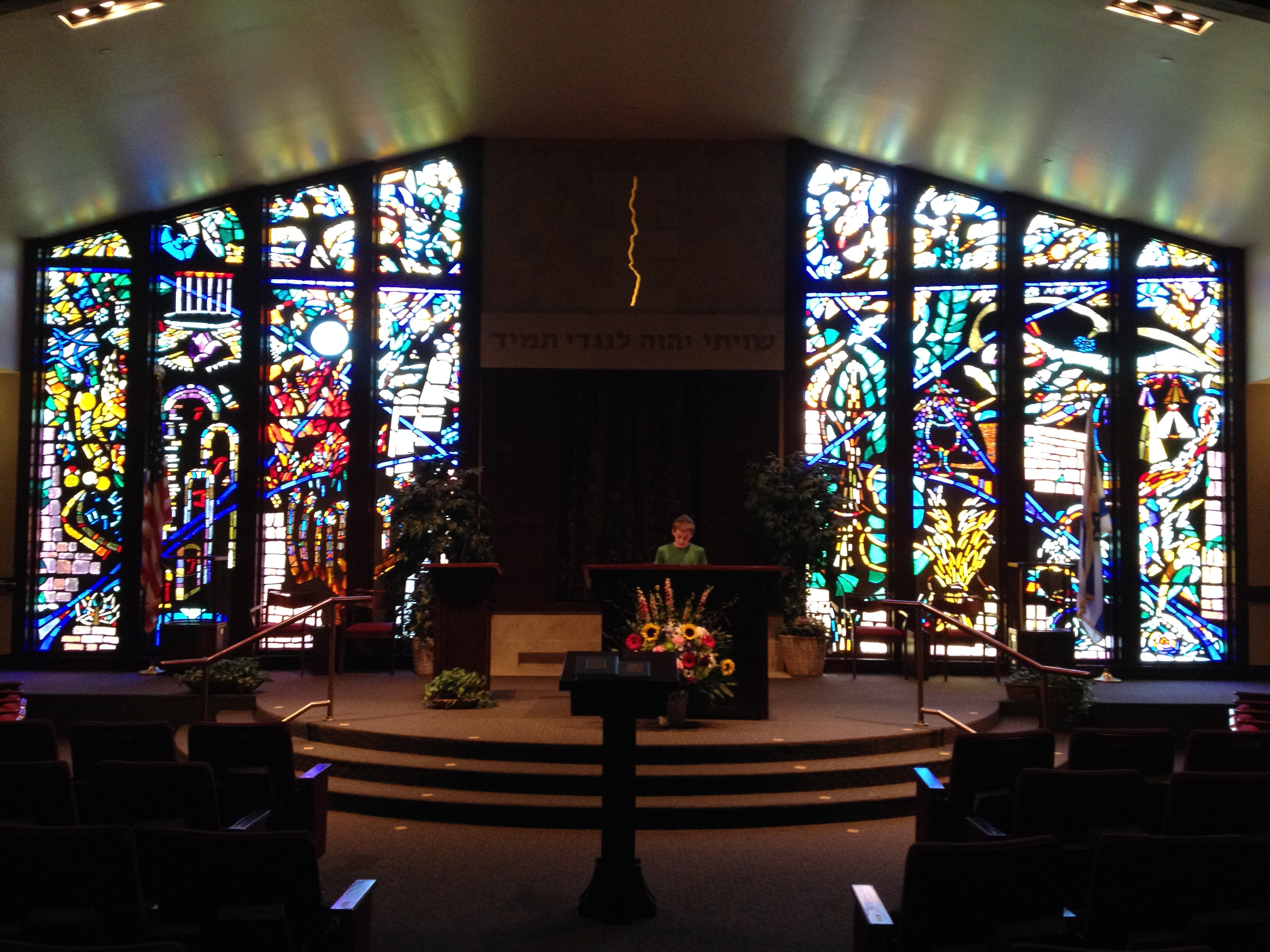
Visit the sanctuary for a moment of solitude and peace on a weekly basis. Go up on the bimah. Utter a personal prayer.
Old habits may die hard. New habits, however, are easily born. Won’t you give it a try?
Rabbi Craig Scheff
What’s a picture worth?
A picture, they say, is worth a thousand words. It does not, however, tell the whole story. In the last week I have heard fourteen different commencement addresses and thousands of words about endings, beginnings, and all the living that needs to be done in between. I have also taken hundreds of snapshots (with my phone) of smiling faces, family, friends, triumphant moments and loving embraces. The speeches were of various lengths and tones, each resonating and inspiring in its own way. The pictures, too, conveyed messages that said so much about the passing of time, the love shared between brothers and the joy of being together.

The pictures, however, are snapshots (often staged!) of moments of joy. We delete the ones where someone’s eyes are closed or smile is off. They don’t tell the story of the energy and time, the arguments and lectures, the tears and laughter, and the worries and disappointments that every family experiences before reaching such moments. As I sat listening to the many words of wisdom being spoken to my son and his friends, I thought to myself, what will these experiences impart to us beyond the electronic photo album?
As my head was spinning with thoughts of how I would handle Scott’s transition out of college and Matthew’s transition into married life, all in the span of a very wonderful week, I came to realize that their transitions are also my own. And as such, I can offer the following as the most important life lesson for them to carry.
We are graced in life with moments of joy and we are burdened with an equal number of sorrows. We are disappointed and deflated when the ecstasy of our celebratory moment fades, leaving us with only pictures to relive the experience, while we allow the pain of our sorrows to gnaw and eat at us. But any picture-perfect happiness–when examined more closely–is pocked with imperfections, even as the darkest moments are pierced by rays of light, hope and kindness. The best advice I can offer is to take in the holiness of every moment. Recognize that our greatest joys and our greatest sorrows are so because they come from the same place of love. Life’s transitional moments of birth, death and everything in between are most special because they reflect our humanity and our divinity, our mortality and our Godliness. And, miraculously, that well of love is never emptied as we draw from it; it only fills to an ever-expanding capacity.
Shehechiyanu ve-kiyemanu ve-higeeyanu lazman hazeh.
Rabbi Craig Scheff
OJC’s March of the Living, Day 13 – Bringing it home
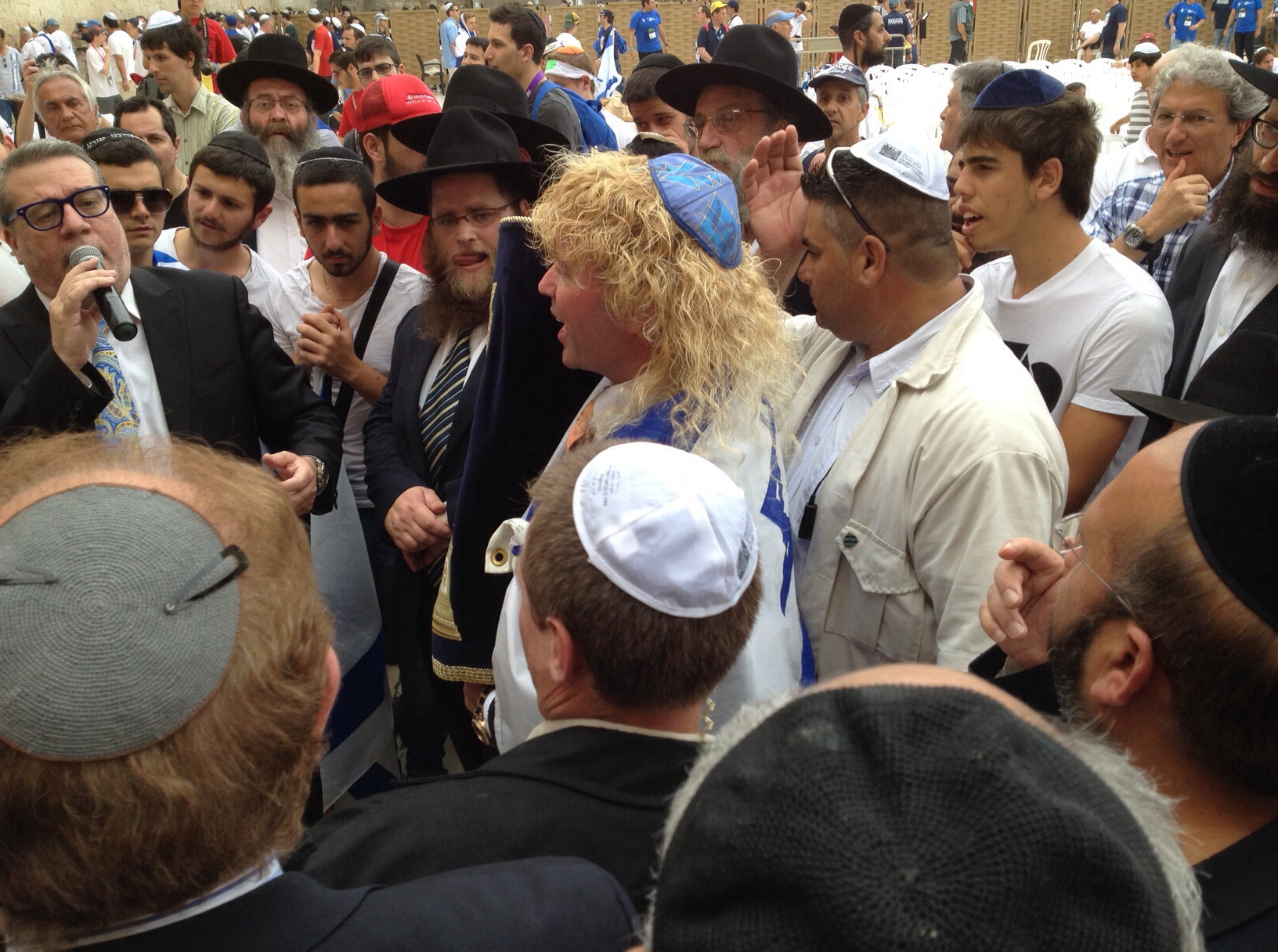
This day brought the OJC’s 2014 March of the Living to a close, and our experience came full circle. The Sefer Torah that was completed in Auschwitz-Birkenau was accompanied by loving arms and dancing feet into the Kotel plaza. All religious politics aside for a moment, it was symbolically important and powerful to be surrounded by thousands who had marched with us in Poland and who now sang Hatikvah at our side. The Torah had arrived home, until its next March of the Living, when it will travel back to Poland to accompany the next round of marchers.
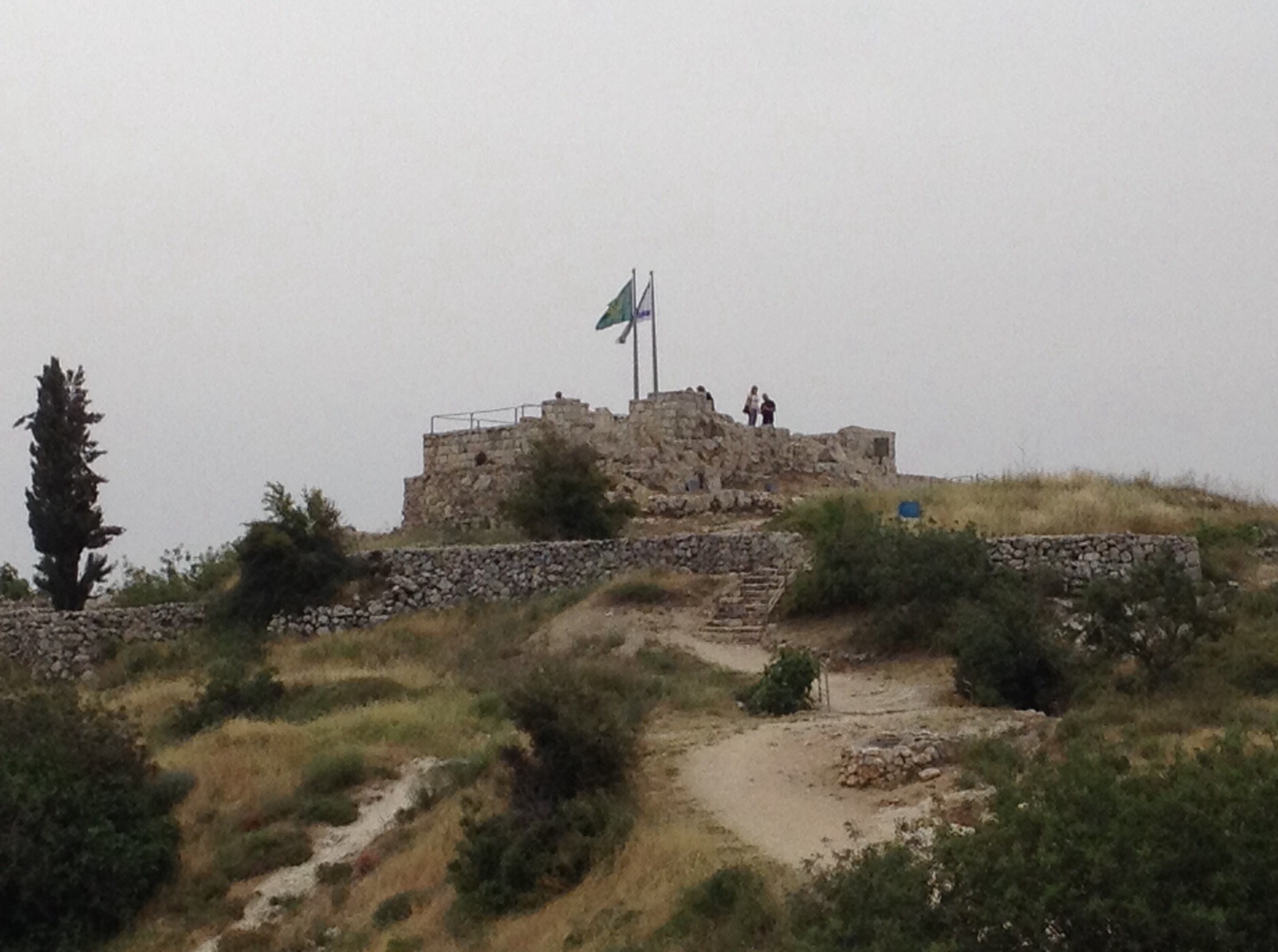
We were all a bit depleted upon awakening this morning; the celebration last night took a bit out of us! Nevertheless, we pushed ahead and hiked up to Castel, the strategic vantage point that overlooks the main road to Jerusalem, and that was captured by Yitzhak Rabin and the Harel Brigade on the eve of the 1948 War of Independence.

Our bus carefully wound its way through the hills and valleys outside Jerusalem to the 9/11 memorial, the only memorial to this date that exists outside of the United States. We paid homage to the names of the victims, and sang “America the Beautiful” and “Hatikvah” as we reflected on the nature of Israel’s independence and her special relationship with America.

From the depths of the valley we ascended to Ammunition Hill, site of another famous battle of the 1967 Six Day War, the place many consider to be the turning point that led to Israel reclaiming the Old City. Today, the IDF was exhibiting its latest technology to the general public. Barbecues abounded, as is traditional on this day, as children played atop military vehicles. How ironic that just yesterday we mourned the price of war, and today we celebrated our ability to engage–and be victorious–in war. I can’t deny the pride I experienced and the security I felt surrounded by these young, smart and devoted guardians of Israel. I just wonder what is the toll on the psyche of the developing mind and personality in particular, and on the society in general.

All this before noon! Our next stop was the Jewish Quarter of the Old City and the Cardo for–you guessed it–food and shopping! We walked down to the Kotel plaza, where we joined our fellow marchers to bring this year’s March to a close. From there, we walked (Oy, enough with the walking already!) to Notre Dame, home of the Pontifical Institute and guesthouse. We met Father Eamon Kelly, Vice Charge of the center, who took us to the rooftop to give us a 3-minute overview of the Bible using the majestic views to tell the story. His teaching was a universal message of coexistence, tikkun olam, and a shared responsibility to build upon our shared mission.

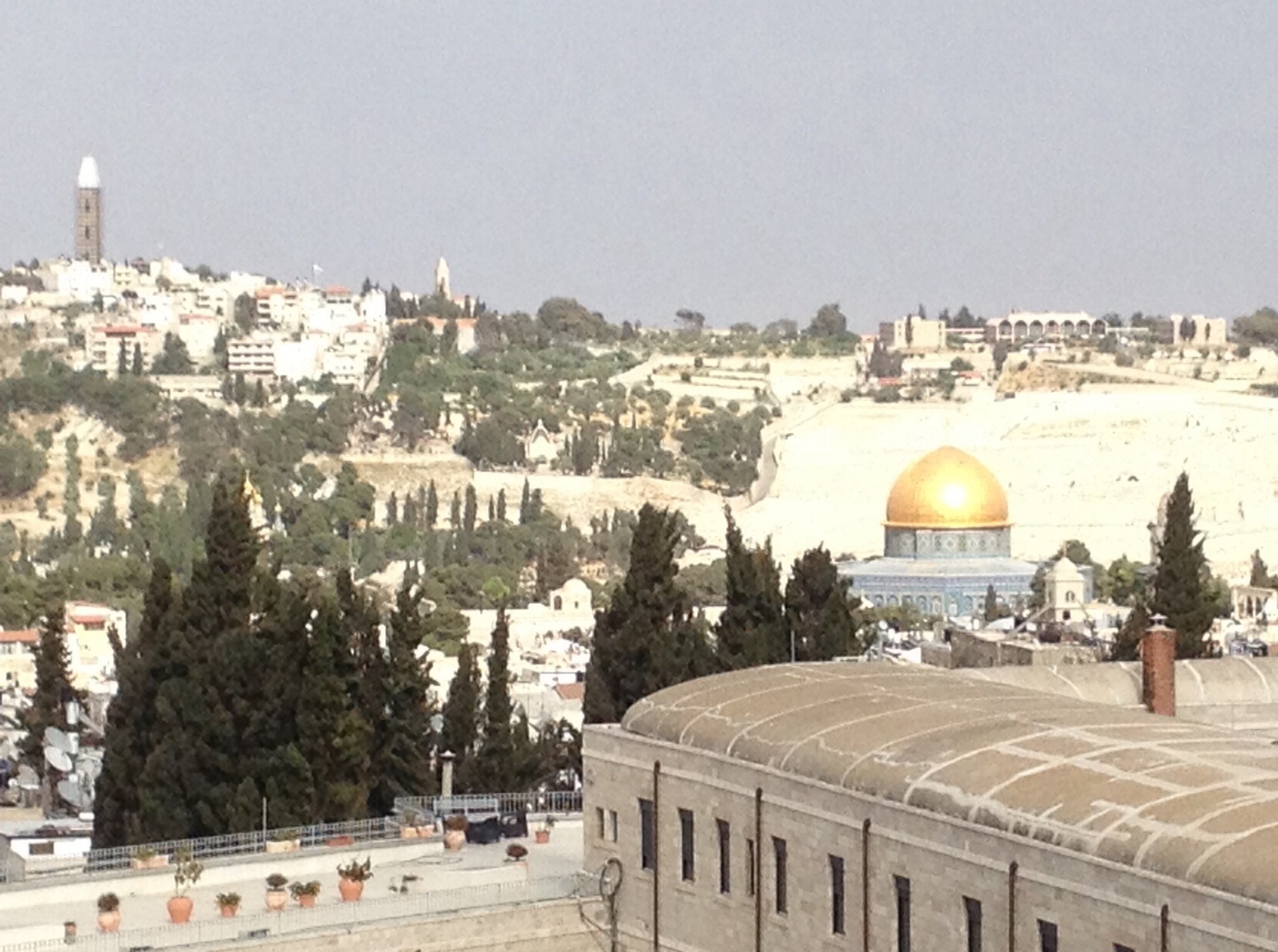
A leisurely dinner provided the opportunity and the venue to share our reflections, highlights, and appreciation for having shared this experience. I hope we can bring it home to you in a way that inspires you to be among the next to carry our love to, and for, Israel.
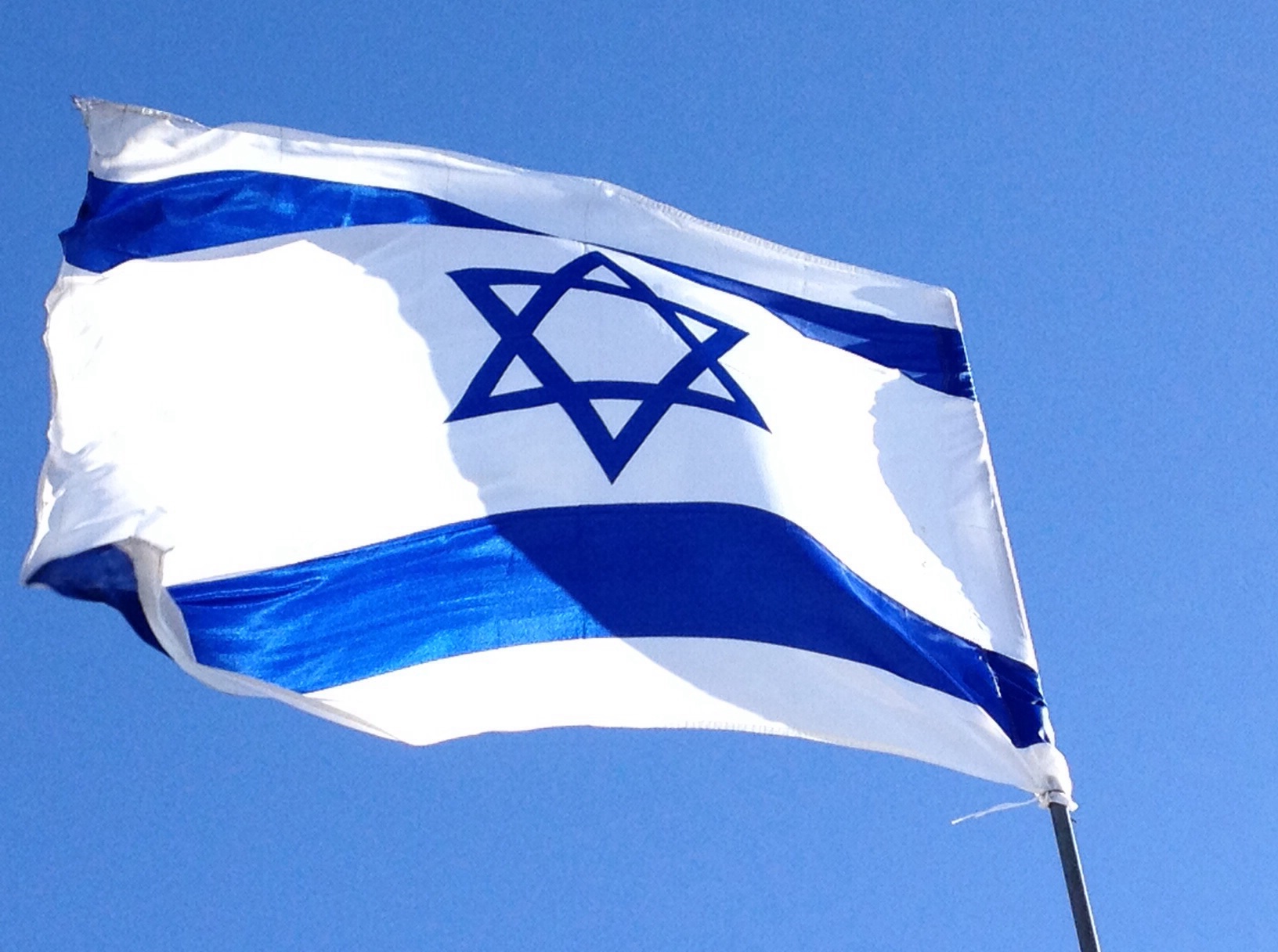
With God’s help, we will see each other soon. May it be only for days of celebration such as this one.
Rabbi Craig Scheff
OJC’s March of the Living, Day 12 – A day to remember
Today we observed Israel’s memorial day. We began our day with a cross country drive that took all of 90 minutes. We arrived at Atlit, a detention camp administered by the British before the founding of the state of Israel. Atlit housed the Maapilim, Jews who escaped Europe for Palestine without official documentation and in violation of quotas the British imposed in 1939. If captured, the Maapilim were taken from their boats to Atlit, where they were disrobed and disinfected, men and women were separated from one another, and a sometimes long and often boring waiting period began. But the dream of stepping foot in the promised land was enough to carry them through the dangerous voyage, one that felt all too much for some like a return to the concentration camps they were escaping.


A short ride through Haifa and we were back at Kfar Ahava. Most of the children were on their way home for the holiday, but after a tour of the grounds, we experienced the memorial created for the children. It was a powerful exhibit that spoke to all ages about the value of every life and every story. A candle had been saved for us to light, and we once again felt the warm embrace of the place that has adopted us as its own as much as we have adopted the place.
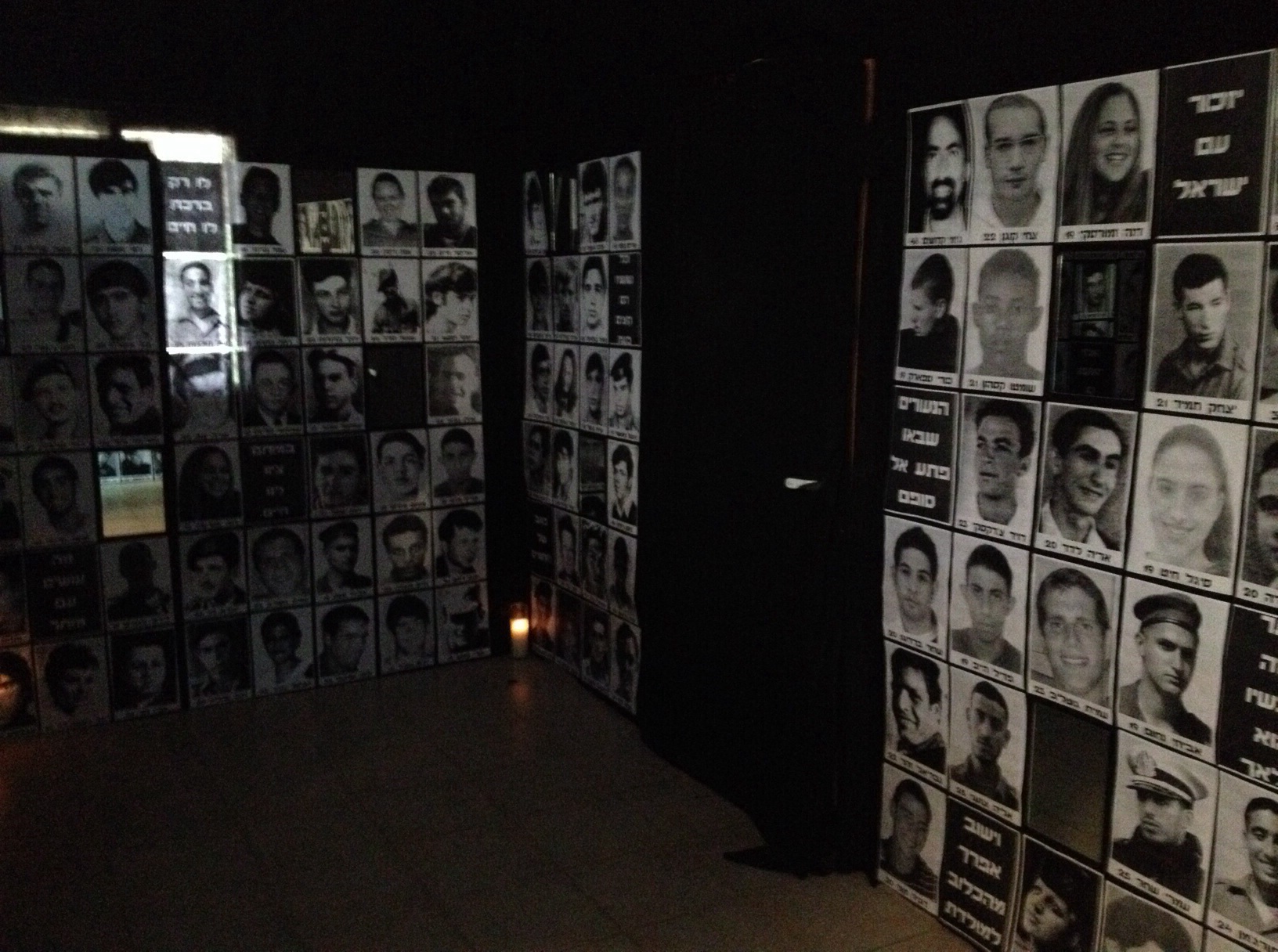
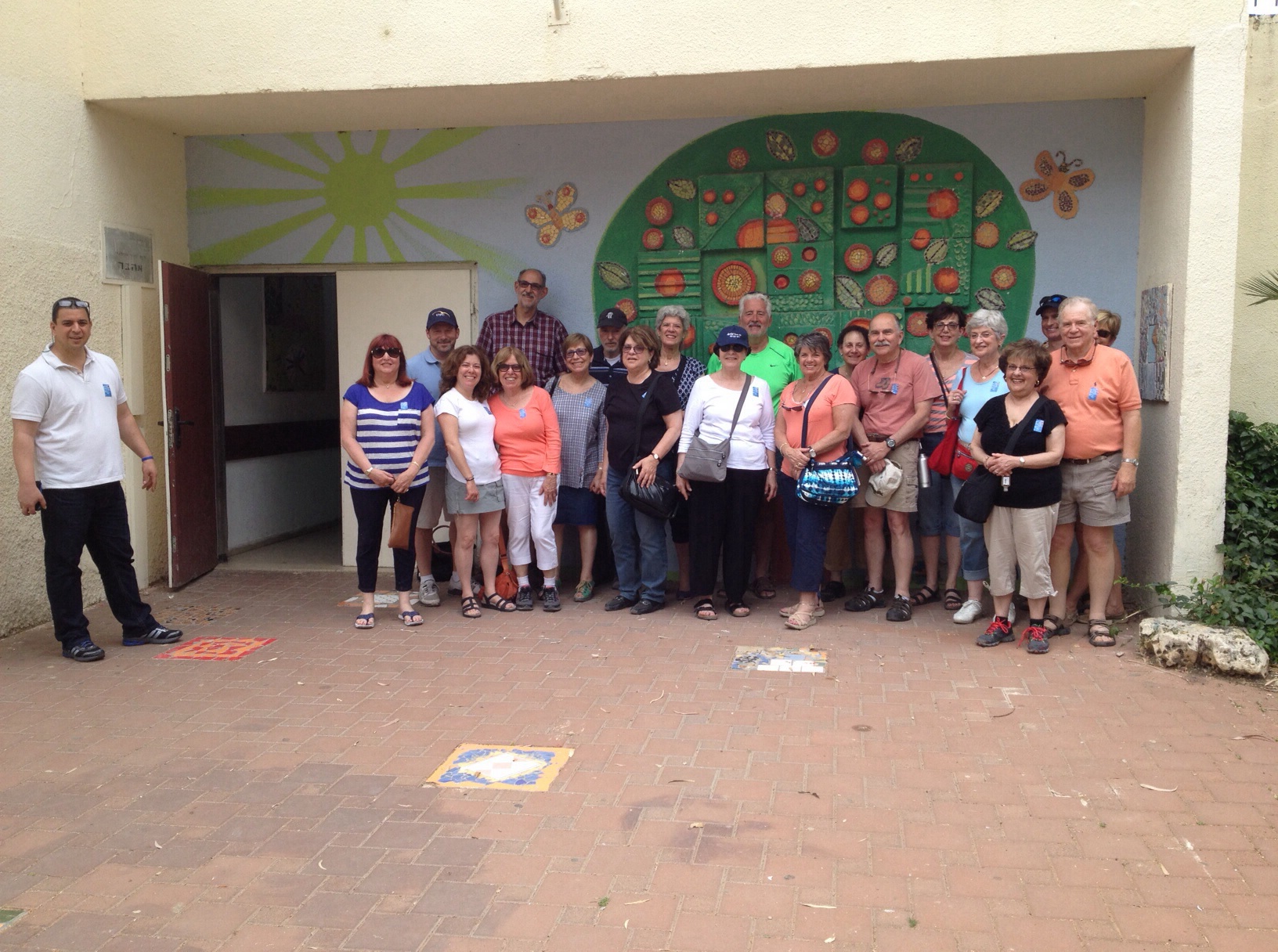
We returned to the hotel for an emotional afternoon meeting with representatives of TAPS (Tragedy Assistance Program for Survivors), and a group of women and children who lost loved ones in service of the United States military and who are beneficiaries of the program. They are here as part of a joint program with the IDF’s Widows and Orphans Fund, and were participating in the Yom Hazikaron commemoration. They inspired us and left us humbled with their stories of courage, resilience and pride.
This evening we watched the ceremony that transitions the nation into its Independence Day celebration. For individuals who suffered personal loss, there is no transition into joy. For the nation, however, there is a collective exhale, filled with genuine joy, sincere appreciation, and heartfelt song. We stood in Jerusalem’s Safra Square surrounded by thousands who took to the streets to sing and dance. We marveled at the multiple generations that danced together and knew all the lyrics to the songs that have told the story of the nation for decades.
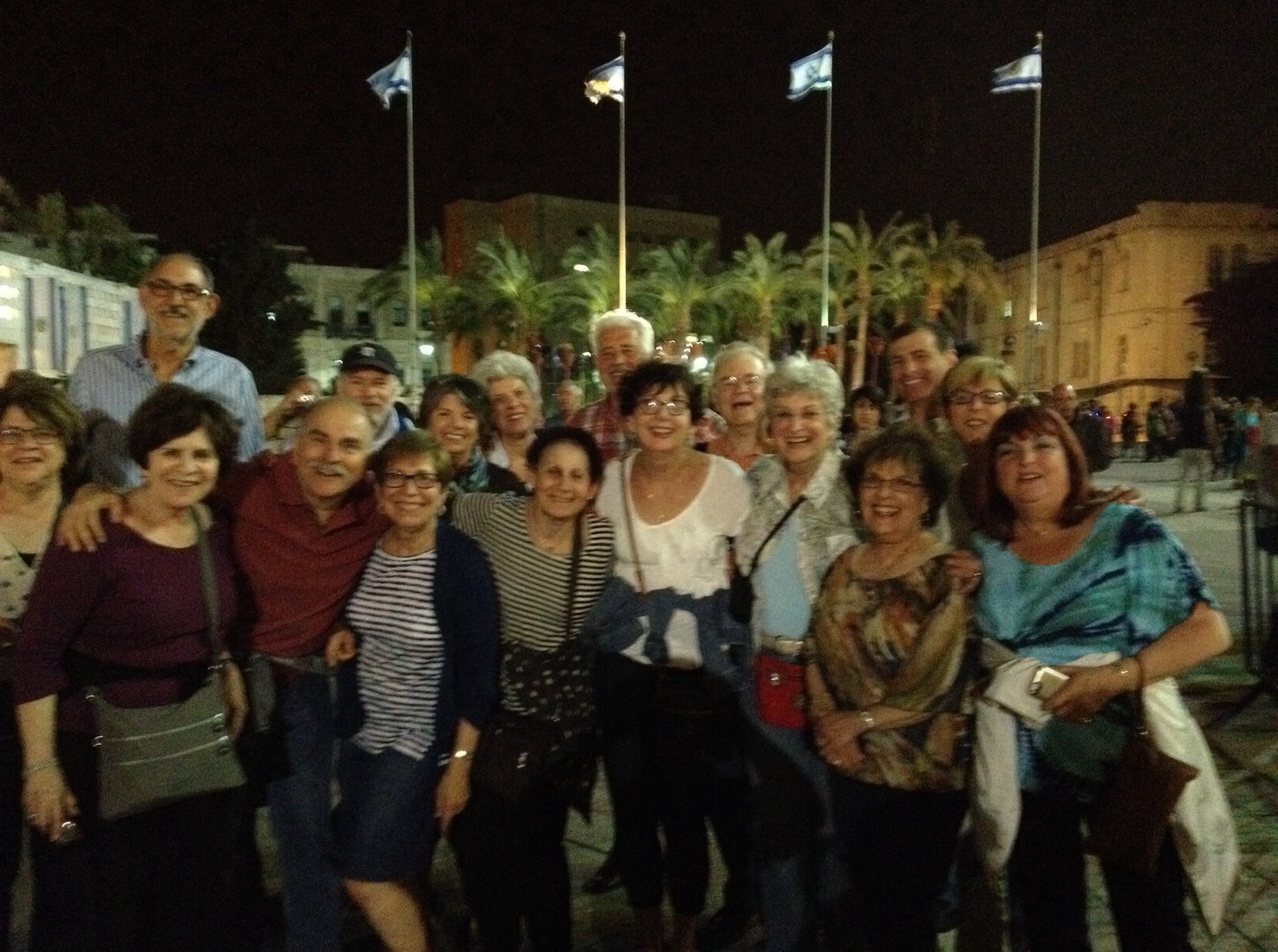

The dream, we realized, is alive and well. We exhaled from a long and emotional 24 hours. And we danced.
Happy 66th birthday, Israel!
Rabbi Craig Scheff
OJC’s March of the Living, Day 11
Day 11 of our journey began with a beautiful morning minyan on the hotel terrace looking towards the Old City. We made a minyan for an older gentleman from Connecticut saying Kaddish for his mother. We were proud to be a community for him on this morning.
Over breakfast, Joan Kedem, a long-time friend of OJC and advocate for Israel’s lone soldiers, shared with us her latest efforts on behalf of the soldiers who serve in Israel without the support and/or presence of families.
Our first stop of the day was the City Planners’ Office. We examined the miniature model of the city, with all its current and proposed building projects reflected on the map. The lifelike representation helped orient us to the topography, and to understand the historical development and expansion of the city. We ascended to the rooftop to gaze at the real-life, breathtaking version of the city.

11am? Must be time for a winery visit! At Tzuba, we were introduced to the art of growing grapes, and to the production of kosher wines. We got a lesson in tasting, then fulfilled the obligation of four cups (is it Passover again already?), plus two ports, red and white, for dessert. Neeedles to say, wee were all shtarting to feel pritty good ’bout th day ahed….

A good dose of fresh air, lunch on Ben Yehuda street (I had Kosher McDonald’s, surprised?) and a brief shopping spree got us refocused for our next visit. At Our Crowd, we met with venture capitalist Élan Zivitofsky, who gave us an overview of the factors that have led to Israel’s status as the start-up nation.
After a brief respite back at our hotel, we headed to Hatzor, an Air Force base near my younger sister Randi’s home, where we had the opportunity to experience an opening ceremony of Israel’s Memorial Day, Yom Hazikaron. Ariel Brickman, former commander of the base and now General Manager of the Ramon Foundation, greeted us and brought us to our seats. While most of us didn’t understand the speeches, songs and poems that were shared, we were deeply affected by the sound of the 8pm siren that was observed in silence, the voices that gave expression to the pain of the many losses recalled, and the swell of unity and pride that was shared when we stood for Hatikvah. Following the hour-long ceremony for the base soldiers, their families, and the families of fallen pilots, we met (by chance!) with several American soldiers from an airborne division who are training with the Israeli pilots. They talked about their positive experiences with the Israelis, how moved they were by the outpouring of honor and respect paid to Israel’s fallen soldiers, and by the way Jewish people recall their loved ones. In turn, we were so proud to be represented by this fine group of American soldiers.
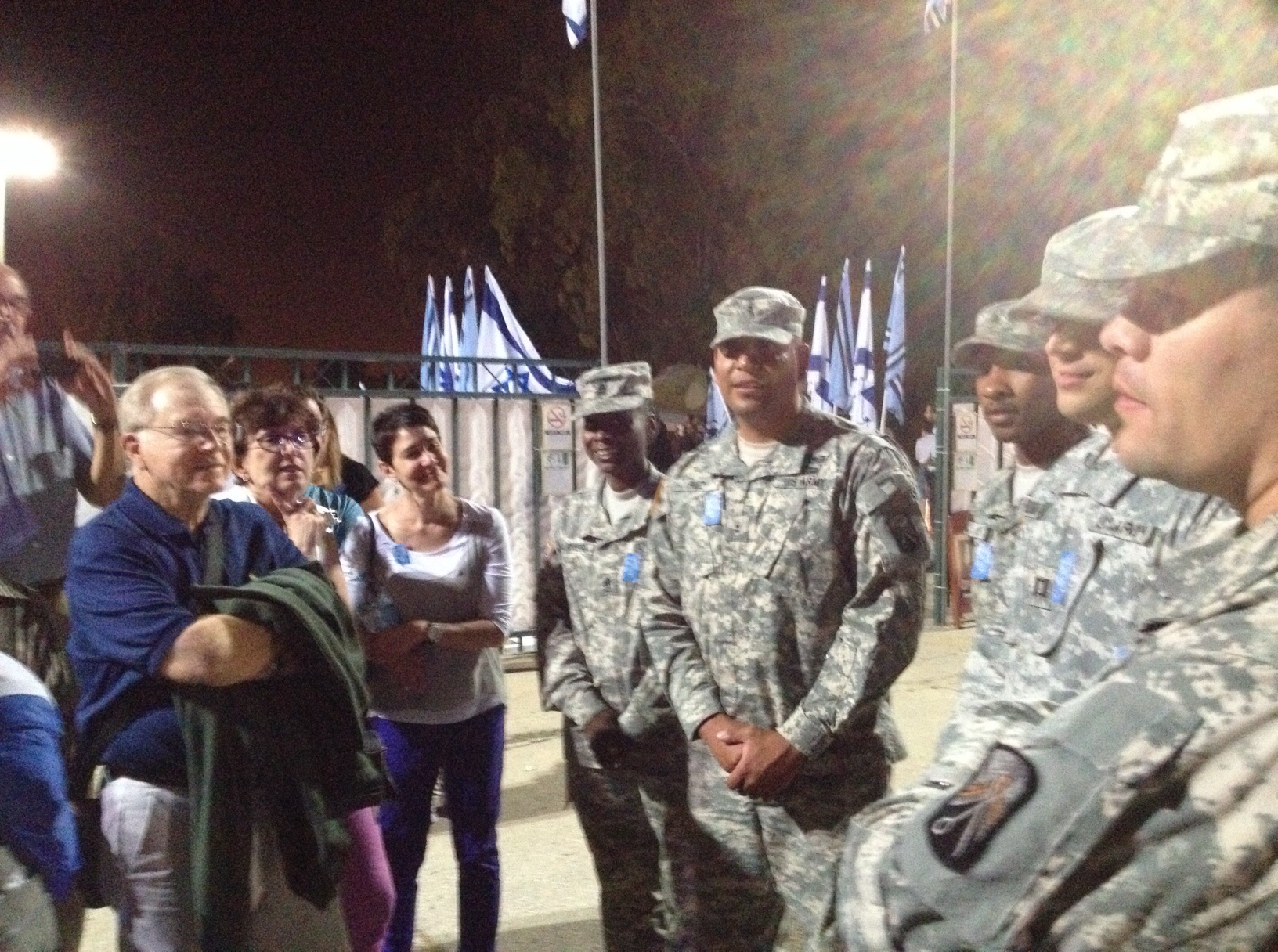
No alcohol is served tonight. Restaurants are closed for the evening. TV and radio stations carry no light entertainment. Soldiers’ stories and songs of loss fill the airwaves. It is a communal and individual time to remember, to reflect and to find strength and comfort in a nation-wide embrace.
L’shalom,
Rabbi Craig Scheff
OJC’s March of the Living – Days 9 and 10, Shabbat
Let’s see, where were we? Oh yes, Friday! Our first full day in Israel. We prayed on the hotel terrace toward the Old City in the morning, to the sounds of traffic and jackhammers and the sight of the national bird, the crane, all across the horizon. And there was not a more perfect sanctuary in the world.
Our major stop on Friday was Har Herzl. We bridged our Holocaust experience with the State of Israel by learning stories of those soldiers who gave their lives for the sake of building a homeland. Some of them Holocaust survivors, each of them representing a precious story. Rank, office, and title mean nothing in this national cemetery. Every grave represents a story that is meant to be told, and we were moved by so many. This cemetery is a place of life, in stark contrast to the cemeteries of Eastern Europe. And we were asked to build upon these stories as we move forward in our lives in celebration of this land.


We affirmed this covenant by visiting the bustling market of Machaneh Yehudah, where thousands busily jostled for position among the vendors to make their final Shabbat preparations. We sampled the many ethnic foods of Israeli culture, bumped into friends and strangers, shared several laughs, and headed back to the hotel.
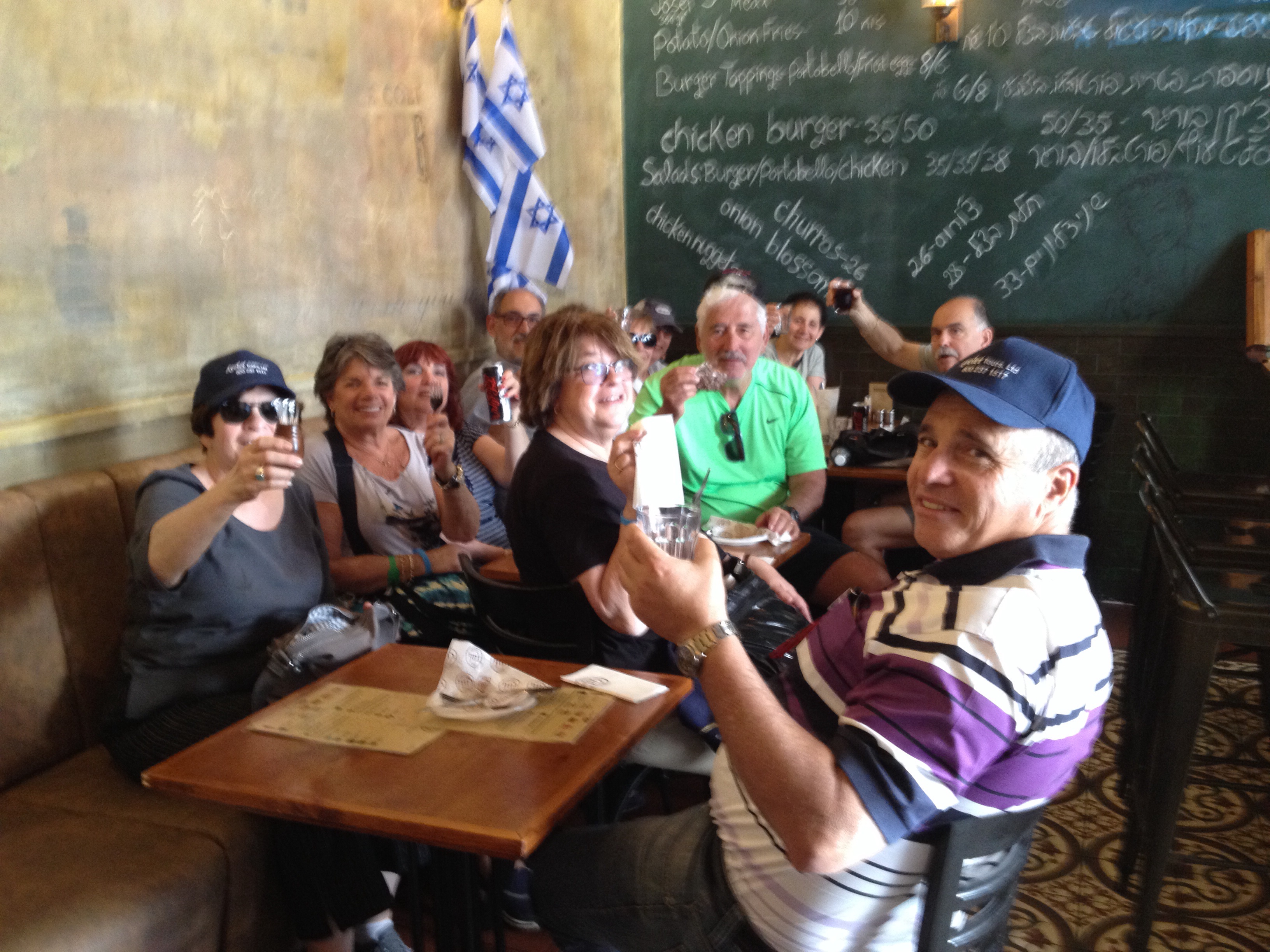

We welcomed Shabbat in Ezarat Yisrael, the newly designated area for men and women to pray together at the Kotel. We sang and prayed, other visitors joined our community. As we finished Kabbalat Shabbat, a group of children led by my colleague, student and friend, Rabbi Ari Lucas, descended to the platform, gathered beside us, and the rabbi and children started their prayers. Our songs occasionally clashed, and at times we joined each other’s melodies. And I felt something that I have never felt before at the Kotel. Total joy.
The OJC group closed down the dining room with a rousing rendition of Birkat Hamazon, and we were all primed to enjoy a well-deserved Shabbat rest.
Shabbat was a day of joyful rest, with some of us sampling services at different synagogues, some of us enjoying a walking tour, and some of us playing with family at the pool. We joined Rabbi Jim Rosen (Ariella’s father) and the Beth El community from West Hartford for a discussion, Maariv and Havdallah.
We ushered in the 18th day of the Omer with dining, shopping and witnessing the streets of Jerusalem crowded with people at play.
As we head toward Memorial Day on Sunday night, I pray: To those who gave so selflessly in order for us to have such joy, we thank you and hope to be worthy of your sacrifice.
Shavua tov,
Rabbi Craig Scheff
OJC’s March of the Living, Day 8 – Time to soar
With what seemed to be a shared burst of adrenaline, we were up and out early this morning to catch our flight to Israel. Predictably, by the time we all boarded the flight, we were crashing, physically and emotionally. Our spirits, however, were sensing that the moment to soar was fast approaching. We landed a bit late in Ben Gurion, but breezed through baggage claim and customs, met our agent, tour guide, driver and my sister, Randi, who shleps to the airport for nearly every trip I have ever taken to Israel to greet me with a hug, several kisses, lots of tears and ten whole minutes of my time.
Our first obligation was to fulfill the mitzvah of giving back to the land upon our entrance. We drove to Neot Kedumim, a scenic biblical landscape, home to every type of tree mentioned in the Torah and reminiscent of the land of milk and honey that God promised to the children of Israel. Under the warm and bright afternoon sun, we spoke prayers of thanksgiving that we had been restored to the land, and got down on our knees to plant olive trees in the soil.
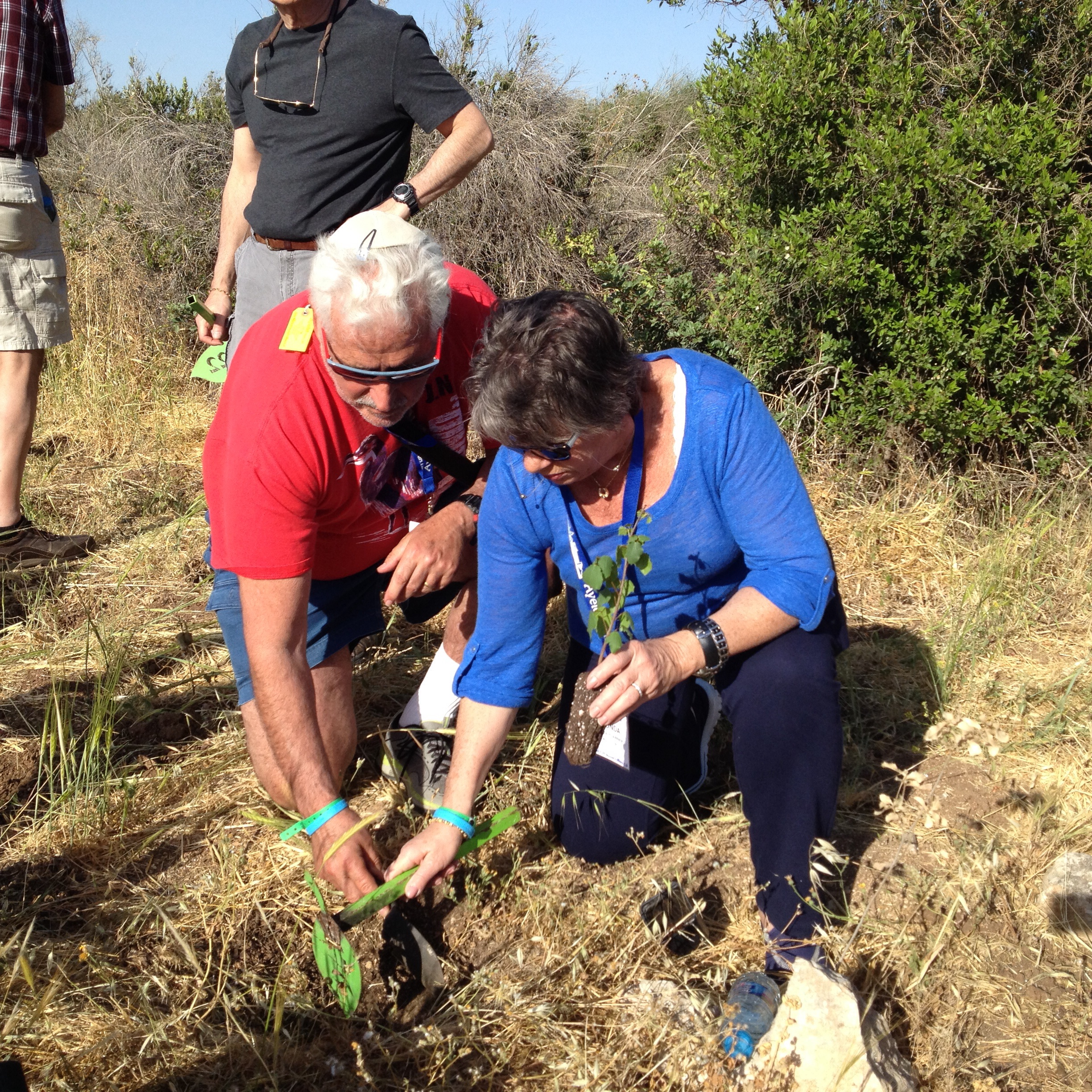
Back aboard the bus, we settled in for the climb to Jerusalem. Sweet renditions of “If I forget thee O Jerusalem” filled our ears, and the glow of the stones reflecting the golden rays of the setting sun dazzled our eyes. We got off the bus at Yemin Moshe to view the Old City, and to share a bottle of wine, a long braided loaf of sweet challah, a song of Jerusalem, and a blessing thanking God for bringing us to this day.

We earned this day. From slavery to freedom, from degradation to exaltation, we have spent the last week bearing witness to moments of our people’s greatest suffering. As our tradition teaches, those who mourn her will be privileged to know her greatest joy. Today our spirits fly.
With Shabbat coming in tomorrow afternoon, I will take this opportunity to wish you a Shabbat shalom. We’ll have to wait until Sunday to catch up!
Rabbi Craig Scheff
Ignorance is bliss, maybe – OJC’s March of the Living, Day 7
There is simply no denying Budapest’s beauty. Seeing her from the Danube at night, she glows majestically. Walking her streets under a sunny blue sky, I come across everything in a city I could want: gorgeous architecture, breathtaking vistas, a cosmopolitan feeling, art, music, sidewalk cafes, culture, history, and a rich Jewish presence. And a river that runs through it!
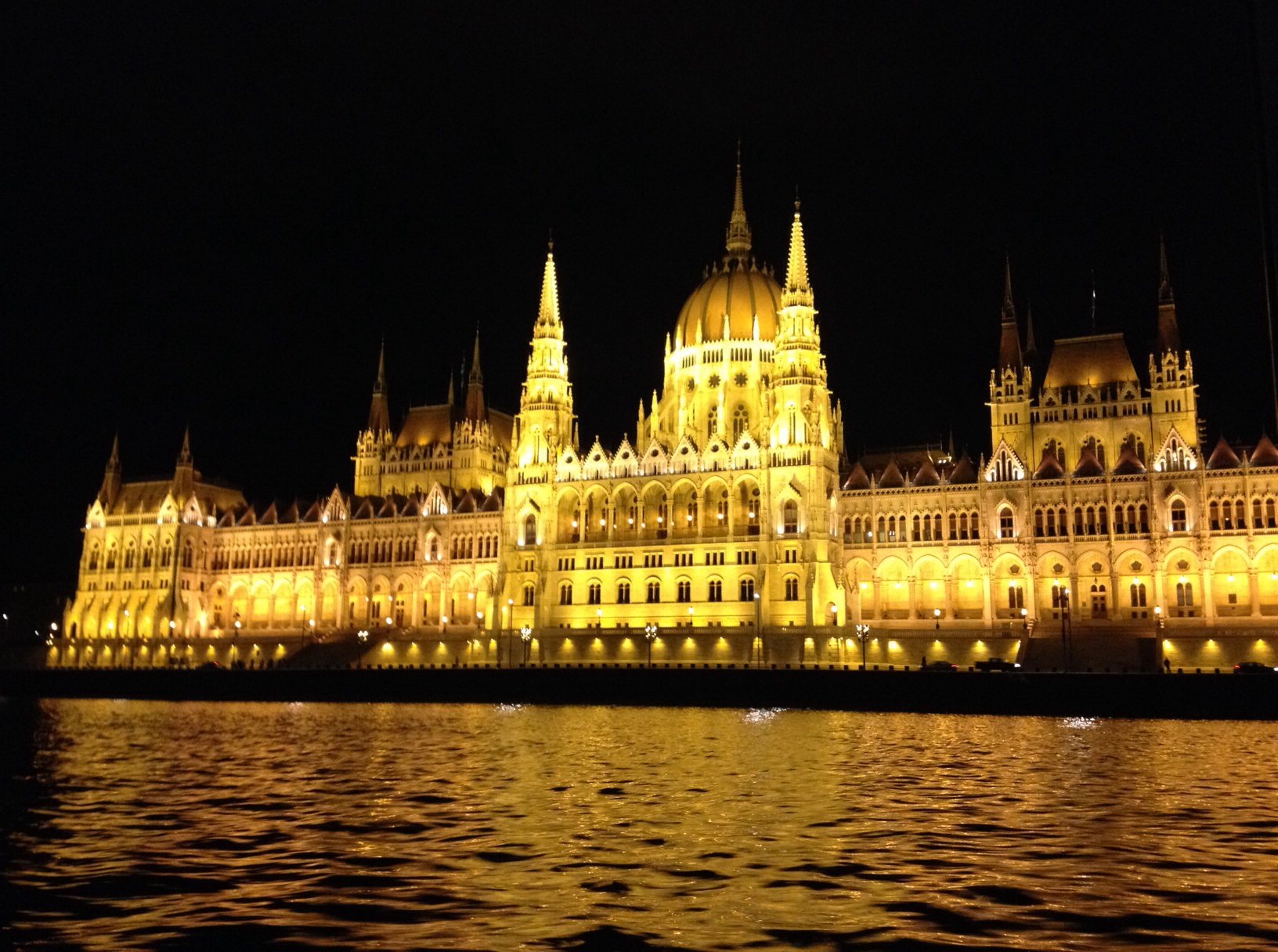


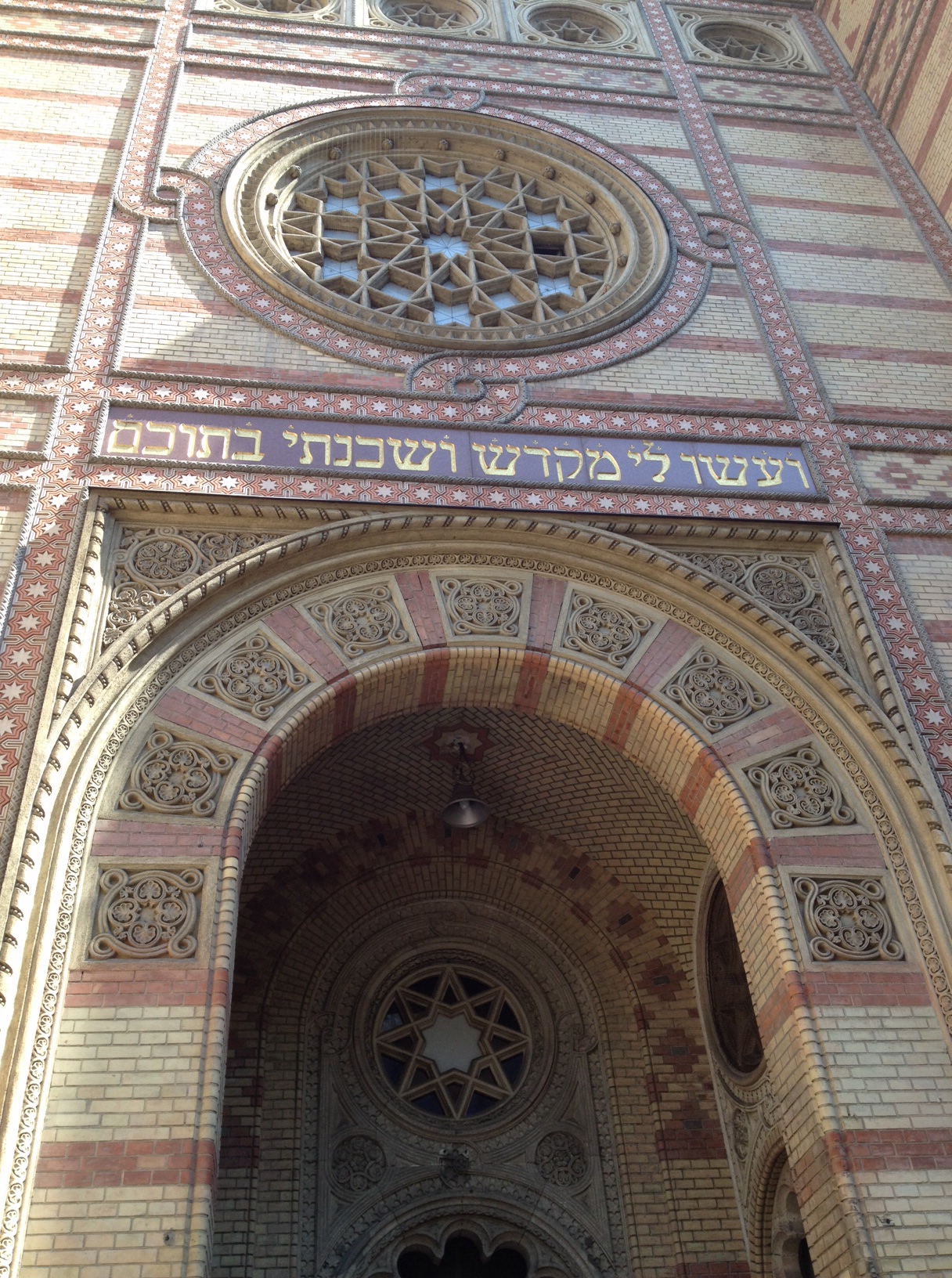
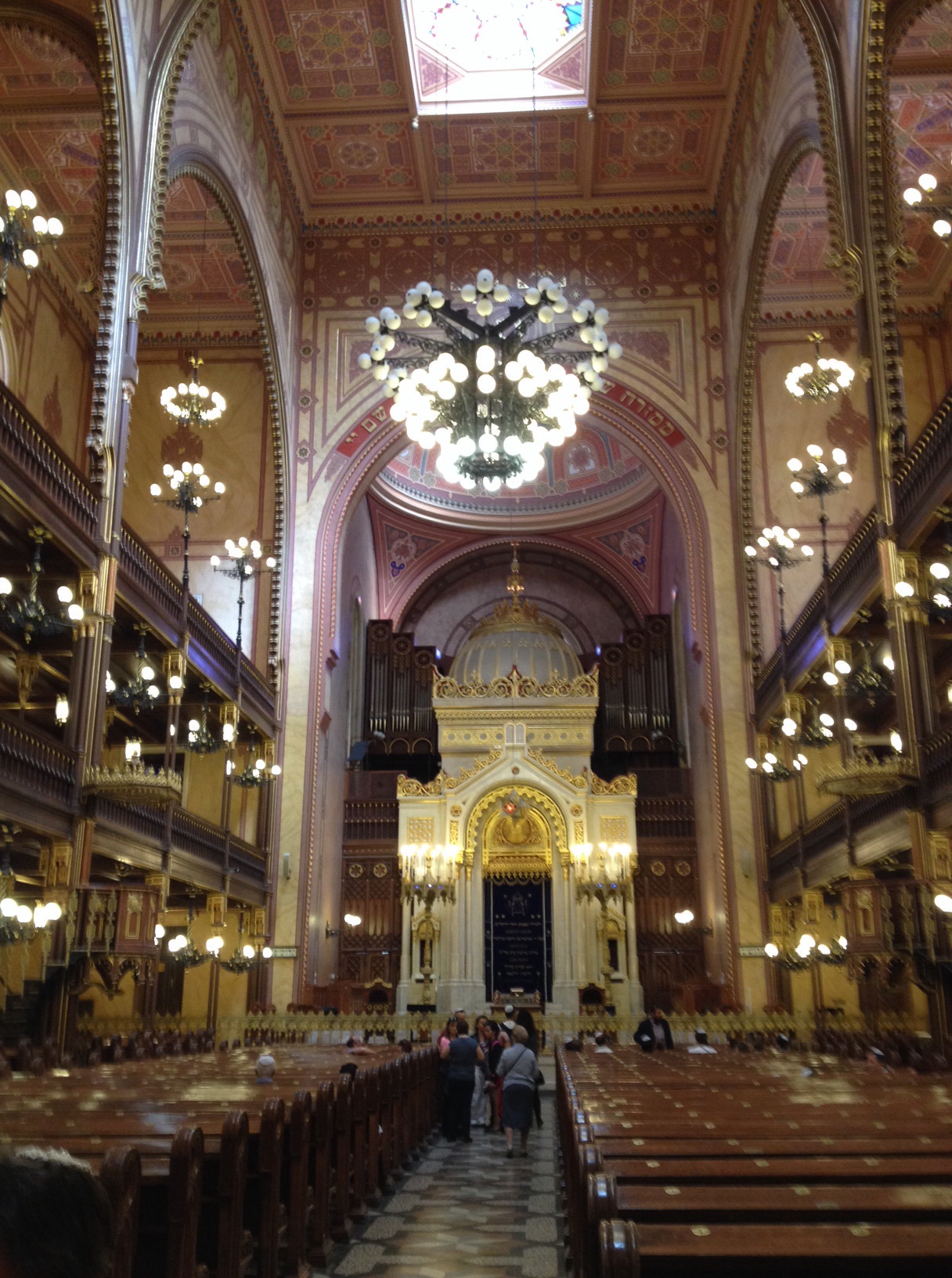
The largest synagogue in Europe can be found here, the Dohany Synagogue, a symbol of 19th century Jewish assimilation and acceptance. Jewish museums and a rabbinical seminary are all part of a vibrant Jewish community that boasts of 80,000 members. Okay, so the synagogue only gets 50 people on average for Shabbat morning services, but 3,000 show up for the High Holy Days! We found a quiet corner away from the tour groups in the magnificent sanctuary, and sang psalms of Hallel in celebration of Rosh Chodesh.
Oh, about that river. Well, that’s the piece of this place that gives me nightmares. It reminds me that, while I try to enjoy this magnificent city, there is a history here of its government and citizens choosing the wrong side of the battle between good and evil. Hungary enacted anti-Jewish legislation in 1920, well before Germany. The Hungarians chose the Nazis’ side in World War II. Subsequently they were occupied by Germany (which is why so many magnificent structures remained largely intact). And the Hungarian extreme nationalist party, known as the Arrow Cross, assisted in the decimation of Hungarian Jewry. Of an estimated 800,000 Jews alive at the beginning of 1944, fewer than 200,000 were alive after the war. 400,000 Hungarian Jews were killed at Auschwitz-Birkenau over a 10 week period of time beginning in April 1944. The Arrow Cross killed thousands more in the weeks that followed, taking Budapest’s remaining Jews down to the river to kill them and to dispose of their bodies in the Danube waters that came to be known as the red river.

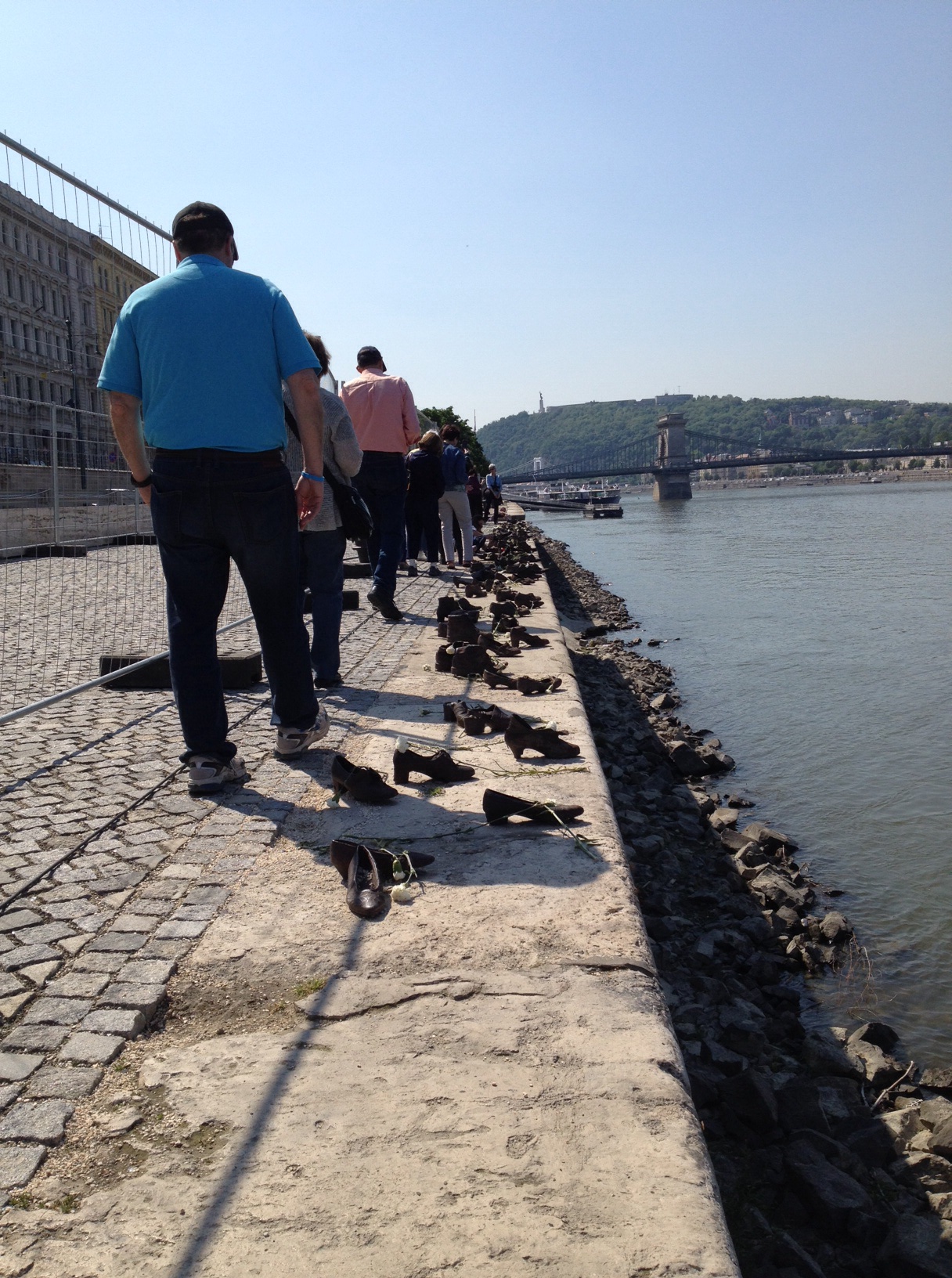
Only those who care enough to walk along the river will notice the shoe memorial that recalls those horrible days. But I can’t get the image out of my head. Even the prominent tributes to Raoul Wallenberg, a Swedish banker and diplomat who is said to have saved 100,000 Jewish lives by issuing them diplomatic immunity papers and safe houses, cannot soften the brutal images of Hungarian complicity or the reality that the extreme right wing party constitutes twenty percent (and growing) of Hungary’s government today.
A docent at the Jewish Museum today commented that only a Jew can tell the story of the Jews’ suffering in Hungary with passion. And that’s what worries me. When will others own the story of the greatest sin against humanity with the same passion that we do? And what happens until that time?
All that said, this city certainly is beautiful. So long as you don’t think about what is beneath the surface.
Tomorrow morning Israel. Thank God.
Rabbi Craig Scheff
OJC’s March of the Living, Day 5, The March
I am not taking the easy way out. Today was a day far more about images than words. And so I have chosen to share images with you. Images of a wet and dreary day at Auschwitz that evolved into a bright afternoon upon our entrance into Birkenau, the death camp that we filled today with life. Friends and families were reunited today in spirit and in person. Tears were shed for the horrors, and laughter was shared to protect us and to reaffirm life. A Torah scroll was completed at the end of the march in front of 12,000 people, and we sang Hatikvah firmly committed to our hope and faith in the future. Horrific reminders of death were balanced by personal encounters with resilience and courage. I hope the images below can provide a small measure of what we will carry in our minds and hearts forever.

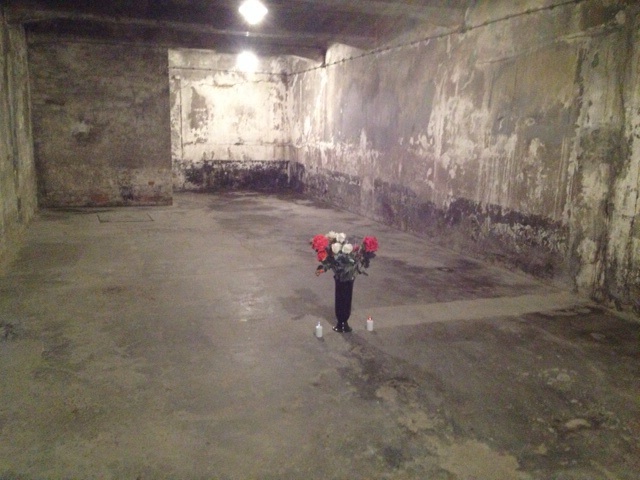
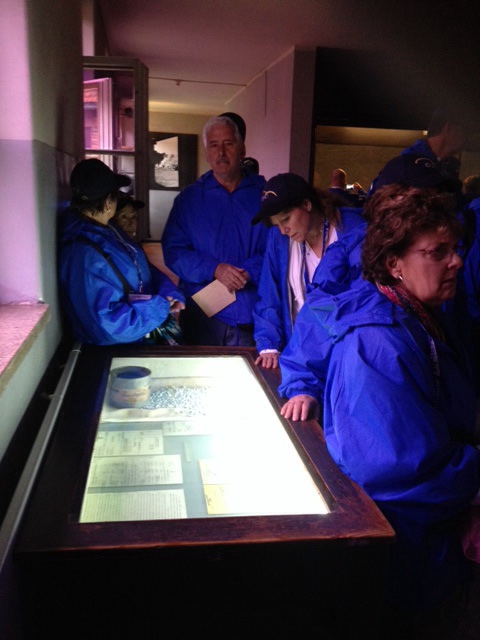


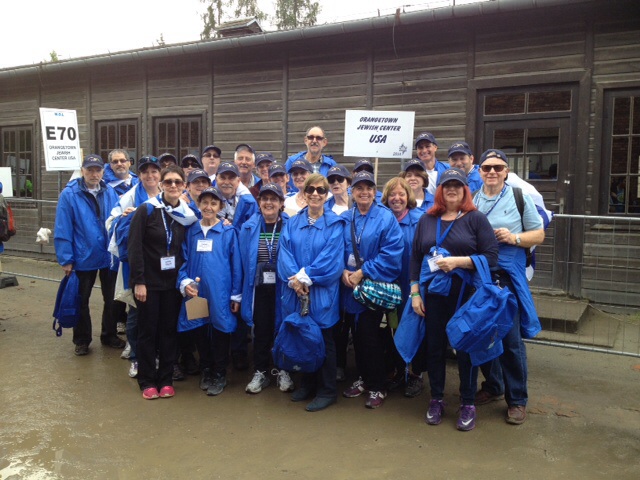
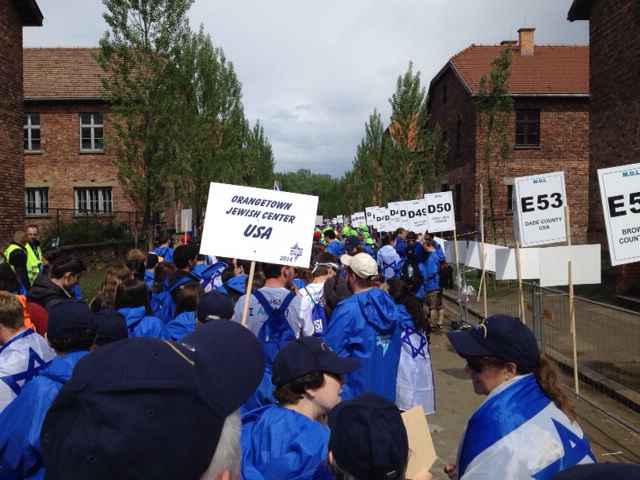

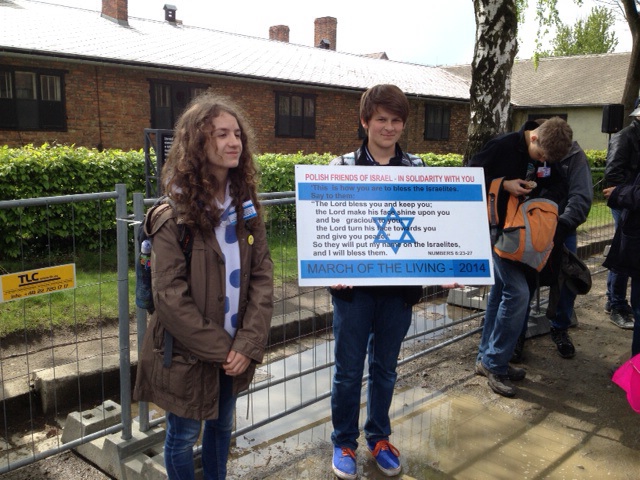


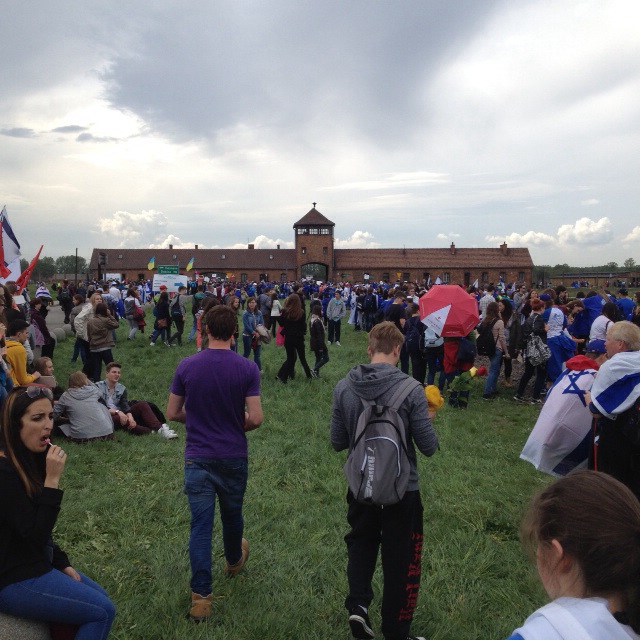


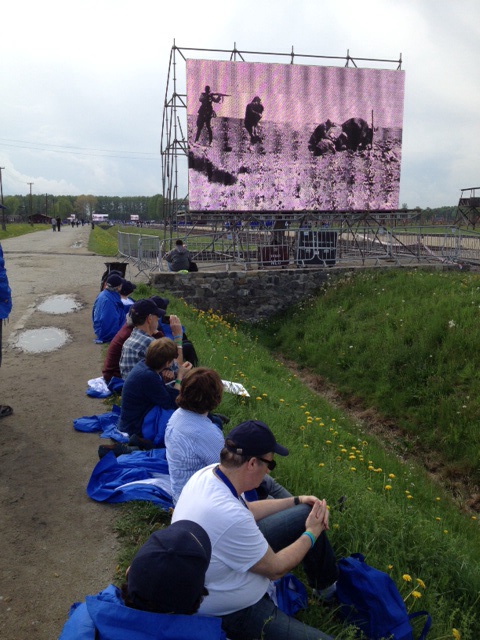

Tomorrow morning we depart for Budapest. It will be a long bus ride through the hills of Slovakia. You will here from me again, God willing, on Wednesday. I leave you with a thought from Anne Frank that Rabbi Drill shared with me: A candle both defines and defies the darkness. If the soul is the lamp of God, then we too can both define and defy the darkness. And that is why we are here.
Am Yisrael Chai,
Rabbi Craig Scheff
The need to scream – OJC’s March of the Living, Day Four
In just a couple of hours, our friends back home at the Orangetown Jewish Center will light a candle. For the 25 hours that follow, that candle will be watched by shomrim, or guardians, our keepers of the flame. The sanctuary will be open as a quiet space for reflection and meditation. Some people will find peace sitting in the quiet with their thoughts and memories. Some people will learn as they read personal accounts of victims and survivors of the Holocaust.
Whether you choose to sit for an hour as a keeper or just drop in for a few moments of reflection as a participant in our commemoration, I pray that you will keep those of your community who are here in Kraków in your thoughts as well.
This has been a long and hard day. For some of us it has been a day of frustration and anxiety. Being in Kraków today is like being in Disney World. The Old Towne Center looks like Epcot. Kraków was spared by the Nazis from destruction because they intended to use it as their center of control for their Polish occupation. So many synagogues remain well-preserved. Some date back to the early 17th century, and the Ramu’s sanctuary dates back to the 14th century. The old Jewish cemetery is manicured and better kept than some of our Long Island cemeteries. In fact, it all looks too good.
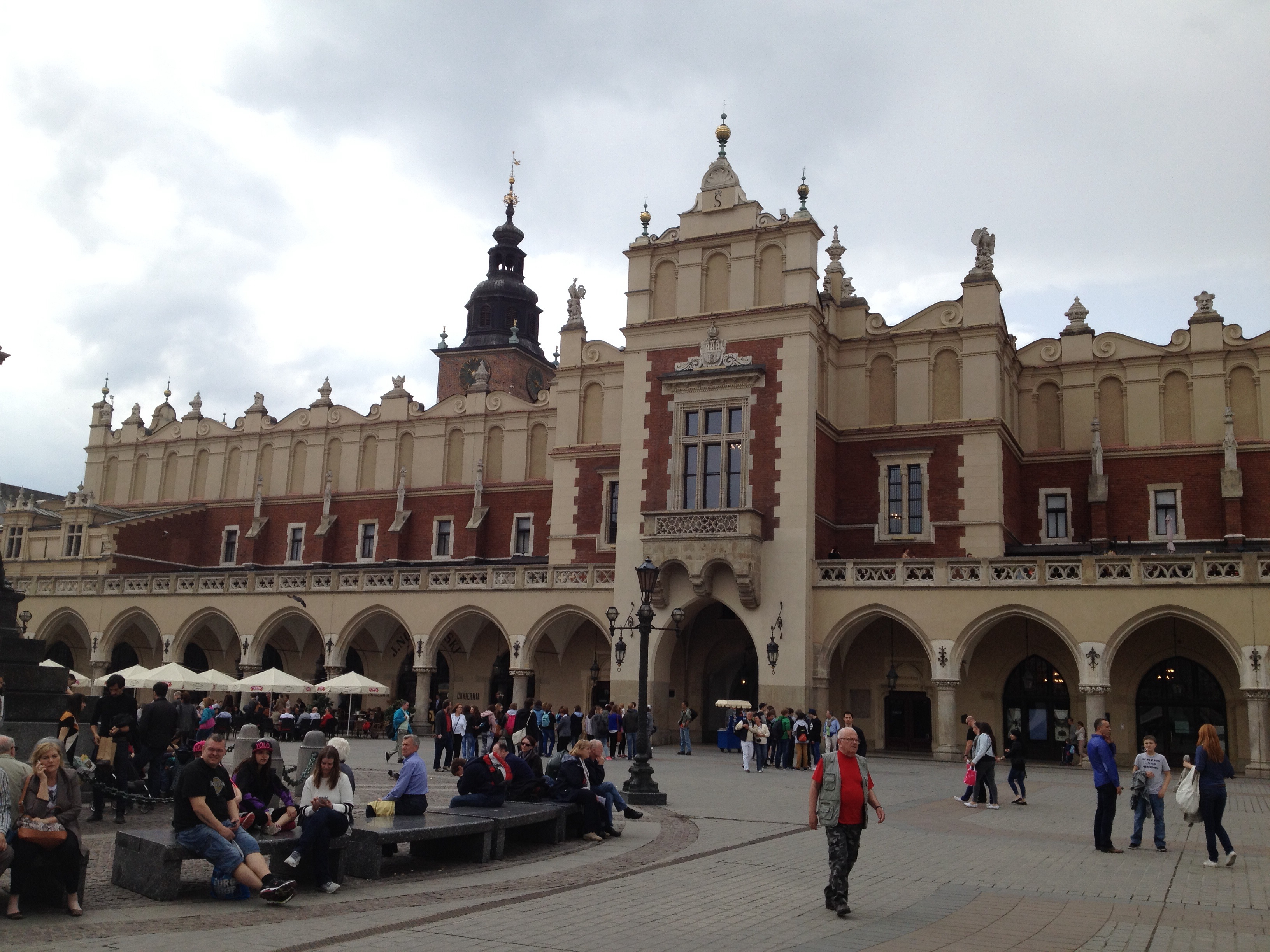
And that is the crux of our issue with this place. It is too neat, too clean. Many of us used the term “whitewashed” on several occasions today. Some of us began to challenge our guides, only to be met with resistance and defensiveness. We understand that this generation of Polish people struggles with accepting our sense of victimization when the Polish people suffered at the hands of the Nazis as well. But we can’t accept their reluctance to accept any responsibility for the deeds of the past as part of their history. The righteous among the Polish, those who aided Jews at the risk of their lives, are highlighted as they should be. But there is no mention, no acknowledgment, of the perpetrators among them.
So we are left wanting to scream to the world on this eve of Yom Hashoah. But what do we scream? For what purpose did we come out of this Mitzrayim, this Egyptian enslavement? Hopefully tomorrow, as we march through the divided sea with thousand all around us, we will have our answer.
Laila tov,
Rabbi Craig Scheff
 Three Rabbis Walk Into A Shul
Recent Comments