Remember
The 2013 Pew Research Center’s recent survey of the American Jewish community reported that, among those people who identify themselves as Jewish, a whopping 73 percent say that remembering the Holocaust is an essential part of what being Jewish means to them. That element of Jewish identity received the highest response rate, outpacing other suggested elements such as leading an ethical life (69 percent), caring about Israel (43 percent) and being part of a Jewish community (28 percent). Why does this element of Jewish identity receive such prominence? Is it the guilt that would accompany not remembering, the notion that we might afford Hitler (may his name be blotted out) a posthumous victory if we forget? Is it the particularistic notion that we must remain vigilant against our enemies who are constantly seeking to eliminate us? Is it the universal lesson that makes us better human beings because we will not idly stand by the persecution of any group?
This past Sunday night we commemorated Kristalnacht, the 76th anniversary of the Night of Broken Glass, the event that many say was the official starting point of the Holocaust. German Jewish shops were destroyed, men were beaten, detained and killed, synagogues burned. And rescue workers stood by to make sure that the fires didn’t spread to the neighboring non-Jewish homes and businesses.
The Rockland community observed the commemoration ceremony this year at the OJC. Over 200 people gathered to see the presentation of colors by the Jewish War Veterans, to hear the words of County Legislator Harriett Cornell and the personal testimony of survivor Paul Galan, and to stand in solemn solidarity with the 30 teens holding candles as the words of El Maleh Rachamim, the Jewish memorial prayer, filled the sanctuary.

As I think about the surprising Pew survey statistics, I can understand the relatively high importance we place on remembering the Holocaust in light of what I witnessed Sunday night. I felt our children’s hearts swell with pride as they watched our Jewish veterans salute the American flag, pledge allegiance and sing Hatikvah.
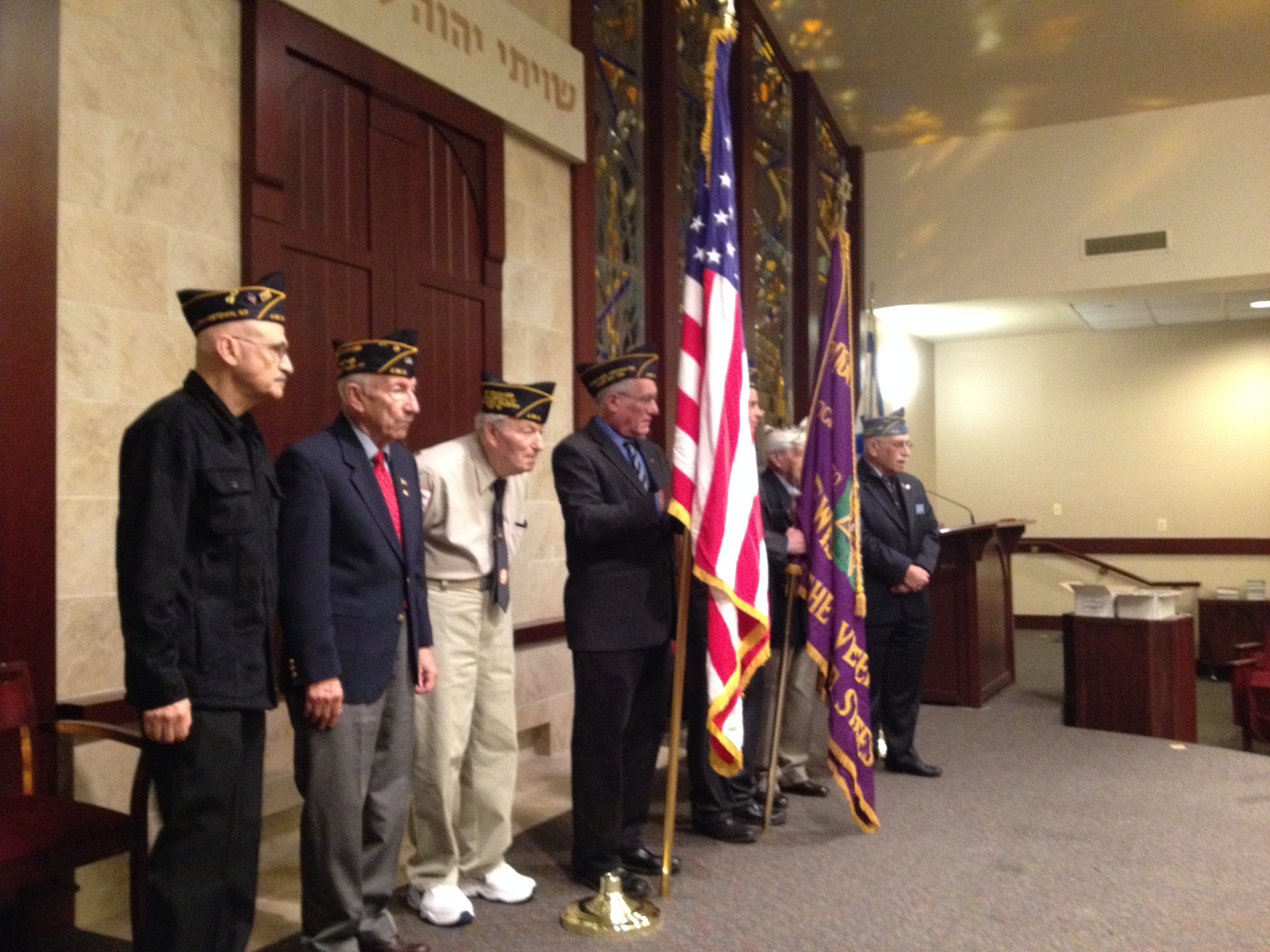
I felt our children’s souls ignited by the memorial candles they held. I felt our children’s minds understand at a level beyond words what it means to remember. Our children recognized that Jewish remembering is not passive. Our remembering is an obligation we fulfill that shapes our Judaism, our identity as Americans, and our humanity. For our children, the lessons of the Holocaust also inform their obligation to defend the values for which they stand, and shape their responses to social issues they confront on a regular basis, like bullying and intolerance. The Holocaust is six million individual Jewish stories of vulnerability, fear, insecurity, cruelty, powerlessness, hope, courage, faith, redemption and love. It is the story of our people as much as the exodus from Egypt, and it is a part of our narrative that must be told.
How will you remember? Participate in our Kaddish project. Match yourself with an individual who died in the Holocaust with no one left to observe their yahrzeit. Learn their story. Say Kaddish for them. Contact Larry Suchoff, our Holocaust Remembrance Committee chairperson, or just walk into the OJC office, to adopt a story. Perhaps remembering the Holocaust will become an essential part of what being Jewish means to you.
Rabbi Craig Scheff
Empowering our children
Foresight. Vision. Strategy. Whatever led to the decision, it was nothing short of brilliant. It will pay dividends in the short run by providing benefits to consumers, and it will bring a return on investment in the long run by developing a broader base of financial supporters and leadership. Brilliant.
This past Sunday night, Jawonio (Rockland’s premiere provider of lifespan services for those with developmental disabilities) held its annual gala at the Paramount Country Club in New City, New York. This relatively pricey, black-tie optional, politician-studded fundraising event has been held for decades and has catered traditionally to a pretty high-end crowd to benefit the organization.

This year, Jawonio got creative. The organization chose to honor the Orangetown Jewish Center Youth. 25 of our finest kids got dressed up, purchased tickets at a reduced price of $36, rubbed elbows with the big shots, and danced the night away like few at this event had ever seen. Oh yeah, Rabbi Drill, our youth director Sharon Rappaport, our youth chair Mitch Brill, our USY division director Bruce Varon and I were there to make sure the kids behaved, to share a few words, to shep a bit of naches, and to shed a few tears as well!
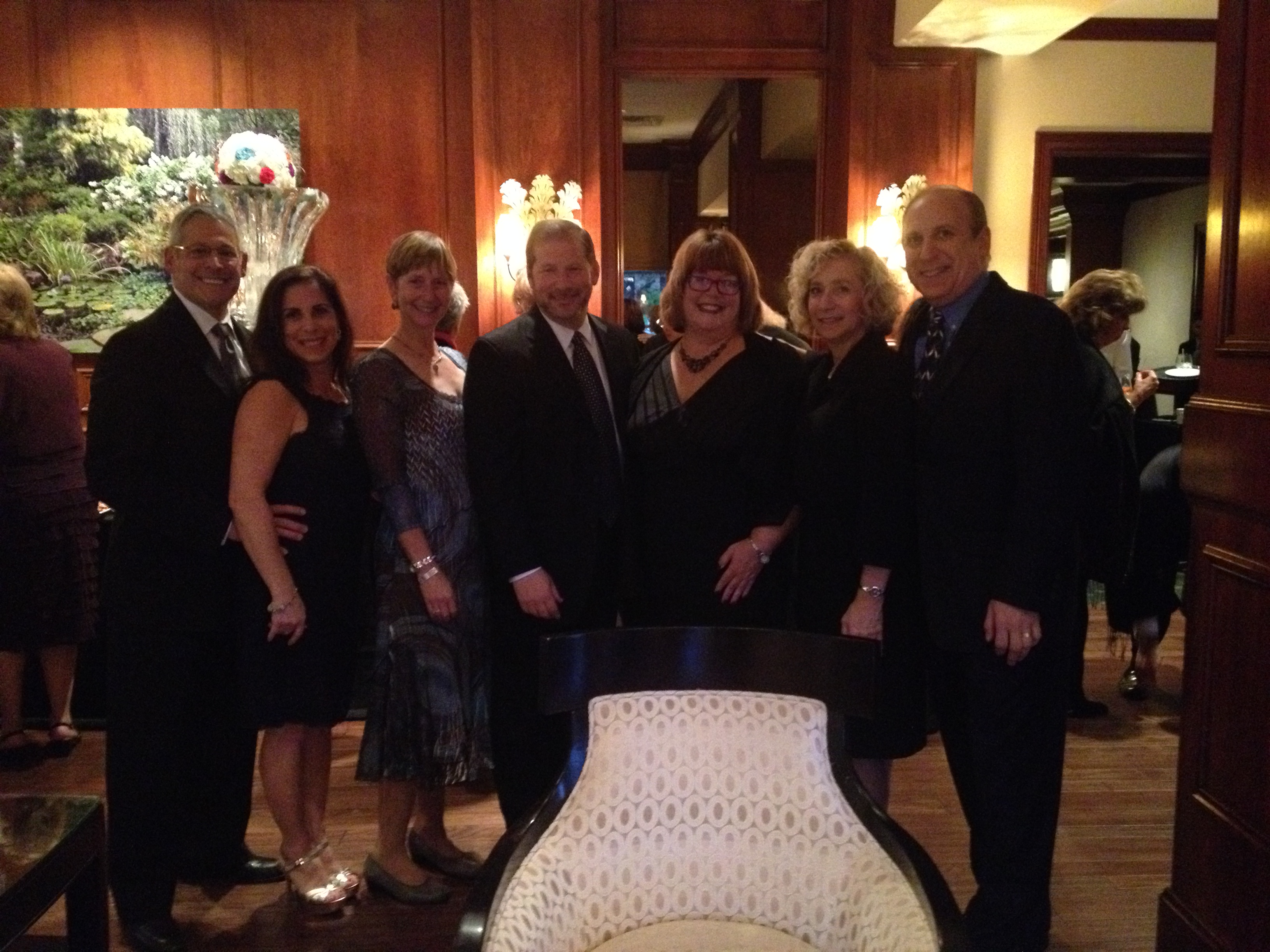
Over the years our youth group has studied the Jewish value that every person is created b’tzelem Elohim, in God’s image. Their learning has led to their communal commitment to serve those of varying abilities by visiting group homes, running carnivals, holding bowl-a-thons and hosting social gatherings. Their actions have helped them individually conquer fears, break down barriers, increase sensitivity, and generate love for all of God’s creations.

Jawonio’s leaders took a risk. By subsidizing the attendance of these youth, and by choosing to honor a group that doesn’t make a large financial commitment to its bottom line, Jawonio chose to inspire. Jawonio inspired our kids by helping them see themselves as valued and contributing members of society who can make a difference; Jawonio inspired its own supporters by showing how its mission is changing the world for the better, both for its consumers and for the larger community; Jawonio reminded us all that our children are our future, deserving of recognition for their contributions and investment in their leadership development. That’s what I call vision!
Mazal tov to our community, to our Naaseh/USY program for empowering our youth to make a difference, to our kids who choose to be a part of holy work, and to Jawonio for helping us see the image of God in every person.
Rabbi Craig Scheff
Smiling willows
Even at the age of 90, Morris is amazing with his hands. And he is so loving and thoughtful. Every year just before Hoshana Rabbah, the seventh day of Sukkot, he collects willow branches and bundles them together in fives with palm branches. He prepares enough for everybody who will attend the early morning service to complete the ceremony of Hoshanot with seven circles around the sanctuary and the beating of the willow branches (aravot). In contrast to the willow branches of my lulav, which are badly browning and bent by the seventh day of the holiday, these bunches of willow are fresh green.
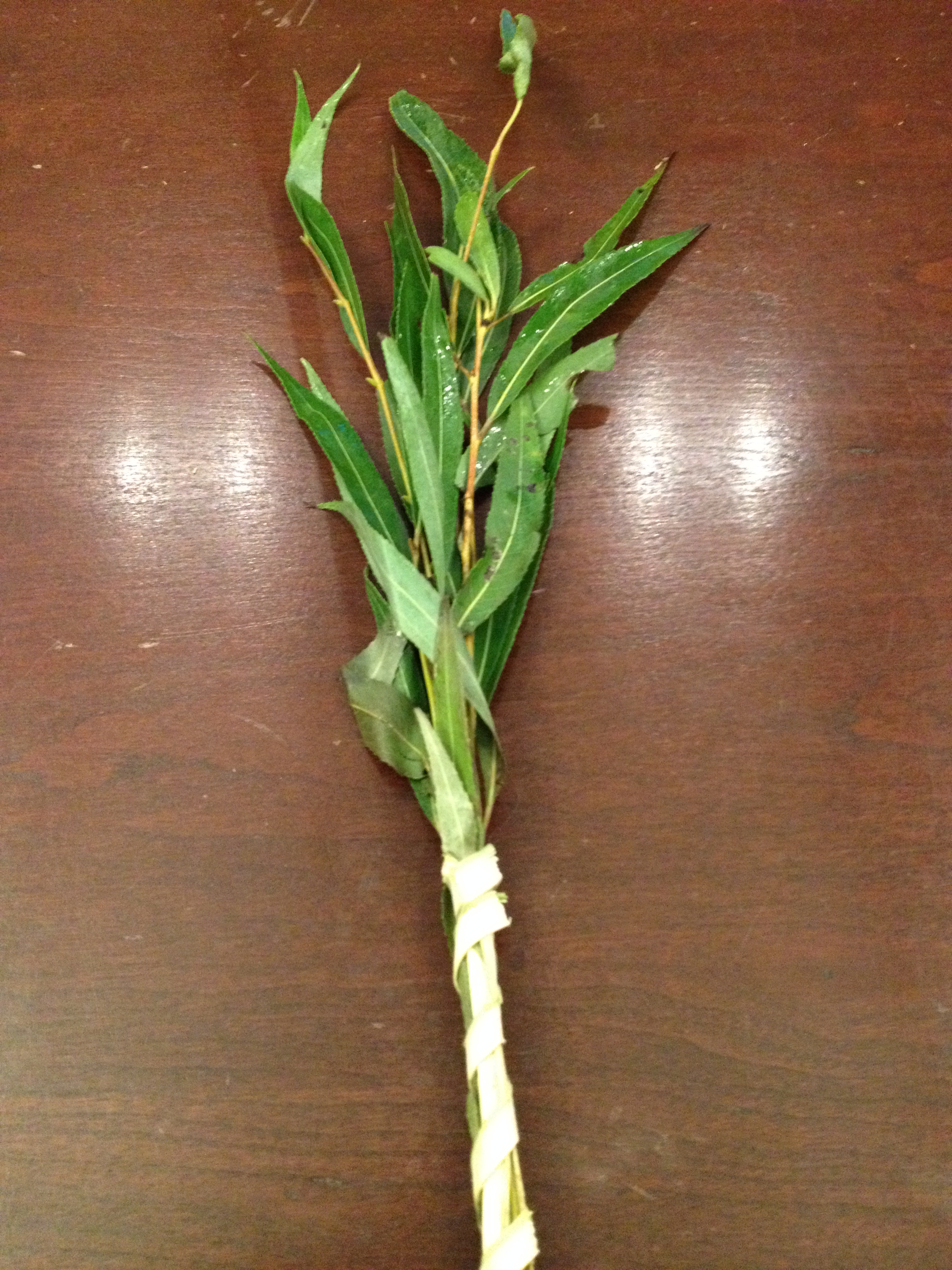
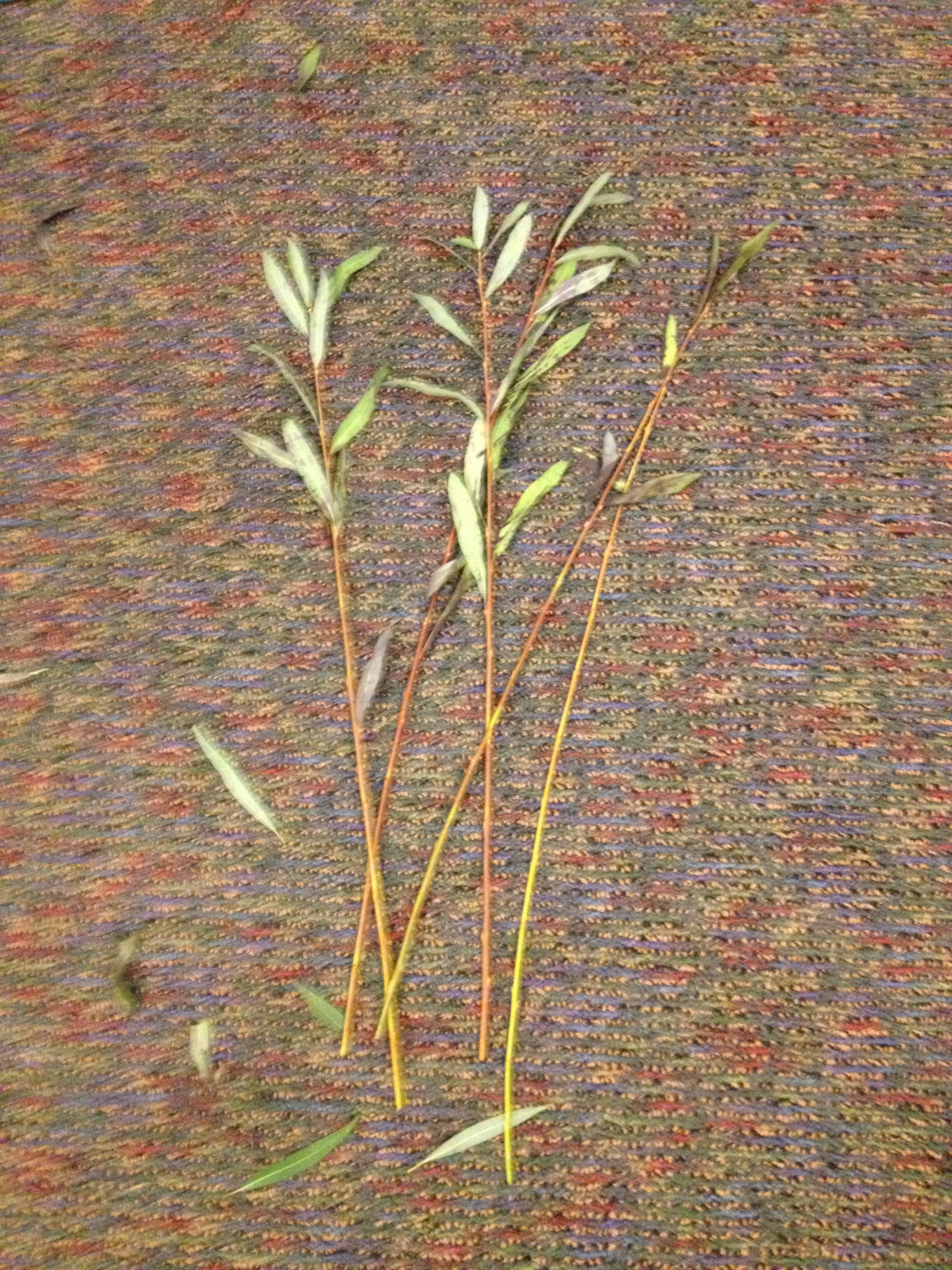
I recite the words of the ceremony “Kol M’vaser m’vaser v’omer” (“The voice of the prophet resounds and proclaims … good news of peace and deliverance”) three times, and I whip the floor hard with the willow branches. As this season of repentance comes to a close, I hope to shed the willow leaves that represent the deeds I want to leave behind in the year that was. Much like the breadcrumbs that I tossed onto the flowing waters of Tashlich, hoping they would be carried far away from me, I hope these willow leaves will be carried away by the wind and rain. But the batch that Morris prepares for our service sheds nothing as I beat the floor! The expertly wrapped bunch is beautiful and green and lush and cool to the touch. The leaves cling tightly to the long, thin branches. And I smile. I smile for myself and for all the other people who know that they have done the work that needs to be done in preparation for this season of repentance. We can dance with joy over the next days with confidence in God’s acceptance of the imperfections that cling to us, the broken pieces that we carry with us and make a part of our lives, like the broken tablets of the Ten Commandments carried in the ark along with the unbroken set.
I can smile because I have faith that, with good intentions and deeds shaped by the desire to heal the world around me, God will forgive me for that which I don’t accomplish in my quest. I smile because the perfect willows, despite having no fragrance and bearing no fruit, remind me that I can forgive myself for being the perfectly imperfect human being that I am.
Chag sameach,
Rabbi Craig Scheff
Make today remarkable
Over the past few days, I have been approached by several individuals who have expressed appreciation for my Rosh Hashanah message, sharing with me how the words I shared have taken hold in the rhythm of their daily lives. While I don’t have a full written text of my sermon, I do have some quotes that I can share. Leaving out the jokes and the stories, I offer you the essence of the message. I hope you will pass it along, and perhaps we can truly shape the world for the better in the year ahead.
From the movie 500 Days of Summer: “Most days of the year are unremarkable. They begin and they end with no lasting memory made in between. Most days have no impact on the course of a life.” What a sad and cynical way to approach a new day. What if we could make every day remarkable? What if each day had one lasting memory, one moment in which we affected someone else for the better? How would the course of our lives be changed?
Our patriarch Abraham committed a single act of kindness, welcoming three strangers into his tent, and in so doing he set a series of events into motion, changing the course of history. His ideology, built upon the performance of deeds that move the world deeper into relationship with the Creator of us all, is still the best ideology to bring about a victory of good over evil. The good deed changes the world; it latches onto our soul. Our acts of goodness reverberate through our souls for eternity.
Abraham Joshua Heschel wrote: “A Jew is asked to take a leap of action, rather than a leap of thought.” Indeed, our prayers are empty if they are not accompanied by action. And those actions need not be super-human, heroic or even self-sacrificing. They just need to be offered with the proper intention, and with the courage and pride to be performed as a Jew performing a mitzvah in the world. We wear the garb of our favorite sports heroes and teams (and I tip my hat to Derek Jeter), associating ourselves with others and with a cause. How much more so must we be prepared to identify ourselves and our mitzvahs as Jewish? Not that we must wear kippot in public as I do, but we must find the hat, the jewelry or the bumper magnet that will let people know whom we are and for what we stand.
Seventy-five years ago, our enemies labeled us with stars and the word “Jew” on our sleeves; the symbols identified us as vermin, disease, and the source of all of society’s ills. There are those who still attempt to cast the Jew in the same light, out of ignorance, fear and hatred. The battles against terror and evil around the world today will be fought with bombs and bullets, but the war is ultimately one of competing ideologies. And if we are to win this war, we must carry our Jewish identity with pride. We must let our deeds define us, as Jews and as human beings who seek the triumph of good.
Two weeks ago, we invited our synagogue’s neighborhood to join us in the building for some long-overdue introductions, refreshments and a tour. Our neighbors finally got to meet the people and see the space on the other side of the stained-glass wall that faces the street. It was an evening of breaking the ice, of tearing down barriers, of creating new relationships, of fighting back against the darkness. And it was a night that changed our small corner of the world. Call me an idealist, call me naïve; but I saw the world change before my eyes, and I felt it as I walked the streets of my neighborhood the next day. My world has been changed forever.
Especially in light of–and in spite of–the spread of anti-Semitism around the world and the ignorance that persists in our own back yards, we must wear our Jewish stars on our sleeves more visibly than ever. We must allow our deeds to define us as Jews more visibly than ever. We must, in this new year of 5775, fight back against the darkness with the light of our shining individual deeds that can transform our days, our lives and the world around us.
Shanah tovah and g’mar chatimah tovah,
Rabbi Craig Scheff
Listen
It came in a long blue velvet bag, with my Hebrew name in gold lettering. I still remember how, a few weeks short of my thirteenth birthday, I was so excited that my sisters had cared enough to buy me a present. Not a ram’s horn, it was the horn of a Greater Kudu. I loved the shape, the color, the size of the mouthpiece and the sound that emerged as I blew it like my trumpet. I couldn’t wait for Sunday morning minyan; maybe Rabbi Sosland would permit me to sound the shofar at the end of the service: tekiah, shevarim, teruah, tekiah.
Thirty seven years later, almost to the day, I unzip the blue velvet bag and slide the twisting shofar from the sack. I blow into the mouthpiece a steady stream of air, just to remove the imaginary cobwebs and to clear the pathway that the sound will eventually travel. Now I purse my lips and press them against the round mouthpiece, not too tightly, and push the air out. The sound emerges always as a surprise, a cross between a trumpet’s call and a cry for help. Thirty seven years later, I continue to discover new meanings in the craggy screech, the staccato siren, the triumphant call. If I close my eyes tightly enough, I can feel the many yearnings of my heart emerge from the end of the horn. I am simultaneously saddened and gladdened, remorseful and hopeful, broken and resolute.
Thirty seven years ago, my rabbi, teacher and mentor wasn’t so thrilled about a twelve year old boy blowing a shofar that was almost as big as he was. Rabbi Sosland took great care to teach me the proper method for the ritual and the appropriate length for each of the sounds. He asked me to sound the shofar facing the ark; he asked me not to hold the final blast so long. He even asked if I would consider blowing a smaller horn. My teacher taught me that those hearing the sound should not be distracted by what they might see: the red face, the puffed cheeks, the winding horn. The only thing that matters in hearing the shofar is the ability to hear with the proper intention. Any visual or aural distraction only serves to diminish that intention and the potential impact of the ritual. In those days leading up to my thirteenth birthday and Rosh Hashanah, Rabbi Sosland was trying to teach me humility.
Close your eyes and let the primal cries enter your ears. If we experience the sounds as entertainment, we are not allowing the reverberations to reach our hearts. But if we listen to the sound of the shofar the way it was meant to be heard, we will learn to hear its call every day: in the still, small voice of God within.
Rabbi Craig Scheff
In memoriam
God of men and mountains,
Master of people and planets,
Creator of the universe: I am afraid.
I am afraid of the angels
Thou hast sent to wrestle with me:
The angel of success
who carries a two-edged sword
The angels of darkness
Whose names I do not know,
The angel of death
For whom I have no answer.
I am afraid of the touch
Of Thy great hand on my feeble heart.
Yet must I turn to Thee and praise Thee
Awful and great though Thou art,
For there is none else.
There is no strength nor courage
But in Thee.
There is no life, no light, no joy,
But in Thee.
— Ruth Brin
We have not been placed on this earth to answer the question “why” God takes a beautiful child from her parents and family so suddenly at such a young age. Nor are we here to assert that she is in a better place. The arms of her loving parents are the very best place for a daughter to be. We are here to embrace a soul: to keep her in our hearts, our thoughts and, most importantly, our deeds.
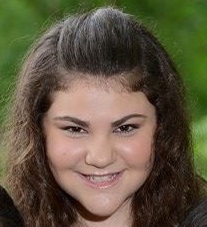
Emily Sarah Levine
May 27, 2001 – August 12, 2014
In memory of a beautiful child who cherished her Jewish identity, please consider supporting a Jewish camping experience or educational opportunity for another child who may grow to be the proud Jew and fine human being that Emily became in her short 13 years.
May Emily’s family, friends and community find comfort, and may her memory always be for a blessing.
Rabbi Craig Scheff
The quest for balance, interrupted
At 2:00am New York time, I wrote these words:
Cease fire. Who knows whether it will hold, and who knows whether or to whom it will be of benefit. Israel has committed itself to the task of destroying an infrastructure of tunnels that pose a terrifying threat to her citizens. Hopefully, whatever agreement is ultimately reached will include the completion of that task to the mutual benefit of Israelis and Palestinians. Hopefully, this time will empower voices of wisdom and moderation to prevail against the grip of terror and extremism. Hopefully, those who advocate for economic prosperity, mutual recognition and responsible governance will seize this moment to paint a picture of the possible. In the interim, I catch my breath and consider where I am on the Jewish calendar, only to be reminded once again of the dangers all types of extremism represent.
This coming Monday night and Tuesday, we commemorate Tisha B’Av (the ninth day of the month Av), the saddest day on the Jewish calendar, as we recall the destruction of the Holy Temple in Jerusalem and several other tragic events of our past. We actually begin a period of mourning three weeks before the date (no weddings, among other things), and intensify our mourning in the last nine days. Our sages teach us that the Holy Temple fell due to the baseless hatred Jews harbored against one another. In the face of an oppressive Roman presence, the Jewish community of two thousand years ago fell in on itself. Political alliances, religious sectarian infighting and power-hungry leaders rendered the Jewish community fractured and vulnerable. The Temple was destroyed, and in the wake of the unthinkable disaster, Judaism had to recreate itself.
When we teach the lessons of Tisha B’Av today, we focus on the values of respecting one another despite our differences, hearing each other’s opinions, and searching for roads to peace between us. The recreated Judaism of the rabbis taught us that we learn best when paired with others, especially with whom we disagree. In so doing, we allow our basic assumptions to be challenged, we learn to refine our own positions and to make room for the opinions of others. We discover a greater sense of compassion and we give ourselves the possibility of growth.
Some day, God willing soon, it will be time for us to consider how we move forward from this conflict as a Jewish community. We need to express our anger, frustrations and fears, but doing so at the expense of our ability to learn from one another leads only to baseless hatred and destruction.

This was my prayer before sleep last night:
This Tisha B’Av, I pray that we find and hold our center; that we rediscover the language of respect; that we embrace and learn from our plurality and dissonance of opinions; that we combat our own tendencies toward extremism; and that our neighbors have the strength and courage to do the same.
But the light of day brings news of a suicide bomber’s attack, the fear of an IDF soldier’s kidnapping, and a fiercely desperate Israeli response with more civilian casualties. And I am knocked off balance again. And the only voices I can hear are the cries of a kidnapped soldier’s parents. And on this morning, I must tell you, compassion for anyone else is so much harder to feel.

Dear God, in this time of mourning, restore the balance to my humanity. Assuage my wrath. Set me on a course of faith and hope. Help me forge a path to peace. And let me be a source of comfort and compassion to others.
Rabbi Craig Scheff
What’s your story?
I want to say something tonight that will change the minds of those who are blinded by ignorance, prejudice or worse. Something that will reach every heart, from the Hasidic Jew in New York City this afternoon protesting Israel’s right to exist to the Muslim protester in Antwerp yesterday calling for the slaughter of the Jews. Something that will reach the heart of every person who calls for the indiscriminate death of Palestinians–as if that will end the conflict–without considering those boys and girls who must do the dirty work, how many lives it will cost, and what could be the toll on the collective Jewish soul.
What I have heard time and again over the last days, unfortunately, is that there is no changing people’s minds through the media. Most people who read my words or hear me teach, by and large, share a worldview similar to my own. They will “like” me and “follow” me because I affirm their way of thinking. If I don’t, chances are, they are hearing opinions different from my own. And if we do engage with people who disagree with us on a charged subject, we are typically responding in anger, dismissing the other as out of touch with reality.
What can I offer, then, to move people just a little from where they are? Perhaps the personal story. The narrative that isn’t filled with history or facts or politics or agenda. Just a real life story of one person’s experience that dares the listener to identify, to empathize and maybe even to change perspective for a moment.
Ariel is a father of 3, a great guy, my sister’s neighbor on the moshav. Looking at him in a t-shirt, jeans and flip-flops, you’d never know he was one of Israel’s top fighter pilots. A retired pilot now, a former commander of an air force base, now serving as general manager of a charitable foundation. A couple of weeks ago, Ariel’s 18 year old son, Guy, finished his army training, receiving an award as the outstanding soldier of his unit. Guy is a fun-loving boy who has no desire to hurt anyone. Ariel loves flying to reach the heavens, where he finds peace. Today, Ariel is back in active service, flying over Gaza, giving cover to the troops below. Giving cover to his son.
Israel just reported its first casualty of the ground incursion. I hope you will pray with me for the peace that Ariel and Guy want, the safety of their family and the prosperity of their neighbors. Pray with me that they come home safely and to safety. Soon.
Feels good to share a story. Perhaps you’ll share one of your own?
Rabbi Craig Scheff
Summertime, and the living is easy?
It’s hot here in Israel this time of year. So hot that brush fires are popping up all around the country. They are only mildly dangerous and easily extinguished. Sometimes they are man-made and sometimes inadvertently sparked. One such brush fire was ignited in the field behind my sister’s house a couple of weeks ago by a tractor’s blades. My nephew frantically called my sister, vacated the house and waited for the fire company to arrive. The bougainvillea plants that bordered the yard are gone now, but the house is safe and the fear is gone.
Mostly. After all, how does a boy of 12 rid himself of the images of the flames approaching his house? How does a child protect himself against the fear that accompanies hearing a recording of 3 teenagers being kidnapped and shot, their captors rejoicing, and the message being played across every media outlet? How does a family find normalcy when each person’s tablet and phone rings with an alert of every “color red” that is declared for the neighborhoods twenty miles away?
Nancy and I arrived here yesterday for my niece’s wedding celebration. We enjoyed a trip to McDonald’s for dinner, and attended my sister’s community choir concert. The kids got up this morning and went next door to hang out in the pool overlooking the scorched field. Life is as normal as ever, it would seem.

Except for the anxiety just beneath the surface. The “safe room” is 45 seconds away if needed, they joke. Two “Iron Domes” are in the area, they assure themselves. The police are present in large numbers on the roads in and out of Jerusalem to assure the public and to dissuade any who might be tempted to kindle a new fire. The family is monitoring the news, praying that a thorough police investigation will reveal that the killing of a young Palestinian boy was something other than an act of Israeli revenge.
It is hot here, that is for sure. But Israel won’t let us see her sweat. Life is more complicated than ever. Our children who are visiting here are as safe as anywhere else, I assure you. And there could not be a more important time for us to be here to offer some love and comfort. The difference is that we will return to the United States, to a place where independence means not relying on others for political, financial or even emotional support. For those who call this place home, there is no place else to go. So they will live with the anxiety, and keep praying for rain.
Shabbat will be here soon. I think I’ll join my nephew in the pool.
Shabbat shalom,
Rabbi Craig Scheff
Releasing our children
No matter their age, it’s what they are. They are our children. As such, we want them to grow into self-sufficiency and independence, happiness and contentment. But a piece of us also wants to hold on to a piece of them, to keep them young and safe, and to keep us in their lives and in command.
It is the season of graduation and commencement, of endings and new beginnings. A time for celebration and tears. The changes are bittersweet for us as parents as our chests swell with pride for what we have accomplished together (because they certainly couldn’t have done it without us!) and our eyes swell with tears because we know that with each new challenge they will rely on us less.
I cried the first time I heard the song “Uf Gozal” (and the second and the third). Arik Einstein, who died this past November at the age of 73 and was known as “the voice” of Israel, wrote and recorded this song about a bird acknowledging the launching of the bird’s little ones. (I used to think the speaker was a mother bird, but now I realize it could just as easily have been the father bird remaining in the nest!)
My little birds have left the nest
Spread their wings and flew away
And I, an old bird, remained in the nest
Really hoping that everything will be alright.
I always knew the day would come
When we’d have to part
But now it came to me so suddenly
So what’s the wonder that I’m a bit concerned.
Fly, little bird
Cut through the sky
Fly to wherever you want
Just don’t forget
There’s an eagle in the sky
Be cautious…
As the years have passed, I have felt the song has been over-used and played out (i.e., no more tears when I hear it). And what kind of Jewish-mother ending is this about looking out for the eagle in the sky?! This year, however, the song is particularly poignant. Arik has died, and that is a loss to Israel and to all who loved his music. And now, at the season of celebrating our children leaving the nest, an eagle from the sky has snatched away three of our Israeli sons. Their families suffer while communities are left praying for word of their welfare, for their safe return, and for the intervention of more powerful forces that can bring pressure to bear to secure their return. (Click here to hear the song and watch a video–the subtitles are Spanish, but you’ll get it, I promise.)
I prayed for Eyal, Gilad and Naftali today, and I will pray for them again tomorrow. I will celebrate today’s commencements, even as I say to my children time and time again: “Look both ways as you cross. Buckle up. Drive safely. Call me if you need me.” Dear God, thank you and take care of them.
Rabbi Craig Scheff
 Three Rabbis Walk Into A Shul
Recent Comments