The Palace is Either Lit Up or On Fire
We welcome our colleague and congregant, Rabbi Ted Lichtenfeld, as a guest blogger this week. He offered these powerful words on Parashat Lech L’cha this past Shabbat to honor the brit mitzvah of his child.
The Torah tells us nothing about Abraham’s personality or motivation. It
just begins his story by telling us of his family background and then that
God instructs him to move from the city of Ur in Mesopotamia to “a land
that I will show you.” We learn more about his character as the Torah goes
on, but pre-rabbinic legends and the Rabbinic midrash spend a good deal
of time explaining why God chose Abram. Abraham was the person who
discovered the one true God, setting the stage for Judaism, Christianity,
and Islam. The Midrash Rabbah on Genesis tells the following parable:
This is analogous to one who was passing from place to place, and
saw a palace all lit up. [Noting that such a beautiful illuminated palace
must have been built by somebody,] he said: ‘Is it possible that this
palace has no one in charge of it?’ The master of the palace looked
out at him and said: ‘I am the master of this palace.’ So, because
Abraham our patriarch was saying: ‘Is it possible that this world is
without someone in charge?’ The Holy One blessed be He looked at
him and said to him: ‘I am the master of the world.’
In this way, Abraham through intellectual investigation comes to believe in
what we call the teleological argument for the existence of God. A world of
such seeming order and wonder – like a many-roomed palace – could only
have come about through a Creator, and it must have a Master watching
over it.
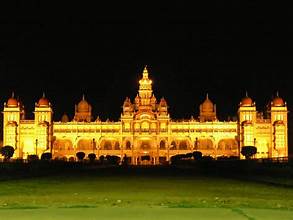
But there is another way of translating this midrash. In this version the
Hebrew birah doleket means not “a palace all illuminated,” but rather, a
“palace completely on fire.” In this version, the traveler sees a building
completely on fire, thinks, “Well, someone must have built this thing.
Where the heck is he?!” By and by, the owner of the palace sticks his head
out and says, “I am the master of this palace.” The midrash now means
that Abraham sees the world as a dumpster fire. He thinks, “Where the
heck is the Creator of the world?! Has he completely stopped paying
attention?! And then Adonai reveals Himself as “the Master of the world.”
Without belaboring the point, the world as dumpster fire probably feels to
many of us like a not unreasonable analogy to the present moment.
The original meaning of the “palace on fire” story was probably more
comforting to the Rabbis than it is to us. In fact, the original idea was that
the world only looks like an out-of-control conflagration. In fact, all the
recent disasters that Abram knows about, like Noah’s flood, were a result of
a God who is completely in charge, and were a means of just punishment
of the wicked.
But our teacher Rabbi Abraham Joshua Heschel, z”l sees much more
complexity in all the bad that happens in the world. Heschel, ud mutzal
me-esh, a brand plucked from the fire, lost his whole family in the
Holocaust and was not one to sugarcoat the cruel reality of the world. In
fact, in God in Search of Man, he tells our midrash twice. Early on he tells
the “a palace filled with light” version and speaks of how our wonder at the
world can inspire faith in God. Chapters later, he tells the “palace on fire”
version, as an introduction to the section entitled, “The Problem of Evil.”
His summary of our midrash poignantly declares, “The world is in flames,
consumed by evil. Is it possible there is no one who cares?”
The idea that God cares, and even more important, that we as human
beings must, pervades Heschel’s discussion of evil. Writing ten years after
Auschwitz was liberated and the Germans surrendered, he worries that we
have become “callous to catastrophes” and that “our sense of horror is on
the wane.” (I think of Lewiston, where my reaction was both horror and the
thought, “Oh, another one.”) But even more worrisome to him, rather
prophetically, is the confusion of good and evil.
In this world it seems, the holy and the unholy do not exist apart, but
are mixed, interrelated, and confounded. It is a world where idols
may be rich in beauty, and where the worship of God may be tinged
with evil.
This seems truer than ever in a world where students rightly concerned
with fair treatment of the Palestinians descend into frightening
anti-Semitism. A world where an Israel which in the wake of horror must
rightly neutralize Hamas maintains a Jewish terrorist as national security
minister.
So how do we face a world burning out of control? As much as the God of
Abraham may be the Guide, the sovereign of the world, what we do is much more important than what we believe about God’s justice. Torah is
the antidote. The mitzvah is the response. Heschel expands on this idea:
Neither the recognition of the peril nor faith in the redemptive power
of God is sufficient to solve the tragic predicament of the world. We
cannot stem the tide of evil by taking refuge in temples, by fervently
imploring the restrained omnipotence of God. The mitzvah, the
humble single act of serving God, of helping man, of cleansing the
self, is our way of dealing with the problem.
In this moment of disaster upon disaster, I wish I had a more expansive
answer. But I find hope in the fact that Judaism has endured through the
ages with a healthy understanding that the world is a palace that is
sometimes miraculous and beautifully illuminated and sometimes burning
down. May we respond by doing mitzvot, by shoring up the spirit of our
fellow Jews, by contributing to the welfare of all people. May our faith in the
one God of Abraham lead, however slowly and gradually, to a universal
belief in the oneness of all humanity.
 Three Rabbis Walk Into A Shul
Recent Comments