At the intersection of life and Torah
Please, God, not this week.
I see my daily life through the lens that Torah provides as a construct in time. The parashat hashavua (weekly Torah portion), divided into seven parts, often provides daily insights and a thematic through line for the seven days of my week. There was a time when I considered the connections of my life with Torah teachings as coincidences. But that is no longer the case. Now I look for the connections, and they are usually pretty easy to find.
But this week, I don’t want the connections to be made. This week, I don’t want the story to fit my life.
This week’s parashah, Vayechi, reads: “Vayikrevu yemei Yisrael la’mut,” “The time approached for Israel to die….” After Jacob/Israel gathers the strength to bless his grandsons Ephraim and Menasheh, he offers insights into his sons’ lives, and he dies.
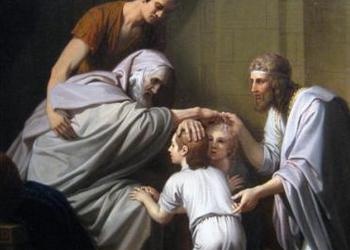
My grandfather Israel has reached the end of his years at 100, possibly the end of his months, maybe the end of his weeks. His children and grandchildren have given him their final blessings. His soul knows it has our blessings to be joined with his ancestors and loved ones, to take its leave when it so chooses.
But please God, not this week.
After all, Israel is 147 when he dies. My grandfather Israel is only 100.
Israel calls his son Joseph to his bedside, then fails to recognize Joseph’s children. My grandfather Israel saw his son Joey on Sunday, and recognized his grandchildren without a prompt.
Israel blesses his sons with the prayer that their offspring should multiply for generations to come, having lived only to see two great-grandchildren. My grandfather Israel has lived to see great-great-grandchildren, and has no such need for such prayers. His have been answered.
Israel dies in a foreign land, his descendants about to spend centuries in exile and enslavement. My grandfather Israel brought his family out of exile and enslavement to a land of freedom and prosperity.
Israel looks back on his life as difficult and frustrating, filled with challenges and suffering. My grandfather Israel considers himself the luckiest man alive, blessed with a wonderful life despite having lived through the Holocaust, illness and loss.
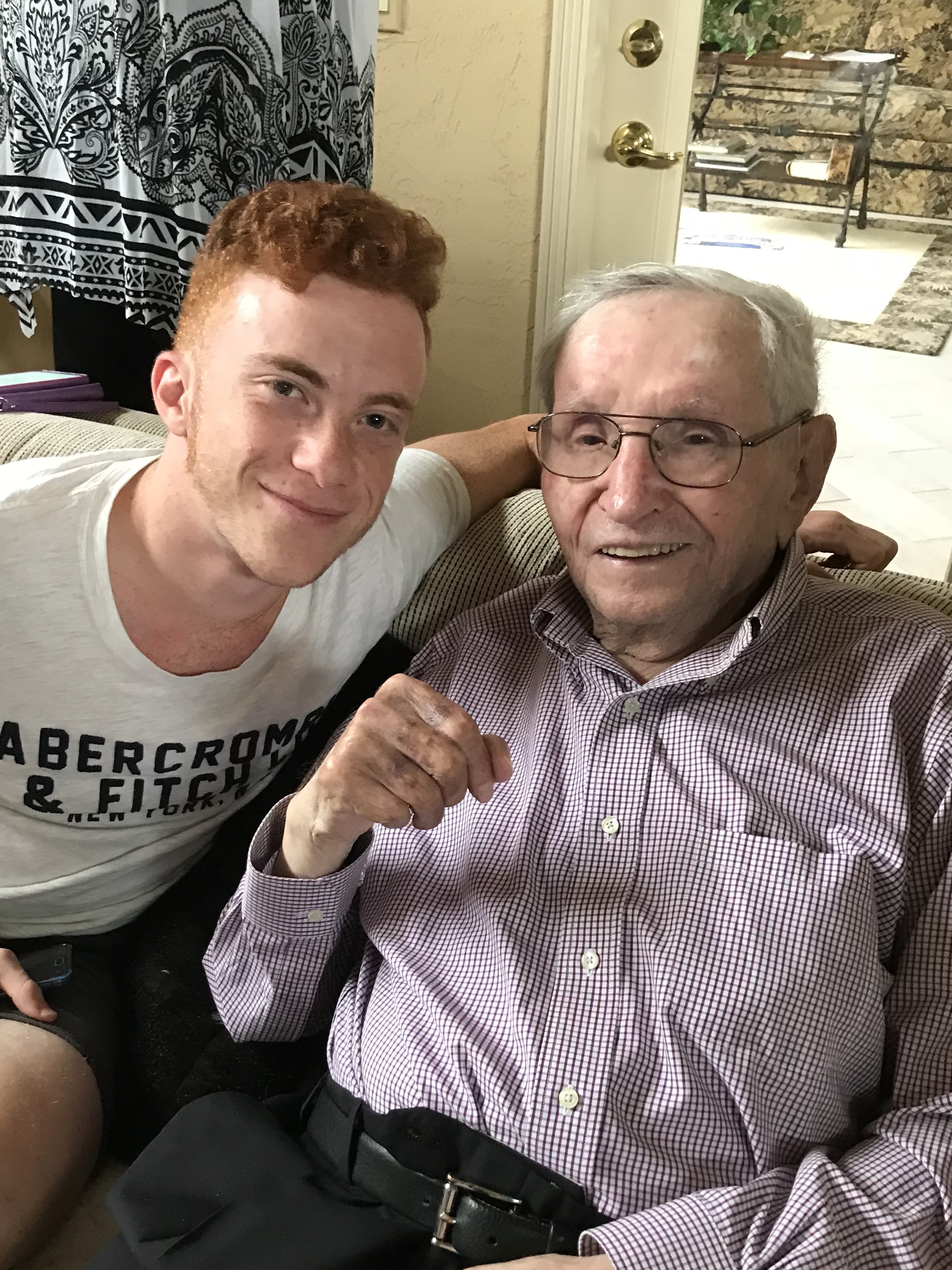
My Israel, son of Abraham has so little in common with the Torah’s Israel, son of Isaac. My Israel is a man of generosity and vision; the Torah’s Israel is a man of limited sight and spirit. My Israel is a patriarch who has been loved and respected by the generations that have followed him; the Torah’s Israel spent most of his days as Jacob, forging a twisting path through difficult relationships.
So you see, God, this week’s parashah Vayechi (“And he lived”) should stop right there as far as any connection with my grandfather Israel goes. Next week we’ll begin reading the story of Moses. As far as I’m concerned, his is a story that is a far better parallel to that of my grandfather Israel. Especially the part that we’ll read at the end of Moses’ life: “For there never arose in Israel another prophet like Moses, whom God knew face to face.”
Ken y’hi ratzon, so may it be Your will.
Rabbi Craig Scheff
The resilient child within
The nine year-old Israeli boy with the large soulful eyes stands alone on the stage, his teacher-counselor-accompanist off to the side on a stool with guitar in hand. The youth looks totally relaxed, the microphone a therapeutic pet in his hands.
The strings begin to reverberate their introduction and the child opens his mouth to sing. Time stops and the tears begin to flow from the eyes of the 18 American guests and the 12 Israeli teachers, therapists and foster parents in the audience. The children gathered as a makeshift audience put their arms atop each others’ shoulders and begin to sway side to side. The boy’s sweet voice ascends and descends like an angel on a ladder, and with it our souls soar, almost out of control with the swing of our emotions.
Knowing that the boy’s biological parents are not present, that the child has suffered emotional abuse (at the very least), that at a tender age his life is broken in so many ways, and that but for the presence of the caregivers in the room he might be totally lost, it is no surprise that the group is overcome with emotion in hearing his sweet and powerful voice. But to understand his Hebrew words is to be filled with awe, appreciation, inspiration and hope:
“Be not afraid to fall in love,
That the heart may break,
Be not afraid to lose along the way.
To get up every morning
And to go out into the world
And to try everything before it ends
To search from whence we came
And in the end always return to the beginning
To find yet more beauty in everything
And to dance until overcome
By exhaustion or love.
(Before it ends, Idan Raichel)
Resilience has been defined as the power to be able to recover readily from adversity or challenge. And it is one of those human traits that I consider to be among God’s greatest gifts.
This past week, seventeen of our community members have been in Israel witnessing the power of resilience. We have seen resilience in the ability of an abused child to sing before a crowd of peers and strangers; in the work of Yoav Apelboim, the executive director of Kfar Ahava Youth Village who sees too much suffering, yet continues to make meaningful improvements in the lives of so many; in a society that resumes school and work a day after rockets rained down on its homes; in a kibbutz that has reinvented itself to stand as a beacon of religious pluralism and an advocate for societal change in the face of extremism.

We have seen resilience in ourselves: in our ability to make the sacrifices of time and resources to do the work that takes us out of our comfort zones year after year; in our willingness to suffer the emotional toll of being inside the suffering of children; in sharing the pains of loss, memory and empathy inside our own community family.
We have seen resilience from afar, as the natural elements have wreaked havoc across the ocean, from fires on the west coast to snow on the east coast, families have abandoned homes to survive and begin anew, and individual acts of kindness and sacrifice have eased the burden of others.
There is something within the human spirit that enables us to get up every morning, to go out into the world, and to try everything before it ends. Despite the disappointment, despite the pain, despite the knowledge that we may not complete our task and that our hearts may be broken yet again. To me, there is nothing more miraculous or more divine.
Join us on Monday night, November 19 at 7:30pm, as we explore “Community preparedness and resilience in the face of threats: Lessons from Israel” with Dr. Danny Brom, Director of the Israel Psychotrauma Center. Please register at OJCcares4U@gmail.com for an evening of learning, reflection and discovery. From the scientific to the spiritual, we’ll learn a little more about what keeps us going, and what we can do to bolster that ability “to dance until overcome by exhaustion or love.”
Oh, by the way, the little boy with the angelic voice? His name happens to be Or, meaning light. And as is his name, so is he. May he always know it, and may he always be.
Shabbat shalom from Israel, and hope to see you on Mitzvah Day Sunday!
Rabbi Craig Scheff
You don’t know me
Thank you to the hundreds who showed up for Shabbat this past weekend to hear our message, and to know and to love one another a little better. The following is the message I shared:
You don’t know me.
As I stand here on this Shabbat morning welcoming those who have come to celebrate with our Bar Mitzvah and his family, those who chose to show up for Shabbat with their synagogue community, and those who have come from our neighborhood or larger community, Jewish or not, in order to pledge solidarity and unity in the face of hatred, I realize you probably don’t know me. Not the way I’d like you to.
If you did, you’d know that last Saturday, while I was reading a story in my synagogue about my ancestor Abraham—how he welcomed strangers into his tent, providing them food and shelter from the heat of the day—eleven members of my extended Jewish family were being executed for no reason other than that they were Jewish, and that they were learning the value of welcoming the stranger.
You don’t know me.
If you did, you’d know that while I was learning this week about my ancestor Abraham and how he purchased a burial place for his wife Sarah, how he saw himself as a stranger amongst his neighbors and thus insisted on paying the full price for his plot so no one would ever question the legitimacy of his presence in their midst, my extended family was burying its dead, suddenly feeling very much like strangers themselves and, by extension, shaking my own sense of belonging.
You don’t know me.
If you did, you’d know the pain I feel as a result of having been offered more wishes of congratulations on my favorite baseball team’s victory than wishes of condolence on my sense of personal loss because of the murders in Pittsburgh.
You don’t know me.
If you did, you’d know that in the week ahead I’d be commemorating the 80th anniversary of Kristallnacht, the Night of Broken Glass, a night that signaled the start of the Holocaust, sending my grandparents into flight from their home in Poland, to Russia where my mother would be born in a labor camp, then to a displaced person camp in Germany, and finally to the shores of these United States.
You don’t know me.
If you did, you’d know that this past week I made a donation to HIAS (the Hebrew Immigrant Aid Society), the same organization that my fellow Pittsburgh community supported, because I too believe in protecting refugees, and because without its support my family would not be here today.
You don’t know me.
If you did, you’d know that this past Tuesday Rabbi Drill and I took our sixth and seventh grade students around our OJC neighborhood to extend personal invitations to our 35 neighboring homes to join us this Shabbat in solidarity, and again on our Mitzvah Day in two weeks for breakfast, just to know one another and share in doing some good.
You don’t know me.
If you did, you’d know that when I was growing up here in this community, I knew my neighbors by name, but my children have grown up in this neighborhood not knowing the people who lived across the street.
Winter is coming. (Yes, I am a fan of Game of Thrones.) And while this winter may not be ushering in the ultimate battle between the forces of good and evil, I do believe we are on a dangerous path. When I was a child, winter meant shoveling my own driveway and going to my neighbors with a friend to ask if they wanted their driveways cleared or their cars cleaned off. Today, winter means locking your doors, lowering your shades and communicating with a friend virtually.
I do not believe that we find ourselves today in the winter of 1938 Nazi Germany. Most importantly, the police and the law are here to stand with us and to protect us, as they have been throughout this week. Our Town Supervisor and neighbor Chris Day is with us today to assert that an act of hatred against one of us is an act of hatred against us all. Our sisters from the Dominican Convent in Sparkill are here with us to share our pain and our mission in combating violent acts of hate with loving acts of kindness. Our Rockland Human Rights Commissioner Constance Frazier is with us today to share our outrage and determination not to let our community be home to those who target the weak, the aged, the young, those of a particular religion, gender, race, sexual identity or political persuasion.
If you don’t know me by now, I bear partial responsibility for not knowing you, for not introducing myself and giving you the chance to know me and what I value.
If you don’t know me by now, let me share with you that my faith commands me to love my neighbor and my tradition teaches me that I cannot love whom I do not know. In the days ahead may we come to know one another, so that our love for one another and for our neighborhoods, communities and country will truly come to be stronger than the hatred that seeks to tear us apart.
I can go to the polls this Tuesday and vote according to my values and who I am, but that is not going to change my relationship with you. And so I beg of you—as we leave here today and as we head to the polls in the week ahead to elect those with the power to shape our communities on a policy level—to knock on a neighbor’s door this week, to make an introduction, to maybe even extend an invitation, so that we may know one another again.

In the big inning God created the seventh-inning stretch
“What are you going to do Friday night?”
I just heard it again! At first, I didn’t understand the question. My initial answer was, “What I always do on the first Friday of the month! I’m going to go to our OJC family service and and then home to have Shabbat dinner!” But by the third time I was asked the question over the last two days, I understood. One person went so far as to inquire whether I am among those who would leave a television on somewhere in the house in order to watch the baseball game. While I understand that it is the practice of some Sabbath-observant people to stay within the letter of the law in this fashion, I personally don’t believe that doing so would be in keeping with the spirit of the day.

Before 2004, watching the Red Sox (my favorite baseball team) play would instantly result in my blood pressure elevating to 170/110. Not a healthy experience. Since that miraculous fall of 2004, however, I am much less personally bound up with the Bosox (and the bp is normal). Even so, when it comes to playing the Yankees, old wounds resurface and scars are revealed. Honestly, it’s hard to enjoy the moment, and I often feel relieved just to have it behind me, win or lose (though the satisfaction of the win does linger a bit longer than the pain of defeat). Don’t get me wrong—I love the sport and will watch the Sox any time I am free to do so; I just won’t put them ahead of the other priorities in my life … like Shabbat.

As we begin the Torah again this week, we read that God blessed the seventh day and sanctified it, for on it God desisted (“shavat”) from all God’s work. But to what end? For what purpose? Later we are told that we are to “keep” or “guard” the Sabbath as an eternal covenant for all generations, a remembrance that God created the world in six days, and that on the seventh God rested and recharged, or perhaps more literally “re-souled” (vayinafash).
Shabbat is a holy day because God said so, regardless of how we “keep” it. But its potential effect on us is only realized in how we spend it. If it is not qualitatively different than our other days off from work, we have not truly kept it. If “re-souling” is the goal, our time should be spent reflecting on, and deepening our appreciation of, the world we’ve played a role in creating. We should engage with people and matters that uplift us. We should feed our souls the things that nourish us spiritually; we are not meant to fill ourselves with more agitation and anxiety, or even with the short-lived pleasures with which we engage on any other day.

So why would I choose to ruin the most precious hours of my week over a game that has no bearing on my self-worth, but could only serve to further drain my battery and leave me exhausted, amped up and sleepless, win or lose? If the Sox lose, I’m glad I didn’t suffer; if they win, I’ll watch the highlights. And if they win in some miraculous fashion as if God had intervened (as God did, according to some, in 2004), then I’ll record the replay and save it for posterity.
Not that it really means anything to me. And not that God would punish me or my team if I did sneak a peek through the neighbors’ window . . . .
On the other hand, if it were Game 7 of the World Series, I might need to revisit the question . . . .
Oh boy, do I need to talk to my Rabbi. Or my therapist.
Shabbat shalom!
Rabbi Craig Scheff
Renewing our bonds with Israel in 5779
In the year ahead, our community will feature the many and diverse ways in which our households connect to Israel. As we celebrate her achievements, share in her anguish, advocate for her security, and invest our energies in her promise to be a light unto the nations, a spiritual home to all Jews and a voice of moral governance to the world, we welcome you to share your Israel story with our community. As we usher in 5779, we are pleased to share Rachel Sherman’s story. Thank you, Rachel, and g’mar chatimah tovah!
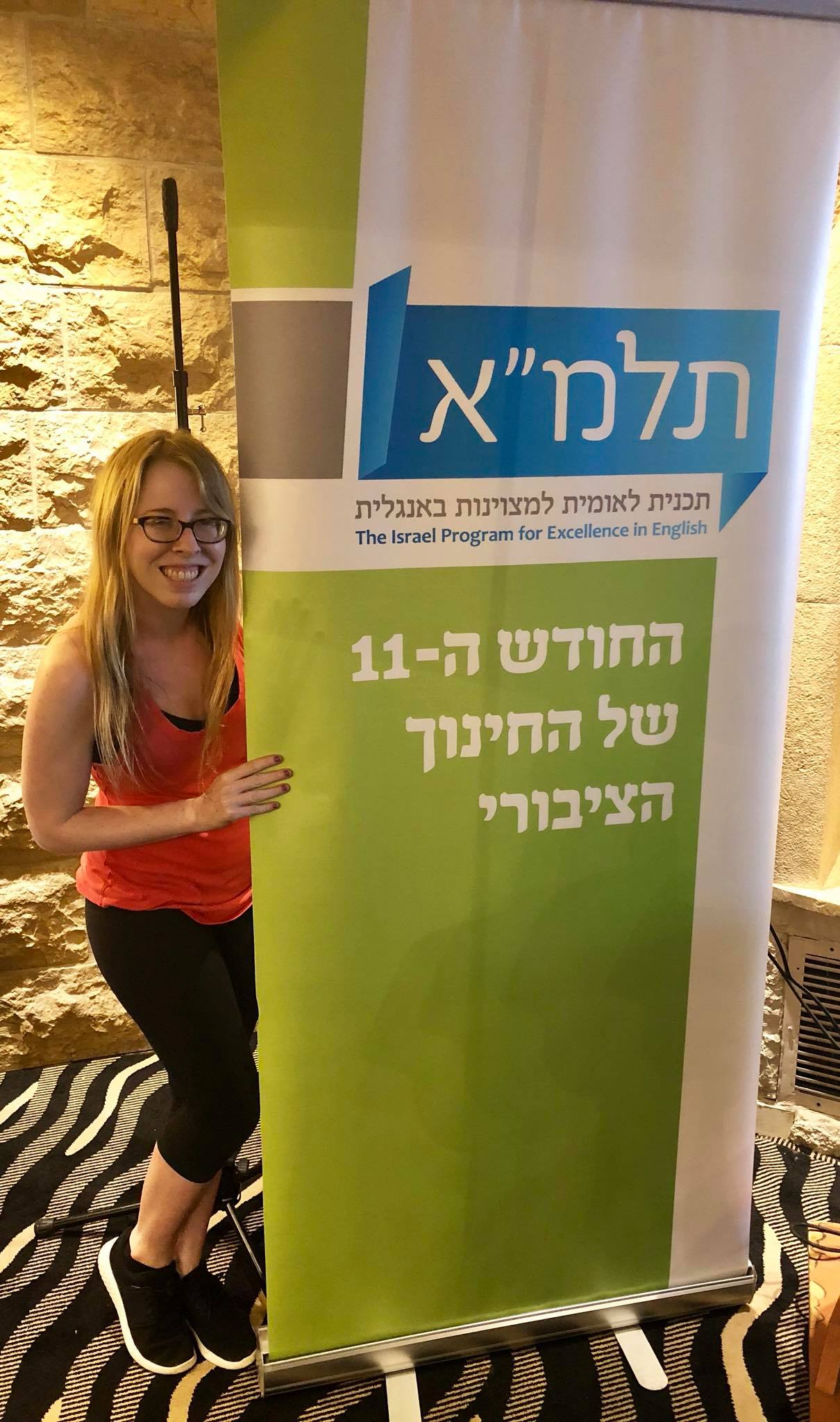
Over the summer, I participated in a month-long program called TALMA: The Israel Program for Excellence in English. The program brings educators from all over the world to teach English to children in low-income communities throughout Israel. Each non-Israeli educator is paired up with an Israeli co-teacher. As a team, the non-Israeli educator and the Israeli educator co-teach a group of around 30 children.
The 300 teachers were placed in 6 different “living locations” around Israel including Mitzpe Ramon, Ben Shemen Youth Village, Jerusalem, Ashkelon, Safed, and in the northern region of Mizra. Schools were located in the vicinity of living locations and teachers traveled by bus, carpools, or walking. The first and last weekends of the program were for the entire TALMA program, first in Shafayim near Tel Aviv and the last Shabbat in Jerusalem. The other 2 weekends we were free to travel to different parts of Israel on our own.
I was placed in the northern region of Israel and lived at the Nof Tavor Hotel next to Kibbutz Mizra. I lived there with 14 other teachers from around the US/Canada and with 4 Israeli educators/mentors from the Teach First Israel (TFI) program. The 19 of us taught in four different locations: Menashe, The Jezreel Valley, Nazareth Lllit, and Migdal Haemek.
I taught at a school called Nitznei Reut in Menashe from 8 am to 1 pm Sunday through Thursday. My school was 40 minutes away and 4 of us were in a carpool with our Israeli mentor. With my Israeli co-teacher Sivan, we taught English to 30 third grade students together. Most knew little English so we taught letters with sounds, body parts, colors, and other topics. They learned a lot including vocabulary and phrases. For example, leading up to the “Café Day”, they learned restaurant/food related vocabulary and phrases that they would use at a café. Each child created a menu and decided whether they wanted to be a waiter/waitress or a customer and they role played using English. The students did art projects, STEAM projects, family trees, sang songs, learned chants, danced, and baked challah, chocolate balls, and pizza. My school had a petting zoo and the principal brought in her poodle every day who is a mascot for the school.
Teaching in Israel was a big culture shock for me. For example, there is no such thing as recess duty and teachers did not supervise the children when they were outside. There wasn’t much discipline compared to what I’m used to in NY schools. If students did not want to do the work given, they didn’t have to do it — it was their choice!
After school, we often swam at the Kibbutz Mizra pool, went to a nearby Café Café, or took a bus to different towns nearby such as Afula, Nazareth, and Ramat Yishai.
During my two free weekends, I went to different parts of Israel. During the first weekend, we rented cars and 8 of us went to Safed, Haifa, Akko, and a winery. The other free weekend I went to Jerusalem with friends and then split up to spend Shabbat with relatives and my family’s close friends.
I had a great time and am so appreciative that I was part of the TALMA Teaching Fellowship this summer. I learned from both the Israeli teachers and other teacher friends I met from around the world. Living and teaching in Israel has deepened my connection to Israel in a different way from previous tourist experiences. I encourage other teachers to explore this opportunity!
The Gateway to a New Year
There’s nothing like a fresh pair of eyes, or four pairs, to get a new perspective on the things you take for granted.
Last week, I had the pleasure of hosting one of my Israeli sisters, along with her husband and two sons, for a few days of New York-style fun.
On Tuesday morning, we toured the USS Intrepid Museum. I’d been there just last year, but seeing the exhibits through the eyes of the Israelis, I was struck with a new sense of pride. We marveled at the stories of courage, ingenuity and sacrifices of the many Americans who have served our country in air, at sea, and in space.

Next, we visited the Statue of Liberty, and I was reminded that Lady Liberty was not erected to represent a person; rather, she is there to represent an idea.

From the pier we walked west on Fulton Street. As we headed towards the Freedom Tower and the 9/11 memorial, I couldn’t shake the memories in my head, images of ash-covered people walking the streets like zombies on a Tuesday morning 17 years ago.

The Twin Towers once stood like a gateway to our land, much like the two mountains between which the Israelites marched as they entered the Promised Land, with blessings pronounced to them from one and curses from the other. They too represented an idea; to me, they represented the indomitable spirit of America. That same undying spirit is represented today in the energy of the descending memorial pools and in the tower that now skyrockets to the heavens to accompany the souls of all those lost on that tragic day.

For the past 15 years, I have stood with fellow local clergy and Tappan’s first responders in remembrance on the mornings of 9/11. This year, I pray they will forgive my absence from the public ceremony, and I hope our non-Jewish neighbors will be reminded that the Jewish community means no disrespect by its absence, as it will be busy celebrating its holy day of Rosh Hashanah.
That being said, I hope you will join us this second day of Rosh Hashanah during our service to give honor to the memory of those who died, to pay tribute to those who secure our safety and our freedom, and to express our gratitude for the blessings we share as Jews in America. Sometimes we take for granted the lives we have in this country, as Americans and as Jews. Sometimes, in the thick of the public debates and political rancor, we forget the good that is all around us.
If you plan to be with our community on the second day of Rosh Hashanah, please consider arriving early, even if it means you’ll leave earlier than usual. We will be interrupting our regular service to make space for communal and individual remembrance with silence, song and shofar. Be on time (8:30am) to honor the day and to participate in our commemoration and prayer.
May our Rosh Hashanah usher in a year that brings us healing, wholeness, peace, and an appreciation of all our blessings.
Rabbi Craig Scheff
Incest, Ethics and Yom Kippur
Over the past year, our synagogue’s Committee on Jewish Living and Ritual, along with anyone else so motivated, has engaged with me in a monthly study of the traditional Torah reading assigned to the afternoon service of Yom Kippur, and of the approved alternate reading found in many high holiday mahzors. The goal of this process was to arrive at a decision as to whether our community should keep to the traditional reading or adopt the suggested alternative. While it is solely my responsibility as Mara d’Atra (“Teacher of the Place” or Halachic decisor) to make a final determination, I did not want to do so without considering input from those people who were seriously engaged with this question.
So what’s the big deal, you might ask? I realize that most people are not even present to hear the reading that takes place just a couple hours before the blowing of the shofar, when the majority of us are busy passing the last part of the fast day with a nap. The fact is, however, that since the time of the Talmud some 1500 years ago our traditional communities have been reading the same passage, Leviticus 18:1-30, during the Yom Kippur mincha (afternoon service). This reading follows closely on the heels of the passage we read Yom Kippur morning, which details the service of the High Priest and the Yom Kippur ritual of atonement.
The traditional afternoon reading of Leviticus 18 does not, however, contain a readily apparent connection to Yom Kippur. The passage focuses on guarding against the adoption of our neighboring cultures’ illicit and immoral practices. Specifically, the assigned portion details prohibited sexual unions, including the prohibition that a man may not lie with another man in the manner that he lies with a woman. The Torah seems to be giving voice to its revulsion at the erotic components of pagan society centuries ago.

In rationalizing its place in our service, commentators have pointed out that just as we focus on our spiritual purity and renewal of our relationships on this holy day, so must we recommit ourselves to examining our conduct in our most intimate relationships.
There is no doubt that the social and sexual mores of that time certainly influenced the choice of this passage for this particular occasion. Note, the Torah does not dictate the reading for Yom Kippur; it is the Rabbis (men) of the Talmud who did so.
Clearly, we don’t simply skip or excise passages of the Torah that make us uncomfortable. We confront Leviticus 18 as we read the Torah throughout the year, and we wrestle with it to make sense of it in our day and age. Its relation to Yom Kippur, however, has been called into question. And an alternative reading of Leviticus 19 has been included in many mahzors.
Leviticus 19 commences with the command “Be holy, for I the Lord your God am holy.” The passage contains Judaism’s central ethical teachings, detailing the kinds of behaviors that we should strive to adopt in order to achieve lives of greater holiness, and concluding with the command to love your neighbor as yourself.
The argument has been advanced that, whereas the reading for Yom Kippur morning is about ritual purity, this alternate afternoon reading provides a complement by stressing the importance of ethical purity. For those seriously engaged in self-reflection and atonement, an examination of our personal ethics certainly seems like an important endeavor.

Change should never be made simply for the sake of change or convenience. That being said, we should not avoid all change simply because we fear the slippery slope. Change in custom may be warranted when enforcement of the status quo has the consequence of undermining the purpose of the custom.
As a reader of Torah, I have never been comfortable reading about incest and bestiality on Yom Kippur to a tired and hungry crowd. It does not enhance my experience of the day in any way; and I think my feelings mirror those of the majority of people who attend this particular service. On the other hand, reading about the kinds of behaviors I must cultivate in order to be a more ethical person feels like a far more relevant and inspiring pursuit for this particular day.

At the end of our year of studying the issue, my “advisory board” voted in favor change toward adopting the alternative reading of Leviticus 19. But as I stated above, the decision is mine alone.
There is no doubt that I find the content of the alternative reading more suitable to Yom Kippur contemplation. And there is no doubt that I place value on the process of change itself; it trains us to guard against complacency. But the ultimate reason for my decision to adopt this change is my desire to capitalize on an opportunity. On the one day of the year that finds more of our constituents in synagogue and exposed to Torah, I hope we will be captivated in greater numbers by the beauty and relevance of Torah in our lives. I hope we will be inspired to examine our interactions daily, and recognize the ways in which the ethics of Leviticus 19 inform the most mundane aspects of our lives.
With this in mind, perhaps you’ll join us for mincha on Yom Kippur at 5:15pm for a short Torah study and the reading we are implementing. And perhaps you’ll consider picking up a Bible and studying the Holiness Code of Leviticus 19 in anticipation of the holy day. And perhaps, in so doing, you’ll make my decision the right one for you.
Rabbi Craig Scheff
Mas’ei: These are the voyages
Over the past week, I had an opportunity to share some vacation travel with my two older sons. Aside from being a time to rest, relax and rejuvenate, it was also an opportunity to experience a new city, reconnect with my adult children, and revisit relationships with extended family and friends.
Sharing space and time with others for an extended period, especially in close proximity, was an excellent exercise in self-awareness. The experience brought on a heightened consciousness of personal habits and a test of comfort with making conversation or with the lack thereof. Even our pace of movement as a group was something to be considered and negotiated.
Our destination was more familiar to some and brand new to others. This imbalance dictated that some would step up to lead while others would be relegated to follow. Some accepted their roles with complete comfort; others were forced to confront the insecurities that can accompany such powerlessness. While some of us sought to take in the experience from an intellectual perspective, diving deep into each historical site and building, others of us preferred the bird’s eye view, preferring the forest to the trees of the landscape.
Now, imagine that we were two million travelers instead of just three! These challenges (relatively insignificant, especially given that the context was a vacation!) must have been multiplied exponentially for the Israelite families journeying from Egypt to the Promised Land. The Torah, however, goes to great lengths to recount the places that served as mileposts of the trek and the people who led the migration. Let’s not lose sight of the many emotions and dynamics that had to be addressed by individuals, families and communities along the way.
And the next time we venture to a new place or choose to share an experience with others in a new configuration, perhaps we can examine our own responses more closely, especially relative to others. Perhaps we’ll come to appreciate the journey as much as, if not more than, the destination.
Shabbat shalom,
Rabbi Craig Scheff
Now is not always the right time
Ramah, the camping arm of Conservative Judaism, has occupied the headlines of the Jewish press over the last week. At issue is Ramah’s educational approach regarding Israel and Zionism. In particular, IfNotNow (INN), an organization whose stated goal is to end American support for Israel’s current policies with respect to the Palestinians, has begun training Jewish camp counselors to effect change in the Israel education of Jewish summer camps.Three months ago, a group of Ramah alumni involved with INN approached the Ramah national leadership seeking a commitment from Ramah to change its Israel education to include the Palestinian narrative. As news of INN’s camp counselor training program became public, the Ramah leadership issued a statement distancing itself from any partnership with INN and affirming its commitment to teaching Ahavat Yisrael, a love of Israel. Backlash came from both the right and the left. From one extreme, Ramah was being ordered to conduct a purge of any counselors who might express any sympathies to the Palestinian cause; from the other side, Ramah was being accused of betraying alumni who felt they had been labeled as anti-Zionist at best and anti-Semitic at worst.
Change, no matter how warranted, typically takes time in established institutions. Change requires education, building consensus, and the development of stakeholders who can model the proposed change as a natural and mission-driven extension of the institution itself. Change imposed from outside the institutional framework will, more often than not, fail, especially if it is expected to take effect immediately.
The Ramah camping movement, one of the great and long-lasting successes of Conservative Judaism and a breeding ground for ideas, leadership and best practices, is well aware of the changing landscape of the Jewish world, and in particular as it relates to Israel. Hundreds of young Israeli emissaries (shlchim) staff the Ramah camps each summer, bringing with them their many perspectives on Jewish identity, Zionism and Israel. The shlichim are not screened for their political leanings in advance of their placement. Each Ramah camp has its own board, its own professional leadership, its own unique demographic of staff, campers and families. Each camp has met the challenges of change in its own way, always sensitive to the Ramah mission, the camp’s constituent communities, and the reality that staff and campers come from a diversity of religious and educational backgrounds. To this day, the camp cultures differ in their religious and educational philosophies, even as they pursue the same mission.
The Ramah camps also face the challenge of educating students—campers and staff—who range in age from 6 to 60, many of whom live together in community. Learning takes place in formal, informal and experiential settings. The unintended curriculum is often more important than the intended curriculum, as so much of the learning occurs in the context of late-night one on one conversations. It is in the context of personal relationships that nuanced opinions are best expressed and best able to be heard. That is the true magic of Ramah.
Ramah directors across the camps, I believe, sympathize with those Ramah alumni who want to see staff and older campers engage in Israel discussions that reflect the complexity and nuance of the Israeli-Palestinian conflict. However, in light of INN’s demands for immediate and sweeping change, it should come as no surprise that the Ramah leadership felt the need to make a strong statement in response, officially distancing Ramah camps from any organizational or philosophical partnership, especially considering that INN’s platform specifically states that it does not take a position regarding the support of Israeli statehood. Critics may have cause to say that Ramah leadership’s latest statement was an attempt to appease the majority of its base and its financial supporters. Even if this were to be true, it doesn’t mean that Ramah has abandoned its dedication to pluralism and to permitting a diversity of opinions.
The world of Jewish education is still learning how to address the moral challenges of Israeli statehood and Jewish power. The Shalom Hartman Institute, as far as I am concerned, has done an excellent job of creating informative, nuanced and challenging educational materials for adults. (Check out the iEngage Israel curricula; our synagogue community has already implemented three of its courses to a positive reception.) Adapting these conversations for middle schoolers or high school students is going to take time and expertise, especially given the widely diverse ages and backgrounds of the intended students.
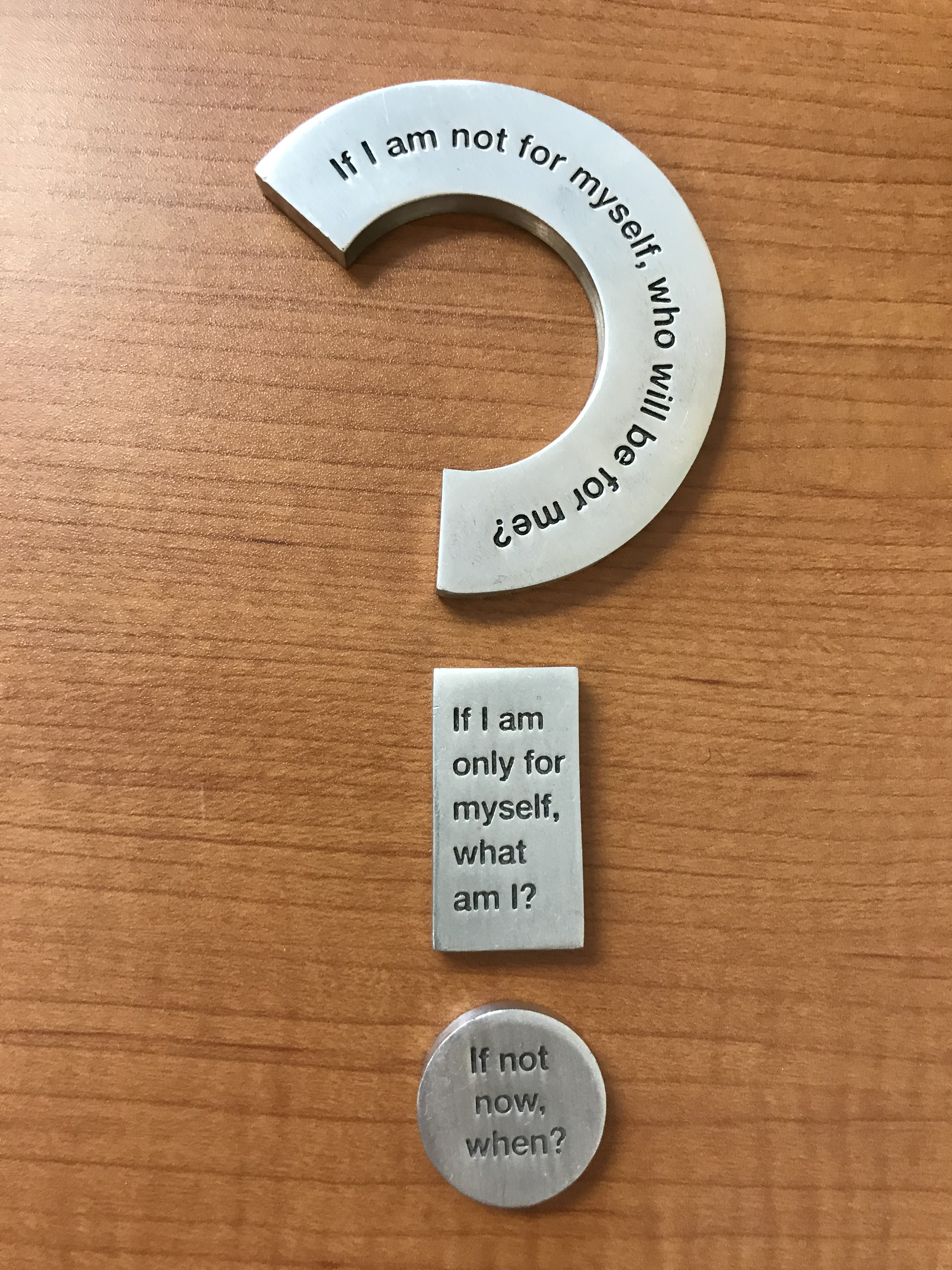
I firmly believe that now is the time to wrestle with the question of how to teach about Israel’s conflicts. But the answer to that question, especially when it comes to good Israel education, is certainly not one to be arrived at in a matter of months. Ramah camps are as good a place as any to advance this discussion—but not necessarily this summer or even next. Not if it is going to be done well, with the result producing the best informed Israel lovers and advocates for our future.
Rabbi Craig Scheff
Abiding in the amazement
Cain kills Abel; God asks Cain where is his brother; Cain claims not to know, and challenges God by proclaiming he is not Abel’s keeper. God replies that the blood of Abel is calling out. The Midrash boldly suggests an alternative reading: the blood of Abel is yelling at (or against) God, accusing God of standing by and permitting the injustice. (Genesis Rabbah 22:9)
As has been pointed out with respect to the Shoah, we are quick to ask where God was; less frequently do we ask where was Humanity.
As Holocaust survivors, my grandparents have never held God responsible for the deaths of family members or for their earlier years of torment. They do, however, consider their lives and their descendants miracles of God. They’ve never claimed to be more righteous or deserving of God’s attention or intervention; but they accept their gifts of life as miraculous nonetheless. For them, every day — despite the aches and pains, the losses of loved ones and the toll of the mundane — is a miracle.
Just off of Yom Hashoah and Yom Ha’atzmaut, I wrestle with my seemingly conflicting understanding of God. In reflecting on the Shoah, I say God was not accountable, except to the extent that God made room in the world for our free will. That conscious act created the possibility for the distinctiveness of good versus bad, of right versus wrong, of exultation versus disappointment. Put another way, in making room for evil, God created the possibility for us to live lives of meaning, as opposed to merely existing.
And yet, when it comes to the birth of the State of Israel — as is the case of the birth of my children — I proclaim that God was “in the room.” Despite the many sleepless nights that follow those births, I abide in the amazement of the miracle, as my grandparents do and as we as a people do, every single day.
I personally cannot believe in a God that would desire the suffering of the innocent or the young, of family or friends. I choose to believe in the God that invites me to choose life over death, blessings above curses. My God is the God that abides in the blessings I bring when I offer comfort, strength and healing energy. My God is the God that is revealed when I come together in community to offer prayer and to mobilize in action. My God is the God that is felt in the hearts of the suffering when they feel me acting as their keeper.
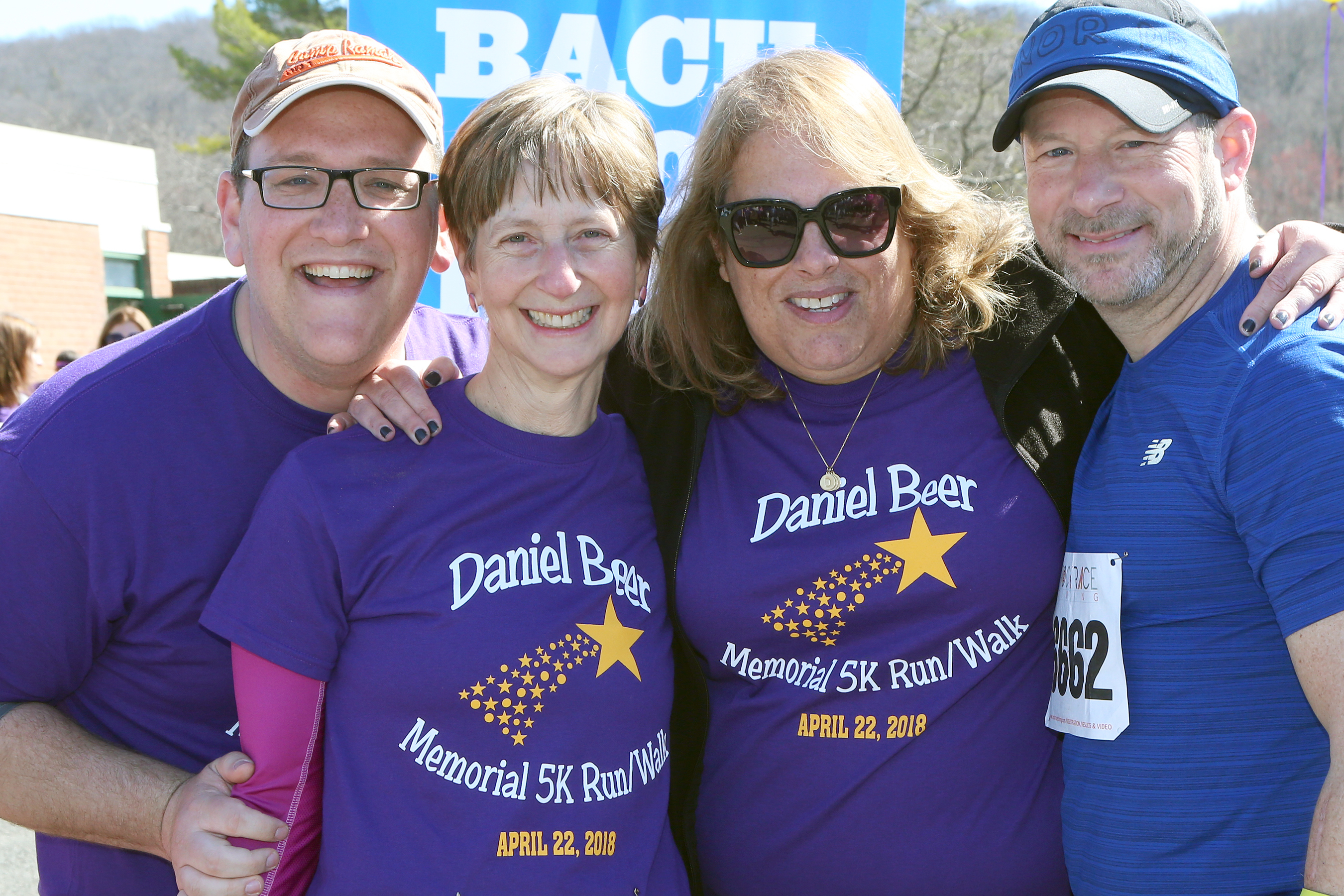
Do you wish to help a friend, but don’t know how? Do you wonder where God is in the suffering? Choose life. Recite Psalm 121 daily at 7:30pm with and for Rabbi Drill as she, with God’s and our help, experiences a refuah shleimah (complete healing), and add a psalm of healing for those in your life who are in need. Give someone else the gift of life, and donate blood. Perform an act of kindness in the name of a loved one. Remember someone you love. Abide in the amazement of something you once called a miracle.
Shabbat shalom, and a speedy recovery, my friend,
Rabbi Craig Scheff
 Three Rabbis Walk Into A Shul
Recent Comments