OJC’s March of the Living, Day 12 – A day to remember
Today we observed Israel’s memorial day. We began our day with a cross country drive that took all of 90 minutes. We arrived at Atlit, a detention camp administered by the British before the founding of the state of Israel. Atlit housed the Maapilim, Jews who escaped Europe for Palestine without official documentation and in violation of quotas the British imposed in 1939. If captured, the Maapilim were taken from their boats to Atlit, where they were disrobed and disinfected, men and women were separated from one another, and a sometimes long and often boring waiting period began. But the dream of stepping foot in the promised land was enough to carry them through the dangerous voyage, one that felt all too much for some like a return to the concentration camps they were escaping.


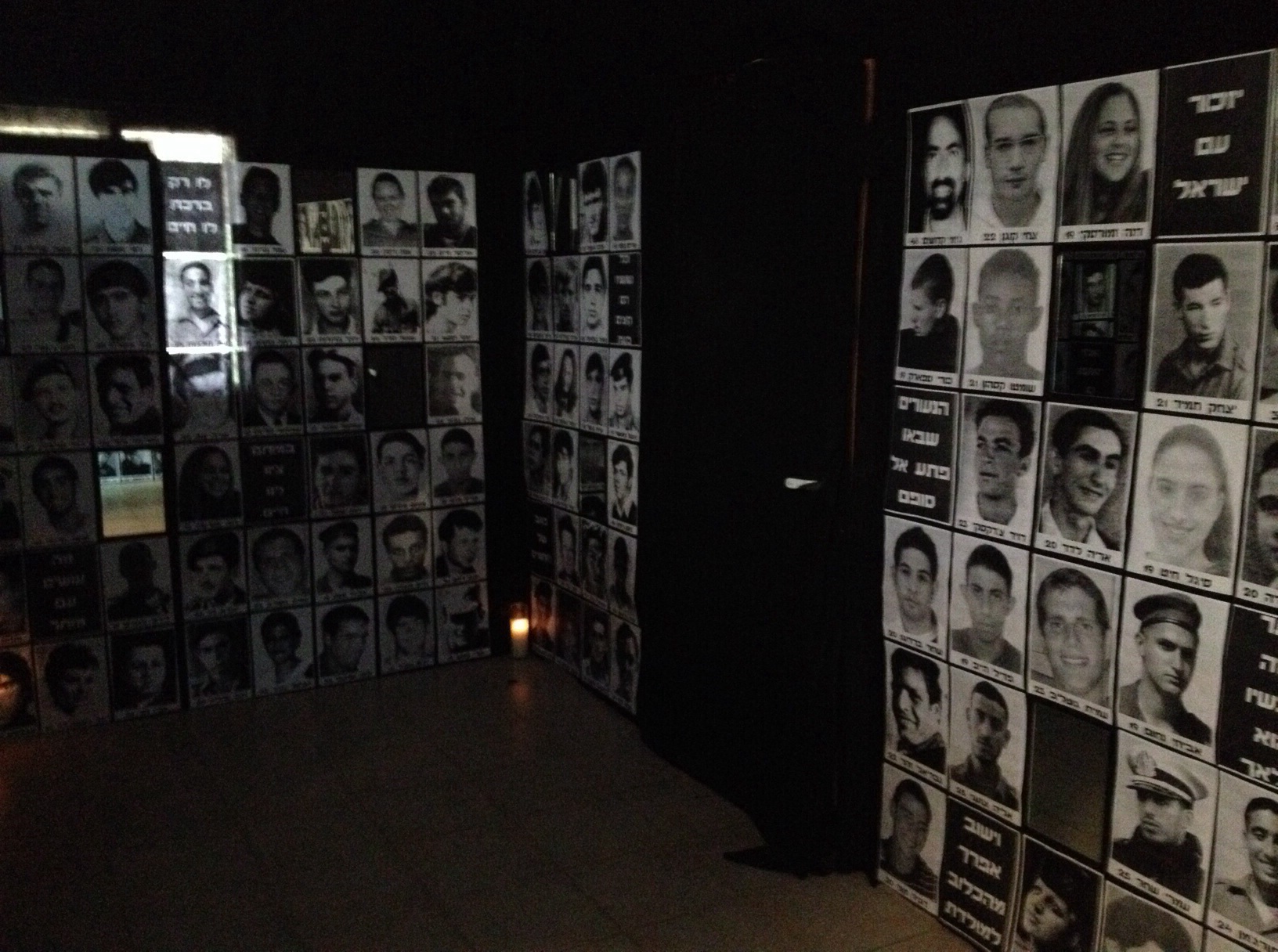
A short ride through Haifa and we were back at Kfar Ahava. Most of the children were on their way home for the holiday, but after a tour of the grounds, we experienced the memorial created for the children. It was a powerful exhibit that spoke to all ages about the value of every life and every story. A candle had been saved for us to light, and we once again felt the warm embrace of the place that has adopted us as its own as much as we have adopted the place.
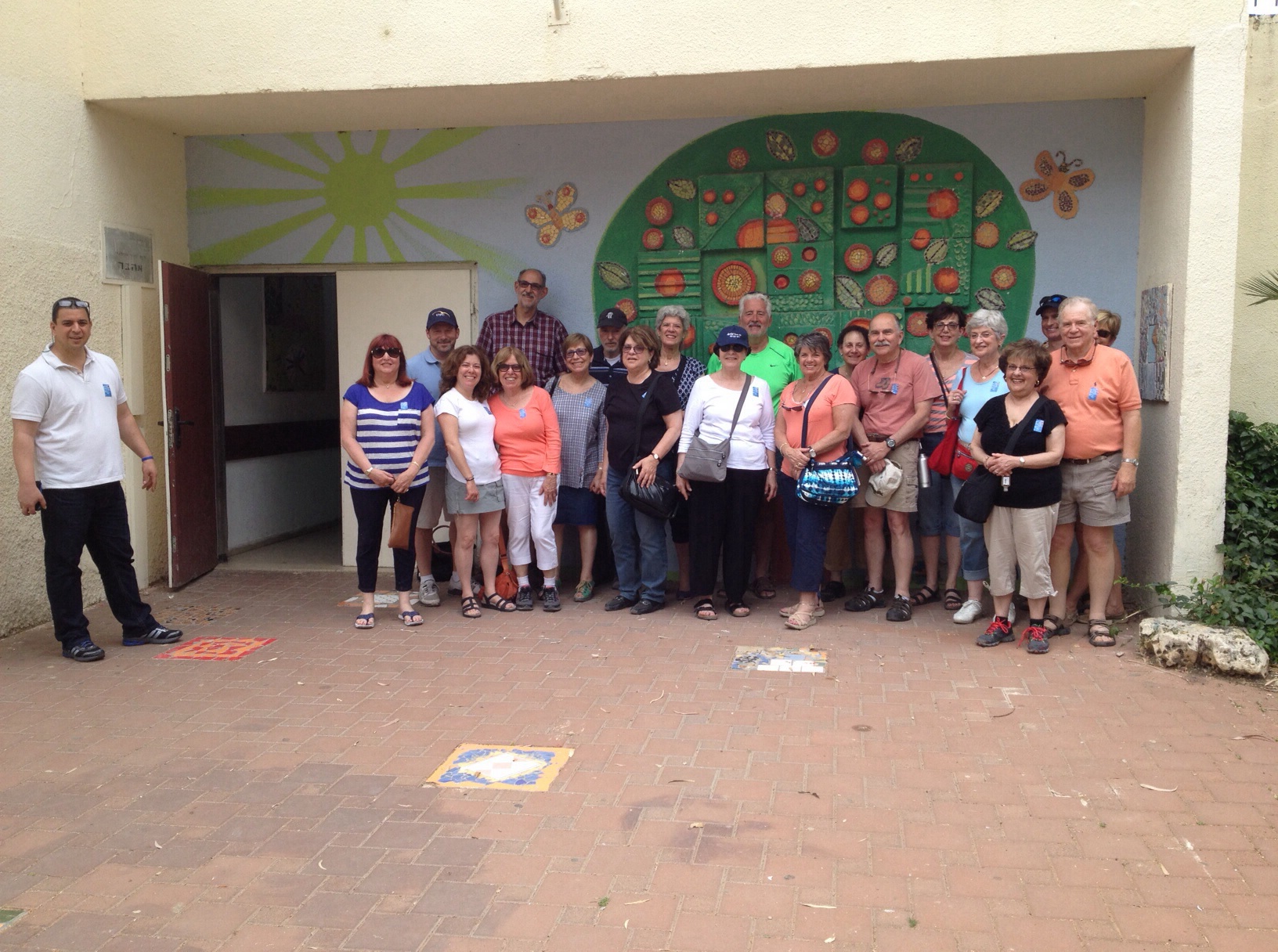
We returned to the hotel for an emotional afternoon meeting with representatives of TAPS (Tragedy Assistance Program for Survivors), and a group of women and children who lost loved ones in service of the United States military and who are beneficiaries of the program. They are here as part of a joint program with the IDF’s Widows and Orphans Fund, and were participating in the Yom Hazikaron commemoration. They inspired us and left us humbled with their stories of courage, resilience and pride.
This evening we watched the ceremony that transitions the nation into its Independence Day celebration. For individuals who suffered personal loss, there is no transition into joy. For the nation, however, there is a collective exhale, filled with genuine joy, sincere appreciation, and heartfelt song. We stood in Jerusalem’s Safra Square surrounded by thousands who took to the streets to sing and dance. We marveled at the multiple generations that danced together and knew all the lyrics to the songs that have told the story of the nation for decades.
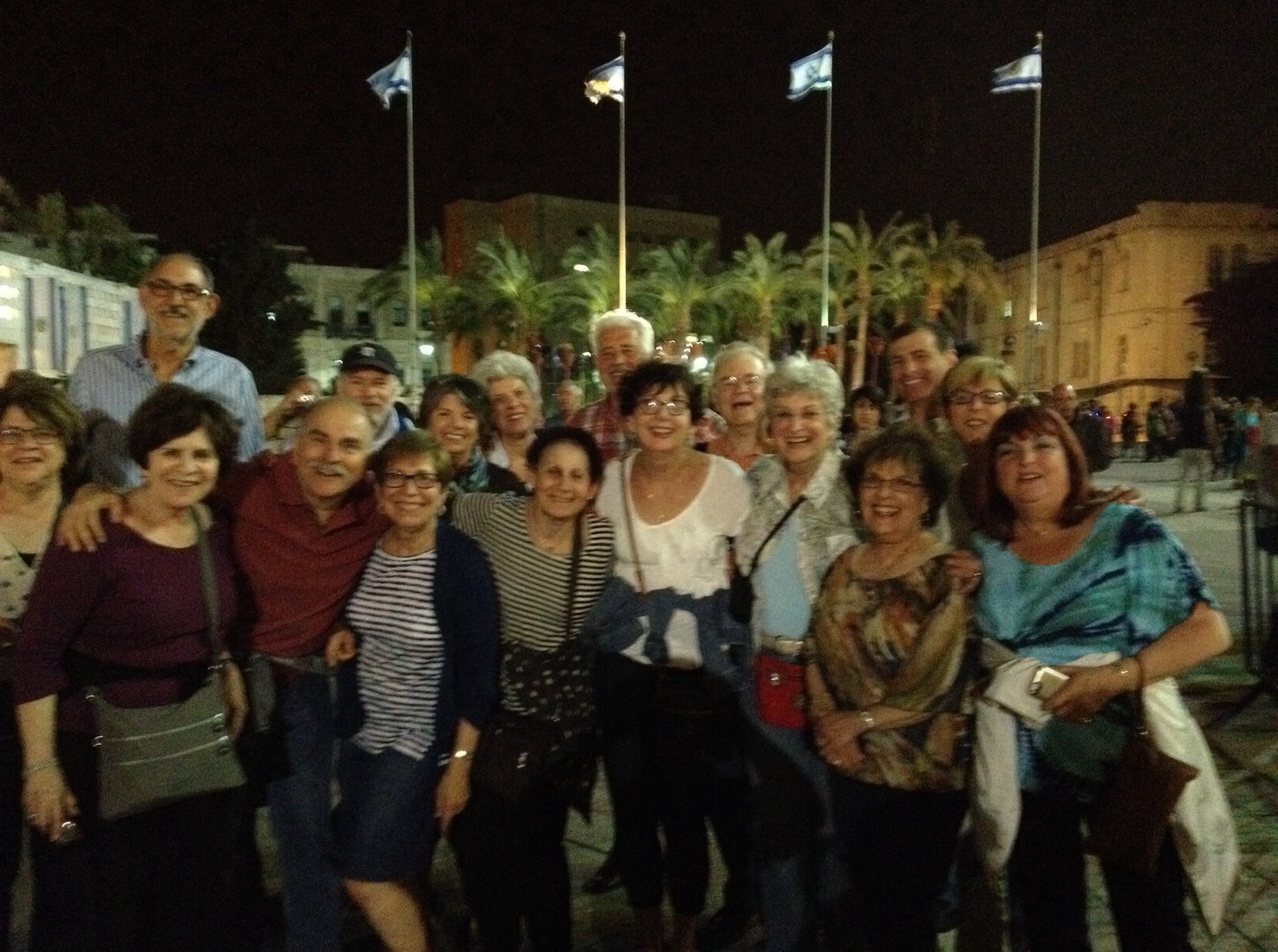

The dream, we realized, is alive and well. We exhaled from a long and emotional 24 hours. And we danced.
Happy 66th birthday, Israel!
Rabbi Craig Scheff
OJC’s March of the Living, Day 11
Day 11 of our journey began with a beautiful morning minyan on the hotel terrace looking towards the Old City. We made a minyan for an older gentleman from Connecticut saying Kaddish for his mother. We were proud to be a community for him on this morning.
Over breakfast, Joan Kedem, a long-time friend of OJC and advocate for Israel’s lone soldiers, shared with us her latest efforts on behalf of the soldiers who serve in Israel without the support and/or presence of families.
Our first stop of the day was the City Planners’ Office. We examined the miniature model of the city, with all its current and proposed building projects reflected on the map. The lifelike representation helped orient us to the topography, and to understand the historical development and expansion of the city. We ascended to the rooftop to gaze at the real-life, breathtaking version of the city.

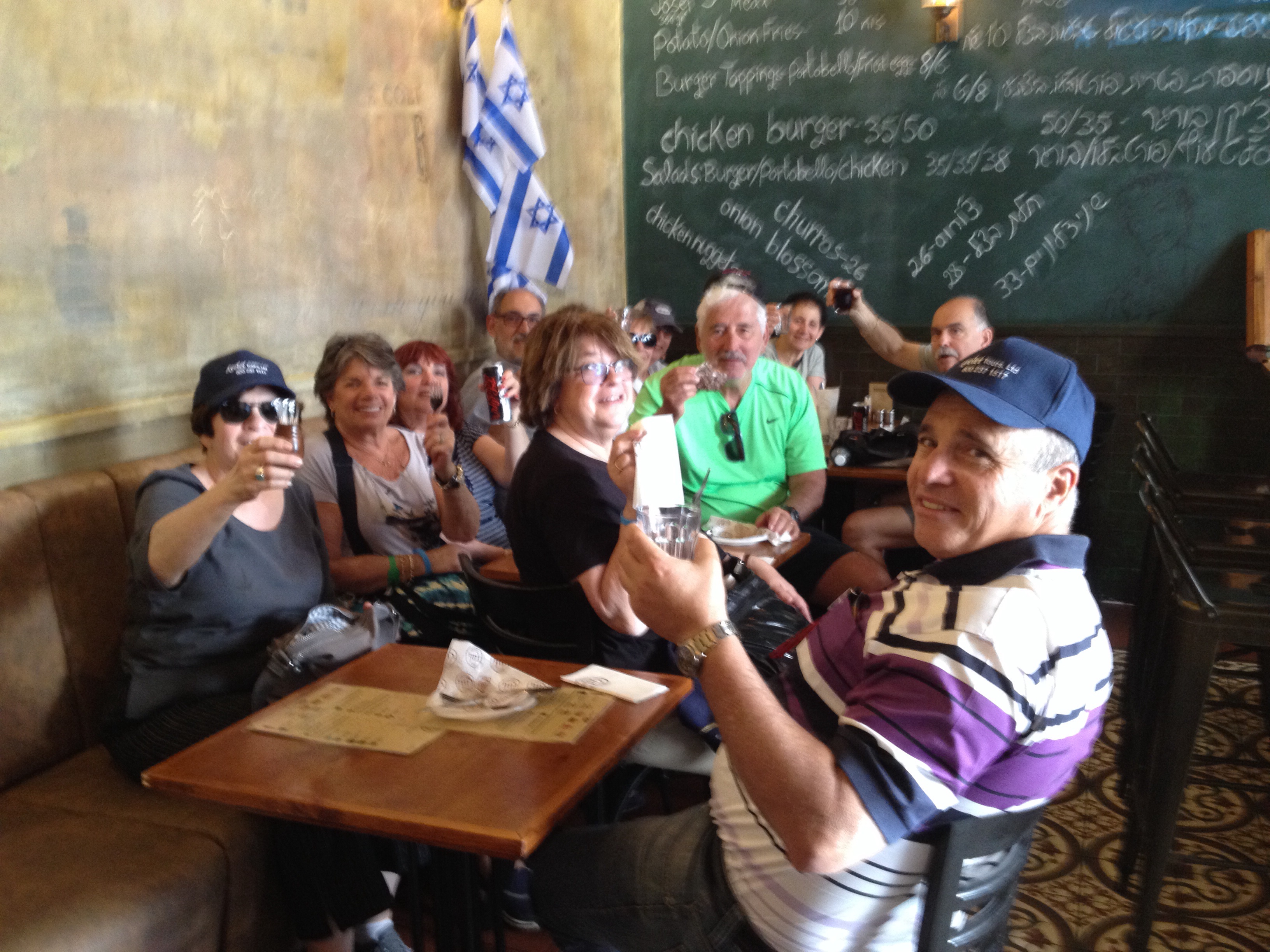
11am? Must be time for a winery visit! At Tzuba, we were introduced to the art of growing grapes, and to the production of kosher wines. We got a lesson in tasting, then fulfilled the obligation of four cups (is it Passover again already?), plus two ports, red and white, for dessert. Neeedles to say, wee were all shtarting to feel pritty good ’bout th day ahed….

A good dose of fresh air, lunch on Ben Yehuda street (I had Kosher McDonald’s, surprised?) and a brief shopping spree got us refocused for our next visit. At Our Crowd, we met with venture capitalist Élan Zivitofsky, who gave us an overview of the factors that have led to Israel’s status as the start-up nation.
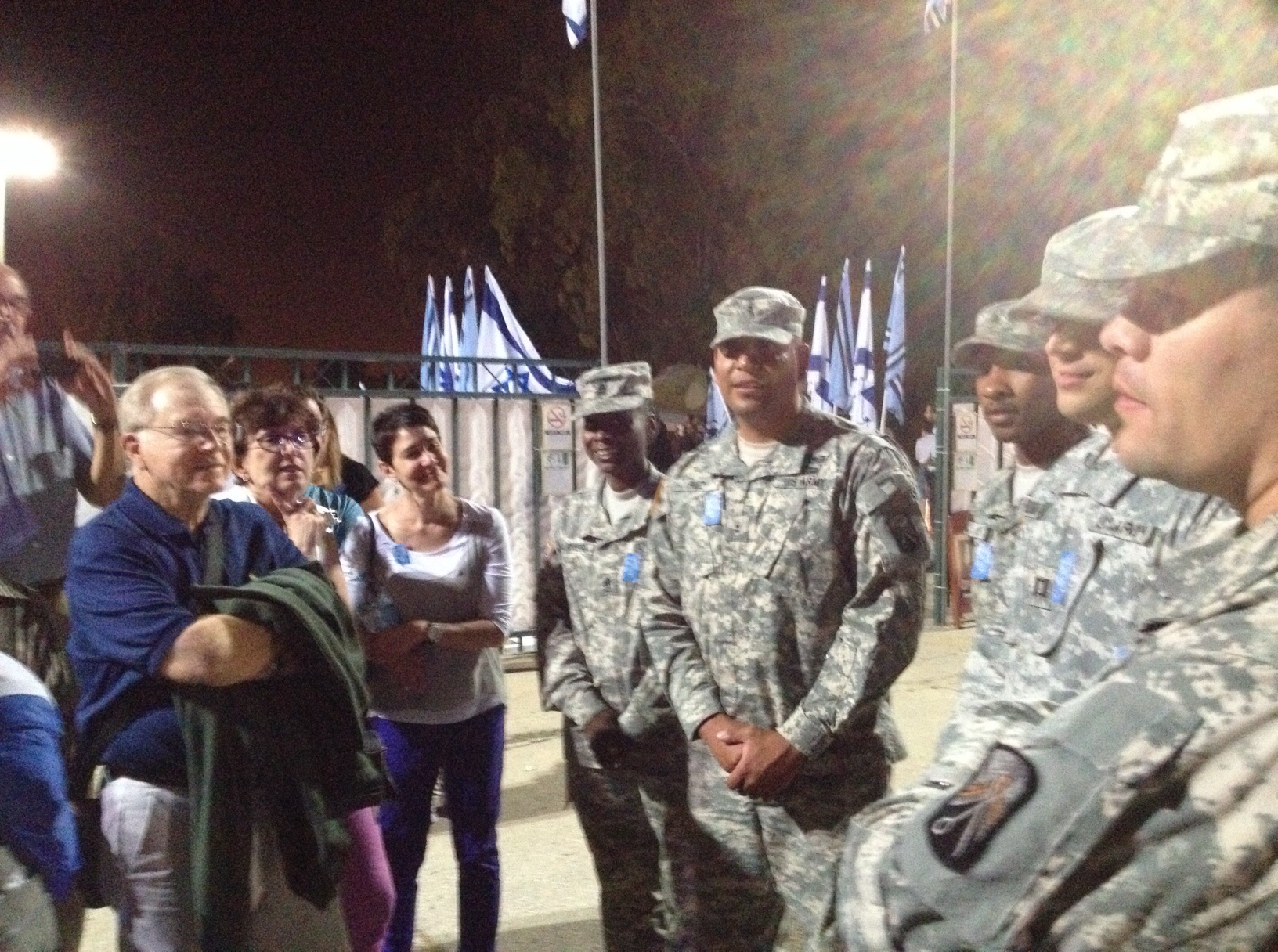
After a brief respite back at our hotel, we headed to Hatzor, an Air Force base near my younger sister Randi’s home, where we had the opportunity to experience an opening ceremony of Israel’s Memorial Day, Yom Hazikaron. Ariel Brickman, former commander of the base and now General Manager of the Ramon Foundation, greeted us and brought us to our seats. While most of us didn’t understand the speeches, songs and poems that were shared, we were deeply affected by the sound of the 8pm siren that was observed in silence, the voices that gave expression to the pain of the many losses recalled, and the swell of unity and pride that was shared when we stood for Hatikvah. Following the hour-long ceremony for the base soldiers, their families, and the families of fallen pilots, we met (by chance!) with several American soldiers from an airborne division who are training with the Israeli pilots. They talked about their positive experiences with the Israelis, how moved they were by the outpouring of honor and respect paid to Israel’s fallen soldiers, and by the way Jewish people recall their loved ones. In turn, we were so proud to be represented by this fine group of American soldiers.
No alcohol is served tonight. Restaurants are closed for the evening. TV and radio stations carry no light entertainment. Soldiers’ stories and songs of loss fill the airwaves. It is a communal and individual time to remember, to reflect and to find strength and comfort in a nation-wide embrace.
L’shalom,
Rabbi Craig Scheff
OJC’s March of the Living – Days 9 and 10, Shabbat
Let’s see, where were we? Oh yes, Friday! Our first full day in Israel. We prayed on the hotel terrace toward the Old City in the morning, to the sounds of traffic and jackhammers and the sight of the national bird, the crane, all across the horizon. And there was not a more perfect sanctuary in the world.
Our major stop on Friday was Har Herzl. We bridged our Holocaust experience with the State of Israel by learning stories of those soldiers who gave their lives for the sake of building a homeland. Some of them Holocaust survivors, each of them representing a precious story. Rank, office, and title mean nothing in this national cemetery. Every grave represents a story that is meant to be told, and we were moved by so many. This cemetery is a place of life, in stark contrast to the cemeteries of Eastern Europe. And we were asked to build upon these stories as we move forward in our lives in celebration of this land.


We affirmed this covenant by visiting the bustling market of Machaneh Yehudah, where thousands busily jostled for position among the vendors to make their final Shabbat preparations. We sampled the many ethnic foods of Israeli culture, bumped into friends and strangers, shared several laughs, and headed back to the hotel.

We welcomed Shabbat in Ezarat Yisrael, the newly designated area for men and women to pray together at the Kotel. We sang and prayed, other visitors joined our community. As we finished Kabbalat Shabbat, a group of children led by my colleague, student and friend, Rabbi Ari Lucas, descended to the platform, gathered beside us, and the rabbi and children started their prayers. Our songs occasionally clashed, and at times we joined each other’s melodies. And I felt something that I have never felt before at the Kotel. Total joy.
The OJC group closed down the dining room with a rousing rendition of Birkat Hamazon, and we were all primed to enjoy a well-deserved Shabbat rest.
Shabbat was a day of joyful rest, with some of us sampling services at different synagogues, some of us enjoying a walking tour, and some of us playing with family at the pool. We joined Rabbi Jim Rosen (Ariella’s father) and the Beth El community from West Hartford for a discussion, Maariv and Havdallah.
We ushered in the 18th day of the Omer with dining, shopping and witnessing the streets of Jerusalem crowded with people at play.
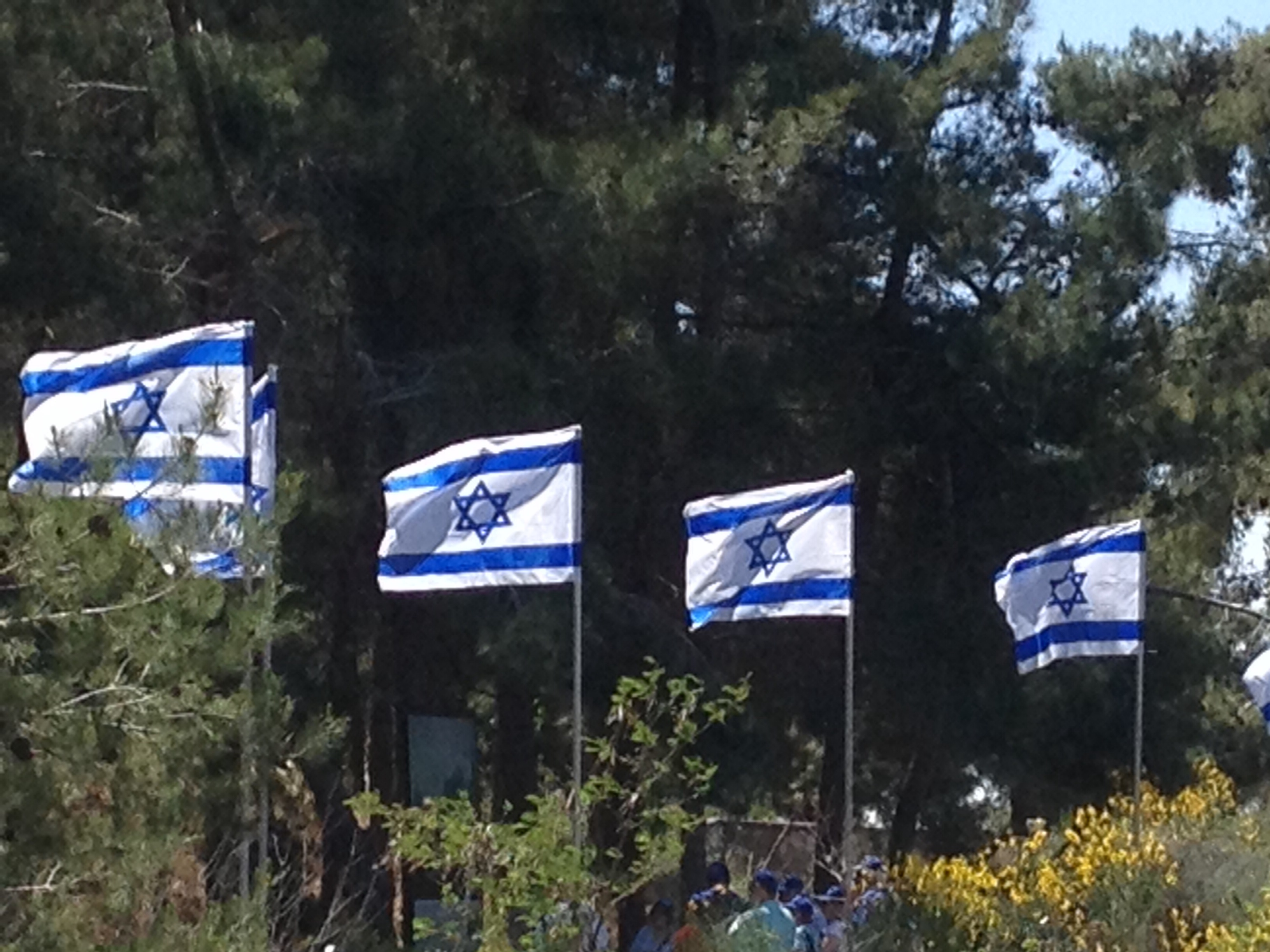
As we head toward Memorial Day on Sunday night, I pray: To those who gave so selflessly in order for us to have such joy, we thank you and hope to be worthy of your sacrifice.
Shavua tov,
Rabbi Craig Scheff
OJC’s March of the Living, Day 8 – Time to soar
With what seemed to be a shared burst of adrenaline, we were up and out early this morning to catch our flight to Israel. Predictably, by the time we all boarded the flight, we were crashing, physically and emotionally. Our spirits, however, were sensing that the moment to soar was fast approaching. We landed a bit late in Ben Gurion, but breezed through baggage claim and customs, met our agent, tour guide, driver and my sister, Randi, who shleps to the airport for nearly every trip I have ever taken to Israel to greet me with a hug, several kisses, lots of tears and ten whole minutes of my time.
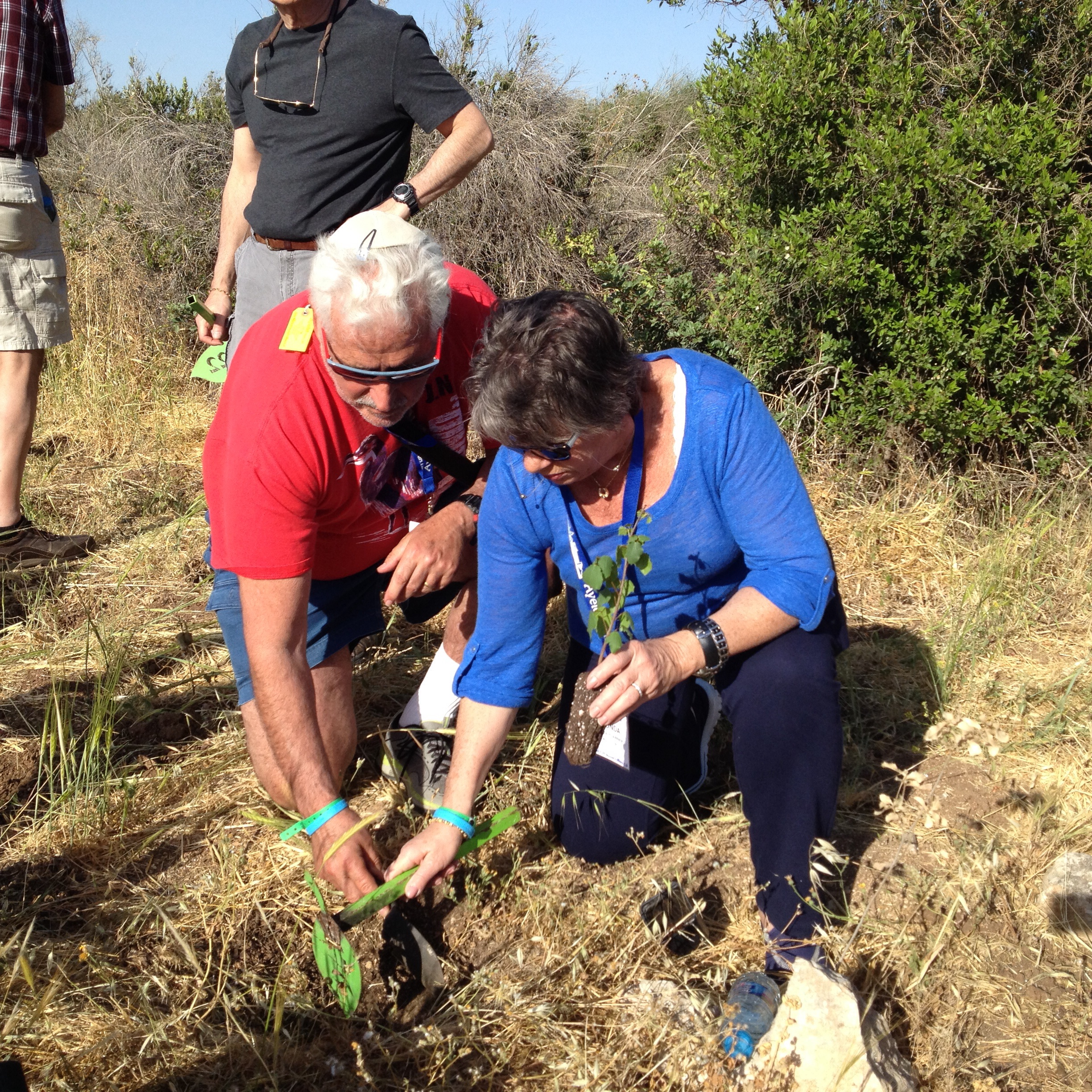
Our first obligation was to fulfill the mitzvah of giving back to the land upon our entrance. We drove to Neot Kedumim, a scenic biblical landscape, home to every type of tree mentioned in the Torah and reminiscent of the land of milk and honey that God promised to the children of Israel. Under the warm and bright afternoon sun, we spoke prayers of thanksgiving that we had been restored to the land, and got down on our knees to plant olive trees in the soil.
Back aboard the bus, we settled in for the climb to Jerusalem. Sweet renditions of “If I forget thee O Jerusalem” filled our ears, and the glow of the stones reflecting the golden rays of the setting sun dazzled our eyes. We got off the bus at Yemin Moshe to view the Old City, and to share a bottle of wine, a long braided loaf of sweet challah, a song of Jerusalem, and a blessing thanking God for bringing us to this day.

We earned this day. From slavery to freedom, from degradation to exaltation, we have spent the last week bearing witness to moments of our people’s greatest suffering. As our tradition teaches, those who mourn her will be privileged to know her greatest joy. Today our spirits fly.
With Shabbat coming in tomorrow afternoon, I will take this opportunity to wish you a Shabbat shalom. We’ll have to wait until Sunday to catch up!
Rabbi Craig Scheff
Ignorance is bliss, maybe – OJC’s March of the Living, Day 7
There is simply no denying Budapest’s beauty. Seeing her from the Danube at night, she glows majestically. Walking her streets under a sunny blue sky, I come across everything in a city I could want: gorgeous architecture, breathtaking vistas, a cosmopolitan feeling, art, music, sidewalk cafes, culture, history, and a rich Jewish presence. And a river that runs through it!



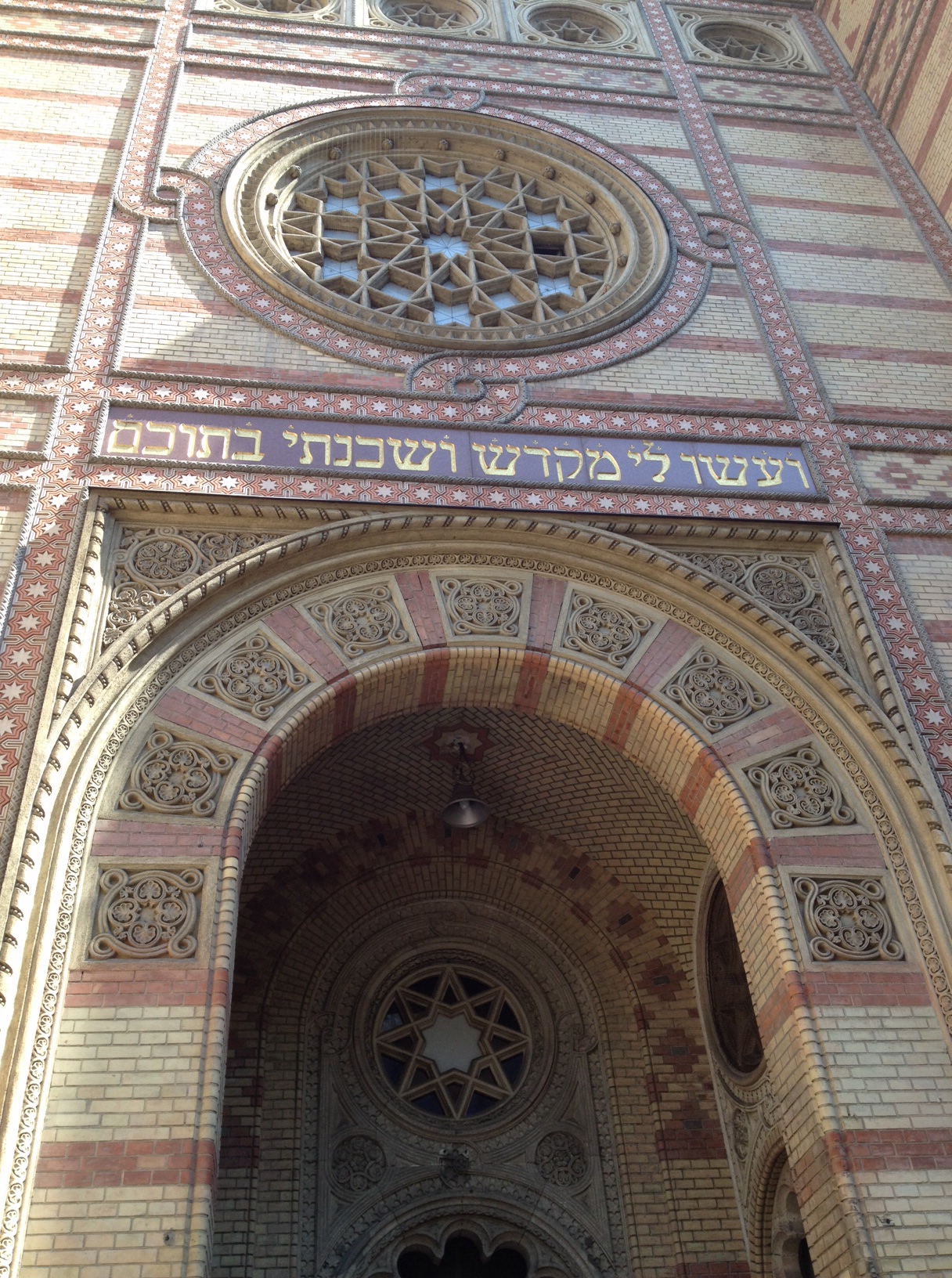
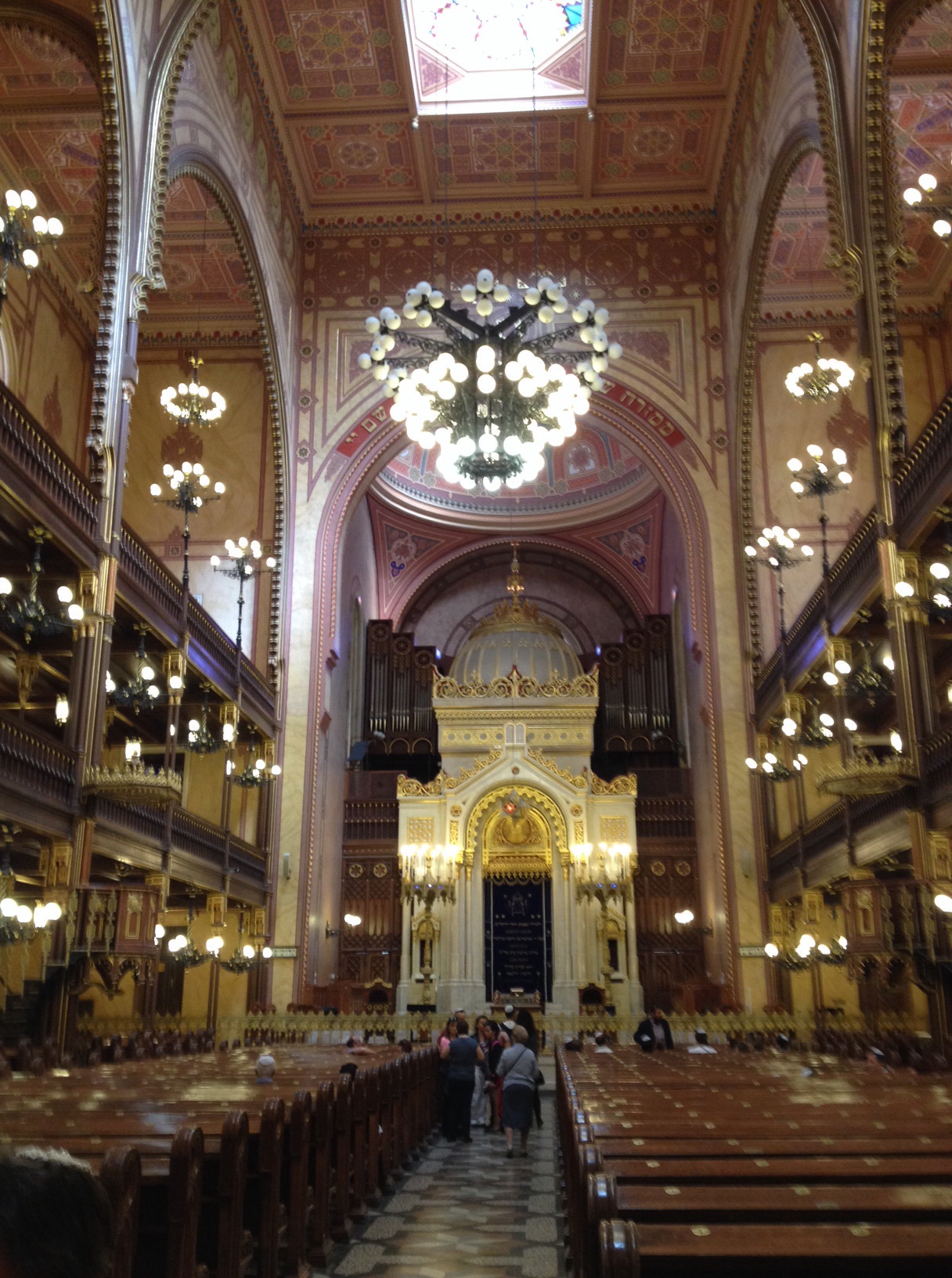
The largest synagogue in Europe can be found here, the Dohany Synagogue, a symbol of 19th century Jewish assimilation and acceptance. Jewish museums and a rabbinical seminary are all part of a vibrant Jewish community that boasts of 80,000 members. Okay, so the synagogue only gets 50 people on average for Shabbat morning services, but 3,000 show up for the High Holy Days! We found a quiet corner away from the tour groups in the magnificent sanctuary, and sang psalms of Hallel in celebration of Rosh Chodesh.
Oh, about that river. Well, that’s the piece of this place that gives me nightmares. It reminds me that, while I try to enjoy this magnificent city, there is a history here of its government and citizens choosing the wrong side of the battle between good and evil. Hungary enacted anti-Jewish legislation in 1920, well before Germany. The Hungarians chose the Nazis’ side in World War II. Subsequently they were occupied by Germany (which is why so many magnificent structures remained largely intact). And the Hungarian extreme nationalist party, known as the Arrow Cross, assisted in the decimation of Hungarian Jewry. Of an estimated 800,000 Jews alive at the beginning of 1944, fewer than 200,000 were alive after the war. 400,000 Hungarian Jews were killed at Auschwitz-Birkenau over a 10 week period of time beginning in April 1944. The Arrow Cross killed thousands more in the weeks that followed, taking Budapest’s remaining Jews down to the river to kill them and to dispose of their bodies in the Danube waters that came to be known as the red river.

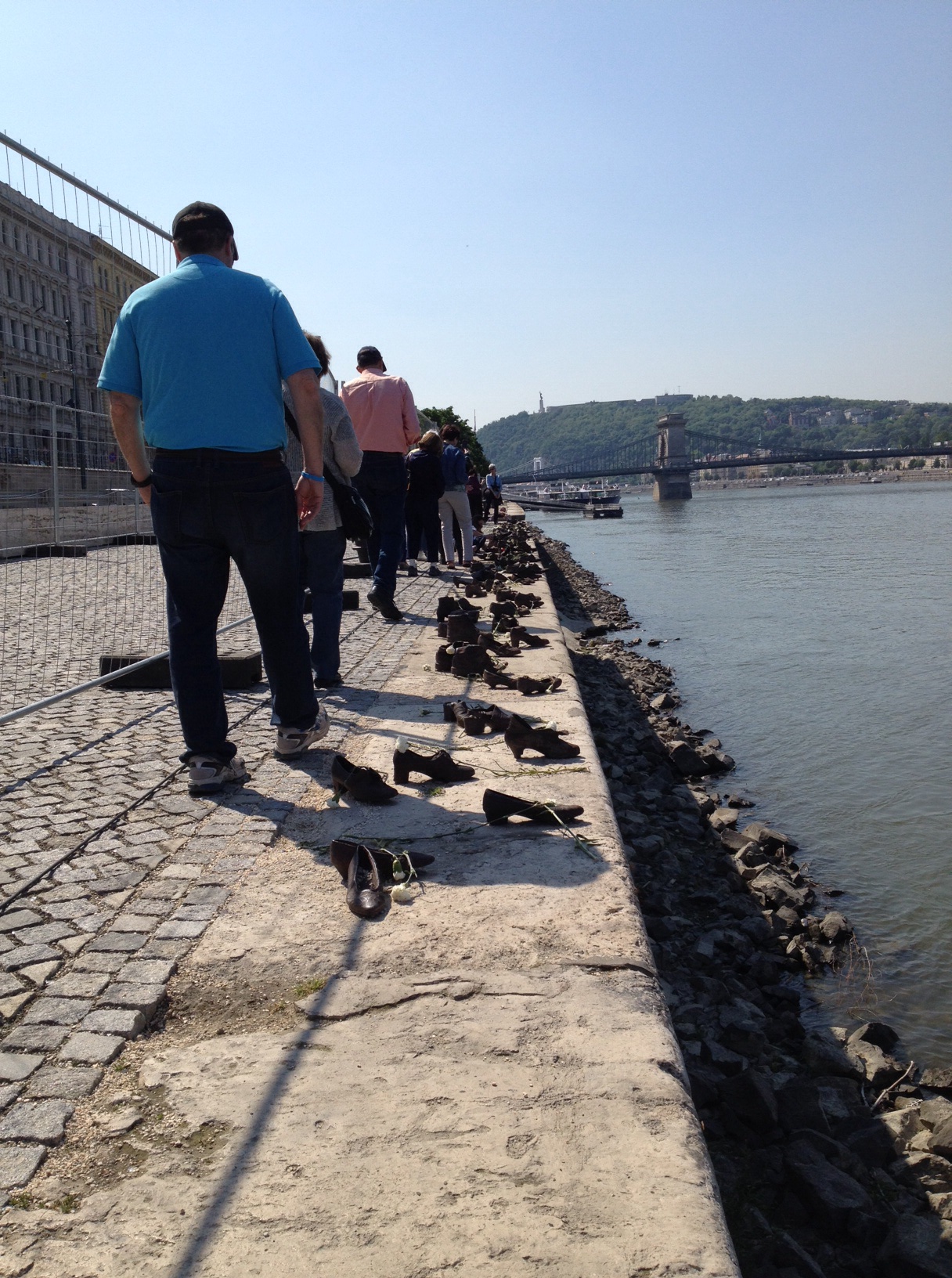
Only those who care enough to walk along the river will notice the shoe memorial that recalls those horrible days. But I can’t get the image out of my head. Even the prominent tributes to Raoul Wallenberg, a Swedish banker and diplomat who is said to have saved 100,000 Jewish lives by issuing them diplomatic immunity papers and safe houses, cannot soften the brutal images of Hungarian complicity or the reality that the extreme right wing party constitutes twenty percent (and growing) of Hungary’s government today.
A docent at the Jewish Museum today commented that only a Jew can tell the story of the Jews’ suffering in Hungary with passion. And that’s what worries me. When will others own the story of the greatest sin against humanity with the same passion that we do? And what happens until that time?
All that said, this city certainly is beautiful. So long as you don’t think about what is beneath the surface.
Tomorrow morning Israel. Thank God.
Rabbi Craig Scheff
OJC’s March of the Living, Day 5, The March
I am not taking the easy way out. Today was a day far more about images than words. And so I have chosen to share images with you. Images of a wet and dreary day at Auschwitz that evolved into a bright afternoon upon our entrance into Birkenau, the death camp that we filled today with life. Friends and families were reunited today in spirit and in person. Tears were shed for the horrors, and laughter was shared to protect us and to reaffirm life. A Torah scroll was completed at the end of the march in front of 12,000 people, and we sang Hatikvah firmly committed to our hope and faith in the future. Horrific reminders of death were balanced by personal encounters with resilience and courage. I hope the images below can provide a small measure of what we will carry in our minds and hearts forever.

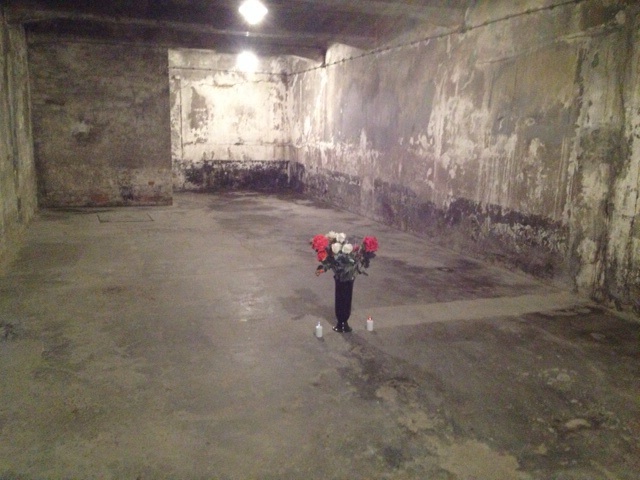
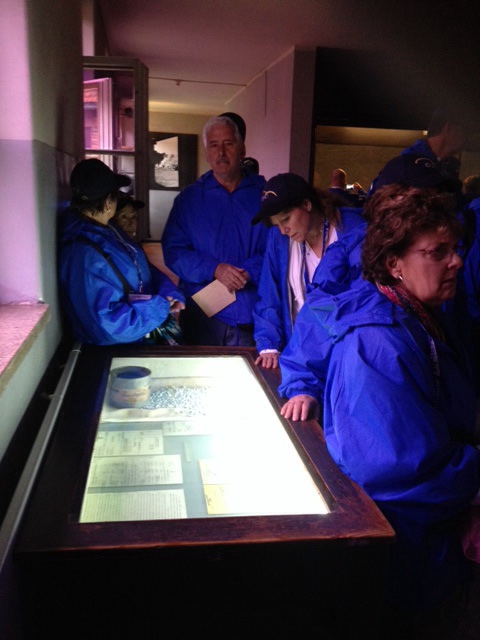


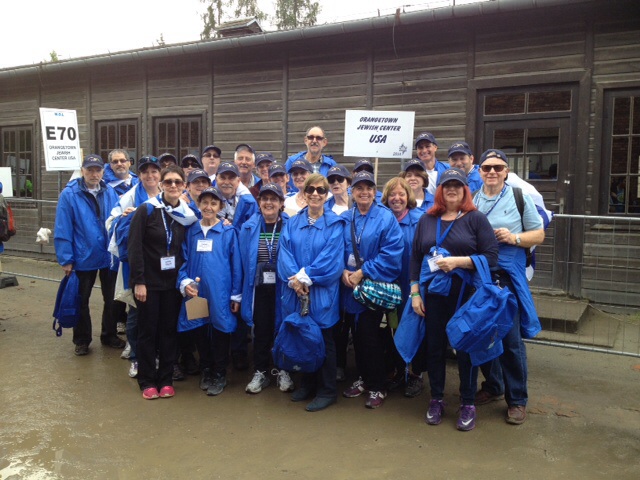
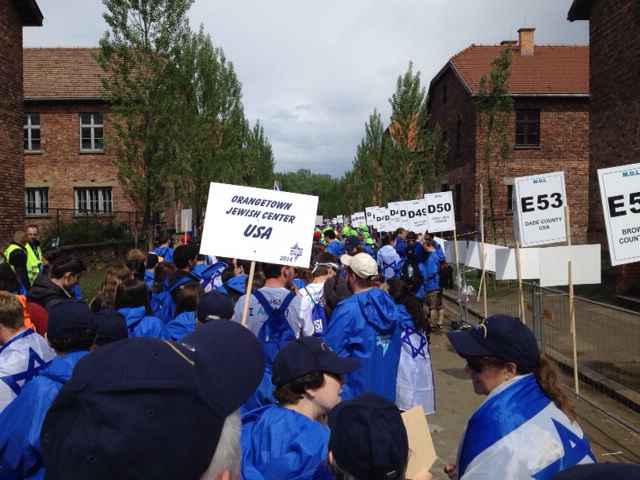

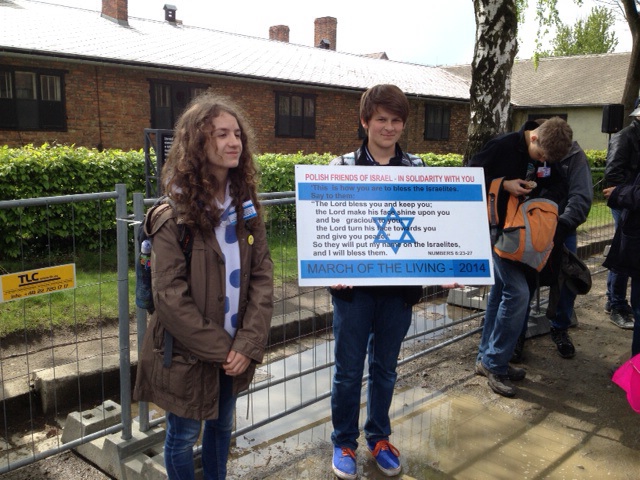


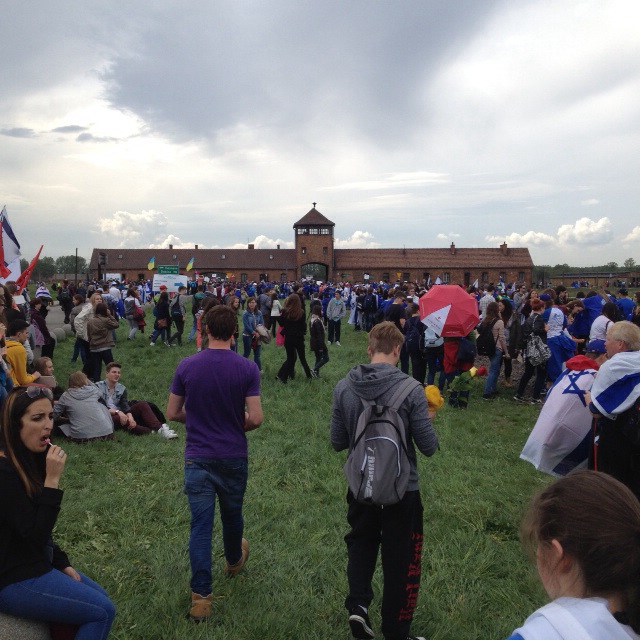


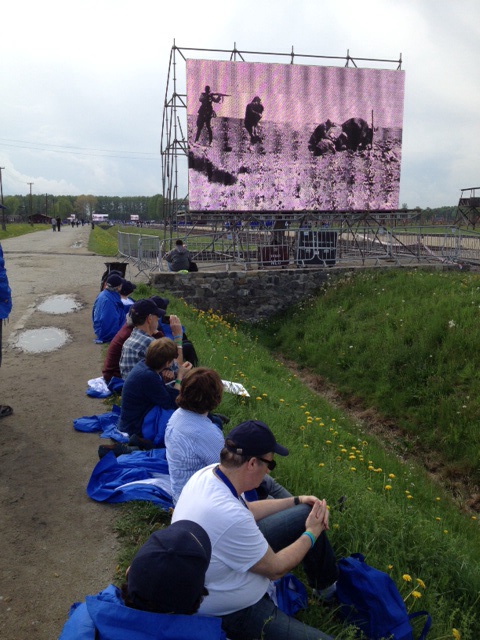

Tomorrow morning we depart for Budapest. It will be a long bus ride through the hills of Slovakia. You will here from me again, God willing, on Wednesday. I leave you with a thought from Anne Frank that Rabbi Drill shared with me: A candle both defines and defies the darkness. If the soul is the lamp of God, then we too can both define and defy the darkness. And that is why we are here.
Am Yisrael Chai,
Rabbi Craig Scheff
The need to scream – OJC’s March of the Living, Day Four
In just a couple of hours, our friends back home at the Orangetown Jewish Center will light a candle. For the 25 hours that follow, that candle will be watched by shomrim, or guardians, our keepers of the flame. The sanctuary will be open as a quiet space for reflection and meditation. Some people will find peace sitting in the quiet with their thoughts and memories. Some people will learn as they read personal accounts of victims and survivors of the Holocaust.
Whether you choose to sit for an hour as a keeper or just drop in for a few moments of reflection as a participant in our commemoration, I pray that you will keep those of your community who are here in Kraków in your thoughts as well.
This has been a long and hard day. For some of us it has been a day of frustration and anxiety. Being in Kraków today is like being in Disney World. The Old Towne Center looks like Epcot. Kraków was spared by the Nazis from destruction because they intended to use it as their center of control for their Polish occupation. So many synagogues remain well-preserved. Some date back to the early 17th century, and the Ramu’s sanctuary dates back to the 14th century. The old Jewish cemetery is manicured and better kept than some of our Long Island cemeteries. In fact, it all looks too good.
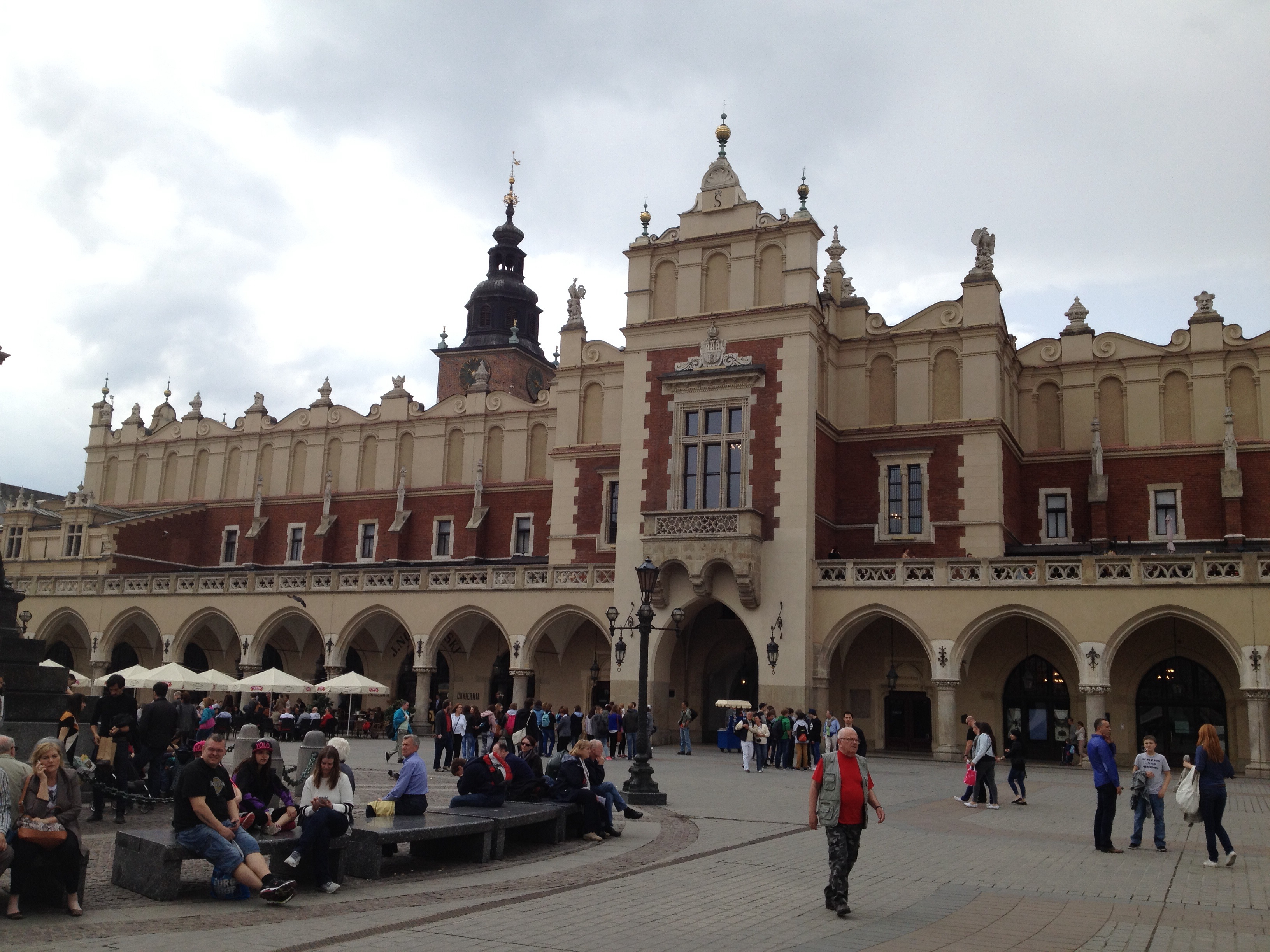
And that is the crux of our issue with this place. It is too neat, too clean. Many of us used the term “whitewashed” on several occasions today. Some of us began to challenge our guides, only to be met with resistance and defensiveness. We understand that this generation of Polish people struggles with accepting our sense of victimization when the Polish people suffered at the hands of the Nazis as well. But we can’t accept their reluctance to accept any responsibility for the deeds of the past as part of their history. The righteous among the Polish, those who aided Jews at the risk of their lives, are highlighted as they should be. But there is no mention, no acknowledgment, of the perpetrators among them.
So we are left wanting to scream to the world on this eve of Yom Hashoah. But what do we scream? For what purpose did we come out of this Mitzrayim, this Egyptian enslavement? Hopefully tomorrow, as we march through the divided sea with thousand all around us, we will have our answer.
Laila tov,
Rabbi Craig Scheff
Atypical Shabbat in Warsaw – Day Three
Cold. Wet. Gray. Like the grainy images we have all seen of past Jewish life in Poland. That is the way I imagine Warsaw, and every other city in which Jews were crowded into just 70 years ago on the eve of their destruction. And that is the city of Warsaw that we experienced today.
After a Shabbat morning service and Torah study, we headed to explore the new Museum of Jewish Life in Poland, slated to open in October. We were all deeply affected by our docent, Martha, who clearly had not anticipated our questions. Sure, she could describe the construction and architecture of the museum. She could address each period of Jewish life in Poland. But when asked about her own identity, she seemed taken aback. The daughter of a Catholic father and a Jewish mother, she was raised in a home where Communism was the official family religion. A class trip to Israel reintroduced her to her ancestry, and after five years in Israel and a brief stay in America, she returned to Poland to reclaim her past. Now, she sees it as her mission to restore the place of the Jews in Poland’s historical narrative. It was powerful to see a personal struggle to rediscover an identity; it was inspiring to learn this perspective on why we are here.
While the museum’s emphasis is the many contributions of Jewish life in Poland, our walking tour of the monuments to Jewish life in the Warsaw ghetto certainly took us back to the suffering of the Jewish people in this place. We were cold and wet as we sloshed through the gray landscape. But we did not dare complain. We were all acutely aware that we had sturdy shoes, multiple layers of clothing, some of us had gloves, and all of us were fed and headed ultimately for shelter. Who were we to complain, especially standing in the footsteps of those whom we were here to remember.
The topic of our Torah study this morning, from today’s parasha Kedoshim, was the Torah’s commandments not to stand idly by the suffering of our brothers, not to hate others in our hearts, and to love our neighbors as ourselves. Tonight, as we put our heads to our feathery soft pillows, we are confronted by challenges that make sleep elusive. How can we begin to empathize with the suffering of the Holocaust’s victims without feeding the flames of anger and hatred? How do we formulate an active and instructive response to these events such that we become more attuned to the suffering of others, be they Jewish or not? How do we own this victimization without victimizing others?
Tonight, international stage and synagogue star Dudu Fisher sang us songs of lament, prayer and hope. It was a poignant way to bring in the new week and the difficult commemoration ahead. I pray I can find the one melody that will bring me just a little sleep before the sun rises to the new day.
Laila tov,
Rabbi Craig Scheff
I am a Jew – Days 1 and 2 of OJC’s March of the Living
Traveling to Eastern Europe with a congregational tour is nothing like traveling to Israel. It is one thing to be greeted gruffly by an El Al security guard or bumped aside by a Jewish grandmother trying to be the first to the overhead bin; it is another thing altogether to be identified so easily as an outsider. Okay, maybe it is just in my head. But that’s the only place that really matters as I reflect on the meaning of this trip to Warsaw and this growing feeling of anticipation.
I am a Jew. I feel it most acutely when I am traveling abroad, especially headed for Poland. I am identified by my language, my idioms, my jeans and my kippah. My conversation with the person next to me invites curiosity, apologetics, perhaps a touch of pity (and a measure of resentment?). Must we live in the past? Must we dwell on the horrors? Must we constantly remind others of our suffering? Must we be so overtly distinctive? And yet, as I go through customs to board the plane from Frankfurt to Warsaw on this morning, I have never been more proud to be a Jew.
I am a Jew. And I am headed back to the place where it was made clear, on more than one occasion throughout the history of Europe, that the Jews were not wanted. I am soon to set foot in the land of my grandparents’ birth, the site of my namesake’s death. (My great uncle Shmiel was an officer in the Polish army. He died in World War II defending his home, even while his wife and children were buried alive there. The rest of my family escaped to much brighter futures, while he chose to stay behind.) Still, I ask myself as a Jew, what is my mission?
I am a Jew. So I will go to the ancient synagogue, and I will see the restored town center, and I will visit the Jewish cemetery and the site of the ghetto. I will struggle with the significance of an enlarged photo of long-gone Jewish life decorating a remaining ghetto facade in the middle of a bustling city.
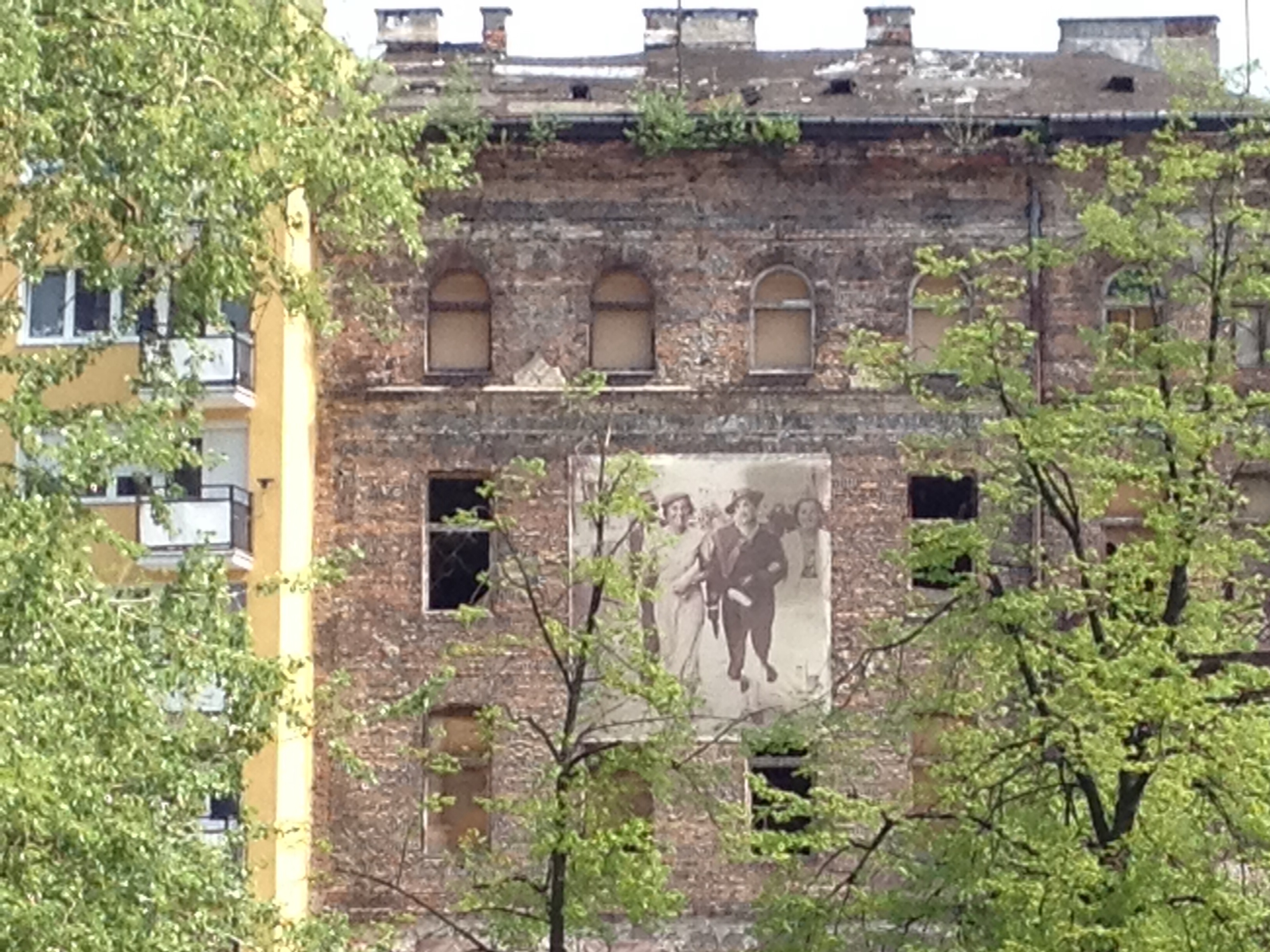
But I will also pray with the new Warsaw Jewish progressive community. And I will share Shabbat dinner with hundreds of others from around the world sharing my journey. And I will make Shabbat in a place that is not my own, but guard it dearly nonetheless.
I am a Jew, and I am here. In spite of history and to spite history. In the name of my family and in revenge for the atrocities. In solidarity with my community and in testimony to the world. In prayer for humanity. Sh’ma Yisrael, Adonai eloheinu, Adonai echad.
Shabbat shalom from Warsaw,
Rabbi Craig Scheff
Fifty days (and ways) to meet your Lover
Make a new plan, Stan.
While Paul Simon sang of this and 49 other ways to leave your lover, this coming Tuesday night begins a period of time when Jews begin counting the ways to draw nearer to God, one day at a time. Seven complete weeks of counting, beginning with Day One at our second seder, brings us to the celebration of Shavuot on Day Fifty, the day we stood with God at Sinai, as if (as our sages imagined) beneath a bridal canopy.
Our mystics have assigned special qualities to each one of these days, and each quality is meant to explore another aspect of our relationship with God. Personally, if I were away from the one I loved, I would count down with each passing day until the day I am reunited with my love. That, however, is the very point of counting up! We are not wishing days away. Each day presents another opportunity to add another dimension–to offer another gift–to the relationship that we share with God. Each day is another bauble we add to the collection of treasures that reminds us of the courtship that began the day we left Egypt and headed for the Promised Land. The fifty days represent fifty ways to meet our Lover. What started centuries ago as the gift of a measure of grain (an omer) for the priesthood each day has evolved into a personal exercise in mindfulness.
So get off the bus of your daily routine, Gus! Download an Omer counter app for your phone! I’ve even provided a link for you (click here) to a fun way to track the days of the Omer. Count each day with the blessing “Baruch atah adonay eloheynu melech ha’olam asher kidshanu bemitzvotav vetzivanu al sefirat ha’omer” when the stars come out, and make each day count as a blessing. If you miss an evening, you can still count during the day that follows. But If you miss an entire day (evening and the day that follows) of counting, then you don’t get to say the blessing anymore! The blessing is only said with each evening’s counting so long as you haven’t skipped a day.
Such is love. It requires commitment, obligation and constancy. It also, however, makes us feel valued and valuable. It gives us comfort and security. It inspires us to strive to be our best selves. It motivates us to show gratitude and to express ourselves through words and deeds that we didn’t know we even possessed. Start on Tuesday night at the end of your second seder, and get yourself free.
Chag kasher v’sameach,
Rabbi Craig Scheff
 Three Rabbis Walk Into A Shul
Recent Comments