First responders
This morning I participated in a memorial service at the fire house in Tappan. Police officers, firefighters, and emergency medical technicians from around our community came to give honor to the fallen. Equally as important to the remembrance of the deceased, however, was the honor given to those who were present in the tragedy’s aftermath: Construction workers who came into the city to dig through the rubble for survivors; civil servants who took extra shifts just to serve water to the weary; clergy who trekked across the country to stand beside others who so clearly needed help finding the words to a prayer.

This week’s parasha, Ki Tavo, details the blessings we realize as a consequence of living according to God’s commandments, and the curses we experience in disregarding the same. Torah teaches us that to live in a constant state of dread is a curse. We should not be constantly looking over our shoulder, worrying about what tragedy will befall us next. That is the life of the cursed. We can, however, choose to live life as first responders. We can choose a life of action, a life of courage, a life of readiness to step into the breach. We can choose to know our neighbors and to express our love for them through our deeds. We can confront hatred with kindness, fanaticism with moderation, fear with hope. In so doing, we will go to sleep at night with clear consciences and awaken to mornings of possibility, productivity and hope. We can revisit those early post-9/11 days, recommit ourselves with determination and vigilance in the battle against all forms of extremism, and give gratitude for the freedoms we have as Americans.
May God bless America, may God bless the souls of those we remember this day, and may God bless us with the wisdom to recognize the blessings that accompany us daily.
Rabbi Craig Scheff
Listen
It came in a long blue velvet bag, with my Hebrew name in gold lettering. I still remember how, a few weeks short of my thirteenth birthday, I was so excited that my sisters had cared enough to buy me a present. Not a ram’s horn, it was the horn of a Greater Kudu. I loved the shape, the color, the size of the mouthpiece and the sound that emerged as I blew it like my trumpet. I couldn’t wait for Sunday morning minyan; maybe Rabbi Sosland would permit me to sound the shofar at the end of the service: tekiah, shevarim, teruah, tekiah.
Thirty seven years later, almost to the day, I unzip the blue velvet bag and slide the twisting shofar from the sack. I blow into the mouthpiece a steady stream of air, just to remove the imaginary cobwebs and to clear the pathway that the sound will eventually travel. Now I purse my lips and press them against the round mouthpiece, not too tightly, and push the air out. The sound emerges always as a surprise, a cross between a trumpet’s call and a cry for help. Thirty seven years later, I continue to discover new meanings in the craggy screech, the staccato siren, the triumphant call. If I close my eyes tightly enough, I can feel the many yearnings of my heart emerge from the end of the horn. I am simultaneously saddened and gladdened, remorseful and hopeful, broken and resolute.
Thirty seven years ago, my rabbi, teacher and mentor wasn’t so thrilled about a twelve year old boy blowing a shofar that was almost as big as he was. Rabbi Sosland took great care to teach me the proper method for the ritual and the appropriate length for each of the sounds. He asked me to sound the shofar facing the ark; he asked me not to hold the final blast so long. He even asked if I would consider blowing a smaller horn. My teacher taught me that those hearing the sound should not be distracted by what they might see: the red face, the puffed cheeks, the winding horn. The only thing that matters in hearing the shofar is the ability to hear with the proper intention. Any visual or aural distraction only serves to diminish that intention and the potential impact of the ritual. In those days leading up to my thirteenth birthday and Rosh Hashanah, Rabbi Sosland was trying to teach me humility.
Close your eyes and let the primal cries enter your ears. If we experience the sounds as entertainment, we are not allowing the reverberations to reach our hearts. But if we listen to the sound of the shofar the way it was meant to be heard, we will learn to hear its call every day: in the still, small voice of God within.
Rabbi Craig Scheff
In memoriam
God of men and mountains,
Master of people and planets,
Creator of the universe: I am afraid.
I am afraid of the angels
Thou hast sent to wrestle with me:
The angel of success
who carries a two-edged sword
The angels of darkness
Whose names I do not know,
The angel of death
For whom I have no answer.
I am afraid of the touch
Of Thy great hand on my feeble heart.
Yet must I turn to Thee and praise Thee
Awful and great though Thou art,
For there is none else.
There is no strength nor courage
But in Thee.
There is no life, no light, no joy,
But in Thee.
— Ruth Brin
We have not been placed on this earth to answer the question “why” God takes a beautiful child from her parents and family so suddenly at such a young age. Nor are we here to assert that she is in a better place. The arms of her loving parents are the very best place for a daughter to be. We are here to embrace a soul: to keep her in our hearts, our thoughts and, most importantly, our deeds.

Emily Sarah Levine
May 27, 2001 – August 12, 2014
In memory of a beautiful child who cherished her Jewish identity, please consider supporting a Jewish camping experience or educational opportunity for another child who may grow to be the proud Jew and fine human being that Emily became in her short 13 years.
May Emily’s family, friends and community find comfort, and may her memory always be for a blessing.
Rabbi Craig Scheff
The quest for balance, interrupted
At 2:00am New York time, I wrote these words:
Cease fire. Who knows whether it will hold, and who knows whether or to whom it will be of benefit. Israel has committed itself to the task of destroying an infrastructure of tunnels that pose a terrifying threat to her citizens. Hopefully, whatever agreement is ultimately reached will include the completion of that task to the mutual benefit of Israelis and Palestinians. Hopefully, this time will empower voices of wisdom and moderation to prevail against the grip of terror and extremism. Hopefully, those who advocate for economic prosperity, mutual recognition and responsible governance will seize this moment to paint a picture of the possible. In the interim, I catch my breath and consider where I am on the Jewish calendar, only to be reminded once again of the dangers all types of extremism represent.
This coming Monday night and Tuesday, we commemorate Tisha B’Av (the ninth day of the month Av), the saddest day on the Jewish calendar, as we recall the destruction of the Holy Temple in Jerusalem and several other tragic events of our past. We actually begin a period of mourning three weeks before the date (no weddings, among other things), and intensify our mourning in the last nine days. Our sages teach us that the Holy Temple fell due to the baseless hatred Jews harbored against one another. In the face of an oppressive Roman presence, the Jewish community of two thousand years ago fell in on itself. Political alliances, religious sectarian infighting and power-hungry leaders rendered the Jewish community fractured and vulnerable. The Temple was destroyed, and in the wake of the unthinkable disaster, Judaism had to recreate itself.
When we teach the lessons of Tisha B’Av today, we focus on the values of respecting one another despite our differences, hearing each other’s opinions, and searching for roads to peace between us. The recreated Judaism of the rabbis taught us that we learn best when paired with others, especially with whom we disagree. In so doing, we allow our basic assumptions to be challenged, we learn to refine our own positions and to make room for the opinions of others. We discover a greater sense of compassion and we give ourselves the possibility of growth.
Some day, God willing soon, it will be time for us to consider how we move forward from this conflict as a Jewish community. We need to express our anger, frustrations and fears, but doing so at the expense of our ability to learn from one another leads only to baseless hatred and destruction.

This was my prayer before sleep last night:
This Tisha B’Av, I pray that we find and hold our center; that we rediscover the language of respect; that we embrace and learn from our plurality and dissonance of opinions; that we combat our own tendencies toward extremism; and that our neighbors have the strength and courage to do the same.
But the light of day brings news of a suicide bomber’s attack, the fear of an IDF soldier’s kidnapping, and a fiercely desperate Israeli response with more civilian casualties. And I am knocked off balance again. And the only voices I can hear are the cries of a kidnapped soldier’s parents. And on this morning, I must tell you, compassion for anyone else is so much harder to feel.

Dear God, in this time of mourning, restore the balance to my humanity. Assuage my wrath. Set me on a course of faith and hope. Help me forge a path to peace. And let me be a source of comfort and compassion to others.
Rabbi Craig Scheff
What’s your story?
I want to say something tonight that will change the minds of those who are blinded by ignorance, prejudice or worse. Something that will reach every heart, from the Hasidic Jew in New York City this afternoon protesting Israel’s right to exist to the Muslim protester in Antwerp yesterday calling for the slaughter of the Jews. Something that will reach the heart of every person who calls for the indiscriminate death of Palestinians–as if that will end the conflict–without considering those boys and girls who must do the dirty work, how many lives it will cost, and what could be the toll on the collective Jewish soul.
What I have heard time and again over the last days, unfortunately, is that there is no changing people’s minds through the media. Most people who read my words or hear me teach, by and large, share a worldview similar to my own. They will “like” me and “follow” me because I affirm their way of thinking. If I don’t, chances are, they are hearing opinions different from my own. And if we do engage with people who disagree with us on a charged subject, we are typically responding in anger, dismissing the other as out of touch with reality.
What can I offer, then, to move people just a little from where they are? Perhaps the personal story. The narrative that isn’t filled with history or facts or politics or agenda. Just a real life story of one person’s experience that dares the listener to identify, to empathize and maybe even to change perspective for a moment.
Ariel is a father of 3, a great guy, my sister’s neighbor on the moshav. Looking at him in a t-shirt, jeans and flip-flops, you’d never know he was one of Israel’s top fighter pilots. A retired pilot now, a former commander of an air force base, now serving as general manager of a charitable foundation. A couple of weeks ago, Ariel’s 18 year old son, Guy, finished his army training, receiving an award as the outstanding soldier of his unit. Guy is a fun-loving boy who has no desire to hurt anyone. Ariel loves flying to reach the heavens, where he finds peace. Today, Ariel is back in active service, flying over Gaza, giving cover to the troops below. Giving cover to his son.
Israel just reported its first casualty of the ground incursion. I hope you will pray with me for the peace that Ariel and Guy want, the safety of their family and the prosperity of their neighbors. Pray with me that they come home safely and to safety. Soon.
Feels good to share a story. Perhaps you’ll share one of your own?
Rabbi Craig Scheff
Summertime, and the living is easy?
It’s hot here in Israel this time of year. So hot that brush fires are popping up all around the country. They are only mildly dangerous and easily extinguished. Sometimes they are man-made and sometimes inadvertently sparked. One such brush fire was ignited in the field behind my sister’s house a couple of weeks ago by a tractor’s blades. My nephew frantically called my sister, vacated the house and waited for the fire company to arrive. The bougainvillea plants that bordered the yard are gone now, but the house is safe and the fear is gone.
Mostly. After all, how does a boy of 12 rid himself of the images of the flames approaching his house? How does a child protect himself against the fear that accompanies hearing a recording of 3 teenagers being kidnapped and shot, their captors rejoicing, and the message being played across every media outlet? How does a family find normalcy when each person’s tablet and phone rings with an alert of every “color red” that is declared for the neighborhoods twenty miles away?
Nancy and I arrived here yesterday for my niece’s wedding celebration. We enjoyed a trip to McDonald’s for dinner, and attended my sister’s community choir concert. The kids got up this morning and went next door to hang out in the pool overlooking the scorched field. Life is as normal as ever, it would seem.

Except for the anxiety just beneath the surface. The “safe room” is 45 seconds away if needed, they joke. Two “Iron Domes” are in the area, they assure themselves. The police are present in large numbers on the roads in and out of Jerusalem to assure the public and to dissuade any who might be tempted to kindle a new fire. The family is monitoring the news, praying that a thorough police investigation will reveal that the killing of a young Palestinian boy was something other than an act of Israeli revenge.
It is hot here, that is for sure. But Israel won’t let us see her sweat. Life is more complicated than ever. Our children who are visiting here are as safe as anywhere else, I assure you. And there could not be a more important time for us to be here to offer some love and comfort. The difference is that we will return to the United States, to a place where independence means not relying on others for political, financial or even emotional support. For those who call this place home, there is no place else to go. So they will live with the anxiety, and keep praying for rain.
Shabbat will be here soon. I think I’ll join my nephew in the pool.
Shabbat shalom,
Rabbi Craig Scheff
Releasing our children
No matter their age, it’s what they are. They are our children. As such, we want them to grow into self-sufficiency and independence, happiness and contentment. But a piece of us also wants to hold on to a piece of them, to keep them young and safe, and to keep us in their lives and in command.
It is the season of graduation and commencement, of endings and new beginnings. A time for celebration and tears. The changes are bittersweet for us as parents as our chests swell with pride for what we have accomplished together (because they certainly couldn’t have done it without us!) and our eyes swell with tears because we know that with each new challenge they will rely on us less.
I cried the first time I heard the song “Uf Gozal” (and the second and the third). Arik Einstein, who died this past November at the age of 73 and was known as “the voice” of Israel, wrote and recorded this song about a bird acknowledging the launching of the bird’s little ones. (I used to think the speaker was a mother bird, but now I realize it could just as easily have been the father bird remaining in the nest!)
My little birds have left the nest
Spread their wings and flew away
And I, an old bird, remained in the nest
Really hoping that everything will be alright.
I always knew the day would come
When we’d have to part
But now it came to me so suddenly
So what’s the wonder that I’m a bit concerned.
Fly, little bird
Cut through the sky
Fly to wherever you want
Just don’t forget
There’s an eagle in the sky
Be cautious…
As the years have passed, I have felt the song has been over-used and played out (i.e., no more tears when I hear it). And what kind of Jewish-mother ending is this about looking out for the eagle in the sky?! This year, however, the song is particularly poignant. Arik has died, and that is a loss to Israel and to all who loved his music. And now, at the season of celebrating our children leaving the nest, an eagle from the sky has snatched away three of our Israeli sons. Their families suffer while communities are left praying for word of their welfare, for their safe return, and for the intervention of more powerful forces that can bring pressure to bear to secure their return. (Click here to hear the song and watch a video–the subtitles are Spanish, but you’ll get it, I promise.)
I prayed for Eyal, Gilad and Naftali today, and I will pray for them again tomorrow. I will celebrate today’s commencements, even as I say to my children time and time again: “Look both ways as you cross. Buckle up. Drive safely. Call me if you need me.” Dear God, thank you and take care of them.
Rabbi Craig Scheff
Time for some new habits
Perhaps this is hard to believe, given that we have just passed the holiday of Shavuot and are about two weeks away from the end of the hectic end-of-schoolyear rush, but I am already looking forward to next year. New programs (just to name a few: Sunday evening multi-generational a cappella with Amichai Margolis; Conversations with Clergy that will meet once a month outside the synagogue in a home near you; an expanded Mitzvah Day format that will encompass an entire weekend; a “Good Neighbor” program that will invite our synagogue neighbors into the building to meet our clergy, staff and leadership to learn more about how the OJC serves our community) will add more opportunities for relationship building within our community and for connecting with our rich heritage. We are busily planning our calendar so you can include these experiences among the other items that fill your calendar. We know how fast our lives get filled with commitments come the fall. Perhaps, with some advance notice and planning, Jewish family time, Jewish learning, Jewish celebrating, and Jewish service can capture a few more protected time slots in our busy lives.
Unfortunately, it is often the case that, by the time September arrives, we are too caught up in our old commitments and habits to envision the possibility for modification. That is where the summer can be such a blessing. As the pace slows down just a bit, now is the ideal time to insert moments into our routine that can become indispensable for the year ahead. An exercise routine, a journal, a weekly phone call, a blessing of gratitude–now is the time for some new habits. Make them part of the rhythm of your life now, and in the year ahead they will be as protected as any other commitment you currently value.
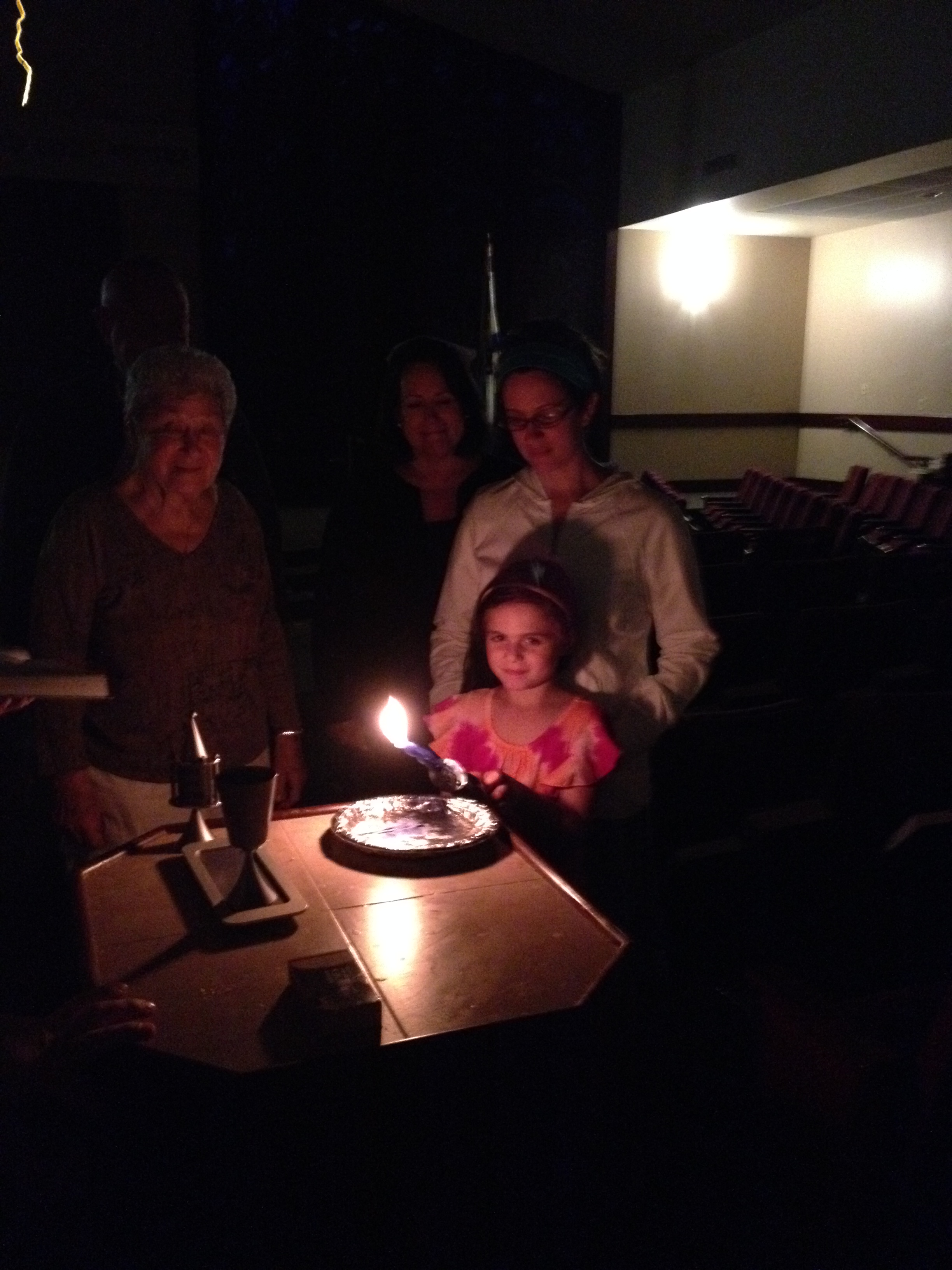
Attend a Havdallah service once a month with your family or friends.
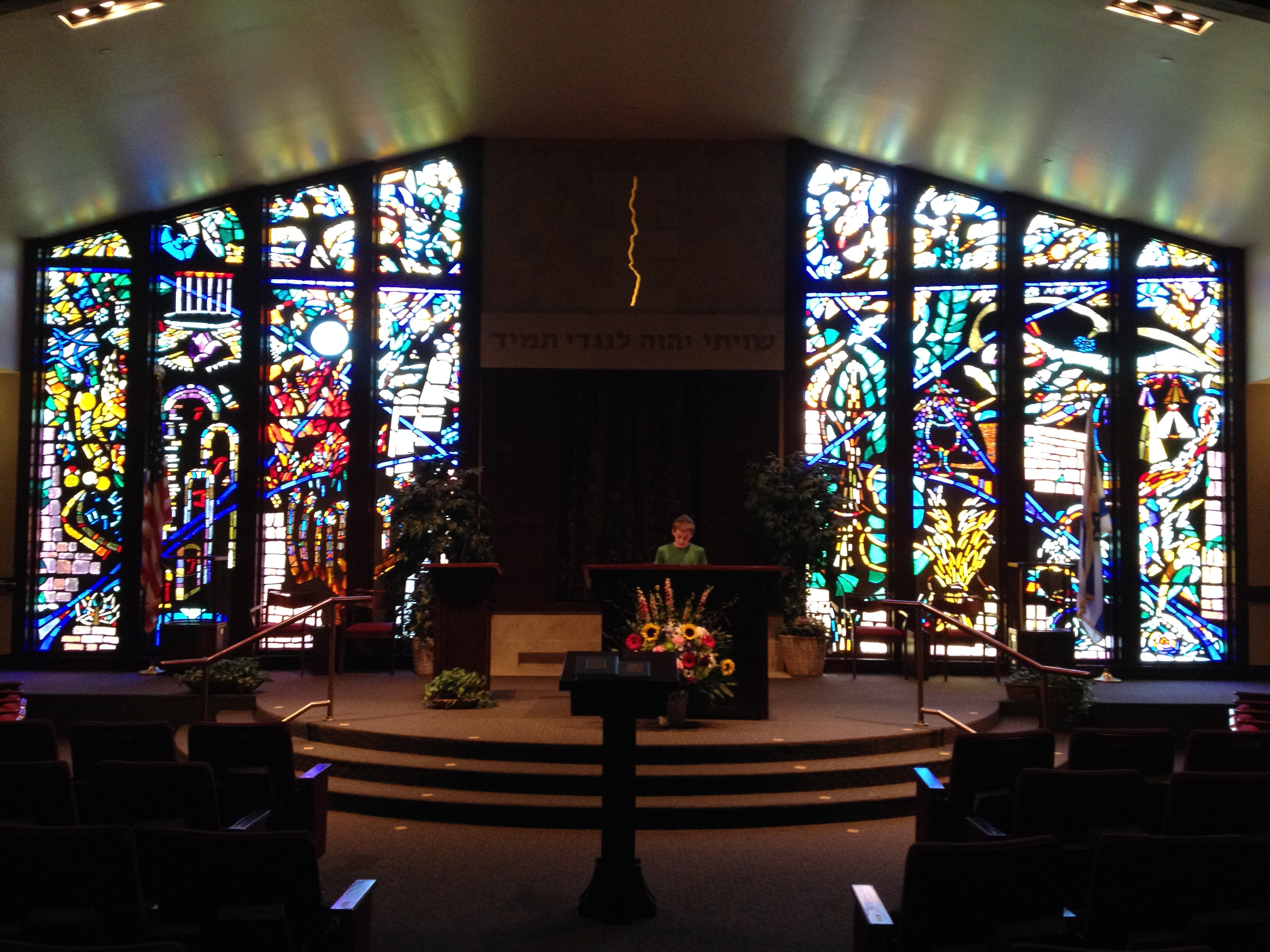
Visit the sanctuary for a moment of solitude and peace on a weekly basis. Go up on the bimah. Utter a personal prayer.
Old habits may die hard. New habits, however, are easily born. Won’t you give it a try?
Rabbi Craig Scheff
What’s a picture worth?
A picture, they say, is worth a thousand words. It does not, however, tell the whole story. In the last week I have heard fourteen different commencement addresses and thousands of words about endings, beginnings, and all the living that needs to be done in between. I have also taken hundreds of snapshots (with my phone) of smiling faces, family, friends, triumphant moments and loving embraces. The speeches were of various lengths and tones, each resonating and inspiring in its own way. The pictures, too, conveyed messages that said so much about the passing of time, the love shared between brothers and the joy of being together.

The pictures, however, are snapshots (often staged!) of moments of joy. We delete the ones where someone’s eyes are closed or smile is off. They don’t tell the story of the energy and time, the arguments and lectures, the tears and laughter, and the worries and disappointments that every family experiences before reaching such moments. As I sat listening to the many words of wisdom being spoken to my son and his friends, I thought to myself, what will these experiences impart to us beyond the electronic photo album?
As my head was spinning with thoughts of how I would handle Scott’s transition out of college and Matthew’s transition into married life, all in the span of a very wonderful week, I came to realize that their transitions are also my own. And as such, I can offer the following as the most important life lesson for them to carry.
We are graced in life with moments of joy and we are burdened with an equal number of sorrows. We are disappointed and deflated when the ecstasy of our celebratory moment fades, leaving us with only pictures to relive the experience, while we allow the pain of our sorrows to gnaw and eat at us. But any picture-perfect happiness–when examined more closely–is pocked with imperfections, even as the darkest moments are pierced by rays of light, hope and kindness. The best advice I can offer is to take in the holiness of every moment. Recognize that our greatest joys and our greatest sorrows are so because they come from the same place of love. Life’s transitional moments of birth, death and everything in between are most special because they reflect our humanity and our divinity, our mortality and our Godliness. And, miraculously, that well of love is never emptied as we draw from it; it only fills to an ever-expanding capacity.
Shehechiyanu ve-kiyemanu ve-higeeyanu lazman hazeh.
Rabbi Craig Scheff
OJC’s March of the Living, Day 13 – Bringing it home
This day brought the OJC’s 2014 March of the Living to a close, and our experience came full circle. The Sefer Torah that was completed in Auschwitz-Birkenau was accompanied by loving arms and dancing feet into the Kotel plaza. All religious politics aside for a moment, it was symbolically important and powerful to be surrounded by thousands who had marched with us in Poland and who now sang Hatikvah at our side. The Torah had arrived home, until its next March of the Living, when it will travel back to Poland to accompany the next round of marchers.

We were all a bit depleted upon awakening this morning; the celebration last night took a bit out of us! Nevertheless, we pushed ahead and hiked up to Castel, the strategic vantage point that overlooks the main road to Jerusalem, and that was captured by Yitzhak Rabin and the Harel Brigade on the eve of the 1948 War of Independence.

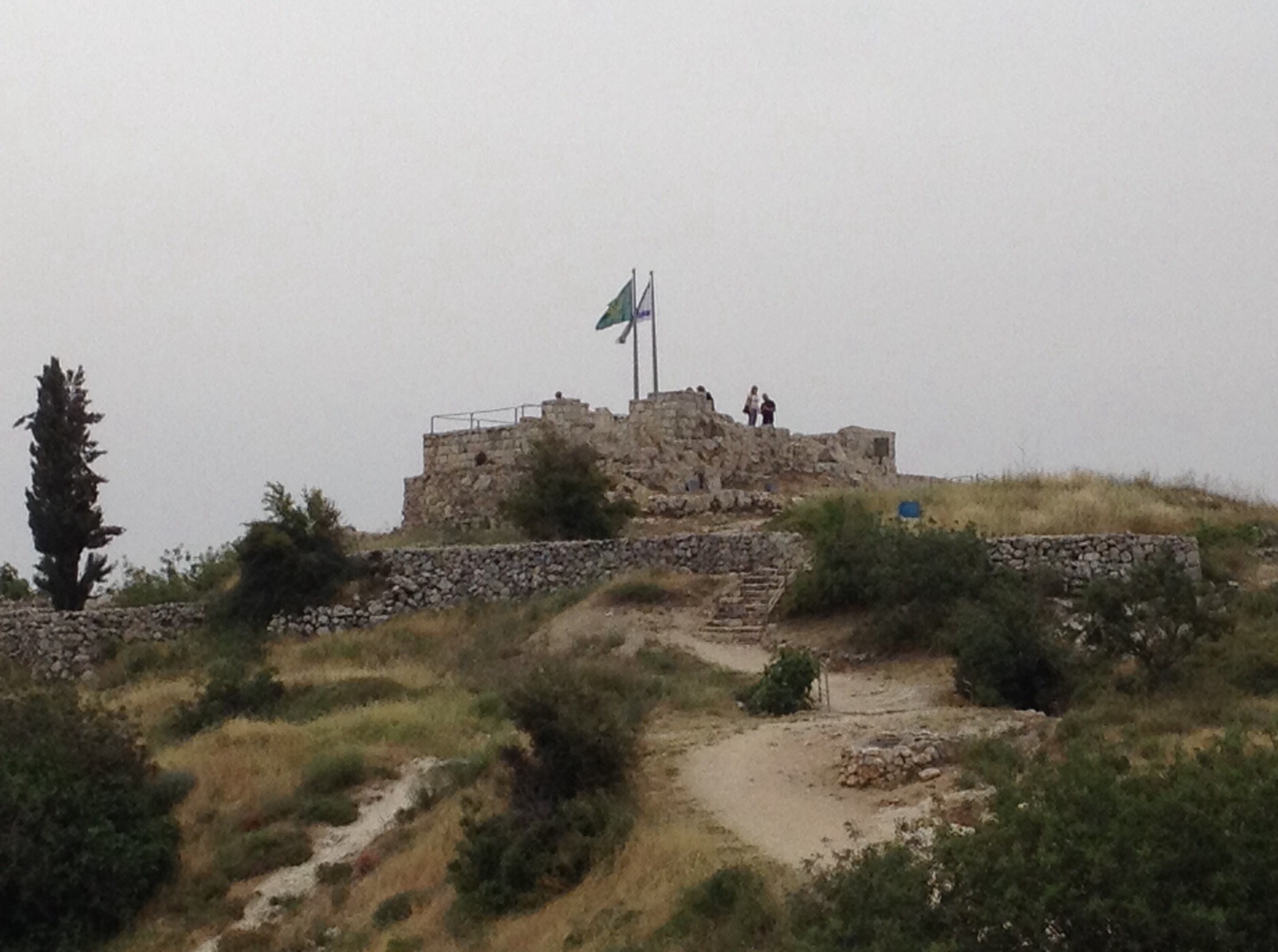
Our bus carefully wound its way through the hills and valleys outside Jerusalem to the 9/11 memorial, the only memorial to this date that exists outside of the United States. We paid homage to the names of the victims, and sang “America the Beautiful” and “Hatikvah” as we reflected on the nature of Israel’s independence and her special relationship with America.

From the depths of the valley we ascended to Ammunition Hill, site of another famous battle of the 1967 Six Day War, the place many consider to be the turning point that led to Israel reclaiming the Old City. Today, the IDF was exhibiting its latest technology to the general public. Barbecues abounded, as is traditional on this day, as children played atop military vehicles. How ironic that just yesterday we mourned the price of war, and today we celebrated our ability to engage–and be victorious–in war. I can’t deny the pride I experienced and the security I felt surrounded by these young, smart and devoted guardians of Israel. I just wonder what is the toll on the psyche of the developing mind and personality in particular, and on the society in general.

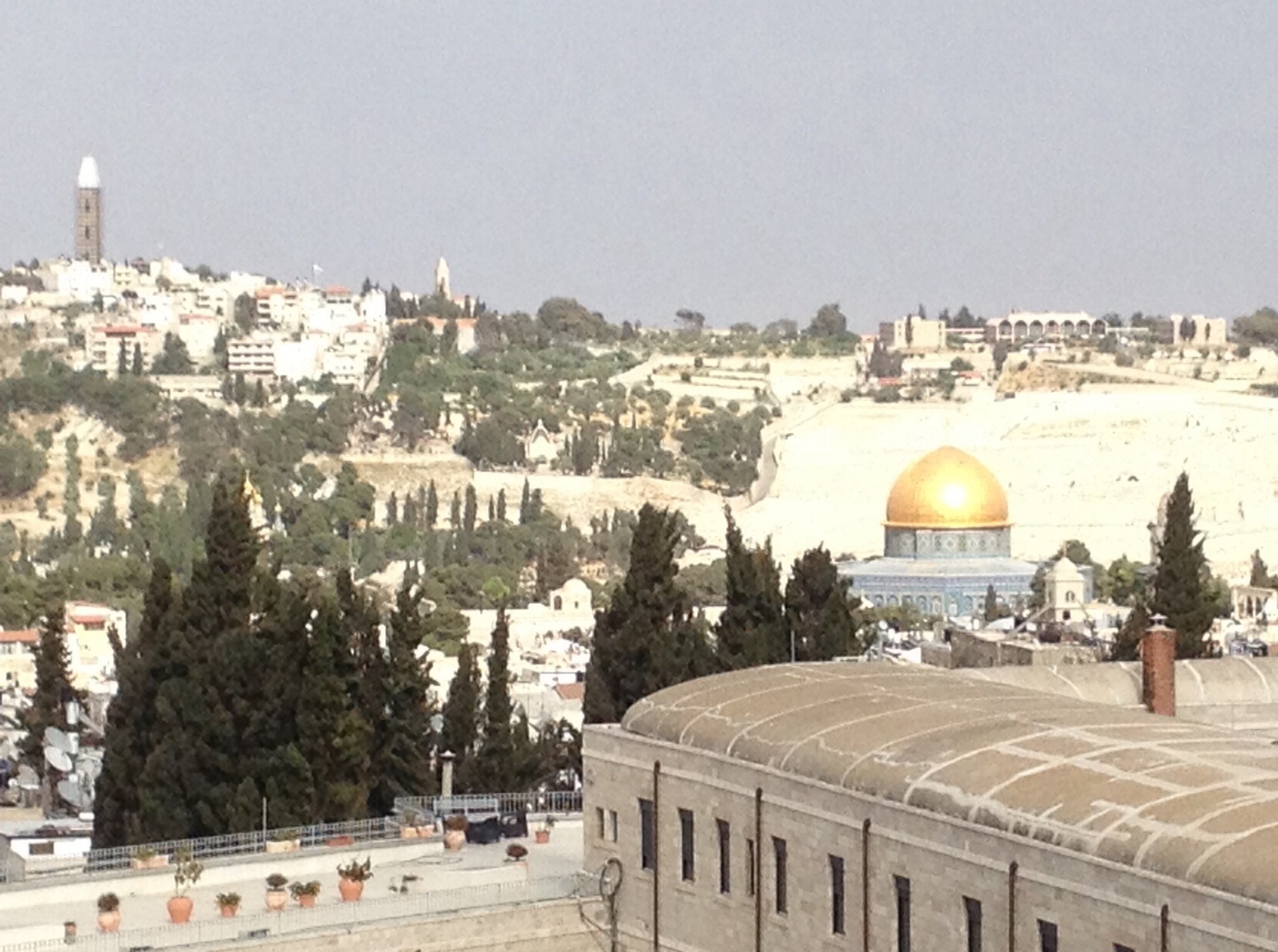
All this before noon! Our next stop was the Jewish Quarter of the Old City and the Cardo for–you guessed it–food and shopping! We walked down to the Kotel plaza, where we joined our fellow marchers to bring this year’s March to a close. From there, we walked (Oy, enough with the walking already!) to Notre Dame, home of the Pontifical Institute and guesthouse. We met Father Eamon Kelly, Vice Charge of the center, who took us to the rooftop to give us a 3-minute overview of the Bible using the majestic views to tell the story. His teaching was a universal message of coexistence, tikkun olam, and a shared responsibility to build upon our shared mission.

A leisurely dinner provided the opportunity and the venue to share our reflections, highlights, and appreciation for having shared this experience. I hope we can bring it home to you in a way that inspires you to be among the next to carry our love to, and for, Israel.
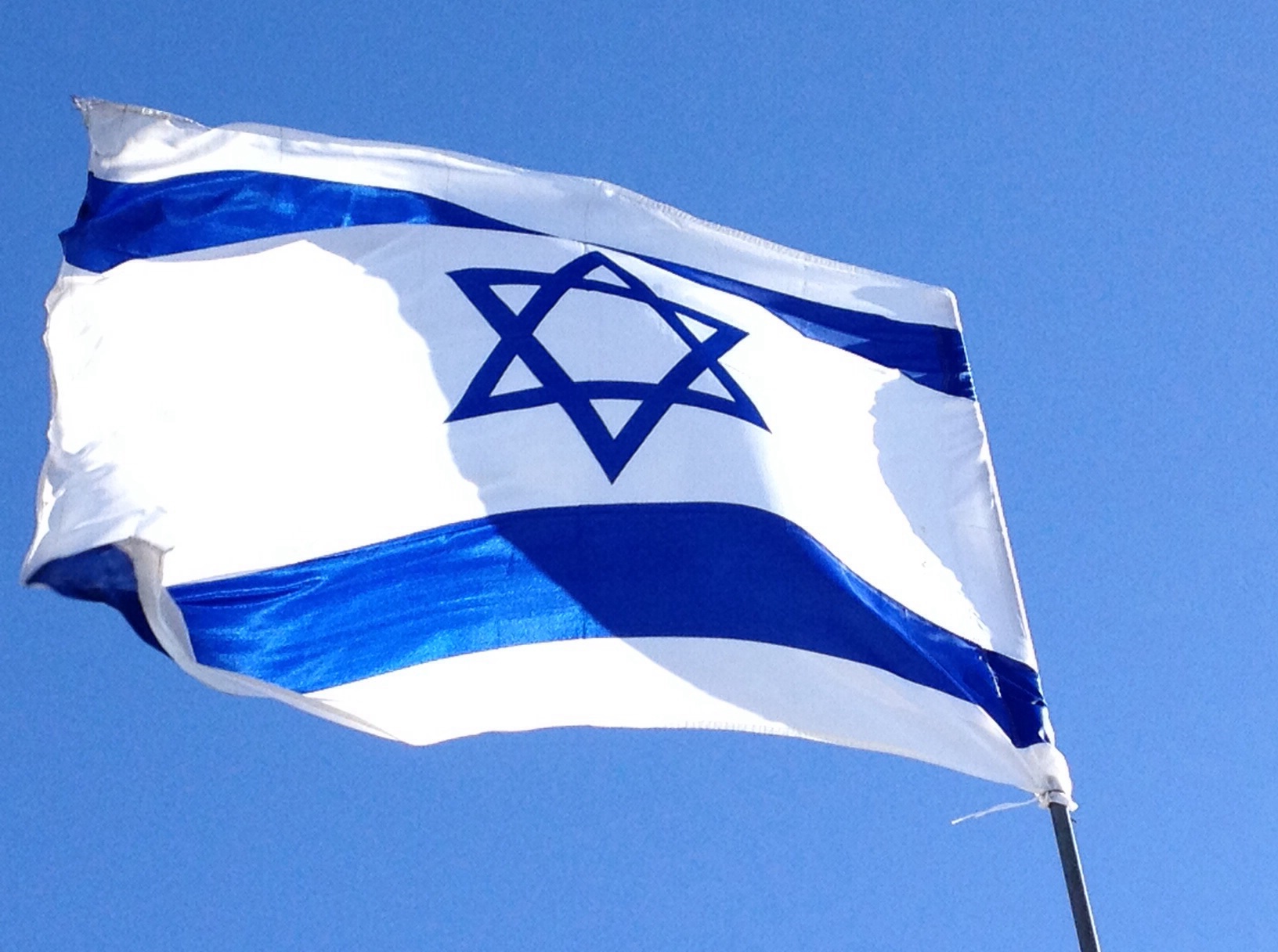
With God’s help, we will see each other soon. May it be only for days of celebration such as this one.
Rabbi Craig Scheff
 Three Rabbis Walk Into A Shul
Recent Comments