Day Two is a day for love
We introduced nine newcomers to Ahava this morning, including 4 Israelis. Yoav, our good friend and executive director, proudly led the group around the grounds of this residence for at-risk children. The group met one of the foster families that cares for thirteen children between the ages of 6 and 17, and was warmly welcomed by a group of Israeli lone soldiers who have come to live at Ahava for life-skill counselling. They somberly walked through the rooms of the emergency shelter, where fifteen children are given intensive therapy to address their traumas. They met one girl who only weeks ago witnessed her mother’s murder at the hands of her father. These are the harsh realities, they learned, that serve as the motivation for the loving and supportive framework that Ahava attempts to provide. Finally, they saw the many projects of OJC’s past mission participants and financial supporters.
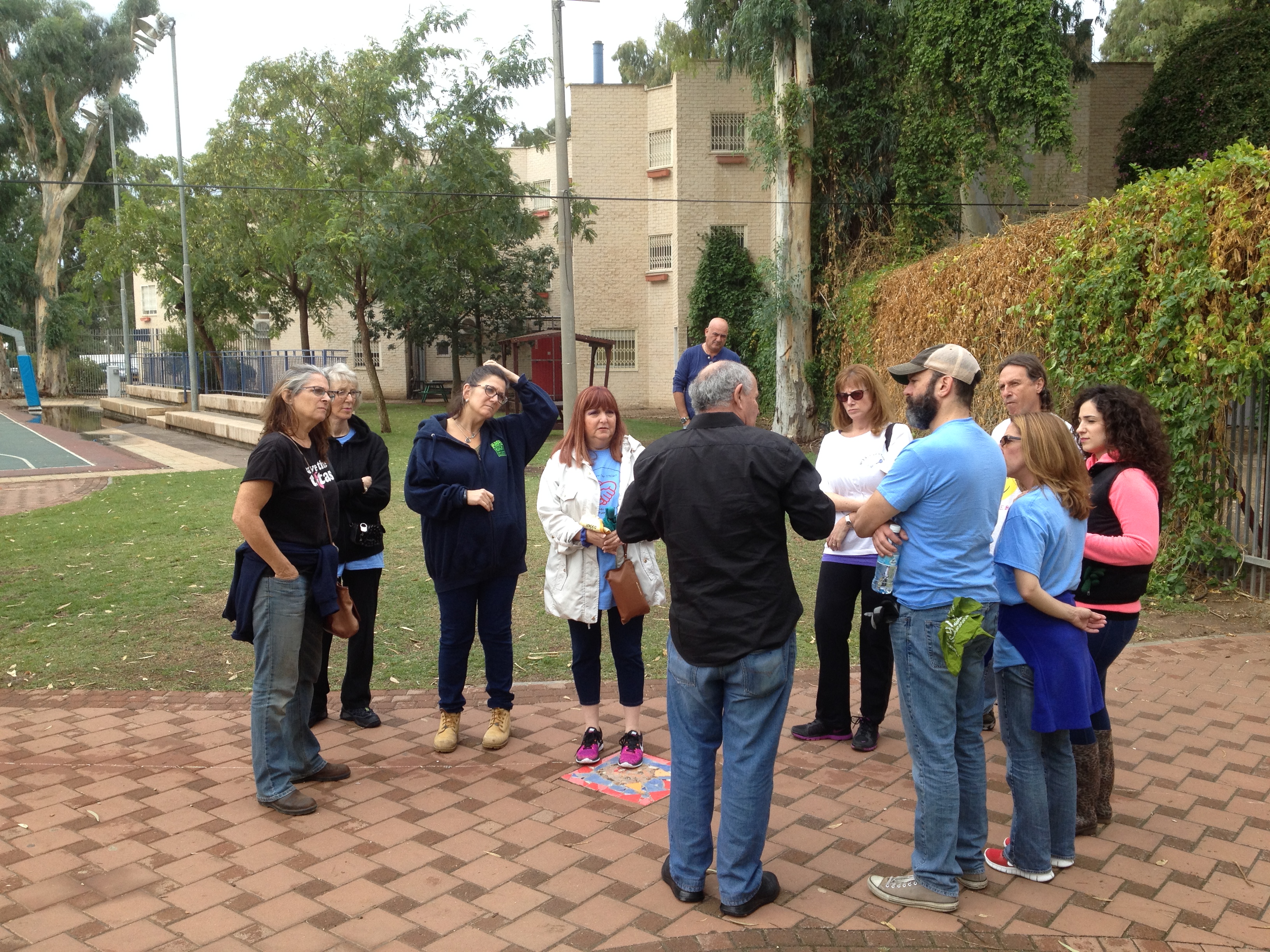
Meanwhile, the rest of our group was getting started on the projects that would occupy us today and tomorrow. In addition to painting the playroom and stairwells of the emergency shelter, we created “Rob’s Corner,” an outdoor meeting and relaxation area to be dedicated in memory of Rob Katz, z”l. Using large tires covered in a metal netting, we poured and plastered cement around the tires to create a seating area. We fashioned tile mosaics that will be set into the cement structures tomorrow.


In the evening, the children’s band and choir entertained us in song and dance, and board members and staff expressed their appreciation for our ten years of service. In truth, we owe them so much more for the opportunity to give a bit of ourselves to their herculean–make that Godly–effort. It is so humbling to be in the presence of these teachers, counselors and civil servants who are saving lives and repairing damaged psyches.

Tomorrow, we finish our tasks, and we are off to Jerusalem. May we leave a little more peace in our wake, and may we arrive in peace to our destination.
B’Ahava,
Rabbi Craig Scheff
It was evening and it was morning
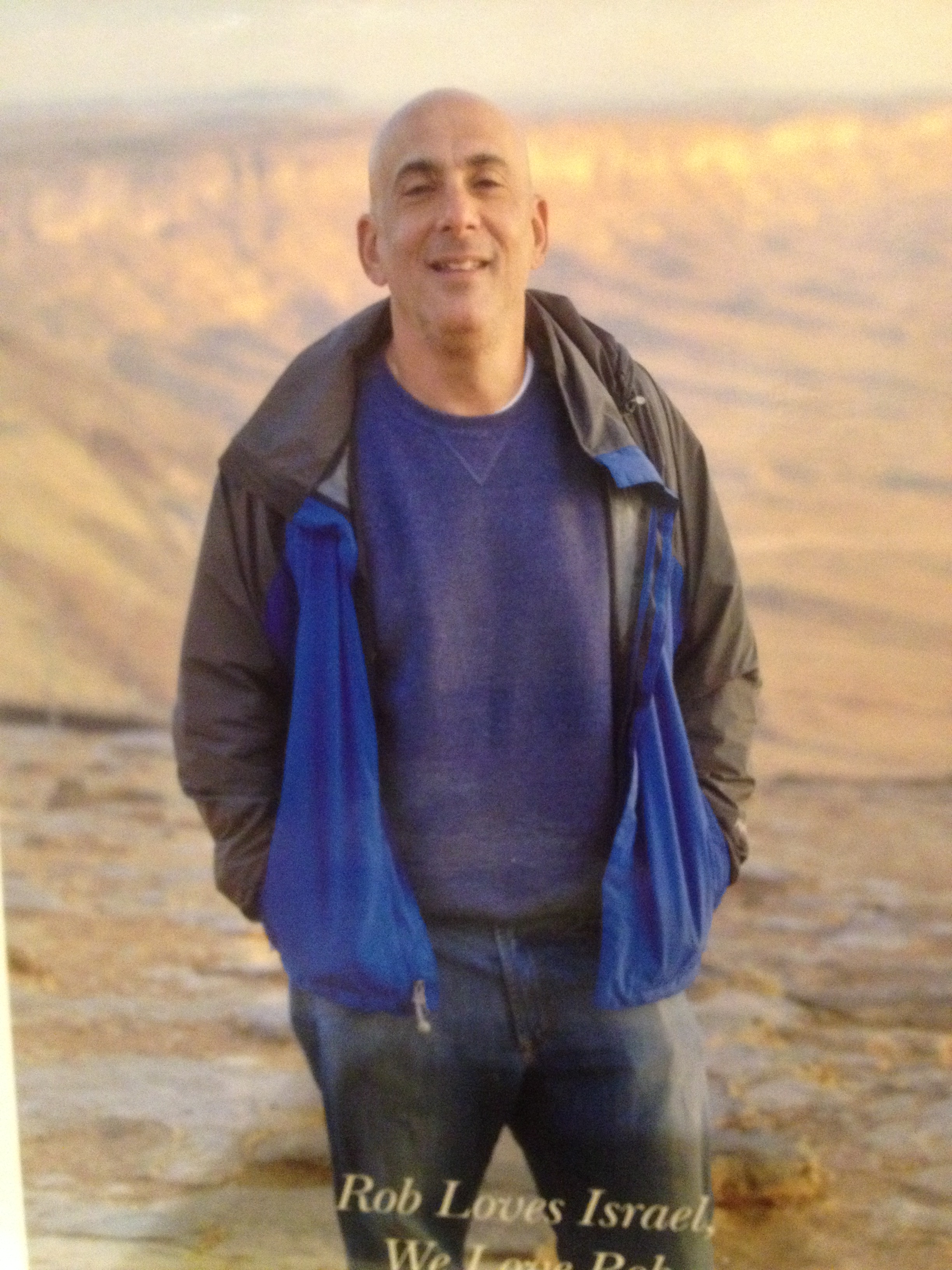
Day One of our 10th mitzvah mission to Israel began officially with a dinner. But this dinner was unlike any other I have shared on our mission before. We drank a toast and sang happy birthday to a man in Rob Katz who inspired us, modeled generosity, and dared each of us to move beyond our comfort zones. This would have been his 54th, and he would have loved to share it, as he did each year for the past eight, in Israel. We shared our favorite memories and we dedicated ourselves to continuing his legacy.
After far too late a night for some of us who caught the Giants-Patriots game at a local bar, we were up early to daven on the beach and head for South Tel Aviv. There we met Felicia, a woman who came to Israel from Ghana twenty years ago. Today, she and one other person were caring for 45 preschoolers and babies, children of Sudanese refugees. They greeted us with easily offered hugs and the excitement of anticipating a treat that comes along with visitors. We carried some,and led others by the hand (and even chased after a few!) as we accompanied them several blocks and down busy streets to small park under a porous tent. The children burned energy playing, and suddenly the heavens opened. First we were drenched in the rain, and then came the hail! Small marbles of ice bounced all around us. Some of the kids held us tightly to stay warm; others ran from under the leaky tent to dance in the icy shower. Our bus finally came to the rescue, and we loaded the children onto their coach to return them to their over crowded playroom. Leaving them was the low point of the day for many of us. Several of us committed ourselves to a return visit next year.

As we rode to our next stop, we wrestled with the conflicting realities Israel faces in remembering its roots as a safe haven for those escaping persecution and in wanting to preserve a healthy economy, a strong defense, and the Jewish character of the state.
This conflict was further complicated by our visit to the Rabin Center, an exhibit dedicated to the life and death of Prime Minister Yitzhak Rabin. Once again, we were bombarded by images of an Israeli society struggling to pursue peace while negotiating among its own citizens and with its neighbors for secure and defensible borders for all.

Dinner brought us to Zichron Yakov and the rabbi and leadership of Kehillat Ve’Ahavta, our new sister Masorti community. The warmth and comfort with one another followed quickly, and we began brainstorming ways by which our communities can build a lasting, supportive and mutually beneficial bond.
Until tomorrow, shalom to us all,
Rabbi Craig Scheff
Hello and free will; goodbye and fate
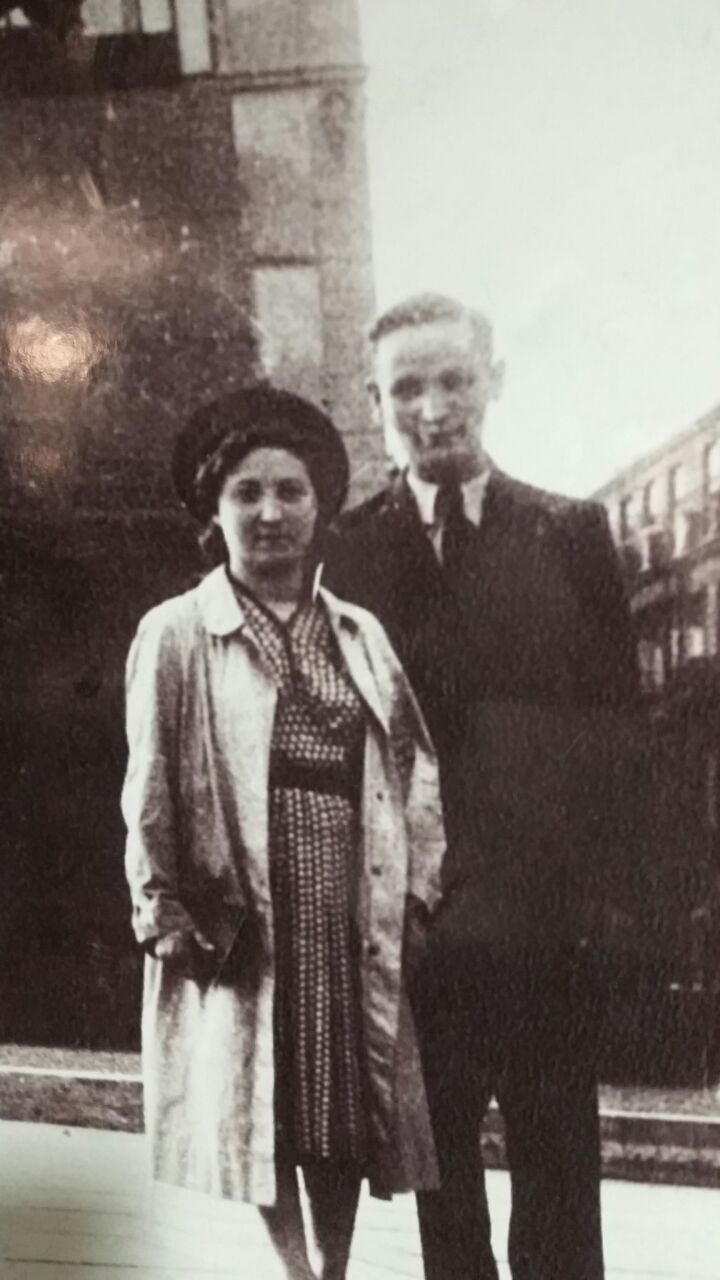
Despite hearing the call, not everyone up and left home. My grandparents were among the lucky ones. They heeded the call, though they did not know where their journey would take them. That decision would ultimately save family members and the generations that would follow. If Israel and Sonia had been told in that moment that they would one day number like the stars, they might not have believed you. Today, as my grandfather once again shared tidbits of his story with me, he recounted the many times he cried thinking that his world was coming to an end: a father losing his job; a young boy sent off to a distant city to attend yeshiva; a journey with wife and brother in tow out of Poland; life in the displaced persons camp; an arrival in the United States. There were no guarantees of a happy ending, no assurances of survival. Yet, in retrospect, my Zeidy believes that none of the blessings he now enjoys would have been possible without those moments over which he cried.
Faith is not synonymous with the belief in miracles. Just ask Abraham and Sarah! Their faith was not blind and without question. They did not rely on Divine Providence alone to make the future promised them come to fruition. So much of their fate was dictated by the choices they made and the actions they undertook, sometimes at great peril to themselves and their progeny.
My grandparents don’t assert that God chose to grace them above anyone else. They don’t believe that God interceded to save their family from the harm that befell so many others. But faith in the power of working hard, loving well, doing good and taking responsibility for one’s decisions–and consequences thereof–can certainly bring one closer to the belief in a Divine plan. At least it has for them.

The tension between our beliefs in Divine Providence and our own free will is constantly played out in the text of the Torah and in the narrative of our lives. Is God testing Abraham and us, leaving matters in human hands? Or is God the all-knowing One who is manipulating us as part of a grander scheme? I don’t have an answer to this question, but this much I know: If my grandparents’ lives were a matter of God’s intervention for some greater purpose, I have thanked God many times over. And if their journey has been one of their own making, with God kvelling all the while, I hope their legacy will be instructive for many generations to come.
As for my grandparents and me, every “hello” is more precious than the last, and every “goodbye” is more difficult. So I have chosen to resolve the tension between fate and free will, between Divine plan and human agency, as only a grandson of Yisrael ben Avraham v’Sarah can: May we extend every “hello” as an offer of peace, a moment of appreciation, and an opportunity to change someone’s world for the better; and may we express every “goodbye” as a prayer for peace, a moment of reflection, and an invocation of God’s greater plan in our lives.
Hello, goodbye and shalom,
Rabbi Craig Scheff
Here comes the rain again
The Talmud teaches that those who don’t mourn ancient Jerusalem’s destruction will not merit rejoicing with her at her redemption. I have always understood this statement to mean that we can only truly appreciate the greatest joys in our lives if we have truly engaged with the sorrows in our lives. As the two extremes seemingly travel together within us, our saddest moments are buoyed by the knowledge that we have known—and will know again—pure joy. Similarly, our happiest moments are tinged with the knowledge that such joy can’t last forever, and that we will no doubt come to know sadness again.
One of the ancient rituals of the holiday of Sukkot is the celebration of water drawing and libations that took place in the time of the Holy Temple. The Talmud describes this ceremony as the epitome of joy, as water would be drawn from a well and poured over the sacrificial altar. As the rains fall today, on this third day of the holiday, we have the luxury of moving indoors; but our prayers for rain at this time despite wanting to be outside in the sukkah underline this sense of anxiety with which we live. We don’t control the weather—no matter what Rabbi Drill tells you about her powers—and we are dependent on a force beyond our control to bring just enough rain to be a blessing, a source of sustenance and joy. The same source of that joy, however, can also be a source of destruction and sadness. When it is time to draw from the well, there is no guarantee the well will be filled. We want to find the well filled when we need it, but not at the expense of the joy that is meant to accompany this holiday.

I liken this well to a well that exists within each of us. That well holds all our love. It is filled by how much love we give, and by how much we allow ourselves to be loved. In our times of greatest celebration, that love is easily drawn and poured out atop our offerings of joy. And in times of our greatest sadness, that love is similarly drawn up from the well, to be poured atop our altar of tears. Only those of us who have drawn from the well in sadness can truly understand what it means to draw from the well in joy. And only those of us who have known such complete joy as to cry in happiness can fully appreciate the profound nature of our loss.
To paraphrase a line from the movie Parenthood (the original with Steve Martin, not the TV series), we must choose whether we want our lives to run like a rollercoaster, with all its exhilarating highs and frightening lows, or like a merry-go-round, never really getting anywhere. Jewish living invites us to ride the rollercoaster–to be exhilarated and frightened, joyful and sorrowful, in the same breath.
May we be comforted in knowing that the feeling in the pit of our stomach is simply a wellspring of love.
In gratitude for your friendship,
Rabbi Craig Scheff
The crux of the matter
As far as I am concerned, reading a sermon in print—especially a high holiday sermon—is nowhere near as effective as hearing a message in a room filled with community brothers and sisters. That being said, I am told that people often want to hear the crux of the messages if they could not be present for whatever reason. So hear is the crux, and just the crux (minus the lead in, the joke, and the sources in support thereof, available upon request)!
I’ll get right to it:
WE HAVE BECOME FAR TOO COMFORTABLE, BORDERING ON APATHETIC, AS FAR AS OUR JEWISH IDENTITIES ARE CONCERNED!
In May, the mayor of Rehovot cancels a bar mitzvah celebration for children with disabilities because it is scheduled to take place in a Masorti (Israeli Conservative) synagogue. After Israeli President Rivlin reschedules the service to take place in his own residence, he cancels the service.
On Shavuot, the holiday on which we celebrate the giving of the Torah, Tzohar (an Israeli organization of supposedly more open-minded Orthodox rabbis) cancels its invitation to Masorti and Reform rabbis to participate in the holiday’s all-night study session. The rabbis are subsequently re-invited, but are placed in a separate space from the rest of the program.
In June, the Chief Rabbinate of Israel tries to force the retirement of Rabbi Shlomo Riskin, Chief Rabbi of Efrat. The reason given is his age, but his willingness to train women to be Jewish legal experts and his willingness to engage in interfaith dialogue were the more plausible motivating factors.
In July, I am invited to participate in my cousin’s wedding ceremony (in my sister’s back yard), to be conducted by a Tzohar rabbi. Originally I was to be the officiant, but my cousin’s bride’s family pressured the couple to use an Orthodox rabbi whose wedding could be registered with the state as a religious wedding. The officiant calls me to the huppah as “Mister” Craig Scheff. I feel the sting on my cheek as if someone publicly slapped me. In that moment, I want to disappear. I am not a rabbi, and as far as I am concerned, in the eyes of the State of Israel, I am not a Jew.
Israel is my story. I was a slave. I came out of Egypt. I stood at Sinai. And so did you! We were all there! But someone, in the unlikeliest of places and with disproportionate power and influence, is attacking our identities, telling us were not there!

Ironically, the land of Israel was never guaranteed as a possession to our ancestors. It was part of a promise, conditioned upon our community’s behavior. We need to merit being in the land as a community of Jews. Somehow, the average Israeli has forgotten this message, and the ruling religious factions are happy to keep them in the dark. Israel’s survival depends upon more than secure borders and a strong defense. The larger community of Israel is being torn apart by a failure in shared ethics, by a disunity that is sweeping the Jewish community, and by a breach in our rich tradition of embracing diversity and pluralism of Jewish practice. The divide can be seen in our political arenas; it can be seen in the gaps between the generations and between the American and Israeli Jewish communities.
Israeli Jewish identity is shaped, by and large, by a sense of belonging to the land. There are no “religious” choices that need to be made. There is no soccer on Shabbat; school is closed for the holidays; and everywhere you go you are reminded of your rich, deep rootedness in the land as a Jew. American Jewish identity is shaped by religious values that have to be exercised and chosen from among a long list of competing social values, Israel being only one of them.
And there lies the disconnect. Jewish identity is controlled in Israel by those who deny us our Judaism, our very identity. We proudly send our children to serve in the IDF, only to discover that they have to fight a battle to preserve their Jewish identities, the ones we gave them. And we can’t afford the apathy, either here or in Israel, being created as a result of this disconnect.
Israel, the seat of our ideals, has lost sight of and must reclaim its mission as the destination, the intention, the hope of all Jewish people. And we as American Jews must awaken to the issue, engage in the cause and assist in bolstering the “secular Israeli” Jewish community’s efforts to reclaim its historic Jewish identity. We can no longer tolerate a Jewish Agency–an Israeli establishment–that will send emissaries to teach us about Israel without knowing who we are as Jews, without learning from us and carrying our message back to Israel. For Israel to be the home of all Jewish people, all Jewish people need to feel at home in Israel.
For centuries, our disunity has consistently led to expulsion, exile, and persecution. These events have almost always followed on the heels of schisms in our community that were the direct results of intolerance, a lack of empathy, one side’s claim of authority. For centuries, our unity has been based upon a multiplicity of approaches to Torah and to learning from others. Our rich tradition of arguing for the sake of heaven has helped us remain dynamic, adaptable, modern—a true light unto the nations. Torah has remained relevant because it has 70 faces.
In the year ahead, we plan to deepen our connection to Israel: through our partnership with Masorti and with the Masorti community of Zichron Yakov; by participation in Rav Siach (“Multiple Conversations”), the first partnership between the Ministry for Jerusalem and Diaspora Affairs and the Masorti Movement in Israel designed to enhance the exchange of ideas; by hosting guest speakers who will educate on the topic of religious pluralism; and by supporting the Masorti movement in our missions and family trips to Israel. In so doing, perhaps “Israel” will come to a broader acceptance and embrace of the Jewish identity, of the role we play in ensuring the continuation of our rich history, and of the great empathy we are meant to carry as Jews who came out of Egypt together.

Pass it on with love.
Gemar chatimah tovah,
Rabbi Craig Scheff
Referees and umpires
As coach of Rockland’s 16U basketball team in the JCC Maccabi Games last week, I saw my fair share of good refereeing; I also saw some really bad calls. Some went in our team’s favor and some went against us. Some calls were inconsequential to the game’s outcome and some changed the game’s momentum and possibly affected the results. I encountered coaches drawing technical fouls for inapproprate behavior (none for me!), and coaches bantering with the refs as if they knew each other well.
This week’s Torah portion instructs us to appoint judges who will administer the just application of our societal rules. Our society’s referees are commanded to rule justly, to shun partiality and to avoid the appearance of impropriety. It is a tall task, however, to ask judges to remain totally impartial. I certainly don’t expect a referee to give any of my players the benefit of the doubt if they are being disrespectful in any way to the referee, another player, or the game itself! In the same vein, why would an umpire want to make a call that I am expecting if all I do is complain about every call?
On a far more emotional level, how can an umpire not get caught up in the approving roar of the crowd or the emotional swell of a game’s momentum? What referee doesn’t get angry when voices from the sideline or the crowd are constantly berating them for the job they are doing? And what person won’t harbor some resentment from one bad set of interactions to the next encounter?

I instruct all my players that I will be the only one to address the referees. I greet them with a handshake. During the game, I ask for explanations of a ruling, as opposed to being overtly critical. I point out inconsistency in the application of the rules. I suggest that certain infractions by the opposing team be watched more carefully. And after the game, my players shake the hands of the “judges” and thank them for their service.
Sounds good, right? But what about the fact that I do all these things with the added hope that it will gain some measure of favor for my team? Am I not striving for some measure of impartiality, a psychological bribe of sorts?
In our day and age, there is more and more emphasis on instant replay, on removing the human element from the application of the rules. Removing the human, however, also means removing the humanity from the equation. In this month of Elul and in the time of judgment that is a few weeks away, we ask God to move from the seat of justice to the seat of mercy. We don’t want to be held to the strict application of the rules. We want a ref who will let us travel, or carry, or commit a foul once in a while without getting called for it. We want a judge who will, in fact, be partial to our humanity.
Rabbi Craig Scheff
Minyans without minions
Flying home from Israel a couple of weeks ago, I had an interesting conversation with a Modern Orthodox man from the Wesley Hills area of Rockland County. He shared with me that his learning community struggles to get a morning minyan (quorum of 10 for public prayer) on a daily basis, and that the community elected to pay five people to come on a daily basis to assure the presence of a minyan!
Our history is replete with stories of people looking for someone to serve as “the tenth” for a minyan. To this day there are many neighborhoods where it is not uncommon for someone to stop you in the street and ask “are you Jewish?” and “can you help make a minyan?”
 So I am about to share something with you now, but if you read the next line, you have to promise to read to the end, okay?
There is no mitzvah in the Torah that obligates a person to pray with a minyan!
Having said that, let me explain.
Public worship and the requirement of a minyan were rabbinic enactments some two thousand years ago. Their purpose was to encourage communal prayer; more specifically, the rabbis taught that our prayer, the Amidah, was accepted more favorably by God than individual prayer. The rabbis have long debated whether there is an actual obligation to pray with a minyan or whether it is simply more meritorious to do so! The Shulchan Aruch (OC 90:9) writes that a person should “make an effort” (yishtadel) to daven with a minyan, but does not state that “one must.” Even those who call it an obligation recognize many exemptions to the obligation: where someone is occupied with another mitzvah (obligation); where someone needs to travel further than 18 minutes by foot (and the rabbis disagree regarding whether this is exemption is based on distance or time!); or where someone is busy earning a living. Personally, I would add to the exemption list: when someone is occupied caring for the needs of another.
There are many added benefits to praying with a minyan. First and foremost, a minyan helps create community. A minyan also enables us to answer “amen” to Kaddish and Kedushah, both of which are the public sanctifications of God; a minyan enables us to read publicly from the Torah. Coming off a week with 3 shiva houses, we know that by having a daily minyan, our community fosters a culture of care, compassion and support for its families. All these benefits are wonderful by-products of coming together to offer our prayer. Some rabbis labelled as “bad neighbors” those who failed to support public worship when they were not exempted.

It is a mitzvah as well, however, to pray at home. And it is a mitzvah as well to come to the synagogue to pray with others, even if a minyan quorum of ten is not achieved. Our Tuesday morning 8:45 service rarely gets a minyan, but the people who are there pray, sing, teach, learn, meditate, give love and feel embraced. Our Thursday morning 6:45 service often has a minyan, but even when it doesn’t, the morning’s “regulars” count on seeing and connecting with each other and are glad to complete their prayers together. Our Sunday morning 8:45 service often comes up just short, but those of us there count on that time to breathe together. With or without a minyan, we benefit by coming together in prayer.
Some mourners feel a sense of disappointment when they come to say kaddish and we don’t get a minyan. I try to teach, however, that the mourners’ sacrifice, effort and intentions are what fulfills their obligation to their loved ones, regardless of whether they actually utter the words of the kaddish on a particular morning. Furthermore, a minyan that exists for the primary purpose of a mourner’s kaddish fails to meet the primary objective of public worship and will never shape the consciousness of the community.
Our community would love to achieve a quorum every day. And our success rate this summer has been pretty good in the evenings, thanks to the efforts of some pretty dedicated people. But I would rather fail even half the time than succeed by paying people to pray, or by counting the Torah as the 10th person as some communities have resorted to doing over the centuries (a practice dismissed as shtut, or foolishness, by most of our authorities, and resorted to by the minority only in cases where a community is on the verge of collapse!).
Twenty years ago most of our community lived within a three mile radius of the synagogue. Today, many of our congregants drive twenty minutes to be here. Forty minutes of driving for a fifteen minute service is hard to justify for some, just as the sages of old drew the line at an eighteen minute walk! I question nobody’s commitment to the synagogue or to the community on the basis of whether they attend our public prayer services.
That being said, I invite you once again to experience the benefits of public prayer. Find a place of prayer near you where you can draw near to others. Come create community with us, even one night per month. All who are willing receive a number correlating to one of the nights of the month, and each month we hope you will commit to attend our evening service on that date of the month. (If your number is 23, for example, you would attend the 23rd of each month, and we would see you tomorrow!) You even get an exemption on Shabbat and holidays. If you didn’t receive a number or don’t remember receiving one, reach out to me and I will make sure you get one. (Just don’t all jump for 31 at the same time!)
May we find ourselves in the company of good neighbors, and may we strive to be the same.
Rabbi Craig Scheff
True Solidarity
In an extraordinary display of unity, a broad cross-section of American Jewish organizations have joined to declare this coming Shabbat, beginning the evening of Friday, June 26 and ending the evening of June 27, to be a “Shabbat of solidarity with the African-American community.” In light of the horrific act of violence in Charleston, South Carolina, leaders across the North American Jewish community are asking their members to participate in this Sabbath of solidarity.
Among the suggested actions for rabbis, congregations and organizations, are to speak out in synagogues this coming Shabbat on the issue of racism in society and to express rejection of hateful extremism. All rabbis and congregations are encouraged to reach out to AME churches in their communities with expressions and demonstrations of support.
So would it surprise you to learn that our synagogue is not participating?
Solidarity is defined as “unity or agreement of feeling or action, especially among individuals with a common interest; mutual support within a group.” It would indeed be important for our own synagogue community to come together in a feeling of unity about our rejection of hateful extremism. And it certainly is nice that a large cross-section of the Jewish community is showing displaying unity about something! The solidarity we sorely need, however (and especially here in Rockland County), is the solidarity between our communities. This solidarity can only happen beyond the walls of our synagogue – not on a Sabbath, when we are far less likely to extend an open invitation to our brothers and sisters from across the spectrum of religions to a 2- or 3-hour service. It must happen during the week, in the synagogues, churches, mosques and streets. It must happen in places where we can all speak the languages of our own prayers at the same time, wear our particularity, share our melodies, join hands in a unified chorus, be identified clearly for who we are, and be seen just as clearly for what we advocate.

On Sunday night, at the First Baptist Church of Spring Valley, nearly a quarter of the crowd of 200 who came together to pray for the victims and their families was Jewish. We stood, we held hands, we watched people sway and cry out in devotion, and we cried ourselves (okay, at least Nancy and I did) at the sight of gratitude trumping hatred and God’s love overcoming retribution. The four rabbis sitting in the congregation were asked to rise, be acknowledged and join the ministers and choir on the stage. And the largely African-American crowd cheered when Rabbi Ariel Russo was invited as a female rabbi – something many of the Spring Valley residents had never seen – to offer words of blessing. I was grateful that my sons experienced something so transformative in their teens; it was so apparent how moved they were. They learned the true meaning of solidarity, and I believe they will never be the same for the experience.

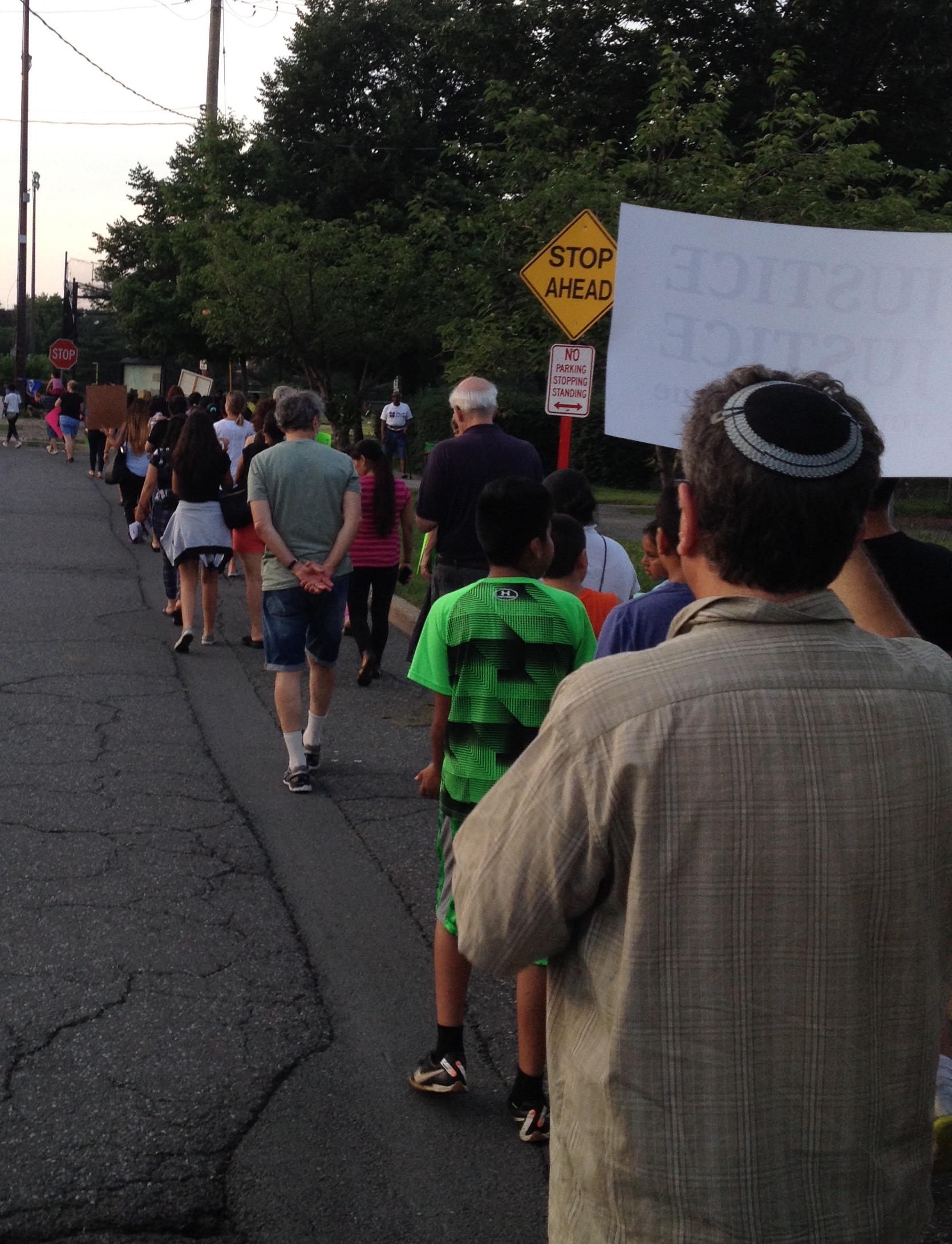
On Monday night, at Spring Valley’s Memorial Park, hundreds gathered to demand a vote on legislation that would bring state oversight to the embattled school district of East Ramapo. One of our congregants consciously chose to wear his kippah. He wanted to be certain he would be identified in the crowd as a Jew standing for the values we cherish as Jews. We marched through the streets of Spring Valley – young and old, black and white, Christian and Jewish. It was so apparent how moved his thirteen year-old son was to be a part of the experience, and to be acknowledged by so many for being a Jewish person willing to step up for a cause.
Whether our prayer vigil effected change or our legislative efforts in the short run are successful, I believe we have established a new framework for future community relations. We have expressed our shared values in more than words. We have stood together for consideration, deliberation, transparency, education and tolerance. We have stood together against discrimination, extremism, and political favoritism. And at least in the minds of some, we have shattered stereotypes that have supported ignorance, suspicion and hatred.
Solidarity Shabbat? I say Solidarity Sunday to Friday. And on Shabbat, all will be One.
Rabbi Craig Scheff
Scout’s honor
I did not know that this something was missing from our grounds. When Jared and his father Matt presented the idea to our synagogue board, I started having an inkling of what it might feel like. As the grounds were prepared for their new guests, I felt the energy of those involved in the project–younger and older, Jewish and not–and my anticipation grew. But nothing could prepare me for the sight of seeing those flags flying at the entrance to our synagogue. And there are few things about which I have ever felt as proud as the sight of those flags outside my bedroom window each morning as I roll up the shade.

It took a scout to have the vision. To be exact, it took an Eagle Scout. Ironic, given that as the Israelites send out scouts to see the land promised to them, their shortsightedness and narrow vision caused the great majority of the scouts to see themselves as unqualified for the task. In contrast, our scout inspired a community, excited the leadership, and motivated us to achieve the possible.

There is something to these stars and stripes, the blue ones on white, and the red, white and blue ones. They remind us of sacrifices made, traditions upheld, identity shared and loyalty earned. For many, they call up feelings of pride and courage; for others, they stir up conflict, enmity and resentment. Even among the standard bearers, the flag can be a source of disagreement as to which of our freedoms requires protection at any moment in time, and as to how we go about providing that protection. (This is what happens when you see the final scene of A Few Good Men three times in the same week!)
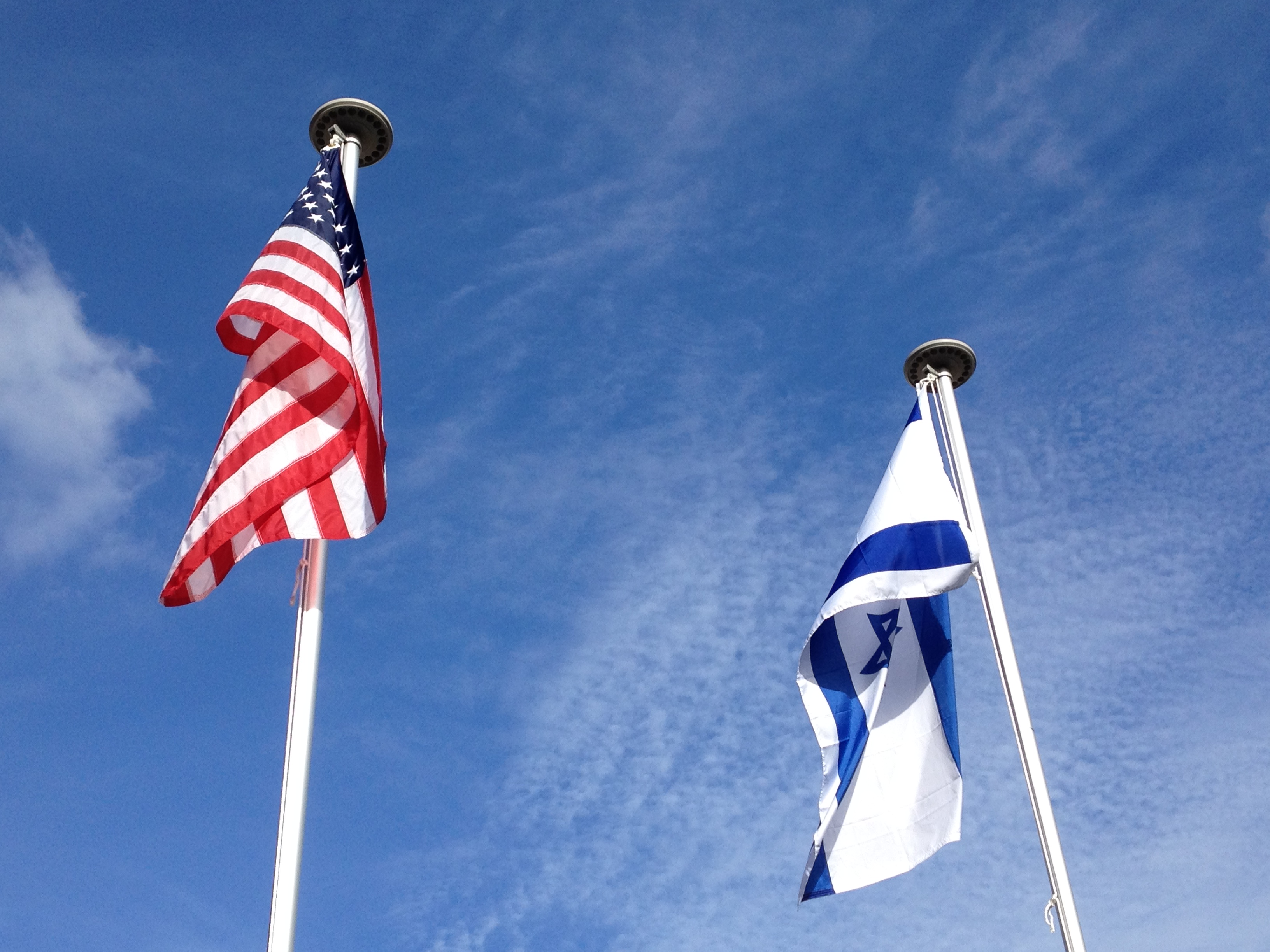
As for me, the two flags represent companions to the mezuzah on my doorpost, a gateway through which I will pass each day as I leave my home. And I will be reminded in my coming and my going to scout my world with the lasting hope that I can advance the cause of liberty and justice for all.
Shabbat shalom,
Rabbi Craig Scheff
Friendly competition
Nine- and ten-year old athletes crowded into the gymnasium, each JCC delegation sporting a different color. They nervously fiddled with their gloves and rackets, either trying not to look at their opponents around the court, or staring down the competition they would soon be facing. (Or perhaps they were just checking out each other’s $130 shoes?!)
As the mini-athletes took the field for the opening ceremony this past Sunday, they smiled large for the cameras, proudly displaying their hometown banners, clearly excited about kicking off the first (hopefully annual!) JCC Mini-Maccabi Games. Welcoming the 200-plus athletes and their families (from as far away as Baltimore) to JCC Rockland, I asked them if they knew the Hebrew word chaver. “Friend,” many of them exuberantly called back to me. Actually, they were 9 and 10, so it sounded more like “frieeeeeeend!” Yes, friend.

But to the teachers of our tradition, I explained, the word chaver meant much more than someone with whom we play and socialize. The chaver is also our competition, the one who challenges us to be our best, the one who forces us to refine our strengths and inspires us to give our best effort. In the Jewish tradition, we learn with a chaver who will not always agree with us or accept our argument. Our study partner is expected to push back, to challenge our assumptions, to introduce us to new ways of thought.
On the fields of play, our teammates may indeed be our friends and playmates. They may also, however, force us to grow, challenge us to be better, and sometimes require us to face our shortcomings. And the same may be true of our opponents. If they care about us and our development (and that is an important Jewish assumption in this equation), they too may be our chaverim. They may teach us how to win and lose graciously, help us develop resilience, remind us how much harder we must work if we expect to succeed.

Not everyone can be a winner all the time. And we need not–and should not–protect our children from the experience of losing in life. Certainly we want them to experience success in areas that bring them satisfaction. As parents, teachers and mentors it is our job to help our children find situations where they will experience success, or at a minimum help them learn confidence, recognize growth and feel satisfaction in their efforts. It is also our responsibility, however, to to teach them how to own and use failure.

Whether you win or lose, it is NOT how you play the game. It’s about what the experience of playing teaches you about yourself. That’s what a worthy and true chaver–even one on the opposing team–can help you learn.
Rabbi Craig Scheff
 Three Rabbis Walk Into A Shul
Recent Comments